European Union: a brief history
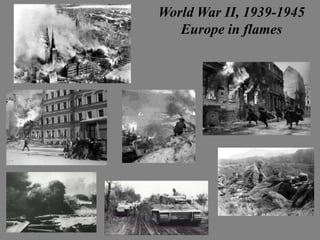
World War II, 1939-1945
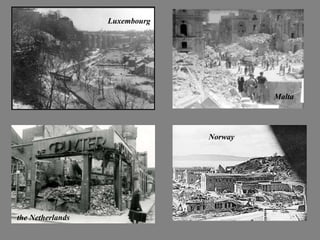
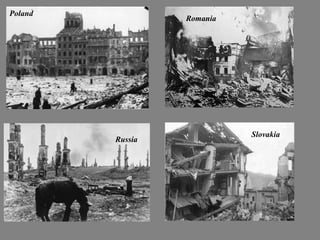
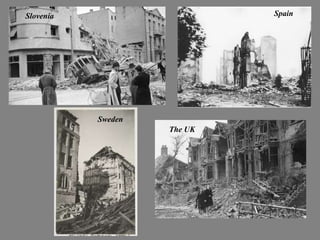
   Europe in flames
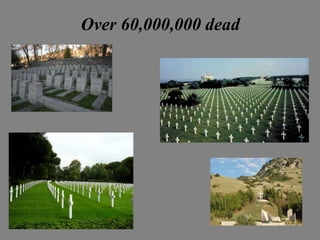
Over 60,000,000 dead
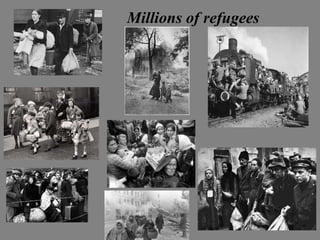
Millions of refugees
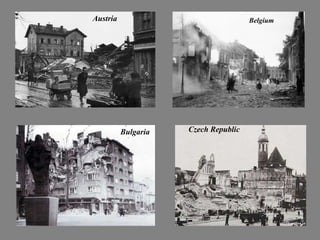
Austria                               Belgium


          Bulgaria   Czech Republic
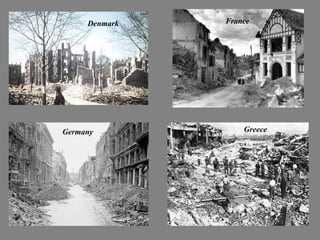
Denmark   France


Germany            Greece
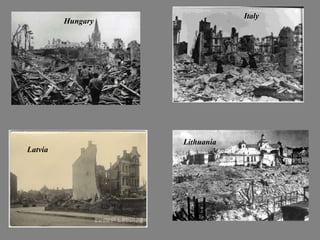
Italy
         Hungary


                   Lithuania
Latvia
Luxembourg


                                        Malta


                               Norway


the Netherlands
Poland
                  Romania


                            Slovakia
         Russia
Slovenia                     Spain


           Sweden
                    The UK
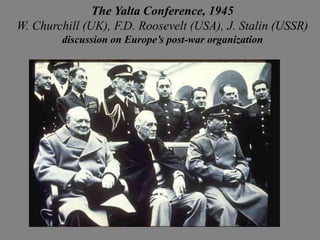
The Yalta Conference, 1945
W. Churchill (UK), F.D. Roosevelt (USA), J. Stalin (USSR)
        discussion on Europe’s post-war organization
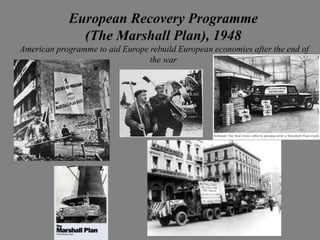
European Recovery Programme
              (The Marshall Plan), 1948
American programme to aid Europe rebuild European economies after the end of
                                 the war
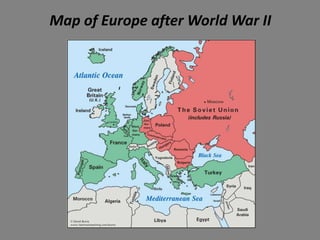
Map of Europe after World War II
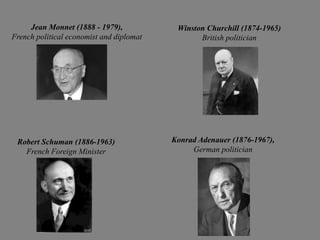
Some of EU’s founding personalities
Jean Monnet (1888 - 1979),            Winston Churchill (1874-1965)
French political economist and diplomat          British politician


 Robert Schuman (1886-1963)               Konrad Adenauer (1876-1967),
   French Foreign Minister                     German politician
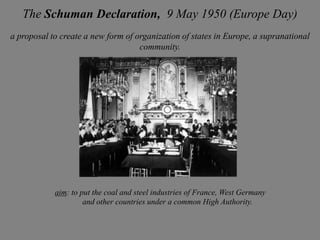
The Schuman Declaration, 9 May 1950 (Europe Day)
a proposal to create a new form of organization of states in Europe, a supranational
                                    community.


            aim: to put the coal and steel industries of France, West Germany
                     and other countries under a common High Authority.
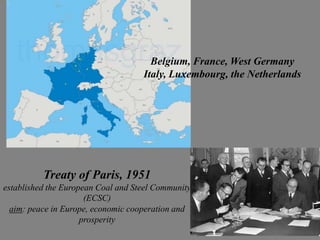
Belgium, France, West Germany
                                    Italy, Luxembourg, the Netherlands


          Treaty of Paris, 1951
established the European Coal and Steel Community
                      (ECSC)
  aim: peace in Europe, economic cooperation and
                     prosperity
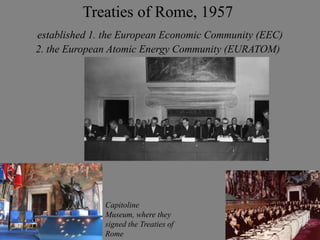
Treaties of Rome, 1957
established 1. the European Economic Community (EEC)
2. the European Atomic Energy Community (EURATOM)


              Capitoline
              Museum, where they
              signed the Treaties of
              Rome
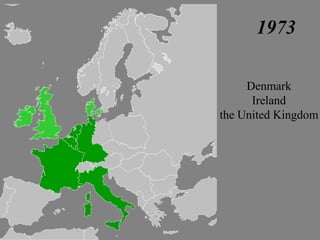
1973

     Denmark
      Ireland
the United Kingdom
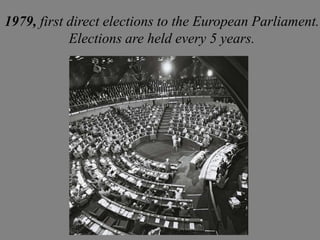
1979, first direct elections to the European Parliament.
            Elections are held every 5 years.
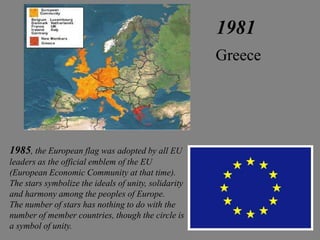
1981
                                                      Greece

                     .


1985, the European flag was adopted by all EU
leaders as the official emblem of the EU
(European Economic Community at that time).
The stars symbolize the ideals of unity, solidarity
and harmony among the peoples of Europe.
The number of stars has nothing to do with the
number of member countries, though the circle is
a symbol of unity.
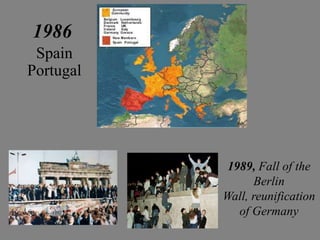
1986
 Spain
Portugal


            1989, Fall of the
                 Berlin
           Wall, reunification
              of Germany
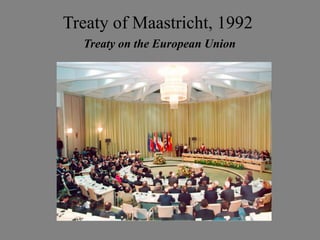
Treaty of Maastricht, 1992
  Treaty on the European Union
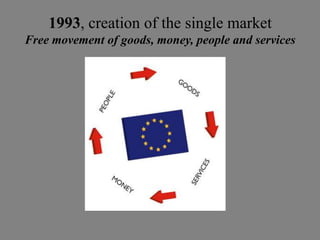
1993, creation of the single market
Free movement of goods, money, people and services
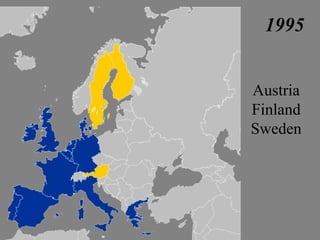
1995


Austria
Finland
Sweden
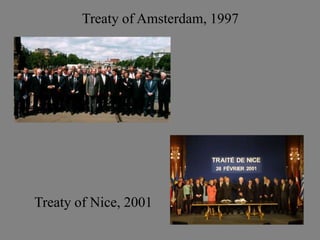
Treaty of Amsterdam, 1997


Treaty of Nice, 2001
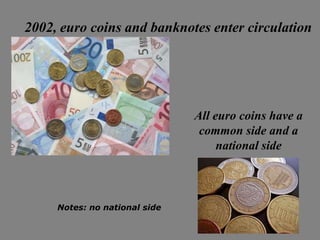
2002, euro coins and banknotes enter circulation


                               All euro coins have a
                                common side and a
                                    national side


     Notes: no national side
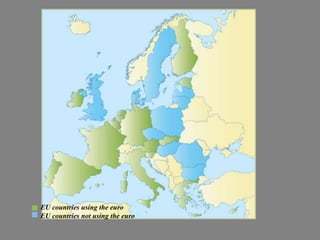
EU countries using the euro
EU countries not using the euro
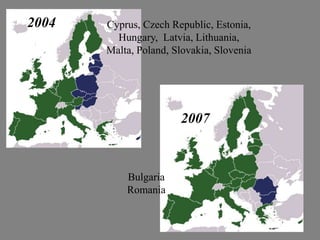
2004   Cyprus, Czech Republic, Estonia,
         Hungary, Latvia, Lithuania,
       Malta, Poland, Slovakia, Slovenia


                       2007


           Bulgaria
           Romania
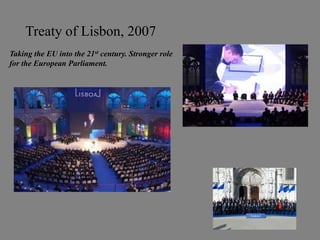
Treaty of Lisbon, 2007
Taking the EU into the 21st century. Stronger role
for the European Parliament.
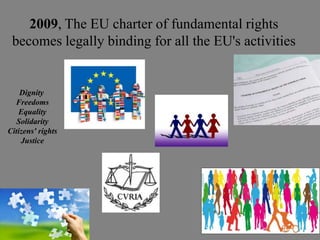
2009, The EU charter of fundamental rights
 becomes legally binding for all the EU's activities


    Dignity
  Freedoms
   Equality
   Solidarity
Citizens' rights
    Justice
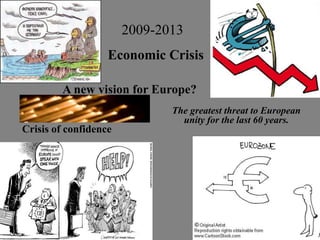
2009-2013
                   Economic Crisis

         A new vision for Europe?
                              The greatest threat to European
                                unity for the last 60 years.
Crisis of confidence

EU a brief history

  • 1.
    European Union: abrief history
  • 2.
    World War II,1939-1945 Europe in flames
  • 3.
  • 4.
  • 5.
    Austria Belgium Bulgaria Czech Republic
  • 6.
    Denmark France Germany Greece
  • 7.
    Italy Hungary Lithuania Latvia
  • 8.
    Luxembourg Malta Norway the Netherlands
  • 9.
    Poland Romania Slovakia Russia
  • 10.
    Slovenia Spain Sweden The UK
  • 11.
    The Yalta Conference,1945 W. Churchill (UK), F.D. Roosevelt (USA), J. Stalin (USSR) discussion on Europe’s post-war organization
  • 12.
    European Recovery Programme (The Marshall Plan), 1948 American programme to aid Europe rebuild European economies after the end of the war
  • 13.
    Map of Europeafter World War II
  • 14.
    Some of EU’sfounding personalities
  • 15.
    Jean Monnet (1888- 1979), Winston Churchill (1874-1965) French political economist and diplomat British politician Robert Schuman (1886-1963) Konrad Adenauer (1876-1967), French Foreign Minister German politician
  • 16.
    The Schuman Declaration,9 May 1950 (Europe Day) a proposal to create a new form of organization of states in Europe, a supranational community. aim: to put the coal and steel industries of France, West Germany and other countries under a common High Authority.
  • 17.
    Belgium, France, WestGermany Italy, Luxembourg, the Netherlands Treaty of Paris, 1951 established the European Coal and Steel Community (ECSC) aim: peace in Europe, economic cooperation and prosperity
  • 18.
    Treaties of Rome,1957 established 1. the European Economic Community (EEC) 2. the European Atomic Energy Community (EURATOM) Capitoline Museum, where they signed the Treaties of Rome
  • 19.
    1973 Denmark Ireland the United Kingdom
  • 20.
    1979, first directelections to the European Parliament. Elections are held every 5 years.
  • 21.
    1981 Greece . 1985, the European flag was adopted by all EU leaders as the official emblem of the EU (European Economic Community at that time). The stars symbolize the ideals of unity, solidarity and harmony among the peoples of Europe. The number of stars has nothing to do with the number of member countries, though the circle is a symbol of unity.
  • 22.
    1986 Spain Portugal 1989, Fall of the Berlin Wall, reunification of Germany
  • 23.
    Treaty of Maastricht,1992 Treaty on the European Union
  • 24.
    1993, creation ofthe single market Free movement of goods, money, people and services
  • 25.
  • 26.
    Treaty of Amsterdam,1997 Treaty of Nice, 2001
  • 27.
    2002, euro coinsand banknotes enter circulation All euro coins have a common side and a national side Notes: no national side
  • 28.
    EU countries usingthe euro EU countries not using the euro
  • 29.
    2004 Cyprus, Czech Republic, Estonia, Hungary, Latvia, Lithuania, Malta, Poland, Slovakia, Slovenia 2007 Bulgaria Romania
  • 30.
    Treaty of Lisbon,2007 Taking the EU into the 21st century. Stronger role for the European Parliament.
  • 31.
    2009, The EUcharter of fundamental rights becomes legally binding for all the EU's activities Dignity Freedoms Equality Solidarity Citizens' rights Justice
  • 32.
    2009-2013 Economic Crisis A new vision for Europe? The greatest threat to European unity for the last 60 years. Crisis of confidence