01/06/2022
ETHICAL DECISION MAKING PROCESS
PREPARED BY:
MARY ELEANOR N. USIS,MSN, RN
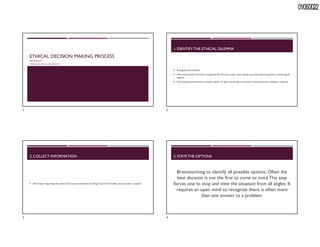
1. IDENTIFY THE ETHICAL DILEMMA
 Recognize the problem.
 Once the problem has been recognized,the decision maker must clearly state the ethical question,considering all
aspects.
 If the decisions at hand are a simple matter of right and wrong,no process of ethical decision making is required.
2. COLLECT INFORMATION
 Information regarding the values of the parties involved, including those of the health care provider is needed.
3. STATETHE OPTIONS
Brainstorming to identify all possible options. Often the
best decision is not the first to come to mind.This step
forces one to stop and view the situation from all angles. It
requires an open mind to recognize there is often more
than one answer to a problem.
1 2
3 4
01/06/2022
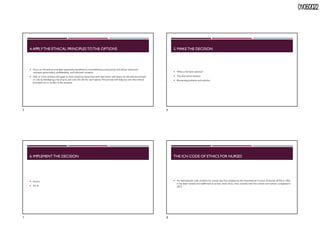
4.APPLYTHE ETHICAL PRINCIPLES TOTHE OPTIONS
 Focus on the ethical principles (autonomy, beneficence, nonmaleficence,and justice) and ethical values and
concepts (paternalism,confidentiality, and informed consent).
 One or more of these will apply to most situations.State how each alternative will impact on the ethical principle
or rule by developing a list of pros and cons.Do this for each option.This process will help you see what ethical
principles are in conflict in the situation.
5. MAKE THE DECISION
 What is the best solution?
 The alternative solution
 Remaining problems and solution.
6. IMPLEMENTTHE DECISION
 Action
 Do it!
THE ICN CODE OF ETHICS FOR NURSES
 An international code of ethics for nurses was first adopted by the International Council of Nurses (ICN) in 1953.
It has been revised and reaffirmed at various times since, most recently with this review and revision completed in
2012.
5 6
7 8
01/06/2022
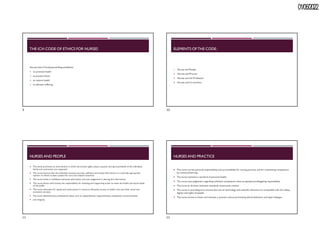
THE ICN CODE OF ETHICS FOR NURSES
Nurses have 4 Fundamental Responsibilities:
 to promote health
 to prevent illness
 to restore health
 to alleviate suffering
ELEMENTS OFTHE CODE:
1. Nurses and People
2. Nurses and Practice
3. Nurses and the Profession
4. Nurses and Co-workers
NURSES AND PEOPLE
 The nurse promotes an environment in which the human rights,values, customs and spiritual beliefs of the individual,
family and community are respected.
 The nurse ensures that the individual receives accurate, sufficient and timely information in a culturally appropriate
manner on which to base consent for care and related treatment.
 The nurse holds in confidence personal information and uses judgement in sharing this information.
 The nurse shares with society the responsibility for initiating and supporting action to meet the health and social needs
of the public
 The nurse advocates for equity and social justice in resource allocation,access to health care and other social and
economic services.
 The nurse demonstrates professional values such as respectfulness,responsiveness,compassion,trustworthiness
 and integrity
NURSES AND PRACTICE
 The nurse carries personal responsibility and accountability for nursing practice, and for maintaining competence
by continual learning.
 The nurse maintains a standard of personal health.
 The nurse uses judgement regarding individual competence when accepting and delegating responsibility.
 The nurse at all times maintains standards of personal conduct
 The nurse,in providing care, ensures that use of technology and scientific advances are compatible with the safety,
dignity and rights of people.
 The nurse strives to foster and maintain a practice culture promoting ethical behaviour and open dialogue.
9 10
11 12
01/06/2022
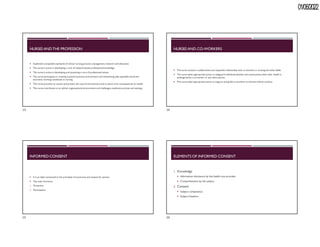
NURSES ANDTHE PROFESSION
 Implement acceptable standards of clinical nursing practice, management,research and education.
 The nurse is active in developing a core of research-based professional knowledge.
 The nurse is active in developing and sustaining a core of professional values.
 The nurse participates in creating a positive practice environment and maintaining safe, equitable social and
economic working conditions in nursing
 The nurse practices to sustain and protect the natural environment and is aware of its consequences on health.
 The nurse contributes to an ethical organizational environment and challenges unethical practices and settings.
NURSES AND CO-WORKERS
 The nurse sustains a collaborative and respectful relationship with co-workers in nursing and other fields.
 The nurse takes appropriate action to safeguard individuals,families and communities when their health is
endangered by a co-worker or any other person.
 The nurse takes appropriate action to support and guide co-workers to advance ethical conduct.
INFORMED CONSENT
 It is an ideal connected to the principles of autonomy and respect for person.
 Two main functions:
1. Protective
2. Participative
ELEMENTS OF INFORMED CONSENT
1. Knowledge
 Information disclosure by the health care provider
 Comprehension by the subject
2. Consent
 Subject competence
 Subject freedom
13 14
15 16
01/06/2022
PROXY CONSENT
 When informed consent cannot be given by the patient, the patient’s family or guardian or representative
provides it.
17

Ethical Decision Making Process.pdf

  • 1.
    01/06/2022 ETHICAL DECISION MAKINGPROCESS PREPARED BY: MARY ELEANOR N. USIS,MSN, RN 1. IDENTIFY THE ETHICAL DILEMMA  Recognize the problem.  Once the problem has been recognized,the decision maker must clearly state the ethical question,considering all aspects.  If the decisions at hand are a simple matter of right and wrong,no process of ethical decision making is required. 2. COLLECT INFORMATION  Information regarding the values of the parties involved, including those of the health care provider is needed. 3. STATETHE OPTIONS Brainstorming to identify all possible options. Often the best decision is not the first to come to mind.This step forces one to stop and view the situation from all angles. It requires an open mind to recognize there is often more than one answer to a problem. 1 2 3 4
  • 2.
    01/06/2022 4.APPLYTHE ETHICAL PRINCIPLESTOTHE OPTIONS  Focus on the ethical principles (autonomy, beneficence, nonmaleficence,and justice) and ethical values and concepts (paternalism,confidentiality, and informed consent).  One or more of these will apply to most situations.State how each alternative will impact on the ethical principle or rule by developing a list of pros and cons.Do this for each option.This process will help you see what ethical principles are in conflict in the situation. 5. MAKE THE DECISION  What is the best solution?  The alternative solution  Remaining problems and solution. 6. IMPLEMENTTHE DECISION  Action  Do it! THE ICN CODE OF ETHICS FOR NURSES  An international code of ethics for nurses was first adopted by the International Council of Nurses (ICN) in 1953. It has been revised and reaffirmed at various times since, most recently with this review and revision completed in 2012. 5 6 7 8
  • 3.
    01/06/2022 THE ICN CODEOF ETHICS FOR NURSES Nurses have 4 Fundamental Responsibilities:  to promote health  to prevent illness  to restore health  to alleviate suffering ELEMENTS OFTHE CODE: 1. Nurses and People 2. Nurses and Practice 3. Nurses and the Profession 4. Nurses and Co-workers NURSES AND PEOPLE  The nurse promotes an environment in which the human rights,values, customs and spiritual beliefs of the individual, family and community are respected.  The nurse ensures that the individual receives accurate, sufficient and timely information in a culturally appropriate manner on which to base consent for care and related treatment.  The nurse holds in confidence personal information and uses judgement in sharing this information.  The nurse shares with society the responsibility for initiating and supporting action to meet the health and social needs of the public  The nurse advocates for equity and social justice in resource allocation,access to health care and other social and economic services.  The nurse demonstrates professional values such as respectfulness,responsiveness,compassion,trustworthiness  and integrity NURSES AND PRACTICE  The nurse carries personal responsibility and accountability for nursing practice, and for maintaining competence by continual learning.  The nurse maintains a standard of personal health.  The nurse uses judgement regarding individual competence when accepting and delegating responsibility.  The nurse at all times maintains standards of personal conduct  The nurse,in providing care, ensures that use of technology and scientific advances are compatible with the safety, dignity and rights of people.  The nurse strives to foster and maintain a practice culture promoting ethical behaviour and open dialogue. 9 10 11 12
  • 4.
    01/06/2022 NURSES ANDTHE PROFESSION Implement acceptable standards of clinical nursing practice, management,research and education.  The nurse is active in developing a core of research-based professional knowledge.  The nurse is active in developing and sustaining a core of professional values.  The nurse participates in creating a positive practice environment and maintaining safe, equitable social and economic working conditions in nursing  The nurse practices to sustain and protect the natural environment and is aware of its consequences on health.  The nurse contributes to an ethical organizational environment and challenges unethical practices and settings. NURSES AND CO-WORKERS  The nurse sustains a collaborative and respectful relationship with co-workers in nursing and other fields.  The nurse takes appropriate action to safeguard individuals,families and communities when their health is endangered by a co-worker or any other person.  The nurse takes appropriate action to support and guide co-workers to advance ethical conduct. INFORMED CONSENT  It is an ideal connected to the principles of autonomy and respect for person.  Two main functions: 1. Protective 2. Participative ELEMENTS OF INFORMED CONSENT 1. Knowledge  Information disclosure by the health care provider  Comprehension by the subject 2. Consent  Subject competence  Subject freedom 13 14 15 16
  • 5.
    01/06/2022 PROXY CONSENT  Wheninformed consent cannot be given by the patient, the patient’s family or guardian or representative provides it. 17