Essential Elements
of a Successful
Exhibition Display
Layout
An exhibition display stand layout is a key aspect of showcasing products, services, and branding at trade shows,
conferences, and similar events. A well-planned layout maximizes visibility, enhances visitor engagement, and
ensures efficient use of space. Here are some essential elements and considerations for creating an effective
exhibition display stand layout.
Stand Types and Shapes
1.
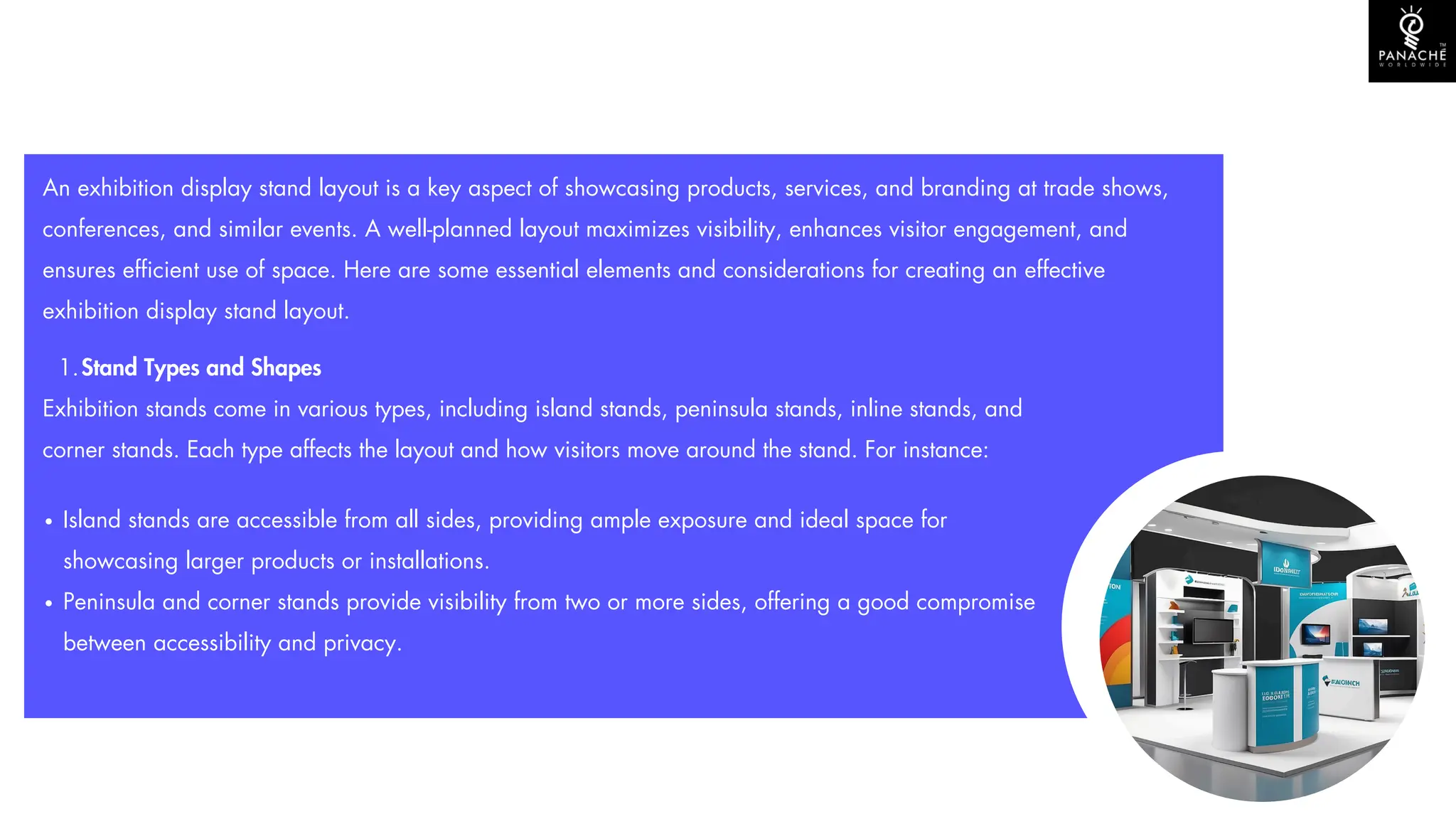
Exhibition stands come in various types, including island stands, peninsula stands, inline stands, and
corner stands. Each type affects the layout and how visitors move around the stand. For instance:
Island stands are accessible from all sides, providing ample exposure and ideal space for
showcasing larger products or installations.
Peninsula and corner stands provide visibility from two or more sides, offering a good compromise
between accessibility and privacy.
2. Zoning and Flow
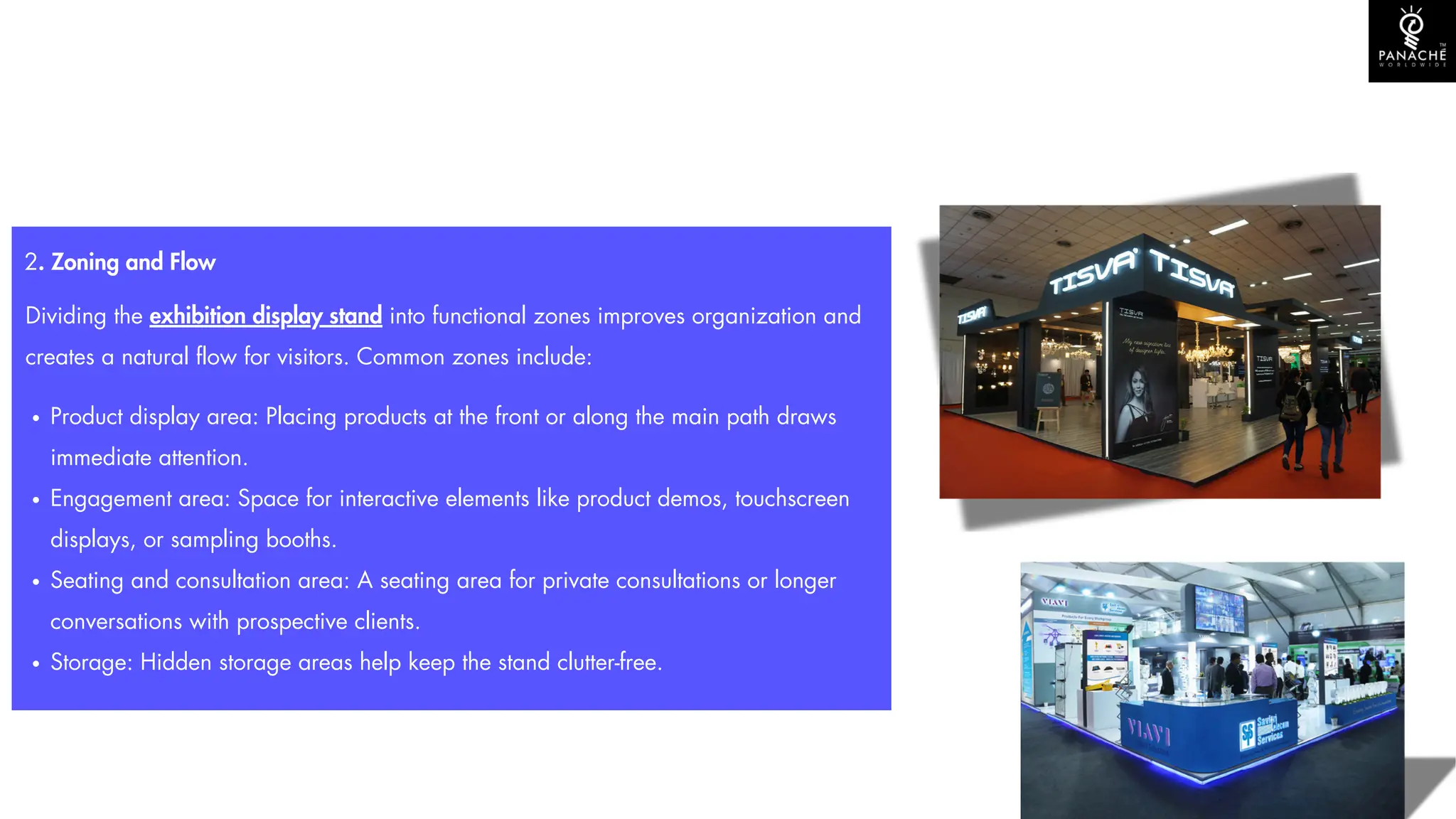
Dividing the exhibition display stand into functional zones improves organization and
creates a natural flow for visitors. Common zones include:
Product display area: Placing products at the front or along the main path draws
immediate attention.
Engagement area: Space for interactive elements like product demos, touchscreen
displays, or sampling booths.
Seating and consultation area: A seating area for private consultations or longer
conversations with prospective clients.
Storage: Hidden storage areas help keep the stand clutter-free.
3. Visual Hierarchy and Branding
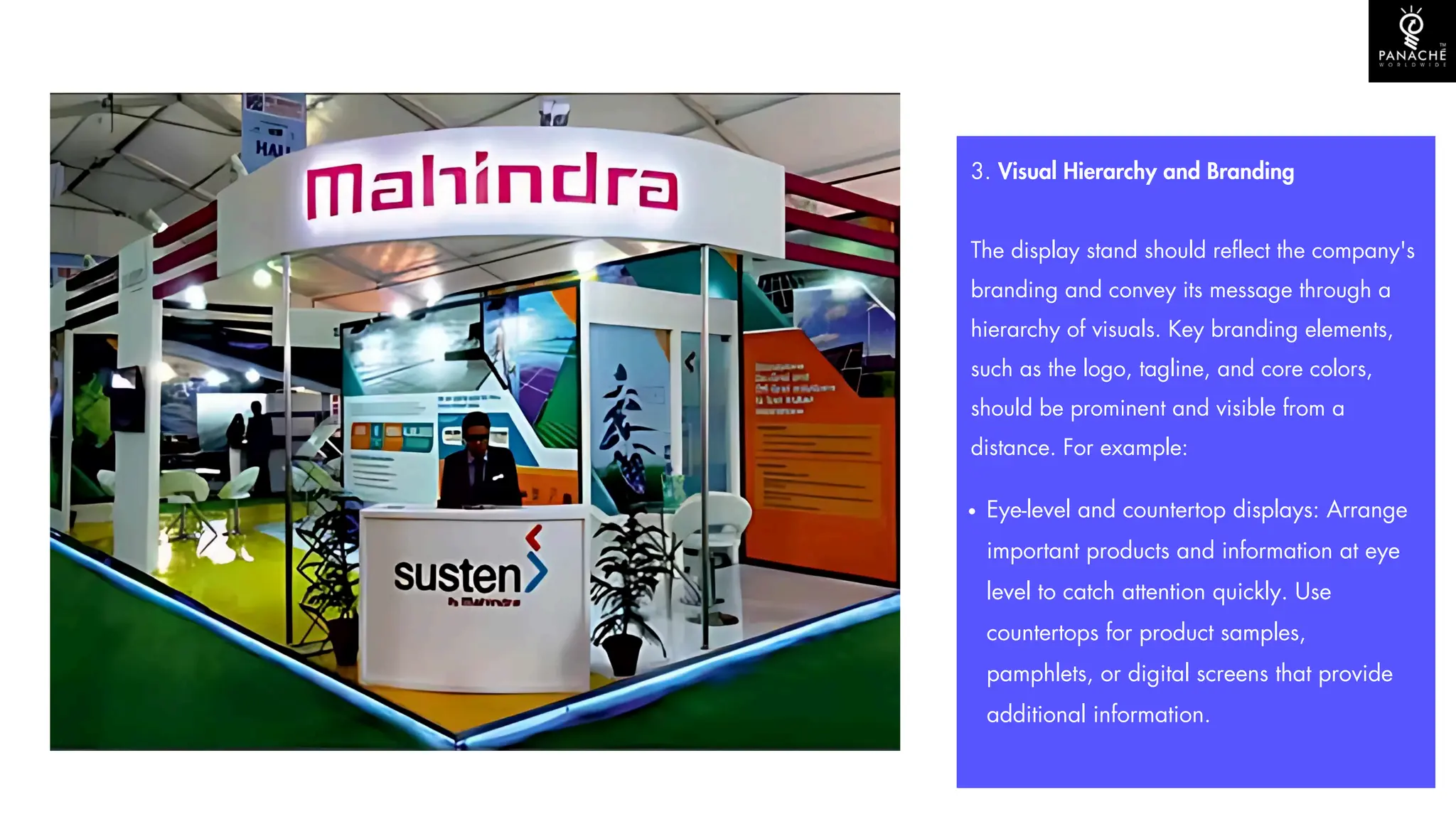
The display stand should reflect the company's
branding and convey its message through a
hierarchy of visuals. Key branding elements,
such as the logo, tagline, and core colors,
should be prominent and visible from a
distance. For example:
Eye-level and countertop displays: Arrange
important products and information at eye
level to catch attention quickly. Use
countertops for product samples,
pamphlets, or digital screens that provide
additional information.
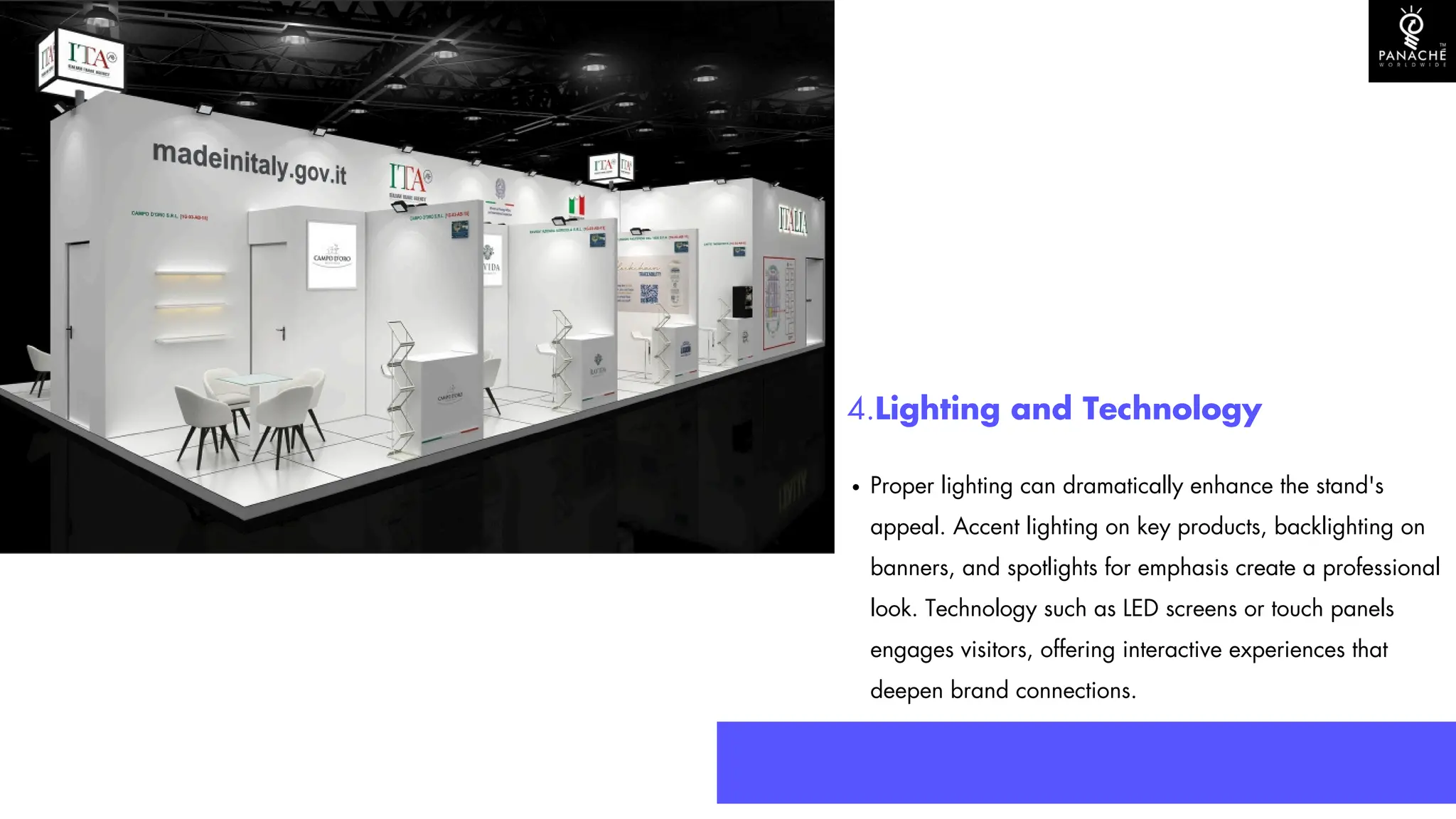
4.Lighting and Technology
Proper lighting can dramatically enhance the stand's
appeal. Accent lighting on key products, backlighting on
banners, and spotlights for emphasis create a professional
look. Technology such as LED screens or touch panels
engages visitors, offering interactive experiences that
deepen brand connections.
Contact Us-
www.panache-worldwide.com
+91-8527249797
contact@panache-worldwide.com
Adjacent 143 Metro Station, Sec.
143 Noida -201306, India
THANK
contact@panache-worldwide.com
YOU

Essential Elements of a Successful Exhibition Display Layout.pdf

  • 1.
    Essential Elements of aSuccessful Exhibition Display Layout
  • 2.
    An exhibition displaystand layout is a key aspect of showcasing products, services, and branding at trade shows, conferences, and similar events. A well-planned layout maximizes visibility, enhances visitor engagement, and ensures efficient use of space. Here are some essential elements and considerations for creating an effective exhibition display stand layout. Stand Types and Shapes 1. Exhibition stands come in various types, including island stands, peninsula stands, inline stands, and corner stands. Each type affects the layout and how visitors move around the stand. For instance: Island stands are accessible from all sides, providing ample exposure and ideal space for showcasing larger products or installations. Peninsula and corner stands provide visibility from two or more sides, offering a good compromise between accessibility and privacy.
  • 3.
    2. Zoning andFlow Dividing the exhibition display stand into functional zones improves organization and creates a natural flow for visitors. Common zones include: Product display area: Placing products at the front or along the main path draws immediate attention. Engagement area: Space for interactive elements like product demos, touchscreen displays, or sampling booths. Seating and consultation area: A seating area for private consultations or longer conversations with prospective clients. Storage: Hidden storage areas help keep the stand clutter-free.
  • 4.
    3. Visual Hierarchyand Branding The display stand should reflect the company's branding and convey its message through a hierarchy of visuals. Key branding elements, such as the logo, tagline, and core colors, should be prominent and visible from a distance. For example: Eye-level and countertop displays: Arrange important products and information at eye level to catch attention quickly. Use countertops for product samples, pamphlets, or digital screens that provide additional information.
  • 5.
    4.Lighting and Technology Properlighting can dramatically enhance the stand's appeal. Accent lighting on key products, backlighting on banners, and spotlights for emphasis create a professional look. Technology such as LED screens or touch panels engages visitors, offering interactive experiences that deepen brand connections.
  • 6.
  • 7.