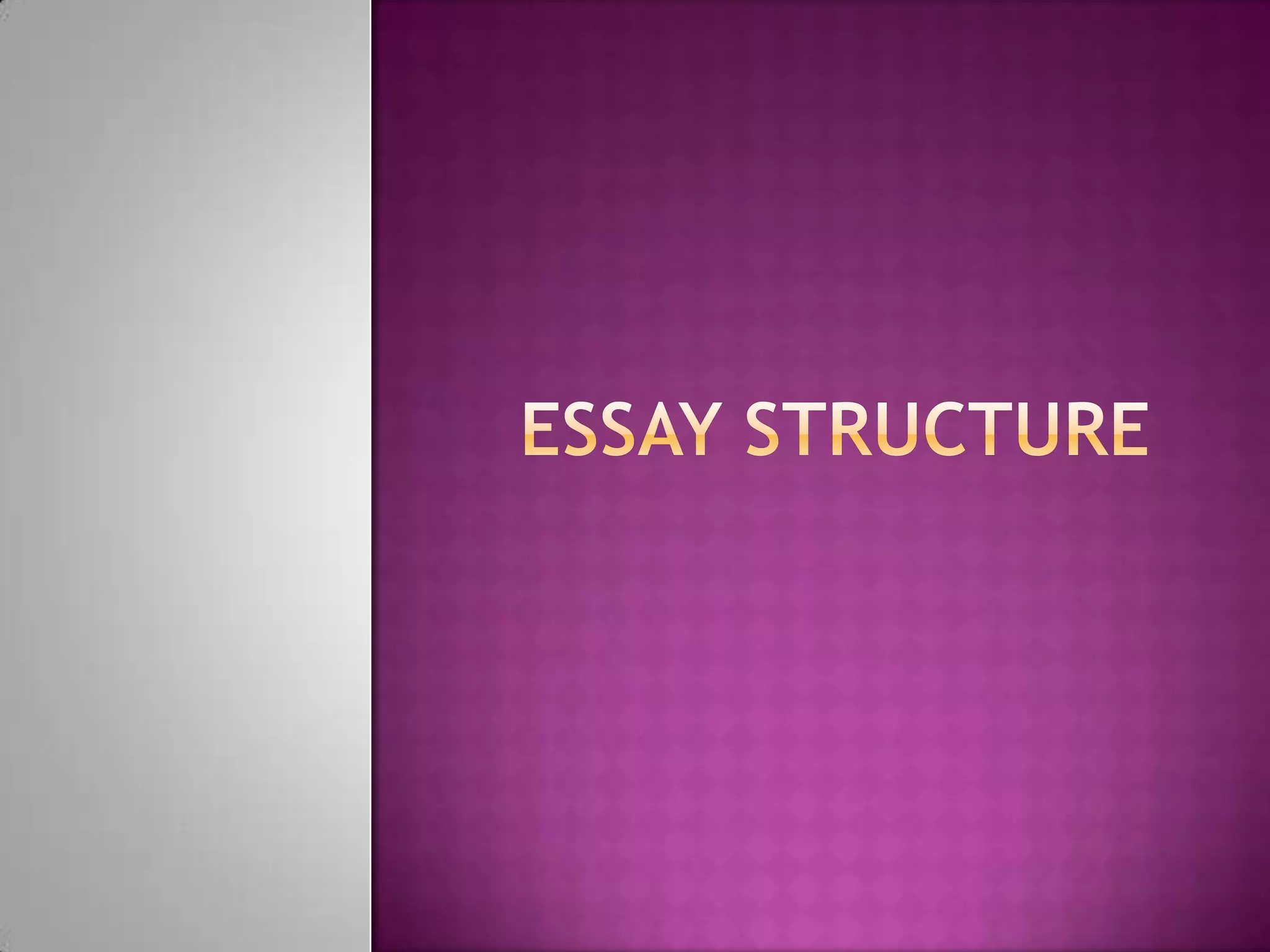
 Point – the factor
 Elaboration – explain the factor
 Example – specific details of the factor to
  support the point
 Link – how the factor leads to the issue in the
  question. (VERY IMPORTANT! w/o link, max
  mark is 3/5m & 4/10m)
     Find out the issue in the question
     Format: Therefore, (factor) leads to/causes
      (issue) because…
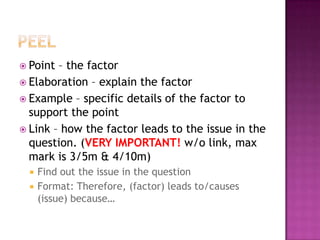
 Explain how economic reasons were a cause
  for Separation in 1965. (5m)
 http://www.youtube.com/watch?v=tH0M3ki
  Mxco
 Point
    Due to economic reasons, SG separated from
     Malaysia
 Example
    Delay in setting up of Common Market
    SG’s contribution increased from 40% to 60%
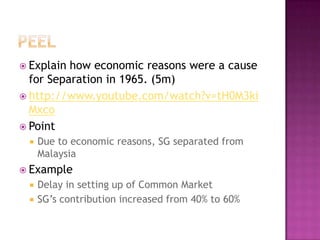
 Explain how economic reasons were a cause for
  Separation in 1965. (5m)
 Elaboration
     Malaysia saw SG as a competitor and not an economic
      ally and were not willing to share the market.
     Unfair terms of agreement: SG has to contribute to
      central gov more revenue in the form of taxes
   Link
       Therefore, economic reasons led to separation
        because the delay in setting up the CM/SG’s increase
        in contribution resulted in SG’s economy slowing
        down. Since SG was not benefitting economically
        from the merger, it decided to separate.
 Explain
        how political reasons led to the
 merger between Singapore and Malaya. (5m)
 Explain how the difference in political
  approach in Malaysia and Singapore led to
  separation in 1965. (5m)
 Point:
    There was a difference in political approaches in
     Malaysia and Singapore.
 Example:
    Singapore was non-communal while Malaysia was
     communal.
   Explain how the difference in political approach in
    Malaysia and Singapore led to separation in 1965. (5m)
 Explanation:
       Since Singapore was about equality for all races
        and Malaysia gave the Malays special privileges,
        they couldn’t come to an agreement on how best
        to develop policies for the people.
 Link
       Therefore, the difference in political approach in
        Malaysia and Singapore led to separation because
        the inability to agree meant there was no clear
        direction for progress and implementation of
        policies. This resulted in political instability,
        hence SG decided to separate.
 Explainhow the principle “Anticipate Change
  and Stay Relevant” helps in achieving good
  governance in Singapore. (5m)
 Point:
    “Anticipate Change and Stay Relevant” is one of
     principles.
 Example:
    NEWater was set up to produce drinkable water
     so we can self-sufficient.
   Explain how the principle “Anticipate Change and Stay
    Relevant” helps in achieving good governance in Singapore.
    (5m)
 Explanation:
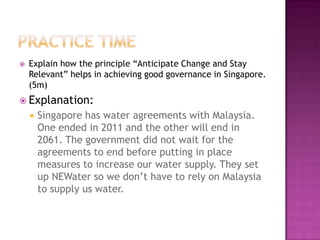
       Singapore has water agreements with Malaysia.
        One ended in 2011 and the other will end in
        2061. The government did not wait for the
        agreements to end before putting in place
        measures to increase our water supply. They set
        up NEWater so we don’t have to rely on Malaysia
        to supply us water.
   Explain how the principle “Anticipate Change and Stay
    Relevant” helps in achieving good governance in Singapore.
    (5m)
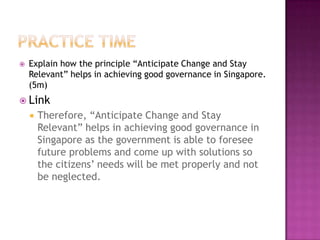
 Link
       Therefore, “Anticipate Change and Stay
        Relevant” helps in achieving good governance in
        Singapore as the government is able to foresee
        future problems and come up with solutions so
        the citizens’ needs will be met properly and not
        be neglected.

Essay structure

  • 2.
     Point –the factor  Elaboration – explain the factor  Example – specific details of the factor to support the point  Link – how the factor leads to the issue in the question. (VERY IMPORTANT! w/o link, max mark is 3/5m & 4/10m)  Find out the issue in the question  Format: Therefore, (factor) leads to/causes (issue) because…
  • 3.
     Explain howeconomic reasons were a cause for Separation in 1965. (5m)  http://www.youtube.com/watch?v=tH0M3ki Mxco  Point  Due to economic reasons, SG separated from Malaysia  Example  Delay in setting up of Common Market  SG’s contribution increased from 40% to 60%
  • 4.
     Explain howeconomic reasons were a cause for Separation in 1965. (5m)  Elaboration  Malaysia saw SG as a competitor and not an economic ally and were not willing to share the market.  Unfair terms of agreement: SG has to contribute to central gov more revenue in the form of taxes  Link  Therefore, economic reasons led to separation because the delay in setting up the CM/SG’s increase in contribution resulted in SG’s economy slowing down. Since SG was not benefitting economically from the merger, it decided to separate.
  • 5.
     Explain how political reasons led to the merger between Singapore and Malaya. (5m)
  • 6.
     Explain howthe difference in political approach in Malaysia and Singapore led to separation in 1965. (5m)  Point:  There was a difference in political approaches in Malaysia and Singapore.  Example:  Singapore was non-communal while Malaysia was communal.
  • 7.
    Explain how the difference in political approach in Malaysia and Singapore led to separation in 1965. (5m)  Explanation:  Since Singapore was about equality for all races and Malaysia gave the Malays special privileges, they couldn’t come to an agreement on how best to develop policies for the people.  Link  Therefore, the difference in political approach in Malaysia and Singapore led to separation because the inability to agree meant there was no clear direction for progress and implementation of policies. This resulted in political instability, hence SG decided to separate.
  • 8.
     Explainhow theprinciple “Anticipate Change and Stay Relevant” helps in achieving good governance in Singapore. (5m)  Point:  “Anticipate Change and Stay Relevant” is one of principles.  Example:  NEWater was set up to produce drinkable water so we can self-sufficient.
  • 9.
    Explain how the principle “Anticipate Change and Stay Relevant” helps in achieving good governance in Singapore. (5m)  Explanation:  Singapore has water agreements with Malaysia. One ended in 2011 and the other will end in 2061. The government did not wait for the agreements to end before putting in place measures to increase our water supply. They set up NEWater so we don’t have to rely on Malaysia to supply us water.
  • 10.
    Explain how the principle “Anticipate Change and Stay Relevant” helps in achieving good governance in Singapore. (5m)  Link  Therefore, “Anticipate Change and Stay Relevant” helps in achieving good governance in Singapore as the government is able to foresee future problems and come up with solutions so the citizens’ needs will be met properly and not be neglected.