EqualisersAn Introduction
The Harmonic SeriesIn order to understand what we are doing when we use an equaliser, we first need to understand how a sound is made up.Most musical instruments produce a tone through exciting a complex series of vibrations in a string or a pipe. These vibrations can be rationalised into a series of more simple modes of vibration.
The Harmonic SeriesThe simplest mode of vibration produces a pure tone, this is known as a sine wave. A perfectly pure tone is not a naturally occurring thing, although it can be generated electronically. From an analysis point of view a sine wave is very useful.
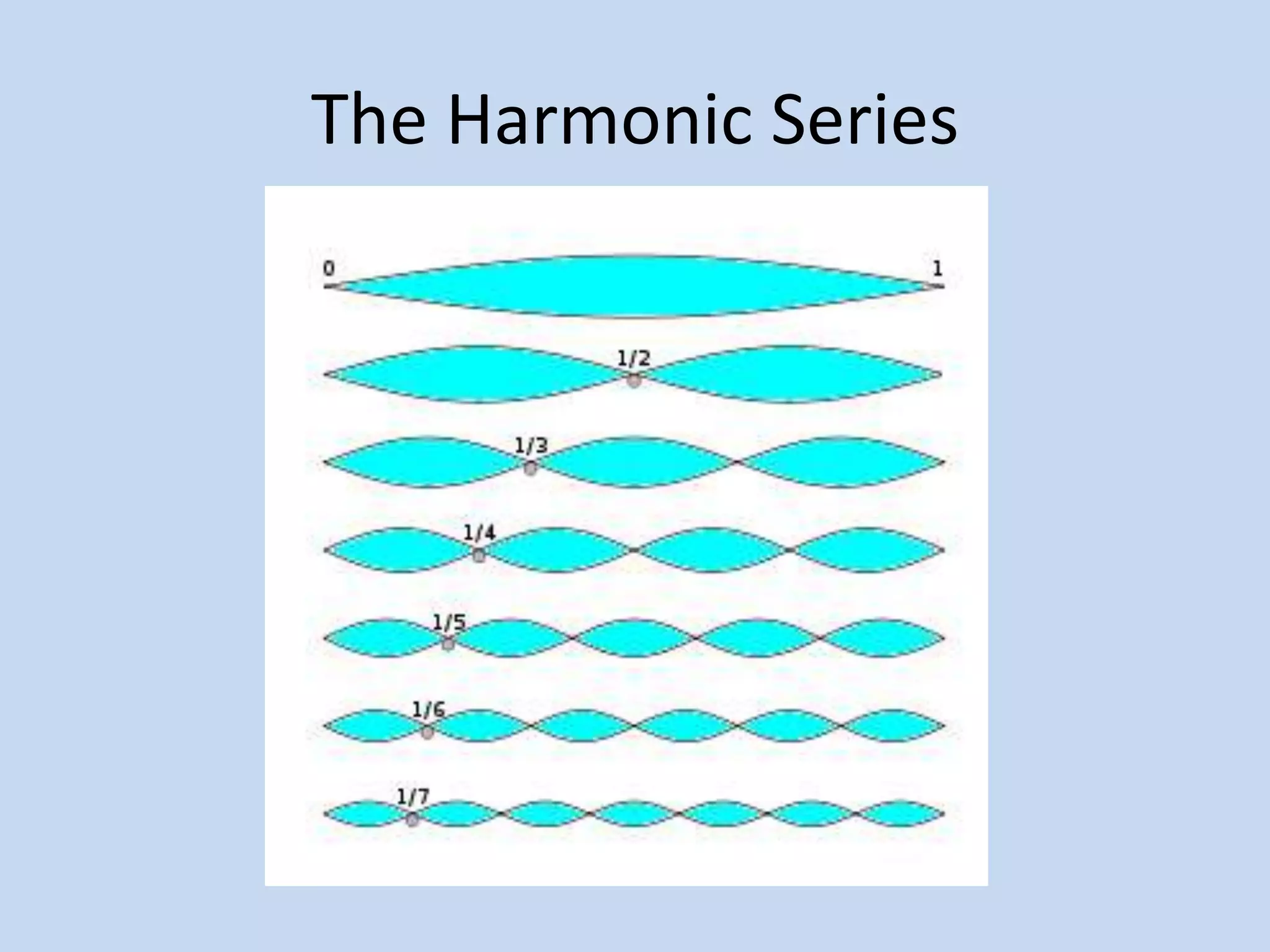
The Harmonic Series
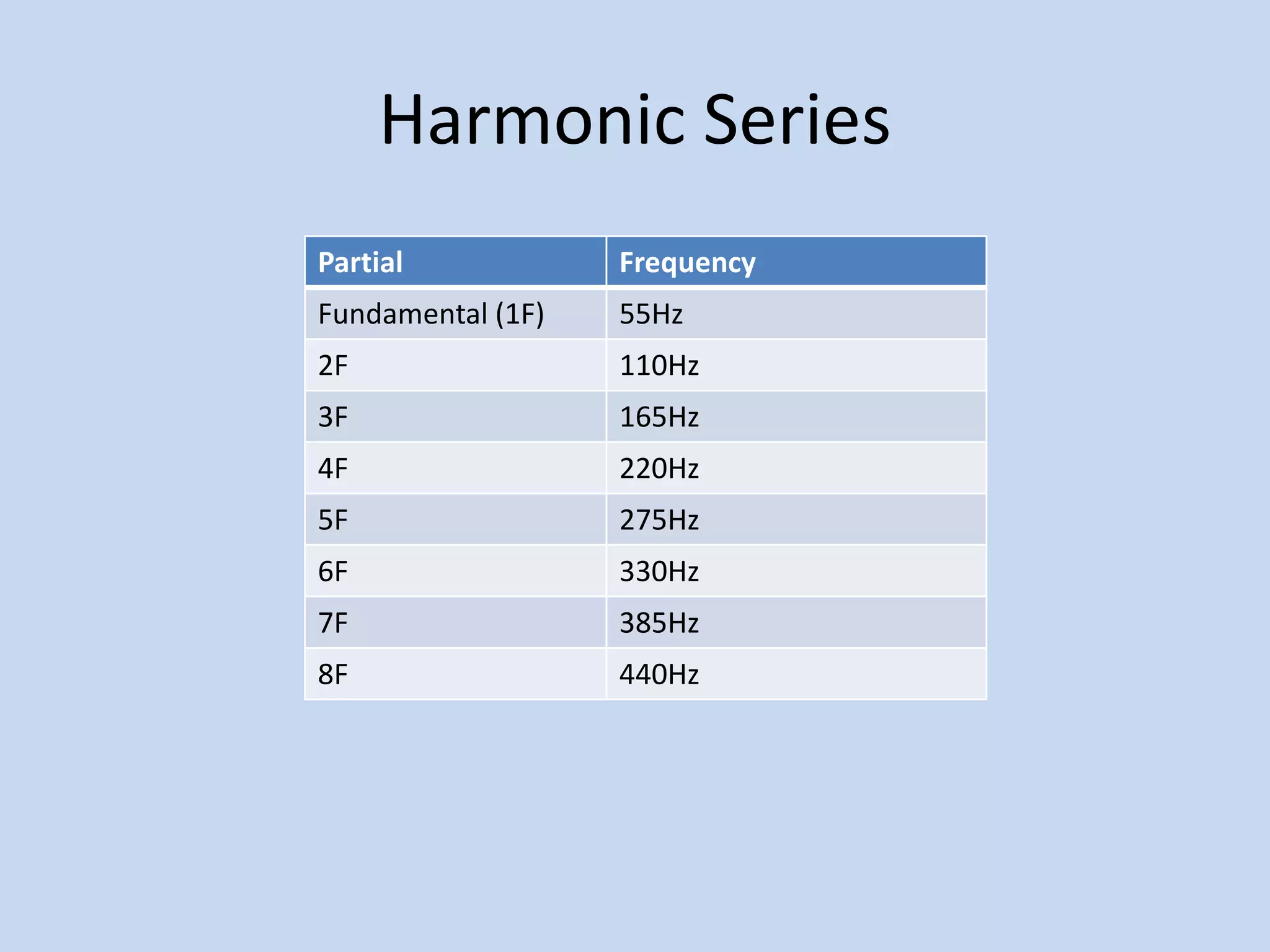
Harmonic Series
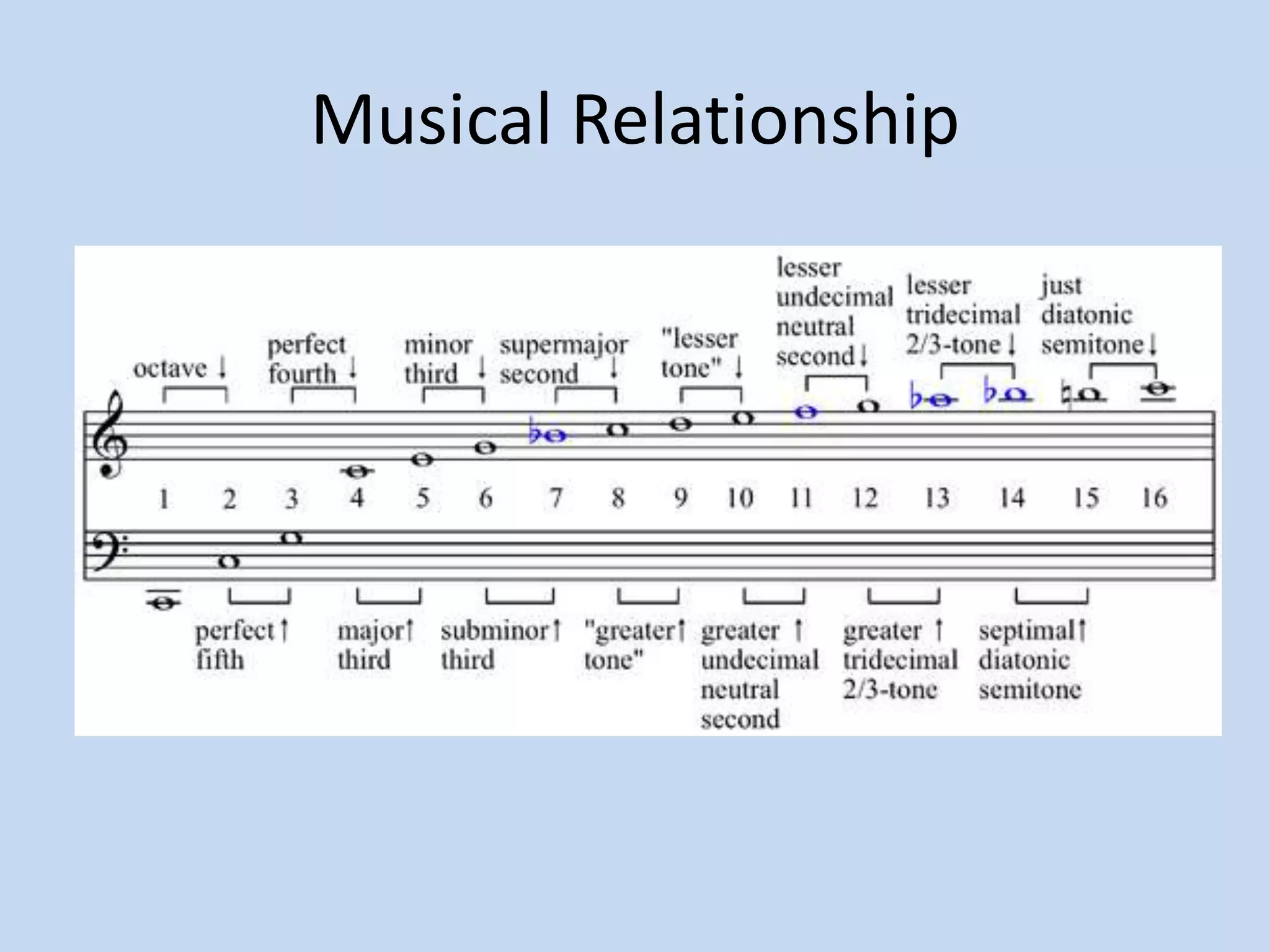
Musical Relationship
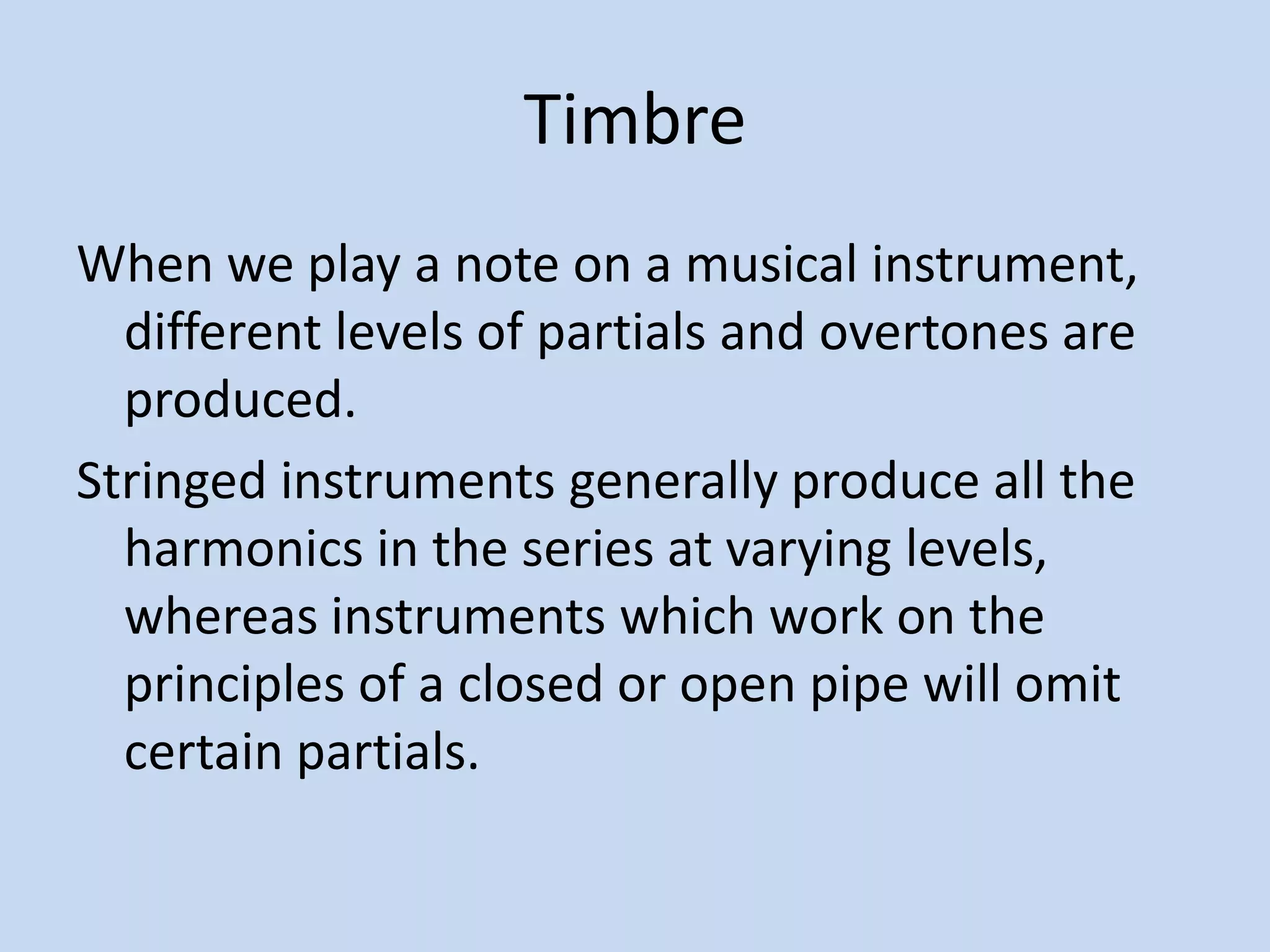
TimbreWhen we play a note on a musical instrument, different levels of partials and overtones are produced. Stringed instruments generally produce all the harmonics in the series at varying levels, whereas instruments which work on the principles of a closed or open pipe will omit certain partials.
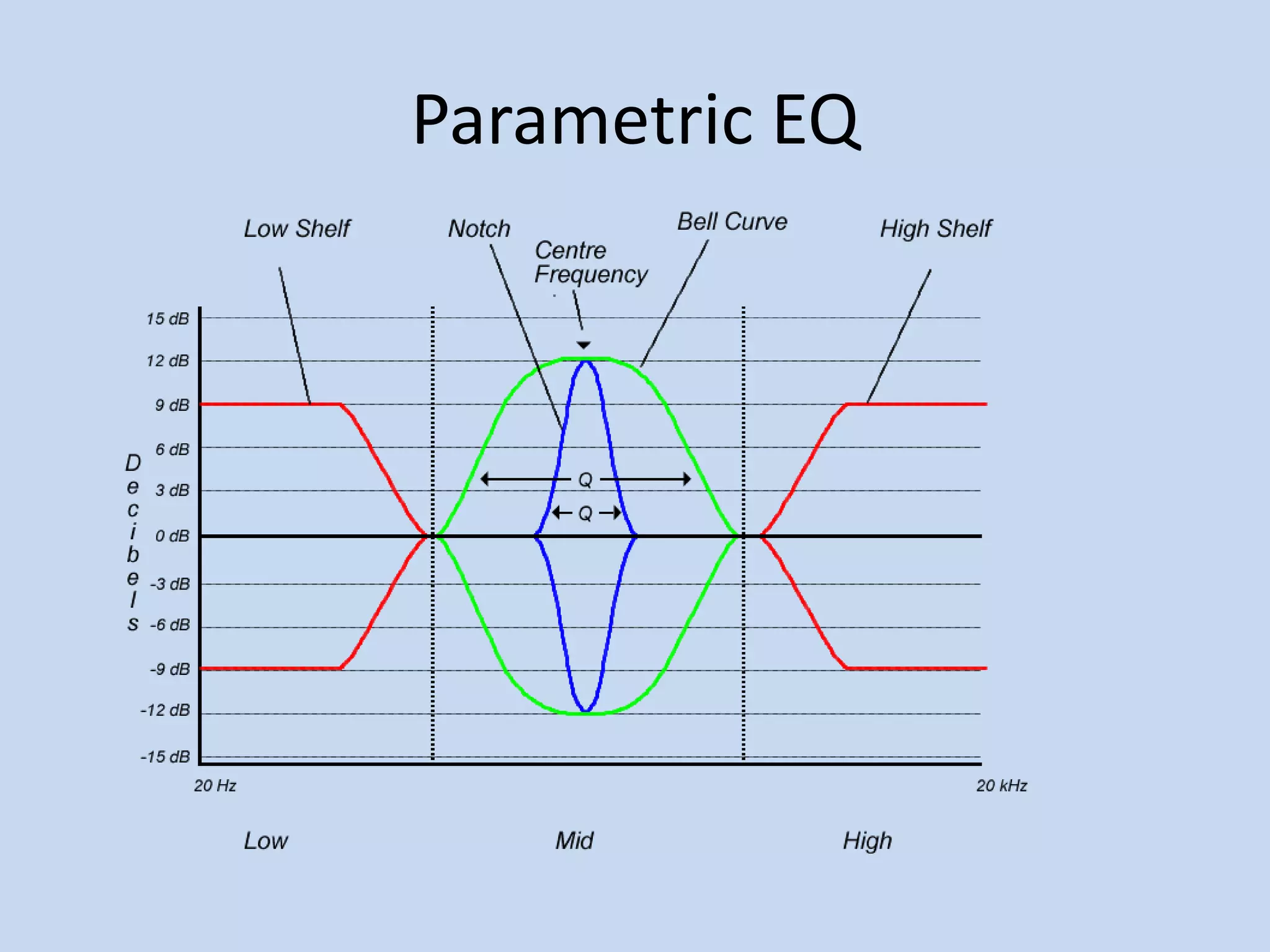
Types of EqualisersAn Equaliser works by adjusting the balance of the partials and overtones in a sound. This alters the tone of an instrument.The two most common types of equaliser you will come across are:Parametric;Graphic.
Parametric EQ
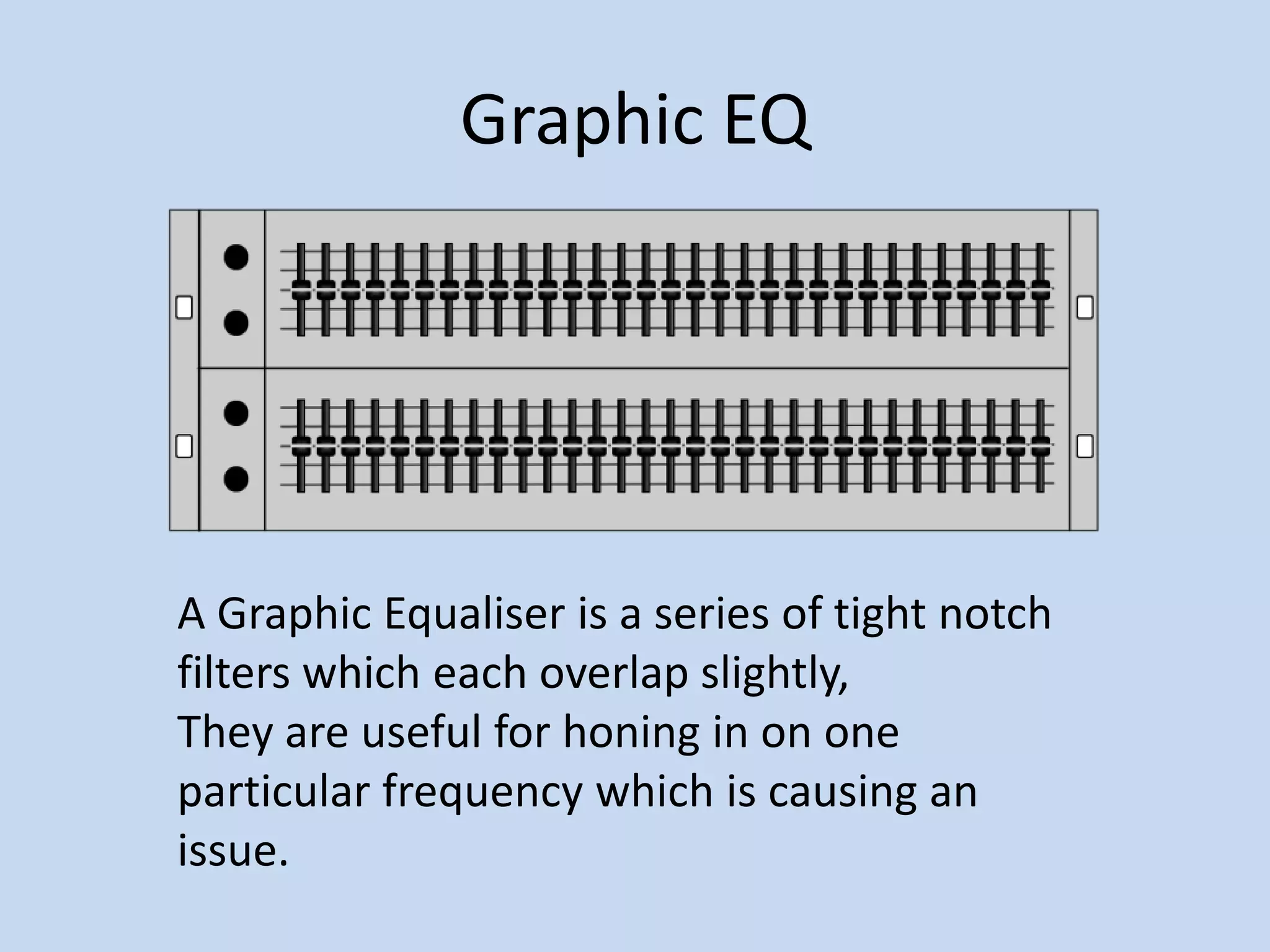
Graphic EQA Graphic Equaliser is a series of tight notch filters which each overlap slightly, They are useful for honing in on one particular frequency which is causing an issue.
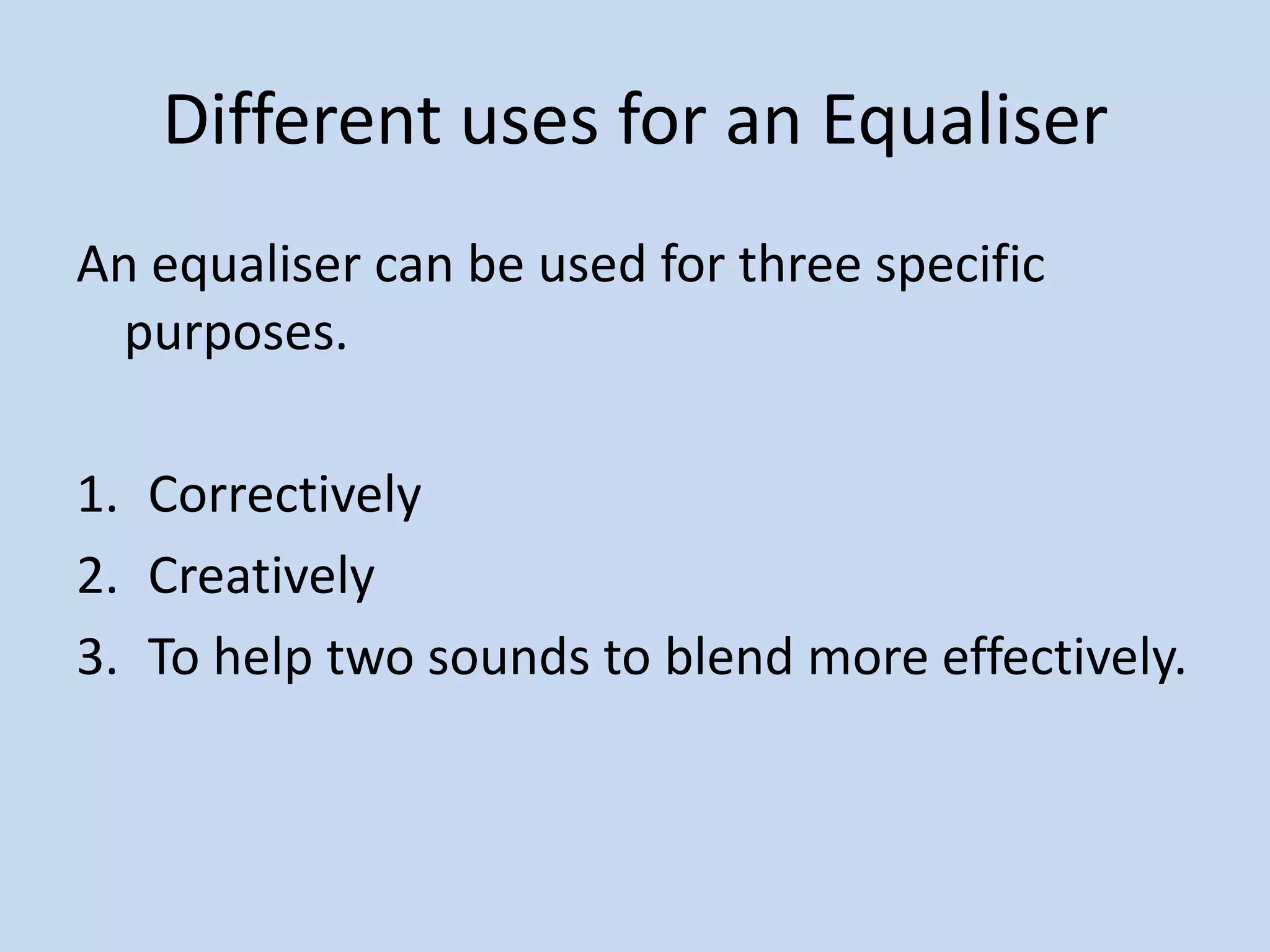
Different uses for an EqualiserAn equaliser can be used for three specific purposes.CorrectivelyCreativelyTo help two sounds to blend more effectively.
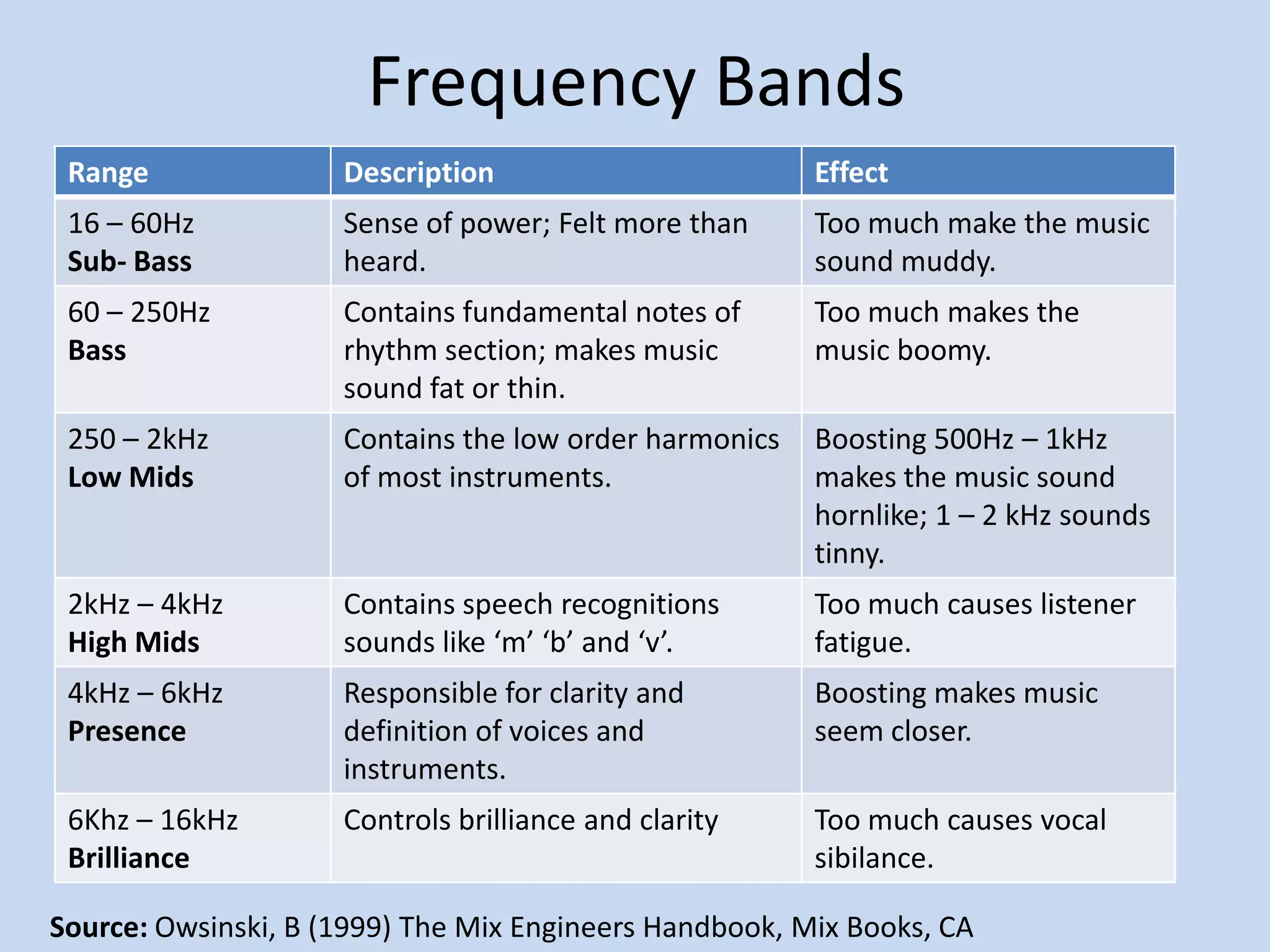
Frequency BandsSource: Owsinski, B (1999) The Mix Engineers Handbook, Mix Books, CA
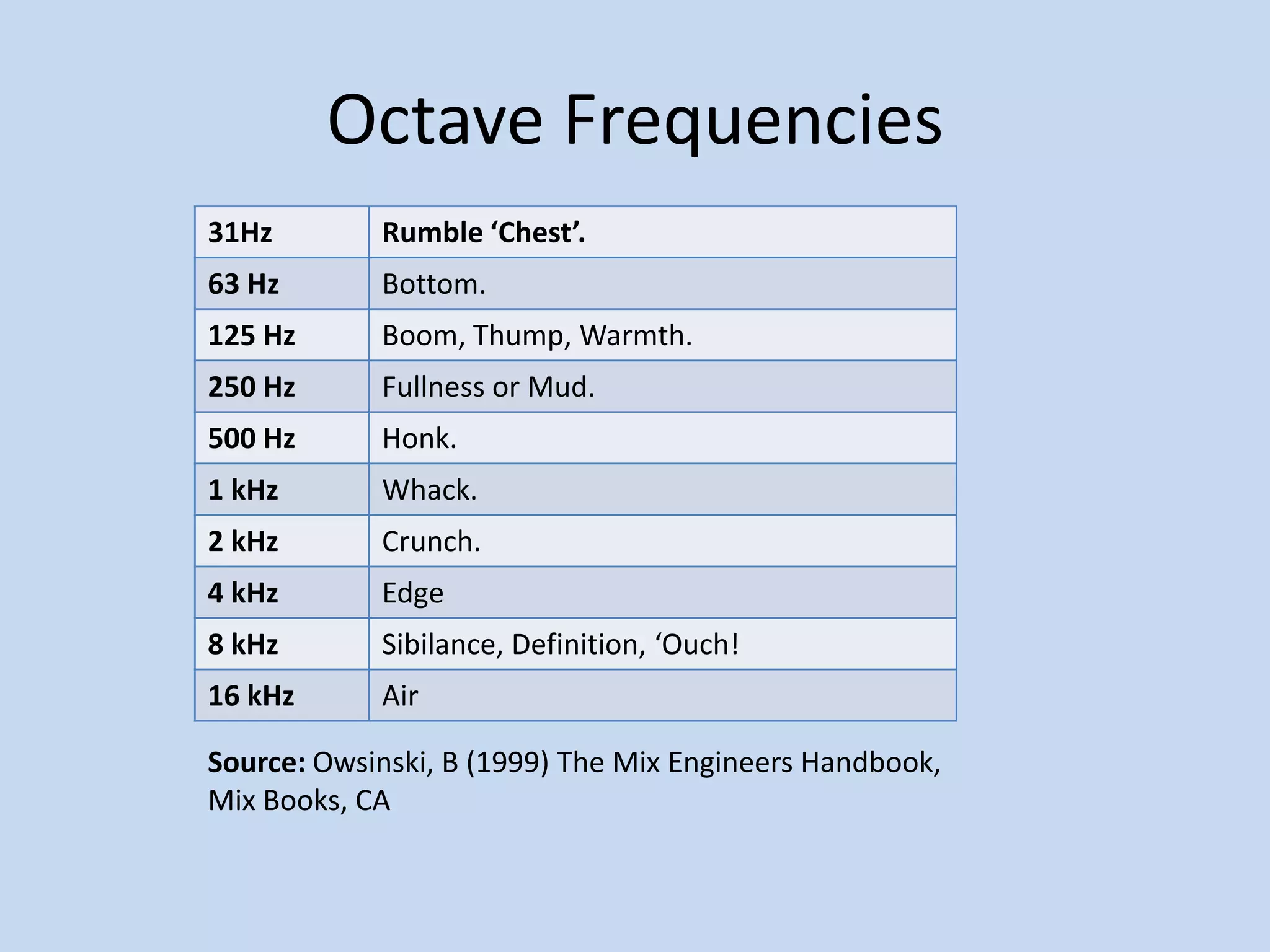
Octave FrequenciesSource: Owsinski, B (1999) The Mix Engineers Handbook, Mix Books, CA
Choose source materialChoose source material and devise a practice EQ task.

Equalisers

  • 1.
  • 2.
    The Harmonic SeriesInorder to understand what we are doing when we use an equaliser, we first need to understand how a sound is made up.Most musical instruments produce a tone through exciting a complex series of vibrations in a string or a pipe. These vibrations can be rationalised into a series of more simple modes of vibration.
  • 3.
    The Harmonic SeriesThesimplest mode of vibration produces a pure tone, this is known as a sine wave. A perfectly pure tone is not a naturally occurring thing, although it can be generated electronically. From an analysis point of view a sine wave is very useful.
  • 4.
  • 5.
  • 6.
  • 7.
    TimbreWhen we playa note on a musical instrument, different levels of partials and overtones are produced. Stringed instruments generally produce all the harmonics in the series at varying levels, whereas instruments which work on the principles of a closed or open pipe will omit certain partials.
  • 8.
    Types of EqualisersAnEqualiser works by adjusting the balance of the partials and overtones in a sound. This alters the tone of an instrument.The two most common types of equaliser you will come across are:Parametric;Graphic.
  • 9.
  • 10.
    Graphic EQA GraphicEqualiser is a series of tight notch filters which each overlap slightly, They are useful for honing in on one particular frequency which is causing an issue.
  • 11.
    Different uses foran EqualiserAn equaliser can be used for three specific purposes.CorrectivelyCreativelyTo help two sounds to blend more effectively.
  • 12.
    Frequency BandsSource: Owsinski,B (1999) The Mix Engineers Handbook, Mix Books, CA
  • 13.
    Octave FrequenciesSource: Owsinski,B (1999) The Mix Engineers Handbook, Mix Books, CA
  • 14.
    Choose source materialChoosesource material and devise a practice EQ task.

Editor's Notes

  • #5 An easy way to understand the relationships in the harmonic series is to look at a guitar string.
  • #6 The Fundamental harmonic is usually the loudest and is the one which defines the pitch of the note. The table shows the harmonic series up to the 8th Harmonic or 7th partial for a Low A. As you can see from the table each partial is an integer multiple of the fundamental. Often notes will also contain frequencies which do not relate to the Harmonic series, these are usually referred to as overtones, rather than partials to distinguish the two.
  • #7 Looking at the interval relationships of the harmonic series it is easy to see how we developed harmony from these mathematical relationships.
  • #11 A Graphic Equaliser is a series of tight notch filters which each overlap slightly, They are useful for honing in on one particular frequency which is causing an issue.Graphic Equalisers are most commonly found in a live environment and used toEliminate problems with feedback or to control a poor acoustic. They can proveUseful from time to time in a studio environment also.
  • #12 Correctively – To correct a problem with a poor acoustic or microphone technique.Creatively – To enhance or shape the sound for emotional effect.To help two sounds to blend more effectively – To create space for two instruments to co-exist alongside one another.