Varujan Apelian European Passengers’ Federation www.epf.eu [email_address] CEE Railways 2009 Ensuring the CEE Railway sector stays on the right track Bucharest, 27th & 28th April 2009 Rail Security and Safety Projects –  The EPF Perspective
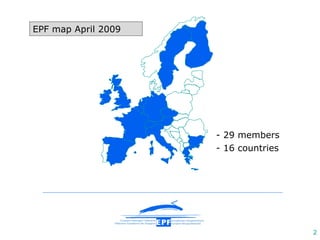
EPF map April 2009 29 members 16 countries
What is the European Passengers’ Federation? a n  European umbrella organisation of national and regional passengers’ organisations office in Gent (Belgium) financed by its member organisations voice of European passengers, lobbying the passengers’ interests in face of European organisations dealing with all modes of public transport such as local transport, railways, buses and maritime transport
Railway transport security
Problems: Increase in extremism and religious motivation in terrorist attacks Absolutely a nihilistic in forms of action The terrorists are using more complex and flawless systems of attacking The means against conventional terrorism are not applicable to the new one Decisions: Complex appraisal of European railway system alertness  against terrorist attacks Development of programs for analysis of the terrorist risk  Strategic centers for managing the security risks in rail transport Plans for actions in crises Safety measures working steadily in periods of busy traffic Development of programs for prevention and public information Railway net s  for  alerting potential dangers
Basic minimum requirements H igh-tech detectors  and cameras Emergency preparedness plans and equipment  Passenger train emergency simulations T raining  and drills  of railway st a ff  C ivil agents for control  R ailway counter   terroristic team s C o-operation from other   countries UITP’s COUNTERACT project
The elements of security aler tness • E xplosion-resisting garbage containers .   • Installation of cameras 360  degrees .  • More  warning  and informational  boards  and brochures.  • Training of railway st a ff and passengers  to  improv e  evacuation readiness. • Joint training in order to improve co - operation. • Secret checks of  security  measures . • Increased presence of security guards . • PR communication strategies for  danger threats . • Preparation for false threats and dece ption. • Other actions in specific circumstances.
Plan s   for defensive   actions   Level  1  - “Normal everyday activities” Level 2 - “Level of high danger”  Level 3 - “Level of possible danger of attack” Level 4  - “Confirmed or unconfirmed danger for  railway  sector that can occur in 48 hours or a country  attack that has  involved  a lot of victims”
   Overview of benchmarking about safety and risk control in the railways
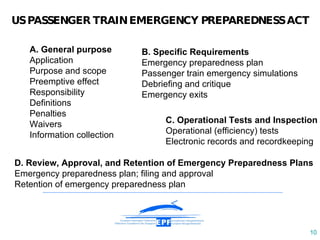
A.  General   purpose  Application Purpose and scope Preemptive effect Responsibility Definitions Penalties Waivers Information collection US PASSENGER TRAIN EMERGENCY PREPAREDNESS ACT B.  Specific   Requirements Emergency preparedness plan Passenger train emergency simulations Debriefing and critique Emergency exits D. Review, Approval, and Retention of Emergency Preparedness Plans Emergency preparedness plan; filing and approval Retention of emergency preparedness plan C. Operational Tests and Inspection Operational (efficiency) tests Electronic records and recordkeeping
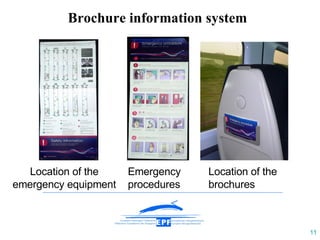
Location of the emergency equipment Emergency   procedures Location of the brochures B rochure  information  system
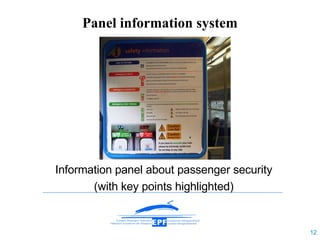
Information panel about passenger security (with key points highlighted) Panel information system
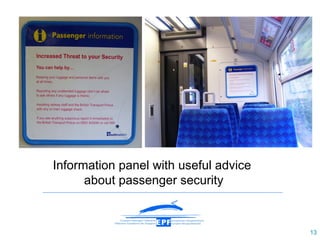
Information panel with useful advice  about passenger security
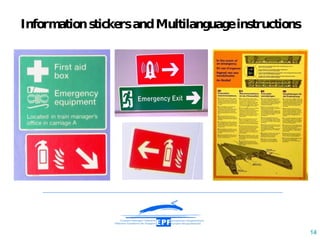
Information stickers and Multilanguage instructions
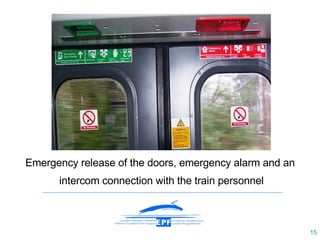
Emergency release of the doors, emergency alarm and an  intercom connection with the train personnel
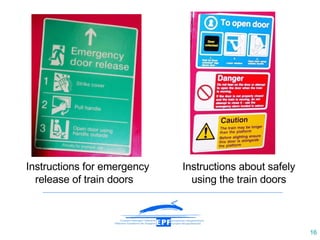
Instructions about safely using the train doors Instructions for emergency release of train doors
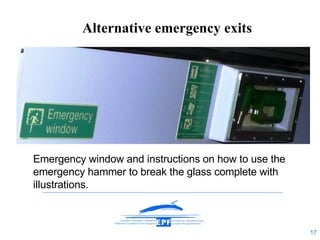
Emergency window and instructions on how to use the emergency hammer to break the glass complete with illustrations. Alternative emergency exits
“ ...   Luckily for us there are methods which can help us further our knowledge about the problems of railway safety and security. Simulations and specific training which are not implemented in the Bulgarian railways system can help define the weaknesses of those responsible… ”  * * Varujan Apelian ,  Railway transport magazine  issue 11/12 year 2007 ** ** three months before the first train fire in Bulgaria   in 2008
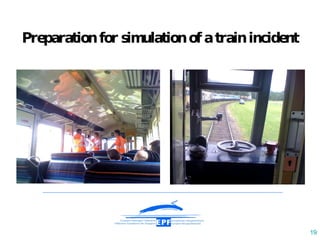
Preparation for simulation of a train incident
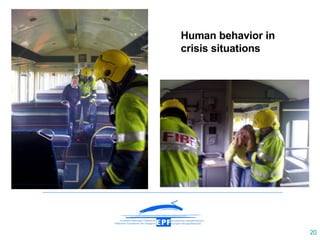
Human behavior in crisis situations
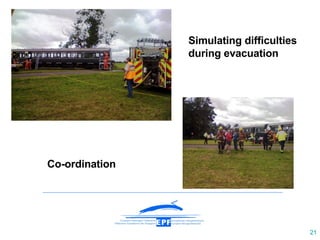
Co-ordination Simulating difficulties during evacuation
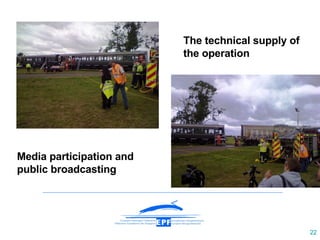
The technical supply of the operation Media participation and public broadcasting
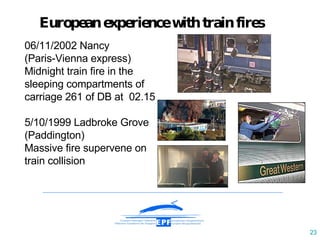
European experience with train fires 06/11/2002 Nancy  (Paris-Vienna express)  Midnight train fire in the sleeping compartments of carriage 261 of DB at  02.15 5/10/1999 Ladbroke Grove (Paddington) Massive fire supervene on train collision
C o-ordinated  strategies  for  safety and security  measures T o define the role of the State in preventing or decreasing of  the safety and security risks. To reduce the magnitude and severity of casualties in railway operations by ensuring that railways involved in passenger train operations can effectively and efficiently manage passenger train emergencies. To prescribe safety and security  standards for the preparation, adoption, and implementation of emergency preparedness plans by railways, connected with the operation of passenger trains.
Put the passengers  on the focus! Thank you for your attention. [email_address] www.epf.eu

EPF presentation on CEE Railways 2009

  • 1.
    Varujan Apelian EuropeanPassengers’ Federation www.epf.eu [email_address] CEE Railways 2009 Ensuring the CEE Railway sector stays on the right track Bucharest, 27th & 28th April 2009 Rail Security and Safety Projects – The EPF Perspective
  • 2.
    EPF map April2009 29 members 16 countries
  • 3.
    What is theEuropean Passengers’ Federation? a n European umbrella organisation of national and regional passengers’ organisations office in Gent (Belgium) financed by its member organisations voice of European passengers, lobbying the passengers’ interests in face of European organisations dealing with all modes of public transport such as local transport, railways, buses and maritime transport
  • 4.
  • 5.
    Problems: Increase inextremism and religious motivation in terrorist attacks Absolutely a nihilistic in forms of action The terrorists are using more complex and flawless systems of attacking The means against conventional terrorism are not applicable to the new one Decisions: Complex appraisal of European railway system alertness against terrorist attacks Development of programs for analysis of the terrorist risk Strategic centers for managing the security risks in rail transport Plans for actions in crises Safety measures working steadily in periods of busy traffic Development of programs for prevention and public information Railway net s for alerting potential dangers
  • 6.
    Basic minimum requirementsH igh-tech detectors and cameras Emergency preparedness plans and equipment Passenger train emergency simulations T raining and drills of railway st a ff C ivil agents for control R ailway counter terroristic team s C o-operation from other countries UITP’s COUNTERACT project
  • 7.
    The elements ofsecurity aler tness • E xplosion-resisting garbage containers . • Installation of cameras 360 degrees . • More warning and informational boards and brochures. • Training of railway st a ff and passengers to improv e evacuation readiness. • Joint training in order to improve co - operation. • Secret checks of security measures . • Increased presence of security guards . • PR communication strategies for danger threats . • Preparation for false threats and dece ption. • Other actions in specific circumstances.
  • 8.
    Plan s for defensive actions Level 1 - “Normal everyday activities” Level 2 - “Level of high danger” Level 3 - “Level of possible danger of attack” Level 4 - “Confirmed or unconfirmed danger for railway sector that can occur in 48 hours or a country attack that has involved a lot of victims”
  • 9.
      Overviewof benchmarking about safety and risk control in the railways
  • 10.
    A. General purpose Application Purpose and scope Preemptive effect Responsibility Definitions Penalties Waivers Information collection US PASSENGER TRAIN EMERGENCY PREPAREDNESS ACT B. Specific Requirements Emergency preparedness plan Passenger train emergency simulations Debriefing and critique Emergency exits D. Review, Approval, and Retention of Emergency Preparedness Plans Emergency preparedness plan; filing and approval Retention of emergency preparedness plan C. Operational Tests and Inspection Operational (efficiency) tests Electronic records and recordkeeping
  • 11.
    Location of theemergency equipment Emergency procedures Location of the brochures B rochure information system
  • 12.
    Information panel aboutpassenger security (with key points highlighted) Panel information system
  • 13.
    Information panel withuseful advice about passenger security
  • 14.
    Information stickers andMultilanguage instructions
  • 15.
    Emergency release ofthe doors, emergency alarm and an intercom connection with the train personnel
  • 16.
    Instructions about safelyusing the train doors Instructions for emergency release of train doors
  • 17.
    Emergency window andinstructions on how to use the emergency hammer to break the glass complete with illustrations. Alternative emergency exits
  • 18.
    “ ... Luckily for us there are methods which can help us further our knowledge about the problems of railway safety and security. Simulations and specific training which are not implemented in the Bulgarian railways system can help define the weaknesses of those responsible… ” * * Varujan Apelian , Railway transport magazine issue 11/12 year 2007 ** ** three months before the first train fire in Bulgaria in 2008
  • 19.
    Preparation for simulationof a train incident
  • 20.
    Human behavior incrisis situations
  • 21.
  • 22.
    The technical supplyof the operation Media participation and public broadcasting
  • 23.
    European experience withtrain fires 06/11/2002 Nancy (Paris-Vienna express) Midnight train fire in the sleeping compartments of carriage 261 of DB at 02.15 5/10/1999 Ladbroke Grove (Paddington) Massive fire supervene on train collision
  • 24.
    C o-ordinated strategies for safety and security measures T o define the role of the State in preventing or decreasing of the safety and security risks. To reduce the magnitude and severity of casualties in railway operations by ensuring that railways involved in passenger train operations can effectively and efficiently manage passenger train emergencies. To prescribe safety and security standards for the preparation, adoption, and implementation of emergency preparedness plans by railways, connected with the operation of passenger trains.
  • 25.
    Put the passengers on the focus! Thank you for your attention. [email_address] www.epf.eu

Editor's Notes

  • #2 Dear Mr Chairman, Dear Ladies and Gentlemen, I am happy today, that all of us can give our contribution to develop CEE Railways. I would like to thank the organizers EastEuro Link for the excellent opportunity they have given us.