AT - ON - IN - Prepositions of Time
English Grammar Rules
AT
We use AT with specific times (hour / minutes):
 I get up at 7 o'clock.
 My English class starts at 10am.
 She finishes work at 6.15
 I left the party at midnight.
Midnight (and midday) is a specific hour which is why we use AT.
12am = midnight
12pm = midday / noon
We use AT for a holiday period of two or more days:
 Do you normally get together with your relatives at Christmas?
 Did you eat a lot of chocolate at Easter?
ON
We use ON for specific days and dates:
 I will return it to you on Wednesday.
 They got married on Friday the 13th.
 We get paid on the 20th of every month.
 I drank too much on New Year's eve.
Remember that for dates, we use ordinal numbers.
E.g. the First of September (not the one of September)
IN
We use IN for specific months, years, seasons, centuries and lengths of time.
 My birthday is in January. (I don't mention the date, just the month)
 My grandmother was born in 1927.
 The river near my house is dry in Summer.
 The company was founded in the 19th century.
 We need to have this report ready in 15 minutes.
Compare:
The New Zealand National day is in February.
(I don't mention the day - only the month)
The New Zealand National day is on February 6th.
(I mention the day - the order is not important)
The Weekend
Sometimes you will hear ATthe weekend and sometimes ON the weekend.
They are both correct. ON the weekend is used in United States.
 Where did you go on the weekend? (US)
 Where did you go at the weekend? (British)
We don't use Prepositions
Remember! We do not use at, on, in or the with the following expressions:
 Today, tomorrow, yesterday, this morning, tonight, last, next, every.

PREPOSITIONS OF TIE

  • 1.
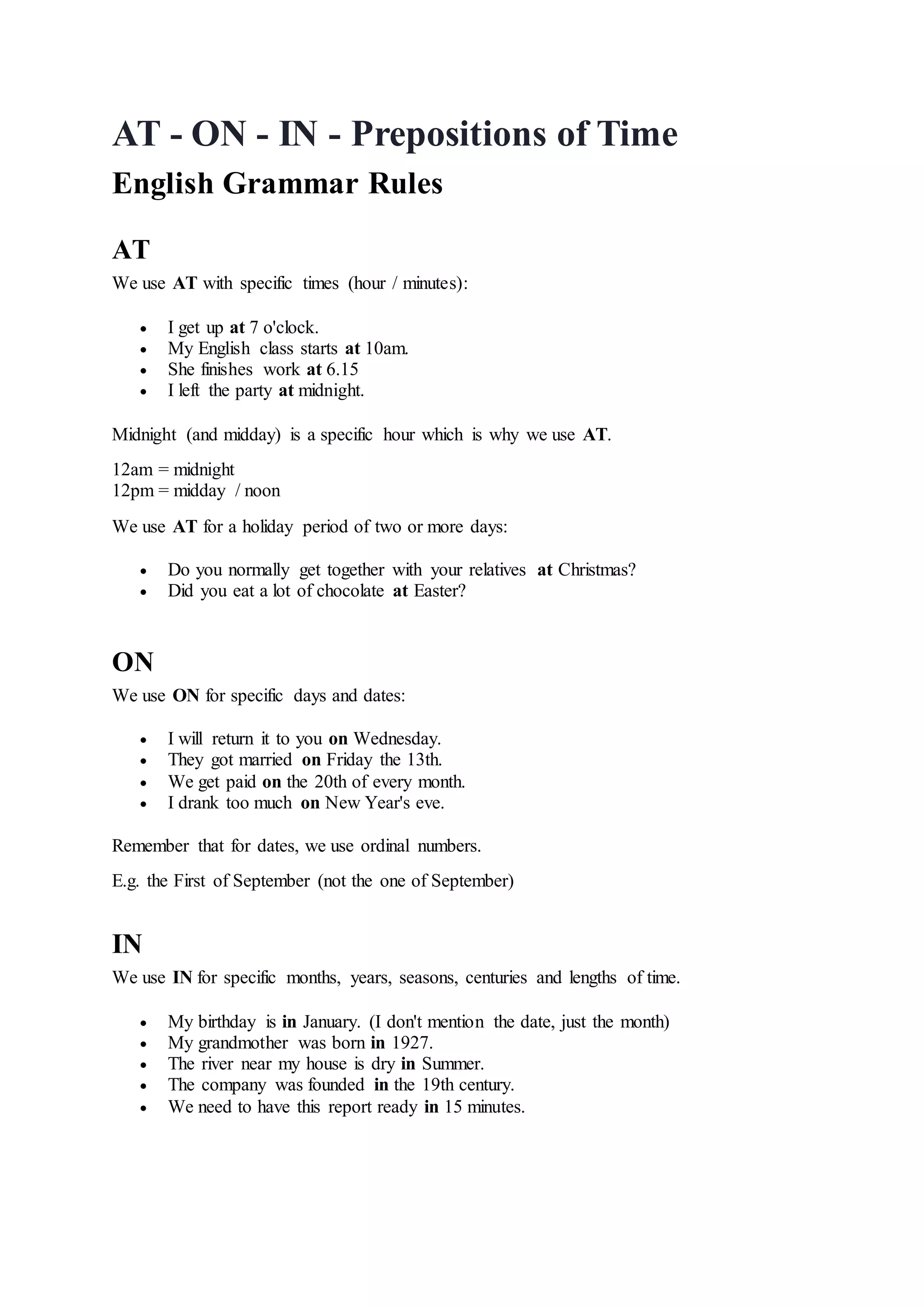
    AT - ON- IN - Prepositions of Time English Grammar Rules AT We use AT with specific times (hour / minutes):  I get up at 7 o'clock.  My English class starts at 10am.  She finishes work at 6.15  I left the party at midnight. Midnight (and midday) is a specific hour which is why we use AT. 12am = midnight 12pm = midday / noon We use AT for a holiday period of two or more days:  Do you normally get together with your relatives at Christmas?  Did you eat a lot of chocolate at Easter? ON We use ON for specific days and dates:  I will return it to you on Wednesday.  They got married on Friday the 13th.  We get paid on the 20th of every month.  I drank too much on New Year's eve. Remember that for dates, we use ordinal numbers. E.g. the First of September (not the one of September) IN We use IN for specific months, years, seasons, centuries and lengths of time.  My birthday is in January. (I don't mention the date, just the month)  My grandmother was born in 1927.  The river near my house is dry in Summer.  The company was founded in the 19th century.  We need to have this report ready in 15 minutes.
  • 2.
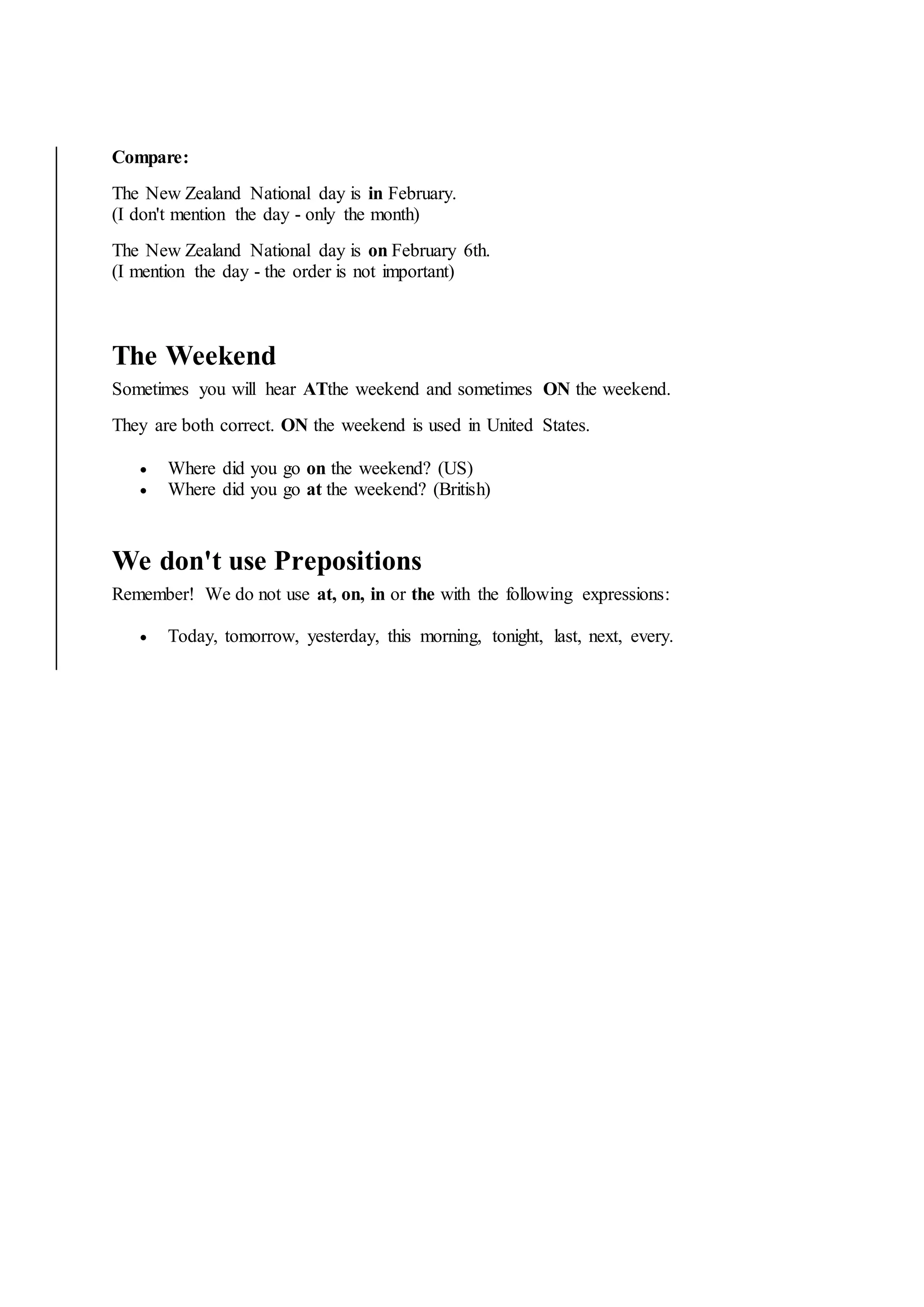
    Compare: The New ZealandNational day is in February. (I don't mention the day - only the month) The New Zealand National day is on February 6th. (I mention the day - the order is not important) The Weekend Sometimes you will hear ATthe weekend and sometimes ON the weekend. They are both correct. ON the weekend is used in United States.  Where did you go on the weekend? (US)  Where did you go at the weekend? (British) We don't use Prepositions Remember! We do not use at, on, in or the with the following expressions:  Today, tomorrow, yesterday, this morning, tonight, last, next, every.