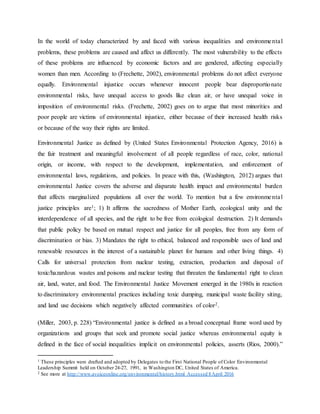
1) The document discusses environmental justice, equity, and racism. It explores how environmental problems disproportionately impact vulnerable groups, such as minorities and low-income communities, who face greater health risks and limited participation in decision making.
2) Environmental justice aims for fair treatment and meaningful involvement of all people regardless of race or income in developing and enforcing environmental laws and policies. It seeks to address adverse health impacts and environmental burdens on marginalized populations.
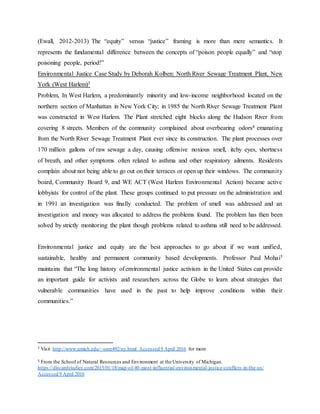
3) The case study of the North River Sewage Treatment Plant in West Harlem, New York highlights issues of odor and health problems faced by the predominantly minority and low-income neighborhood from the plant. Community groups advocated to address the problems.