ENVIRONMENTAL ENGINEERING
Introduction
EskedarTafete (AAiT- CEED)
Course content
 Chapter 1: Introduction
 Chapter 2: Concepts of Ecology and Natural Resources
 Chapter 3: Material & Energy Balance
 Chapter 4: Water Quality Engineering
 Chapter 5: Air Pollution and Control
 Chapter 6: Solid waste management
 Chapter 7: Environmental Impact Assessment
 Chapter 8: Hazardous and Radioactive wastes
 Chapter 9: Noise Pollution and Control
Methodology
 Lectures
 Assignments
 Group Mini-Project
 Exams
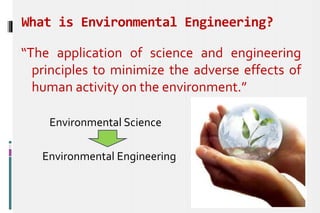
What is Environmental Engineering?
“The application of science and engineering
principles to minimize the adverse effects of
human activity on the environment.”
Environmental Science
Environmental Engineering
Environmental Science
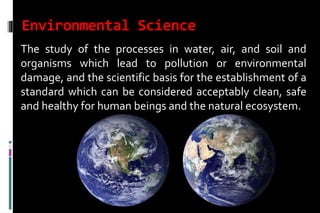
The study of the processes in water, air, and soil and
organisms which lead to pollution or environmental
damage, and the scientific basis for the establishment of a
standard which can be considered acceptably clean, safe
and healthy for human beings and the natural ecosystem.
Quantitative environmental science
An organized collection of mathematical theories that may
be used to describe and explore environmental
relationships, while environmental science is an organized
body of knowledge about environmental relationships
Environmental Engineering
 Concerned with the design, manufacture, installation
and operation of the engineering systems that sustain
and control the environments required by people and
processes.
 ENVIRONMENTAL ENGINEER
 is a professional trained in the art of applying scientific
principles and technological means to avoid or reduce forms
of pollution by human activities. This includes possessing a
knowledge of past and current engineering practice and an
ability to innovate.
 Involves social, political, economic, and legal issues
Environmental pollution
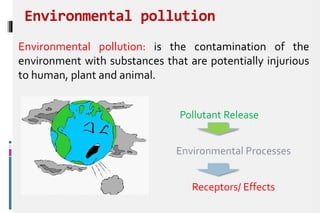
Environmental pollution: is the contamination of the
environment with substances that are potentially injurious
to human, plant and animal.
Pollutant Release
Environmental Processes
Receptors/ Effects
Environmental pollution
The identification, evaluation, and resolution of a particular
pollution problem typically evolves in the reverse direction
implied by the above, that is
1. Identification of an adverse receptor effect.
2. Determination of the substance
3. Identification of the source of the polluting substances
4. Control of the source to achieve the safe emission level.
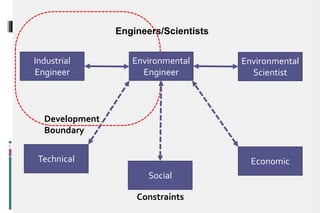
Environmental
Engineer
Environmental
Scientist
Industrial
Engineer
Social
Technical Economic
Engineers/Scientists
Development
Boundary
Constraints
Environmental Engineering
 Environmental engineering is object-focused (problem
focused), rather than tool-based
 It operates at four different levels:
 remediation of contaminated sites (=fixing the past),
 treatment of effluents (=dealing with present),
 pollution prevention, and
 care for future generations.
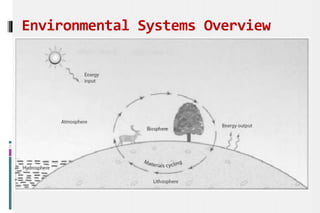
Environmental Systems Overview
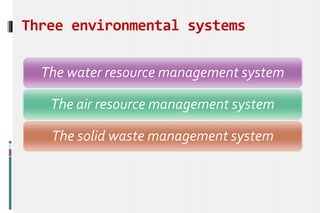
Three environmental systems
The water resource management system
The air resource management system
The solid waste management system
Three environmental systems
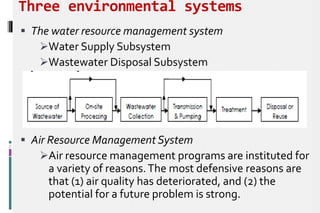
 The water resource management system
Water Supply Subsystem
Wastewater Disposal Subsystem
 Air Resource Management System
Air resource management programs are instituted for
a variety of reasons.The most defensive reasons are
that (1) air quality has deteriorated, and (2) the
potential for a future problem is strong.
Three environmental systems
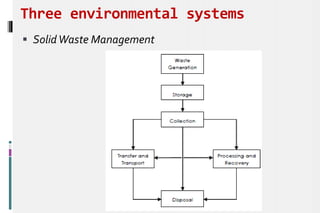
 SolidWaste Management
Multimedia Systems
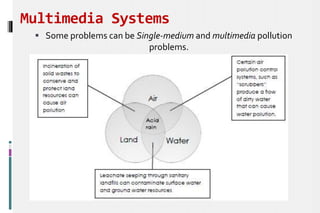
 Some problems can be Single-medium and multimedia pollution
problems.
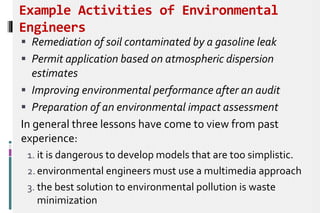
Example Activities of Environmental
Engineers
 Remediation of soil contaminated by a gasoline leak
 Permit application based on atmospheric dispersion
estimates
 Improving environmental performance after an audit
 Preparation of an environmental impact assessment
In general three lessons have come to view from past
experience:
1. it is dangerous to develop models that are too simplistic.
2. environmental engineers must use a multimedia approach
3. the best solution to environmental pollution is waste
minimization
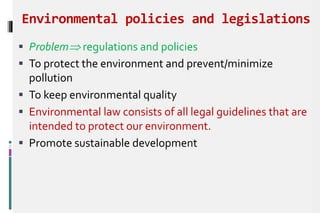
Environmental policies and legislations
 Problem regulations and policies
 To protect the environment and prevent/minimize
pollution
 To keep environmental quality
 Environmental law consists of all legal guidelines that are
intended to protect our environment.
 Promote sustainable development
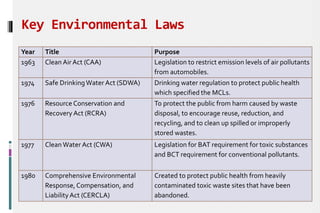
Key Environmental Laws
Year Title Purpose
1963 Clean AirAct (CAA) Legislation to restrict emission levels of air pollutants
from automobiles.
1974 Safe DrinkingWater Act (SDWA) Drinking water regulation to protect public health
which specified the MCLs.
1976 Resource Conservation and
Recovery Act (RCRA)
To protect the public from harm caused by waste
disposal, to encourage reuse, reduction, and
recycling, and to clean up spilled or improperly
stored wastes.
1977 Clean Water Act (CWA) Legislation for BAT requirement for toxic substances
and BCT requirement for conventional pollutants.
1980 Comprehensive Environmental
Response, Compensation, and
LiabilityAct (CERCLA)
Created to protect public health from heavily
contaminated toxic waste sites that have been
abandoned.
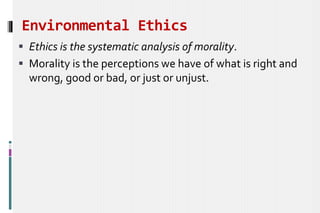
Environmental Ethics
 Ethics is the systematic analysis of morality.
 Morality is the perceptions we have of what is right and
wrong, good or bad, or just or unjust.
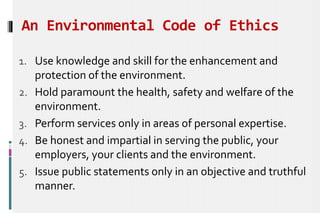
An Environmental Code of Ethics
1. Use knowledge and skill for the enhancement and
protection of the environment.
2. Hold paramount the health, safety and welfare of the
environment.
3. Perform services only in areas of personal expertise.
4. Be honest and impartial in serving the public, your
employers, your clients and the environment.
5. Issue public statements only in an objective and truthful
manner.
Reading assignment
Read about historical perspective of environmental
engineering and environmental awareness.
Eskedar Tafete (AAiT-CEED)

Environmental Engineering presentation chapter-1.pptx

  • 1.
  • 2.
    Course content  Chapter1: Introduction  Chapter 2: Concepts of Ecology and Natural Resources  Chapter 3: Material & Energy Balance  Chapter 4: Water Quality Engineering  Chapter 5: Air Pollution and Control  Chapter 6: Solid waste management  Chapter 7: Environmental Impact Assessment  Chapter 8: Hazardous and Radioactive wastes  Chapter 9: Noise Pollution and Control
  • 3.
  • 4.
    What is EnvironmentalEngineering? “The application of science and engineering principles to minimize the adverse effects of human activity on the environment.” Environmental Science Environmental Engineering
  • 5.
    Environmental Science The studyof the processes in water, air, and soil and organisms which lead to pollution or environmental damage, and the scientific basis for the establishment of a standard which can be considered acceptably clean, safe and healthy for human beings and the natural ecosystem.
  • 6.
    Quantitative environmental science Anorganized collection of mathematical theories that may be used to describe and explore environmental relationships, while environmental science is an organized body of knowledge about environmental relationships
  • 7.
    Environmental Engineering  Concernedwith the design, manufacture, installation and operation of the engineering systems that sustain and control the environments required by people and processes.  ENVIRONMENTAL ENGINEER  is a professional trained in the art of applying scientific principles and technological means to avoid or reduce forms of pollution by human activities. This includes possessing a knowledge of past and current engineering practice and an ability to innovate.  Involves social, political, economic, and legal issues
  • 8.
    Environmental pollution Environmental pollution:is the contamination of the environment with substances that are potentially injurious to human, plant and animal. Pollutant Release Environmental Processes Receptors/ Effects
  • 9.
    Environmental pollution The identification,evaluation, and resolution of a particular pollution problem typically evolves in the reverse direction implied by the above, that is 1. Identification of an adverse receptor effect. 2. Determination of the substance 3. Identification of the source of the polluting substances 4. Control of the source to achieve the safe emission level.
  • 10.
  • 11.
    Environmental Engineering  Environmentalengineering is object-focused (problem focused), rather than tool-based  It operates at four different levels:  remediation of contaminated sites (=fixing the past),  treatment of effluents (=dealing with present),  pollution prevention, and  care for future generations.
  • 12.
  • 13.
    Three environmental systems Thewater resource management system The air resource management system The solid waste management system
  • 14.
    Three environmental systems The water resource management system Water Supply Subsystem Wastewater Disposal Subsystem  Air Resource Management System Air resource management programs are instituted for a variety of reasons.The most defensive reasons are that (1) air quality has deteriorated, and (2) the potential for a future problem is strong.
  • 15.
    Three environmental systems SolidWaste Management
  • 16.
    Multimedia Systems  Someproblems can be Single-medium and multimedia pollution problems.
  • 17.
    Example Activities ofEnvironmental Engineers  Remediation of soil contaminated by a gasoline leak  Permit application based on atmospheric dispersion estimates  Improving environmental performance after an audit  Preparation of an environmental impact assessment In general three lessons have come to view from past experience: 1. it is dangerous to develop models that are too simplistic. 2. environmental engineers must use a multimedia approach 3. the best solution to environmental pollution is waste minimization
  • 18.
    Environmental policies andlegislations  Problem regulations and policies  To protect the environment and prevent/minimize pollution  To keep environmental quality  Environmental law consists of all legal guidelines that are intended to protect our environment.  Promote sustainable development
  • 19.
    Key Environmental Laws YearTitle Purpose 1963 Clean AirAct (CAA) Legislation to restrict emission levels of air pollutants from automobiles. 1974 Safe DrinkingWater Act (SDWA) Drinking water regulation to protect public health which specified the MCLs. 1976 Resource Conservation and Recovery Act (RCRA) To protect the public from harm caused by waste disposal, to encourage reuse, reduction, and recycling, and to clean up spilled or improperly stored wastes. 1977 Clean Water Act (CWA) Legislation for BAT requirement for toxic substances and BCT requirement for conventional pollutants. 1980 Comprehensive Environmental Response, Compensation, and LiabilityAct (CERCLA) Created to protect public health from heavily contaminated toxic waste sites that have been abandoned.
  • 20.
    Environmental Ethics  Ethicsis the systematic analysis of morality.  Morality is the perceptions we have of what is right and wrong, good or bad, or just or unjust.
  • 21.
    An Environmental Codeof Ethics 1. Use knowledge and skill for the enhancement and protection of the environment. 2. Hold paramount the health, safety and welfare of the environment. 3. Perform services only in areas of personal expertise. 4. Be honest and impartial in serving the public, your employers, your clients and the environment. 5. Issue public statements only in an objective and truthful manner.
  • 22.
    Reading assignment Read abouthistorical perspective of environmental engineering and environmental awareness. Eskedar Tafete (AAiT-CEED)