What is the important of having
storage in the workplace?
• Storage in the workplace is important because it
allows for the secure keeping of personal items,
work documents, and equipment, which helps
maintain a clean and organized workspace,
improves employee productivity by minimizing
clutter and distractions, and contributes to a safer
environment by preventing tripping hazards and
potential damage to valuables; essentially, it
enhances operational efficiency and employee
wellbeing by providing a designated space to store
necessary items.
• Key benefits of workplace storage
• Reduced Clutter:
• By providing dedicated storage spaces, employees
can keep their belongings out of sight, creating a
cleaner and more focused work environment.
• Increased Productivity:
• Easy access to necessary documents and materials
through organized storage saves time spent
searching and improves overall efficiency.
• Enhanced Security:
• Lockers and cabinets allow for the secure storage of
personal belongings, reducing the risk of theft or
damage.
• Improved Employee Morale:
• Having a designated space to store personal items
can contribute to a sense of order and ownership
over one's workspace, boosting employee morale.
• Space Optimization:
• Proper storage solutions like shelving units can
maximize workspace by utilizing vertical space
effectively.
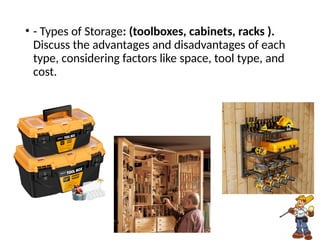
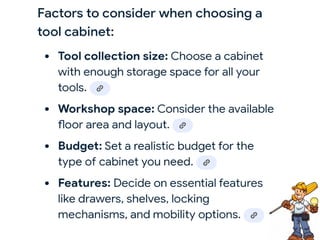
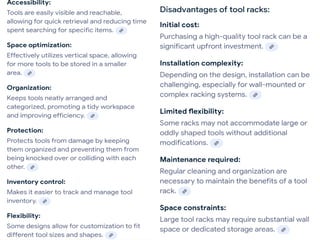
• - Types of Storage: (toolboxes, cabinets, racks ).
Discuss the advantages and disadvantages of each
type, considering factors like space, tool type, and
cost.
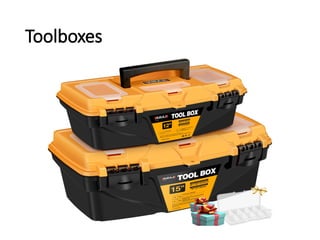
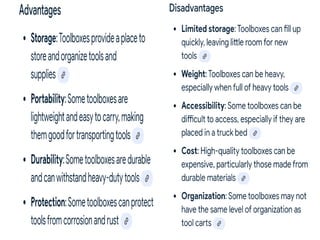
Toolboxes
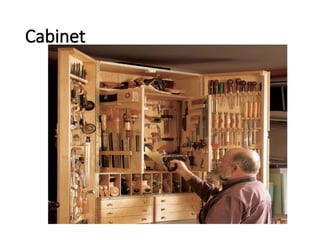
Cabinet
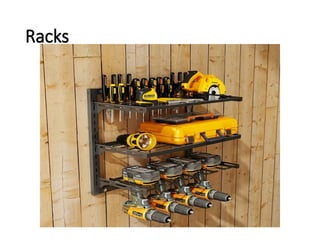
Racks
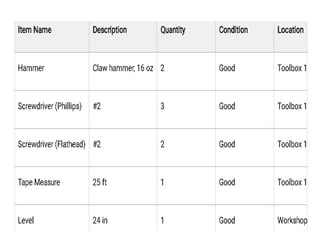
What is inventory ?
• Inventory is a detailed list of items, goods, or
materials that a business or organization owns or
possesses. It includes information about each
item, such as:
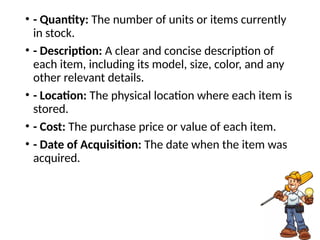
• - Quantity: The number of units or items currently
in stock.
• - Description: A clear and concise description of
each item, including its model, size, color, and any
other relevant details.
• - Location: The physical location where each item is
stored.
• - Cost: The purchase price or value of each item.
• - Date of Acquisition: The date when the item was
acquired.
• Purpose of Inventory:
• - Tracking Assets: Inventory management helps
businesses keep track of their assets and ensure
they have enough on hand to meet customer
demand.
• - Planning and Forecasting: Inventory data helps
businesses plan future purchases and forecast
future demand.
• - Cost Control: By managing inventory effectively,
businesses can reduce storage costs, minimize
waste, and prevent stockouts.
• - Customer Satisfaction: Having enough inventory
on hand ensures that customers can get the
products they need when they need them, leading
to higher customer satisfaction.
• Types of Inventory:
• - Raw Materials: The basic materials used in the
production process.
• - Work-in-Process (WIP): Partially completed goods
that are still undergoing production.
• - Finished Goods: Completed products ready for
sale to customers.
• - MRO (Maintenance, Repair, and Operations):
Items used for maintaining and operating
equipment and facilities.
enventory tools and equipment.pptxmmmmmm

enventory tools and equipment.pptxmmmmmm

  • 3.
    What is theimportant of having storage in the workplace? • Storage in the workplace is important because it allows for the secure keeping of personal items, work documents, and equipment, which helps maintain a clean and organized workspace, improves employee productivity by minimizing clutter and distractions, and contributes to a safer environment by preventing tripping hazards and potential damage to valuables; essentially, it enhances operational efficiency and employee wellbeing by providing a designated space to store necessary items.
  • 4.
    • Key benefitsof workplace storage • Reduced Clutter: • By providing dedicated storage spaces, employees can keep their belongings out of sight, creating a cleaner and more focused work environment. • Increased Productivity: • Easy access to necessary documents and materials through organized storage saves time spent searching and improves overall efficiency.
  • 5.
    • Enhanced Security: •Lockers and cabinets allow for the secure storage of personal belongings, reducing the risk of theft or damage. • Improved Employee Morale: • Having a designated space to store personal items can contribute to a sense of order and ownership over one's workspace, boosting employee morale. • Space Optimization: • Proper storage solutions like shelving units can maximize workspace by utilizing vertical space effectively.
  • 6.
    • - Typesof Storage: (toolboxes, cabinets, racks ). Discuss the advantages and disadvantages of each type, considering factors like space, tool type, and cost.
  • 7.
  • 9.
  • 12.
  • 14.
    What is inventory? • Inventory is a detailed list of items, goods, or materials that a business or organization owns or possesses. It includes information about each item, such as:
  • 15.
    • - Quantity:The number of units or items currently in stock. • - Description: A clear and concise description of each item, including its model, size, color, and any other relevant details. • - Location: The physical location where each item is stored. • - Cost: The purchase price or value of each item. • - Date of Acquisition: The date when the item was acquired.
  • 17.
    • Purpose ofInventory: • - Tracking Assets: Inventory management helps businesses keep track of their assets and ensure they have enough on hand to meet customer demand. • - Planning and Forecasting: Inventory data helps businesses plan future purchases and forecast future demand. • - Cost Control: By managing inventory effectively, businesses can reduce storage costs, minimize waste, and prevent stockouts. • - Customer Satisfaction: Having enough inventory on hand ensures that customers can get the products they need when they need them, leading to higher customer satisfaction.
  • 18.
    • Types ofInventory: • - Raw Materials: The basic materials used in the production process. • - Work-in-Process (WIP): Partially completed goods that are still undergoing production. • - Finished Goods: Completed products ready for sale to customers. • - MRO (Maintenance, Repair, and Operations): Items used for maintaining and operating equipment and facilities.