Guidance Notes
on
Safe Health Facilities
Sanjaya Bhatia
Focal Point Disaster Resilient Schools & Hospitals
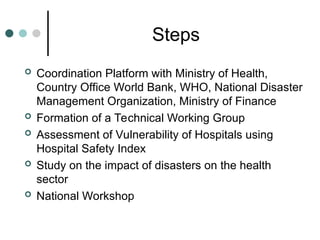
Steps
 Coordination Platform with Ministry of Health,
Country Office World Bank, WHO, National Disaster
Management Organization, Ministry of Finance
 Formation of a Technical Working Group
 Assessment of Vulnerability of Hospitals using
Hospital Safety Index
 Study on the impact of disasters on the health
sector
 National Workshop
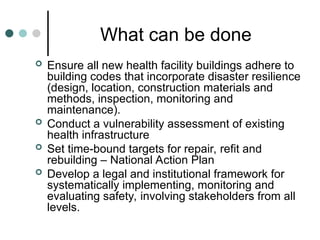
What can be done
 Ensure all new health facility buildings adhere to
building codes that incorporate disaster resilience
(design, location, construction materials and
methods, inspection, monitoring and
maintenance).
 Conduct a vulnerability assessment of existing
health infrastructure
 Set time-bound targets for repair, refit and
rebuilding – National Action Plan
 Develop a legal and institutional framework for
systematically implementing, monitoring and
evaluating safety, involving stakeholders from all
levels.
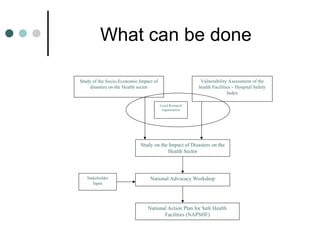
What can be done
Study on the Impact of Disasters on the
Health Sector
Study of the Socio-Economic Impact of
disasters on the Health sector
Vulnerability Assessment of the
health Facilities – Hospital Safety
Index
National Advocacy Workshop
National Action Plan for Safe Health
Facilities (NAPSHF)
Stakeholder
Input
Local Research
organization
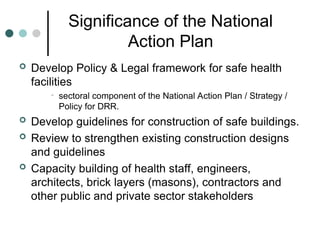
Significance of the National
Action Plan
 Develop Policy & Legal framework for safe health
facilities
• sectoral component of the National Action Plan / Strategy /
Policy for DRR.
 Develop guidelines for construction of safe buildings.
 Review to strengthen existing construction designs
and guidelines
 Capacity building of health staff, engineers,
architects, brick layers (masons), contractors and
other public and private sector stakeholders
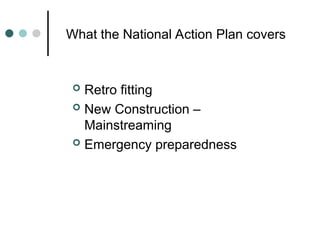
What the National Action Plan covers
 Retro fitting
 New Construction –
Mainstreaming
 Emergency preparedness
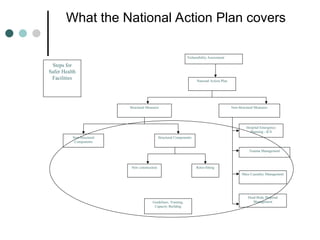
What the National Action Plan covers
Vulnerability Assessment
National Action Plan
Structural Measures Non-Structural Measures
Non-Structural
Components
Structural Components
New construction Retro-fitting
Hospital Emergency
Planning - ICS
Trauma Management
Mass Causality Management
Dead Body Disposal
Management
Guidelines, Training,
Capacity Building
Steps for
Safer Health
Facilities
The GN can provide
 Case studies and guidelines for construction of safer
buildings
 List of reference material for retro-fitting
 List of reference material and guidelines for non-
structural safety
 List of reference material and guidelines for
preparedness
 List of reference material for capacity building
 Case studies and list of reference material for costing
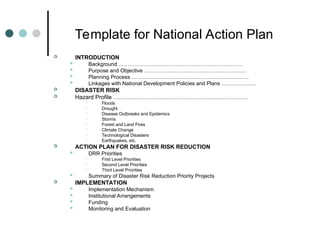
Template for National Action Plan
 INTRODUCTION
 Background …………………………………………………………….
 Purpose and Objective ……………………………………………….…
 Planning Process …………………………………………………………
 Linkages with National Development Policies and Plans ………………..
 DISASTER RISK
 Hazard Profile …………………………………………………………….
• Floods
• Drought
• Disease Outbreaks and Epidemics
• Storms
• Forest and Land Fires
• Climate Change
• Technological Disasters
• Earthquakes, etc.
 ACTION PLAN FOR DISASTER RISK REDUCTION
 DRR Priorities
• First Level Priorities
• Second Level Priorities
• Third Level Priorities
 Summary of Disaster Risk Reduction Priority Projects
 IMPLEMENTATION
 Implementation Mechanism
 Institutional Arrangements
 Funding
 Monitoring and Evaluation
First Level Priorities
 This would be hospitals which are
to be built under pipeline projects.
 The urgency is to integrate DRR
concerns before the construction
begins, so as to ensure strong
buildings.
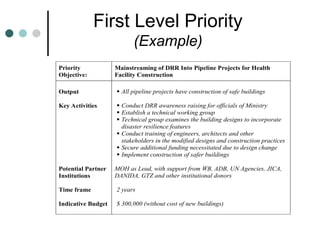
First Level Priority
(Example)
Priority
Objective:
Mainstreaming of DRR Into Pipeline Projects for Health
Facility Construction
Output
Key Activities
Potential Partner
Institutions
Time frame
Indicative Budget
 All pipeline projects have construction of safe buildings
 Conduct DRR awareness raising for officials of Ministry
 Establish a technical working group
 Technical group examines the building designs to incorporate
disaster resilience features
 Conduct training of engineers, architects and other
stakeholders in the modified designs and construction practices
 Secure additional funding necessitated due to design change
 Implement construction of safer buildings
MOH as Lead, with support from WB, ADB, UN Agencies, JICA,
DANIDA, GTZ and other institutional donors
2 years
$ 300,000 (without cost of new buildings)
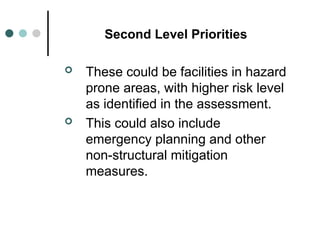
Second Level Priorities
 These could be facilities in hazard
prone areas, with higher risk level
as identified in the assessment.
 This could also include
emergency planning and other
non-structural mitigation
measures.
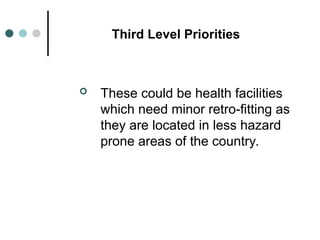
Third Level Priorities
 These could be health facilities
which need minor retro-fitting as
they are located in less hazard
prone areas of the country.
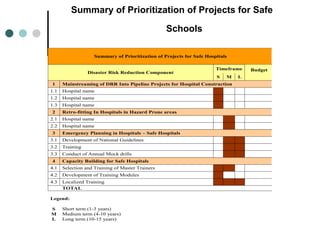
Summary of Prioritization of Projects for Safe
Schools
Summary of Prioritization of Projects for Safe Hospitals
Timeframe
Disaster Risk Reduction Component
S M L
Budget
1 Mainstreaming of DRR Into Pipeline Projects for Hospital Construction
1.1 Hospital name
1.2 Hospital name
1.3 Hospital name
2 Retro-fitting In Hospitals in Hazard Prone areas
2.1 Hospital name
2.2 Hospital name
3 Emergency Planning in Hospitals – Safe Hospitals
3.1 Development of National Guidelines
3.2 Training
3.3 Conduct of Annual Mock drills
4 Capacity Building for Safe Hospitals
4.1 Selection and Training of Master Trainers
4.2 Development of Training Modules
4.3 Localized Training
TOTAL
Legend:
S Short term (1-3 years)
M Medium term (4-10 years)
L Long term (10-15 years)
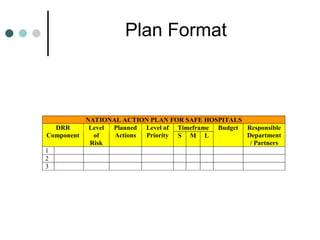
Plan Format
NATIONAL ACTION PLAN FOR SAFE HOSPITALS
Timeframe
DRR
Component
Level
of
Risk
Planned
Actions
Level of
Priority S M L
Budget Responsible
Department
/ Partners
1
2
3
Comments and Suggestions
Thank You

entry_presentation~GNpresentation on .ppt

  • 1.
    Guidance Notes on Safe HealthFacilities Sanjaya Bhatia Focal Point Disaster Resilient Schools & Hospitals
  • 2.
    Steps  Coordination Platformwith Ministry of Health, Country Office World Bank, WHO, National Disaster Management Organization, Ministry of Finance  Formation of a Technical Working Group  Assessment of Vulnerability of Hospitals using Hospital Safety Index  Study on the impact of disasters on the health sector  National Workshop
  • 3.
    What can bedone  Ensure all new health facility buildings adhere to building codes that incorporate disaster resilience (design, location, construction materials and methods, inspection, monitoring and maintenance).  Conduct a vulnerability assessment of existing health infrastructure  Set time-bound targets for repair, refit and rebuilding – National Action Plan  Develop a legal and institutional framework for systematically implementing, monitoring and evaluating safety, involving stakeholders from all levels.
  • 4.
    What can bedone Study on the Impact of Disasters on the Health Sector Study of the Socio-Economic Impact of disasters on the Health sector Vulnerability Assessment of the health Facilities – Hospital Safety Index National Advocacy Workshop National Action Plan for Safe Health Facilities (NAPSHF) Stakeholder Input Local Research organization
  • 5.
    Significance of theNational Action Plan  Develop Policy & Legal framework for safe health facilities • sectoral component of the National Action Plan / Strategy / Policy for DRR.  Develop guidelines for construction of safe buildings.  Review to strengthen existing construction designs and guidelines  Capacity building of health staff, engineers, architects, brick layers (masons), contractors and other public and private sector stakeholders
  • 6.
    What the NationalAction Plan covers  Retro fitting  New Construction – Mainstreaming  Emergency preparedness
  • 7.
    What the NationalAction Plan covers Vulnerability Assessment National Action Plan Structural Measures Non-Structural Measures Non-Structural Components Structural Components New construction Retro-fitting Hospital Emergency Planning - ICS Trauma Management Mass Causality Management Dead Body Disposal Management Guidelines, Training, Capacity Building Steps for Safer Health Facilities
  • 8.
    The GN canprovide  Case studies and guidelines for construction of safer buildings  List of reference material for retro-fitting  List of reference material and guidelines for non- structural safety  List of reference material and guidelines for preparedness  List of reference material for capacity building  Case studies and list of reference material for costing
  • 9.
    Template for NationalAction Plan  INTRODUCTION  Background …………………………………………………………….  Purpose and Objective ……………………………………………….…  Planning Process …………………………………………………………  Linkages with National Development Policies and Plans ………………..  DISASTER RISK  Hazard Profile ……………………………………………………………. • Floods • Drought • Disease Outbreaks and Epidemics • Storms • Forest and Land Fires • Climate Change • Technological Disasters • Earthquakes, etc.  ACTION PLAN FOR DISASTER RISK REDUCTION  DRR Priorities • First Level Priorities • Second Level Priorities • Third Level Priorities  Summary of Disaster Risk Reduction Priority Projects  IMPLEMENTATION  Implementation Mechanism  Institutional Arrangements  Funding  Monitoring and Evaluation
  • 10.
    First Level Priorities This would be hospitals which are to be built under pipeline projects.  The urgency is to integrate DRR concerns before the construction begins, so as to ensure strong buildings.
  • 11.
    First Level Priority (Example) Priority Objective: Mainstreamingof DRR Into Pipeline Projects for Health Facility Construction Output Key Activities Potential Partner Institutions Time frame Indicative Budget  All pipeline projects have construction of safe buildings  Conduct DRR awareness raising for officials of Ministry  Establish a technical working group  Technical group examines the building designs to incorporate disaster resilience features  Conduct training of engineers, architects and other stakeholders in the modified designs and construction practices  Secure additional funding necessitated due to design change  Implement construction of safer buildings MOH as Lead, with support from WB, ADB, UN Agencies, JICA, DANIDA, GTZ and other institutional donors 2 years $ 300,000 (without cost of new buildings)
  • 12.
    Second Level Priorities These could be facilities in hazard prone areas, with higher risk level as identified in the assessment.  This could also include emergency planning and other non-structural mitigation measures.
  • 13.
    Third Level Priorities These could be health facilities which need minor retro-fitting as they are located in less hazard prone areas of the country.
  • 14.
    Summary of Prioritizationof Projects for Safe Schools Summary of Prioritization of Projects for Safe Hospitals Timeframe Disaster Risk Reduction Component S M L Budget 1 Mainstreaming of DRR Into Pipeline Projects for Hospital Construction 1.1 Hospital name 1.2 Hospital name 1.3 Hospital name 2 Retro-fitting In Hospitals in Hazard Prone areas 2.1 Hospital name 2.2 Hospital name 3 Emergency Planning in Hospitals – Safe Hospitals 3.1 Development of National Guidelines 3.2 Training 3.3 Conduct of Annual Mock drills 4 Capacity Building for Safe Hospitals 4.1 Selection and Training of Master Trainers 4.2 Development of Training Modules 4.3 Localized Training TOTAL Legend: S Short term (1-3 years) M Medium term (4-10 years) L Long term (10-15 years)
  • 15.
    Plan Format NATIONAL ACTIONPLAN FOR SAFE HOSPITALS Timeframe DRR Component Level of Risk Planned Actions Level of Priority S M L Budget Responsible Department / Partners 1 2 3
  • 16.