Entrepreneurship management
INTRODUCTION-
 Derived from French word ‘entreprendre’ It means to
undertake or begin something.
 An entrepreneur is one who creates a new business in
the face of risk and uncertainty for the purpose of
achieving profit and growth
Introduction - Meaning &
Definition of Entrepreneurship
 Entrepreneur & Enterprise.
 Differences between Entrepreneurship, Entrepreneur
& Enterprise .
 Functions of Entrepreneur
 Role of Entrepreneur for Economic Development.
 Factors influencing Entrepreneurship.
 Pros and Cons of being an Entrepreneur.
 Differences between Manager and Entrepreneur
Qualities of an Entrepreneur.
Definitions of “Entrepreneur”
 1734: Richard Cantillon Entrepreneurs are non-fixed
income earners who pay known costs of production but
earn uncertain incomes
 1803: Jean-Baptiste Say An entrepreneur is an economic
agent who unites all means of production- land of one, the
labour of another and the capital of yet another and thus
produces a product. By selling the product in the market he
pays rent of land, wages to labour, interest on capital and
what remains is his profit. Entrepreneurs take initiative,
accept risk of failure and have an internal locus of control.
 2013: Ronald May An Entrepreneur is someone who
commercializes his or her innovation.
Entrepreneur
 Learning objectives –
 Who is an entrepreneur and What are his /her functions,
qualities, contribution ?
 What are the types of entrepreneurs.
 Distinction between a manager and an entrepreneur.
 Highs / lows of being an entrepreneur
 What is entrepreneurship ?
 What influences entrepreneurship ?
 What are entrepreneurial competencies and how can it be
developed ?
ENTREPRENEUR &
ENTREPRENEURSHIP
Entrepreneur is the creator whereas entrepreneurship
is the creation.
• An entrepreneur precedes entrepreneurship
 Entrepreneurship is concerned with the development
and coordination of entrepreneurial functions
 It is based on purposeful and systematic innovation
Entrepreneurship Management
 ENTREPRENEURSHIP : NEED OF TODAY
 Characteristics of a successful entrepreneur-
 Risk Taker
 Leader
 Decision Maker
 Responsible
 Confident
 Energetic
NEED AND IMPORTANCE
 Creates job opportunities
 causes economic growth
 strengthens the currency
 innovative & better products
 provides strength to small or complimentary business.
Functions of an entrepreneur
 PUBLIC RELATIONS
 PROJECT DECISION
 RAISING FINANCE
 PRODUCTION PLANNING MARKET RESEARCH
RISK BEARING
 INNOVATION
 MANAGERIAL FUNCTIONS etc.
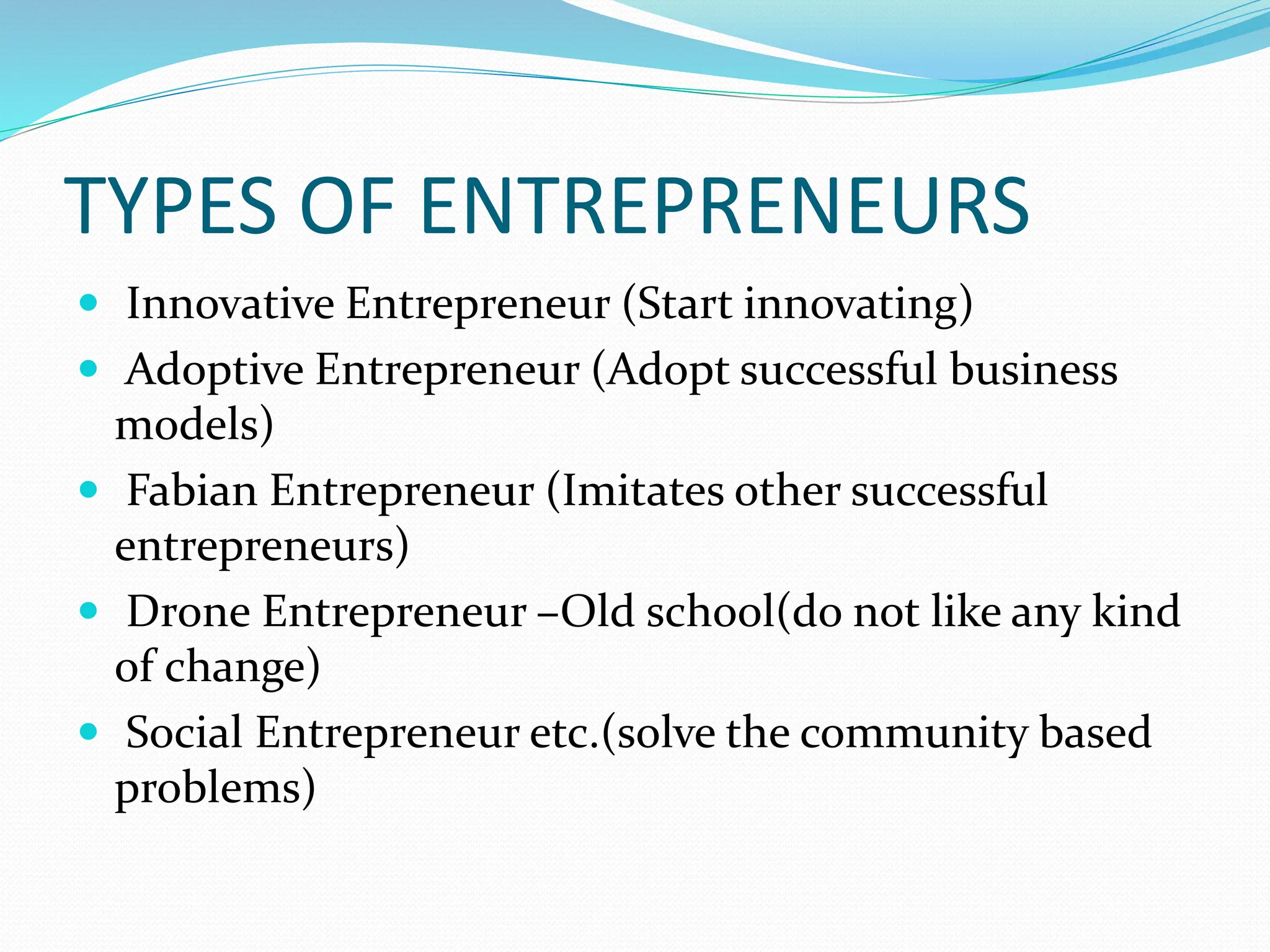
TYPES OF ENTREPRENEURS
 Innovative Entrepreneur (Start innovating)
 Adoptive Entrepreneur (Adopt successful business
models)
 Fabian Entrepreneur (Imitates other successful
entrepreneurs)
 Drone Entrepreneur –Old school(do not like any kind
of change)
 Social Entrepreneur etc.(solve the community based
problems)
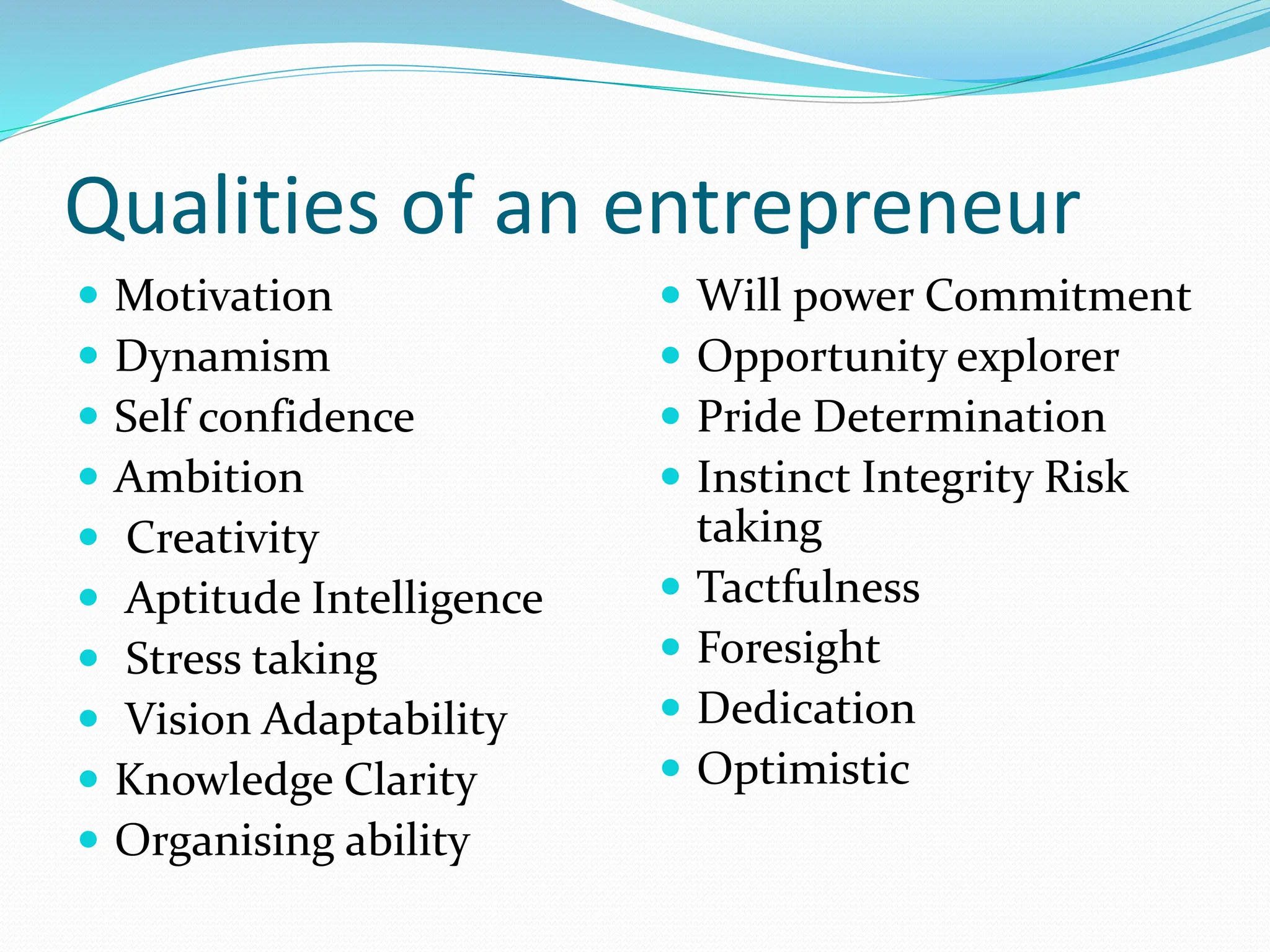
Qualities of an entrepreneur
 Motivation
 Dynamism
 Self confidence
 Ambition
 Creativity
 Aptitude Intelligence
 Stress taking
 Vision Adaptability
 Knowledge Clarity
 Organising ability
 Will power Commitment
 Opportunity explorer
 Pride Determination
 Instinct Integrity Risk
taking
 Tactfulness
 Foresight
 Dedication
 Optimistic
Women entrepreneurs
 “A small scale industrial unit / industry related service or
business enterprise, managed by one or more women
entrepreneurs in proprietary concerns, or in which she
/they individually or jointly have a share capital of not less
than 51% as partners /shareholders / directors of private
limited company / members of corporate society”
 Ekta Kapoor BalajiTelefilms
 Shahnaz Hussain Shahnaz Herbals
 Swati Piramal Piramal Healthcare
 Kiran Mazumdar Shaw Biocon
 Amira Shah Metropolis Healthcare
 Sairee Chahal Flexi-moms
Problems of women entrepreneurs
 Problem of finance Low
risk bearing capacity&
Limited mobility
 Male dominated society
 Family involvement
 Competition
 Lack of education
 Scarcity of raw materials
 Sexual harassment
 Shortage of power
 High cost of production
 Initial hesitation
 Lack of experience and
information
 Lack of freedom
 Lack of encouragement
 False sense of security
 Fear of failure .
MYTHS
*Entrepreneurs, like leaders, are born, not made.
*To be an entrepreneur, one needs money.
*To be an entrepreneur, a great idea is the only
ingredient
*One wants to be an entrepreneur as having no boss is
great fun.
Examples
 Shehnaz Hussain – A successful entrepreneur.
 Shiv Nadar is an Indian billionaire industrialist and
philanthropist. He is the founder and chairman of
HCL…

Entrepreneurship management PPT 1 -1.pptx

  • 1.
    Entrepreneurship management INTRODUCTION-  Derivedfrom French word ‘entreprendre’ It means to undertake or begin something.  An entrepreneur is one who creates a new business in the face of risk and uncertainty for the purpose of achieving profit and growth
  • 2.
    Introduction - Meaning& Definition of Entrepreneurship  Entrepreneur & Enterprise.  Differences between Entrepreneurship, Entrepreneur & Enterprise .  Functions of Entrepreneur  Role of Entrepreneur for Economic Development.  Factors influencing Entrepreneurship.  Pros and Cons of being an Entrepreneur.  Differences between Manager and Entrepreneur Qualities of an Entrepreneur.
  • 3.
    Definitions of “Entrepreneur” 1734: Richard Cantillon Entrepreneurs are non-fixed income earners who pay known costs of production but earn uncertain incomes  1803: Jean-Baptiste Say An entrepreneur is an economic agent who unites all means of production- land of one, the labour of another and the capital of yet another and thus produces a product. By selling the product in the market he pays rent of land, wages to labour, interest on capital and what remains is his profit. Entrepreneurs take initiative, accept risk of failure and have an internal locus of control.  2013: Ronald May An Entrepreneur is someone who commercializes his or her innovation.
  • 4.
    Entrepreneur  Learning objectives–  Who is an entrepreneur and What are his /her functions, qualities, contribution ?  What are the types of entrepreneurs.  Distinction between a manager and an entrepreneur.  Highs / lows of being an entrepreneur  What is entrepreneurship ?  What influences entrepreneurship ?  What are entrepreneurial competencies and how can it be developed ?
  • 5.
    ENTREPRENEUR & ENTREPRENEURSHIP Entrepreneur isthe creator whereas entrepreneurship is the creation. • An entrepreneur precedes entrepreneurship  Entrepreneurship is concerned with the development and coordination of entrepreneurial functions  It is based on purposeful and systematic innovation
  • 6.
    Entrepreneurship Management  ENTREPRENEURSHIP: NEED OF TODAY  Characteristics of a successful entrepreneur-  Risk Taker  Leader  Decision Maker  Responsible  Confident  Energetic
  • 7.
    NEED AND IMPORTANCE Creates job opportunities  causes economic growth  strengthens the currency  innovative & better products  provides strength to small or complimentary business.
  • 8.
    Functions of anentrepreneur  PUBLIC RELATIONS  PROJECT DECISION  RAISING FINANCE  PRODUCTION PLANNING MARKET RESEARCH RISK BEARING  INNOVATION  MANAGERIAL FUNCTIONS etc.
  • 9.
    TYPES OF ENTREPRENEURS Innovative Entrepreneur (Start innovating)  Adoptive Entrepreneur (Adopt successful business models)  Fabian Entrepreneur (Imitates other successful entrepreneurs)  Drone Entrepreneur –Old school(do not like any kind of change)  Social Entrepreneur etc.(solve the community based problems)
  • 10.
    Qualities of anentrepreneur  Motivation  Dynamism  Self confidence  Ambition  Creativity  Aptitude Intelligence  Stress taking  Vision Adaptability  Knowledge Clarity  Organising ability  Will power Commitment  Opportunity explorer  Pride Determination  Instinct Integrity Risk taking  Tactfulness  Foresight  Dedication  Optimistic
  • 11.
    Women entrepreneurs  “Asmall scale industrial unit / industry related service or business enterprise, managed by one or more women entrepreneurs in proprietary concerns, or in which she /they individually or jointly have a share capital of not less than 51% as partners /shareholders / directors of private limited company / members of corporate society”  Ekta Kapoor BalajiTelefilms  Shahnaz Hussain Shahnaz Herbals  Swati Piramal Piramal Healthcare  Kiran Mazumdar Shaw Biocon  Amira Shah Metropolis Healthcare  Sairee Chahal Flexi-moms
  • 12.
    Problems of womenentrepreneurs  Problem of finance Low risk bearing capacity& Limited mobility  Male dominated society  Family involvement  Competition  Lack of education  Scarcity of raw materials  Sexual harassment  Shortage of power  High cost of production  Initial hesitation  Lack of experience and information  Lack of freedom  Lack of encouragement  False sense of security  Fear of failure .
  • 13.
    MYTHS *Entrepreneurs, like leaders,are born, not made. *To be an entrepreneur, one needs money. *To be an entrepreneur, a great idea is the only ingredient *One wants to be an entrepreneur as having no boss is great fun.
  • 14.
    Examples  Shehnaz Hussain– A successful entrepreneur.  Shiv Nadar is an Indian billionaire industrialist and philanthropist. He is the founder and chairman of HCL…