ENTERPRISE AI STRATEGY
By Mukesh Sinha
Outline
AI Industry Facts
Organizational question
1
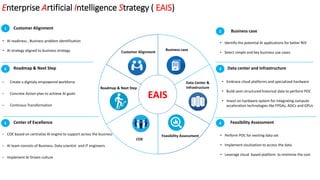
Enterprise Artificial Intelligence Strategy ( EAIS)
End to End Implementation Strategy
Life Cycle of Data Science
2
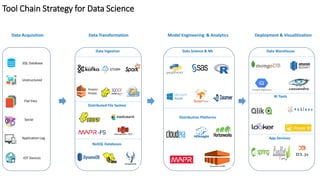
End To End Tool Chain Strategy
3
4
5
6
AI Industry Facts
Value of AI is expected to rise
$11.7B
EQUITY
FUNDING
367
EQUITY
DEALS
1031
NEW
INVESTORS
11
UNICORNS
AI Quick Facts
$ 10 B
$ 40 B
2018 2020
No of companies developing
INTELLIGENT TECHNOLOGY
2600
By 2025, the AI market will surpass $90 billion.
78%
68%
70%
77%
75%
Increased operational efficiency
Reduced False Positives
Reduced Operational cost
Enhancement in Employee productivity
Regulatory compliance at lower cost
Organizational Benefits across Operations, Sales and Customer service
Potential AI use cases
Financial Services
Healthcare
Retail
References
Telecom
• Trading Strategies , Automated trading
• Consumer behavior analysis
• Fraud Detection
• Reducing revenue churn
• Product Recommendation
• Forecasting , Tracking customer history
• Reducing revenue churn
• Forecasting
• Managing Risk, Tracking customer history
• Detecting small variations based on patients’ health data
• Early identification of potential pandemics
• Imaging diagnostics
• What are the potentials of introducing artificial intelligence to our company?
• What are the concrete business use cases to implement AI ?
• What kind of data that can be used for machine learning approach ?
• Do we have strategy and available infrastructure to support E2E AI implementation ?
• What impact have on employees, organization, processes and the eco-system?
• What kind of skill set and resources required to implement successfull AI projects ?
Stakeholder
Infrastructure
Resources
• Which use cases to select for POC and how we can plan to implement POC ?
• How much effort is required to realise the outlined use cases ?
Feasibilty Assessment
Future Roadmap
• How can we increase sales and reduce costs ?
• How to define the future roadmap of analytics pathways for cost optimization ?
Organizational question
EAIS
Customer Alignment
• COE based on centralize AI engine to support across the business
• AI team consists of Business, Data scientist and IT engineers
• Implement AI Driven culture
• Create a digitialy empowered workforce
• Concrete Action plan to achieve AI goals
• Continous Transformation
• Identify the potential AI applications for better ROI
• Select simple and key business use cases
• Embrace cloud platforms and specialized hardware
• Build semi structured historical data to perform POC
• Invest on hardware system for integrating compute
acceleration technologies like FPGAs, ASICs and GPUs
• Perform POC for existing data set
• Implement visulization to access the data
• Leverage cloud based platform to minimize the cost
Business case
Data Center &
Infrastructure
Feasibility Assessment
COE
Roadmap & Next Step
Customer Alignment
Business case
Roadmap & Next Step
Center of Excellence Feasibility Assessment
• AI readiness , Business problem identification
• AI strategy aligned to business strategy
1
6
5 4
3
2
Data center and Infrastructure
Enterprise Artificial Intelligence Strategy ( EAIS)
1
Data cleaning Feature Engineering
Model Engineering
Training Data
Experiment
Testing Data
Train Model
Model Accuracy Model Evaluation
Execution
Applying ML Algorithm
TestingTuning
Deployment
Dashboard Performance Reporting Publish web service
Feature EngineeringData Lake
Deliver
Application Device Data Storages
2 3
456
SQL Database Flat Files
Social Application Log
End to End Implementation Strategy
Business Data Scientist IT Operation
Determine Objective
Problem
Understanding Define success criteria
Access Constraints
Assess Data
Data
Understanding Obtain Data
Explore Data
Filter & Clean DataData
Preparation Feature Engg
Select Model
Modeling
Build Model
Validate ModelResult
Evaluation Explain Model
Deploy Model
Deployment
Monitor & Maintain
5-10%
10-25%
20-40%
20-30%
5-10%
10-15%
Subtasks Proportion EffortTasks
Life Cycle of Data Science
Data Acquisition Data Transformation Model Engineering & Analytics Deployment & Visualitization
Data Science & ML
Distribution Platforms
Data Ingestion
Distributed File System
Data WareHouse
BI Tools
App Services
NoSQL Databases
Tool Chain Strategy for Data Science
SQL Database
Unstructured
Flat Files
Social
Application Log
IOT Devices
THANK YOU

Enterprise Artificial Intelligence strategy

  • 1.
  • 2.
    Outline AI Industry Facts Organizationalquestion 1 Enterprise Artificial Intelligence Strategy ( EAIS) End to End Implementation Strategy Life Cycle of Data Science 2 End To End Tool Chain Strategy 3 4 5 6
  • 3.
    AI Industry Facts Valueof AI is expected to rise $11.7B EQUITY FUNDING 367 EQUITY DEALS 1031 NEW INVESTORS 11 UNICORNS AI Quick Facts $ 10 B $ 40 B 2018 2020 No of companies developing INTELLIGENT TECHNOLOGY 2600 By 2025, the AI market will surpass $90 billion. 78% 68% 70% 77% 75% Increased operational efficiency Reduced False Positives Reduced Operational cost Enhancement in Employee productivity Regulatory compliance at lower cost Organizational Benefits across Operations, Sales and Customer service Potential AI use cases Financial Services Healthcare Retail References Telecom • Trading Strategies , Automated trading • Consumer behavior analysis • Fraud Detection • Reducing revenue churn • Product Recommendation • Forecasting , Tracking customer history • Reducing revenue churn • Forecasting • Managing Risk, Tracking customer history • Detecting small variations based on patients’ health data • Early identification of potential pandemics • Imaging diagnostics
  • 4.
    • What arethe potentials of introducing artificial intelligence to our company? • What are the concrete business use cases to implement AI ? • What kind of data that can be used for machine learning approach ? • Do we have strategy and available infrastructure to support E2E AI implementation ? • What impact have on employees, organization, processes and the eco-system? • What kind of skill set and resources required to implement successfull AI projects ? Stakeholder Infrastructure Resources • Which use cases to select for POC and how we can plan to implement POC ? • How much effort is required to realise the outlined use cases ? Feasibilty Assessment Future Roadmap • How can we increase sales and reduce costs ? • How to define the future roadmap of analytics pathways for cost optimization ? Organizational question
  • 5.
    EAIS Customer Alignment • COEbased on centralize AI engine to support across the business • AI team consists of Business, Data scientist and IT engineers • Implement AI Driven culture • Create a digitialy empowered workforce • Concrete Action plan to achieve AI goals • Continous Transformation • Identify the potential AI applications for better ROI • Select simple and key business use cases • Embrace cloud platforms and specialized hardware • Build semi structured historical data to perform POC • Invest on hardware system for integrating compute acceleration technologies like FPGAs, ASICs and GPUs • Perform POC for existing data set • Implement visulization to access the data • Leverage cloud based platform to minimize the cost Business case Data Center & Infrastructure Feasibility Assessment COE Roadmap & Next Step Customer Alignment Business case Roadmap & Next Step Center of Excellence Feasibility Assessment • AI readiness , Business problem identification • AI strategy aligned to business strategy 1 6 5 4 3 2 Data center and Infrastructure Enterprise Artificial Intelligence Strategy ( EAIS)
  • 6.
    1 Data cleaning FeatureEngineering Model Engineering Training Data Experiment Testing Data Train Model Model Accuracy Model Evaluation Execution Applying ML Algorithm TestingTuning Deployment Dashboard Performance Reporting Publish web service Feature EngineeringData Lake Deliver Application Device Data Storages 2 3 456 SQL Database Flat Files Social Application Log End to End Implementation Strategy
  • 7.
    Business Data ScientistIT Operation Determine Objective Problem Understanding Define success criteria Access Constraints Assess Data Data Understanding Obtain Data Explore Data Filter & Clean DataData Preparation Feature Engg Select Model Modeling Build Model Validate ModelResult Evaluation Explain Model Deploy Model Deployment Monitor & Maintain 5-10% 10-25% 20-40% 20-30% 5-10% 10-15% Subtasks Proportion EffortTasks Life Cycle of Data Science
  • 8.
    Data Acquisition DataTransformation Model Engineering & Analytics Deployment & Visualitization Data Science & ML Distribution Platforms Data Ingestion Distributed File System Data WareHouse BI Tools App Services NoSQL Databases Tool Chain Strategy for Data Science SQL Database Unstructured Flat Files Social Application Log IOT Devices
  • 9.