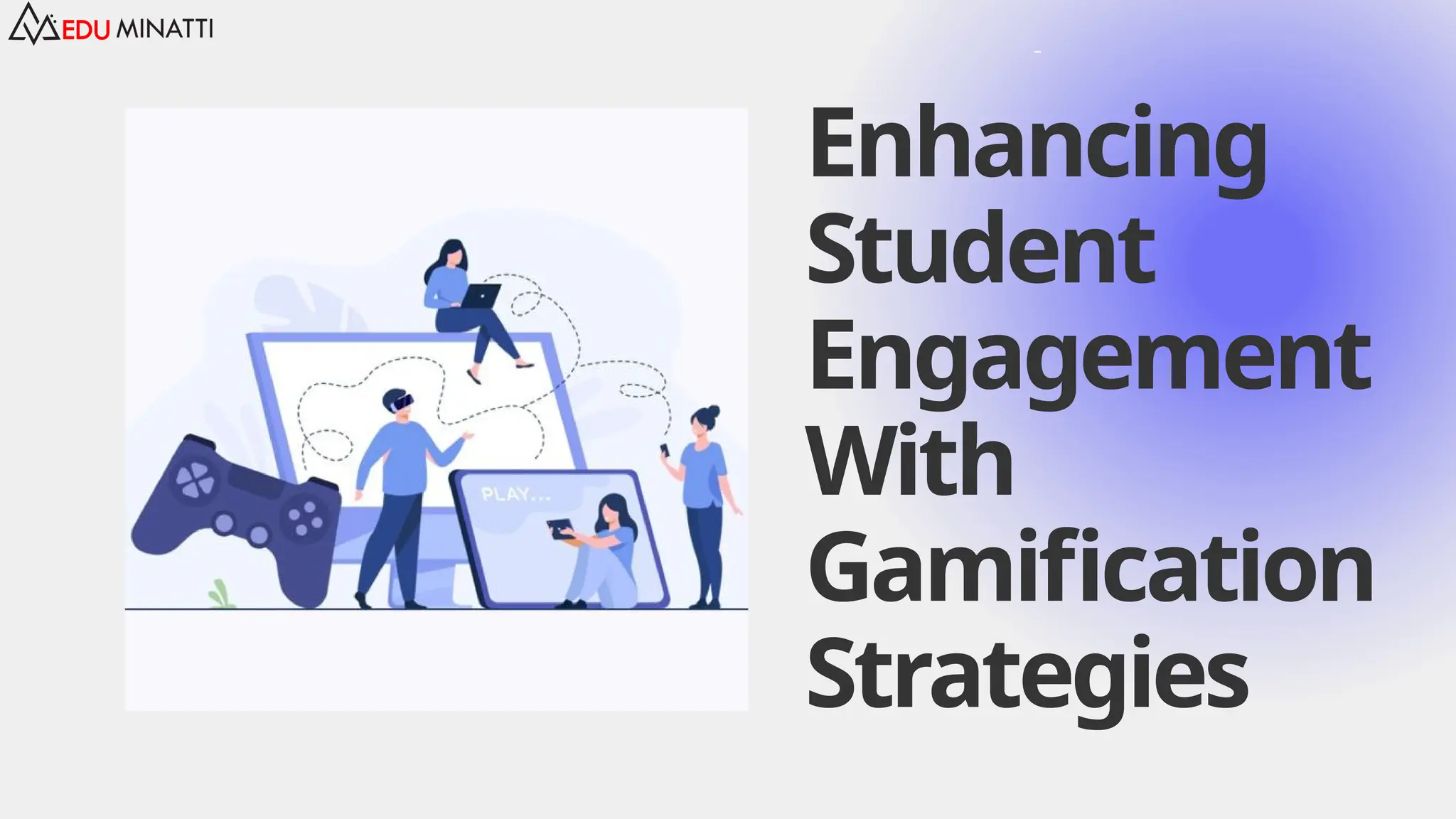
Enhancing Student Engagement With Gamification Strategies
Boost student motivation and participation by integrating gamification strategies that make learning interactive, fun, and goal-oriented in the classroom. For more information.....visit..... https://www.eduminatti.com/category/schools-in-dehradun
Introduction to
Gamification in
Education
•Definition: Gamification is the use of game
elements in non-game contexts, like
classrooms, to motivate and engage
learners.
• Why It Matters: It increases motivation,
attention, participation, and knowledge
retention.
• Key Elements: Points, levels, leaderboards,
badges, challenges
3.
Gamification Techniques
for StudentEngagement
• Quizzes & Challenges: Turn lessons into games with
real-time quiz platforms (e.g., Kahoot, Quizizz).
• Points and Badges: Reward progress and performance
to boost motivation.
• Levels and Unlocks: Encourage progression with
milestones.
• Leaderboards: Promote healthy competition and
visibility of achievement.
03
4.
Real-World Applications
in theClassroom
• Math Adventure Games: Solving
problems to progress through a story.
• Language Learning Apps: Duolingo-style
levels and streaks.
• STEM Simulations: Interactive
experiments with score-based outcomes.
• Group Projects: Assign team-based
quests with achievement tracking.
5.
Benefits of
Gamification in
Learning
•Boosts Engagement: Students are more
active and invested.
• Encourages Collaboration: Many games
foster teamwork and peer learning.
• Builds Motivation: Clear goals and rewards
create a sense of purpose.
• Supports Differentiation: Gamified tasks
can be adapted to varied skill levels.
05
6.
CONCLUSION
• Gamification makeslearning interactive and fun.
• It aligns with students’ digital habits and preferences.
• Properly implemented, it improves participation and
achievement.
• Teachers can blend gamified tools with traditional methods.
• The key is balance—games should support, not overshadow,
learning goals.