LESSON 1:
VALUING OUR ELDERS’
WISDOM
Objectives:
1. Observe the correct production of vowel and
consonant sounds, diphthongs, blends and glides
2. Discover literature as a means of connecting to
a significant past
3. Listen for important points signaled by stress
and intonation
4. Note the changes in stress and intonation that
affect the meaning
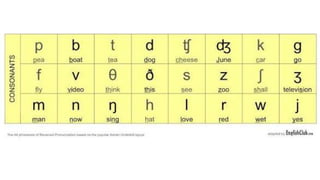
Phonetics
-is the study of the sounds of language. It deals
with the physical production and reception of
sound.
These sounds are called phones.
Phones are the smallest distinct unit of speech
sound, without regard to meaning.
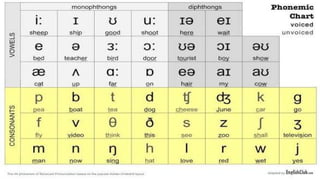
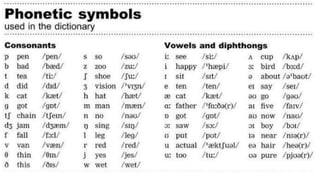
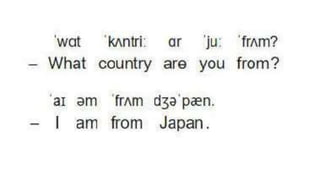
Phones are usually represented by the
International Phonetic Association (IPA) symbols.
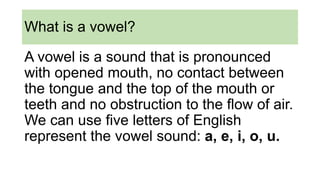
What is a vowel?
A vowel is a sound that is pronounced
with opened mouth, no contact between
the tongue and the top of the mouth or
teeth and no obstruction to the flow of air.
We can use five letters of English
represent the vowel sound: a, e, i, o, u.
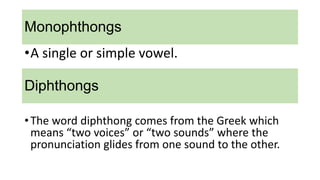
Monophthongs
•The word diphthong comes from the Greek which
means “two voices” or “two sounds” where the
pronunciation glides from one sound to the other.
•A single or simple vowel.
Diphthongs
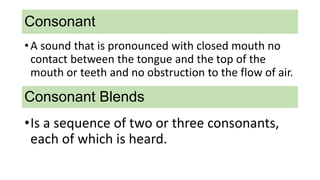
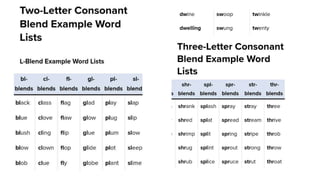
Consonant
•Is a sequence of two or three consonants,
each of which is heard.
•A sound that is pronounced with closed mouth no
contact between the tongue and the top of the
mouth or teeth and no obstruction to the flow of air.
Consonant Blends
ACTIVITY 1
GUESS ME!
Direction: You will be given different
proverbs. Try to choose the
image/illustration that best matches
the proverb.
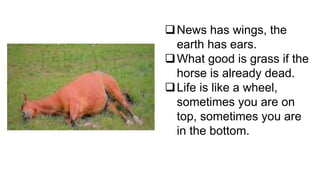
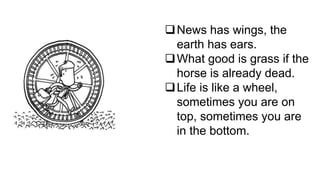
News has wings, the
earth has ears.
What good is grass if the
horse is already dead.
Life is like a wheel,
sometimes you are on
top, sometimes you are
in the bottom.
News has wings, the
earth has ears.
What good is grass if the
horse is already dead.
Life is like a wheel,
sometimes you are on
top, sometimes you are
in the bottom.
WORDS OF WISDOM
Damiana L. Eugenio, the mother of
Philippine Folklore compiled and edited what
may very well be considered as the most
comprehensive collection of proverbs in our
country. She spent a lifetime collecting pieces of
folk literature that reveal our ancestors‘ wisdom.
When she gathered proverbs from various areas
in our country, she declared that our elders lived
by simple, yet very meaningful rules of righteous
living.
In fact, she asserted that even the Spaniards
who colonized our country noticed how
proverbs formed part of the native spirit.
Spanish missionaries were found to have
translated such proverbs and other oral
expressions in Spanish in order for their fellow
religious people to learn our indigenous
languages. By doing so, they were able to
interact with the early Filipinos and eventually
introduce the Catholic faith.
Proverbs are brief instructive expressions that
suggest a specific action, behavior, or
judgment.
Referred to by some scholars as ―the wisdom
of many and the wit of one, they are commonly
written in the form of short assertions or poetic
two-liners which have rhyme.
People are easily struck by proverbs when
they are woven in conversations or writings.
This is perhaps because they have the power
to teach people the more essential truths
about life and the complexity of living.
Compared to lengthy narrations, descriptions,
or argumentations, proverbs are able to
effect quickly a change in view or disposition.
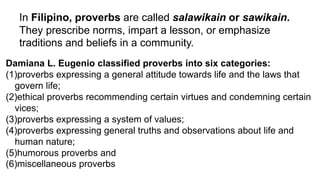
In Filipino, proverbs are called salawikain or sawikain.
They prescribe norms, impart a lesson, or emphasize
traditions and beliefs in a community.
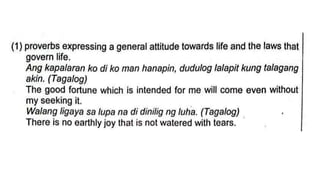
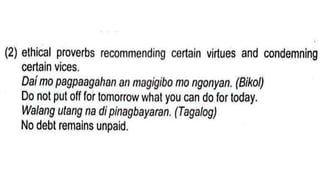
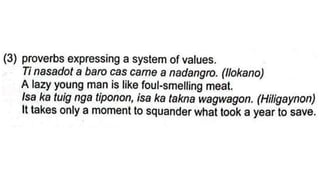
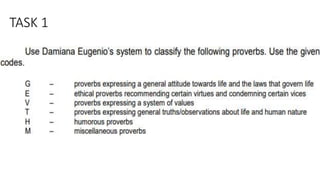
Damiana L. Eugenio classified proverbs into six categories:
(1)proverbs expressing a general attitude towards life and the laws that
govern life;
(2)ethical proverbs recommending certain virtues and condemning certain
vices;
(3)proverbs expressing a system of values;
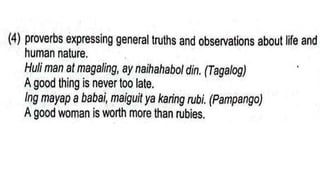
(4)proverbs expressing general truths and observations about life and
human nature;
(5)humorous proverbs and
(6)miscellaneous proverbs
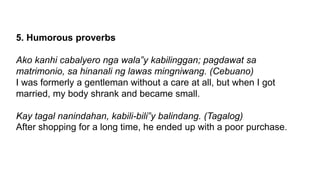
5. Humorous proverbs
Ako kanhi cabalyero nga wala‟y kabilinggan; pagdawat sa
matrimonio, sa hinanali ng lawas mingniwang. (Cebuano)
I was formerly a gentleman without a care at all, but when I got
married, my body shrank and became small.
Kay tagal nanindahan, kabili-bili‟y balindang. (Tagalog)
After shopping for a long time, he ended up with a poor purchase.
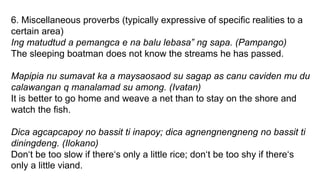
6. Miscellaneous proverbs (typically expressive of specific realities to a
certain area)
Ing matudtud a pemangca e na balu lebasa‟ ng sapa. (Pampango)
The sleeping boatman does not know the streams he has passed.
Mapipia nu sumavat ka a maysaosaod su sagap as canu caviden mu du
calawangan q manalamad su among. (Ivatan)
It is better to go home and weave a net than to stay on the shore and
watch the fish.
Dica agcapcapoy no bassit ti inapoy; dica agnengnengneng no bassit ti
diningdeng. (Ilokano)
Don‘t be too slow if there‘s only a little rice; don‘t be too shy if there‘s
only a little viand.
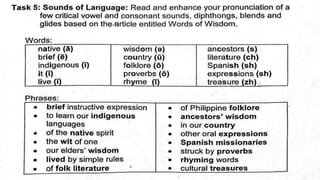
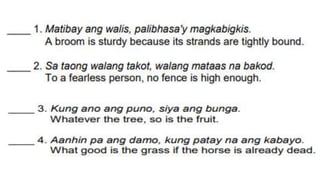
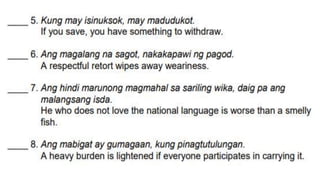
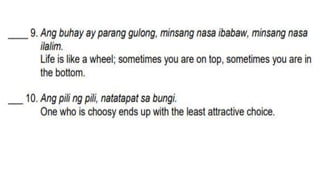
TASK 1
English 7-Lesson 2-2.pptx

English 7-Lesson 2-2.pptx

  • 1.
    LESSON 1: VALUING OURELDERS’ WISDOM
  • 2.
    Objectives: 1. Observe thecorrect production of vowel and consonant sounds, diphthongs, blends and glides 2. Discover literature as a means of connecting to a significant past 3. Listen for important points signaled by stress and intonation 4. Note the changes in stress and intonation that affect the meaning
  • 3.
    Phonetics -is the studyof the sounds of language. It deals with the physical production and reception of sound. These sounds are called phones. Phones are the smallest distinct unit of speech sound, without regard to meaning. Phones are usually represented by the International Phonetic Association (IPA) symbols.
  • 5.
    What is avowel? A vowel is a sound that is pronounced with opened mouth, no contact between the tongue and the top of the mouth or teeth and no obstruction to the flow of air. We can use five letters of English represent the vowel sound: a, e, i, o, u.
  • 6.
    Monophthongs •The word diphthongcomes from the Greek which means “two voices” or “two sounds” where the pronunciation glides from one sound to the other. •A single or simple vowel. Diphthongs
  • 8.
    Consonant •Is a sequenceof two or three consonants, each of which is heard. •A sound that is pronounced with closed mouth no contact between the tongue and the top of the mouth or teeth and no obstruction to the flow of air. Consonant Blends
  • 13.
  • 18.
    GUESS ME! Direction: Youwill be given different proverbs. Try to choose the image/illustration that best matches the proverb.
  • 19.
    News has wings,the earth has ears. What good is grass if the horse is already dead. Life is like a wheel, sometimes you are on top, sometimes you are in the bottom.
  • 20.
    News has wings,the earth has ears. What good is grass if the horse is already dead. Life is like a wheel, sometimes you are on top, sometimes you are in the bottom.
  • 22.
  • 23.
    Damiana L. Eugenio,the mother of Philippine Folklore compiled and edited what may very well be considered as the most comprehensive collection of proverbs in our country. She spent a lifetime collecting pieces of folk literature that reveal our ancestors‘ wisdom. When she gathered proverbs from various areas in our country, she declared that our elders lived by simple, yet very meaningful rules of righteous living.
  • 24.
    In fact, sheasserted that even the Spaniards who colonized our country noticed how proverbs formed part of the native spirit. Spanish missionaries were found to have translated such proverbs and other oral expressions in Spanish in order for their fellow religious people to learn our indigenous languages. By doing so, they were able to interact with the early Filipinos and eventually introduce the Catholic faith.
  • 25.
    Proverbs are briefinstructive expressions that suggest a specific action, behavior, or judgment. Referred to by some scholars as ―the wisdom of many and the wit of one, they are commonly written in the form of short assertions or poetic two-liners which have rhyme.
  • 26.
    People are easilystruck by proverbs when they are woven in conversations or writings. This is perhaps because they have the power to teach people the more essential truths about life and the complexity of living. Compared to lengthy narrations, descriptions, or argumentations, proverbs are able to effect quickly a change in view or disposition.
  • 28.
    In Filipino, proverbsare called salawikain or sawikain. They prescribe norms, impart a lesson, or emphasize traditions and beliefs in a community. Damiana L. Eugenio classified proverbs into six categories: (1)proverbs expressing a general attitude towards life and the laws that govern life; (2)ethical proverbs recommending certain virtues and condemning certain vices; (3)proverbs expressing a system of values; (4)proverbs expressing general truths and observations about life and human nature; (5)humorous proverbs and (6)miscellaneous proverbs
  • 33.
    5. Humorous proverbs Akokanhi cabalyero nga wala‟y kabilinggan; pagdawat sa matrimonio, sa hinanali ng lawas mingniwang. (Cebuano) I was formerly a gentleman without a care at all, but when I got married, my body shrank and became small. Kay tagal nanindahan, kabili-bili‟y balindang. (Tagalog) After shopping for a long time, he ended up with a poor purchase.
  • 34.
    6. Miscellaneous proverbs(typically expressive of specific realities to a certain area) Ing matudtud a pemangca e na balu lebasa‟ ng sapa. (Pampango) The sleeping boatman does not know the streams he has passed. Mapipia nu sumavat ka a maysaosaod su sagap as canu caviden mu du calawangan q manalamad su among. (Ivatan) It is better to go home and weave a net than to stay on the shore and watch the fish. Dica agcapcapoy no bassit ti inapoy; dica agnengnengneng no bassit ti diningdeng. (Ilokano) Don‘t be too slow if there‘s only a little rice; don‘t be too shy if there‘s only a little viand.
  • 35.