Global Engineering for a
Small Planet: A Vision of
Success
Bernard Amadei
Mortenson Center in Engineering for
Developing Communities
University of Colorado, Boulder, USA
“Do today’s engineering graduates and
engineers have the skills and tools to
address the global problems that our
planet and humans are facing today, or
will be facing within the next 20 years?”
Peace/Conflict, Climate Change, Poverty
Reduction, Water, Energy, Shelter,
Communication, Etc.
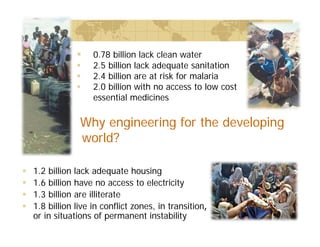
 0.78 billion lack clean water
 2.5 billion lack adequate sanitation
 2.4 billion are at risk for malaria
 2.0 billion with no access to low cost
essential medicines
Why engineering for the developing
world?
 1.2 billion lack adequate housing
 1.6 billion have no access to electricity
 1.3 billion are illiterate
 1.8 billion live in conflict zones, in transition,
or in situations of permanent instability
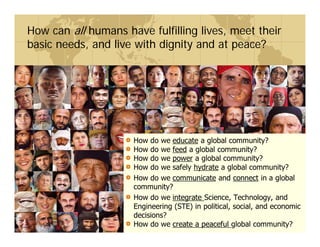
How can all humans have fulfilling lives, meet their
basic needs, and live with dignity and at peace?
Different Challenges
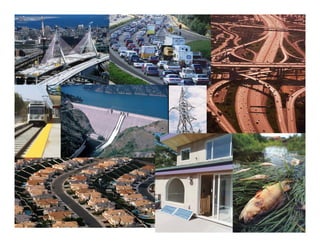
In the developed world, the challenge is to consume
less and more intelligently and be respectful of
natural and human systems
In emerging markets, the challenge is to grow
economically while respecting human and natural
systems
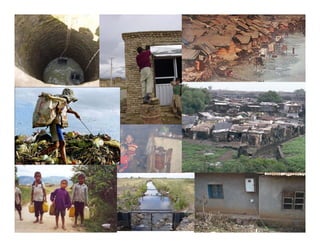
In the developing world, the challenge is to ensure
that proposed economic solutions address the basic
needs of people and are good to the environment
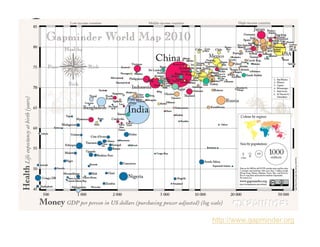
http://www.gapminder.org
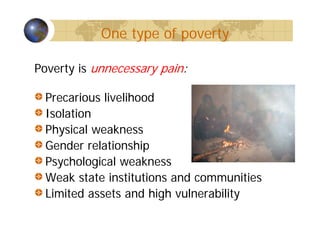
One type of poverty
Poverty is unnecessary pain:
Precarious livelihood
Isolation
Physical weakness
Gender relationship
Psychological weakness
Weak state institutions and communities
Limited assets and high vulnerability
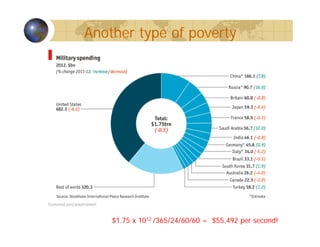
Another type of poverty
$1.75 x 10¹² /365/24/60/60 = $55,492 per second!
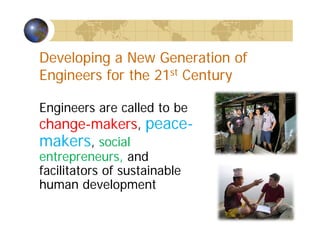
Developing a New Generation of
Engineers for the 21st Century
Engineers are called to be
change-makers, peace-
makers, social
entrepreneurs, and
facilitators of sustainable
human development
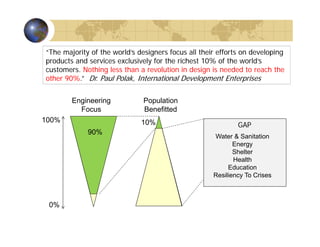
Population
Benefitted
Engineering
Focus
0%
100%
GAP
Water & Sanitation
Energy
Shelter
Health
Education
Resiliency To Crises
10%
90%
“The majority of the world’s designers focus all their efforts on developing
products and services exclusively for the richest 10% of the world’s
customers. Nothing less than a revolution in design is needed to reach the
other 90%.” Dr. Paul Polak, International Development Enterprises
Doing Well by Doing Good
Market for joint ventures between private and
citizen sectors in the low-income world worth:
• $202 billion in health care,
• $424 billion in low-cost housing,
• $553 billion in energy,
• $36 trillion in agricultural products and food.
Drayton and Budinich (2010)
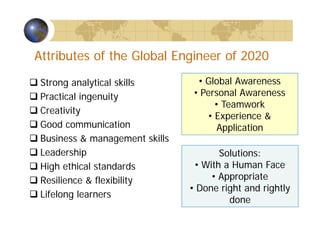
Attributes of the Global Engineer of 2020
 Strong analytical skills
 Practical ingenuity
 Creativity
 Good communication
 Business & management skills
 Leadership
 High ethical standards
 Resilience & flexibility
 Lifelong learners
• Global Awareness
• Personal Awareness
• Teamwork
• Experience &
Application
Solutions:
• With a Human Face
• Appropriate
• Done right and rightly
done
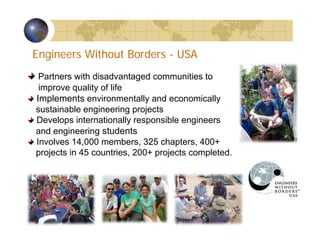
Partners with disadvantaged communities to
improve quality of life
Implements environmentally and economically
sustainable engineering projects
Develops internationally responsible engineers
and engineering students
Involves 14,000 members, 325 chapters, 400+
projects in 45 countries, 200+ projects completed.
Engineers Without Borders - USA
TMTM
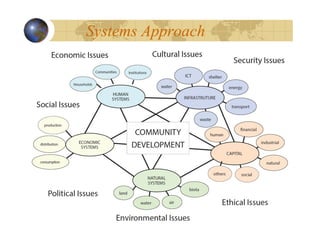
Systems Approach
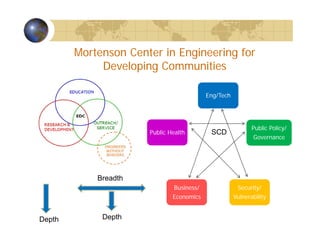
Eng/Tech
Public Policy/
Governance
Security/
Vulnerability
Business/
Economics
Public Health SCD
Depth
Breadth
Depth
Mortenson Center in Engineering for
Developing Communities
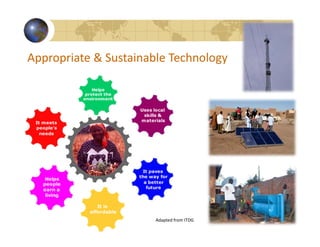
Appropriate & Sustainable Technology
Adapted from ITDG
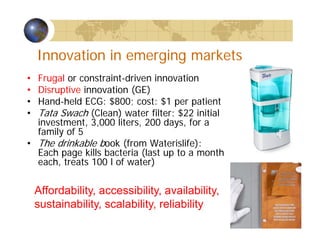
Innovation in emerging markets
• Frugal or constraint-driven innovation
• Disruptive innovation (GE)
• Hand-held ECG: $800; cost: $1 per patient
• Tata Swach (Clean) water filter: $22 initial
investment, 3,000 liters, 200 days, for a
family of 5
• The drinkable book (from Waterislife):
Each page kills bacteria (last up to a month
each, treats 100 l of water)
Affordability, accessibility, availability,
sustainability, scalability, reliability
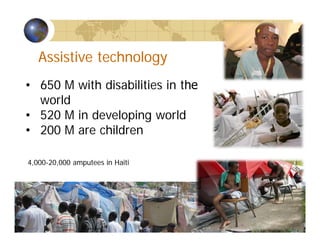
• 650 M with disabilities in the
world
• 520 M in developing world
• 200 M are children
4,000-20,000 amputees in Haiti
Assistive technology
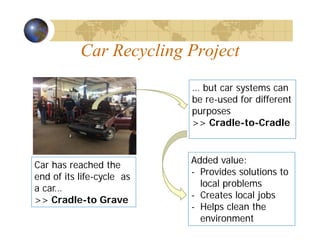
Car Recycling Project
Car has reached the
end of its life-cycle as
a car…
>> Cradle-to Grave
… but car systems can
be re-used for different
purposes
>> Cradle-to-Cradle
Added value:
- Provides solutions to
local problems
- Creates local jobs
- Helps clean the
environment
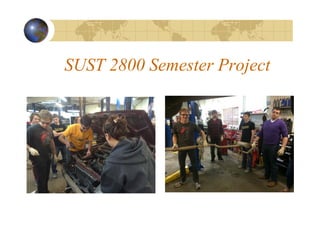
SUST 2800 Semester Project
Engineering for the other 90% is about…
Disrupting poverty and its pathological dysfunctions
Context, participation, systems, multi-disciplinary
Delivery of solutions that are done right (correct)
and rightly done (correctly done)
Solutions with a human face
Solutions that are appropriate
An adaptive approach instead of blueprint
Solutions that emphasize affordability, accessibility,
availability, sustainability, scalability, and reliability
“The significant
problems we face
cannot be solved
by the same level
of thinking that
created them.”
Albert Einstein
Contact: amadei@colorado.edu
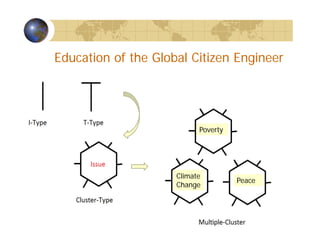
Education of the Global Citizen Engineer
Poverty
Climate
Change
Peace

Engineers Week Keynote by Dr. Amadei

  • 1.
    Global Engineering fora Small Planet: A Vision of Success Bernard Amadei Mortenson Center in Engineering for Developing Communities University of Colorado, Boulder, USA
  • 2.
    “Do today’s engineeringgraduates and engineers have the skills and tools to address the global problems that our planet and humans are facing today, or will be facing within the next 20 years?” Peace/Conflict, Climate Change, Poverty Reduction, Water, Energy, Shelter, Communication, Etc.
  • 4.
     0.78 billionlack clean water  2.5 billion lack adequate sanitation  2.4 billion are at risk for malaria  2.0 billion with no access to low cost essential medicines Why engineering for the developing world?  1.2 billion lack adequate housing  1.6 billion have no access to electricity  1.3 billion are illiterate  1.8 billion live in conflict zones, in transition, or in situations of permanent instability
  • 5.
    How can allhumans have fulfilling lives, meet their basic needs, and live with dignity and at peace?
  • 6.
    Different Challenges In thedeveloped world, the challenge is to consume less and more intelligently and be respectful of natural and human systems In emerging markets, the challenge is to grow economically while respecting human and natural systems In the developing world, the challenge is to ensure that proposed economic solutions address the basic needs of people and are good to the environment
  • 9.
  • 11.
    One type ofpoverty Poverty is unnecessary pain: Precarious livelihood Isolation Physical weakness Gender relationship Psychological weakness Weak state institutions and communities Limited assets and high vulnerability
  • 12.
    Another type ofpoverty $1.75 x 10¹² /365/24/60/60 = $55,492 per second!
  • 13.
    Developing a NewGeneration of Engineers for the 21st Century Engineers are called to be change-makers, peace- makers, social entrepreneurs, and facilitators of sustainable human development
  • 14.
    Population Benefitted Engineering Focus 0% 100% GAP Water & Sanitation Energy Shelter Health Education ResiliencyTo Crises 10% 90% “The majority of the world’s designers focus all their efforts on developing products and services exclusively for the richest 10% of the world’s customers. Nothing less than a revolution in design is needed to reach the other 90%.” Dr. Paul Polak, International Development Enterprises
  • 15.
    Doing Well byDoing Good Market for joint ventures between private and citizen sectors in the low-income world worth: • $202 billion in health care, • $424 billion in low-cost housing, • $553 billion in energy, • $36 trillion in agricultural products and food. Drayton and Budinich (2010)
  • 16.
    Attributes of theGlobal Engineer of 2020  Strong analytical skills  Practical ingenuity  Creativity  Good communication  Business & management skills  Leadership  High ethical standards  Resilience & flexibility  Lifelong learners • Global Awareness • Personal Awareness • Teamwork • Experience & Application Solutions: • With a Human Face • Appropriate • Done right and rightly done
  • 17.
    Partners with disadvantagedcommunities to improve quality of life Implements environmentally and economically sustainable engineering projects Develops internationally responsible engineers and engineering students Involves 14,000 members, 325 chapters, 400+ projects in 45 countries, 200+ projects completed. Engineers Without Borders - USA TMTM
  • 18.
  • 19.
    Eng/Tech Public Policy/ Governance Security/ Vulnerability Business/ Economics Public HealthSCD Depth Breadth Depth Mortenson Center in Engineering for Developing Communities
  • 20.
  • 21.
    Innovation in emergingmarkets • Frugal or constraint-driven innovation • Disruptive innovation (GE) • Hand-held ECG: $800; cost: $1 per patient • Tata Swach (Clean) water filter: $22 initial investment, 3,000 liters, 200 days, for a family of 5 • The drinkable book (from Waterislife): Each page kills bacteria (last up to a month each, treats 100 l of water) Affordability, accessibility, availability, sustainability, scalability, reliability
  • 22.
    • 650 Mwith disabilities in the world • 520 M in developing world • 200 M are children 4,000-20,000 amputees in Haiti Assistive technology
  • 23.
    Car Recycling Project Carhas reached the end of its life-cycle as a car… >> Cradle-to Grave … but car systems can be re-used for different purposes >> Cradle-to-Cradle Added value: - Provides solutions to local problems - Creates local jobs - Helps clean the environment
  • 24.
  • 25.
    Engineering for theother 90% is about… Disrupting poverty and its pathological dysfunctions Context, participation, systems, multi-disciplinary Delivery of solutions that are done right (correct) and rightly done (correctly done) Solutions with a human face Solutions that are appropriate An adaptive approach instead of blueprint Solutions that emphasize affordability, accessibility, availability, sustainability, scalability, and reliability
  • 26.
    “The significant problems weface cannot be solved by the same level of thinking that created them.” Albert Einstein Contact: amadei@colorado.edu
  • 27.
    Education of theGlobal Citizen Engineer Poverty Climate Change Peace