Technology
• Biomass technologytoday serves many markets
that were developed with fossil fuels and modestly
reduces their use
• Uses - Industrial process heat and steam, Electrical
power generation, Transportation fuels (ethanol
and biodiesel) and other products.
• Primary focus of the Biomass Program –
development of advanced technologies.
4.
Bio-refinery
• A facilitythat integrates biomass conversion
processes and equipment to produce fuels,
power, and chemicals from biomass.
• Analogous to today's petroleum refineries
6.
Bio-diesel
• Made bytransforming animal fat or vegetable
oil with alcohol .
• Fuel is made from rapeseed (canola) oil or
soybean oil or recycled restaurant grease.
• Directly substituted for diesel either as neat
fuel or as an oxygenate additive
7.
Modified Waste VegetableFat
• Designed for general use in most compression
ignition engines .
• The production of MWVF can be achieved in a
continuous flow additive process.
• It can be modified in various ways to make a
'greener' form of fuel
8.
E-Diesel
• Uses additivesin order to allow blending of
ethanol with diesel.
• Ethanol blends of 7.7% to 15% and up to 5%
• Additives that prevent the ethanol and diesel
from separating at very low temperatures or
if water contamination occurs.
9.
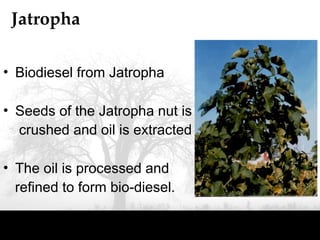
Jatropha
• Biodiesel fromJatropha
• Seeds of the Jatropha nut is
crushed and oil is extracted
• The oil is processed and
refined to form bio-diesel.
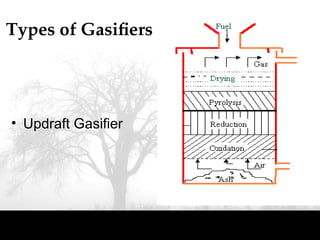
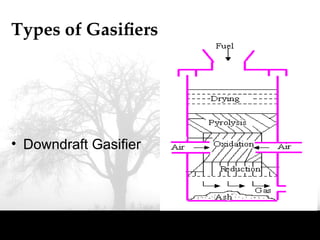
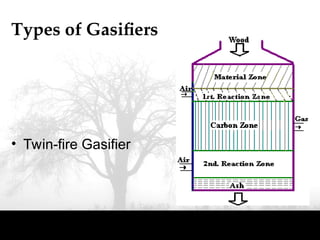
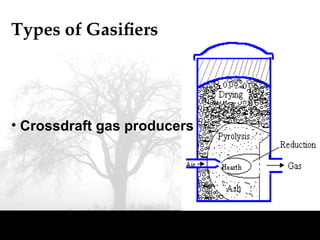
Gasification
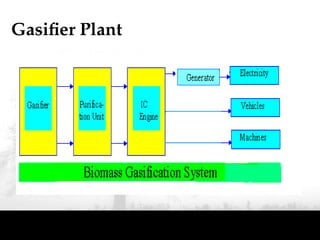
• A processthat uses heat, pressure, and steam to
convert materials directly into a gas composed
primarily of carbon monoxide and hydrogen.
• Gasification technologies rely four key engineering
factors
1. Gasification reactor atmosphere (level of oxygen or
air content).
2. Reactor design.
3. Internal and external heating.
4. Operating temperature.
13.
Gasification
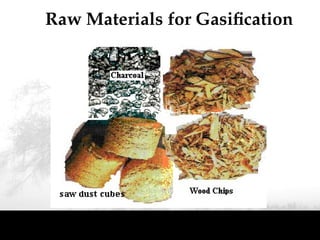
• Typical rawmaterials - coal, petroleum-based
materials, and organic materials.
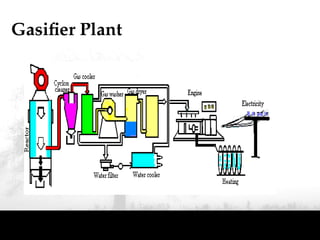
• The feedstock is prepared and fed, in either dry or
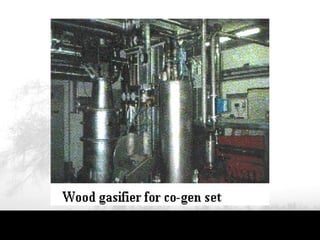
slurried form, into a sealed reactor chamber called a
gasifier.
• The feedstock is subjected to high heat, pressure, and
either an oxygen-rich or oxygen-starved environment
within the gasifier.
Gasification
• Products ofgasification :
* Hydrocarbon gases (also called syngas).
* Hydrocarbon liquids (oils).
* Char (carbon black and ash).
• Syngas is primarily carbon monoxide and
hydrogen (more than 85 percent by volume)
and smaller quantities of carbon dioxide and
methane
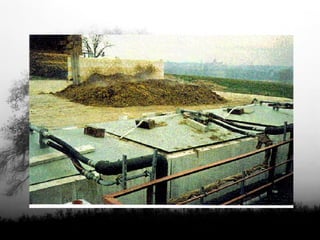
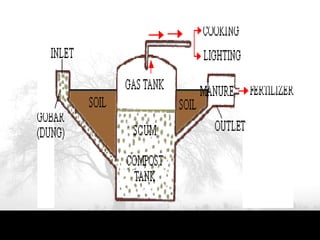
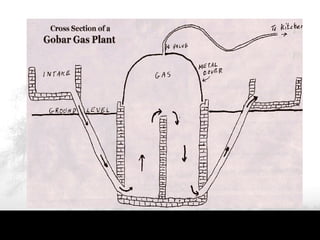
Gobar gas
• Gobargas production is an anaerobic
process
• Fermentation is carried out in an air tight,
closed cylindrical concrete tank called a
digester
Environmental Benefits
•Reduction ofwaste
• Extremely low emission of greenhouse gases compared to
fossil fuels
• Ethanol is Carbon neutral and forms a part of the carbon cycle
• Growing variety of crops increases bio-diversity
29.
Socio-Economic Benefits
• Helpsdeveloping economies by promoting agrarian
communities
• Increase in jobs
• Increase in trade balance (Indian perspective) due to lesser
dependence on foreign resources