Clinical Forms
TYPE II
–More lethal variety, 10% of all cases
– In older post menopausal women
– Aggressive high grade nuclei (less/poorly
differentiated) or serous/papillary, clear cell
Histology
– no precursor lesion
– P53 tumor supressor mutation
– Underlying (back ground) endometrium is
Atrophic/ associated with polyps
– No clear epidimologic profile
SAMUEL BEZABIH(MD)- MMeskrem 2005 27
TYPE I Vs Type II( Germ. PPT)
•
FEATURES TYPE I TYPE II
ESTROGEN DEPENDENCE E-Dependent E-independent
ASSOCIATION WITH
MENOPAUSE
Pre/Postmenopausal Post Menopausal
DIFFRENTIATION Grade I/II Grade III
MYOMETRIAL INVASION Minimal Deep
HYPERPLASIA Yes No
Sub types Endometroid
adenocarcinoma,
secretory
Adenosquamous,
clear cell, serous
prognosis good Poor
SAMUEL BEZABIH(MD)- MMeskrem 2005 28
pathology
SAMUEL BEZABIH(MD)- MMeskrem 2005
WHO Histologic Classification of Endometrial Carcinoma 29
Endometrial Ca Diagnosis
Symptoms
• Prolonged, heavy, irregular menstruation
• Postmenopausal V bleeding ( 5-10% likelihood)
• Abnormal vaginal discharge may be another
symptom in older women.
• In more advanced disease, pelvic pressure and
pain may reflect uterine enlargement or extra-
uterine tumor spread.
• Patients with serous or clear cell tumors often
present with signs and symptoms suggestive of
advanced epithelial ovarian cancer
SAMUEL BEZABIH(MD)- MMeskrem 2005 30
Endometrial Ca Diagnosis
Endometrial Biopsy
• Office pipelle biopsy,
– if inadequate D and C
• Outpatient hysteroscopy is more sensitive for
focal endometrial lesions and thus has proved
less helpful in diagnosing hyperplasia (Ben Yehuda,
1998).
• Hysteroscopy is shown to have a risk of
Intraperitoneal contamination with malignant
cells.
SAMUEL BEZABIH(MD)- MMeskrem 2005 31
Endometrial Ca Diagnosis
Pap smear
• Not sensitive, ~ 50% False Negative
• LBC- better detection of abnormal cells
• inadequate for shift of practice
.
SAMUEL BEZABIH(MD)- MMeskrem 2005 32
Lab and Imaging
 Ca 125
 CXR
 CT
SAMUEL BEZABIH(MD)- MMeskrem 2005 33
Histologic Grade
• Grading is determined microscopically by the
architectural growth pattern
– Arch is judged by the percentage of differentiated
(glandular) versus nondifferentiated (solid) elements
within the tumor specimen.
• If nuclear atypia is advanced (NG 3) relative to the
architectural grade, then grades 1 or 2 will be
raised by one level
this modification was shown to have prognostic value
in the GOG study(protocol #33) (Zaino, 1995).
– The nuclear grade depends on the appearance of the
nucleus, e.g., size of nucleus, chromatin pattern, and is
more subjective
• Acc. to FIGO Nuclear Grading is used for all serous
and clear cell adeno cas
SAMUEL BEZABIH(MD)- MMeskrem 2005 34
Histologic Grading
• The most widely used grading system for Em
Ca is the three-tiered FIGO system.
• Grade 1:
– lesions typically are indolent with little
propensity to spread outside the uterus or
recur.
• Grade 2:
– tumors have an intermediate prognosis.
• Grade 3:
– cancers are associated with an increased potential
for myometrial invasion and nodal metastasis.
SAMUEL BEZABIH(MD)- MMeskrem 2005 35
Histopathologic Criteria for Assessing Grade
GRADE DEFFINITIONS(growth pattern)
1 < 5% of a non-squamous or non-morular
solid growth pattern
2 6–50% of a non-squamous or nonmorular
solid growth pattern
3 > 50% of a non-squamous or nonmorular
solid growth
SAMUEL BEZABIH(MD)- MMeskrem 2005
 Areas of squamous differentiation are not considered to be
solid tumor growth.
36
Patterns of Spread
• Endometrial cancers have several different potential
ways to spread beyond the uterus (Morrow, 1991).
• Type I endometrioid tumors and their variants most
commonly spread, in order of frequency, by:
1. Direct extension,
2. Lymphatic metastasis,
3. Hematogenous dissemination, and
4. Intraperitoneal exfoliation.
• Type II serous and clear cell carcinomas have a
particular propensity for extra-uterine disease, in a
pattern that closely resembles epithelial ovarian
cancer.
• In general, the various patterns of spread are
interrelated and often develop simultaneously.
SAMUEL BEZABIH(MD)- MMeskrem 2005 37
Spread Pattern
• Lymphatic channel invasion and metastasis to
the pelvic and paraaortic nodal chains can
follow tumor penetration of the myometrium.
– The lymphatic network draining the uterus is
complex, and patients can have metastases to any
single nodal group as well as combinations of
groups (Burke, 1996).
– This haphazard pattern is in contrast to cervical
cancer, in which lymphatic spread usually follows
a stepwise progression from pelvic to paraaortic
to scalene nodal groups.
SAMUEL BEZABIH(MD)- MMeskrem 2005 38
Spread Pattern
• Hematogenesis dissemination
– most commonly results in metastases to the
lung and less commonly, to the liver, brain,
bone, and other sites.
– Deep myometrial invasion is the strongest
predictor of this pattern of spread (Mariani,
2001a).
• Retrograde transtubal transport of exfoliated
endometrial cancer cells is one mechanism
by which malignant cells reach the peritoneal
cavity.
SAMUEL BEZABIH(MD)- MMeskrem 2005 39
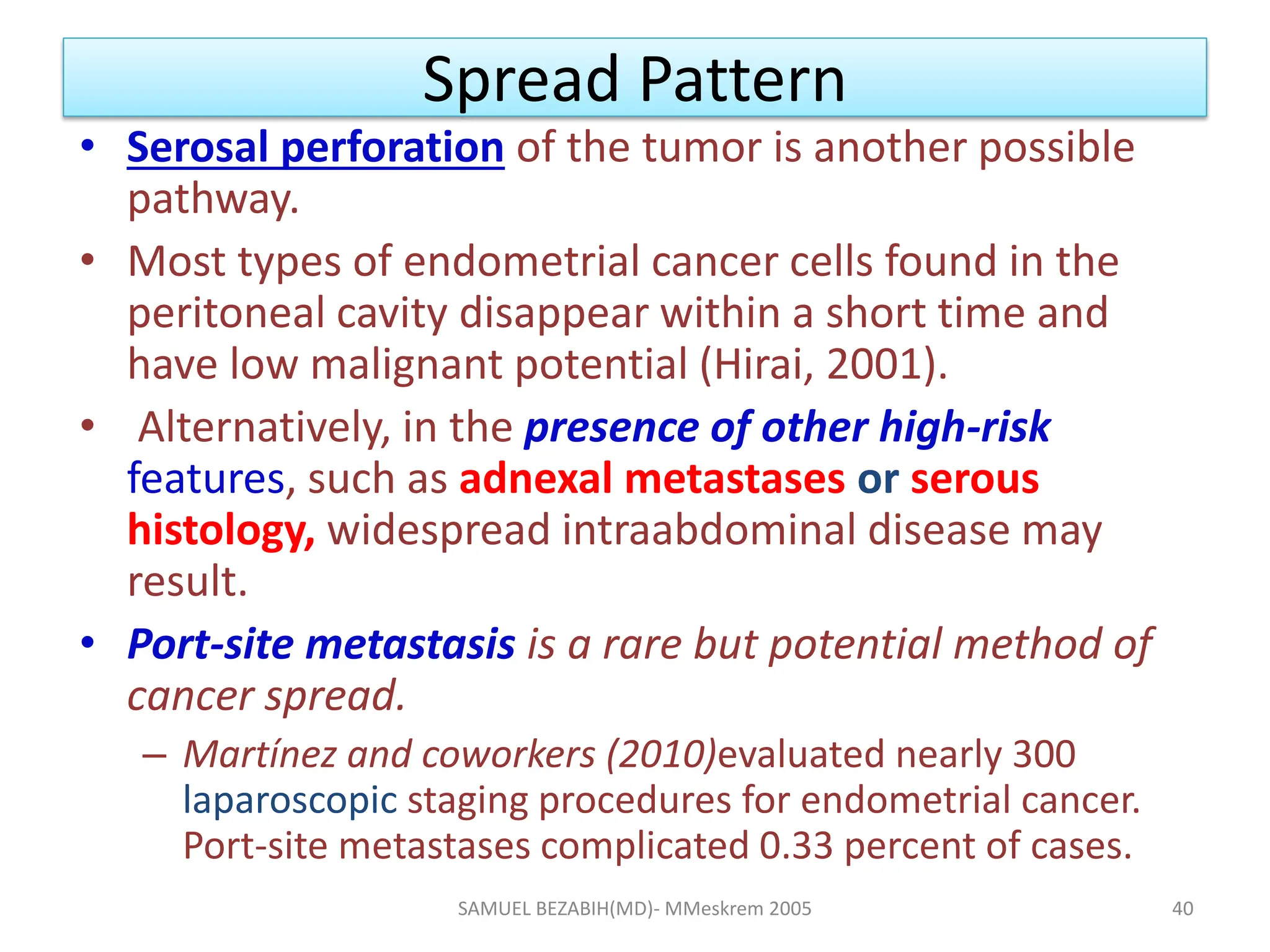
Spread Pattern
• Serosal perforation of the tumor is another possible
pathway.
• Most types of endometrial cancer cells found in the
peritoneal cavity disappear within a short time and
have low malignant potential (Hirai, 2001).
• Alternatively, in the presence of other high-risk
features, such as adnexal metastases or serous
histology, widespread intraabdominal disease may
result.
• Port-site metastasis is a rare but potential method of
cancer spread.
– Martínez and coworkers (2010)evaluated nearly 300
laparoscopic staging procedures for endometrial cancer.
Port-site metastases complicated 0.33 percent of cases.
SAMUEL BEZABIH(MD)- MMeskrem 2005 40
Surgical Staging
• Peritoneal washing/asciteis sampling
• Pelvic and abdominal exploration and resection
of visible lesion
• TAH + BSO
• Pelvic and paraaortic lymphadenectomy
• Patients with low grade T seem at low risk for LN
met ( G1 and 2 Endometroid T, <50%MM, < 2cm T Diam-
Preop biopsy + intraop FS) may not need LN
dissection (ACOG 2015)
• UPSC (uterine papillary serous ca) histology
should have extended surgical staging with an
infracolic omentectomy and bilateral peritoneal
biopsies of the pelvis, percolic gutter, and
diaphragm and resection of any met as in Ov Ca.
SAMUEL BEZABIH(MD)- MMeskrem 2005 41
I. Tumor confined to corpus uteri
Ia:-No or < ½ MM invasion
Ib:-> ½ Myometrial (MM)
II.Cx stromal invasion, but no
extension beyond UX (Ecx
glandular involvement alone- S1)
III.Local regional spread of T
IIIa.Serosa of corpus and/or
adnexa.
IIIb.Vagina and /or parametrium
IIIc. Met to pelvic or Paortic LN
IIIc1- Positive Pelvic LN
IIIc2-Paortic LN + Pelvic LN
IV.T invades bladder/bowel
mucosa (distant
metastasis)
– Iva.Bladder and /or bowel
mucosa invasion
– Ivb.Distant Metastasis
•Any stage can be Grade 1, 2 or 3
•Endocervical G involvement alone- no
more S2
•Positve cytology doesn’t change stage,
reported separately
FIGO Staging of Endometrial Ca- ACOG 2015
SAMUEL BEZABIH(MD)- MMeskrem 2005 42
SAMUEL BEZABIH(MD)- MMeskrem 2005 43
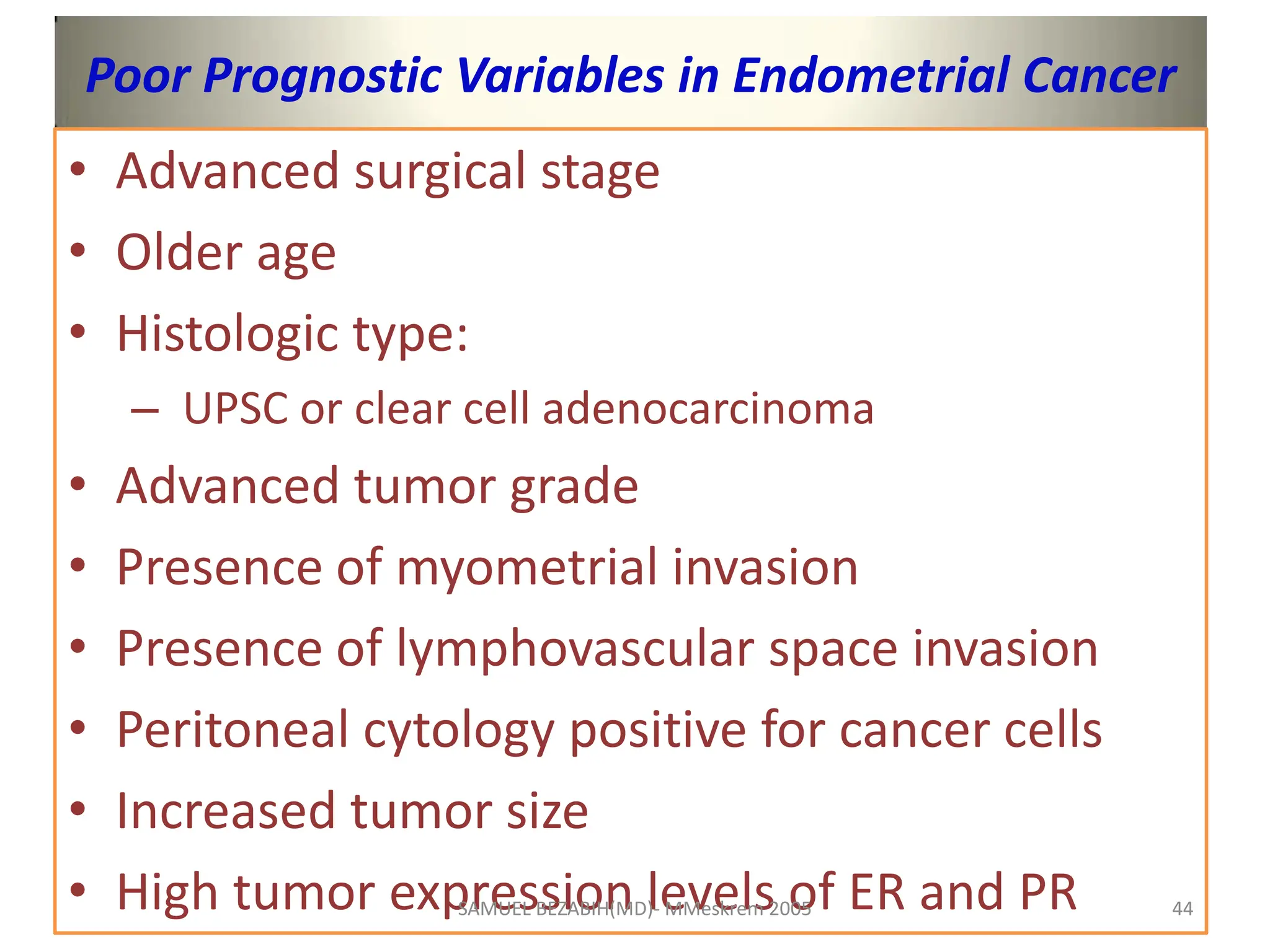
Poor Prognostic Variables in Endometrial Cancer
• Advanced surgical stage
• Older age
• Histologic type:
– UPSC or clear cell adenocarcinoma
• Advanced tumor grade
• Presence of myometrial invasion
• Presence of lymphovascular space invasion
• Peritoneal cytology positive for cancer cells
• Increased tumor size
• High tumor expression levels of ER and PR
SAMUEL BEZABIH(MD)- MMeskrem 2005 44
Treatment
• Primary RX
– Primary Surgical rx (staging)
• Hysterectomy + Bilateral Salpingoophorectomy
– Primary radiation therapy
– Primary hormonal therapy
• Adjuvant
– Chemotherapy
– Radiation
– Hormonal
SAMUEL BEZABIH(MD)- MMeskrem 2005 45
Surgical Rx
• Hysterectomy, BSO with surgical staging
• Few CIs to surgery:
• Fertility desire,
• Massive obesity,
• High operative risk,
• unresectable tumor
– Often Extrafacial (simple) Hysterectomy is
sufficient
– Class III Hysterectomy may be preferable if there
is clinically obvious extension of Em Ca to Cx.
– VH + BSO- an option for those who can’t tolerate
systematic S staging due to comorbidities
SAMUEL BEZABIH(MD)- MMeskrem 2005 46
SAMUEL BEZABIH(MD)- MMeskrem 2005
Distribution of Endometrial Cancer by FIGO Stage
(n =5281 patients)
47
Endometrial Cancer 5-Year Survival Rates for Each Surgical
Stage (n = 5562 Patients)
SAMUEL BEZABIH(MD)- MMeskrem 2005 48
Post Op Surveillance
• Follow up visit Q 3-6 mths for 2yrs, then Q6mths for 01
year , annually there after.
• At each visit;
– Hx on symptoms of recurrence V bleeding, pelvic pain,
wt loss, lethargy
– Thorough speculum, pelvic and RV exam
• Not recommended are:-
– Vaginal cytology and annual CXr -recurrences are detected
by clinical exam, Cxr low utility in detecting recurrence.
– Routine radiologic exm (CT,PET) unless in suspicion of
recurrence (ACOG 2015)
• Advanced disease that requires chemo/Radiorx warrant
more aggressive monitoring.
– Ca125 for UPSC
– Intermittent CT? MRI
SAMUEL BEZABIH(MD)- MMeskrem 2005 49
Adjuvant Chemorx
• For advanced or recurrent disease
• Only three cytotoxic drugs with definite
activity have been identified to date:
– doxorubicin, cisplatin, and paclitaxel (Barrena Medel, 2009).
• Other agents, 5-fluorouracil, vincristine,
ifosfamide, and ixabepilone, have possible
activity based on collected data (Miller, 2009a).
• TAP Paclitaxel (Taxol),doxorubicin
(Adriamycin), and cisplatin chemotherapy is
the adjuvant treatment of choice for
advanced endometrial cancer following
surgery. SAMUEL BEZABIH(MD)- MMeskrem 2005 50
Treatment of UPSC
• Comprehensive surgical staging
–Peritoneal washing
–TAH + BSO
–Infracolic omentectomy
–pelvic/and Para aortic LN dissection
–Peritoneal biopsy
–Aggressive debulking
SAMUEL BEZABIH(MD)- MMeskrem 2005 51
Treatment of UPSC ……
Postop. Follow up
• Stage IA
– simple observation
• Stages Ib and Ic
– chemoradio ( taxol + Carboplatin 3-6 cycles and
vaginal brachytherapy)
• stageII
– benefit from chemo +/- radio
• Stage III
– prone to have recurrence ,Chemoradiatio Taxol
cisplatin+ tumor directed radio
• Stage IV
– debulking- prognostic, atleast 6cycles of Taxol and
Cplatin SAMUEL BEZABIH(MD)- MMeskrem 2005 52
Prevention of Endometrial Ca
Screening
• No role for those with average or increased
risk
• Only for high risk group>35, potential
HNPCC mutation carriers ( family Hx---)
• Genetic counselling to identify those who may
benefit from specific germ line testing
• EmCa- common ‘sentinel Ca’ for Lynch S (Em,
Colonic,Small B, ureter, Renal Pelvis, Ovarian Ca) Gynecologists
play a pivotal role in identification of those
with the syndrome
SAMUEL BEZABIH(MD)- MMeskrem 2005 53
Prevention of Endometrial Ca
Prophylactic Surgery
• Since women with HNPCC have such a high
lifetime risk of developing endometrial cancer
(40 to 60 %) prophylactic hysterectomy is
another option.
• In a cohort of 315 HNPCC-mutation carriers,
Schmeler (2006) confirmed the benefit of this
approach by reporting a 100-percent risk
reduction.
• In general, BSO should also be performed due
to the 10--12% lifetime risk of ovarian cancer.
SAMUEL BEZABIH(MD)- MMeskrem 2005 54
Prevention of Endometrial Cancer
Can phyto-estrogens prevent EC ?
(Xu WH et al. BMJ 328, 2004:1285-1288)
• Case control study 832 patients
• RR for EC 0.67 in group with highest soya intake
Explanation:
• Soya contains “isoflavones“ (Genistein, Daidzein)
• Isoflavones block the estrogen receptor and are
• therefore not phytoestrogens, but phyto-SERM‘s
(selective estrogen receptor blockers)
• Therefore women with high BMI profit the most in
the study!
SAMUEL BEZABIH(MD)- MMeskrem 2005 55

Endometrial Cancer OBS & GYN ALL IN ONE Dr. Sami-1.pdf

  • 1.
    Clinical Forms TYPE II –Morelethal variety, 10% of all cases – In older post menopausal women – Aggressive high grade nuclei (less/poorly differentiated) or serous/papillary, clear cell Histology – no precursor lesion – P53 tumor supressor mutation – Underlying (back ground) endometrium is Atrophic/ associated with polyps – No clear epidimologic profile SAMUEL BEZABIH(MD)- MMeskrem 2005 27
  • 2.
    TYPE I VsType II( Germ. PPT) • FEATURES TYPE I TYPE II ESTROGEN DEPENDENCE E-Dependent E-independent ASSOCIATION WITH MENOPAUSE Pre/Postmenopausal Post Menopausal DIFFRENTIATION Grade I/II Grade III MYOMETRIAL INVASION Minimal Deep HYPERPLASIA Yes No Sub types Endometroid adenocarcinoma, secretory Adenosquamous, clear cell, serous prognosis good Poor SAMUEL BEZABIH(MD)- MMeskrem 2005 28
  • 3.
    pathology SAMUEL BEZABIH(MD)- MMeskrem2005 WHO Histologic Classification of Endometrial Carcinoma 29
  • 4.
    Endometrial Ca Diagnosis Symptoms •Prolonged, heavy, irregular menstruation • Postmenopausal V bleeding ( 5-10% likelihood) • Abnormal vaginal discharge may be another symptom in older women. • In more advanced disease, pelvic pressure and pain may reflect uterine enlargement or extra- uterine tumor spread. • Patients with serous or clear cell tumors often present with signs and symptoms suggestive of advanced epithelial ovarian cancer SAMUEL BEZABIH(MD)- MMeskrem 2005 30
  • 5.
    Endometrial Ca Diagnosis EndometrialBiopsy • Office pipelle biopsy, – if inadequate D and C • Outpatient hysteroscopy is more sensitive for focal endometrial lesions and thus has proved less helpful in diagnosing hyperplasia (Ben Yehuda, 1998). • Hysteroscopy is shown to have a risk of Intraperitoneal contamination with malignant cells. SAMUEL BEZABIH(MD)- MMeskrem 2005 31
  • 6.
    Endometrial Ca Diagnosis Papsmear • Not sensitive, ~ 50% False Negative • LBC- better detection of abnormal cells • inadequate for shift of practice . SAMUEL BEZABIH(MD)- MMeskrem 2005 32
  • 7.
    Lab and Imaging Ca 125  CXR  CT SAMUEL BEZABIH(MD)- MMeskrem 2005 33
  • 8.
    Histologic Grade • Gradingis determined microscopically by the architectural growth pattern – Arch is judged by the percentage of differentiated (glandular) versus nondifferentiated (solid) elements within the tumor specimen. • If nuclear atypia is advanced (NG 3) relative to the architectural grade, then grades 1 or 2 will be raised by one level this modification was shown to have prognostic value in the GOG study(protocol #33) (Zaino, 1995). – The nuclear grade depends on the appearance of the nucleus, e.g., size of nucleus, chromatin pattern, and is more subjective • Acc. to FIGO Nuclear Grading is used for all serous and clear cell adeno cas SAMUEL BEZABIH(MD)- MMeskrem 2005 34
  • 9.
    Histologic Grading • Themost widely used grading system for Em Ca is the three-tiered FIGO system. • Grade 1: – lesions typically are indolent with little propensity to spread outside the uterus or recur. • Grade 2: – tumors have an intermediate prognosis. • Grade 3: – cancers are associated with an increased potential for myometrial invasion and nodal metastasis. SAMUEL BEZABIH(MD)- MMeskrem 2005 35
  • 10.
    Histopathologic Criteria forAssessing Grade GRADE DEFFINITIONS(growth pattern) 1 < 5% of a non-squamous or non-morular solid growth pattern 2 6–50% of a non-squamous or nonmorular solid growth pattern 3 > 50% of a non-squamous or nonmorular solid growth SAMUEL BEZABIH(MD)- MMeskrem 2005  Areas of squamous differentiation are not considered to be solid tumor growth. 36
  • 11.
    Patterns of Spread •Endometrial cancers have several different potential ways to spread beyond the uterus (Morrow, 1991). • Type I endometrioid tumors and their variants most commonly spread, in order of frequency, by: 1. Direct extension, 2. Lymphatic metastasis, 3. Hematogenous dissemination, and 4. Intraperitoneal exfoliation. • Type II serous and clear cell carcinomas have a particular propensity for extra-uterine disease, in a pattern that closely resembles epithelial ovarian cancer. • In general, the various patterns of spread are interrelated and often develop simultaneously. SAMUEL BEZABIH(MD)- MMeskrem 2005 37
  • 12.
    Spread Pattern • Lymphaticchannel invasion and metastasis to the pelvic and paraaortic nodal chains can follow tumor penetration of the myometrium. – The lymphatic network draining the uterus is complex, and patients can have metastases to any single nodal group as well as combinations of groups (Burke, 1996). – This haphazard pattern is in contrast to cervical cancer, in which lymphatic spread usually follows a stepwise progression from pelvic to paraaortic to scalene nodal groups. SAMUEL BEZABIH(MD)- MMeskrem 2005 38
  • 13.
    Spread Pattern • Hematogenesisdissemination – most commonly results in metastases to the lung and less commonly, to the liver, brain, bone, and other sites. – Deep myometrial invasion is the strongest predictor of this pattern of spread (Mariani, 2001a). • Retrograde transtubal transport of exfoliated endometrial cancer cells is one mechanism by which malignant cells reach the peritoneal cavity. SAMUEL BEZABIH(MD)- MMeskrem 2005 39
  • 14.
    Spread Pattern • Serosalperforation of the tumor is another possible pathway. • Most types of endometrial cancer cells found in the peritoneal cavity disappear within a short time and have low malignant potential (Hirai, 2001). • Alternatively, in the presence of other high-risk features, such as adnexal metastases or serous histology, widespread intraabdominal disease may result. • Port-site metastasis is a rare but potential method of cancer spread. – Martínez and coworkers (2010)evaluated nearly 300 laparoscopic staging procedures for endometrial cancer. Port-site metastases complicated 0.33 percent of cases. SAMUEL BEZABIH(MD)- MMeskrem 2005 40
  • 15.
    Surgical Staging • Peritonealwashing/asciteis sampling • Pelvic and abdominal exploration and resection of visible lesion • TAH + BSO • Pelvic and paraaortic lymphadenectomy • Patients with low grade T seem at low risk for LN met ( G1 and 2 Endometroid T, <50%MM, < 2cm T Diam- Preop biopsy + intraop FS) may not need LN dissection (ACOG 2015) • UPSC (uterine papillary serous ca) histology should have extended surgical staging with an infracolic omentectomy and bilateral peritoneal biopsies of the pelvis, percolic gutter, and diaphragm and resection of any met as in Ov Ca. SAMUEL BEZABIH(MD)- MMeskrem 2005 41
  • 16.
    I. Tumor confinedto corpus uteri Ia:-No or < ½ MM invasion Ib:-> ½ Myometrial (MM) II.Cx stromal invasion, but no extension beyond UX (Ecx glandular involvement alone- S1) III.Local regional spread of T IIIa.Serosa of corpus and/or adnexa. IIIb.Vagina and /or parametrium IIIc. Met to pelvic or Paortic LN IIIc1- Positive Pelvic LN IIIc2-Paortic LN + Pelvic LN IV.T invades bladder/bowel mucosa (distant metastasis) – Iva.Bladder and /or bowel mucosa invasion – Ivb.Distant Metastasis •Any stage can be Grade 1, 2 or 3 •Endocervical G involvement alone- no more S2 •Positve cytology doesn’t change stage, reported separately FIGO Staging of Endometrial Ca- ACOG 2015 SAMUEL BEZABIH(MD)- MMeskrem 2005 42
  • 17.
  • 18.
    Poor Prognostic Variablesin Endometrial Cancer • Advanced surgical stage • Older age • Histologic type: – UPSC or clear cell adenocarcinoma • Advanced tumor grade • Presence of myometrial invasion • Presence of lymphovascular space invasion • Peritoneal cytology positive for cancer cells • Increased tumor size • High tumor expression levels of ER and PR SAMUEL BEZABIH(MD)- MMeskrem 2005 44
  • 19.
    Treatment • Primary RX –Primary Surgical rx (staging) • Hysterectomy + Bilateral Salpingoophorectomy – Primary radiation therapy – Primary hormonal therapy • Adjuvant – Chemotherapy – Radiation – Hormonal SAMUEL BEZABIH(MD)- MMeskrem 2005 45
  • 20.
    Surgical Rx • Hysterectomy,BSO with surgical staging • Few CIs to surgery: • Fertility desire, • Massive obesity, • High operative risk, • unresectable tumor – Often Extrafacial (simple) Hysterectomy is sufficient – Class III Hysterectomy may be preferable if there is clinically obvious extension of Em Ca to Cx. – VH + BSO- an option for those who can’t tolerate systematic S staging due to comorbidities SAMUEL BEZABIH(MD)- MMeskrem 2005 46
  • 21.
    SAMUEL BEZABIH(MD)- MMeskrem2005 Distribution of Endometrial Cancer by FIGO Stage (n =5281 patients) 47
  • 22.
    Endometrial Cancer 5-YearSurvival Rates for Each Surgical Stage (n = 5562 Patients) SAMUEL BEZABIH(MD)- MMeskrem 2005 48
  • 23.
    Post Op Surveillance •Follow up visit Q 3-6 mths for 2yrs, then Q6mths for 01 year , annually there after. • At each visit; – Hx on symptoms of recurrence V bleeding, pelvic pain, wt loss, lethargy – Thorough speculum, pelvic and RV exam • Not recommended are:- – Vaginal cytology and annual CXr -recurrences are detected by clinical exam, Cxr low utility in detecting recurrence. – Routine radiologic exm (CT,PET) unless in suspicion of recurrence (ACOG 2015) • Advanced disease that requires chemo/Radiorx warrant more aggressive monitoring. – Ca125 for UPSC – Intermittent CT? MRI SAMUEL BEZABIH(MD)- MMeskrem 2005 49
  • 24.
    Adjuvant Chemorx • Foradvanced or recurrent disease • Only three cytotoxic drugs with definite activity have been identified to date: – doxorubicin, cisplatin, and paclitaxel (Barrena Medel, 2009). • Other agents, 5-fluorouracil, vincristine, ifosfamide, and ixabepilone, have possible activity based on collected data (Miller, 2009a). • TAP Paclitaxel (Taxol),doxorubicin (Adriamycin), and cisplatin chemotherapy is the adjuvant treatment of choice for advanced endometrial cancer following surgery. SAMUEL BEZABIH(MD)- MMeskrem 2005 50
  • 25.
    Treatment of UPSC •Comprehensive surgical staging –Peritoneal washing –TAH + BSO –Infracolic omentectomy –pelvic/and Para aortic LN dissection –Peritoneal biopsy –Aggressive debulking SAMUEL BEZABIH(MD)- MMeskrem 2005 51
  • 26.
    Treatment of UPSC…… Postop. Follow up • Stage IA – simple observation • Stages Ib and Ic – chemoradio ( taxol + Carboplatin 3-6 cycles and vaginal brachytherapy) • stageII – benefit from chemo +/- radio • Stage III – prone to have recurrence ,Chemoradiatio Taxol cisplatin+ tumor directed radio • Stage IV – debulking- prognostic, atleast 6cycles of Taxol and Cplatin SAMUEL BEZABIH(MD)- MMeskrem 2005 52
  • 27.
    Prevention of EndometrialCa Screening • No role for those with average or increased risk • Only for high risk group>35, potential HNPCC mutation carriers ( family Hx---) • Genetic counselling to identify those who may benefit from specific germ line testing • EmCa- common ‘sentinel Ca’ for Lynch S (Em, Colonic,Small B, ureter, Renal Pelvis, Ovarian Ca) Gynecologists play a pivotal role in identification of those with the syndrome SAMUEL BEZABIH(MD)- MMeskrem 2005 53
  • 28.
    Prevention of EndometrialCa Prophylactic Surgery • Since women with HNPCC have such a high lifetime risk of developing endometrial cancer (40 to 60 %) prophylactic hysterectomy is another option. • In a cohort of 315 HNPCC-mutation carriers, Schmeler (2006) confirmed the benefit of this approach by reporting a 100-percent risk reduction. • In general, BSO should also be performed due to the 10--12% lifetime risk of ovarian cancer. SAMUEL BEZABIH(MD)- MMeskrem 2005 54
  • 29.
    Prevention of EndometrialCancer Can phyto-estrogens prevent EC ? (Xu WH et al. BMJ 328, 2004:1285-1288) • Case control study 832 patients • RR for EC 0.67 in group with highest soya intake Explanation: • Soya contains “isoflavones“ (Genistein, Daidzein) • Isoflavones block the estrogen receptor and are • therefore not phytoestrogens, but phyto-SERM‘s (selective estrogen receptor blockers) • Therefore women with high BMI profit the most in the study! SAMUEL BEZABIH(MD)- MMeskrem 2005 55