Endometrial
Carcinoma
Introduction
• One of the commonest malignancy of the
female genital tract, especially in developed
countries
• India – 3rd (after cervical & ovarian
malignancies)
• Peak incidence – 6th & 7th decade of life
• Average – 60 years
• Post menopausal – upto 80%
• Below 40 years - 5%
• 5 year survival rate – Approximately 75%
Epidemiology
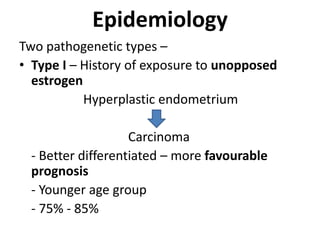
Two pathogenetic types –
• Type I – History of exposure to unopposed
estrogen
Hyperplastic endometrium
Carcinoma
- Better differentiated – more favourable
prognosis
- Younger age group
- 75% - 85%
• Type II – Without history of estrogenic
stimulation
–Usually occurs in the background of an
atrophic endometrium
–Older & thin women
–Less differentiated
–Poorer prognosis
Risk Factors
• Family history / Lynch II syndrome
– 40-60% lifetime risk
• Nulliparity
– 2 to 3 times higher risk
• Early menarche / Late menopause
– Before 12 years / After 52 years
• Unopposed estrogen therapy
– Increases risk 4-8 times
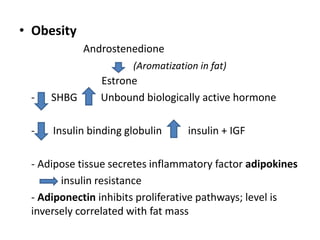
• Obesity
Androstenedione
Estrone
- SHBG Unbound biologically active hormone
- Insulin binding globulin insulin + IGF
- Adipose tissue secretes inflammatory factor adipokines
insulin resistance
- Adiponectin inhibits proliferative pathways; level is
inversely correlated with fat mass
(Aromatization in fat)
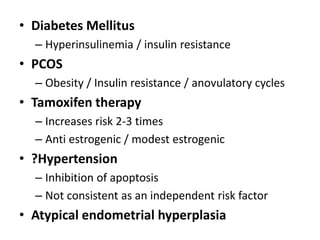
• Diabetes Mellitus
– Hyperinsulinemia / insulin resistance
• PCOS
– Obesity / Insulin resistance / anovulatory cycles
• Tamoxifen therapy
– Increases risk 2-3 times
– Anti estrogenic / modest estrogenic
• ?Hypertension
– Inhibition of apoptosis
– Not consistent as an independent risk factor
• Atypical endometrial hyperplasia
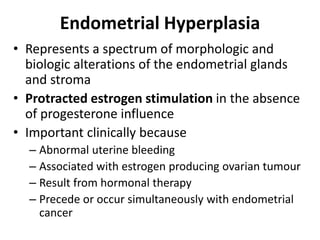
Endometrial Hyperplasia
• Represents a spectrum of morphologic and
biologic alterations of the endometrial glands
and stroma
• Protracted estrogen stimulation in the absence
of progesterone influence
• Important clinically because
– Abnormal uterine bleeding
– Associated with estrogen producing ovarian tumour
– Result from hormonal therapy
– Precede or occur simultaneously with endometrial
cancer
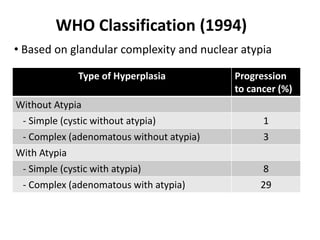
Type of Hyperplasia Progression
to cancer (%)
Without Atypia
- Simple (cystic without atypia) 1
- Complex (adenomatous without atypia) 3
With Atypia
- Simple (cystic with atypia) 8
- Complex (adenomatous with atypia) 29
WHO Classification (1994)
• Based on glandular complexity and nuclear atypia
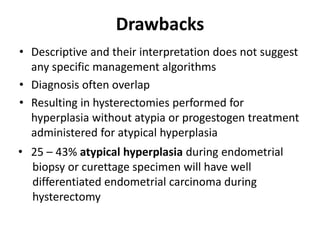
Drawbacks
• Descriptive and their interpretation does not suggest
any specific management algorithms
• Diagnosis often overlap
• Resulting in hysterectomies performed for
hyperplasia without atypia or progestogen treatment
administered for atypical hyperplasia
• 25 – 43% atypical hyperplasia during endometrial
biopsy or curettage specimen will have well
differentiated endometrial carcinoma during
hysterectomy
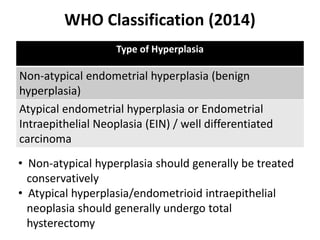
WHO Classification (2014)
Type of Hyperplasia
Non-atypical endometrial hyperplasia (benign
hyperplasia)
Atypical endometrial hyperplasia or Endometrial
Intraepithelial Neoplasia (EIN) / well differentiated
carcinoma
• Non-atypical hyperplasia should generally be treated
conservatively
• Atypical hyperplasia/endometrioid intraepithelial
neoplasia should generally undergo total
hysterectomy
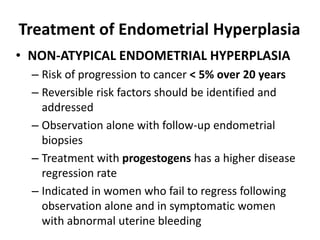
Treatment of Endometrial Hyperplasia
• NON-ATYPICAL ENDOMETRIAL HYPERPLASIA
– Risk of progression to cancer < 5% over 20 years
– Reversible risk factors should be identified and
addressed
– Observation alone with follow-up endometrial
biopsies
– Treatment with progestogens has a higher disease
regression rate
– Indicated in women who fail to regress following
observation alone and in symptomatic women
with abnormal uterine bleeding
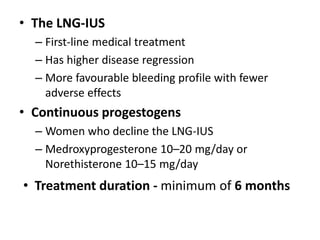
• The LNG-IUS
– First-line medical treatment
– Has higher disease regression
– More favourable bleeding profile with fewer
adverse effects
• Continuous progestogens
– Women who decline the LNG-IUS
– Medroxyprogesterone 10–20 mg/day or
Norethisterone 10–15 mg/day
• Treatment duration - minimum of 6 months
Follow up
• Endometrial surveillance
– Minimum of 6-monthly intervals
– At least two consecutive 6-monthly negative
biopsies
• Recurrence of abnormal vaginal bleeding after
completion of treatment may indicate disease
relapse
• Higher risk of relapse – 6 monthly
endometrial biopsies are recommended. Once
2 consecutive negative biopsies long-term
follow-up annual endometrial biopsies
• Indications of Hysterectomy
– Progression to atypical hyperplasia
– No histological regression of hyperplasia despite
12 months of treatment
– Relapse
– Persistence of bleeding symptoms
– Patient declines surveillance or comply with
medical treatment
• Endometrial ablation - not recommended as
complete and persistent endometrial destruction cannot
be ensured and intrauterine adhesion formation may
preclude future endometrial histological surveillance
• ATYPICAL ENDOMETRIAL HYPERPLASIA
– Total Hysterectomy with/without BSO
– Women wishing to retain their fertility should be
counselled
– Pre-treatment investigations to rule out invasive
endometrial cancer or co-existing ovarian cancer
– First line - LNG-IUS
– Second line - Oral progestogens
– Once fertility is no longer desired - hysterectomy
Follow up
• Routine endometrial surveillance
– Should include endometrial biopsy
– Review intervals every 3 months until two
consecutive negative biopsies
• Long-term follow-up with endometrial biopsy
every 6–12 months until a hysterectomy is
performed.
Screening & Surveillance
• Screening of all high risk individuals - not
advised
• Early diagnosis, if patient presents early results
in a high cure rate
• Work up of AUB even in women < 40 years
should include endometrial biopsy
• Pap smear – inadequate
• Endometrial cytology - insensitive
• Lynch II syndrome / HNPCC
– Defective mismatch repair (MMR) proteins
resulting in mutations that degrade the self repair
capability of DNA
– Inherited as autosomal dominant
– Annual pelvic examination, TVS, endometrial
biopsy beginning at 30 to 35 years
– Prophylactic hysterectomy with BSO is an
effective primary prevention strategy in females
with MSH6 mutations
Symptoms
• Abnormal bleeding
• Discharge PV
• Hematometra / pyometra
• Pressure symptoms
• Colicky pain – pyometra or metastatic spread
• < 5% are asymptomatic
Post menopausal pyometra – 50% risk of
malignancy
Signs
• Physical examination – usually unremarkable
• Associated constitutional factors – Obesity &
hypertension
• Peripheral lymph nodes & breast
• Abdominal examination – ascitis, lump in
hepatic or omental metastasis
• Bimanual recto-vaginal examination – size and
mobility of uterus, adnexa for masses,
parametria for induration, POD for nodularity
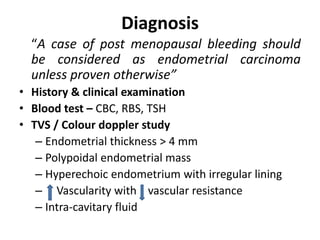
Diagnosis
“A case of post menopausal bleeding should
be considered as endometrial carcinoma
unless proven otherwise”
• History & clinical examination
• Blood test – CBC, RBS, TSH
• TVS / Colour doppler study
– Endometrial thickness > 4 mm
– Polypoidal endometrial mass
– Hyperechoic endometrium with irregular lining
– Vascularity with vascular resistance
– Intra-cavitary fluid
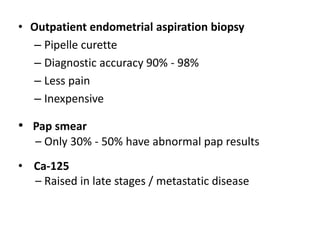
• Outpatient endometrial aspiration biopsy
– Pipelle curette
– Diagnostic accuracy 90% - 98%
– Less pain
– Inexpensive
• Pap smear
– Only 30% - 50% have abnormal pap results
• Ca-125
– Raised in late stages / metastatic disease
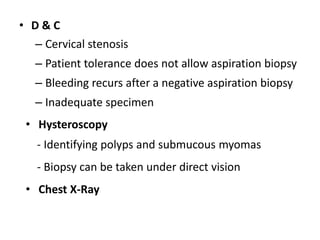
• D & C
– Cervical stenosis
– Patient tolerance does not allow aspiration biopsy
– Bleeding recurs after a negative aspiration biopsy
– Inadequate specimen
• Hysteroscopy
- Identifying polyps and submucous myomas
- Biopsy can be taken under direct vision
• Chest X-Ray
• Further investigations
– CT Scan
– MRI
– PET Scan
Histologic classification
• Endometrioid Adenocarcinoma
- Accounts for about 80 %
- Usually well differentiated with good prognosis
- Variants
1) Squamous differentiation – 15-25%
2) Villoglandular or papillary – 2%
3) Secretory - 1%
• Mucinous Carcinoma
– About 5%
– More than half of the tumour is composed of cells
with intracytoplasmic mucin
– Well differrentiated with good prognosis
• Serous Carcinoma
– Also referred to as uterine papillary serous
carcinoma
– About 3% - 4%
– High risk lesion with high risk of recurrence
– Often associated with lymphovascular space and
deep myometrial invasion
• Clear Cell carcinoma
– Less than 5%
– Characteristically occur in older women
– Prognosis is poor, overall survival rate vary
between 33% - 64%
– Complete surgical staging is important as 52% of
patients with stage I have metastatic disease
• Squamous Carcinoma
– Rare
– Often associated with cervical stenosis, chronic
inflammation and pyometra
– Prognosis is poor
– Estimated survival rate in patients with clinical
stage I disease is 36%
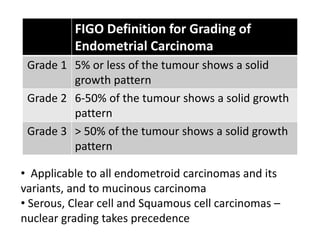
FIGO Definition for Grading of
Endometrial Carcinoma
Grade 1 5% or less of the tumour shows a solid
growth pattern
Grade 2 6-50% of the tumour shows a solid growth
pattern
Grade 3 > 50% of the tumour shows a solid growth
pattern
• Applicable to all endometroid carcinomas and its
variants, and to mucinous carcinoma
• Serous, Clear cell and Squamous cell carcinomas –
nuclear grading takes precedence
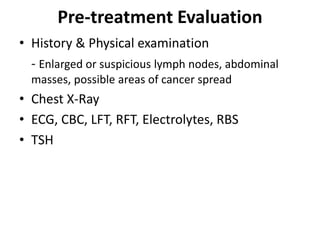
Pre-treatment Evaluation
• History & Physical examination
- Enlarged or suspicious lymph nodes, abdominal
masses, possible areas of cancer spread
• Chest X-Ray
• ECG, CBC, LFT, RFT, Electrolytes, RBS
• TSH
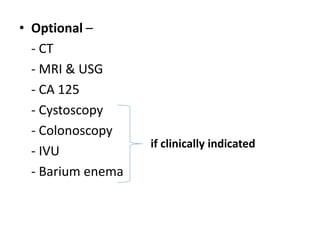
• Optional –
- CT
- MRI & USG
- CA 125
- Cystoscopy
- Colonoscopy
- IVU
- Barium enema
if clinically indicated
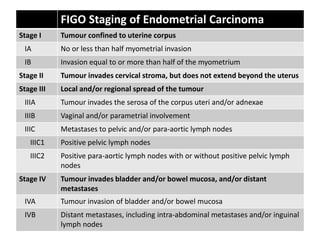
FIGO Staging of Endometrial Carcinoma
Stage I Tumour confined to uterine corpus
IA No or less than half myometrial invasion
IB Invasion equal to or more than half of the myometrium
Stage II Tumour invades cervical stroma, but does not extend beyond the uterus
Stage III Local and/or regional spread of the tumour
IIIA Tumour invades the serosa of the corpus uteri and/or adnexae
IIIB Vaginal and/or parametrial involvement
IIIC Metastases to pelvic and/or para-aortic lymph nodes
IIIC1 Positive pelvic lymph nodes
IIIC2 Positive para-aortic lymph nodes with or without positive pelvic lymph
nodes
Stage IV Tumour invades bladder and/or bowel mucosa, and/or distant
metastases
IVA Tumour invasion of bladder and/or bowel mucosa
IVB Distant metastases, including intra-abdominal metastases and/or inguinal
lymph nodes
Spread
• In general, spread from the uterine cavity is slow,
probably because lymphatics of the functional layer
are small and sparsely distributed
• Local spread
– Slow invasion of the myometrium is the
commonest spread
– May produce considerable uterine enlargement
– May involve the vaginal vault
• Lymphatic spread
– Most important prognostic factor in early stage
disease
– 6 fold higher chance of developing recurrent
cancer
– Stage I – about 10% will have pelvic and 6% will
have para-aortic lymph node metastasis
– 5 year disease free survival rate for patients with
lymph node metastasis is 54%, compared with
90% for patients without lymph node metastasis
• Venous spread
– Not a common feature
– Might account for the occasional appearance of
low vaginal metastasis
• Tubal spread
– May account for isolated ovarian metastasis
– Malignant cells can pass along the tube in the
same way as peritoneal spill can occur during
menstruation
Prognostic Variables
• Age
- Better prognosis in younger patients
- Increased risk for recurrence in older patients
• Histologic type
- Non endometroid carry increased risk for
recurrence and distant spread
• Histologic grade
- Increasing tumour anaplasiais associated with deep
myometrial invasion, cervical extension, lymph node
metastasis, local recurrence and distant metastasis
• Tumour size
- Significant factor for lymph node metastasis and
survival
• Hormone receptor status
- Tumour positive for one or both receptor – longer
survival time
• DNA Ploidy and Proliferative Index
- Proportion of nondiploid tumours increases with
stage, lack of tumour differentiation and depth of
myometrial invasion
• Myometrial invasion
- Increasing depth of invasion is associated with
increasing likelihood of extrauterine spread and
recurrence
• Lymphovascular space invasion
- Independent risk factor for recurrence and death
• Isthmus & Cervical extension
- Associated with an increased risk for extrauterine
disease, lymph node metastasis and recurrence
• Peritoneal Cytology
- Seems to have an adverse effect on survival only if
the endometrial cancer has spread to the adnexa,
peritoneum or lymph nodes
• Stage IIIA
- Adnexal or uterine serosal involvement – other
poor prognostic factors that place them at high risk
for recurrence
• Lymph node metastasis
- Most important prognostic factor in clinical early
stage disease
• Intraperitoneal metastasis
- Gross intraperitoneal spread is highly corellated
with lymph node metastasis
OPTIONS FOR THERAPY
• Surgical
• Radiotherapy
• Chemotherapy
• No therapy
PREOPERATIVE ASSESSMENT &
PREPARATION
• Thorough history & physical examination
• Previous medical history
• Symptoms of metastatic disease
– Abdominal or pelvic pain
– Bowel or bladder dysfunction
– Lower extremity pain or swelling
– Shortness of breath or cough
Surgical Treatment
• Peritoneal cytology
• Hysterectomy
• Bilateral salpingoopherectomy
• Staging
• Omentectomy + appendectomy + peritoneal
biopsy – nonendometroid cancer
• Lymphadenectomy
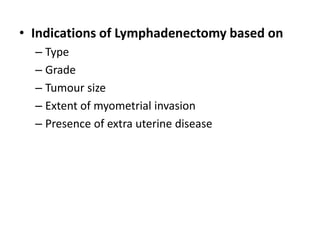
• Indications of Lymphadenectomy based on
– Type
– Grade
– Tumour size
– Extent of myometrial invasion
– Presence of extra uterine disease
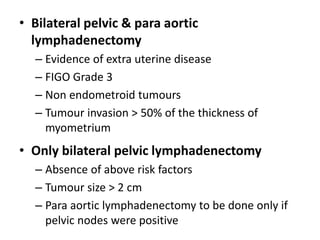
• Bilateral pelvic & para aortic
lymphadenectomy
– Evidence of extra uterine disease
– FIGO Grade 3
– Non endometroid tumours
– Tumour invasion > 50% of the thickness of
myometrium
• Only bilateral pelvic lymphadenectomy
– Absence of above risk factors
– Tumour size > 2 cm
– Para aortic lymphadenectomy to be done only if
pelvic nodes were positive
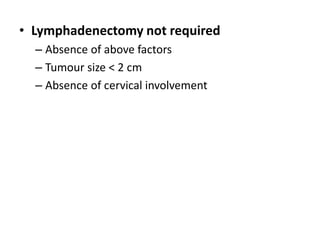
• Lymphadenectomy not required
– Absence of above factors
– Tumour size < 2 cm
– Absence of cervical involvement
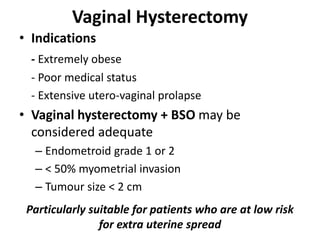
Vaginal Hysterectomy
• Indications
- Extremely obese
- Poor medical status
- Extensive utero-vaginal prolapse
• Vaginal hysterectomy + BSO may be
considered adequate
– Endometroid grade 1 or 2
– < 50% myometrial invasion
– Tumour size < 2 cm
Particularly suitable for patients who are at low risk
for extra uterine spread
• Laparoscopic management
• Robotic assisted surgery
• Thromboprophylaxis
Should be considered in patients > 40 years with
- h/o DVT or pulmonary embolism
- Varicose vein
- Obesity
- Estrogen therapy
- Prolonged surgery
Radiation therapy as primary
treatment
• 5 – 15% unsuitable for surgery due to medical
comorbidities
• Intracavitary radiation
• External beam radiation therapy
MODALITIES OF POSTOPERATIVE
TREATMENT
• Observation
- Grade 1, 2 lesions without myometrial invasion
• Vaginal Vault Radiation
- Grade 3 & lymphovascular space invasion in stage I
• External Pelvic Radiation
- Extrauterine pelvic disease – including adnexal
spread, parametrial involvement, pelvic lymph node
metastases
• Extended Field Radiation
- Histologically proven para aortic node metastases
and no other evidence of spread outside the pelvis
- Entire pelvis, common iliac lymph nodes, para
aortic lymph nodes
• Whole Abdomen Radiation
- Stage III & IV
- Uncommon as chemotherapy is superior to
radiotherapy in advanced disease
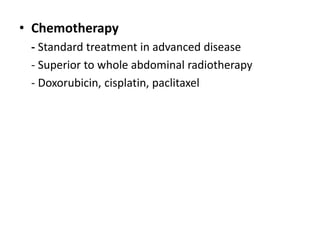
• Chemotherapy
- Standard treatment in advanced disease
- Superior to whole abdominal radiotherapy
- Doxorubicin, cisplatin, paclitaxel
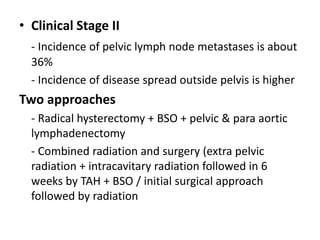
• Clinical Stage II
- Incidence of pelvic lymph node metastases is about
36%
- Incidence of disease spread outside pelvis is higher
Two approaches
- Radical hysterectomy + BSO + pelvic & para aortic
lymphadenectomy
- Combined radiation and surgery (extra pelvic
radiation + intracavitary radiation followed in 6
weeks by TAH + BSO / initial surgical approach
followed by radiation
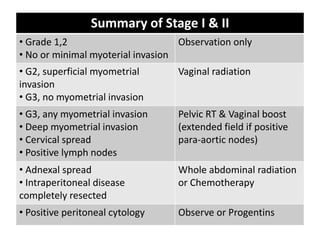
Summary of Stage I & II
• Grade 1,2
• No or minimal myoterial invasion
Observation only
• G2, superficial myometrial
invasion
• G3, no myometrial invasion
Vaginal radiation
• G3, any myometrial invasion
• Deep myometrial invasion
• Cervical spread
• Positive lymph nodes
Pelvic RT & Vaginal boost
(extended field if positive
para-aortic nodes)
• Adnexal spread
• Intraperitoneal disease
completely resected
Whole abdominal radiation
or Chemotherapy
• Positive peritoneal cytology Observe or Progentins
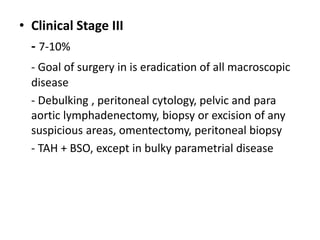
• Clinical Stage III
- 7-10%
- Goal of surgery in is eradication of all macroscopic
disease
- Debulking , peritoneal cytology, pelvic and para
aortic lymphadenectomy, biopsy or excision of any
suspicious areas, omentectomy, peritoneal biopsy
- TAH + BSO, except in bulky parametrial disease
• Clinical Stage IV
- 3%
- Combination of Surgery + RT + Hormonal /
Chemotherapy
- Objective of surgery is to provide palliative relief of
bleeding, discharge and complications involving the
bladder and rectum
- Pelvic exanteration
• Recurrent Disease
- About ¼ treated for early endometrial cancer
develop recurrent disease
- Multimodality approach – RT Radical Surgical
Resection intra-operative RT (IORT)
- Hormonal therapy – Progestins, Tamoxifen
- Chemotherapy – response rates 38% - 76%
- Doxorubicin + Cisplatin
- Cyclophosphamide + Doxorubicin + Cisplatin
- Paclitaxel + Cisplatin +/- Doxorubicin
- Carboplatin + Paclitaxel
• FIGO Annual Report 2001
• Overall 5 year survival rate – 76%
• Patients undergoing surgical staging had much
better survival rate than those staged clinically
(Stage I - 87% / 54%)
(Stage II - 76% / 41%)
(Stage IIII - 57% / 23%)
(Stage IV - 18% / 12%)
TREATMENT RESULTS
FOLLOW UP
• History & Physical examination
• First 2 years – every 3 to 4 months, then 6 months
thereafter
• Half of patients with recurrence have symptoms
• 75% -85% of recurrences are detected on physical
examination
• Chest X-Ray every 12 months

caendometrium-1-220817052735-f5d0c990.pdf

  • 1.
  • 2.
    Introduction • One ofthe commonest malignancy of the female genital tract, especially in developed countries • India – 3rd (after cervical & ovarian malignancies) • Peak incidence – 6th & 7th decade of life • Average – 60 years • Post menopausal – upto 80% • Below 40 years - 5% • 5 year survival rate – Approximately 75%
  • 3.
    Epidemiology Two pathogenetic types– • Type I – History of exposure to unopposed estrogen Hyperplastic endometrium Carcinoma - Better differentiated – more favourable prognosis - Younger age group - 75% - 85%
  • 4.
    • Type II– Without history of estrogenic stimulation –Usually occurs in the background of an atrophic endometrium –Older & thin women –Less differentiated –Poorer prognosis
  • 5.
    Risk Factors • Familyhistory / Lynch II syndrome – 40-60% lifetime risk • Nulliparity – 2 to 3 times higher risk • Early menarche / Late menopause – Before 12 years / After 52 years • Unopposed estrogen therapy – Increases risk 4-8 times
  • 6.
    • Obesity Androstenedione Estrone - SHBGUnbound biologically active hormone - Insulin binding globulin insulin + IGF - Adipose tissue secretes inflammatory factor adipokines insulin resistance - Adiponectin inhibits proliferative pathways; level is inversely correlated with fat mass (Aromatization in fat)
  • 7.
    • Diabetes Mellitus –Hyperinsulinemia / insulin resistance • PCOS – Obesity / Insulin resistance / anovulatory cycles • Tamoxifen therapy – Increases risk 2-3 times – Anti estrogenic / modest estrogenic • ?Hypertension – Inhibition of apoptosis – Not consistent as an independent risk factor • Atypical endometrial hyperplasia
  • 8.
    Endometrial Hyperplasia • Representsa spectrum of morphologic and biologic alterations of the endometrial glands and stroma • Protracted estrogen stimulation in the absence of progesterone influence • Important clinically because – Abnormal uterine bleeding – Associated with estrogen producing ovarian tumour – Result from hormonal therapy – Precede or occur simultaneously with endometrial cancer
  • 9.
    Type of HyperplasiaProgression to cancer (%) Without Atypia - Simple (cystic without atypia) 1 - Complex (adenomatous without atypia) 3 With Atypia - Simple (cystic with atypia) 8 - Complex (adenomatous with atypia) 29 WHO Classification (1994) • Based on glandular complexity and nuclear atypia
  • 10.
    Drawbacks • Descriptive andtheir interpretation does not suggest any specific management algorithms • Diagnosis often overlap • Resulting in hysterectomies performed for hyperplasia without atypia or progestogen treatment administered for atypical hyperplasia • 25 – 43% atypical hyperplasia during endometrial biopsy or curettage specimen will have well differentiated endometrial carcinoma during hysterectomy
  • 11.
    WHO Classification (2014) Typeof Hyperplasia Non-atypical endometrial hyperplasia (benign hyperplasia) Atypical endometrial hyperplasia or Endometrial Intraepithelial Neoplasia (EIN) / well differentiated carcinoma • Non-atypical hyperplasia should generally be treated conservatively • Atypical hyperplasia/endometrioid intraepithelial neoplasia should generally undergo total hysterectomy
  • 12.
    Treatment of EndometrialHyperplasia • NON-ATYPICAL ENDOMETRIAL HYPERPLASIA – Risk of progression to cancer < 5% over 20 years – Reversible risk factors should be identified and addressed – Observation alone with follow-up endometrial biopsies – Treatment with progestogens has a higher disease regression rate – Indicated in women who fail to regress following observation alone and in symptomatic women with abnormal uterine bleeding
  • 13.
    • The LNG-IUS –First-line medical treatment – Has higher disease regression – More favourable bleeding profile with fewer adverse effects • Continuous progestogens – Women who decline the LNG-IUS – Medroxyprogesterone 10–20 mg/day or Norethisterone 10–15 mg/day • Treatment duration - minimum of 6 months
  • 14.
    Follow up • Endometrialsurveillance – Minimum of 6-monthly intervals – At least two consecutive 6-monthly negative biopsies • Recurrence of abnormal vaginal bleeding after completion of treatment may indicate disease relapse • Higher risk of relapse – 6 monthly endometrial biopsies are recommended. Once 2 consecutive negative biopsies long-term follow-up annual endometrial biopsies
  • 15.
    • Indications ofHysterectomy – Progression to atypical hyperplasia – No histological regression of hyperplasia despite 12 months of treatment – Relapse – Persistence of bleeding symptoms – Patient declines surveillance or comply with medical treatment • Endometrial ablation - not recommended as complete and persistent endometrial destruction cannot be ensured and intrauterine adhesion formation may preclude future endometrial histological surveillance
  • 16.
    • ATYPICAL ENDOMETRIALHYPERPLASIA – Total Hysterectomy with/without BSO – Women wishing to retain their fertility should be counselled – Pre-treatment investigations to rule out invasive endometrial cancer or co-existing ovarian cancer – First line - LNG-IUS – Second line - Oral progestogens – Once fertility is no longer desired - hysterectomy
  • 17.
    Follow up • Routineendometrial surveillance – Should include endometrial biopsy – Review intervals every 3 months until two consecutive negative biopsies • Long-term follow-up with endometrial biopsy every 6–12 months until a hysterectomy is performed.
  • 18.
    Screening & Surveillance •Screening of all high risk individuals - not advised • Early diagnosis, if patient presents early results in a high cure rate • Work up of AUB even in women < 40 years should include endometrial biopsy • Pap smear – inadequate • Endometrial cytology - insensitive
  • 19.
    • Lynch IIsyndrome / HNPCC – Defective mismatch repair (MMR) proteins resulting in mutations that degrade the self repair capability of DNA – Inherited as autosomal dominant – Annual pelvic examination, TVS, endometrial biopsy beginning at 30 to 35 years – Prophylactic hysterectomy with BSO is an effective primary prevention strategy in females with MSH6 mutations
  • 20.
    Symptoms • Abnormal bleeding •Discharge PV • Hematometra / pyometra • Pressure symptoms • Colicky pain – pyometra or metastatic spread • < 5% are asymptomatic Post menopausal pyometra – 50% risk of malignancy
  • 21.
    Signs • Physical examination– usually unremarkable • Associated constitutional factors – Obesity & hypertension • Peripheral lymph nodes & breast • Abdominal examination – ascitis, lump in hepatic or omental metastasis • Bimanual recto-vaginal examination – size and mobility of uterus, adnexa for masses, parametria for induration, POD for nodularity
  • 22.
    Diagnosis “A case ofpost menopausal bleeding should be considered as endometrial carcinoma unless proven otherwise” • History & clinical examination • Blood test – CBC, RBS, TSH • TVS / Colour doppler study – Endometrial thickness > 4 mm – Polypoidal endometrial mass – Hyperechoic endometrium with irregular lining – Vascularity with vascular resistance – Intra-cavitary fluid
  • 23.
    • Outpatient endometrialaspiration biopsy – Pipelle curette – Diagnostic accuracy 90% - 98% – Less pain – Inexpensive • Pap smear – Only 30% - 50% have abnormal pap results • Ca-125 – Raised in late stages / metastatic disease
  • 24.
    • D &C – Cervical stenosis – Patient tolerance does not allow aspiration biopsy – Bleeding recurs after a negative aspiration biopsy – Inadequate specimen • Hysteroscopy - Identifying polyps and submucous myomas - Biopsy can be taken under direct vision • Chest X-Ray
  • 25.
    • Further investigations –CT Scan – MRI – PET Scan
  • 26.
    Histologic classification • EndometrioidAdenocarcinoma - Accounts for about 80 % - Usually well differentiated with good prognosis - Variants 1) Squamous differentiation – 15-25% 2) Villoglandular or papillary – 2% 3) Secretory - 1%
  • 27.
    • Mucinous Carcinoma –About 5% – More than half of the tumour is composed of cells with intracytoplasmic mucin – Well differrentiated with good prognosis • Serous Carcinoma – Also referred to as uterine papillary serous carcinoma – About 3% - 4% – High risk lesion with high risk of recurrence – Often associated with lymphovascular space and deep myometrial invasion
  • 28.
    • Clear Cellcarcinoma – Less than 5% – Characteristically occur in older women – Prognosis is poor, overall survival rate vary between 33% - 64% – Complete surgical staging is important as 52% of patients with stage I have metastatic disease
  • 29.
    • Squamous Carcinoma –Rare – Often associated with cervical stenosis, chronic inflammation and pyometra – Prognosis is poor – Estimated survival rate in patients with clinical stage I disease is 36%
  • 30.
    FIGO Definition forGrading of Endometrial Carcinoma Grade 1 5% or less of the tumour shows a solid growth pattern Grade 2 6-50% of the tumour shows a solid growth pattern Grade 3 > 50% of the tumour shows a solid growth pattern • Applicable to all endometroid carcinomas and its variants, and to mucinous carcinoma • Serous, Clear cell and Squamous cell carcinomas – nuclear grading takes precedence
  • 31.
    Pre-treatment Evaluation • History& Physical examination - Enlarged or suspicious lymph nodes, abdominal masses, possible areas of cancer spread • Chest X-Ray • ECG, CBC, LFT, RFT, Electrolytes, RBS • TSH
  • 32.
    • Optional – -CT - MRI & USG - CA 125 - Cystoscopy - Colonoscopy - IVU - Barium enema if clinically indicated
  • 33.
    FIGO Staging ofEndometrial Carcinoma Stage I Tumour confined to uterine corpus IA No or less than half myometrial invasion IB Invasion equal to or more than half of the myometrium Stage II Tumour invades cervical stroma, but does not extend beyond the uterus Stage III Local and/or regional spread of the tumour IIIA Tumour invades the serosa of the corpus uteri and/or adnexae IIIB Vaginal and/or parametrial involvement IIIC Metastases to pelvic and/or para-aortic lymph nodes IIIC1 Positive pelvic lymph nodes IIIC2 Positive para-aortic lymph nodes with or without positive pelvic lymph nodes Stage IV Tumour invades bladder and/or bowel mucosa, and/or distant metastases IVA Tumour invasion of bladder and/or bowel mucosa IVB Distant metastases, including intra-abdominal metastases and/or inguinal lymph nodes
  • 34.
    Spread • In general,spread from the uterine cavity is slow, probably because lymphatics of the functional layer are small and sparsely distributed • Local spread – Slow invasion of the myometrium is the commonest spread – May produce considerable uterine enlargement – May involve the vaginal vault
  • 35.
    • Lymphatic spread –Most important prognostic factor in early stage disease – 6 fold higher chance of developing recurrent cancer – Stage I – about 10% will have pelvic and 6% will have para-aortic lymph node metastasis – 5 year disease free survival rate for patients with lymph node metastasis is 54%, compared with 90% for patients without lymph node metastasis
  • 36.
    • Venous spread –Not a common feature – Might account for the occasional appearance of low vaginal metastasis • Tubal spread – May account for isolated ovarian metastasis – Malignant cells can pass along the tube in the same way as peritoneal spill can occur during menstruation
  • 37.
    Prognostic Variables • Age -Better prognosis in younger patients - Increased risk for recurrence in older patients • Histologic type - Non endometroid carry increased risk for recurrence and distant spread • Histologic grade - Increasing tumour anaplasiais associated with deep myometrial invasion, cervical extension, lymph node metastasis, local recurrence and distant metastasis
  • 38.
    • Tumour size -Significant factor for lymph node metastasis and survival • Hormone receptor status - Tumour positive for one or both receptor – longer survival time • DNA Ploidy and Proliferative Index - Proportion of nondiploid tumours increases with stage, lack of tumour differentiation and depth of myometrial invasion
  • 39.
    • Myometrial invasion -Increasing depth of invasion is associated with increasing likelihood of extrauterine spread and recurrence • Lymphovascular space invasion - Independent risk factor for recurrence and death • Isthmus & Cervical extension - Associated with an increased risk for extrauterine disease, lymph node metastasis and recurrence • Peritoneal Cytology - Seems to have an adverse effect on survival only if the endometrial cancer has spread to the adnexa, peritoneum or lymph nodes
  • 40.
    • Stage IIIA -Adnexal or uterine serosal involvement – other poor prognostic factors that place them at high risk for recurrence • Lymph node metastasis - Most important prognostic factor in clinical early stage disease • Intraperitoneal metastasis - Gross intraperitoneal spread is highly corellated with lymph node metastasis
  • 41.
    OPTIONS FOR THERAPY •Surgical • Radiotherapy • Chemotherapy • No therapy
  • 42.
    PREOPERATIVE ASSESSMENT & PREPARATION •Thorough history & physical examination • Previous medical history • Symptoms of metastatic disease – Abdominal or pelvic pain – Bowel or bladder dysfunction – Lower extremity pain or swelling – Shortness of breath or cough
  • 43.
    Surgical Treatment • Peritonealcytology • Hysterectomy • Bilateral salpingoopherectomy • Staging • Omentectomy + appendectomy + peritoneal biopsy – nonendometroid cancer • Lymphadenectomy
  • 44.
    • Indications ofLymphadenectomy based on – Type – Grade – Tumour size – Extent of myometrial invasion – Presence of extra uterine disease
  • 45.
    • Bilateral pelvic& para aortic lymphadenectomy – Evidence of extra uterine disease – FIGO Grade 3 – Non endometroid tumours – Tumour invasion > 50% of the thickness of myometrium • Only bilateral pelvic lymphadenectomy – Absence of above risk factors – Tumour size > 2 cm – Para aortic lymphadenectomy to be done only if pelvic nodes were positive
  • 46.
    • Lymphadenectomy notrequired – Absence of above factors – Tumour size < 2 cm – Absence of cervical involvement
  • 47.
    Vaginal Hysterectomy • Indications -Extremely obese - Poor medical status - Extensive utero-vaginal prolapse • Vaginal hysterectomy + BSO may be considered adequate – Endometroid grade 1 or 2 – < 50% myometrial invasion – Tumour size < 2 cm Particularly suitable for patients who are at low risk for extra uterine spread
  • 48.
    • Laparoscopic management •Robotic assisted surgery • Thromboprophylaxis Should be considered in patients > 40 years with - h/o DVT or pulmonary embolism - Varicose vein - Obesity - Estrogen therapy - Prolonged surgery
  • 49.
    Radiation therapy asprimary treatment • 5 – 15% unsuitable for surgery due to medical comorbidities • Intracavitary radiation • External beam radiation therapy
  • 50.
    MODALITIES OF POSTOPERATIVE TREATMENT •Observation - Grade 1, 2 lesions without myometrial invasion • Vaginal Vault Radiation - Grade 3 & lymphovascular space invasion in stage I • External Pelvic Radiation - Extrauterine pelvic disease – including adnexal spread, parametrial involvement, pelvic lymph node metastases
  • 51.
    • Extended FieldRadiation - Histologically proven para aortic node metastases and no other evidence of spread outside the pelvis - Entire pelvis, common iliac lymph nodes, para aortic lymph nodes • Whole Abdomen Radiation - Stage III & IV - Uncommon as chemotherapy is superior to radiotherapy in advanced disease
  • 52.
    • Chemotherapy - Standardtreatment in advanced disease - Superior to whole abdominal radiotherapy - Doxorubicin, cisplatin, paclitaxel
  • 53.
    • Clinical StageII - Incidence of pelvic lymph node metastases is about 36% - Incidence of disease spread outside pelvis is higher Two approaches - Radical hysterectomy + BSO + pelvic & para aortic lymphadenectomy - Combined radiation and surgery (extra pelvic radiation + intracavitary radiation followed in 6 weeks by TAH + BSO / initial surgical approach followed by radiation
  • 54.
    Summary of StageI & II • Grade 1,2 • No or minimal myoterial invasion Observation only • G2, superficial myometrial invasion • G3, no myometrial invasion Vaginal radiation • G3, any myometrial invasion • Deep myometrial invasion • Cervical spread • Positive lymph nodes Pelvic RT & Vaginal boost (extended field if positive para-aortic nodes) • Adnexal spread • Intraperitoneal disease completely resected Whole abdominal radiation or Chemotherapy • Positive peritoneal cytology Observe or Progentins
  • 55.
    • Clinical StageIII - 7-10% - Goal of surgery in is eradication of all macroscopic disease - Debulking , peritoneal cytology, pelvic and para aortic lymphadenectomy, biopsy or excision of any suspicious areas, omentectomy, peritoneal biopsy - TAH + BSO, except in bulky parametrial disease
  • 56.
    • Clinical StageIV - 3% - Combination of Surgery + RT + Hormonal / Chemotherapy - Objective of surgery is to provide palliative relief of bleeding, discharge and complications involving the bladder and rectum - Pelvic exanteration
  • 57.
    • Recurrent Disease -About ¼ treated for early endometrial cancer develop recurrent disease - Multimodality approach – RT Radical Surgical Resection intra-operative RT (IORT) - Hormonal therapy – Progestins, Tamoxifen - Chemotherapy – response rates 38% - 76% - Doxorubicin + Cisplatin - Cyclophosphamide + Doxorubicin + Cisplatin - Paclitaxel + Cisplatin +/- Doxorubicin - Carboplatin + Paclitaxel
  • 58.
    • FIGO AnnualReport 2001 • Overall 5 year survival rate – 76% • Patients undergoing surgical staging had much better survival rate than those staged clinically (Stage I - 87% / 54%) (Stage II - 76% / 41%) (Stage IIII - 57% / 23%) (Stage IV - 18% / 12%) TREATMENT RESULTS
  • 59.
    FOLLOW UP • History& Physical examination • First 2 years – every 3 to 4 months, then 6 months thereafter • Half of patients with recurrence have symptoms • 75% -85% of recurrences are detected on physical examination • Chest X-Ray every 12 months