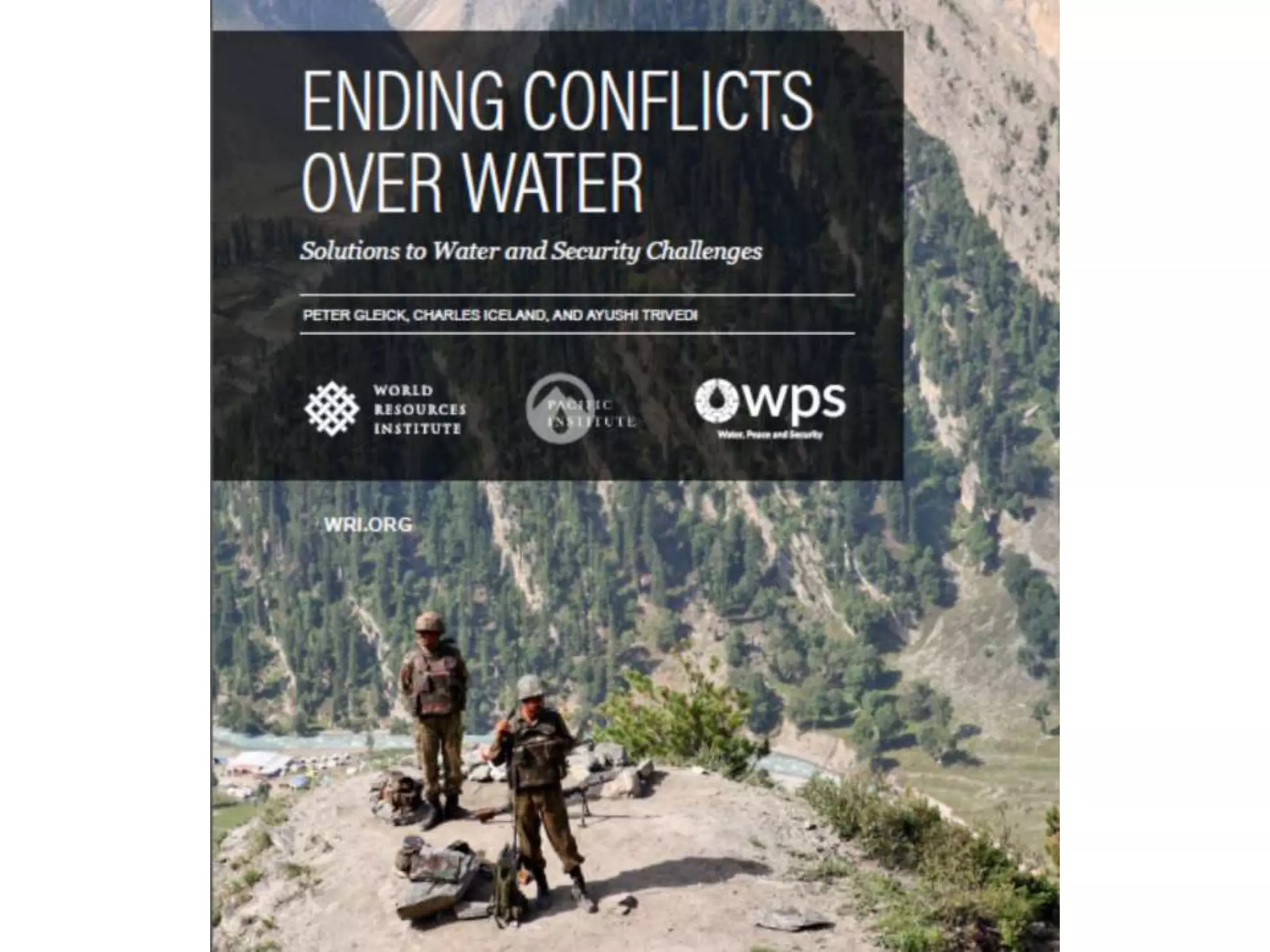
Ending Conflicts Over Water:
Solutions to Water and Security Challenges
vvvvvvvvvvvvvvvvvvvvvvvvv
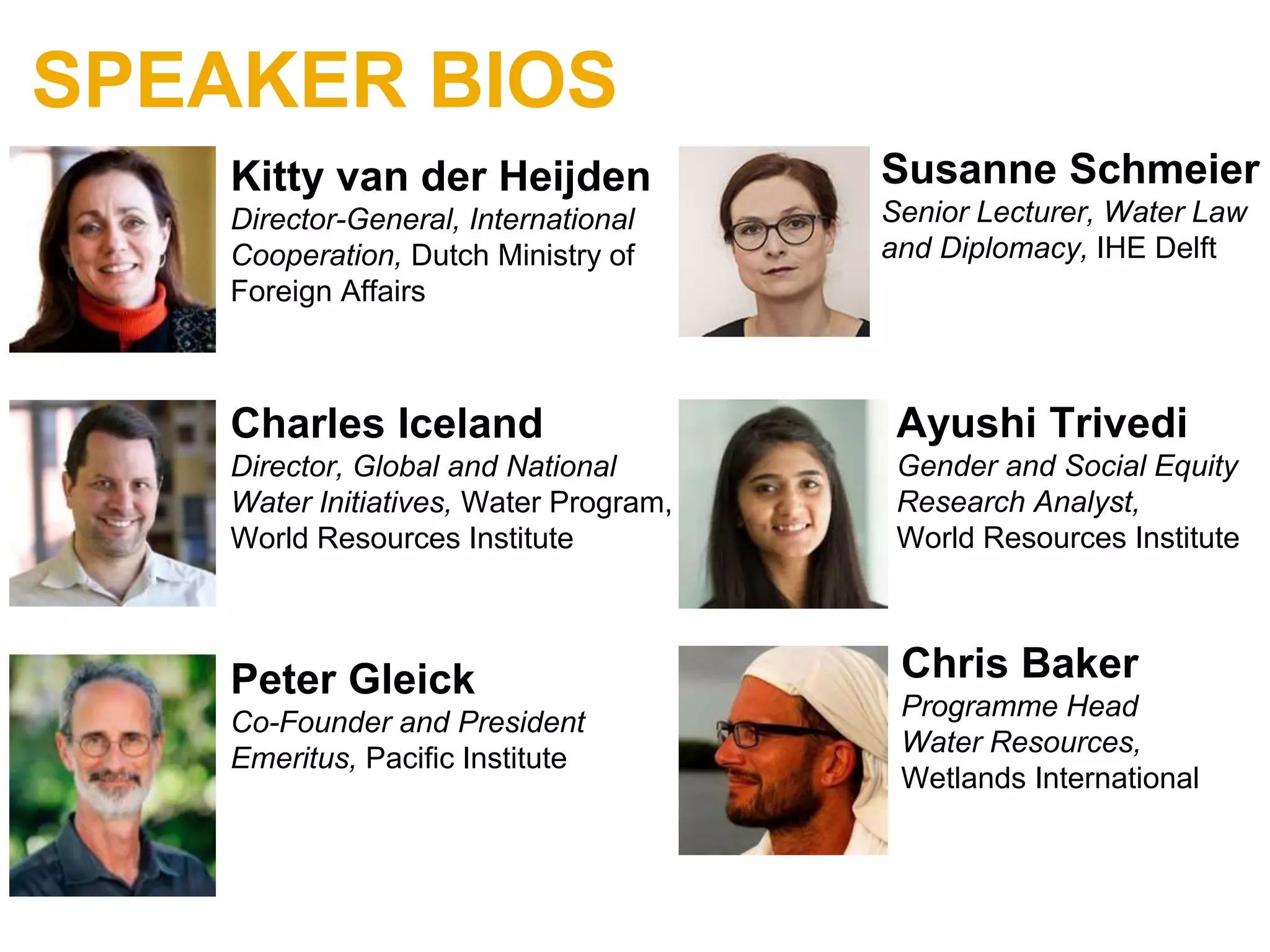
SPEAKER BIOS
Kitty van der Heijden
Director-General, International
Cooperation, Dutch Ministry of
Foreign Affairs
Charles Iceland
Director, Global and National
Water Initiatives, Water Program,
World Resources Institute
Peter Gleick
Co-Founder and President
Emeritus, Pacific Institute
Ayushi Trivedi
Gender and Social Equity
Research Analyst,
World Resources Institute
Chris Baker
Programme Head
Water Resources,
Wetlands International
Susanne Schmeier
Senior Lecturer, Water Law
and Diplomacy, IHE Delft
Water as a Trigger, Weapon, or Casualty of
Conflict: Overview and Trends
Peter H. Gleick
Ending Conflicts over Water: Solutions to Water and
Security Challenges
Webinar: September 2, 2020
http://www.pacinst.org
http://www.worldwater.org/
@petergleick
Water, Security, and Conflict
• Definitions of “security” vary and are expanding.
• There is a long history of conflicts over fresh
water.
• Such conflicts take many forms (as a trigger,
weapon, casualty).
• The risks of water-related disputes are growing,
including over “peak water” constraints of all
kinds.
• These water-related factors will have both direct
and indirect impacts on security and conflict.
Water Conflict Categories
• Trigger: Water as a trigger or root
cause of conflict
–Pastoralists v. farmers in Africa; scarcity and
control in India and Iran (2018-19)
• Weapon: Water as a weapon of conflict
–Diverting water from villages; opening
floodgates on dams (Iraq 2017); poisoning
wells (Somalia 2017)
• Casualty: Water resources or water
systems as a casualty or target of
conflict
–WWII, Vietnam, Iraq, Syria, Yemen
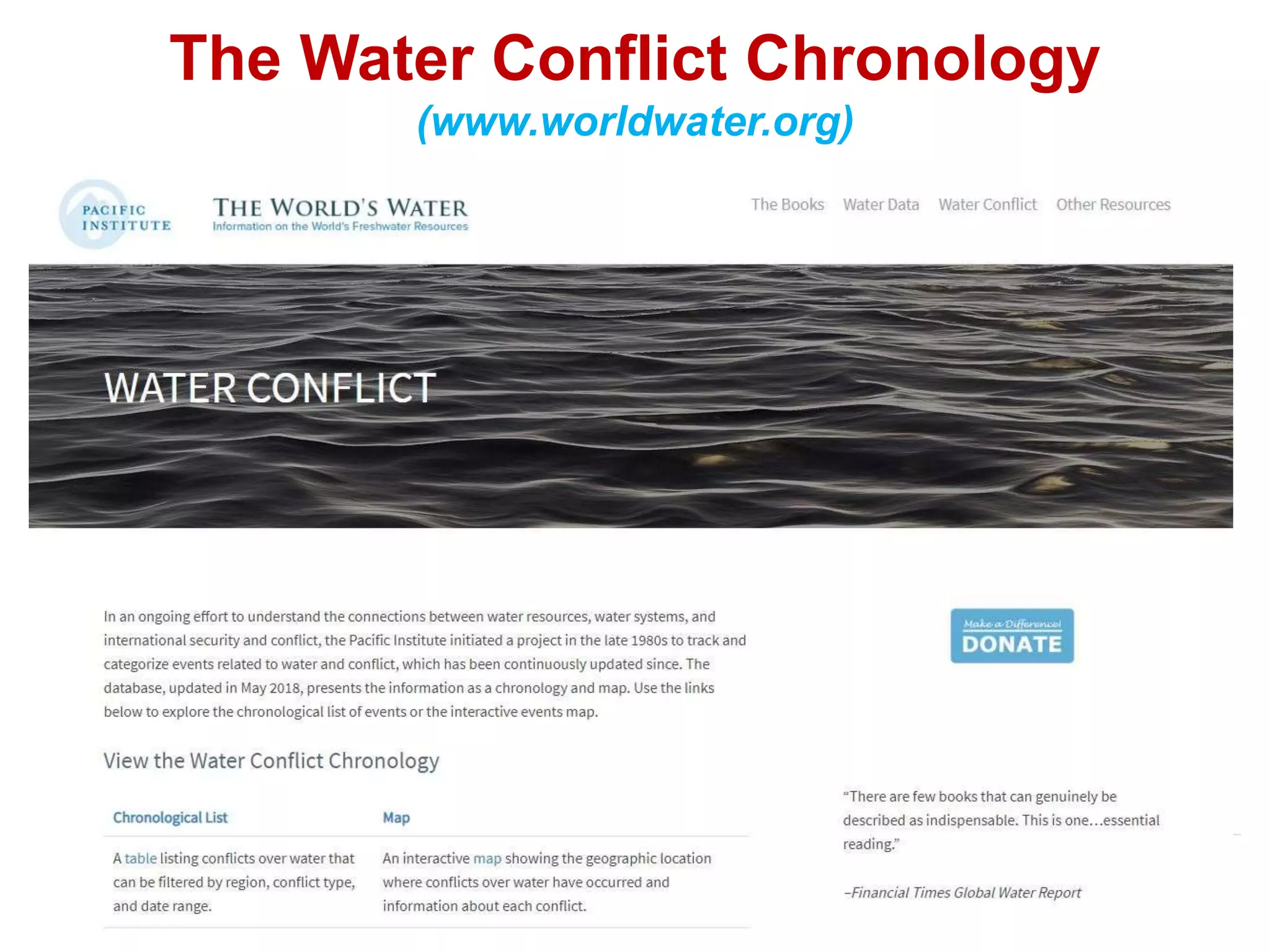
The Water Conflict Chronology
(www.worldwater.org)
Photo: David J. Phillip AP 2017
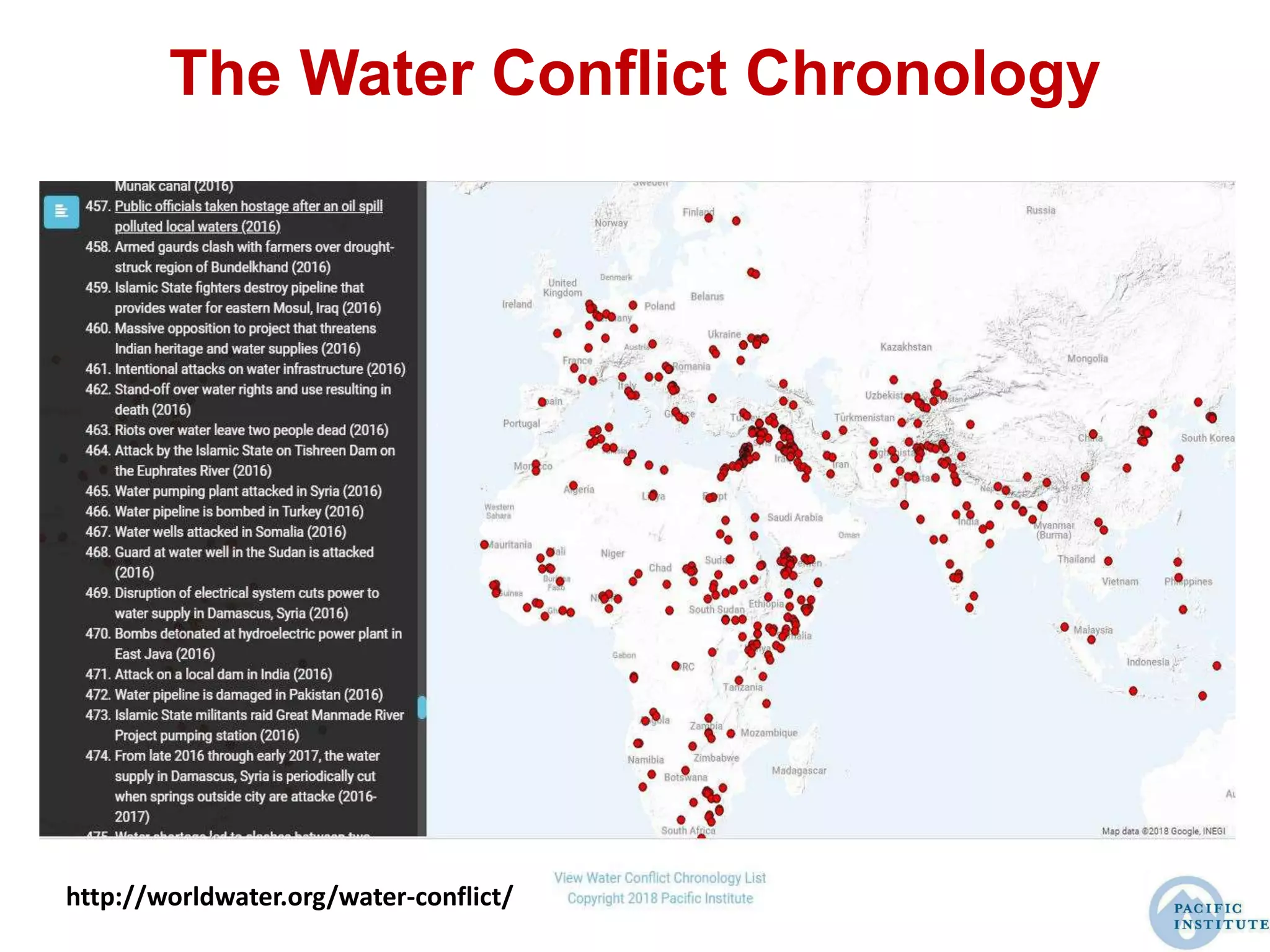
The Water Conflict Chronology
http://worldwater.org/water-conflict/
0
10
20
30
40
50
60
70
80
90
100
1980 1982 1984 1986 1988 1990 1992 1994 1996 1998 2000 2002 2004 2006 2008 2010 2012 2014 2016 2018
Weapon
Casualty
Trigger
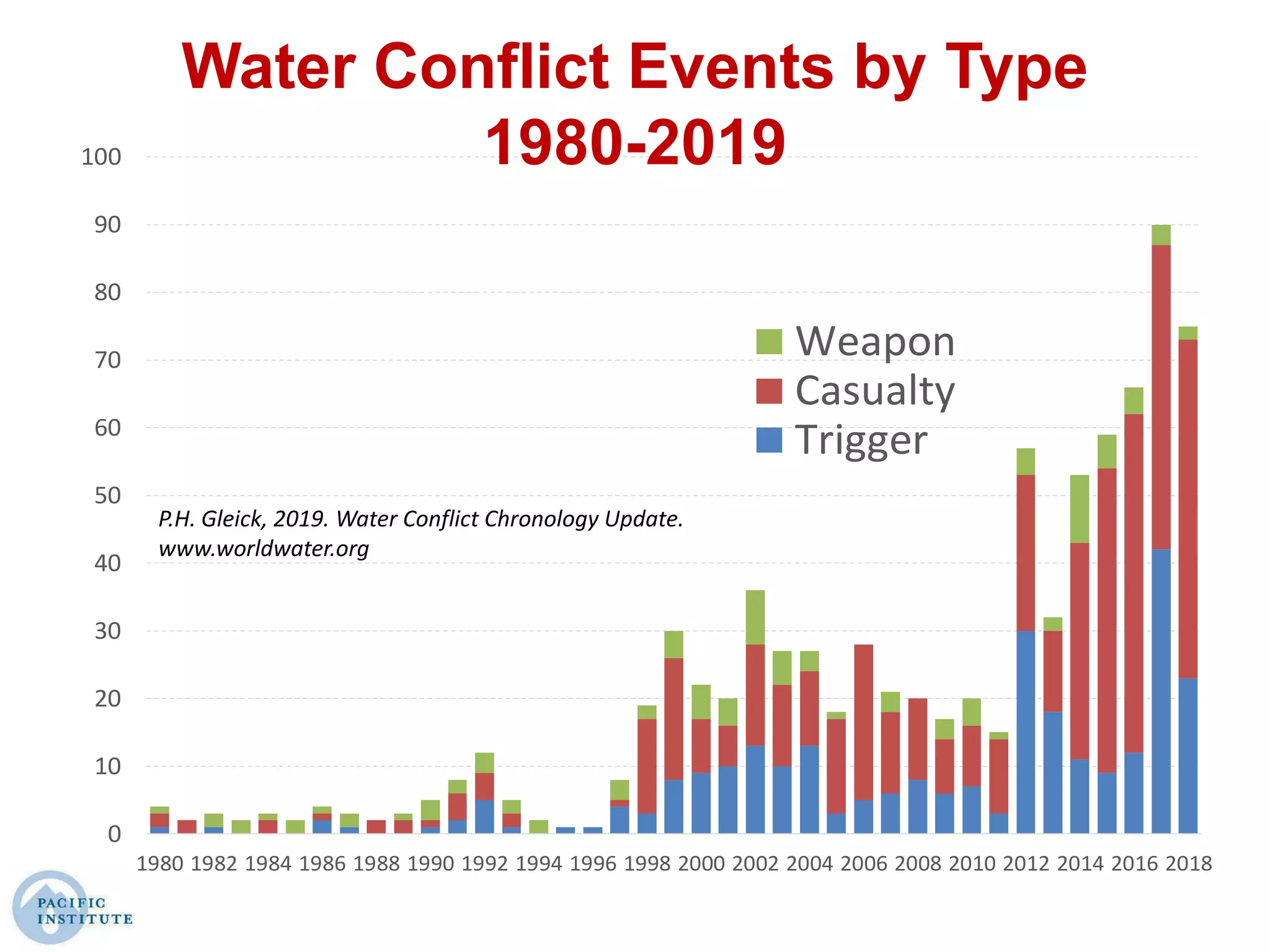
Water Conflict Events by Type
1980-2019
P.H. Gleick, 2019. Water Conflict Chronology Update.
www.worldwater.org
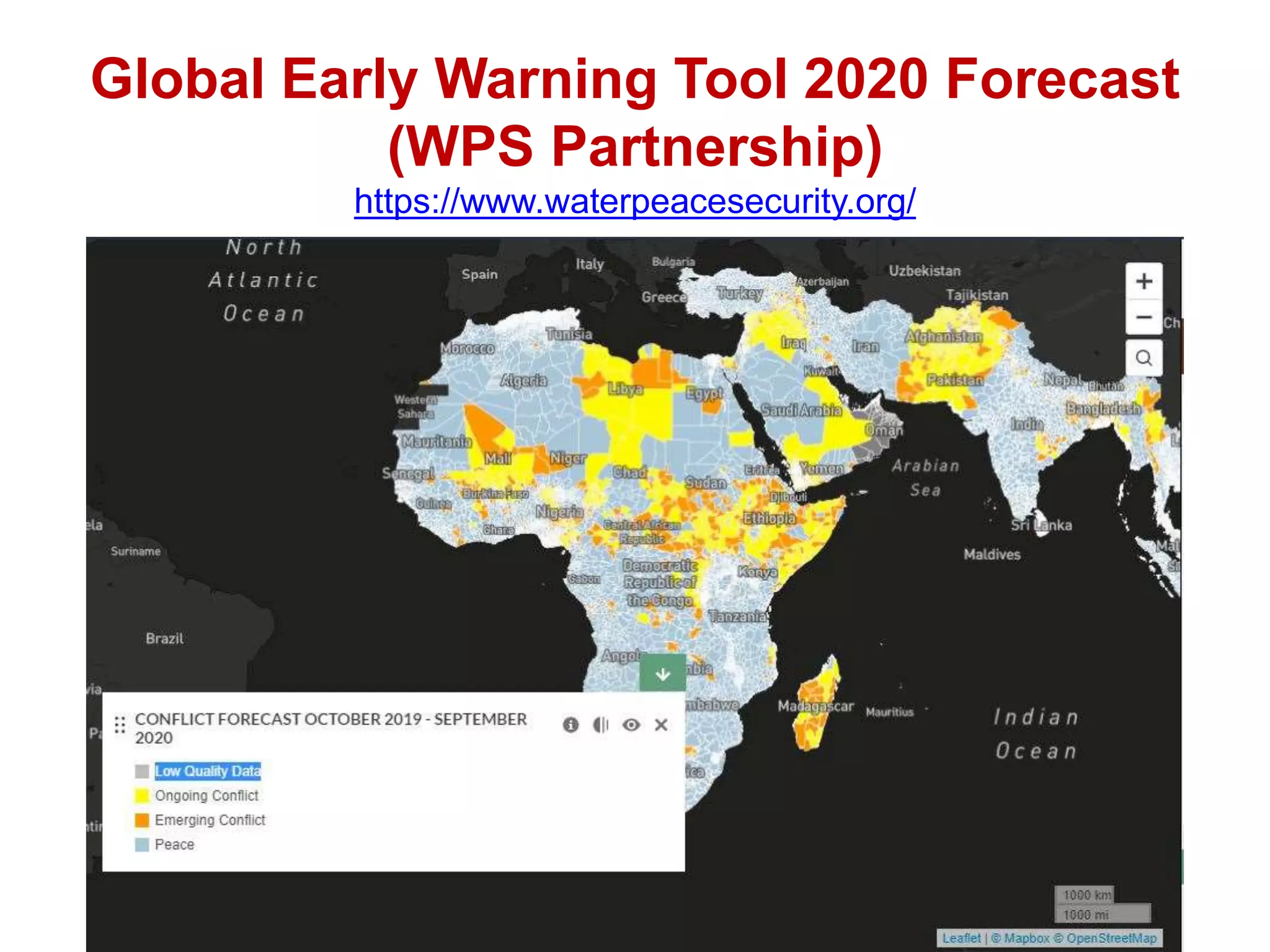
Global Early Warning Tool 2020 Forecast
(WPS Partnership)
https://www.waterpeacesecurity.org/
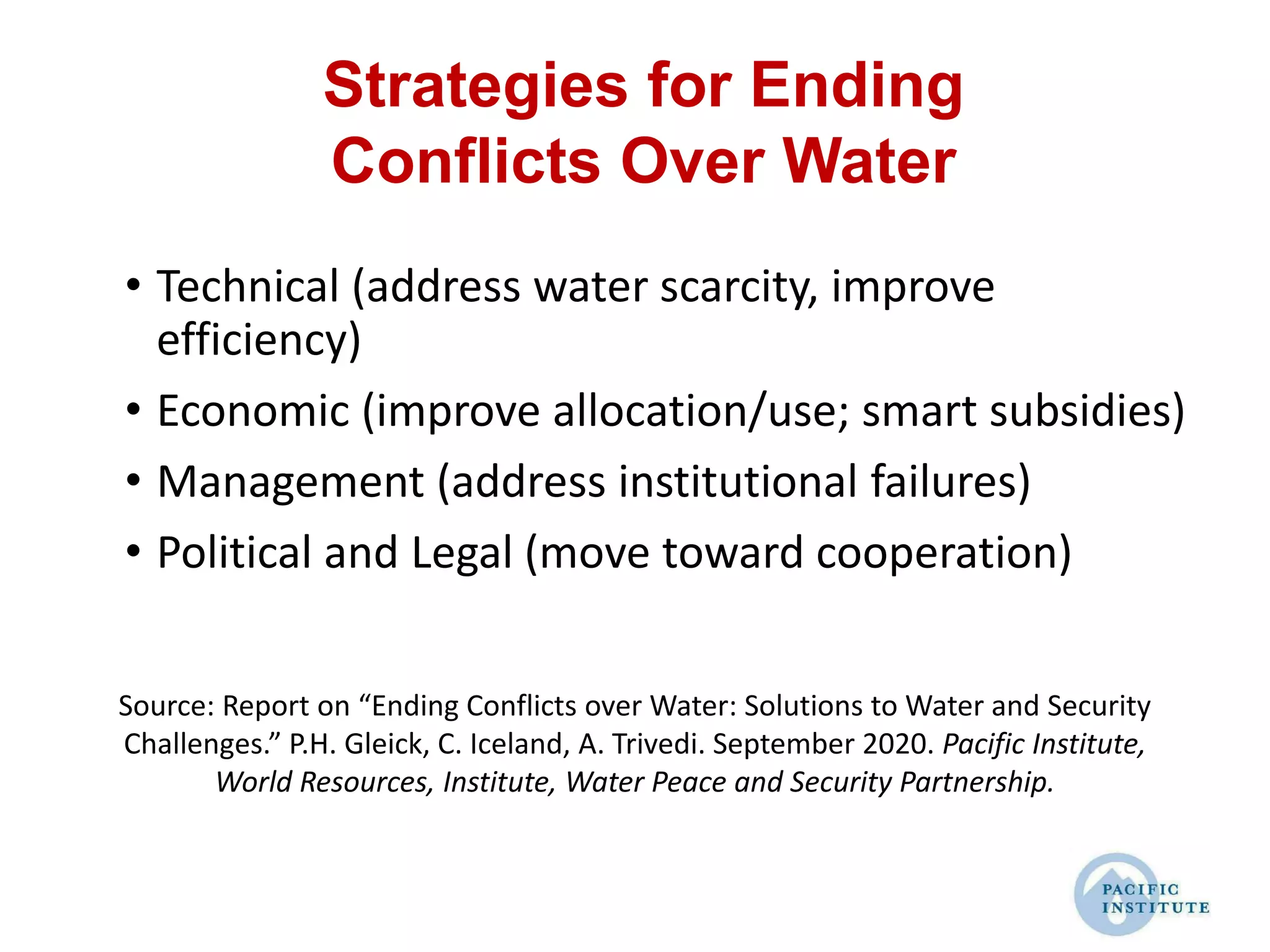
Strategies for Ending
Conflicts Over Water
• Technical (address water scarcity, improve
efficiency)
• Economic (improve allocation/use; smart subsidies)
• Management (address institutional failures)
• Political and Legal (move toward cooperation)
Source: Report on “Ending Conflicts over Water: Solutions to Water and Security
Challenges.” P.H. Gleick, C. Iceland, A. Trivedi. September 2020. Pacific Institute,
World Resources, Institute, Water Peace and Security Partnership.
Dr. Peter H. Gleick
pgleick@pacinst.org
Pacific Institute
Oakland, California
@petergleick
www.pacinst.org
Ending Conflicts Over Water:
Solutions to Water and Security Challenges
Solutions and Barriers to Implementation
Charles Iceland
World Resources Institute
vvvvvvvvvvvvvvvvvvvvvvvvv
Solutions to Water and Security Challenges
1. Natural resources, science and
engineering approaches
2. Political and legal tools
3. Economic and financial tools
4. Policy and governance strategies
Natural Resources, Science, and
Engineering Approaches
1. Natural resources, science and
engineering approaches
2. Political and legal tools
3. Economic and financial tools
4. Policy and governance strategies
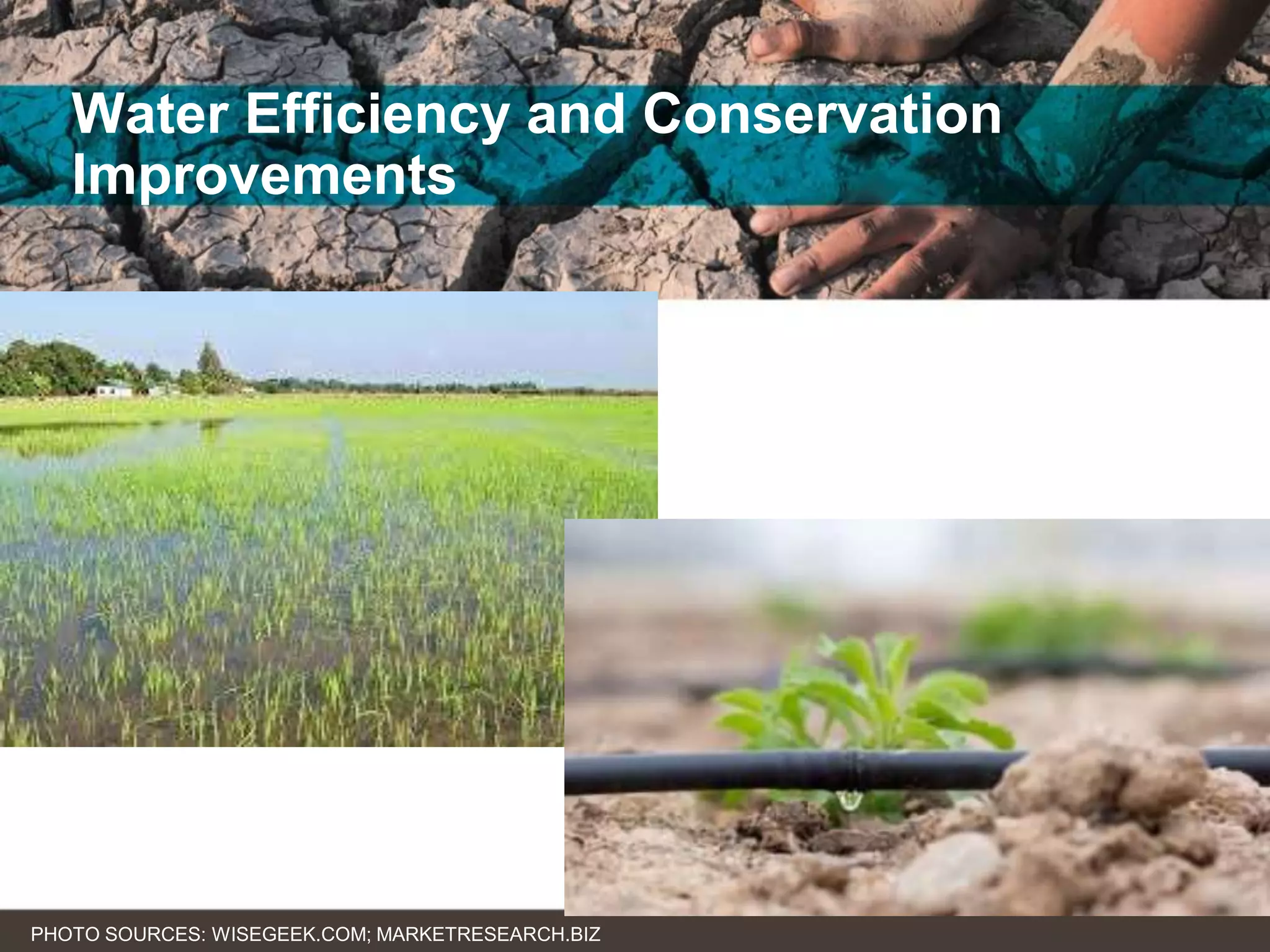
Water Efficiency and Conservation
Improvements
PHOTO SOURCES: WISEGEEK.COM; MARKETRESEARCH.BIZ
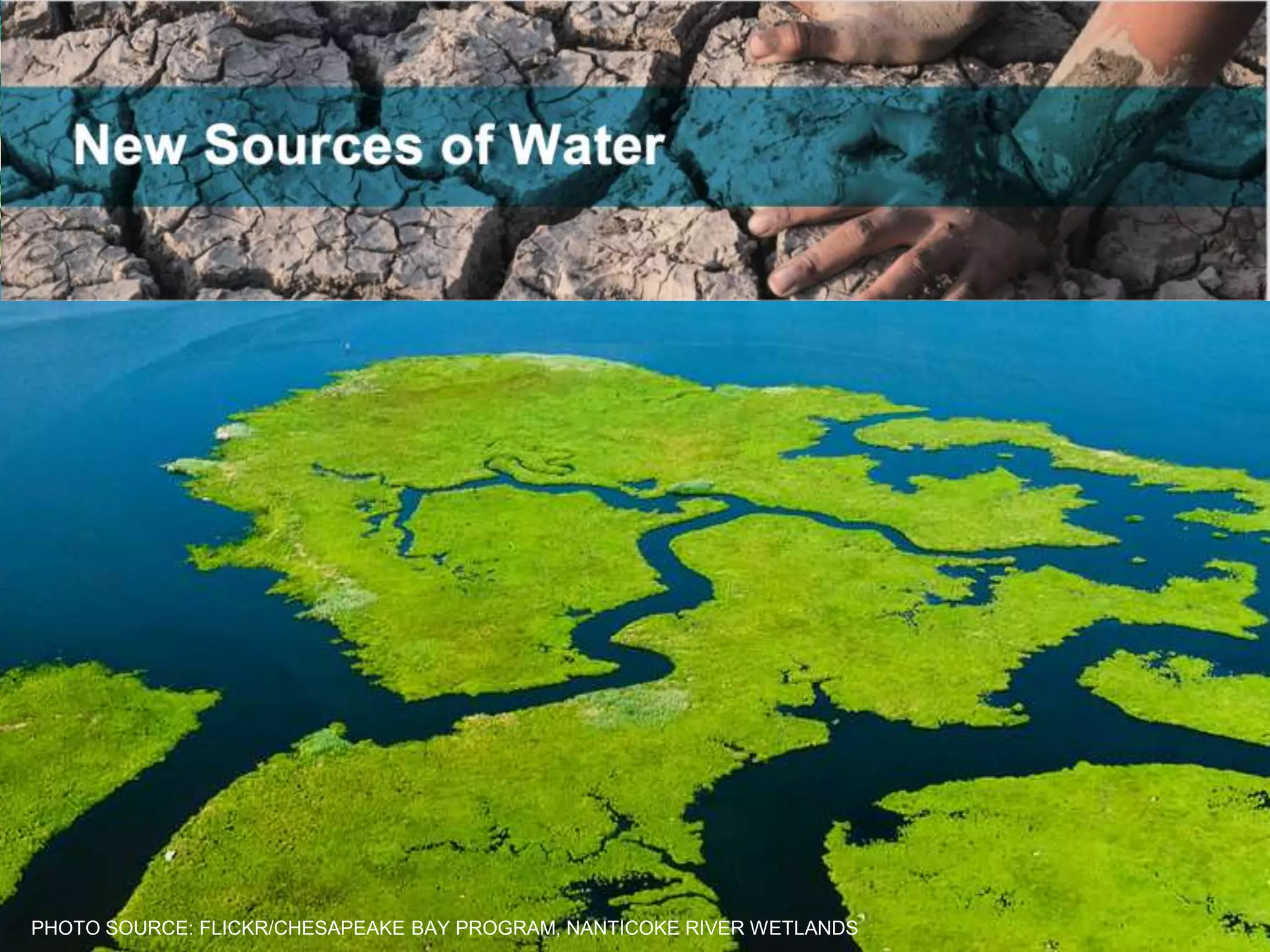
PHOTO SOURCE: FLICKR/CHESAPEAKE BAY PROGRAM, NANTICOKE RIVER WETLANDS
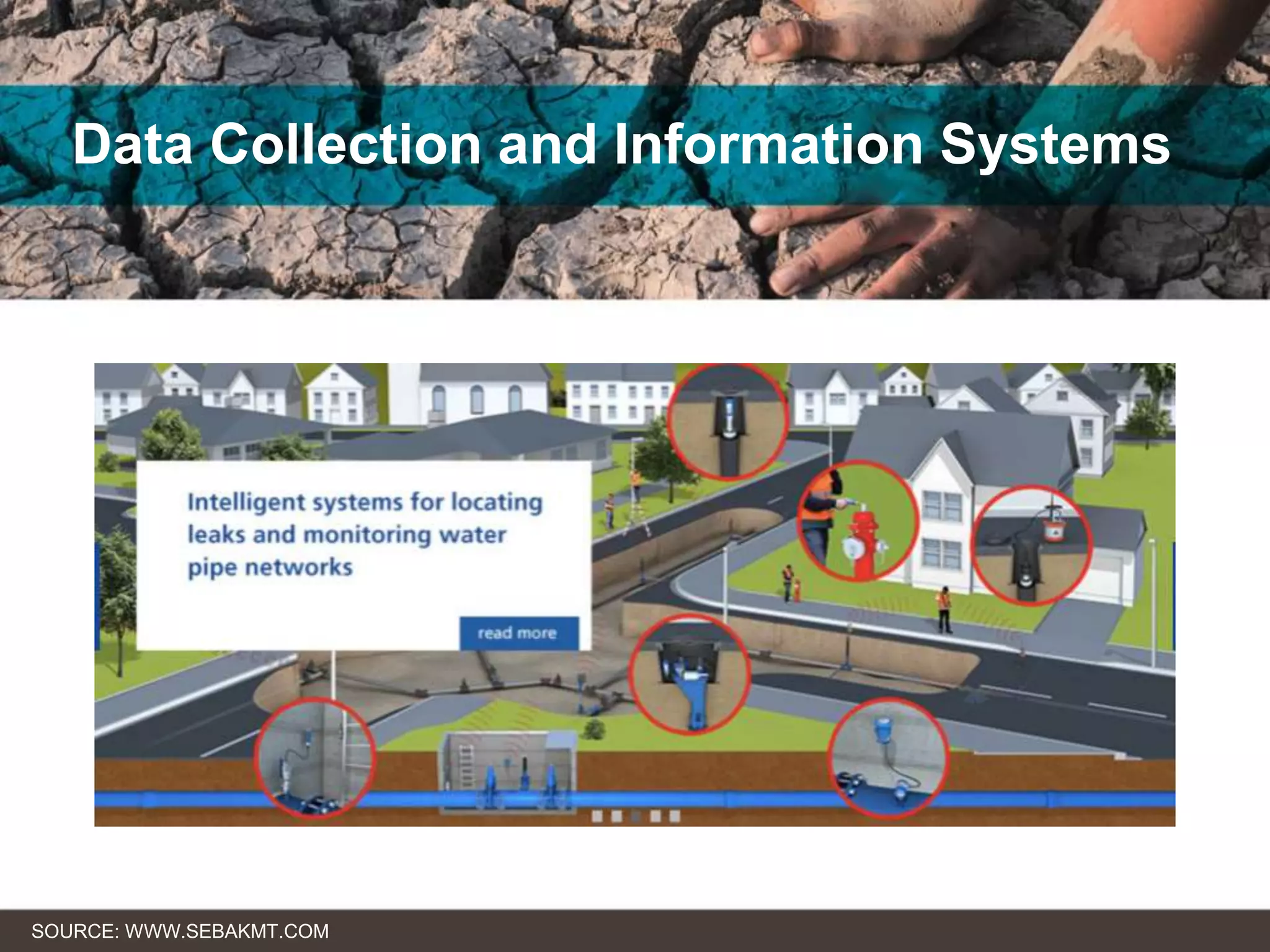
Data Collection and Information Systems
SOURCE: WWW.SEBAKMT.COM
Political and Legal Tools
1. Natural resources, science and
engineering approaches
2. Political and legal tools
3. Economic and financial tools
4. Policy and governance strategies
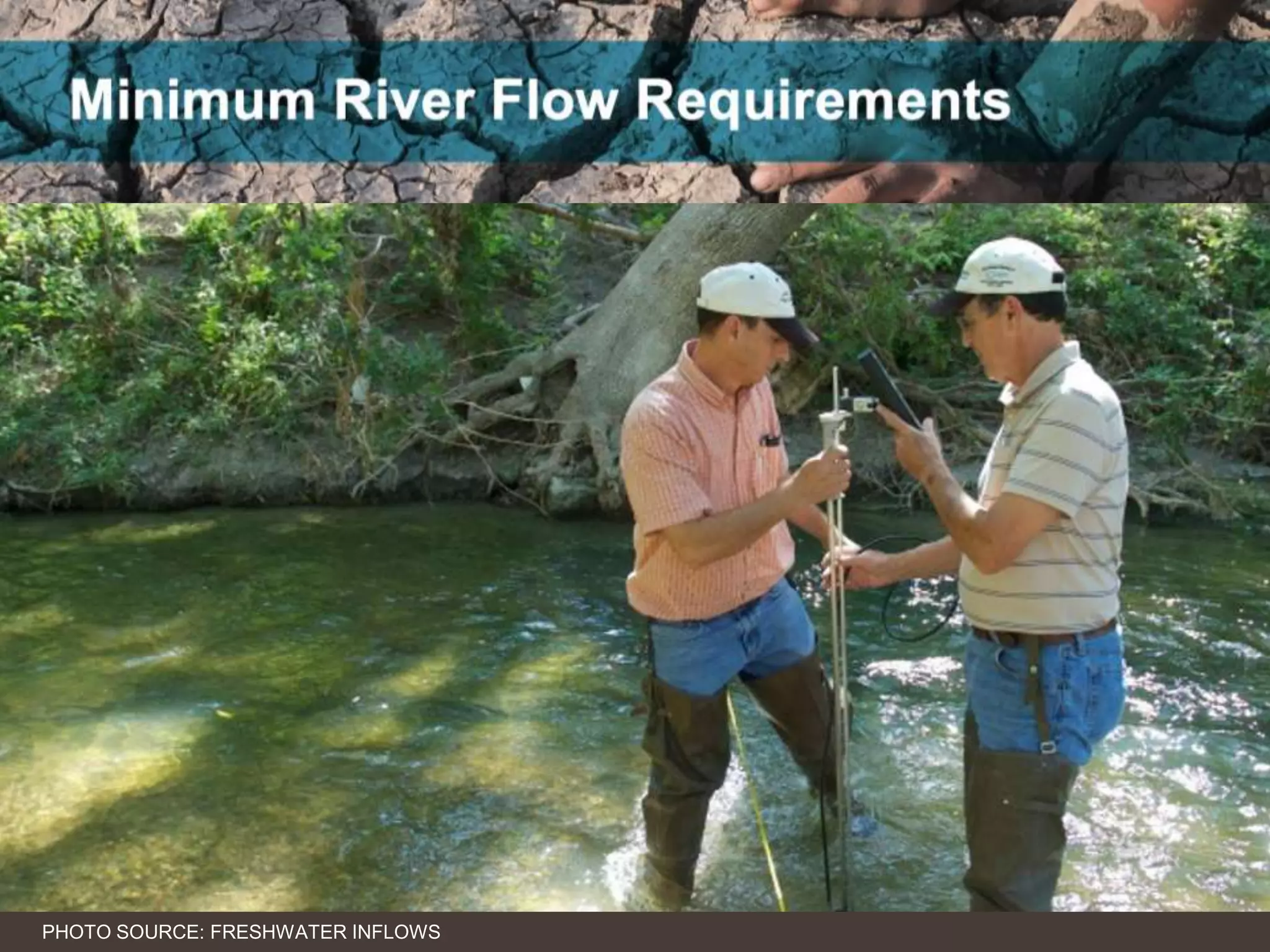
PHOTO SOURCE: FRESHWATER INFLOWS
Economic and Financial Tools
1. Natural resources, science and
engineering approaches
2. Political and legal tools
3. Economic and financial tools
4. Policy and governance strategies
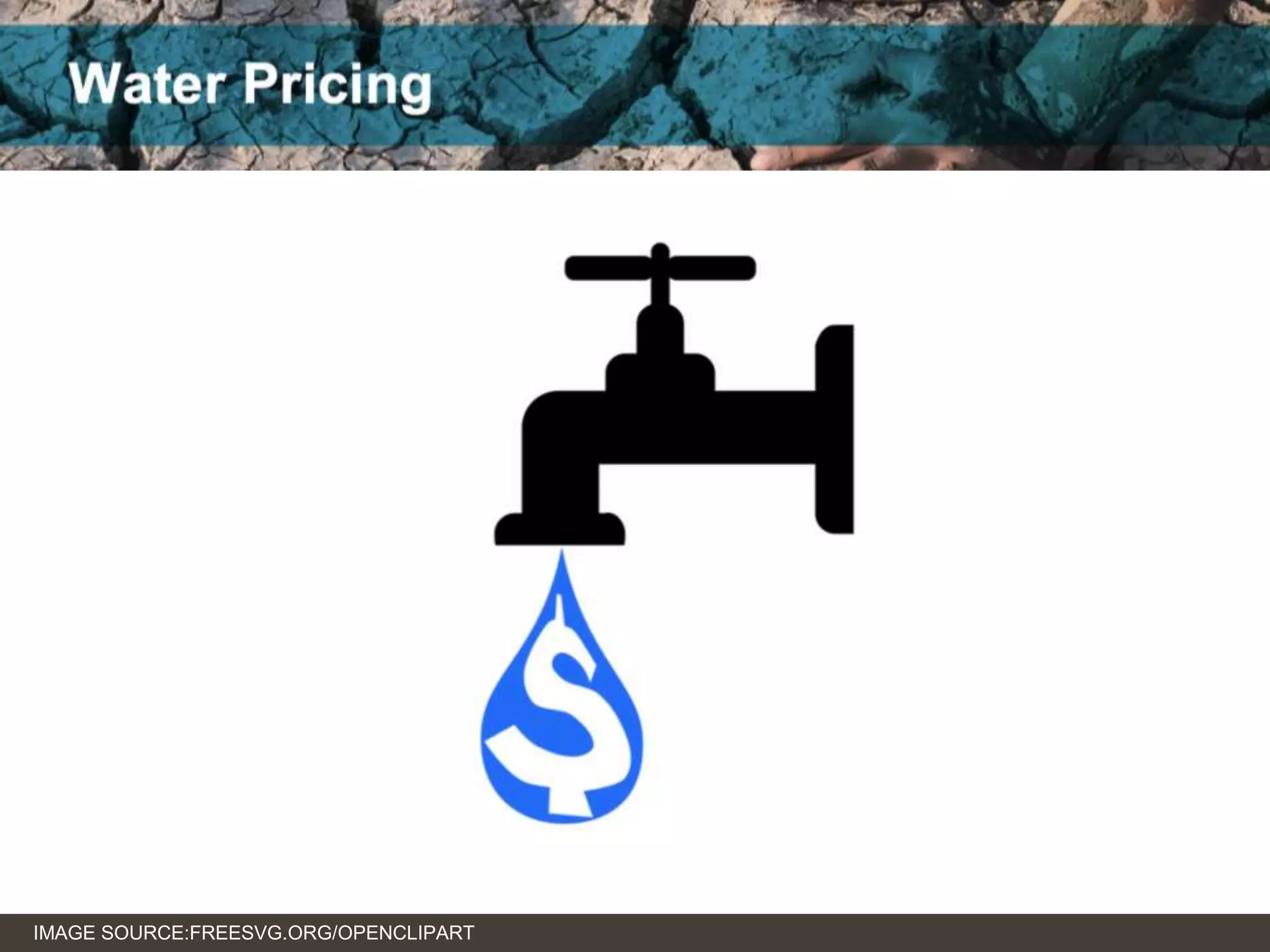
IMAGE SOURCE:FREESVG.ORG/OPENCLIPART
Policy and Governance Strategies
1. Natural resources, science and
engineering approaches
2. Political and legal tools
3. Economic and financial tools
4. Policy and governance strategies
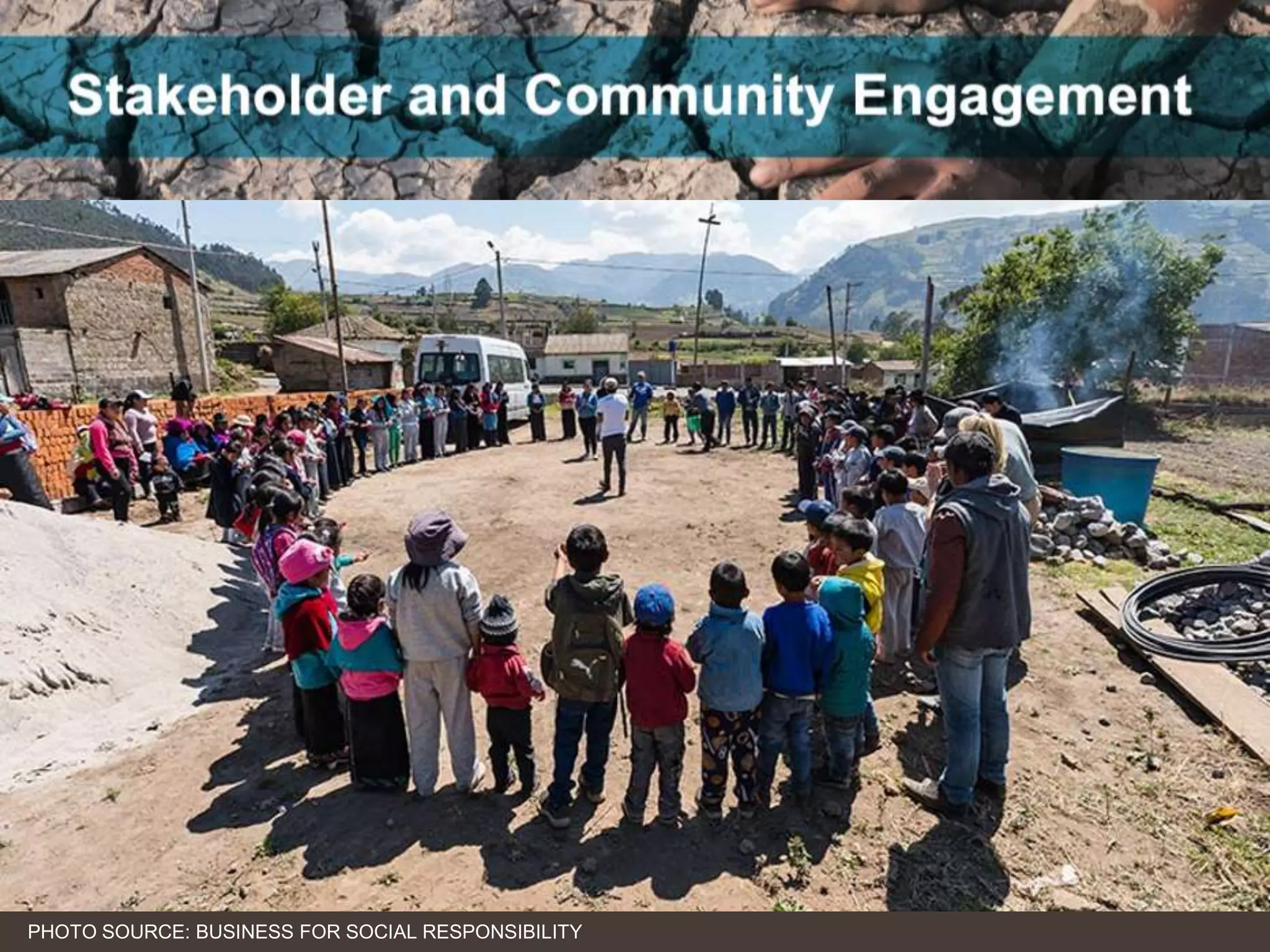
PHOTO SOURCE: BUSINESS FOR SOCIAL RESPONSIBILITY
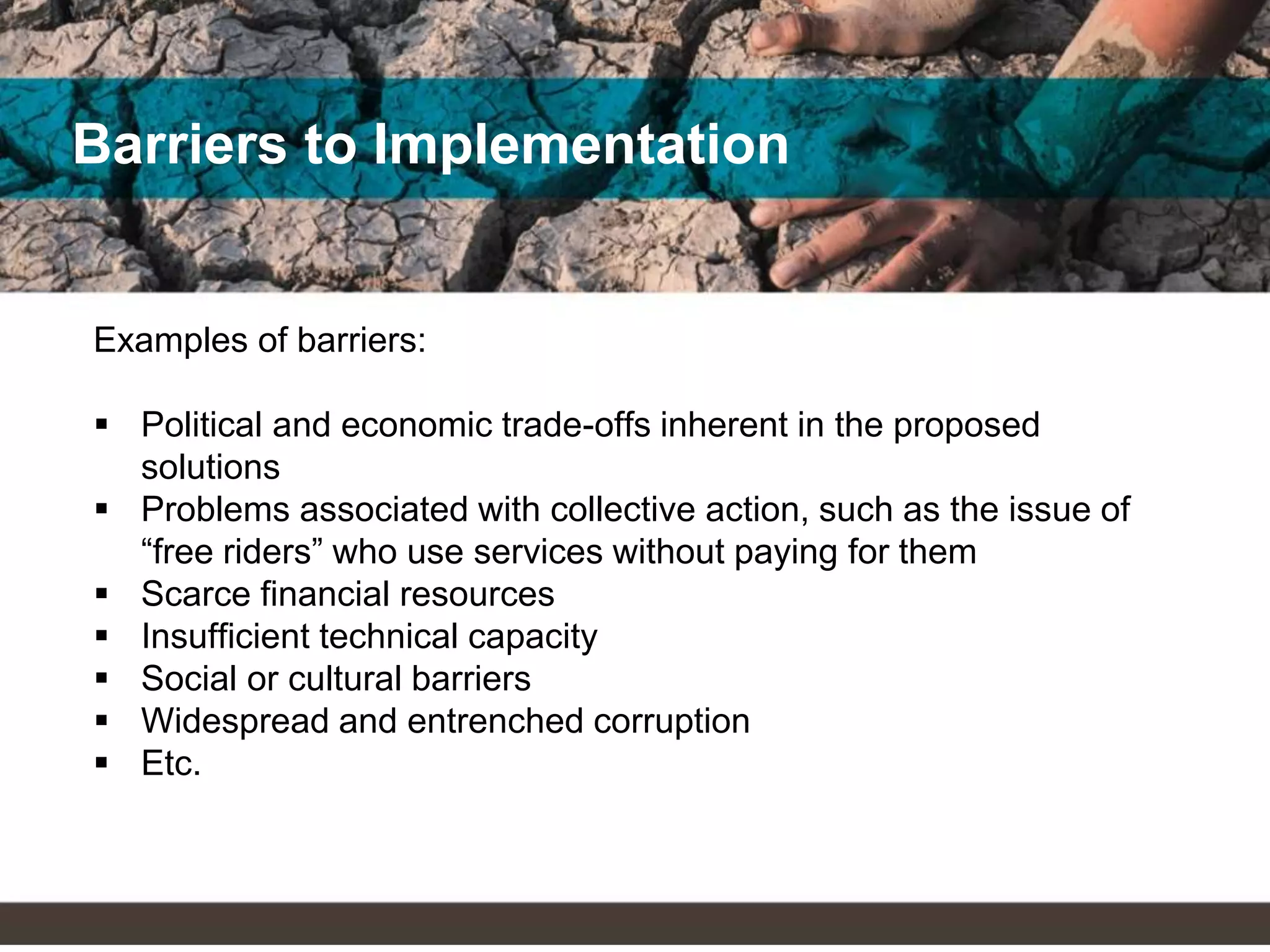
Barriers to Implementation
Examples of barriers:
 Political and economic trade-offs inherent in the proposed
solutions
 Problems associated with collective action, such as the issue of
“free riders” who use services without paying for them
 Scarce financial resources
 Insufficient technical capacity
 Social or cultural barriers
 Widespread and entrenched corruption
 Etc.
Thank You!
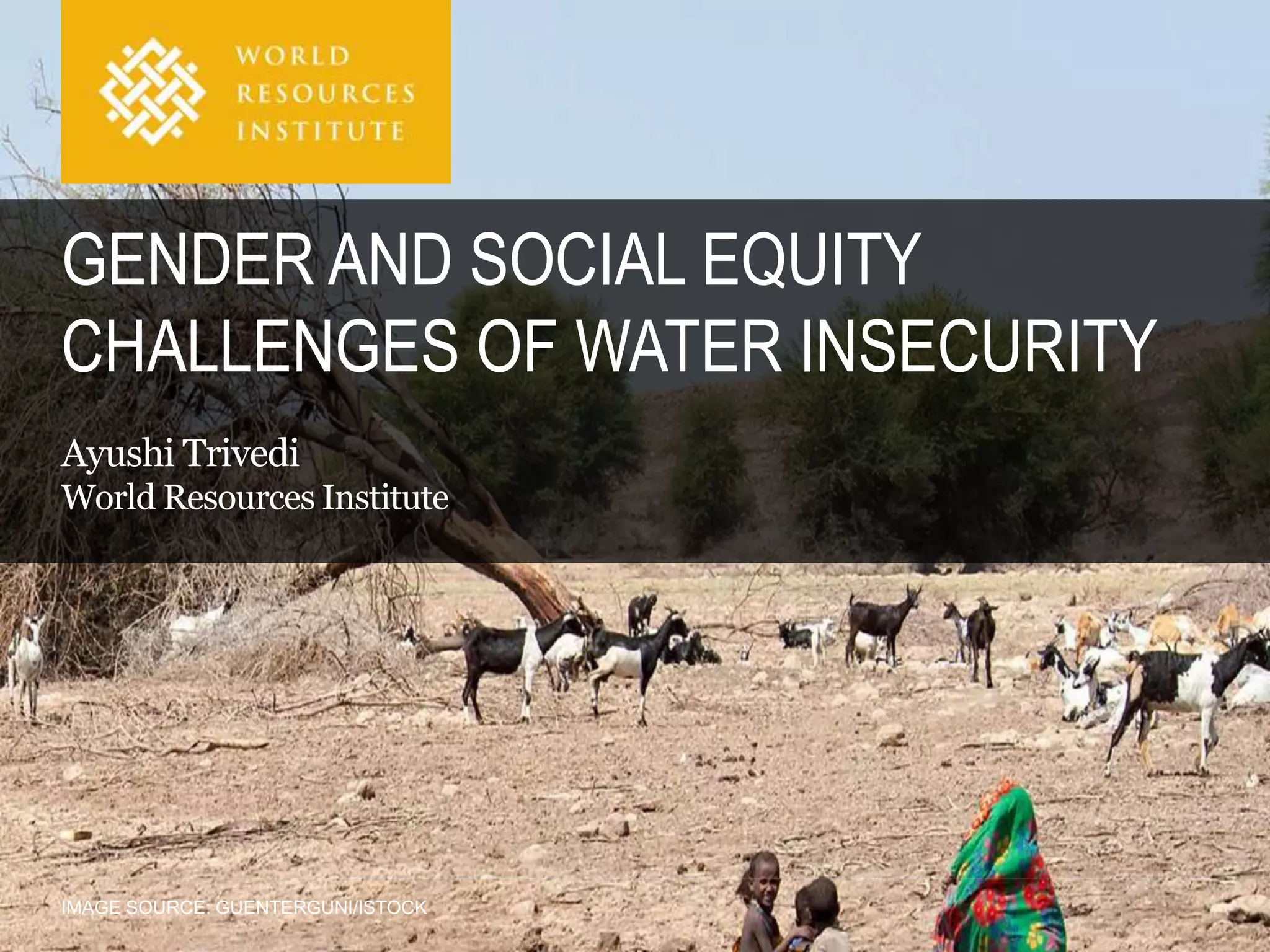
IMAGE SOURCE: GUENTERGUNI/ISTOCK
GENDER AND SOCIAL EQUITY
CHALLENGES OF WATER INSECURITY
Ayushi Trivedi
World Resources Institute
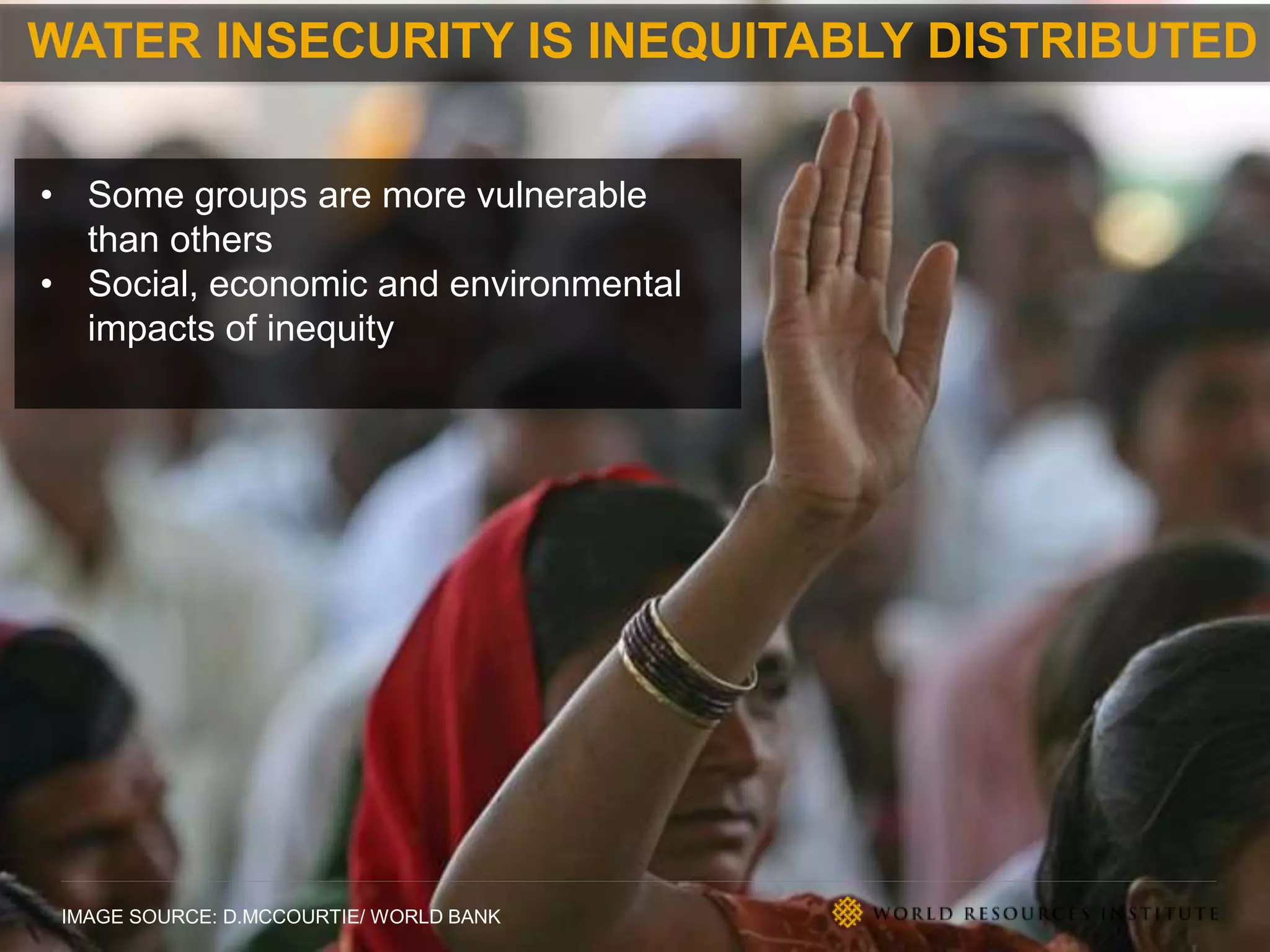
IMAGE SOURCE: D.MCCOURTIE/ WORLD BANK
• Some groups are more vulnerable
than others
• Social, economic and environmental
impacts of inequity
WATER INSECURITY IS INEQUITABLY DISTRIBUTED
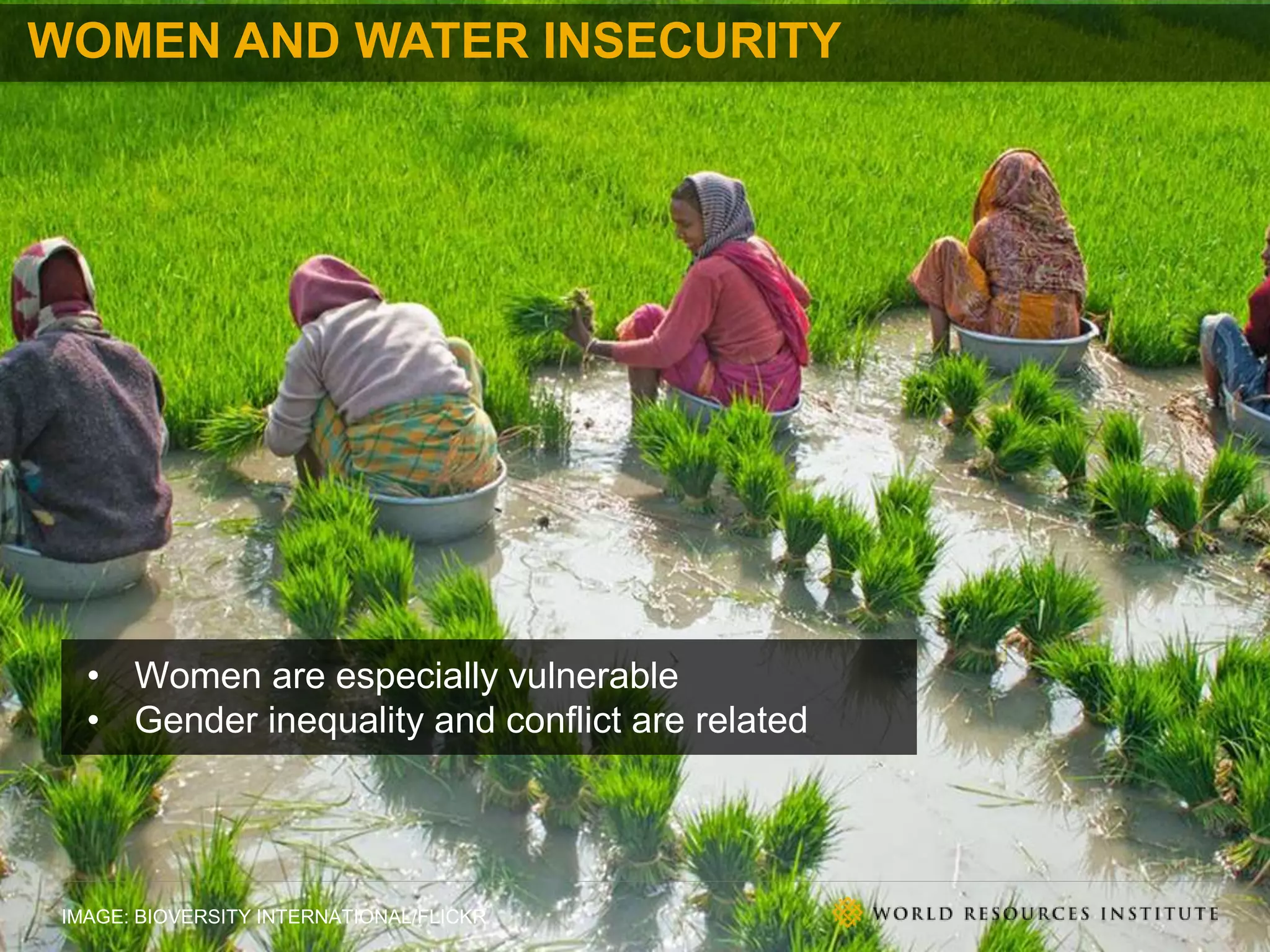
IMAGE: BIOVERSITY INTERNATIONAL/FLICKR
• Women are especially vulnerable
• Gender inequality and conflict are related
WOMEN AND WATER INSECURITY
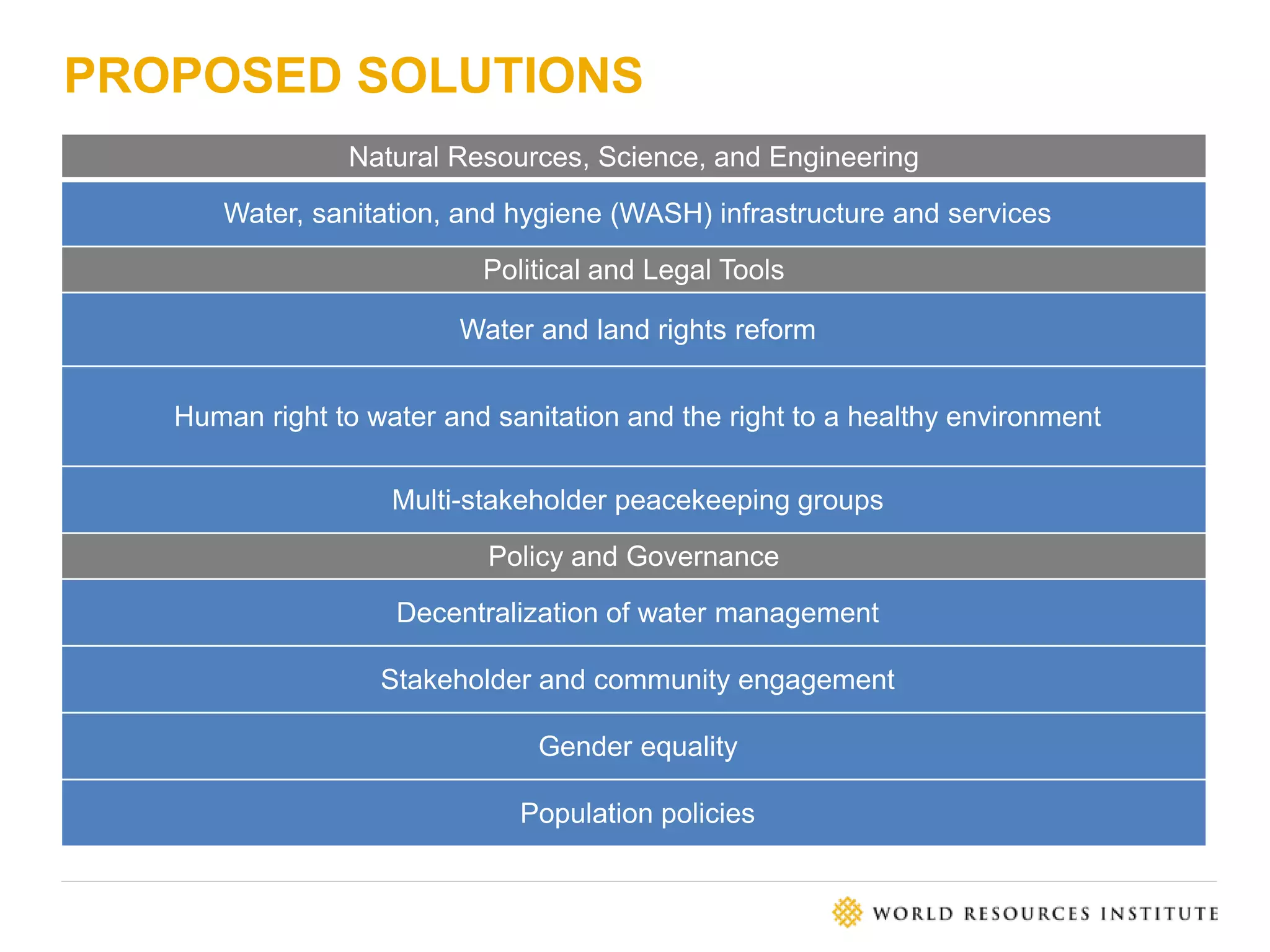
PROPOSED SOLUTIONS
Natural Resources, Science, and Engineering
Water, sanitation, and hygiene (WASH) infrastructure and services
Political and Legal Tools
Water and land rights reform
Human right to water and sanitation and the right to a healthy environment
Multi-stakeholder peacekeeping groups
Policy and Governance
Decentralization of water management
Stakeholder and community engagement
Gender equality
Population policies
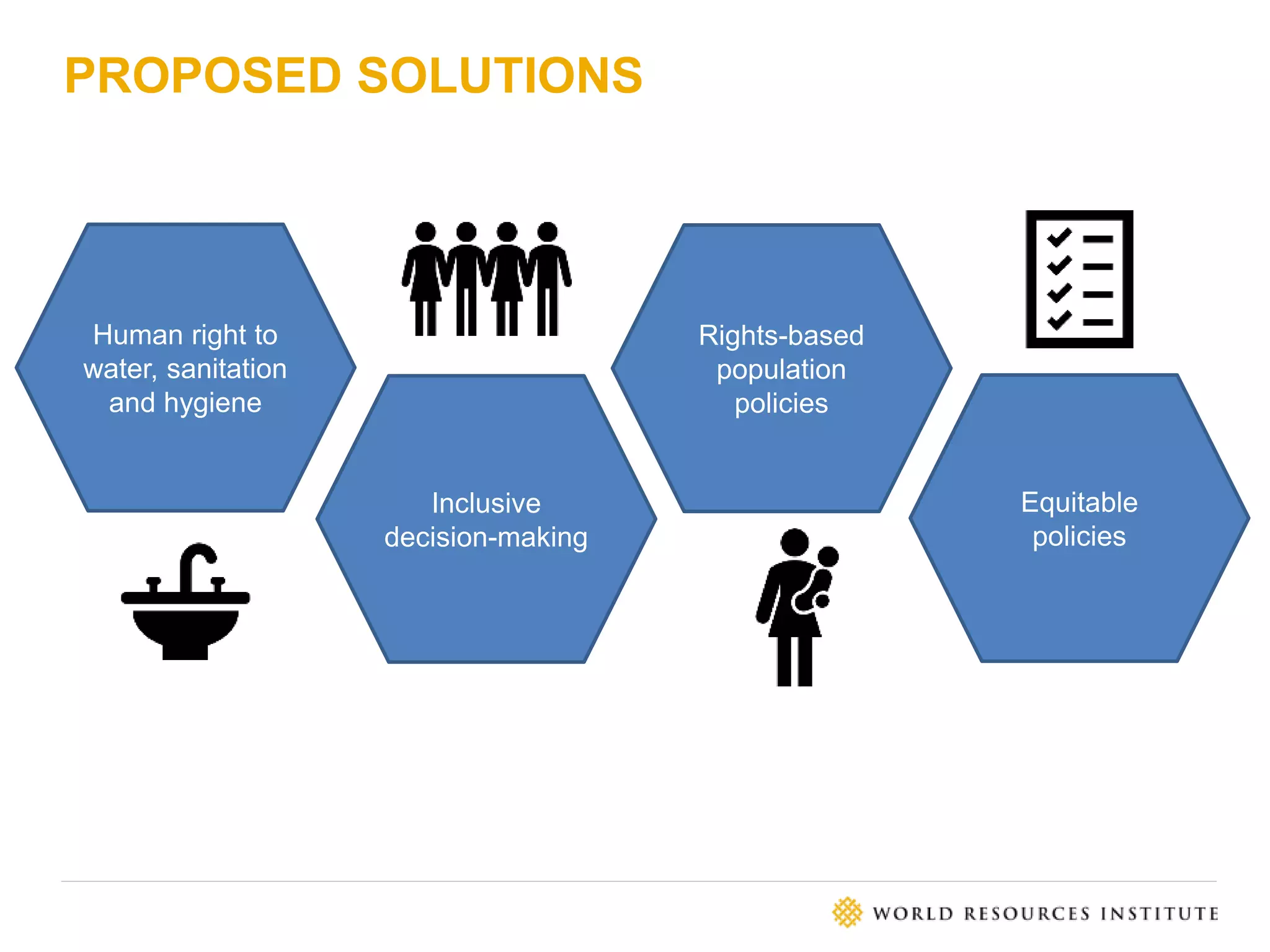
PROPOSED SOLUTIONS
Human right to
water, sanitation
and hygiene
Inclusive
decision-making
Equitable
policies
Rights-based
population
policies
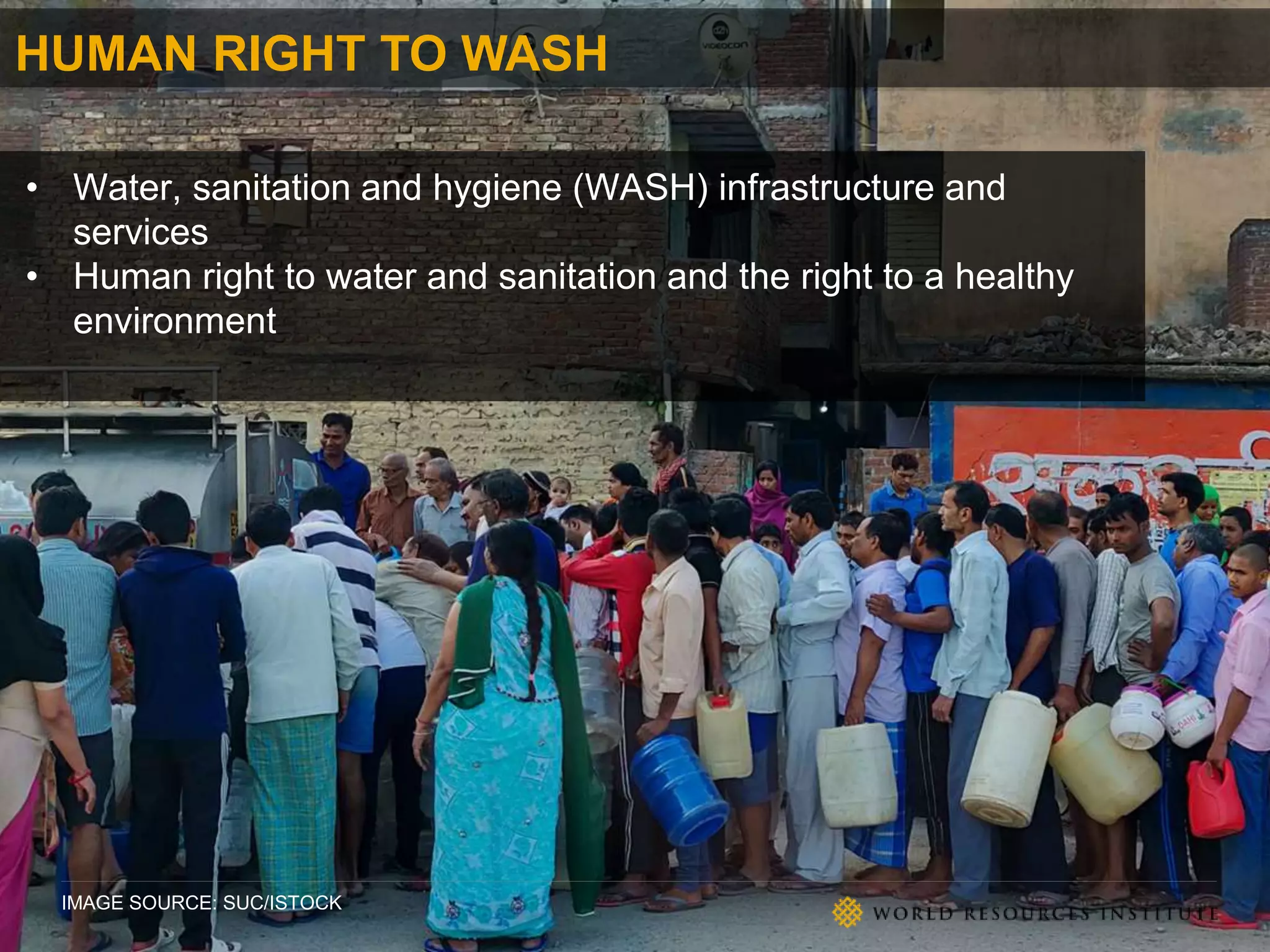
HUMAN RIGHT TO WASH
IMAGE SOURCE: SUC/ISTOCK
• Water, sanitation and hygiene (WASH) infrastructure and
services
• Human right to water and sanitation and the right to a healthy
environment
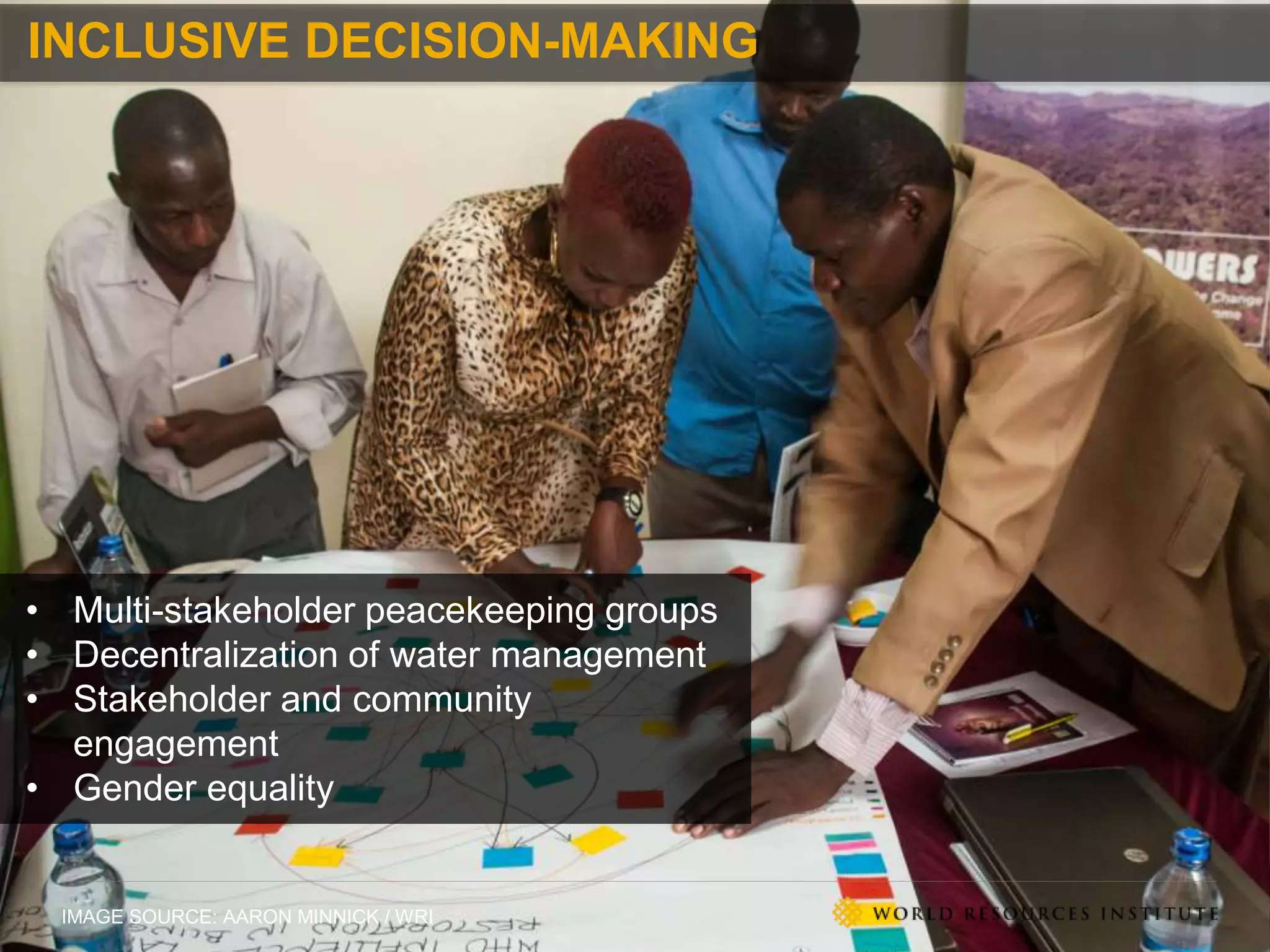
IMAGE SOURCE: AARON MINNICK / WRI
INCLUSIVE DECISION-MAKING
• Multi-stakeholder peacekeeping groups
• Decentralization of water management
• Stakeholder and community
engagement
• Gender equality
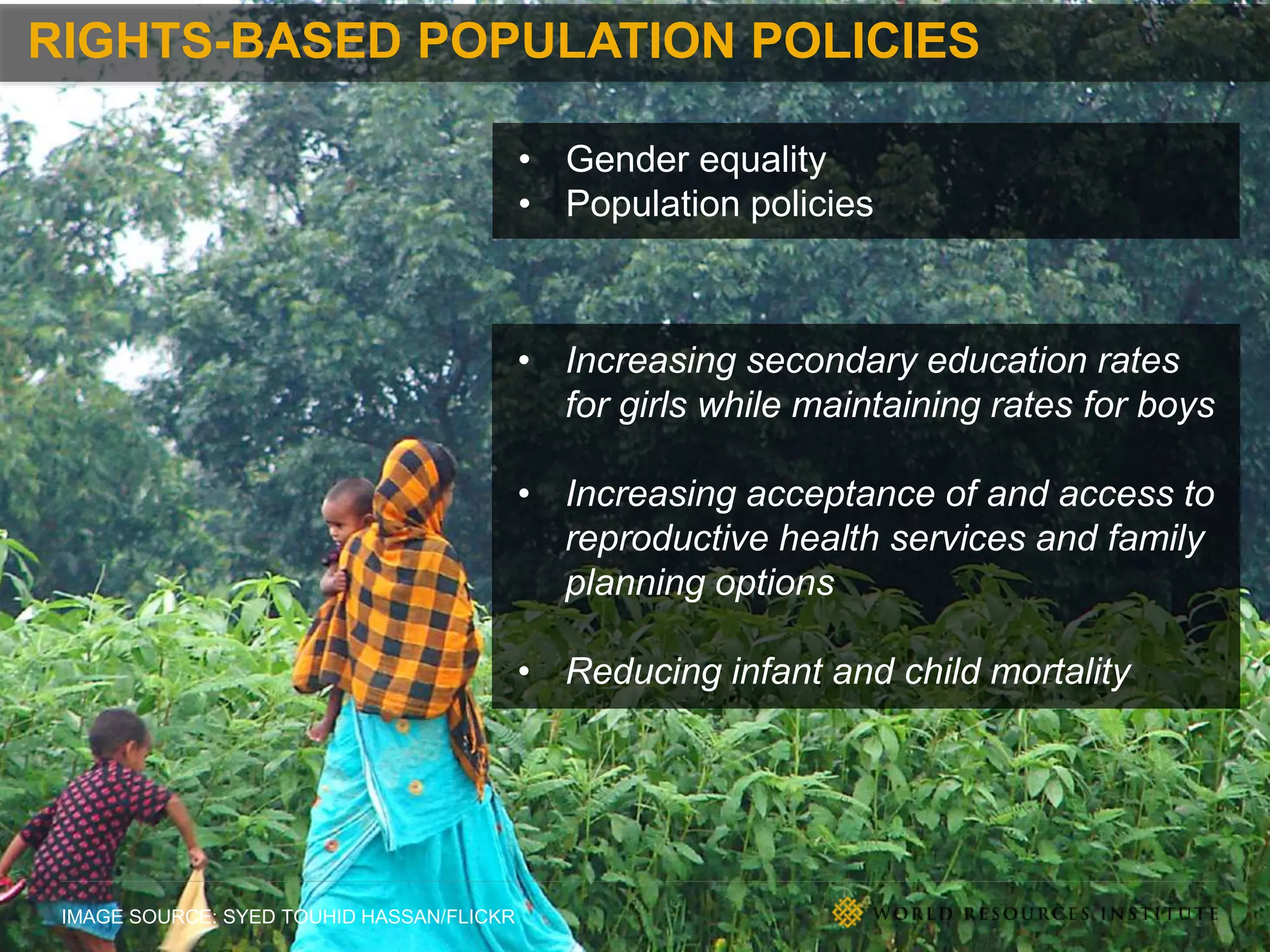
IMAGE SOURCE: SYED TOUHID HASSAN/FLICKR
RIGHTS-BASED POPULATION POLICIES
• Gender equality
• Population policies
• Increasing secondary education rates
for girls while maintaining rates for boys
• Increasing acceptance of and access to
reproductive health services and family
planning options
• Reducing infant and child mortality
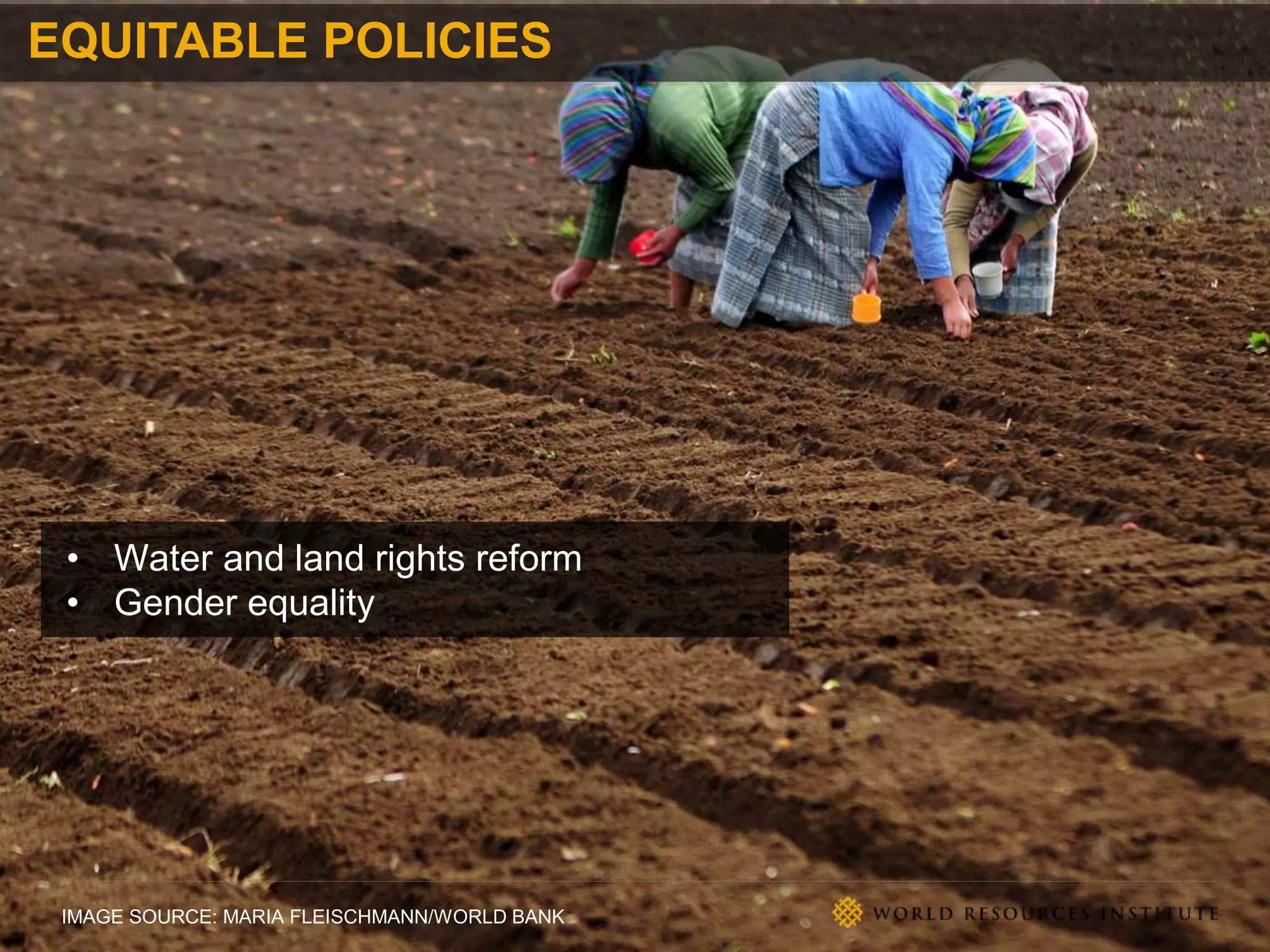
IMAGE SOURCE: MARIA FLEISCHMANN/WORLD BANK
EQUITABLE POLICIES
• Water and land rights reform
• Gender equality
IMAGE SOURCE: GUENTERGUNI/ISTOCK
THANK
YOU!
Ayushi Trivedi
Research Analyst II, Gender and Social
Equity Initiative
World Resources Institute
Ayushi.Trivedi@wri.org
Water Conflicts and Solutions in
Mali
Dr Karounga KEITA, Regional Director, Sahel Office
Dr Chris Baker, Programme Head Water Resources, Global Office
Joyce Kortlandt, Senior Advocacy Officer, Global Office
Dr Beteo Zongo, Environmental Economist, Sahel Office
2nd September 2020, WRI Webinar
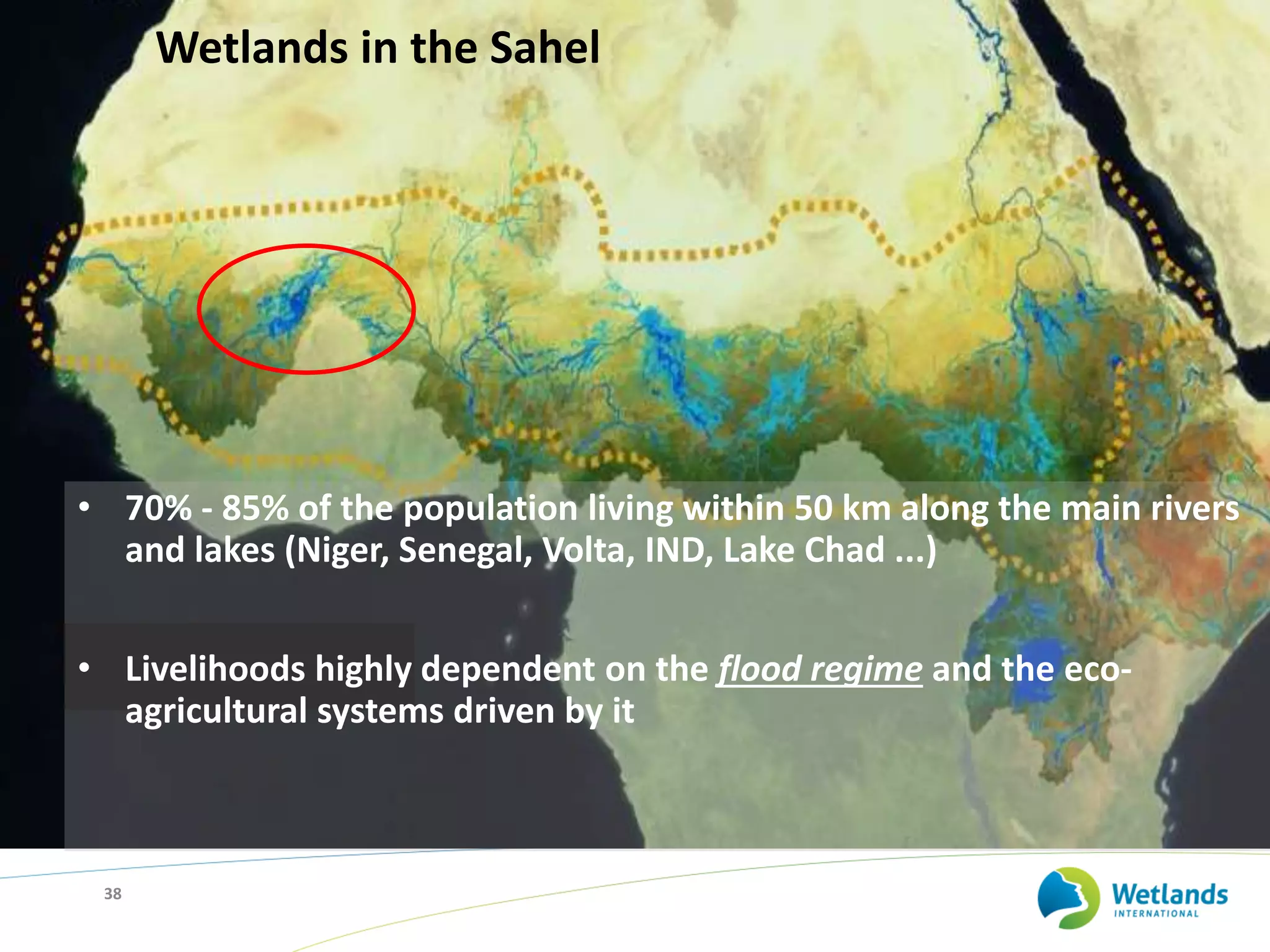
Wetlands in the Sahel
38
• 70% - 85% of the population living within 50 km along the main rivers
and lakes (Niger, Senegal, Volta, IND, Lake Chad ...)
• Livelihoods highly dependent on the flood regime and the eco-
agricultural systems driven by it
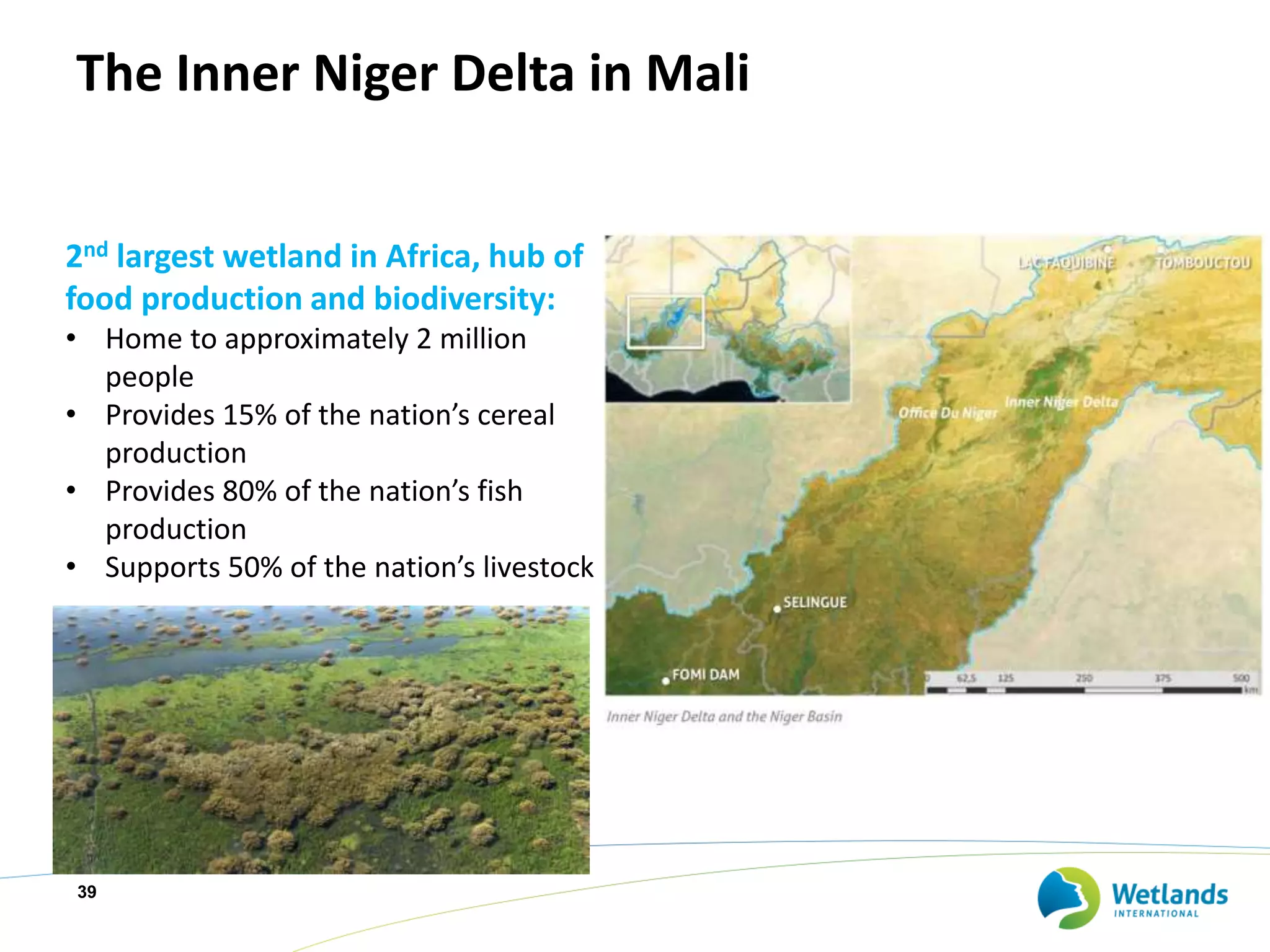
The Inner Niger Delta in Mali
39
2nd largest wetland in Africa, hub of
food production and biodiversity:
• Home to approximately 2 million
people
• Provides 15% of the nation’s cereal
production
• Provides 80% of the nation’s fish
production
• Supports 50% of the nation’s livestock
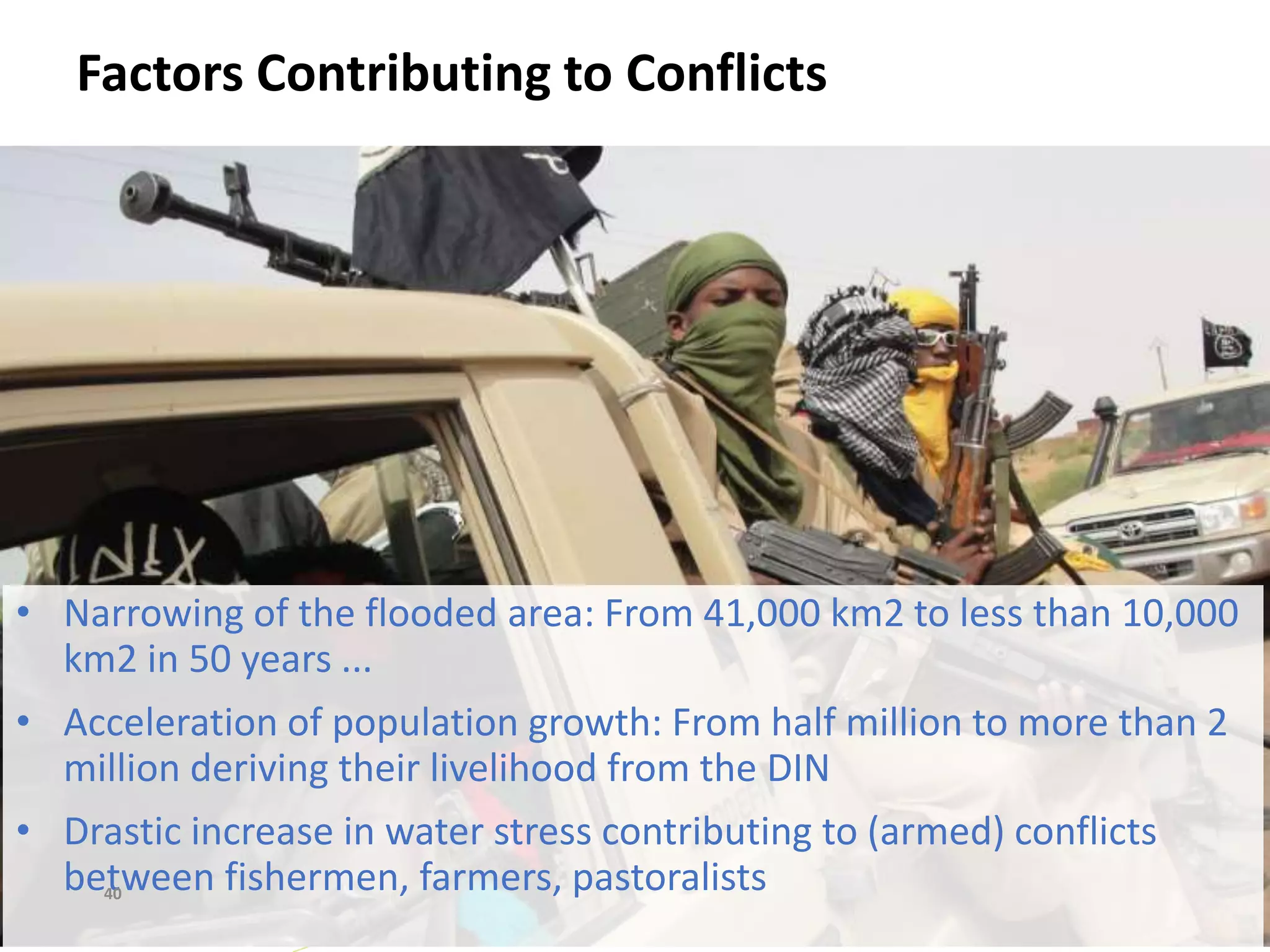
Factors Contributing to Conflicts
40
• Narrowing of the flooded area: From 41,000 km2 to less than 10,000
km2 in 50 years ...
• Acceleration of population growth: From half million to more than 2
million deriving their livelihood from the DIN
• Drastic increase in water stress contributing to (armed) conflicts
between fishermen, farmers, pastoralists40
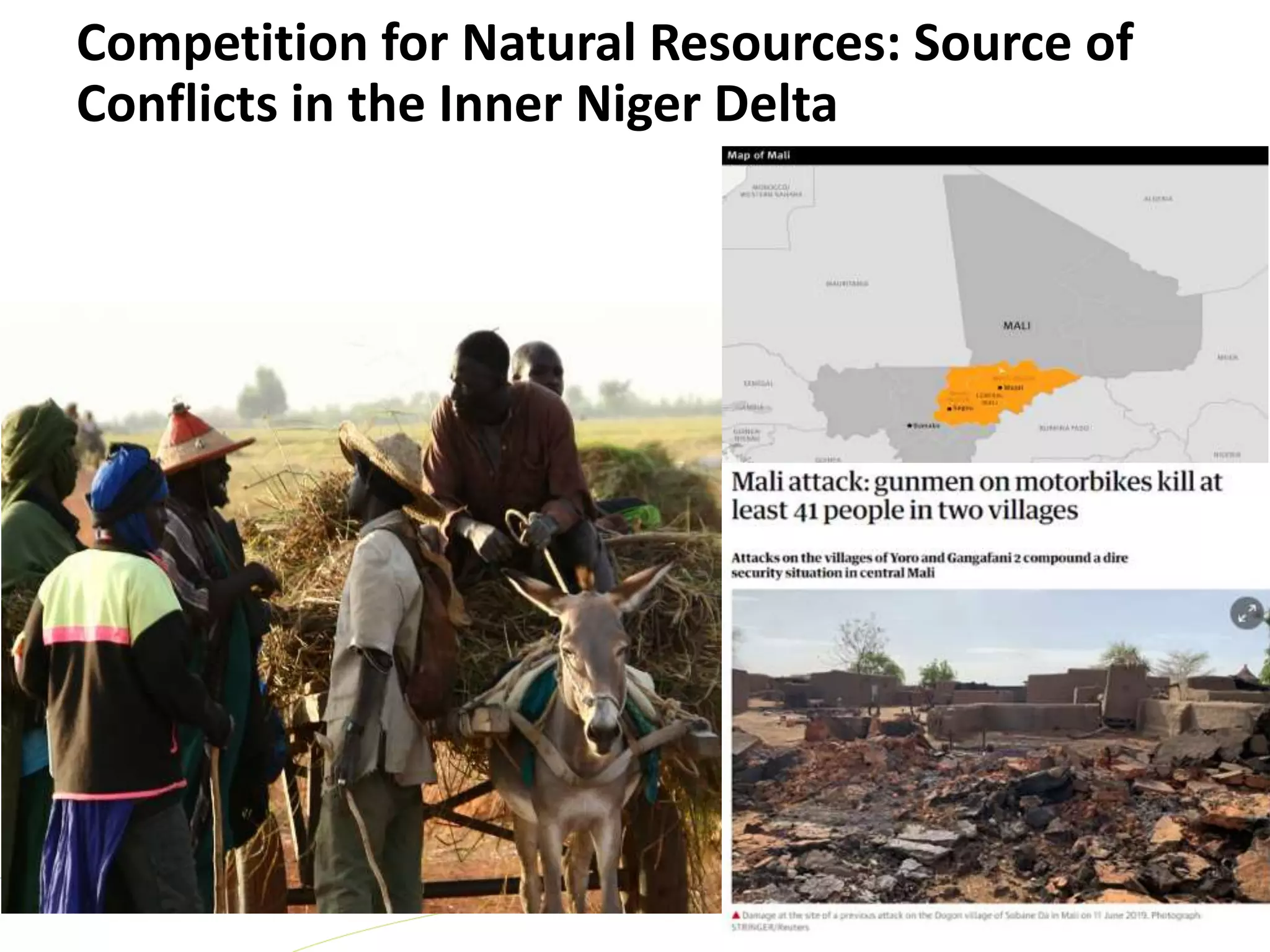
Competition for Natural Resources: Source of
Conflicts in the Inner Niger Delta
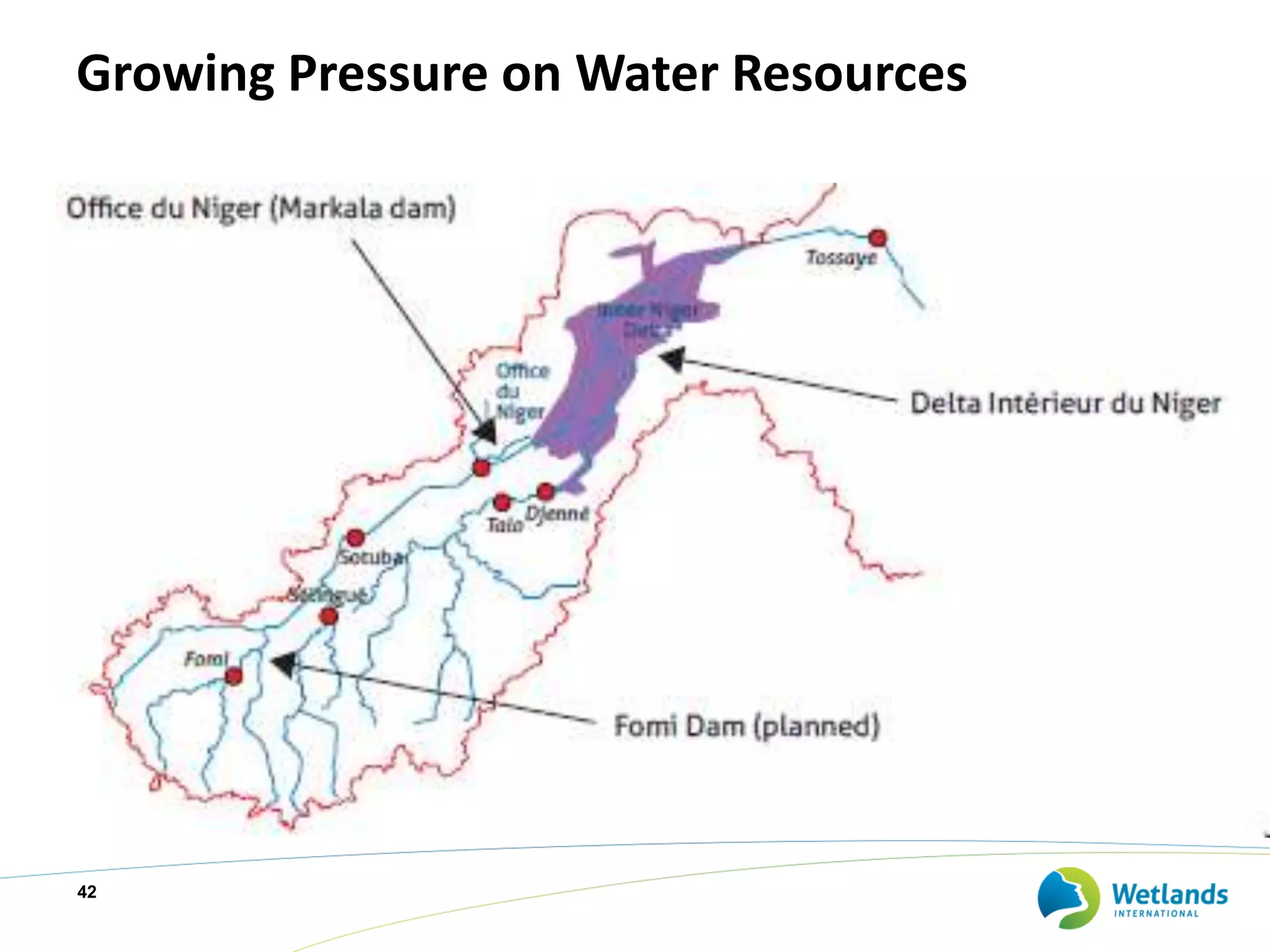
Growing Pressure on Water Resources
42
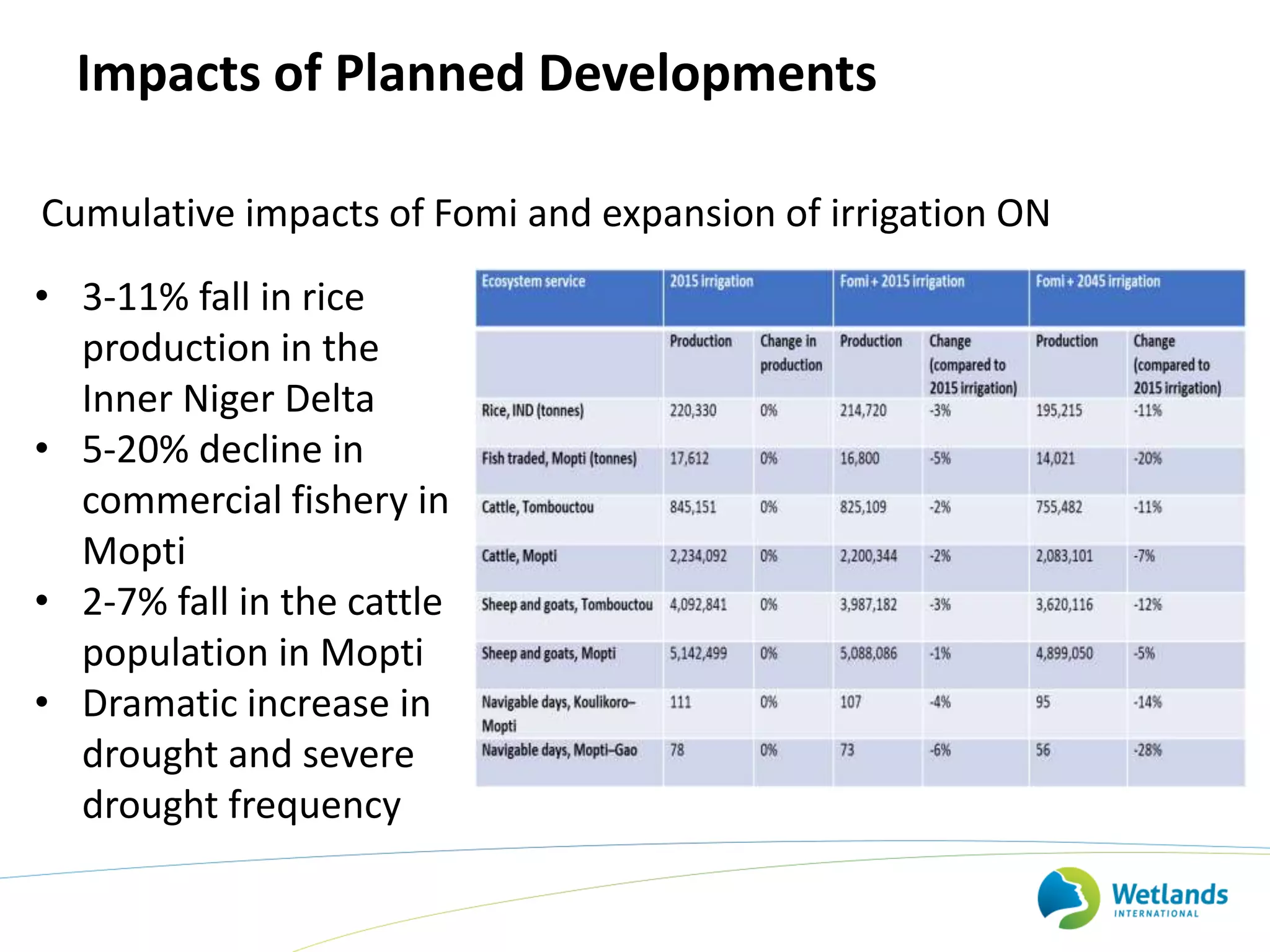
Impacts of Planned Developments
Cumulative impacts of Fomi and expansion of irrigation ON
• 3-11% fall in rice
production in the
Inner Niger Delta
• 5-20% decline in
commercial fishery in
Mopti
• 2-7% fall in the cattle
population in Mopti
• Dramatic increase in
drought and severe
drought frequency
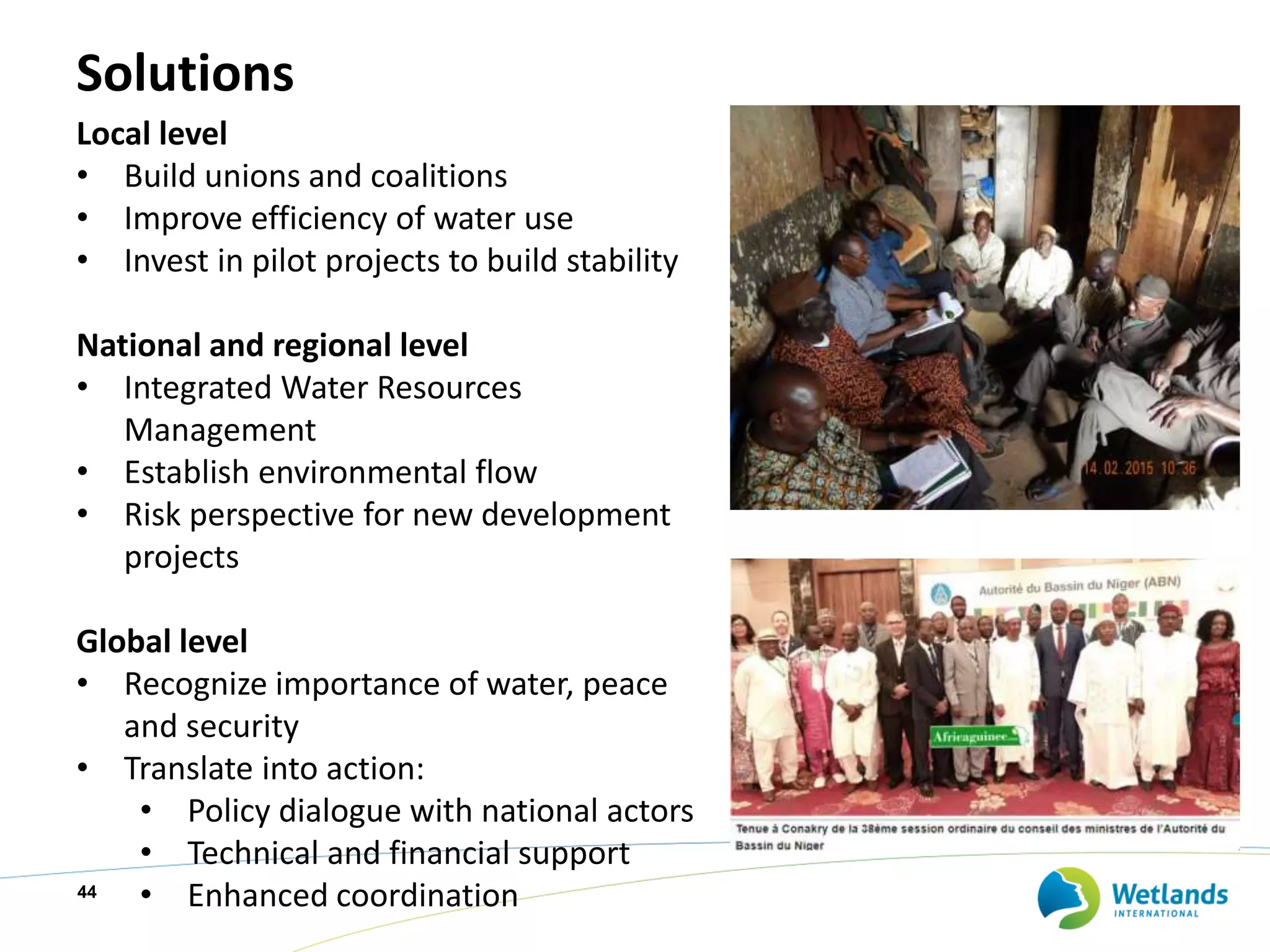
Solutions
44
Local level
• Build unions and coalitions
• Improve efficiency of water use
• Invest in pilot projects to build stability
National and regional level
• Integrated Water Resources
Management
• Establish environmental flow
• Risk perspective for new development
projects
Global level
• Recognize importance of water, peace
and security
• Translate into action:
• Policy dialogue with national actors
• Technical and financial support
• Enhanced coordination
Thank you for your attention
THANK YOU. CONTACT US:
Charles Iceland, Director, Global and National Water
Initiatives, Water Program, WRI, charles.iceland@wri.org
Peter Gleick, Co-Founder and President Emeritus of the
Pacific Institute, pgleick@gmail.com
Ayushi Trivedi, Research Analyst II, Gender and Social
Equity, WRI, ayushi.trivedi@wri.org

Ending Conflicts Over Water: Solutions to Water and Security Challenges

  • 1.
    Ending Conflicts OverWater: Solutions to Water and Security Challenges vvvvvvvvvvvvvvvvvvvvvvvvv
  • 2.
    SPEAKER BIOS Kitty vander Heijden Director-General, International Cooperation, Dutch Ministry of Foreign Affairs Charles Iceland Director, Global and National Water Initiatives, Water Program, World Resources Institute Peter Gleick Co-Founder and President Emeritus, Pacific Institute Ayushi Trivedi Gender and Social Equity Research Analyst, World Resources Institute Chris Baker Programme Head Water Resources, Wetlands International Susanne Schmeier Senior Lecturer, Water Law and Diplomacy, IHE Delft
  • 3.
    Water as aTrigger, Weapon, or Casualty of Conflict: Overview and Trends Peter H. Gleick Ending Conflicts over Water: Solutions to Water and Security Challenges Webinar: September 2, 2020 http://www.pacinst.org http://www.worldwater.org/ @petergleick
  • 5.
    Water, Security, andConflict • Definitions of “security” vary and are expanding. • There is a long history of conflicts over fresh water. • Such conflicts take many forms (as a trigger, weapon, casualty). • The risks of water-related disputes are growing, including over “peak water” constraints of all kinds. • These water-related factors will have both direct and indirect impacts on security and conflict.
  • 6.
    Water Conflict Categories •Trigger: Water as a trigger or root cause of conflict –Pastoralists v. farmers in Africa; scarcity and control in India and Iran (2018-19) • Weapon: Water as a weapon of conflict –Diverting water from villages; opening floodgates on dams (Iraq 2017); poisoning wells (Somalia 2017) • Casualty: Water resources or water systems as a casualty or target of conflict –WWII, Vietnam, Iraq, Syria, Yemen
  • 7.
    The Water ConflictChronology (www.worldwater.org) Photo: David J. Phillip AP 2017
  • 8.
    The Water ConflictChronology http://worldwater.org/water-conflict/
  • 9.
    0 10 20 30 40 50 60 70 80 90 100 1980 1982 19841986 1988 1990 1992 1994 1996 1998 2000 2002 2004 2006 2008 2010 2012 2014 2016 2018 Weapon Casualty Trigger Water Conflict Events by Type 1980-2019 P.H. Gleick, 2019. Water Conflict Chronology Update. www.worldwater.org
  • 10.
    Global Early WarningTool 2020 Forecast (WPS Partnership) https://www.waterpeacesecurity.org/
  • 11.
    Strategies for Ending ConflictsOver Water • Technical (address water scarcity, improve efficiency) • Economic (improve allocation/use; smart subsidies) • Management (address institutional failures) • Political and Legal (move toward cooperation) Source: Report on “Ending Conflicts over Water: Solutions to Water and Security Challenges.” P.H. Gleick, C. Iceland, A. Trivedi. September 2020. Pacific Institute, World Resources, Institute, Water Peace and Security Partnership.
  • 12.
    Dr. Peter H.Gleick pgleick@pacinst.org Pacific Institute Oakland, California @petergleick www.pacinst.org
  • 13.
    Ending Conflicts OverWater: Solutions to Water and Security Challenges Solutions and Barriers to Implementation Charles Iceland World Resources Institute vvvvvvvvvvvvvvvvvvvvvvvvv
  • 14.
    Solutions to Waterand Security Challenges 1. Natural resources, science and engineering approaches 2. Political and legal tools 3. Economic and financial tools 4. Policy and governance strategies
  • 15.
    Natural Resources, Science,and Engineering Approaches 1. Natural resources, science and engineering approaches 2. Political and legal tools 3. Economic and financial tools 4. Policy and governance strategies
  • 16.
    Water Efficiency andConservation Improvements PHOTO SOURCES: WISEGEEK.COM; MARKETRESEARCH.BIZ
  • 17.
    PHOTO SOURCE: FLICKR/CHESAPEAKEBAY PROGRAM, NANTICOKE RIVER WETLANDS
  • 18.
    Data Collection andInformation Systems SOURCE: WWW.SEBAKMT.COM
  • 19.
    Political and LegalTools 1. Natural resources, science and engineering approaches 2. Political and legal tools 3. Economic and financial tools 4. Policy and governance strategies
  • 20.
  • 21.
    Economic and FinancialTools 1. Natural resources, science and engineering approaches 2. Political and legal tools 3. Economic and financial tools 4. Policy and governance strategies
  • 22.
  • 23.
    Policy and GovernanceStrategies 1. Natural resources, science and engineering approaches 2. Political and legal tools 3. Economic and financial tools 4. Policy and governance strategies
  • 24.
    PHOTO SOURCE: BUSINESSFOR SOCIAL RESPONSIBILITY
  • 25.
    Barriers to Implementation Examplesof barriers:  Political and economic trade-offs inherent in the proposed solutions  Problems associated with collective action, such as the issue of “free riders” who use services without paying for them  Scarce financial resources  Insufficient technical capacity  Social or cultural barriers  Widespread and entrenched corruption  Etc.
  • 26.
  • 27.
    IMAGE SOURCE: GUENTERGUNI/ISTOCK GENDERAND SOCIAL EQUITY CHALLENGES OF WATER INSECURITY Ayushi Trivedi World Resources Institute
  • 28.
    IMAGE SOURCE: D.MCCOURTIE/WORLD BANK • Some groups are more vulnerable than others • Social, economic and environmental impacts of inequity WATER INSECURITY IS INEQUITABLY DISTRIBUTED
  • 29.
    IMAGE: BIOVERSITY INTERNATIONAL/FLICKR •Women are especially vulnerable • Gender inequality and conflict are related WOMEN AND WATER INSECURITY
  • 30.
    PROPOSED SOLUTIONS Natural Resources,Science, and Engineering Water, sanitation, and hygiene (WASH) infrastructure and services Political and Legal Tools Water and land rights reform Human right to water and sanitation and the right to a healthy environment Multi-stakeholder peacekeeping groups Policy and Governance Decentralization of water management Stakeholder and community engagement Gender equality Population policies
  • 31.
    PROPOSED SOLUTIONS Human rightto water, sanitation and hygiene Inclusive decision-making Equitable policies Rights-based population policies
  • 32.
    HUMAN RIGHT TOWASH IMAGE SOURCE: SUC/ISTOCK • Water, sanitation and hygiene (WASH) infrastructure and services • Human right to water and sanitation and the right to a healthy environment
  • 33.
    IMAGE SOURCE: AARONMINNICK / WRI INCLUSIVE DECISION-MAKING • Multi-stakeholder peacekeeping groups • Decentralization of water management • Stakeholder and community engagement • Gender equality
  • 34.
    IMAGE SOURCE: SYEDTOUHID HASSAN/FLICKR RIGHTS-BASED POPULATION POLICIES • Gender equality • Population policies • Increasing secondary education rates for girls while maintaining rates for boys • Increasing acceptance of and access to reproductive health services and family planning options • Reducing infant and child mortality
  • 35.
    IMAGE SOURCE: MARIAFLEISCHMANN/WORLD BANK EQUITABLE POLICIES • Water and land rights reform • Gender equality
  • 36.
    IMAGE SOURCE: GUENTERGUNI/ISTOCK THANK YOU! AyushiTrivedi Research Analyst II, Gender and Social Equity Initiative World Resources Institute Ayushi.Trivedi@wri.org
  • 37.
    Water Conflicts andSolutions in Mali Dr Karounga KEITA, Regional Director, Sahel Office Dr Chris Baker, Programme Head Water Resources, Global Office Joyce Kortlandt, Senior Advocacy Officer, Global Office Dr Beteo Zongo, Environmental Economist, Sahel Office 2nd September 2020, WRI Webinar
  • 38.
    Wetlands in theSahel 38 • 70% - 85% of the population living within 50 km along the main rivers and lakes (Niger, Senegal, Volta, IND, Lake Chad ...) • Livelihoods highly dependent on the flood regime and the eco- agricultural systems driven by it
  • 39.
    The Inner NigerDelta in Mali 39 2nd largest wetland in Africa, hub of food production and biodiversity: • Home to approximately 2 million people • Provides 15% of the nation’s cereal production • Provides 80% of the nation’s fish production • Supports 50% of the nation’s livestock
  • 40.
    Factors Contributing toConflicts 40 • Narrowing of the flooded area: From 41,000 km2 to less than 10,000 km2 in 50 years ... • Acceleration of population growth: From half million to more than 2 million deriving their livelihood from the DIN • Drastic increase in water stress contributing to (armed) conflicts between fishermen, farmers, pastoralists40
  • 41.
    Competition for NaturalResources: Source of Conflicts in the Inner Niger Delta
  • 42.
    Growing Pressure onWater Resources 42
  • 43.
    Impacts of PlannedDevelopments Cumulative impacts of Fomi and expansion of irrigation ON • 3-11% fall in rice production in the Inner Niger Delta • 5-20% decline in commercial fishery in Mopti • 2-7% fall in the cattle population in Mopti • Dramatic increase in drought and severe drought frequency
  • 44.
    Solutions 44 Local level • Buildunions and coalitions • Improve efficiency of water use • Invest in pilot projects to build stability National and regional level • Integrated Water Resources Management • Establish environmental flow • Risk perspective for new development projects Global level • Recognize importance of water, peace and security • Translate into action: • Policy dialogue with national actors • Technical and financial support • Enhanced coordination
  • 45.
    Thank you foryour attention
  • 46.
    THANK YOU. CONTACTUS: Charles Iceland, Director, Global and National Water Initiatives, Water Program, WRI, charles.iceland@wri.org Peter Gleick, Co-Founder and President Emeritus of the Pacific Institute, pgleick@gmail.com Ayushi Trivedi, Research Analyst II, Gender and Social Equity, WRI, ayushi.trivedi@wri.org