Empathy: The First Step in
the Design Thinking Process
Agenda
● Introduction
● Understanding Empathy
● Empathy in Design Thinking
● Empathy Mapping
● User Research Techniques
● Design Research
● Building Empathy Skills
● Empathy and User-Centered Design
● Examples of Empathetic Design
● Benefits of Empathy in Design
● Common Challenges in Practicing Empathy
● Conclusion
2
Introduction: Empathy in design; Design thinking overview
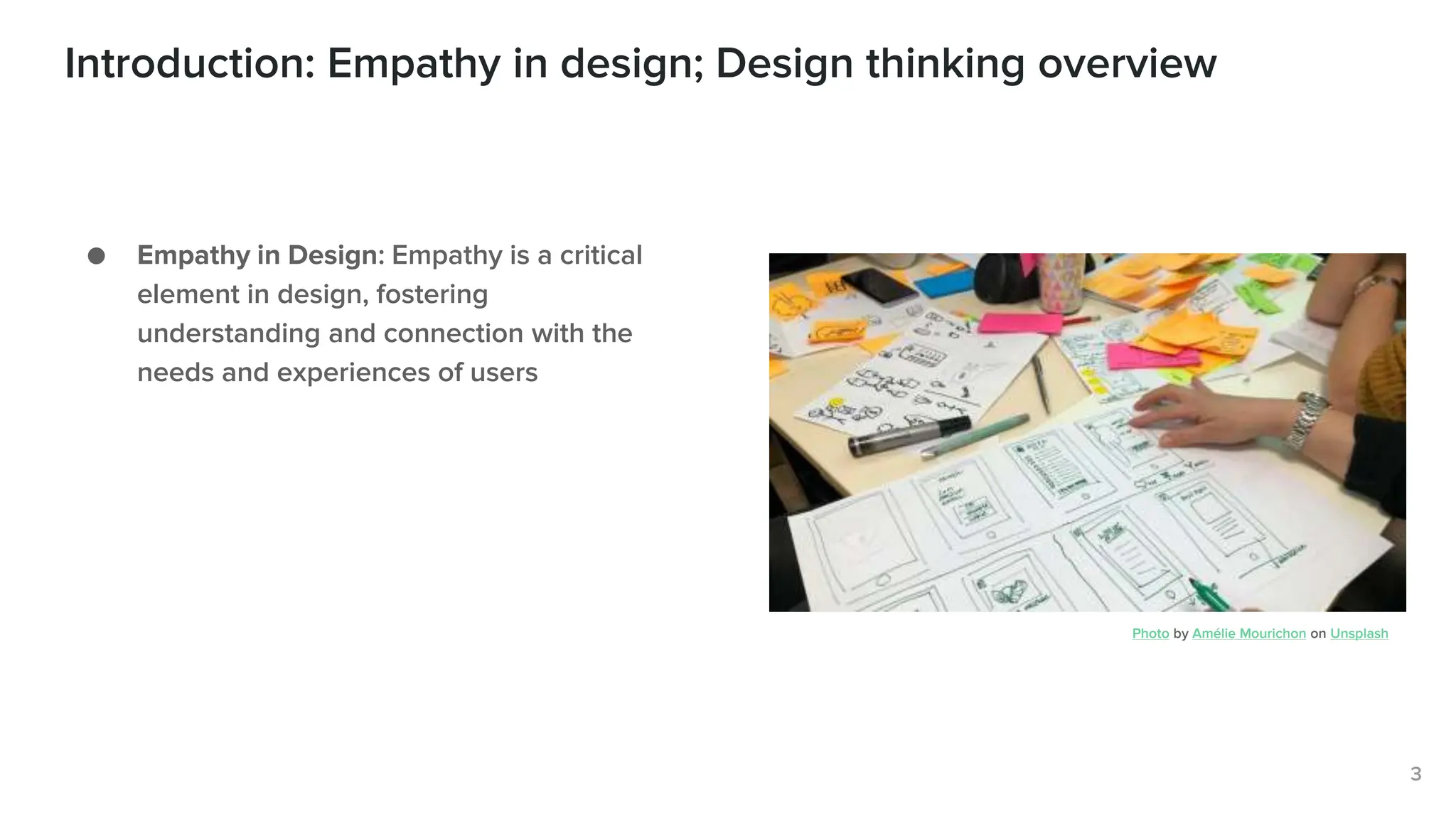
● Empathy in Design: Empathy is a critical
element in design, fostering
understanding and connection with the
needs and experiences of users
3
Photo by Amélie Mourichon on Unsplash
Understanding Empathy: Definition of empathy; Importance in
design
● Definition of Empathy: Empathy involves perceiving and understanding the emotions, perspectives,
and experiences of others, leading to a shared connection
4
Empathy in Design Thinking: Role of empathy in the design
thinking process; Empathy as the first step
● Empathy as the First Step: Empathy is the
initial phase of the design thinking
process, laying the groundwork for
understanding the problem space and the
needs of users
5
Photo by Karin Shaljyan on Unsplash
Empathy Mapping: What is empathy mapping; How to create an
empathy map
● Understanding Empathy Mapping: Empathy mapping involves visualizing and organizing user
insights, emotions, and behaviors to gain deeper understanding
6
User Research Techniques: Methods for gathering user insights;
Interviews, observation, surveys
● Gathering User Insights: User research
techniques such as interviews,
observations, and surveys provide
valuable data and understanding of user
needs and behaviors
7
Photo by Amélie Mourichon on Unsplash
Design Research: Importance of research in empathetic design;
Tools and techniques
● Importance of Research: Research forms
the cornerstone of empathetic design,
providing crucial insights into user needs,
behaviors, and expectations
8
Photo by Amélie Mourichon on Unsplash
Building Empathy Skills: Developing empathy as a designer; Active
listening, putting yourself in others' shoes
● Developing Empathy Skills: As designers,
cultivating empathy involves active
listening, perspective-taking, and
understanding user emotions and
experiences
9
Photo by Vojtech Bruzek on Unsplash
Empathy and User-Centered Design: Connection between
empathy and user-centered design; Putting the user first
● Putting the User First: Empathy forms the
cornerstone of user-centered design,
prioritizing the needs and experiences of
users throughout the design process
10
Photo by Amélie Mourichon on Unsplash
Examples of Empathetic Design: Case studies showcasing
empathetic design; Successful implementation
● Showcasing Empathetic Design: Case
studies and examples demonstrate the
successful implementation of empathetic
design in real-world contexts
11
Photo by Kin Li on Unsplash
Benefits of Empathy in Design: Improving user experience;
Building trust and loyalty
● Improving User Experience: Empathy in
design leads to enhanced user
experiences, fostering trust, loyalty, and
satisfaction
12
Photo by Rahul Mishra on Unsplash
Common Challenges in Practicing Empathy: Overcoming biases;
Dealing with conflicting needs and preferences
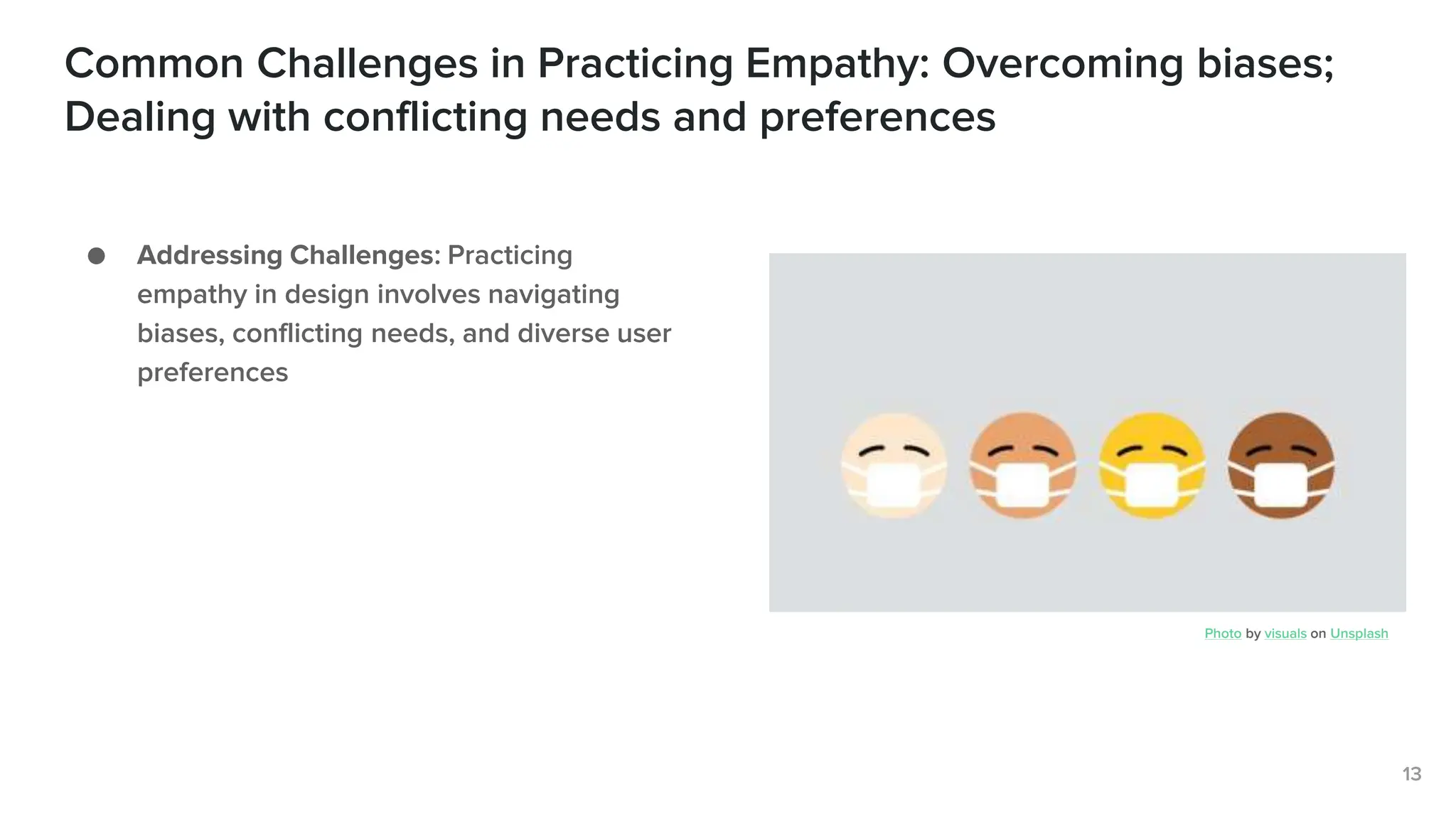
● Addressing Challenges: Practicing
empathy in design involves navigating
biases, conflicting needs, and diverse user
preferences
13
Photo by visuals on Unsplash
Conclusion: Key takeaways; Emphasizing the importance of
empathy in design
● Emphasizing Empathy: In conclusion, empathy is the cornerstone of human-centered design,
fostering deep connections, understanding, and resonating with users' needs
14

Empathy: the first step in the design thinking process.pptx

  • 1.
    Empathy: The FirstStep in the Design Thinking Process
  • 2.
    Agenda ● Introduction ● UnderstandingEmpathy ● Empathy in Design Thinking ● Empathy Mapping ● User Research Techniques ● Design Research ● Building Empathy Skills ● Empathy and User-Centered Design ● Examples of Empathetic Design ● Benefits of Empathy in Design ● Common Challenges in Practicing Empathy ● Conclusion 2
  • 3.
    Introduction: Empathy indesign; Design thinking overview ● Empathy in Design: Empathy is a critical element in design, fostering understanding and connection with the needs and experiences of users 3 Photo by Amélie Mourichon on Unsplash
  • 4.
    Understanding Empathy: Definitionof empathy; Importance in design ● Definition of Empathy: Empathy involves perceiving and understanding the emotions, perspectives, and experiences of others, leading to a shared connection 4
  • 5.
    Empathy in DesignThinking: Role of empathy in the design thinking process; Empathy as the first step ● Empathy as the First Step: Empathy is the initial phase of the design thinking process, laying the groundwork for understanding the problem space and the needs of users 5 Photo by Karin Shaljyan on Unsplash
  • 6.
    Empathy Mapping: Whatis empathy mapping; How to create an empathy map ● Understanding Empathy Mapping: Empathy mapping involves visualizing and organizing user insights, emotions, and behaviors to gain deeper understanding 6
  • 7.
    User Research Techniques:Methods for gathering user insights; Interviews, observation, surveys ● Gathering User Insights: User research techniques such as interviews, observations, and surveys provide valuable data and understanding of user needs and behaviors 7 Photo by Amélie Mourichon on Unsplash
  • 8.
    Design Research: Importanceof research in empathetic design; Tools and techniques ● Importance of Research: Research forms the cornerstone of empathetic design, providing crucial insights into user needs, behaviors, and expectations 8 Photo by Amélie Mourichon on Unsplash
  • 9.
    Building Empathy Skills:Developing empathy as a designer; Active listening, putting yourself in others' shoes ● Developing Empathy Skills: As designers, cultivating empathy involves active listening, perspective-taking, and understanding user emotions and experiences 9 Photo by Vojtech Bruzek on Unsplash
  • 10.
    Empathy and User-CenteredDesign: Connection between empathy and user-centered design; Putting the user first ● Putting the User First: Empathy forms the cornerstone of user-centered design, prioritizing the needs and experiences of users throughout the design process 10 Photo by Amélie Mourichon on Unsplash
  • 11.
    Examples of EmpatheticDesign: Case studies showcasing empathetic design; Successful implementation ● Showcasing Empathetic Design: Case studies and examples demonstrate the successful implementation of empathetic design in real-world contexts 11 Photo by Kin Li on Unsplash
  • 12.
    Benefits of Empathyin Design: Improving user experience; Building trust and loyalty ● Improving User Experience: Empathy in design leads to enhanced user experiences, fostering trust, loyalty, and satisfaction 12 Photo by Rahul Mishra on Unsplash
  • 13.
    Common Challenges inPracticing Empathy: Overcoming biases; Dealing with conflicting needs and preferences ● Addressing Challenges: Practicing empathy in design involves navigating biases, conflicting needs, and diverse user preferences 13 Photo by visuals on Unsplash
  • 14.
    Conclusion: Key takeaways;Emphasizing the importance of empathy in design ● Emphasizing Empathy: In conclusion, empathy is the cornerstone of human-centered design, fostering deep connections, understanding, and resonating with users' needs 14

Editor's Notes

  • #4 Welcome to the presentation on the crucial role of empathy in design. Empathy is the foundation of human-centered design, involving understanding and resonating with the emotions, thoughts, and experiences of others. Through design thinking, we can leverage empathy to create solutions that truly address the needs of users.
  • #5 Empathy refers to the ability to understand and share the feelings of others, stepping into their shoes and seeing the world from their perspective. In design, empathy is essential for creating products and experiences that truly resonate with users' needs and aspirations, fostering a deep and genuine connection.
  • #6 In the design thinking process, empathy forms the crucial first step, enabling designers to immerse themselves in the experiences and perspectives of users. By deeply empathizing with the user, we can gain valuable insights that inform and guide the subsequent stages of ideation, prototyping, and implementation.
  • #7 Empathy mapping is a powerful technique that helps us capture and organize user insights, needs, and emotions. By creating an empathy map, we can visually represent the user's experiences, thoughts, and reactions, gaining a holistic view that informs our design decisions and strategies.
  • #8 To understand the needs and experiences of users, we employ various user research techniques, including interviews, observations, and surveys. These methods enable us to gather rich insights and observations that form the bedrock of empathetic design, guiding us to create solutions that truly resonate with users.
  • #9 Research plays a pivotal role in empathetic design, allowing us to delve deep into the needs, behaviors, and expectations of users. By leveraging various research methods and tools, we can gather empirical data that informs our design decisions, ensuring that our solutions are truly aligned with the needs and aspirations of the intended users.
  • #10 Developing empathy as a designer involves honing the skills of active listening, perspective-taking, and understanding the emotional and experiential landscape of users. By actively engaging with users and immersing ourselves in their world, we can develop a deep understanding that fuels empathetic design solutions.
  • #11 Empathy and user-centered design go hand in hand, with empathy forming the bedrock of a design approach that prioritizes the needs and experiences of users. By putting the user at the forefront of the design process, we can create solutions that truly resonate with their needs and foster a deep, meaningful connection.
  • #12 Real-world case studies and examples provide concrete evidence of empathetic design's impact, showcasing successful implementations that have transformed user experiences and addressed unmet needs. By examining these examples, we gain valuable insights into the practical application and benefits of empathetic design.
  • #13 The benefits of empathy in design are far-reaching, leading to improved user experiences that foster trust, loyalty, and satisfaction. By empathetically addressing user needs and aspirations, we can create experiences and products that resonate deeply with users, forging lasting connections and loyalty.
  • #14 While practicing empathy in design, we encounter common challenges such as biases, conflicting needs, and diverse user preferences. Overcoming these challenges involves navigating the complexities of human experiences and emotions, ensuring that our design solutions are inclusive, adaptable, and genuinely empathetic.
  • #15 In conclusion, empathy forms the heart of human-centered design, shaping solutions that resonate deeply with users and enrich their experiences. By emphasizing the importance of empathy, we can forge meaningful connections with users, create impactful solutions, and ensure that our designs make a positive impact on the lives of people.