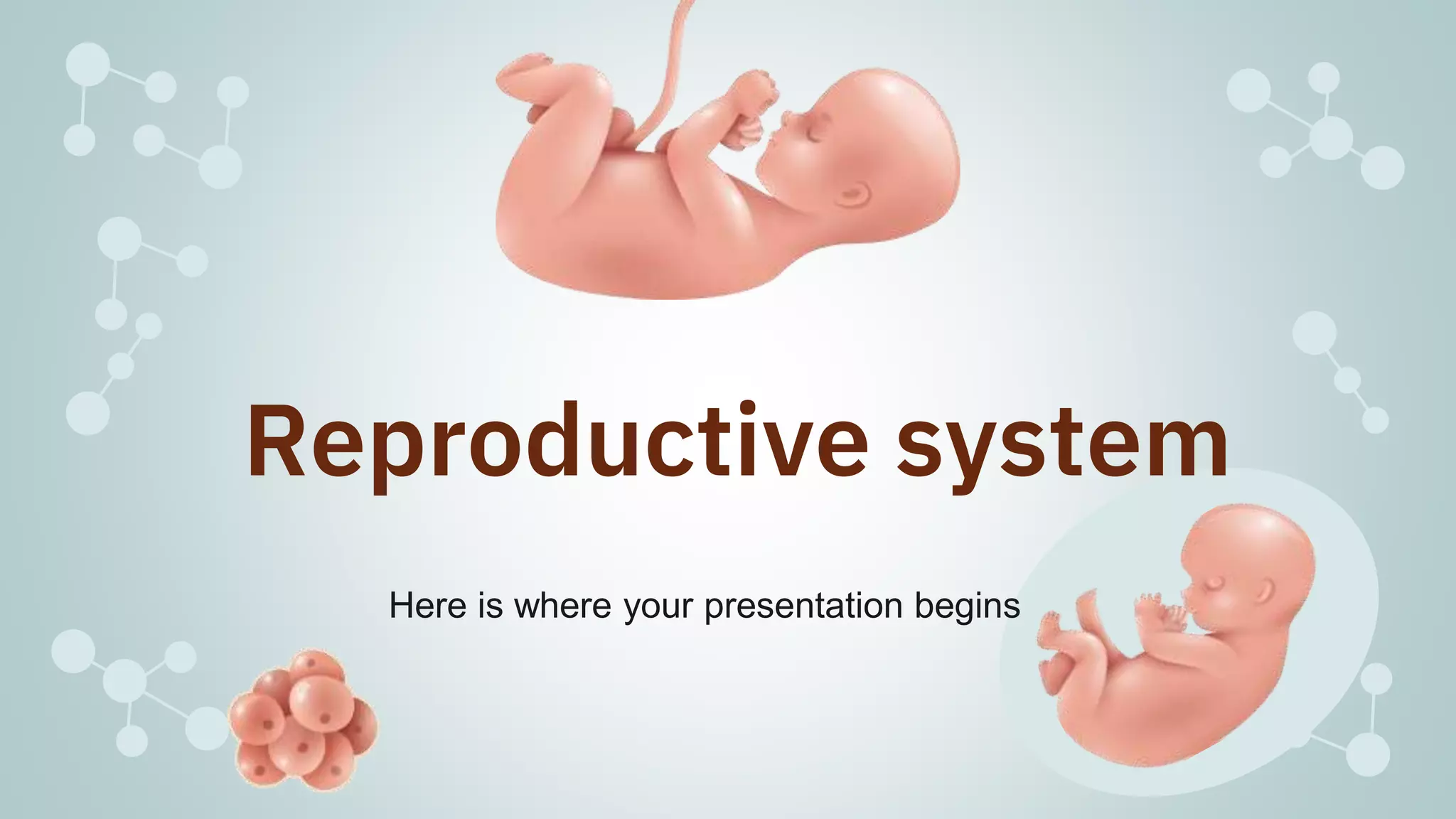
Reproductive system
Here is where your presentation begins
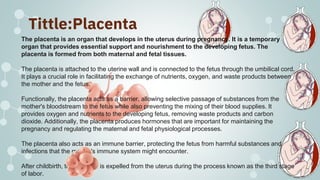
The placenta is an organ that develops in the uterus during pregnancy. It is a temporary
organ that provides essential support and nourishment to the developing fetus. The
placenta is formed from both maternal and fetal tissues.
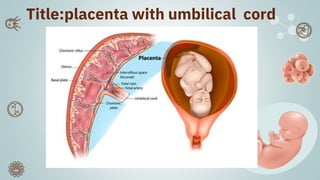
The placenta is attached to the uterine wall and is connected to the fetus through the umbilical cord.
It plays a crucial role in facilitating the exchange of nutrients, oxygen, and waste products between
the mother and the fetus.
Functionally, the placenta acts as a barrier, allowing selective passage of substances from the
mother's bloodstream to the fetus while also preventing the mixing of their blood supplies. It
provides oxygen and nutrients to the developing fetus, removing waste products and carbon
dioxide. Additionally, the placenta produces hormones that are important for maintaining the
pregnancy and regulating the maternal and fetal physiological processes.
The placenta also acts as an immune barrier, protecting the fetus from harmful substances and
infections that the mother's immune system might encounter.
After childbirth, the placenta is expelled from the uterus during the process known as the third stage
of labor.
Tittle:Placenta
Title:placenta with umbilical cord
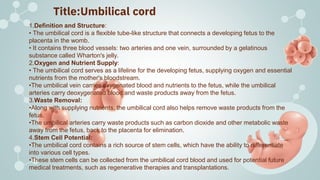
Title:Umbilical cord
1.Definition and Structure:
• The umbilical cord is a flexible tube-like structure that connects a developing fetus to the
placenta in the womb.
• It contains three blood vessels: two arteries and one vein, surrounded by a gelatinous
substance called Wharton's jelly.
2.Oxygen and Nutrient Supply:
• The umbilical cord serves as a lifeline for the developing fetus, supplying oxygen and essential
nutrients from the mother's bloodstream.
•The umbilical vein carries oxygenated blood and nutrients to the fetus, while the umbilical
arteries carry deoxygenated blood and waste products away from the fetus.
3.Waste Removal:
•Along with supplying nutrients, the umbilical cord also helps remove waste products from the
fetus.
•The umbilical arteries carry waste products such as carbon dioxide and other metabolic waste
away from the fetus, back to the placenta for elimination.
4.Stem Cell Potential:
•The umbilical cord contains a rich source of stem cells, which have the ability to differentiate
into various cell types.
•These stem cells can be collected from the umbilical cord blood and used for potential future
medical treatments, such as regenerative therapies and transplantations.
Title: Changes during Embryonic and Fetal
Development
Point 1: Embryonic Development
- Timeframe: Weeks 1-8 of pregnancy
- Rapid cell division and differentiation
- Formation of major organ systems and body structures
- Development of the nervous system, heart, limbs, and facial features
- Vulnerability to external factors, such as teratogens, that can cause developmental abnormalities
Point 2: Formation of Tissues and Organs
- Establishment of the three germ layers (ectoderm, mesoderm, and endoderm)
- Ectoderm gives rise to the skin, nervous system, and sensory organs
- Mesoderm develops into muscles, bones, blood vessels, and reproductive organs
- Endoderm forms the respiratory system, gastrointestinal tract, and associated organs
Title: Changes during Embryonic
and Fetal Development
Point 3: Placenta and Umbilical Cord
- Development of the placenta to support the growing embryo/fetus
- Exchange of nutrients, oxygen, and waste products between the mother
and the fetus
- Umbilical cord connects the fetus to the placenta, facilitating nutrient and
oxygen supply
Point 4: Fetal Development
- Weeks 9-38 of pregnancy (from the end of the embryonic stage until birth)
- Refinement and maturation of organ systems and body structures
- Rapid growth in size and weight
- Development of fetal movements and sensory abilities
Point 5: Sensory and Brain Development
- Formation of neural connections and brain structures
- Development of sensory organs, including sight, hearing, and touch
- Fetal response to external stimuli, such as sound and light
Title: Reproductive Health Procedures
Point 1: Pregnancy Test
- A pregnancy test is a diagnostic tool used to determine if a woman is pregnant.
- It detects the presence of human chorionic gonadotropin (hCG) hormone in urine or blood samples.
- The test can be conducted at home using over-the-counter kits or performed by healthcare professionals in
clinics.
- Results can be obtained within minutes, providing a quick and reliable indication of pregnancy.
- It is essential in confirming pregnancy and helps individuals make informed decisions about their
reproductive health.
Point 2: Parturition
- Parturition refers to the process of giving birth to offspring.
- It occurs when a developing fetus reaches full term and is ready to leave the mother's uterus.
- The process involves uterine contractions, cervical dilation, and the expulsion of the fetus through the birth
canal.
- It can be a natural, unassisted process or assisted through medical interventions, such as induction or
cesarean section.
- Parturition is a critical event that marks the beginning of parenthood and requires proper prenatal care and
support.
Title: Reproductive Health Procedures
Point 3: Surgical Sterilization
- Surgical sterilization is a permanent contraceptive method used to prevent pregnancy.
- It involves surgical procedures that permanently block or remove the reproductive pathways in both men and
women.
- In men, it is commonly known as a vasectomy, where the vas deferens is severed or blocked to prevent sperm
from reaching semen.
.
Point 4: Benefits of Pregnancy Tests, Parturition, and Surgical Sterilization
- Pregnancy tests provide early detection, enabling timely healthcare decisions and appropriate prenatal care.
- Parturition is a natural process that allows the safe delivery of a healthy newborn and marks the beginning of
parenting.
- Surgical sterilization offers a permanent and reliable form of contraception for individuals who do not wish to have
children.
Point 5: Importance of Access and Education
- Access to pregnancy tests, parturition services, and surgical sterilization is crucial for reproductive health.
- Affordable and widespread availability ensures equitable access to these procedures.
- Education and awareness programs play a vital role in providing accurate information about these procedures and
their implications.
Thanks
Do you have any questions?

Embryology Case study_ Genome Edited Human Embryos by Slidesgo`,.pptx

  • 1.
    Reproductive system Here iswhere your presentation begins
  • 2.
    The placenta isan organ that develops in the uterus during pregnancy. It is a temporary organ that provides essential support and nourishment to the developing fetus. The placenta is formed from both maternal and fetal tissues. The placenta is attached to the uterine wall and is connected to the fetus through the umbilical cord. It plays a crucial role in facilitating the exchange of nutrients, oxygen, and waste products between the mother and the fetus. Functionally, the placenta acts as a barrier, allowing selective passage of substances from the mother's bloodstream to the fetus while also preventing the mixing of their blood supplies. It provides oxygen and nutrients to the developing fetus, removing waste products and carbon dioxide. Additionally, the placenta produces hormones that are important for maintaining the pregnancy and regulating the maternal and fetal physiological processes. The placenta also acts as an immune barrier, protecting the fetus from harmful substances and infections that the mother's immune system might encounter. After childbirth, the placenta is expelled from the uterus during the process known as the third stage of labor. Tittle:Placenta
  • 3.
  • 4.
    Title:Umbilical cord 1.Definition andStructure: • The umbilical cord is a flexible tube-like structure that connects a developing fetus to the placenta in the womb. • It contains three blood vessels: two arteries and one vein, surrounded by a gelatinous substance called Wharton's jelly. 2.Oxygen and Nutrient Supply: • The umbilical cord serves as a lifeline for the developing fetus, supplying oxygen and essential nutrients from the mother's bloodstream. •The umbilical vein carries oxygenated blood and nutrients to the fetus, while the umbilical arteries carry deoxygenated blood and waste products away from the fetus. 3.Waste Removal: •Along with supplying nutrients, the umbilical cord also helps remove waste products from the fetus. •The umbilical arteries carry waste products such as carbon dioxide and other metabolic waste away from the fetus, back to the placenta for elimination. 4.Stem Cell Potential: •The umbilical cord contains a rich source of stem cells, which have the ability to differentiate into various cell types. •These stem cells can be collected from the umbilical cord blood and used for potential future medical treatments, such as regenerative therapies and transplantations.
  • 5.
    Title: Changes duringEmbryonic and Fetal Development Point 1: Embryonic Development - Timeframe: Weeks 1-8 of pregnancy - Rapid cell division and differentiation - Formation of major organ systems and body structures - Development of the nervous system, heart, limbs, and facial features - Vulnerability to external factors, such as teratogens, that can cause developmental abnormalities Point 2: Formation of Tissues and Organs - Establishment of the three germ layers (ectoderm, mesoderm, and endoderm) - Ectoderm gives rise to the skin, nervous system, and sensory organs - Mesoderm develops into muscles, bones, blood vessels, and reproductive organs - Endoderm forms the respiratory system, gastrointestinal tract, and associated organs
  • 6.
    Title: Changes duringEmbryonic and Fetal Development Point 3: Placenta and Umbilical Cord - Development of the placenta to support the growing embryo/fetus - Exchange of nutrients, oxygen, and waste products between the mother and the fetus - Umbilical cord connects the fetus to the placenta, facilitating nutrient and oxygen supply Point 4: Fetal Development - Weeks 9-38 of pregnancy (from the end of the embryonic stage until birth) - Refinement and maturation of organ systems and body structures - Rapid growth in size and weight - Development of fetal movements and sensory abilities Point 5: Sensory and Brain Development - Formation of neural connections and brain structures - Development of sensory organs, including sight, hearing, and touch - Fetal response to external stimuli, such as sound and light
  • 7.
    Title: Reproductive HealthProcedures Point 1: Pregnancy Test - A pregnancy test is a diagnostic tool used to determine if a woman is pregnant. - It detects the presence of human chorionic gonadotropin (hCG) hormone in urine or blood samples. - The test can be conducted at home using over-the-counter kits or performed by healthcare professionals in clinics. - Results can be obtained within minutes, providing a quick and reliable indication of pregnancy. - It is essential in confirming pregnancy and helps individuals make informed decisions about their reproductive health. Point 2: Parturition - Parturition refers to the process of giving birth to offspring. - It occurs when a developing fetus reaches full term and is ready to leave the mother's uterus. - The process involves uterine contractions, cervical dilation, and the expulsion of the fetus through the birth canal. - It can be a natural, unassisted process or assisted through medical interventions, such as induction or cesarean section. - Parturition is a critical event that marks the beginning of parenthood and requires proper prenatal care and support.
  • 8.
    Title: Reproductive HealthProcedures Point 3: Surgical Sterilization - Surgical sterilization is a permanent contraceptive method used to prevent pregnancy. - It involves surgical procedures that permanently block or remove the reproductive pathways in both men and women. - In men, it is commonly known as a vasectomy, where the vas deferens is severed or blocked to prevent sperm from reaching semen. . Point 4: Benefits of Pregnancy Tests, Parturition, and Surgical Sterilization - Pregnancy tests provide early detection, enabling timely healthcare decisions and appropriate prenatal care. - Parturition is a natural process that allows the safe delivery of a healthy newborn and marks the beginning of parenting. - Surgical sterilization offers a permanent and reliable form of contraception for individuals who do not wish to have children. Point 5: Importance of Access and Education - Access to pregnancy tests, parturition services, and surgical sterilization is crucial for reproductive health. - Affordable and widespread availability ensures equitable access to these procedures. - Education and awareness programs play a vital role in providing accurate information about these procedures and their implications.
  • 9.
    Thanks Do you haveany questions?