Embedded Systems With C
SlideMake.com
1
Introduction to Embedded Systems with C
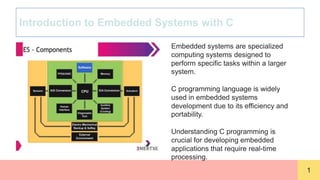
Embedded systems are specialized
computing systems designed to
perform specific tasks within a larger
system.
C programming language is widely
used in embedded systems
development due to its efficiency and
portability.
Understanding C programming is
crucial for developing embedded
applications that require real-time
processing.
2
Characteristics of Embedded Systems
Embedded systems are typically
designed to be resource-constrained,
with limited memory and processing
power.
Real-time operation is a key
requirement for many embedded
systems, where tasks must be
completed within strict time
constraints.
Embedded systems often interact with
the physical world through sensors
and actuators, requiring precise
control and timing.
3
Benefits of Using C in Embedded Systems
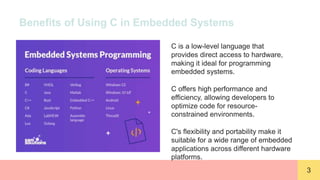
C is a low-level language that
provides direct access to hardware,
making it ideal for programming
embedded systems.
C offers high performance and
efficiency, allowing developers to
optimize code for resource-
constrained environments.
C's flexibility and portability make it
suitable for a wide range of embedded
applications across different hardware
platforms.
4
Common Challenges in Embedded Systems
Development
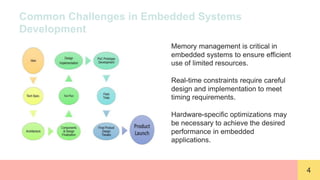
Memory management is critical in
embedded systems to ensure efficient
use of limited resources.
Real-time constraints require careful
design and implementation to meet
timing requirements.
Hardware-specific optimizations may
be necessary to achieve the desired
performance in embedded
applications.
5
Writing Efficient Code in C for Embedded Systems
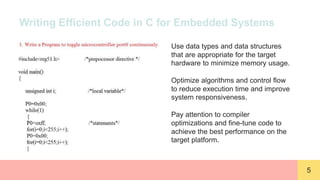
Use data types and data structures
that are appropriate for the target
hardware to minimize memory usage.
Optimize algorithms and control flow
to reduce execution time and improve
system responsiveness.
Pay attention to compiler
optimizations and fine-tune code to
achieve the best performance on the
target platform.
6
Debugging and Testing Embedded Systems in C
Embedded systems debugging often
involves using tools such as JTAG
debuggers and serial communication
interfaces.
Unit testing and integration testing are
essential to verify the functionality of
embedded software components.
Emulators and simulators can be
valuable tools for testing embedded
systems in a controlled environment
before deployment.
7
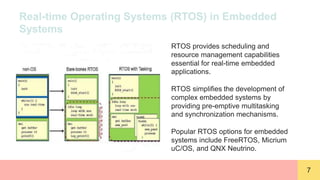
Real-time Operating Systems (RTOS) in Embedded
Systems
RTOS provides scheduling and
resource management capabilities
essential for real-time embedded
applications.
RTOS simplifies the development of
complex embedded systems by
providing pre-emptive multitasking
and synchronization mechanisms.
Popular RTOS options for embedded
systems include FreeRTOS, Micrium
uC/OS, and QNX Neutrino.
8
Interfacing with Peripherals in Embedded Systems
Embedded systems often interact with
peripherals such as sensors, displays,
and communication interfaces.
C provides mechanisms for low-level
hardware access, enabling developers
to interface with peripherals directly.
Device drivers play a crucial role in
abstracting hardware details and
providing a standardized interface for
application development.
9
Security Considerations in Embedded Systems
Development
Secure coding practices are essential
to prevent vulnerabilities and protect
embedded systems from cyber
threats.
Secure boot mechanisms and
encryption techniques can enhance
the security of embedded systems
against unauthorized access.
Regular security assessments and
updates are necessary to address
emerging threats and vulnerabilities in
embedded software.
10
Future Trends in Embedded Systems with C
The Internet of Things (IoT) is driving
the proliferation of connected
embedded devices that require
efficient and secure software
solutions.
Machine learning and artificial
intelligence technologies are being
integrated into embedded systems to
enable intelligent edge computing.
Continued advancements in hardware
design and software development
tools will shape the future of
embedded systems with C.
11
References
Smith, J. (2018). Embedded Systems
Programming with C. Publisher X.
Lee, K. et al. (2020). Real-Time
Operating Systems for Embedded
Applications. Journal of Embedded
Systems.
Brown, S. (2019). Secure
Development Practices for Embedded
Systems. Proceedings of Embedded
Security Conference.

Embedded Systems design by using micro controller and micro processor

  • 1.
    Embedded Systems WithC SlideMake.com
  • 2.
    1 Introduction to EmbeddedSystems with C Embedded systems are specialized computing systems designed to perform specific tasks within a larger system. C programming language is widely used in embedded systems development due to its efficiency and portability. Understanding C programming is crucial for developing embedded applications that require real-time processing.
  • 3.
    2 Characteristics of EmbeddedSystems Embedded systems are typically designed to be resource-constrained, with limited memory and processing power. Real-time operation is a key requirement for many embedded systems, where tasks must be completed within strict time constraints. Embedded systems often interact with the physical world through sensors and actuators, requiring precise control and timing.
  • 4.
    3 Benefits of UsingC in Embedded Systems C is a low-level language that provides direct access to hardware, making it ideal for programming embedded systems. C offers high performance and efficiency, allowing developers to optimize code for resource- constrained environments. C's flexibility and portability make it suitable for a wide range of embedded applications across different hardware platforms.
  • 5.
    4 Common Challenges inEmbedded Systems Development Memory management is critical in embedded systems to ensure efficient use of limited resources. Real-time constraints require careful design and implementation to meet timing requirements. Hardware-specific optimizations may be necessary to achieve the desired performance in embedded applications.
  • 6.
    5 Writing Efficient Codein C for Embedded Systems Use data types and data structures that are appropriate for the target hardware to minimize memory usage. Optimize algorithms and control flow to reduce execution time and improve system responsiveness. Pay attention to compiler optimizations and fine-tune code to achieve the best performance on the target platform.
  • 7.
    6 Debugging and TestingEmbedded Systems in C Embedded systems debugging often involves using tools such as JTAG debuggers and serial communication interfaces. Unit testing and integration testing are essential to verify the functionality of embedded software components. Emulators and simulators can be valuable tools for testing embedded systems in a controlled environment before deployment.
  • 8.
    7 Real-time Operating Systems(RTOS) in Embedded Systems RTOS provides scheduling and resource management capabilities essential for real-time embedded applications. RTOS simplifies the development of complex embedded systems by providing pre-emptive multitasking and synchronization mechanisms. Popular RTOS options for embedded systems include FreeRTOS, Micrium uC/OS, and QNX Neutrino.
  • 9.
    8 Interfacing with Peripheralsin Embedded Systems Embedded systems often interact with peripherals such as sensors, displays, and communication interfaces. C provides mechanisms for low-level hardware access, enabling developers to interface with peripherals directly. Device drivers play a crucial role in abstracting hardware details and providing a standardized interface for application development.
  • 10.
    9 Security Considerations inEmbedded Systems Development Secure coding practices are essential to prevent vulnerabilities and protect embedded systems from cyber threats. Secure boot mechanisms and encryption techniques can enhance the security of embedded systems against unauthorized access. Regular security assessments and updates are necessary to address emerging threats and vulnerabilities in embedded software.
  • 11.
    10 Future Trends inEmbedded Systems with C The Internet of Things (IoT) is driving the proliferation of connected embedded devices that require efficient and secure software solutions. Machine learning and artificial intelligence technologies are being integrated into embedded systems to enable intelligent edge computing. Continued advancements in hardware design and software development tools will shape the future of embedded systems with C.
  • 12.
    11 References Smith, J. (2018).Embedded Systems Programming with C. Publisher X. Lee, K. et al. (2020). Real-Time Operating Systems for Embedded Applications. Journal of Embedded Systems. Brown, S. (2019). Secure Development Practices for Embedded Systems. Proceedings of Embedded Security Conference.

Editor's Notes

  • #3 Image source: https://www.slideshare.net/EmertxeSlides/introduction-to-embedded-system-31944597
  • #4 Image source: https://www.theengineeringprojects.com/blog/tag/basics-of-embedded-system
  • #5 Image source: https://www.sam-solutions.com/blog/all-you-need-to-know-about-embedded-system-programming/
  • #6 Image source: https://pallavaggarwal.in/embedded-system-development-process/
  • #7 Image source: https://www.elprocus.com/basics-and-structure-of-embedded-c-program-with-examples-for-beginners/
  • #8 Image source: https://www.edn.com/how-to-debug-embedded-systems/
  • #9 Image source: https://embeddedcomputing.com/technology/software-and-os/introduction-to-realtime-operating-systems-rtos
  • #10 Image source: https://www.slideshare.net/vibrantgroupmumbai/embedded-system-introduction-to-interfacing-with-peripherals
  • #11 Image source: https://securityboulevard.com/2022/01/7-security-coding-guidelines-to-keep-in-mind/
  • #12 Image source: https://tridenstechnology.com/all-about-the-internet-of-things-iot/