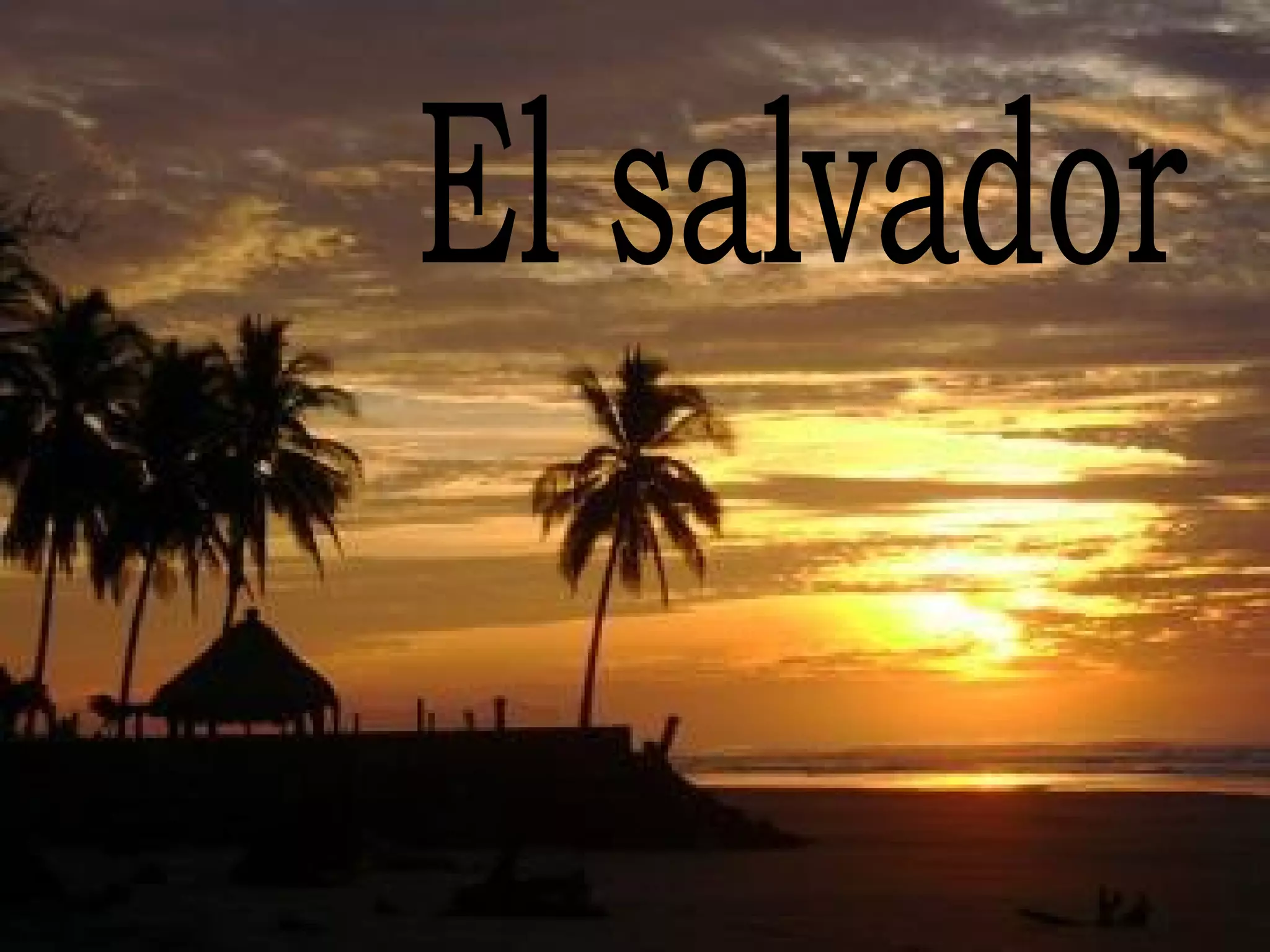
El salvador
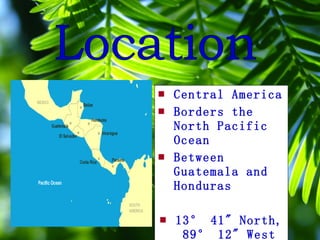
Central America Borders the North Pacific Ocean Between Guatemala and Honduras 13° 41" North, 89° 12" West Location
Begins last days of January or first day of February Ends sometime between October or November Usual day – 7 AM to 12:30 PM (some exceptions) Elementary, middle school, and high school all in same building $50 per year to attend – not including uniform, supplies, and transportation Some expensive private schools, mainly located in San Salvador teach English, German, or French starting in kindergarten Schooling
The private schools have same schedule as US schools All Salvadorians seniors - P.A.E.S (Prueba de Aptitudes para Egresados de Educacion Media) - test covers everything a student has studied - four hour test -can be compared to SAT  Schooling
One of the most seismologically active regions on earth situated atop three of the large tectonic plates that constitute the Earth's surface The northern range – the Sierra Madre form continuous chain along the border with Honduras The southern range - discontinuous chain of more than twenty volcanoes, clustered into five groups has over 300 rivers, the most important of which is the Rio Lempa Geography
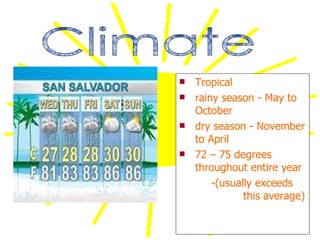
Tropical rainy season - May to October dry season - November to April  72 – 75 degrees throughout entire year -(usually exceeds  this average) Climate
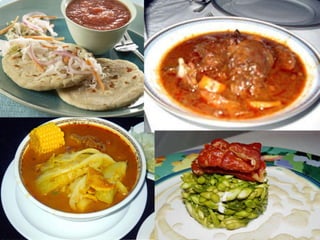
Traditional cuisine: Mayan, Lenca, Pipil people Many dishes include maize (corn) Most notable dishes: pupusa, chicharron, refried beans, and loroco Vegetarian options: ayote or garlic Usual breakfast: mashed beans, sour cream, eggs, Salvadorian tortillas, cheese, fried plantains, rice and coffee Soups are popular: Sopa de Pata, Gallo en Chicha Food
 
Before Spanish Conquest: Mayans, Pipils, and Lencas existed in area District brought under control of Captaincy General of Guatemala -named El Salvador (“The Savior”) Briefly a part of the Mexican Empire of Augustín de Iturbide, and after the empire collapsed El Salvador joined the Central American Federation The primary cultivation of coffee began in the second half of the 19th century 1969; El Salvador invaded Honduras after Honduran landowners deported thousands of Salvadorians (“football war” – broke out during a soccer game)  History
El Salvador also experienced a 12-year Civil War National Conciliation Party vs. Farabundo Marti National Liberation Front Alfredo Cristiani of the right-wing Nationalist Republican Alliance (ARENA) was elected On Jan. 16, 1992, the government signed a peace treaty with the guerrilla forces, formally ending the war 12-year civil war had killed 75,000 History
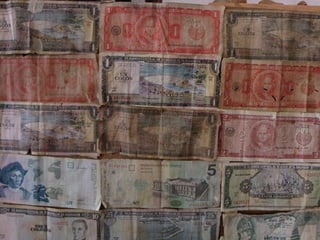
1 Salvadoran colon = 0.114286 U.S. dollars January 2001 - El Salvador gave up control of its monetary policy   Critics argue that the export sector could be hurt by the move It abandoned the fixed exchange rate and “dollarized” the economy US currency can be used in El Salvador as legal currency Money
 
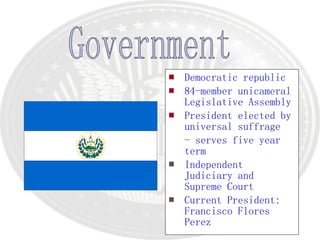
Democratic republic 84-member unicameral Legislative Assembly President elected by universal suffrage - serves five year term Independent Judiciary and Supreme Court Current President: Francisco Flores Perez Government
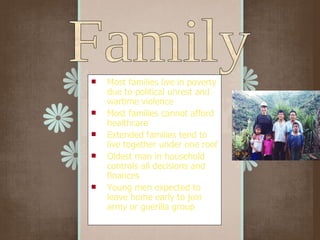
Most families live in poverty due to political unrest and wartime violence Most families cannot afford healthcare Extended families tend to live together under one roof Oldest man in household controls all decisions and finances Young men expected to leave home early to join army or guerilla group Family
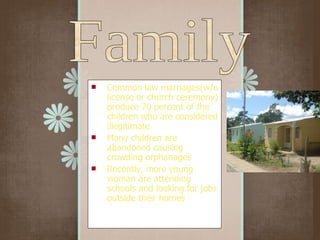
Common law marriages(w/o license or church ceremony) produce 70 percent of the children who are considered illegitimate Many children are abandoned causing crowding orphanages Recently, more young woman are attending schools and looking for jobs outside their homes Family
Hydropower Geothermal Power Petroleum Arable Land Natural Resources
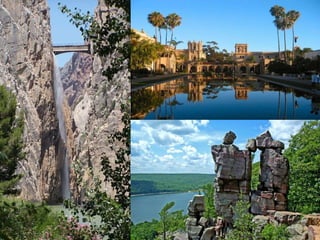
Los Chorros – large, natural pools continue from one to another, with natural water from volcanic cliffs  Balboa Park -  70 acres of flora, myriad birds, sloth and rabbits; A skating rink, soccer field, miles of meandering trails, pre-Colombian style sculptures; cafes and picnics The Devil’s Doorway - Two huge rocks on the edge of a deep precipice shows the view of the valley lying below Tourist Attractions
 
glogster Culture of El Salvador . Julia Dickson Gomez,  1988. Web. 11 Apr. 2010.  < http://www.everyculture.com/Cr-Ga/El-Salvador.html >. El Salvador. HighBeam Research, 2005. Web. 11 Apr. 2010.  < http://www. infoplease .com/ ipa /A0107489.html >. Introducing El Salvador . Lonely Planet, 2010. Web. 11 Apr. 2010.  < http://www. lonelyplanet .com/el- salvador >.   Sanders, Reinfield.  El Salvador . 3rd ed. Vol. 1. New York: Chelsea House, 1988. Print.  Places and Peoples of the World. Foley, Erin, and Rafiz Hapipi.  El Salvador . New York: Marshall Cavendish Benchmark, 2005.  Print.

Elsalvadpr

  • 1.
  • 2.
    Central America Bordersthe North Pacific Ocean Between Guatemala and Honduras 13° 41&quot; North, 89° 12&quot; West Location
  • 3.
    Begins last daysof January or first day of February Ends sometime between October or November Usual day – 7 AM to 12:30 PM (some exceptions) Elementary, middle school, and high school all in same building $50 per year to attend – not including uniform, supplies, and transportation Some expensive private schools, mainly located in San Salvador teach English, German, or French starting in kindergarten Schooling
  • 4.
    The private schoolshave same schedule as US schools All Salvadorians seniors - P.A.E.S (Prueba de Aptitudes para Egresados de Educacion Media) - test covers everything a student has studied - four hour test -can be compared to SAT Schooling
  • 5.
    One of themost seismologically active regions on earth situated atop three of the large tectonic plates that constitute the Earth's surface The northern range – the Sierra Madre form continuous chain along the border with Honduras The southern range - discontinuous chain of more than twenty volcanoes, clustered into five groups has over 300 rivers, the most important of which is the Rio Lempa Geography
  • 6.
    Tropical rainy season- May to October dry season - November to April 72 – 75 degrees throughout entire year -(usually exceeds this average) Climate
  • 7.
    Traditional cuisine: Mayan,Lenca, Pipil people Many dishes include maize (corn) Most notable dishes: pupusa, chicharron, refried beans, and loroco Vegetarian options: ayote or garlic Usual breakfast: mashed beans, sour cream, eggs, Salvadorian tortillas, cheese, fried plantains, rice and coffee Soups are popular: Sopa de Pata, Gallo en Chicha Food
  • 8.
  • 9.
    Before Spanish Conquest:Mayans, Pipils, and Lencas existed in area District brought under control of Captaincy General of Guatemala -named El Salvador (“The Savior”) Briefly a part of the Mexican Empire of Augustín de Iturbide, and after the empire collapsed El Salvador joined the Central American Federation The primary cultivation of coffee began in the second half of the 19th century 1969; El Salvador invaded Honduras after Honduran landowners deported thousands of Salvadorians (“football war” – broke out during a soccer game) History
  • 10.
    El Salvador alsoexperienced a 12-year Civil War National Conciliation Party vs. Farabundo Marti National Liberation Front Alfredo Cristiani of the right-wing Nationalist Republican Alliance (ARENA) was elected On Jan. 16, 1992, the government signed a peace treaty with the guerrilla forces, formally ending the war 12-year civil war had killed 75,000 History
  • 11.
    1 Salvadoran colon= 0.114286 U.S. dollars January 2001 - El Salvador gave up control of its monetary policy Critics argue that the export sector could be hurt by the move It abandoned the fixed exchange rate and “dollarized” the economy US currency can be used in El Salvador as legal currency Money
  • 12.
  • 13.
    Democratic republic 84-memberunicameral Legislative Assembly President elected by universal suffrage - serves five year term Independent Judiciary and Supreme Court Current President: Francisco Flores Perez Government
  • 14.
    Most families livein poverty due to political unrest and wartime violence Most families cannot afford healthcare Extended families tend to live together under one roof Oldest man in household controls all decisions and finances Young men expected to leave home early to join army or guerilla group Family
  • 15.
    Common law marriages(w/olicense or church ceremony) produce 70 percent of the children who are considered illegitimate Many children are abandoned causing crowding orphanages Recently, more young woman are attending schools and looking for jobs outside their homes Family
  • 16.
    Hydropower Geothermal PowerPetroleum Arable Land Natural Resources
  • 17.
    Los Chorros –large, natural pools continue from one to another, with natural water from volcanic cliffs Balboa Park - 70 acres of flora, myriad birds, sloth and rabbits; A skating rink, soccer field, miles of meandering trails, pre-Colombian style sculptures; cafes and picnics The Devil’s Doorway - Two huge rocks on the edge of a deep precipice shows the view of the valley lying below Tourist Attractions
  • 18.
  • 19.
    glogster Culture ofEl Salvador . Julia Dickson Gomez, 1988. Web. 11 Apr. 2010. < http://www.everyculture.com/Cr-Ga/El-Salvador.html >. El Salvador. HighBeam Research, 2005. Web. 11 Apr. 2010. < http://www. infoplease .com/ ipa /A0107489.html >. Introducing El Salvador . Lonely Planet, 2010. Web. 11 Apr. 2010. < http://www. lonelyplanet .com/el- salvador >.   Sanders, Reinfield. El Salvador . 3rd ed. Vol. 1. New York: Chelsea House, 1988. Print. Places and Peoples of the World. Foley, Erin, and Rafiz Hapipi. El Salvador . New York: Marshall Cavendish Benchmark, 2005. Print.