ELEMENTS OF SHORT
STORY
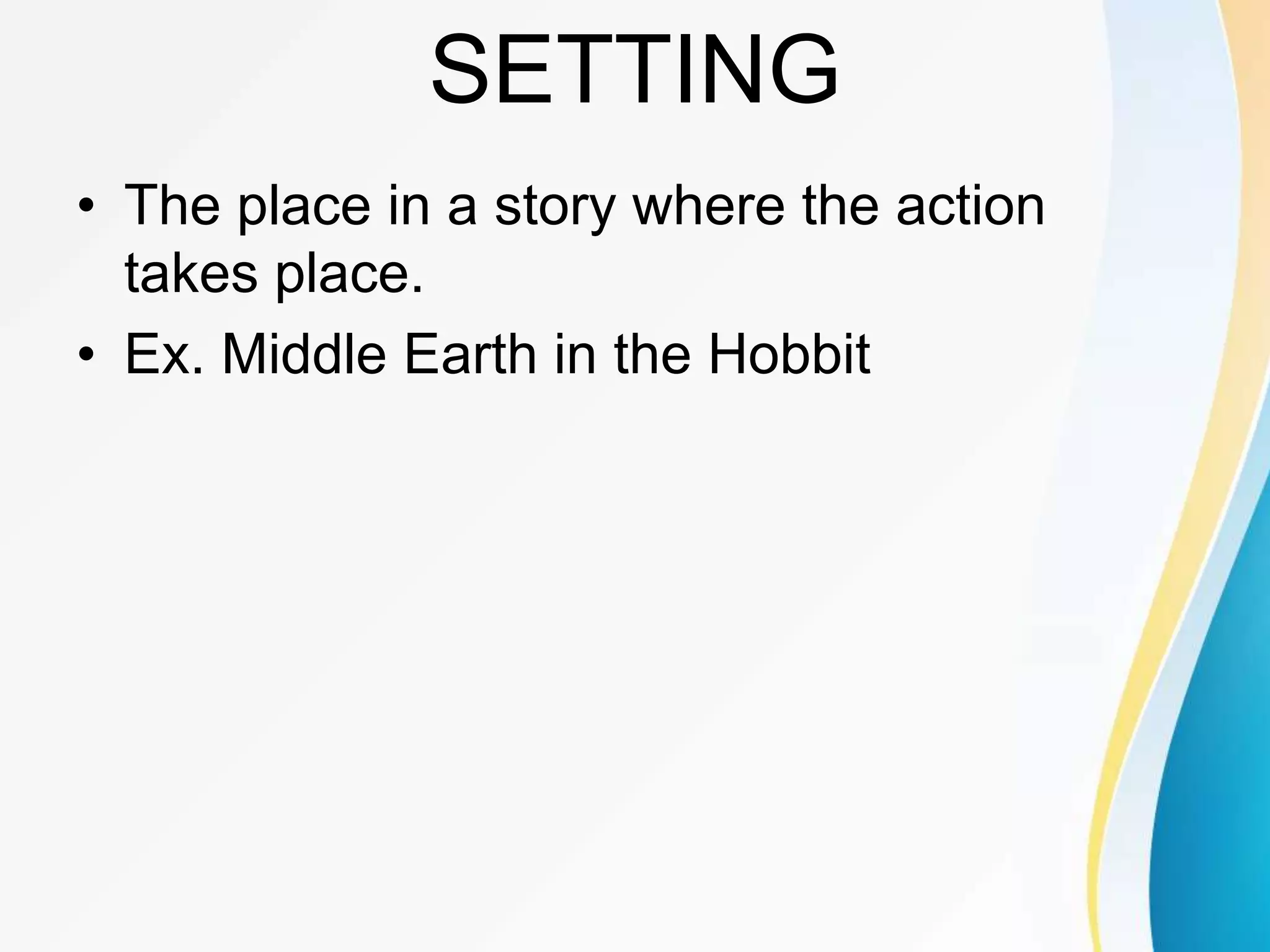
SETTING
• The place in a story where the action
takes place.
• Ex. Middle Earth in the Hobbit
CONFLICT
• The major problem in the story
• Ex. In the Lord of the Rings, the conflict is
the search for the Ring.
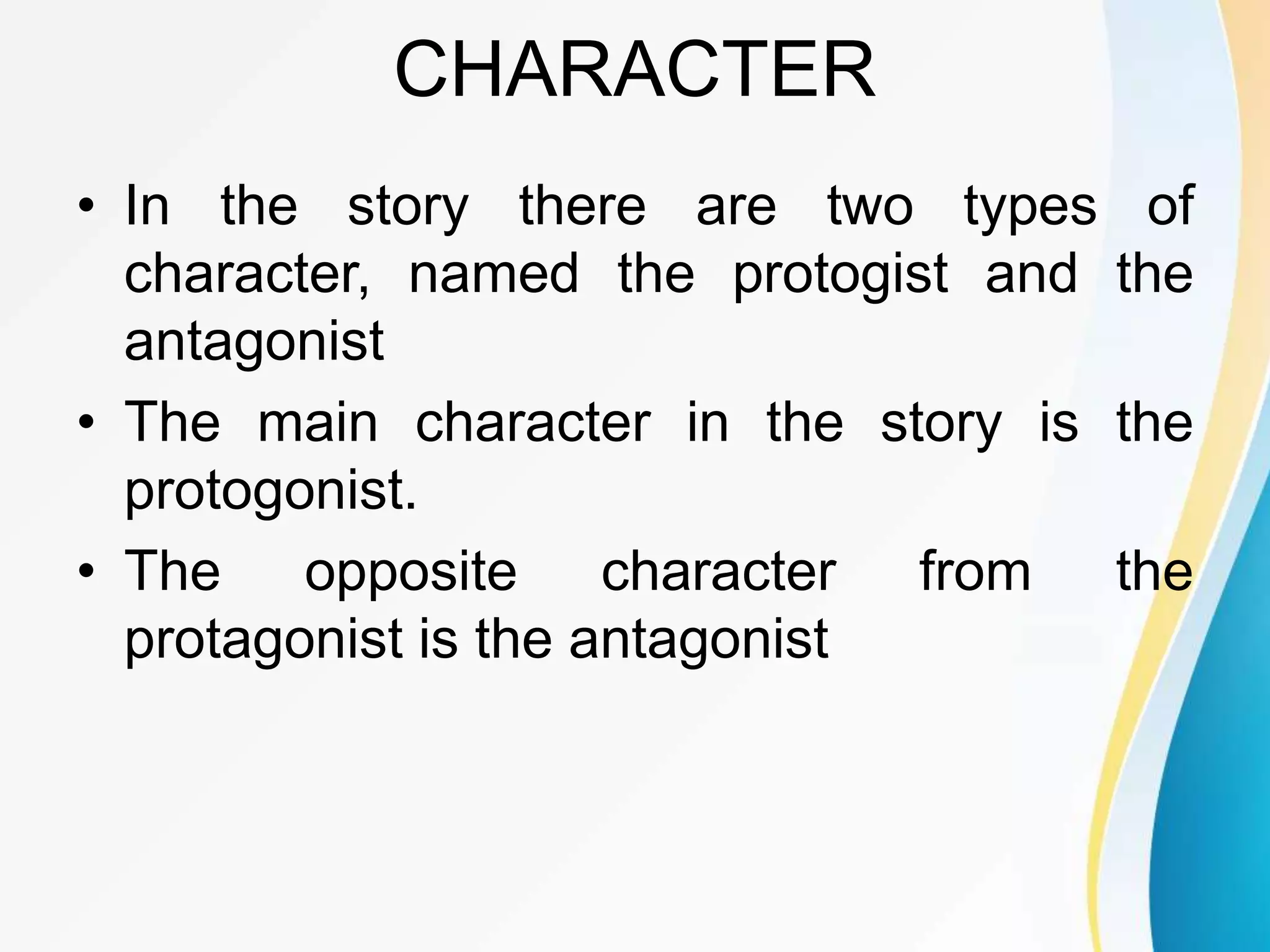
CHARACTER
• In the story there are two types of
character, named the protogist and the
antagonist
• The main character in the story is the
protogonist.
• The opposite character from the
protagonist is the antagonist
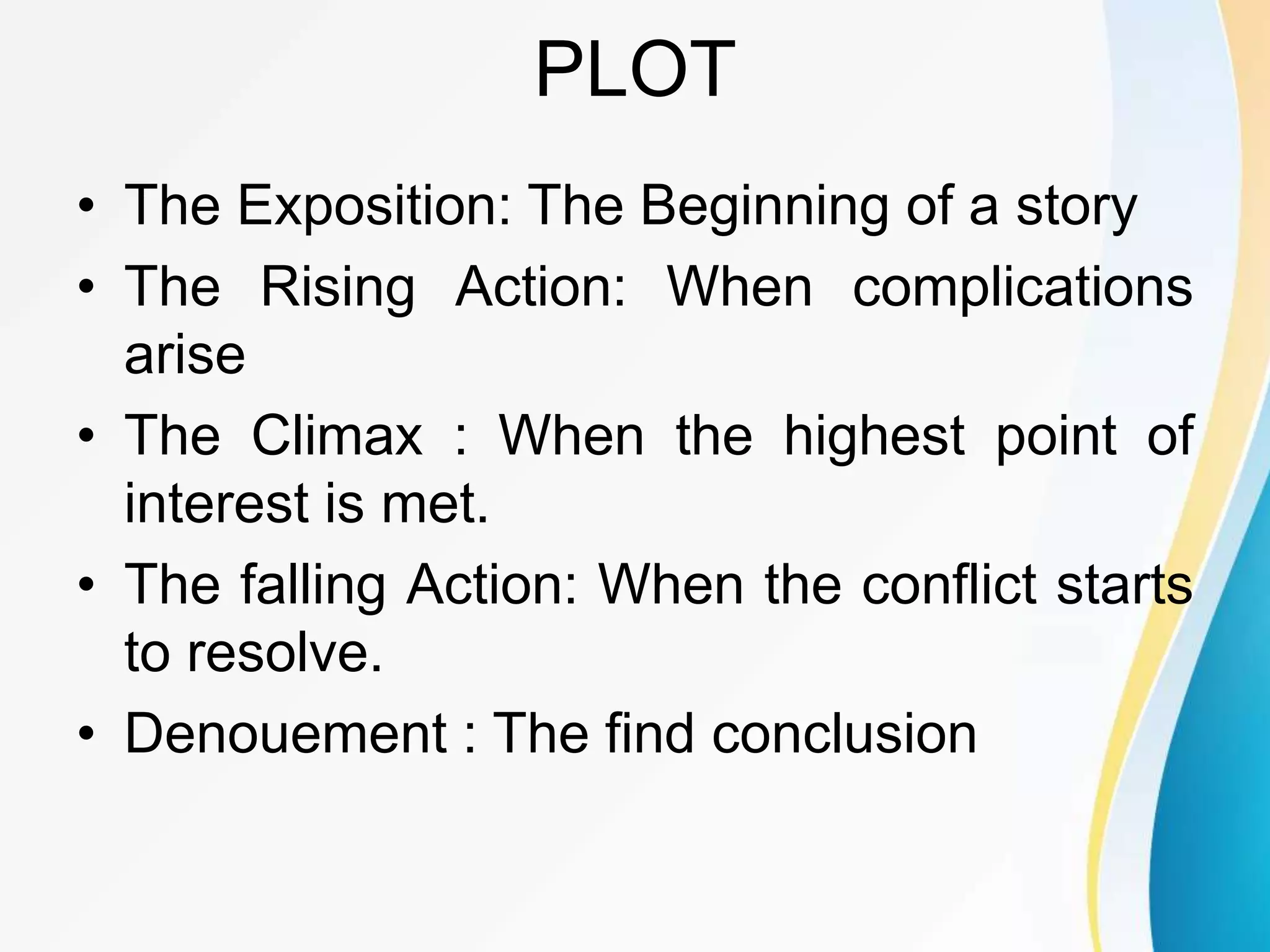
PLOT
• The Exposition: The Beginning of a story
• The Rising Action: When complications
arise
• The Climax : When the highest point of
interest is met.
• The falling Action: When the conflict starts
to resolve.
• Denouement : The find conclusion
THEME
• The author message to the reader.
• Ex : The theme in the Most Dangerous
game is hunting and survival.
POINT OF VIEW
• How the story is told and determine who
narrrator is.
• First person : One who tells the story and
who is in it as well.
• Third person: A "god-like" position in the
story who can see into other character
minds.

elements short story.ppt

  • 1.
  • 2.
    SETTING • The placein a story where the action takes place. • Ex. Middle Earth in the Hobbit
  • 3.
    CONFLICT • The majorproblem in the story • Ex. In the Lord of the Rings, the conflict is the search for the Ring.
  • 4.
    CHARACTER • In thestory there are two types of character, named the protogist and the antagonist • The main character in the story is the protogonist. • The opposite character from the protagonist is the antagonist
  • 5.
    PLOT • The Exposition:The Beginning of a story • The Rising Action: When complications arise • The Climax : When the highest point of interest is met. • The falling Action: When the conflict starts to resolve. • Denouement : The find conclusion
  • 6.
    THEME • The authormessage to the reader. • Ex : The theme in the Most Dangerous game is hunting and survival.
  • 7.
    POINT OF VIEW •How the story is told and determine who narrrator is. • First person : One who tells the story and who is in it as well. • Third person: A "god-like" position in the story who can see into other character minds.