Visual Arts
Hum 100: Introduction to Humanities
Line
Shape
T
one
Color
Pattern
T
exture
Form
Visual Elements
Line is the foundation of all drawing.
Psychological response to different lines
• Curved lines suggest comfort and ease
• Horizontal lines suggest distance and calm
• Vertical lines suggest height and strength
• Jagged lines suggest turmoil and anxiety
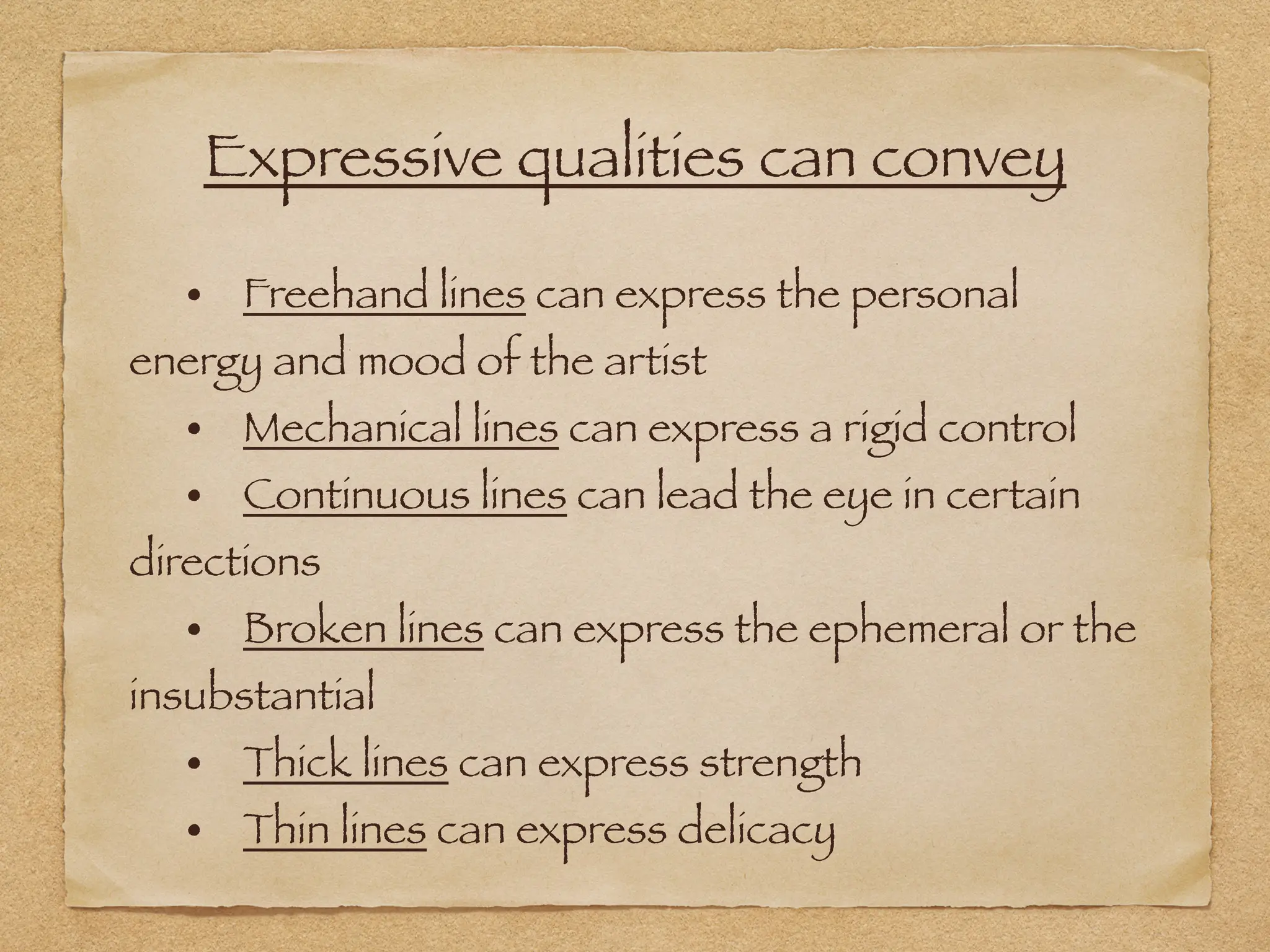
Expressive qualities can convey
• Freehand lines can express the personal
energy and mood of the artist
• Mechanical lines can express a rigid control
• Continuous lines can lead the eye in certain
directions
• Broken lines can express the ephemeral or the
insubstantial
• Thick lines can express strength
• Thin lines can express delicacy
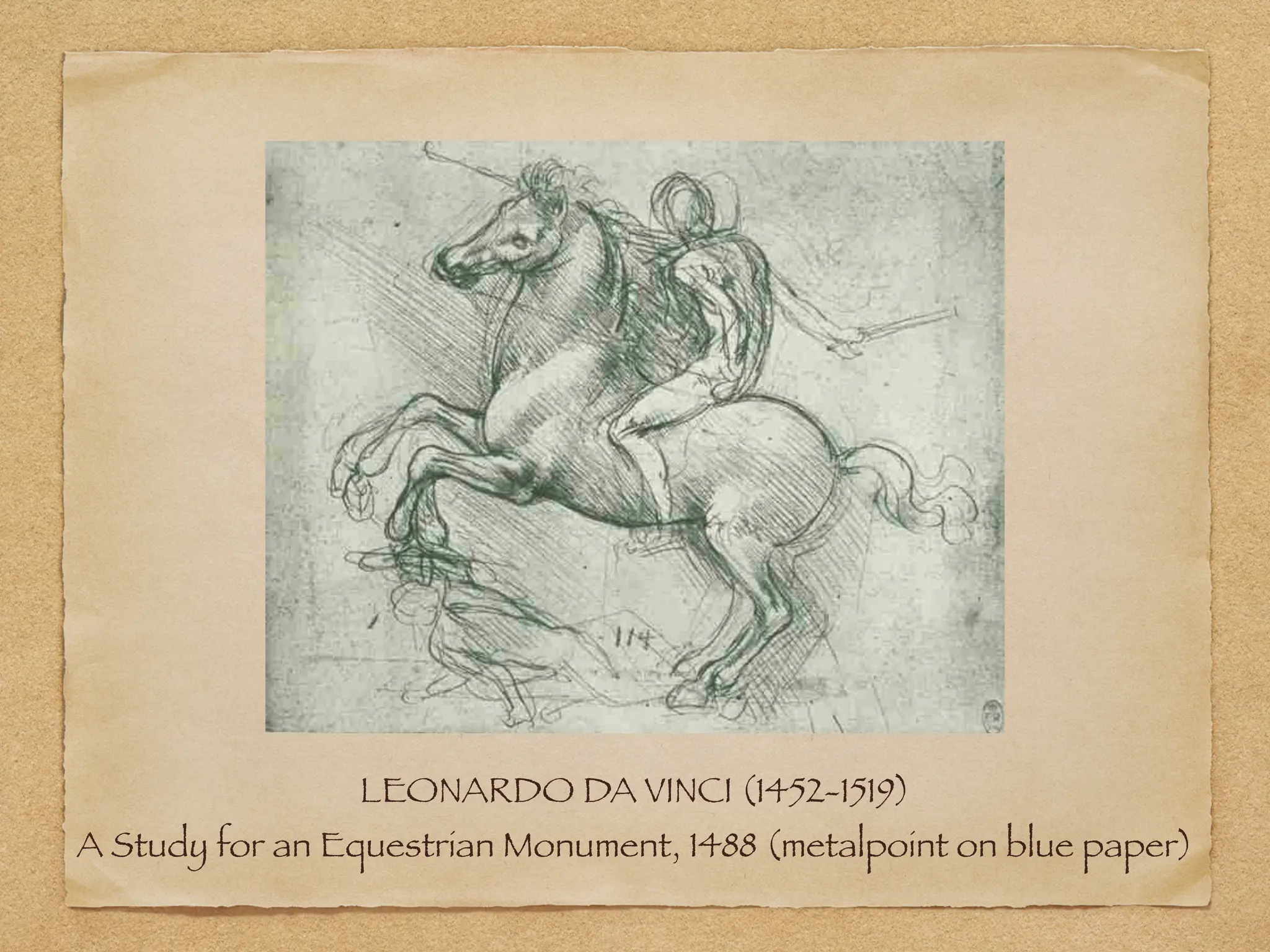
LEONARDO DA VINCI (1452-1519)
A Study for an Equestrian Monument, 1488 (metalpoint on blue paper)
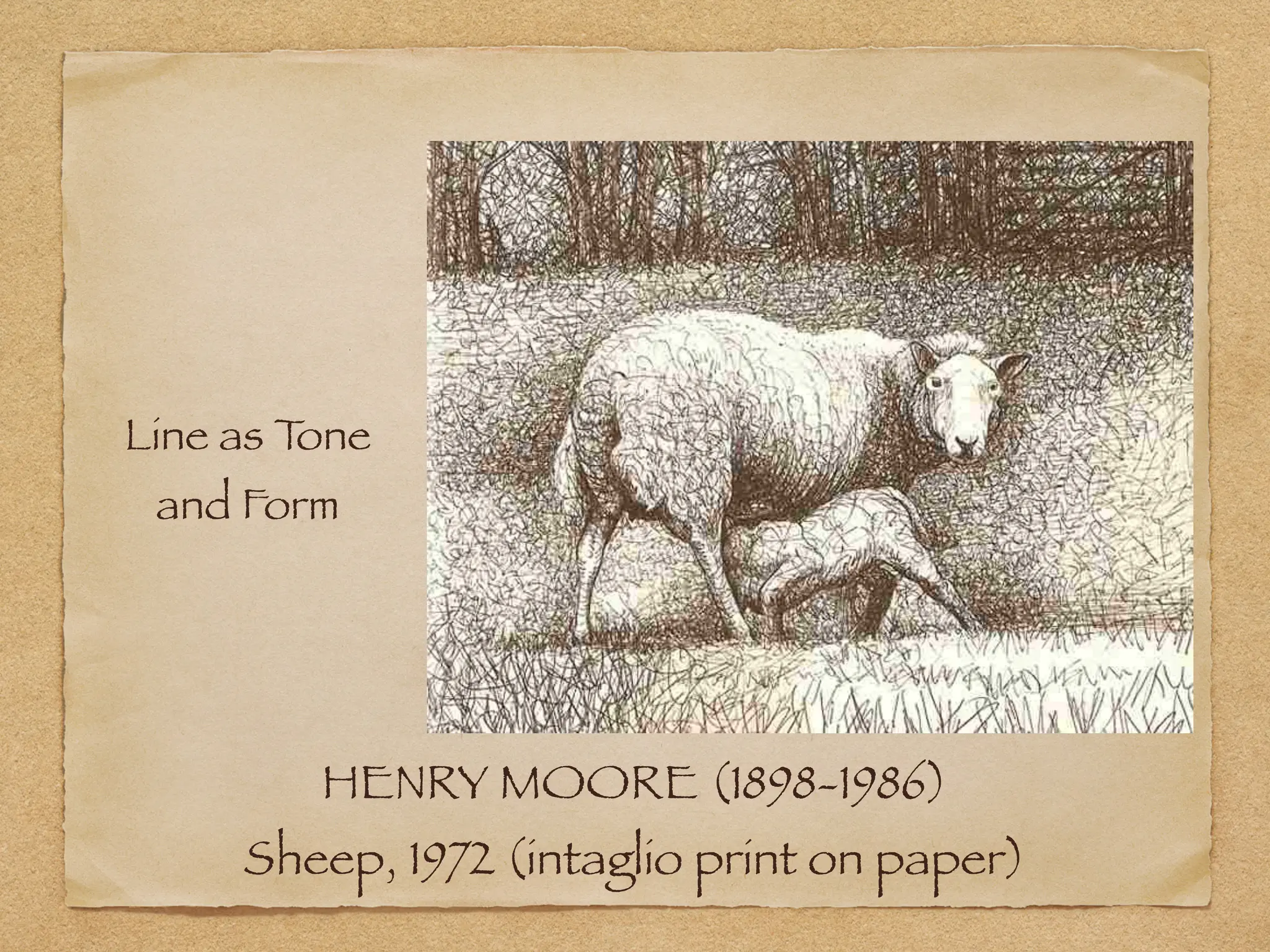
HENRY MOORE (1898-1986)
Sheep, 1972 (intaglio print on paper)
Line as T
one
and Form
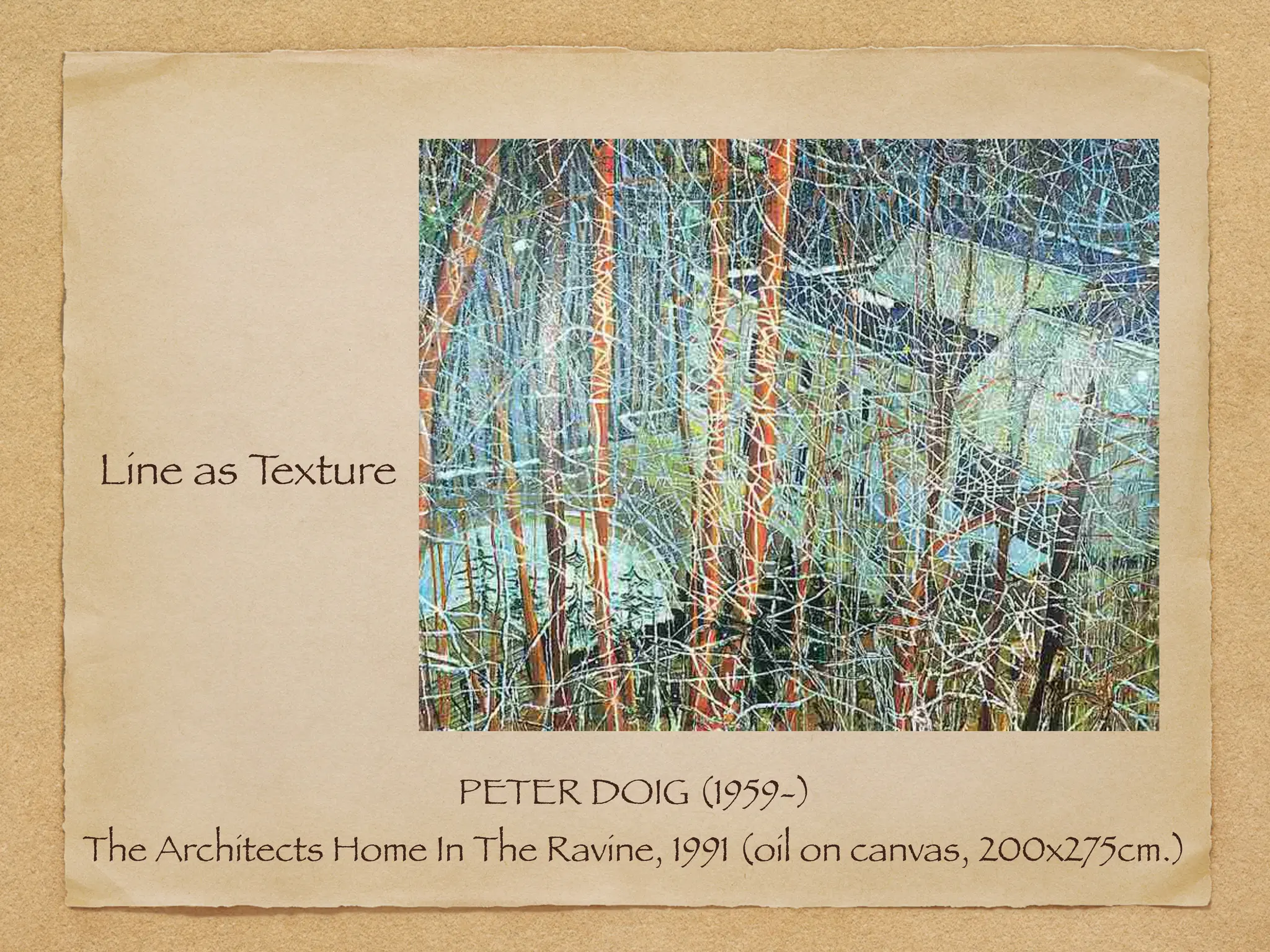
PETER DOIG (1959-)
The Architects Home In The Ravine, 1991 (oil on canvas, 200x275cm.)
Line as T
exture
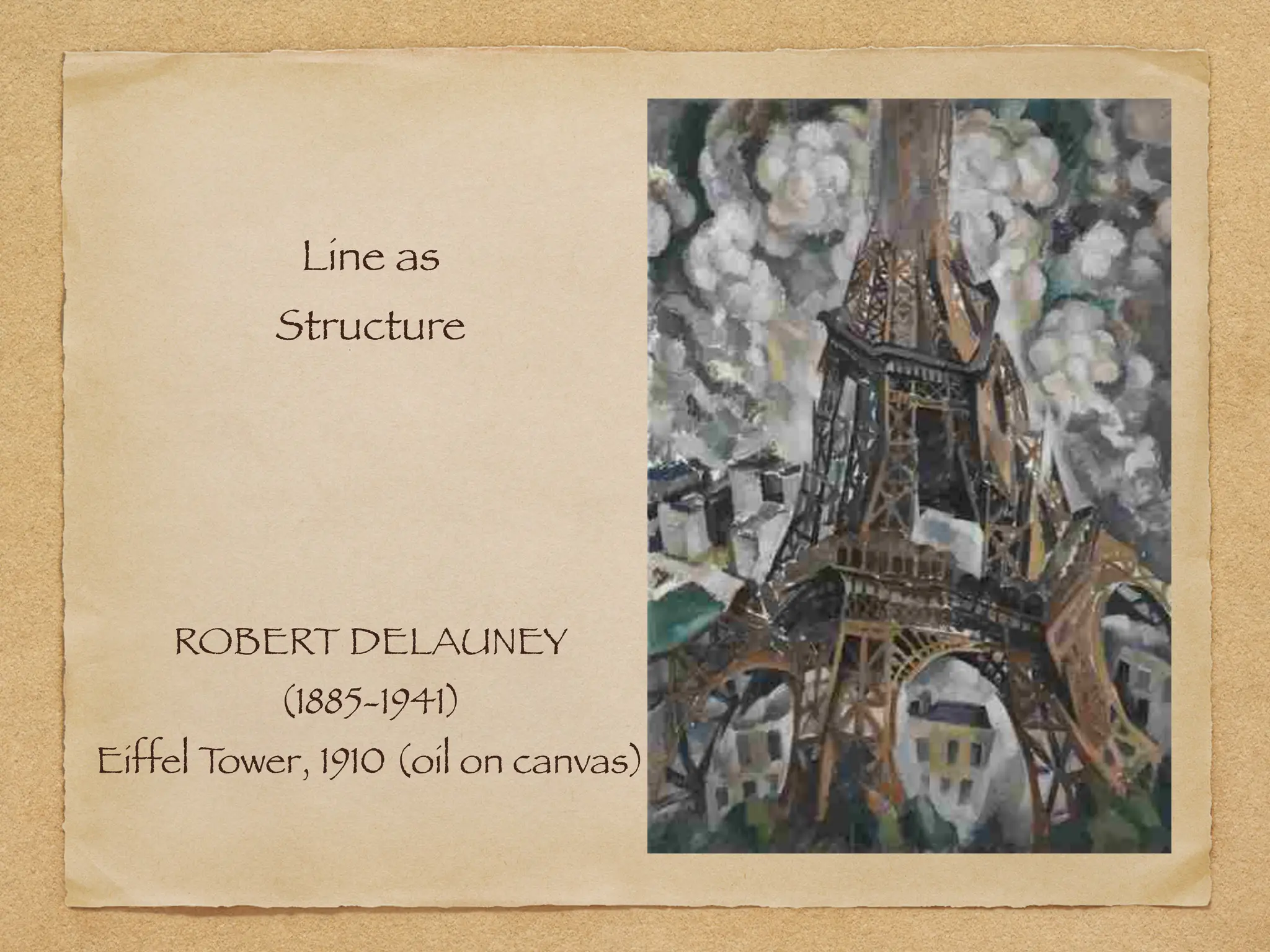
ROBERT DELAUNEY
(1885-1941)
Eiffel T
ower, 1910 (oil on canvas)
Line as
Structure
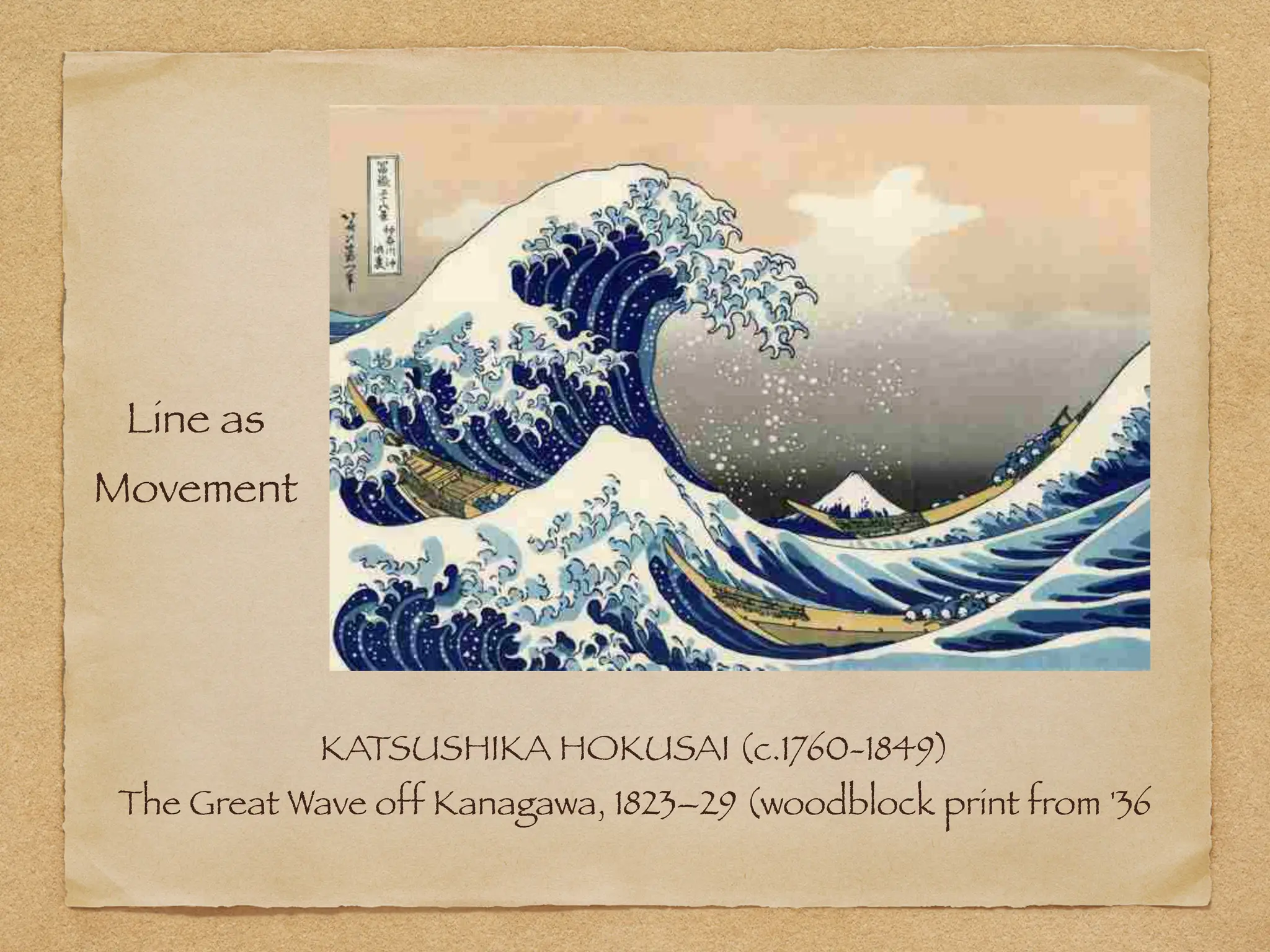
KATSUSHIKA HOKUSAI (c.1760-1849)
The Great Wave off Kanagawa, 1823–29 (woodblock print from '36
Line as
Movement
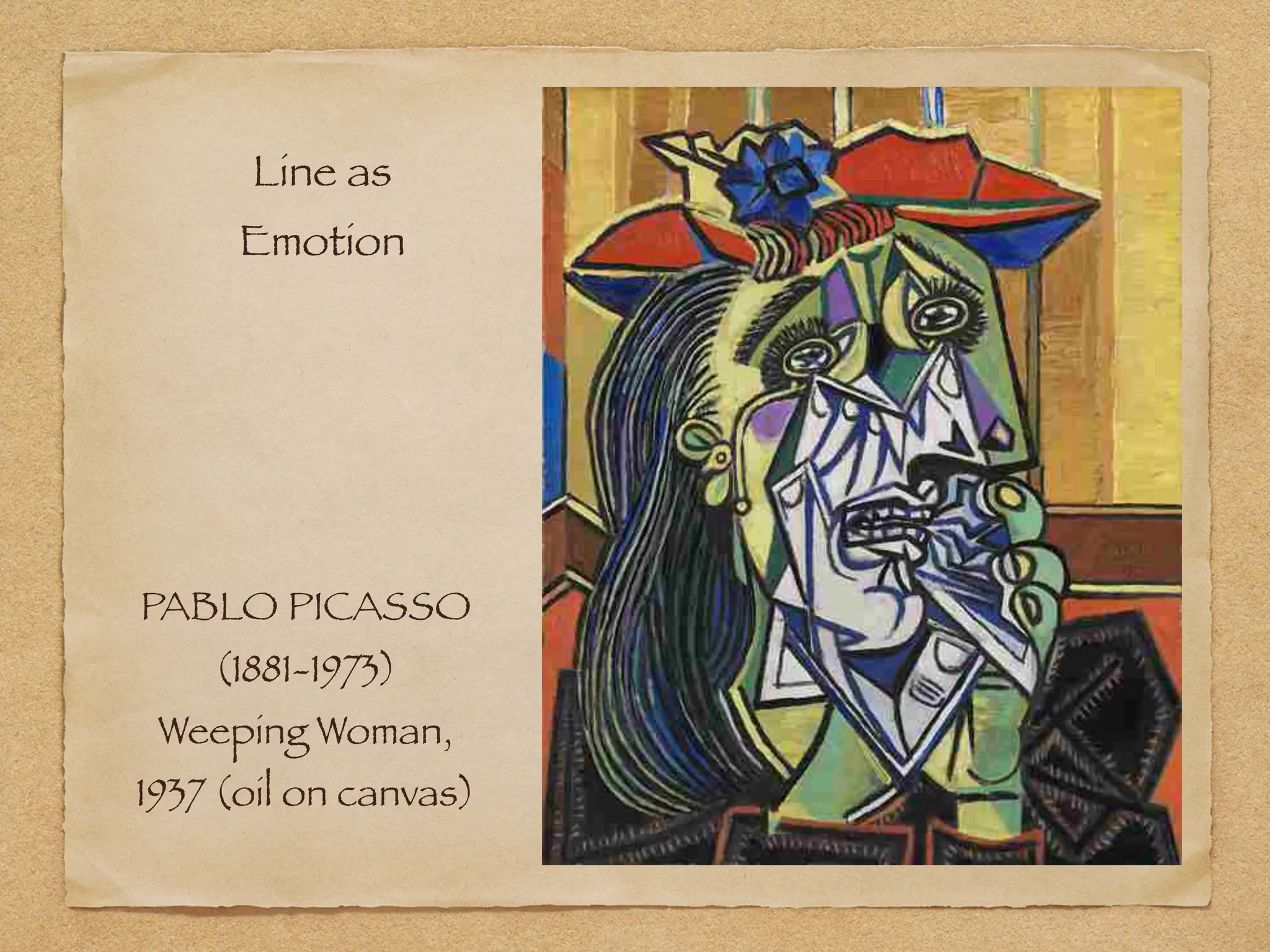
PABLO PICASSO
(1881-1973)
Weeping Woman,
1937 (oil on canvas)
Line as
Emotion
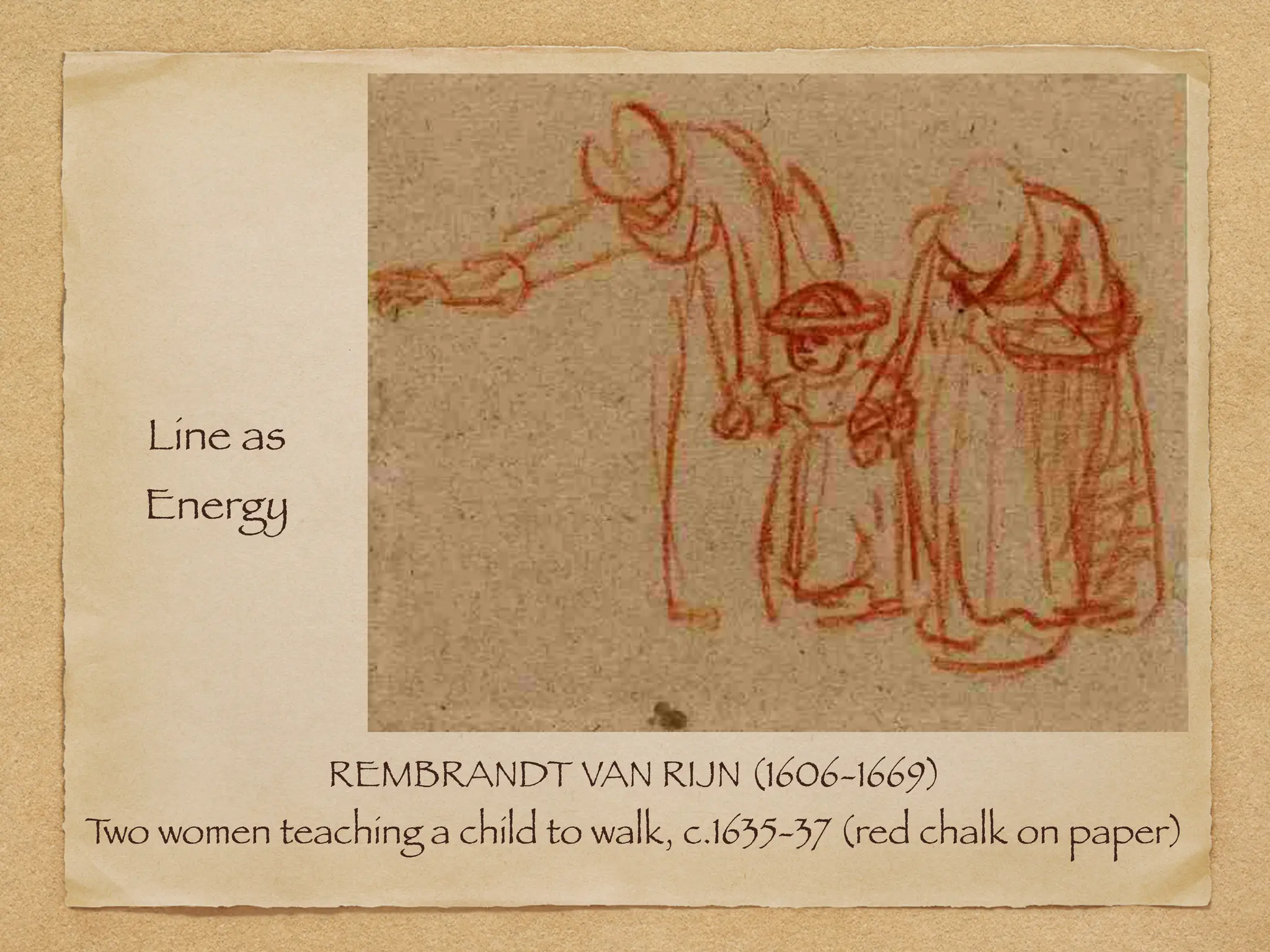
REMBRANDT VAN RIJN (1606-1669)
T
wo women teaching a child to walk, c.1635-37 (red chalk on paper)
Line as
Energy
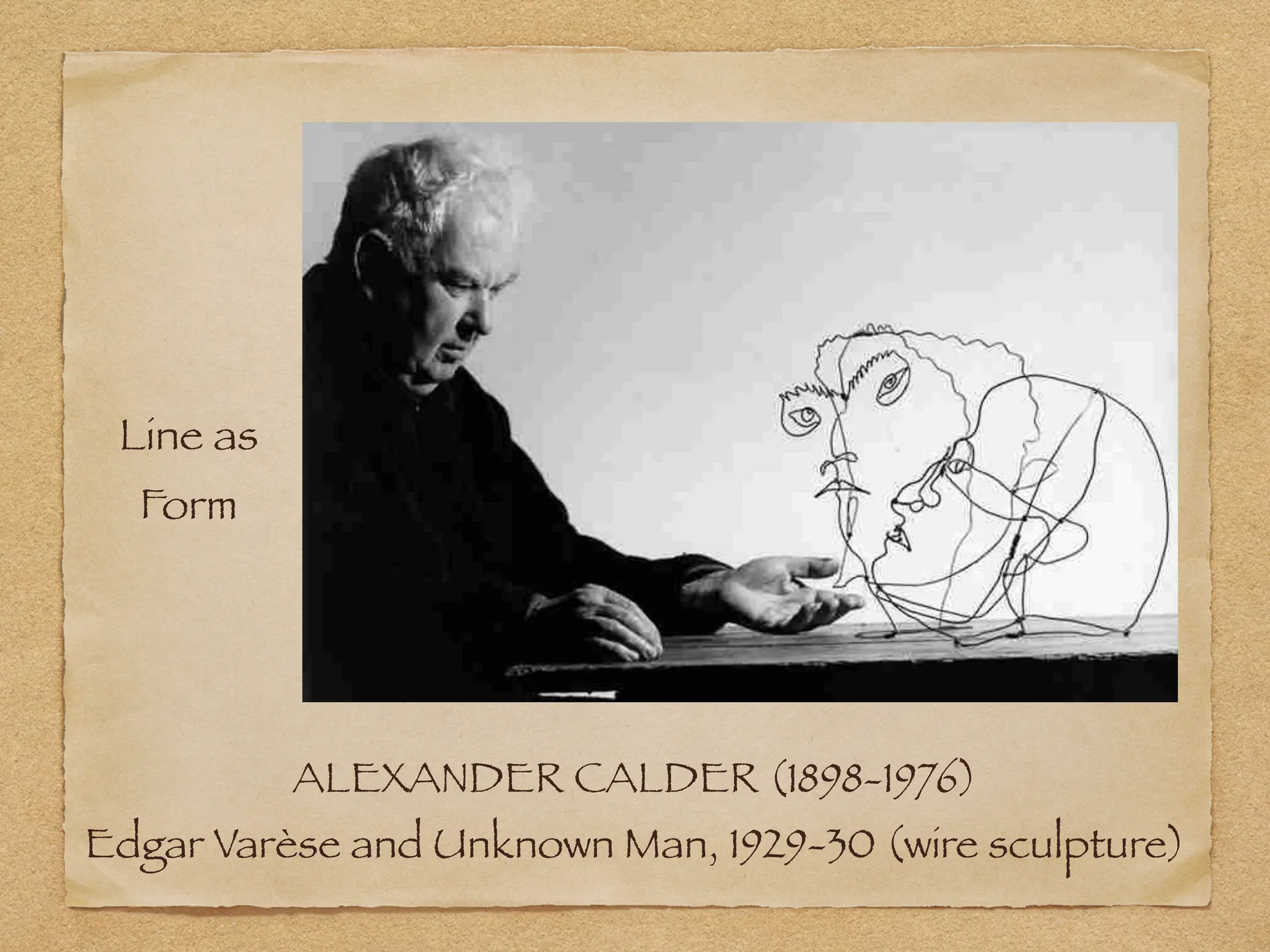
ALEXANDER CALDER (1898-1976)
Edgar Varèse and Unknown Man, 1929-30 (wire sculpture)
Line as
Form
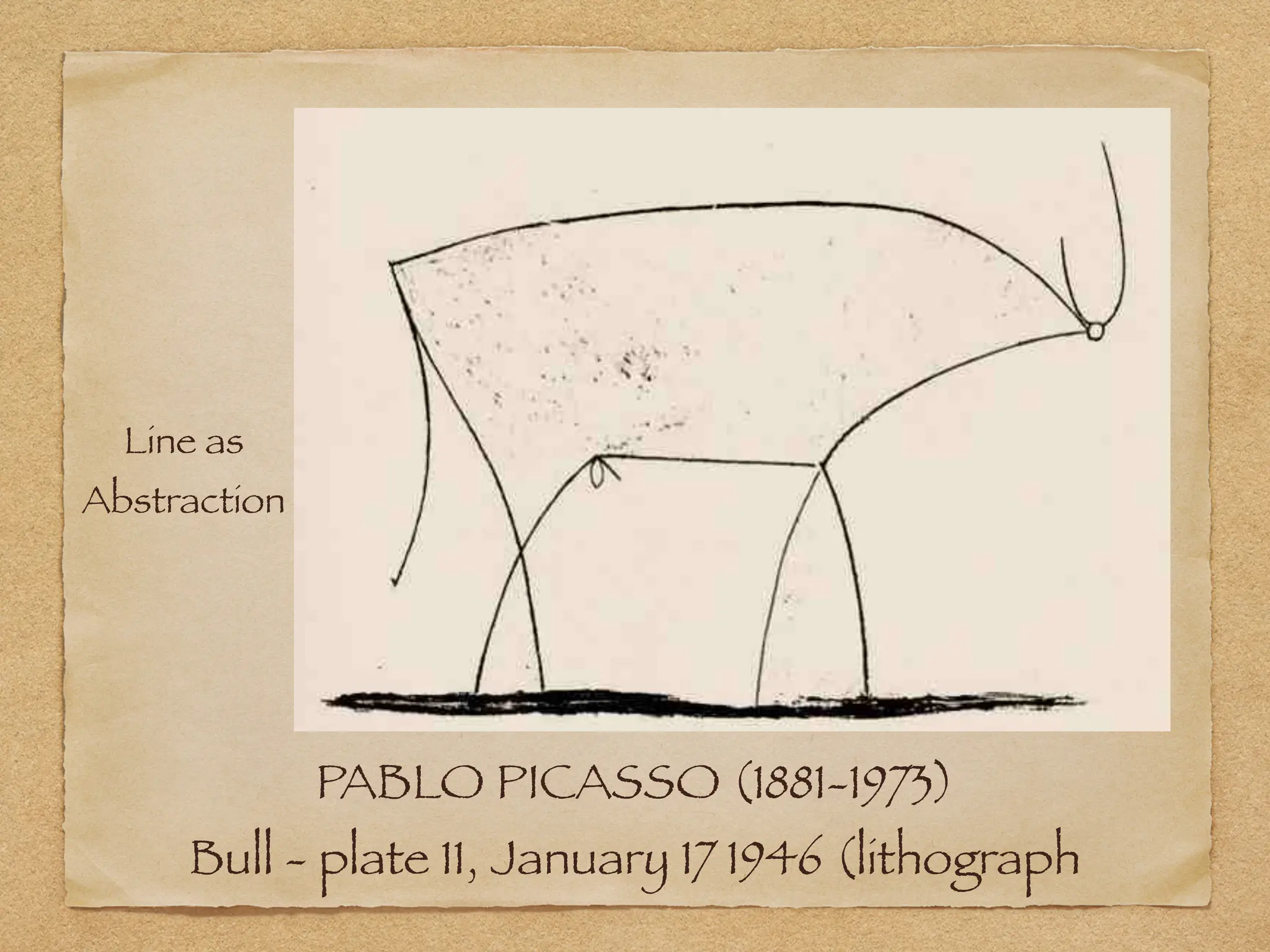
PABLO PICASSO (1881-1973)
Bull - plate 11, January 17 1946 (lithograph
Line as
Abstraction
Visual Elements
• Shape can be natural or man-made, regular or
irregular,
fl
at (2-dimensional) or solid (3-
dimensional), representational or abstract,
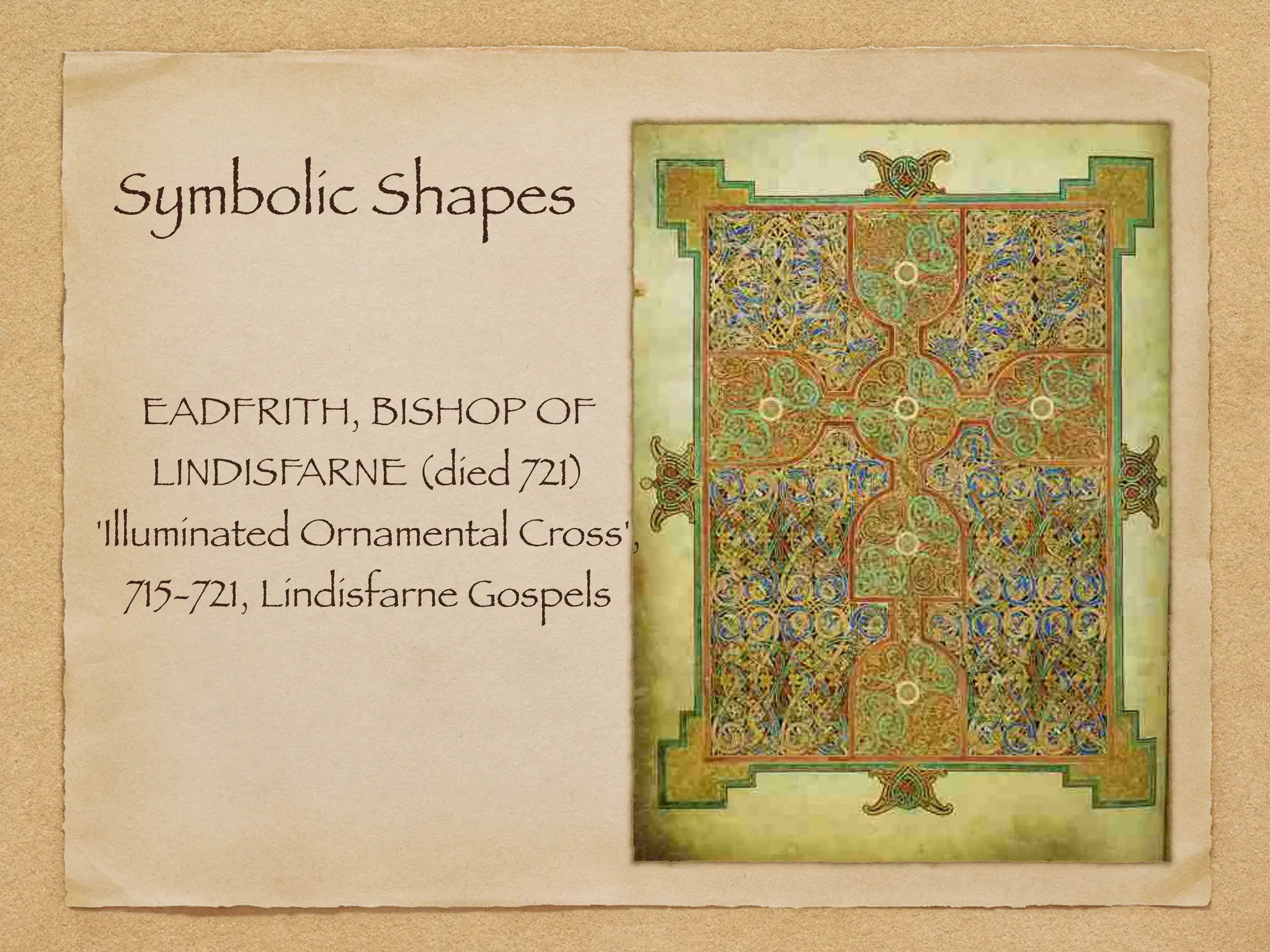
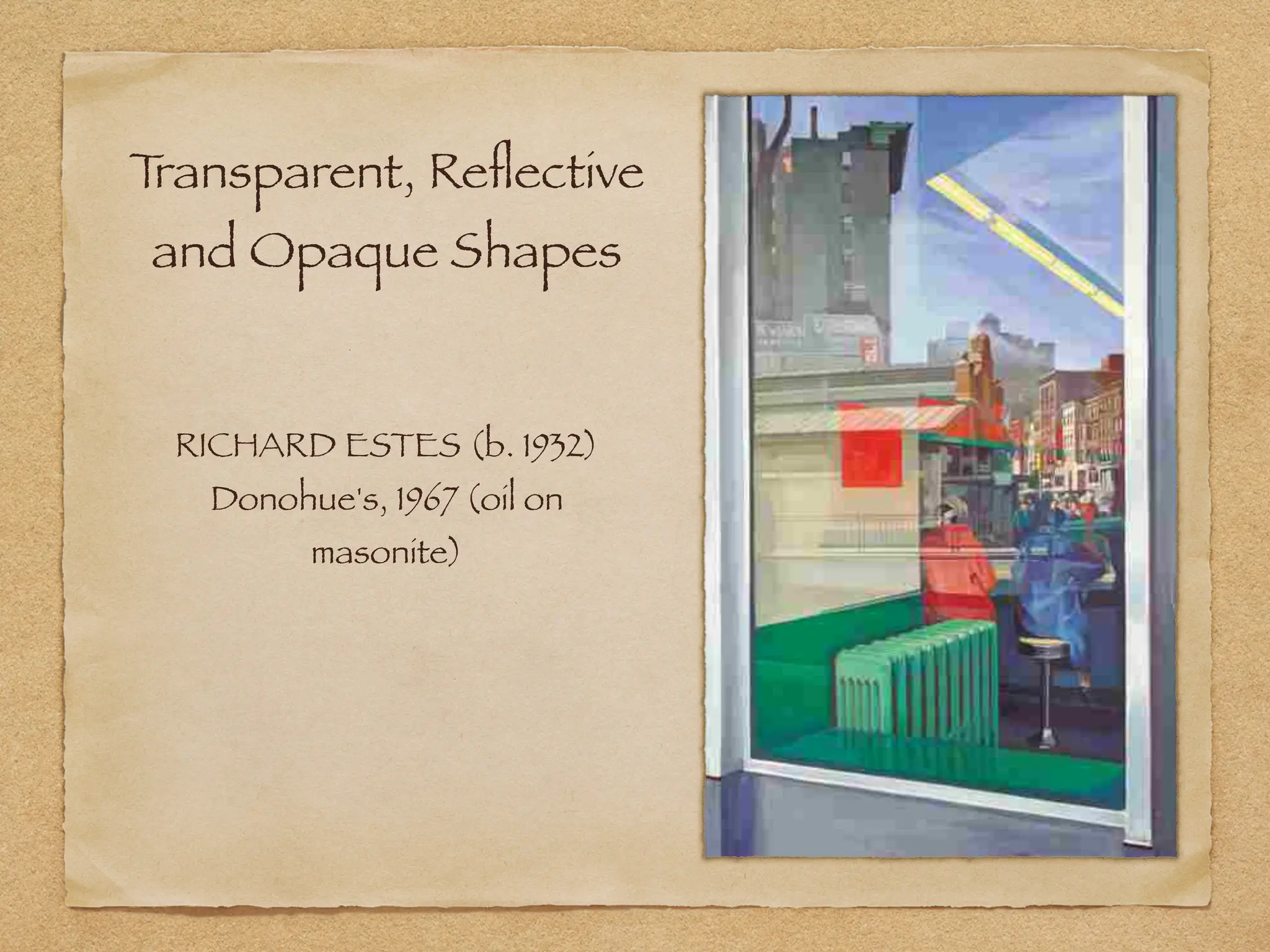
geometric or organic, transparent or opaque,
positive or negative, decorative or symbolic,
colored, patterned or textured.
The Behaviour of Shapes:
Squares and Rectangles can portray strength and
stability
Circles and Ellipses can represent continuous
movement
T
riangles can lead the eye in an upward movement
Inverted T
riangles can create a sense of imbalance
and tension
T
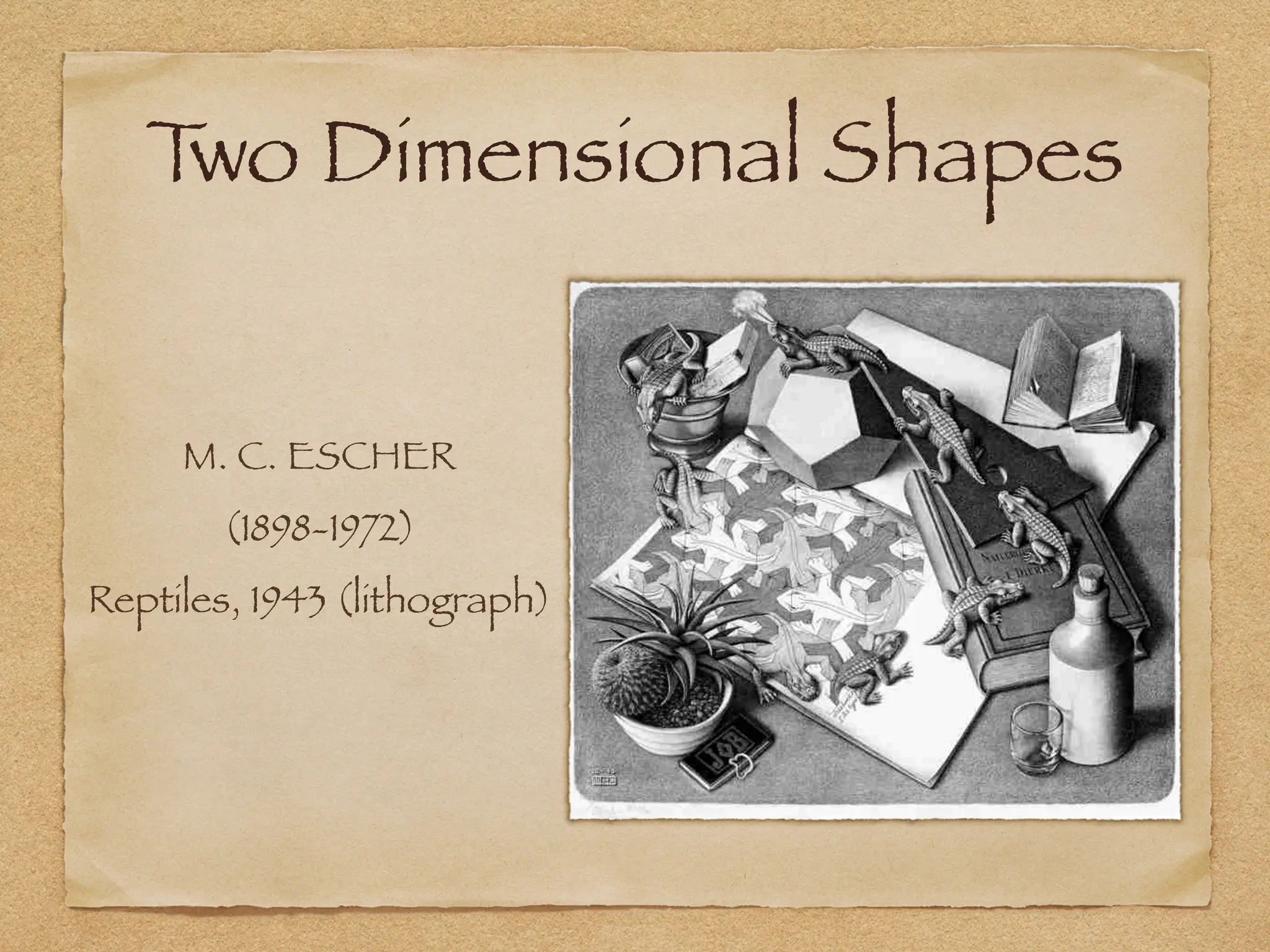
wo Dimensional Shapes
M. C. ESCHER
(1898-1972)
Reptiles, 1943 (lithograph)
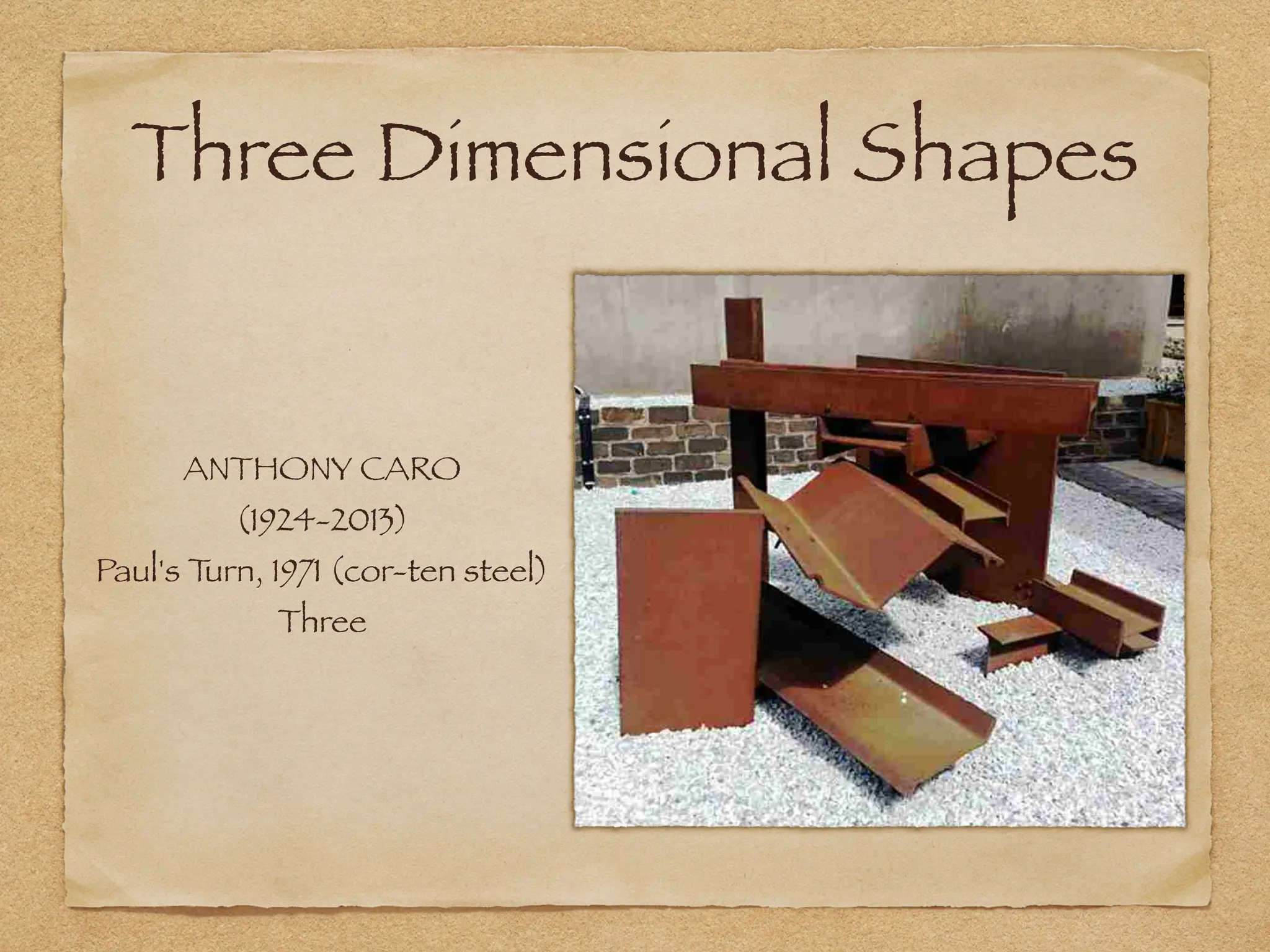
Three Dimensional Shapes
ANTHONY CARO
(1924-2013)
Paul's T
urn, 1971 (cor-ten steel)
Three
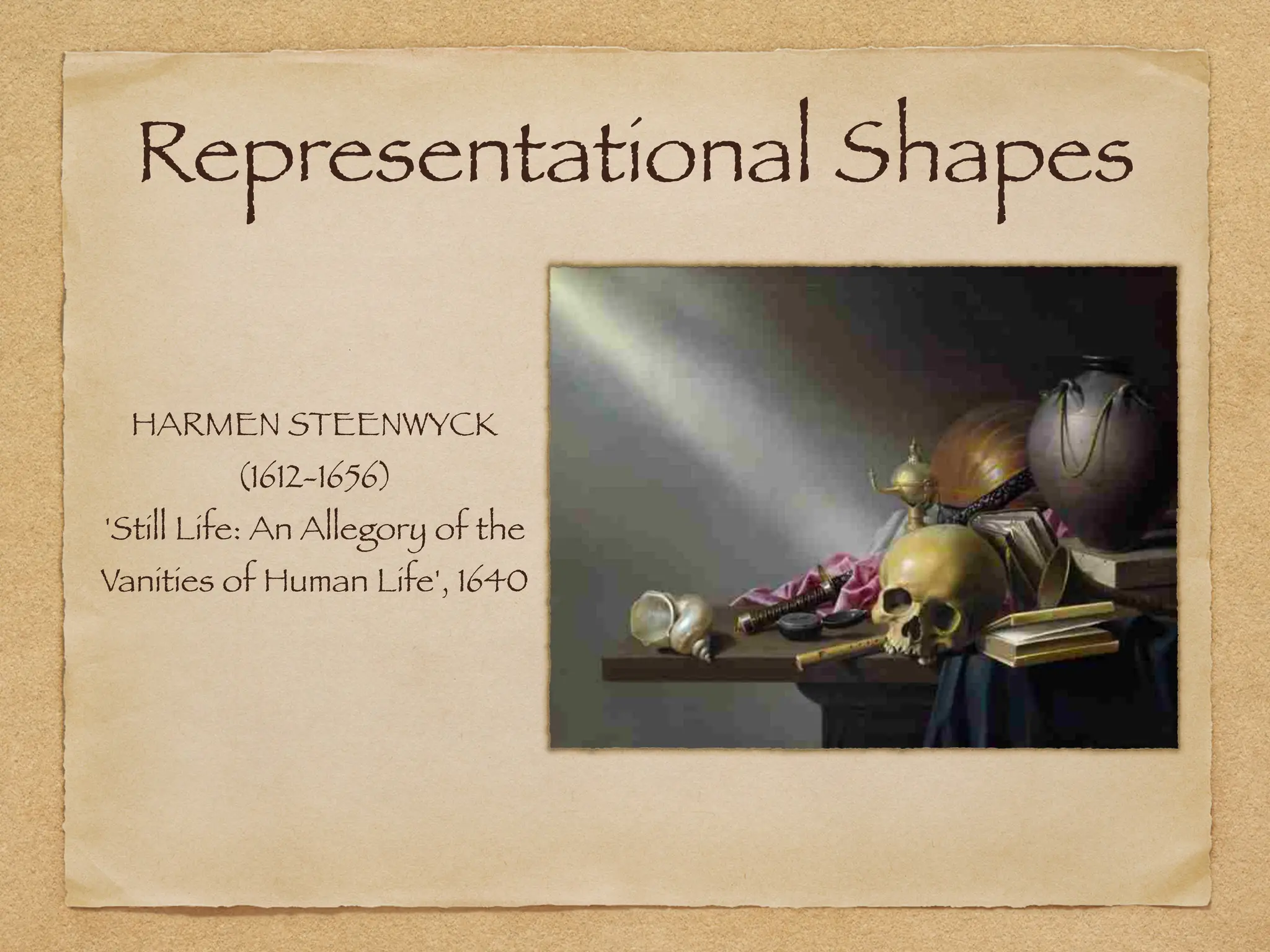
Representational Shapes
HARMEN STEENWYCK
(1612-1656)
'Still Life: An Allegory of the
Vanities of Human Life', 1640
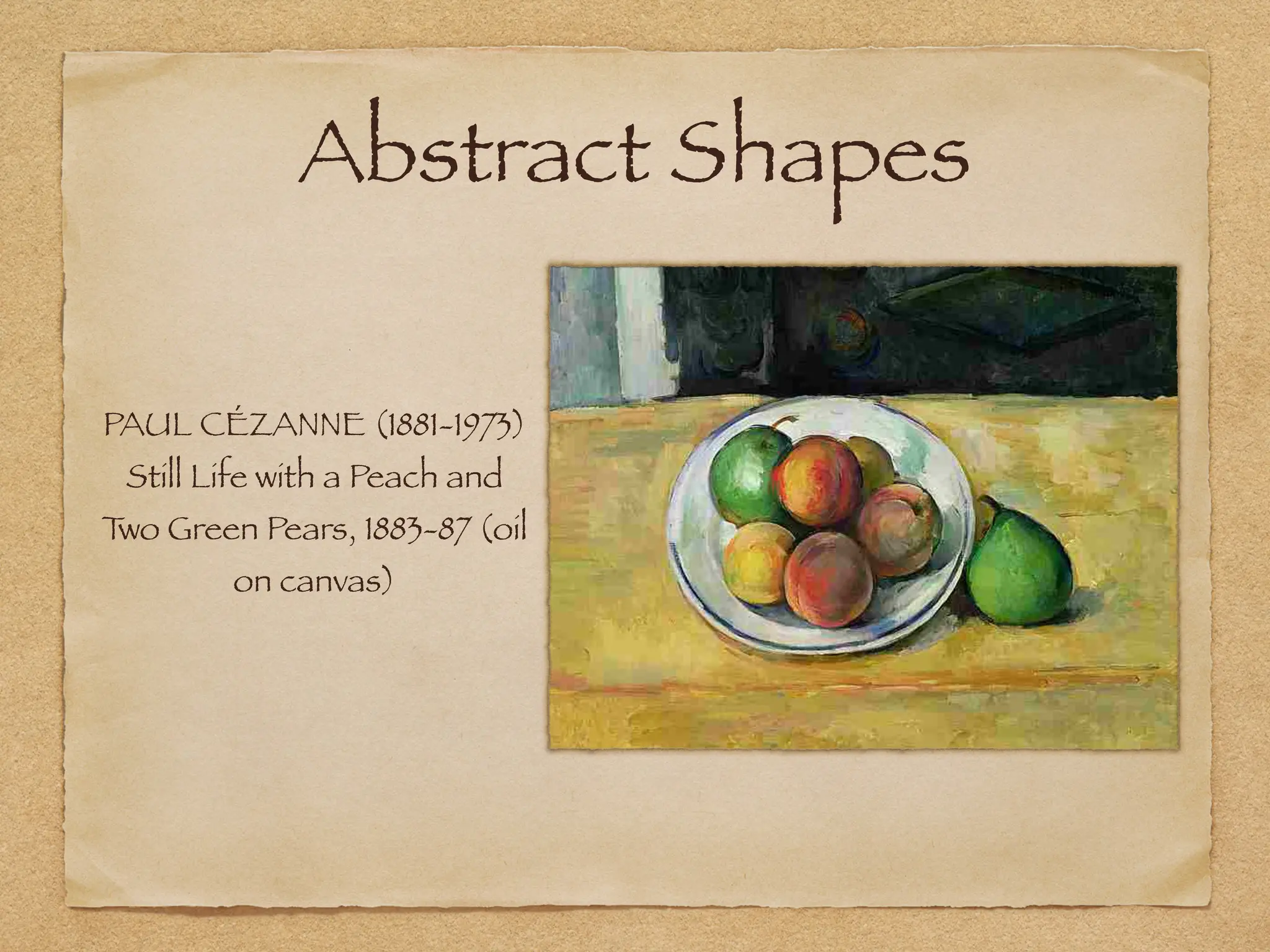
Abstract Shapes
PAUL CÉZANNE (1881-1973)
Still Life with a Peach and
T
wo Green Pears, 1883-87 (oil
on canvas)
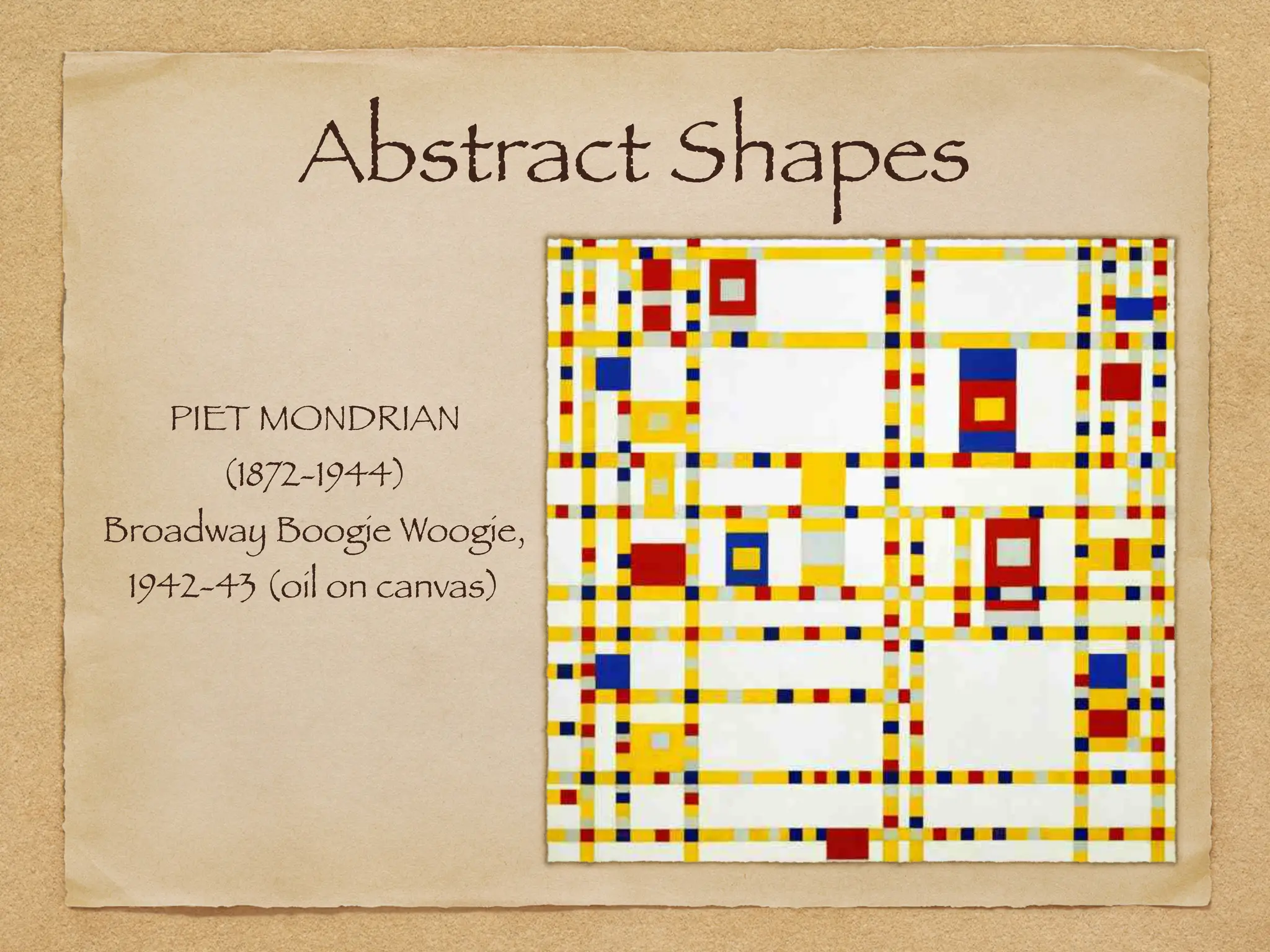
Abstract Shapes
PIET MONDRIAN
(1872-1944)
Broadway Boogie Woogie,
1942-43 (oil on canvas)
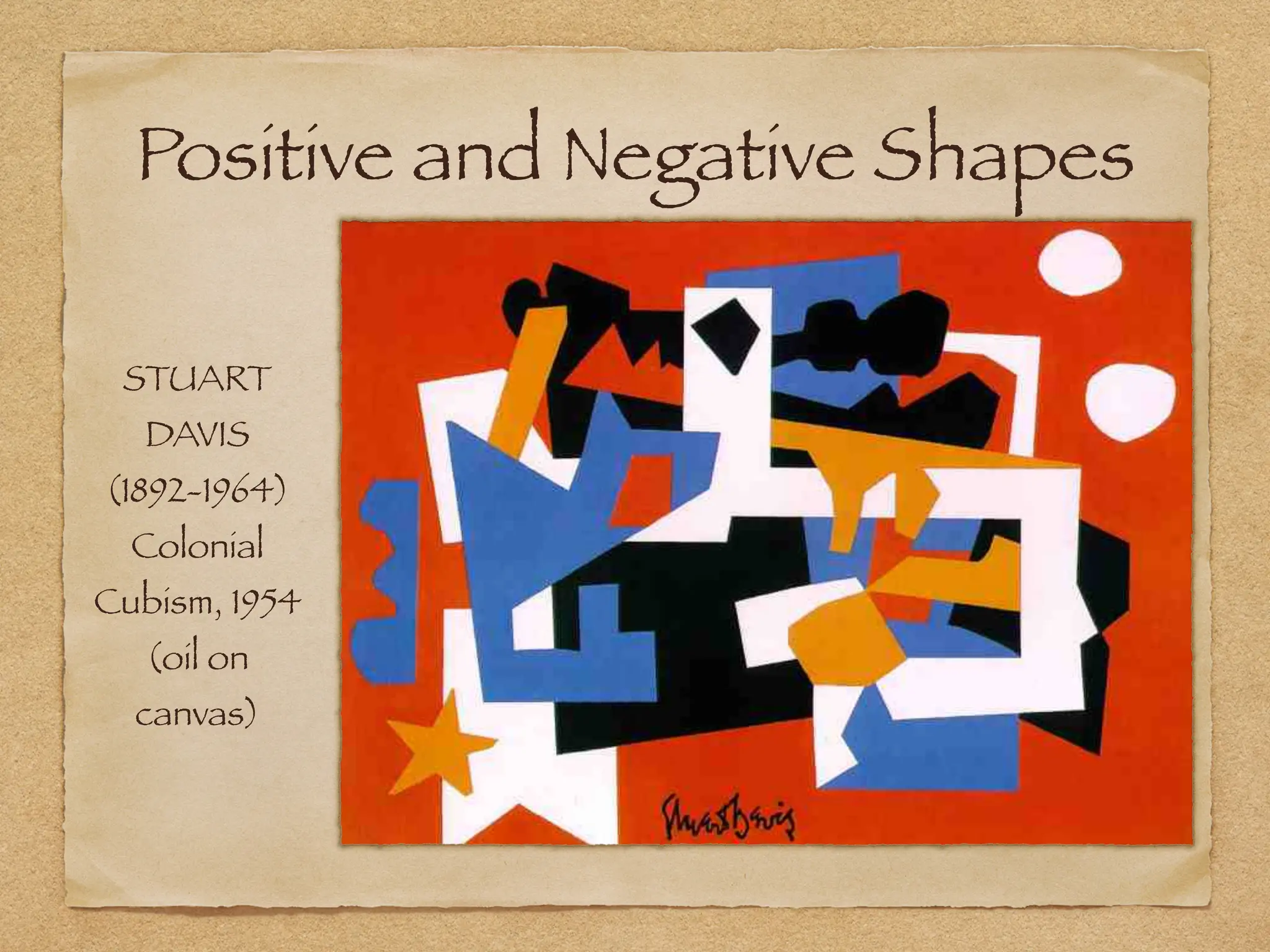
Positive and Negative Shapes
STUART
DAVIS
(1892-1964)
Colonial
Cubism, 1954
(oil on
canvas)
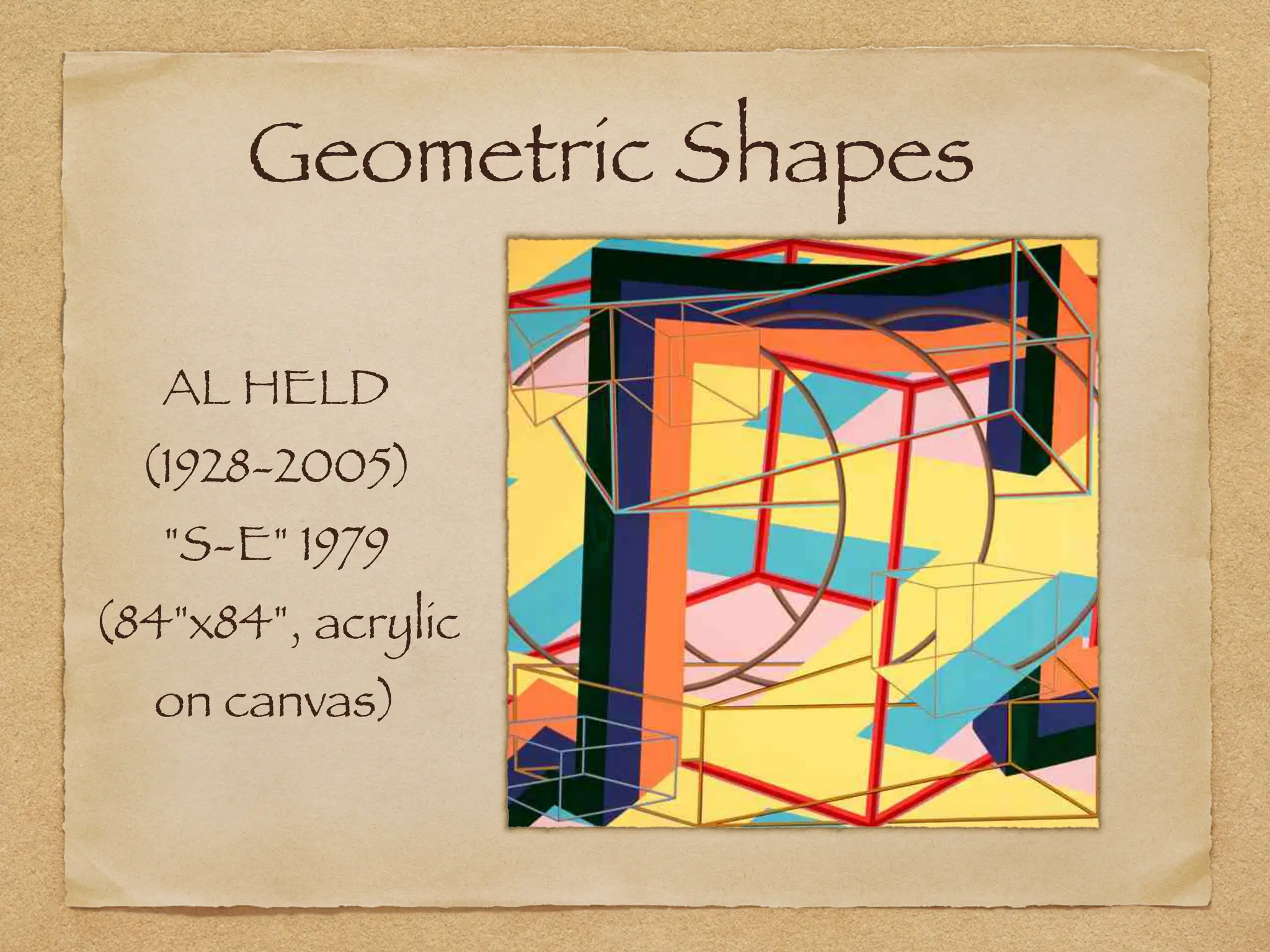
Geometric Shapes
AL HELD
(1928-2005)
"S-E" 1979
(84"x84", acrylic
on canvas)
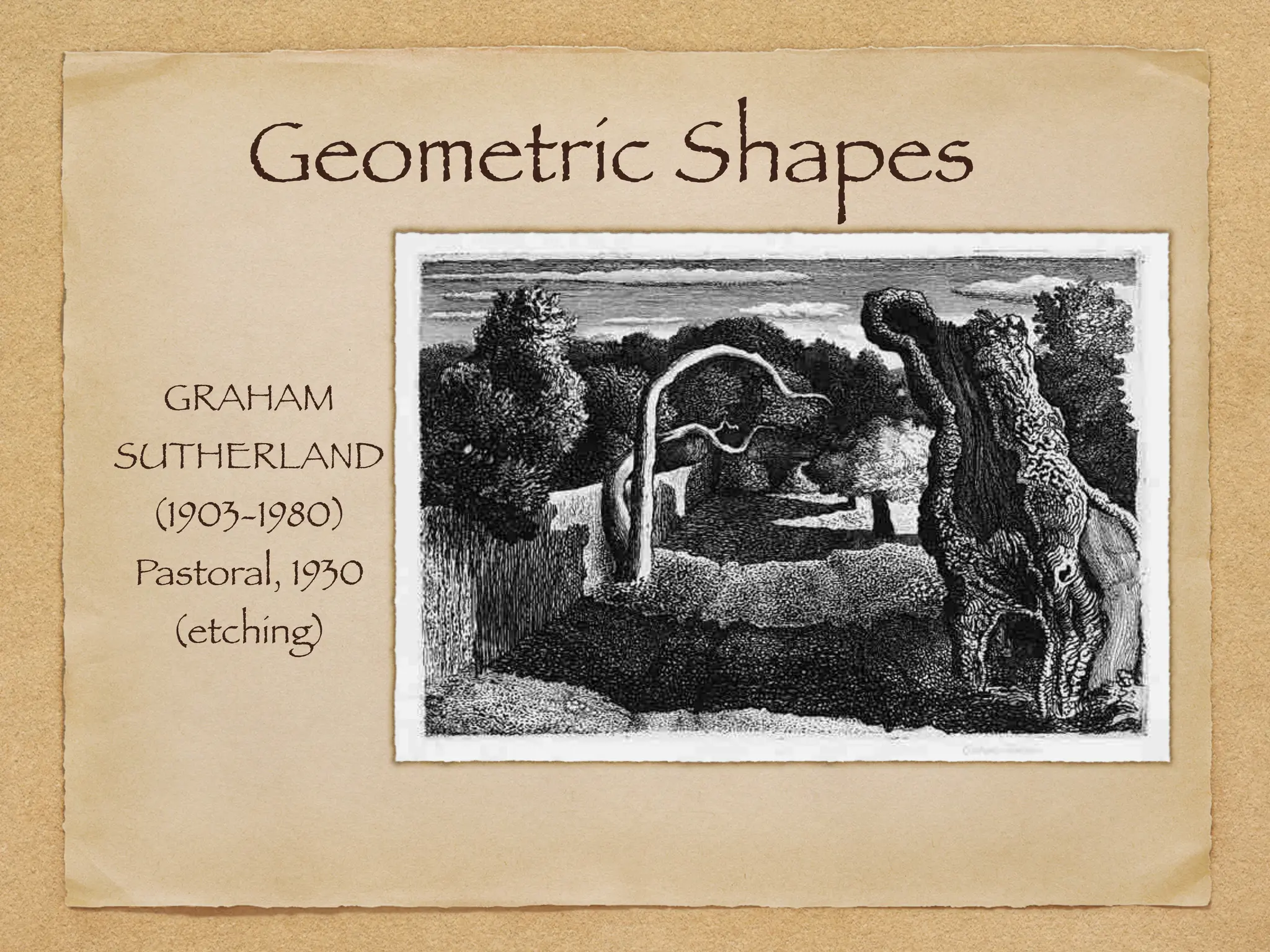
Geometric Shapes
GRAHAM
SUTHERLAND
(1903-1980)
Pastoral, 1930
(etching)
Symbolic Shapes
EADFRITH, BISHOP OF
LINDISFARNE (died 721)
'Illuminated Ornamental Cross',
715-721, Lindisfarne Gospels
T
ransparent, Re
fl
ective
and Opaque Shapes
RICHARD ESTES (b. 1932)
Donohue's, 1967 (oil on
masonite)

Elements of Visual Arts PowerPoint Presentation