Physical Science
Chapter 8: Magnetism
• A magnet is a device which attracts iron or
other magnets, and produces a magnetic
field around it’s body.
The term magnetism refers to the
properties and interactions of magnets.
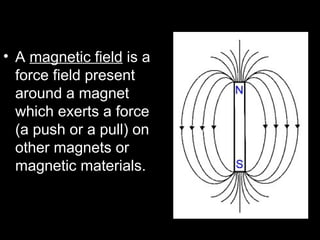
• A magnetic field is a
force field present
around a magnet
which exerts a force
(a push or a pull) on
other magnets or
magnetic materials.
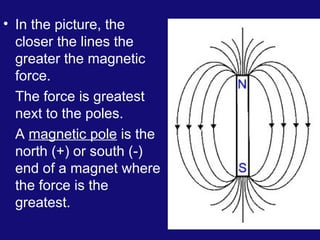
• In the picture, the
closer the lines the
greater the magnetic
force.
The force is greatest
next to the poles.
A magnetic pole is the
north (+) or south (-)
end of a magnet where
the force is the
greatest.
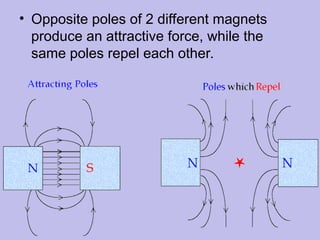
• Opposite poles of 2 different magnets
produce an attractive force, while the
same poles repel each other.
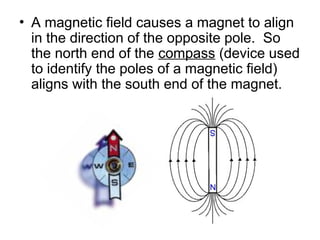
• A magnetic field causes a magnet to align
in the direction of the opposite pole. So
the north end of the compass (device used
to identify the poles of a magnetic field)
aligns with the south end of the magnet.
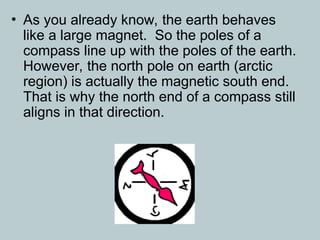
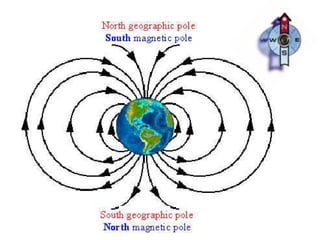
• As you already know, the earth behaves
like a large magnet. So the poles of a
compass line up with the poles of the earth.
However, the north pole on earth (arctic
region) is actually the magnetic south end.
That is why the north end of a compass still
aligns in that direction.
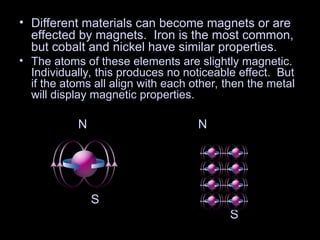
• Different materials can become magnets or are
effected by magnets. Iron is the most common,
but cobalt and nickel have similar properties.
• The atoms of these elements are slightly magnetic.
Individually, this produces no noticeable effect. But
if the atoms all align with each other, then the metal
will display magnetic properties.
N N
S
S
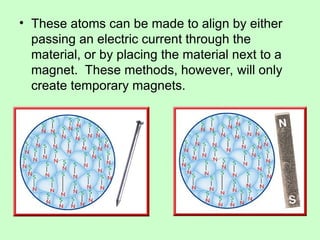
• These atoms can be made to align by either
passing an electric current through the
material, or by placing the material next to a
magnet. These methods, however, will only
create temporary magnets.
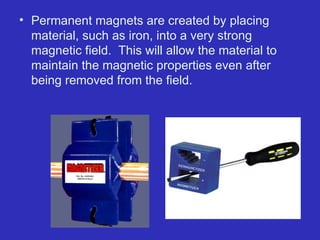
• Permanent magnets are created by placing
material, such as iron, into a very strong
magnetic field. This will allow the material to
maintain the magnetic properties even after
being removed from the field.
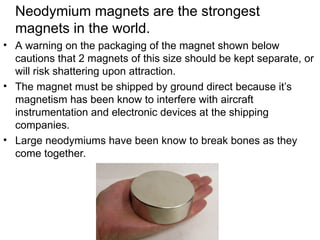
Neodymium magnets are the strongest
magnets in the world.
• A warning on the packaging of the magnet shown below
cautions that 2 magnets of this size should be kept separate, or
will risk shattering upon attraction.
• The magnet must be shipped by ground direct because it’s
magnetism has been know to interfere with aircraft
instrumentation and electronic devices at the shipping
companies.
• Large neodymiums have been know to break bones as they
come together.
• Is the strength of a magnet determined by
it’s size?
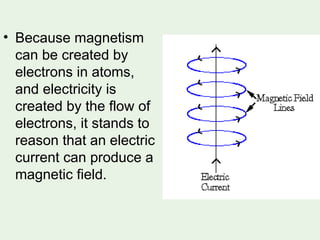
• Because magnetism
can be created by
electrons in atoms,
and electricity is
created by the flow of
electrons, it stands to
reason that an electric
current can produce a
magnetic field.
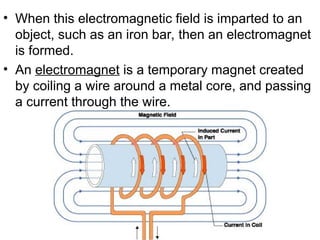
• When this electromagnetic field is imparted to an
object, such as an iron bar, then an electromagnet
is formed.
• An electromagnet is a temporary magnet created
by coiling a wire around a metal core, and passing
a current through the wire.
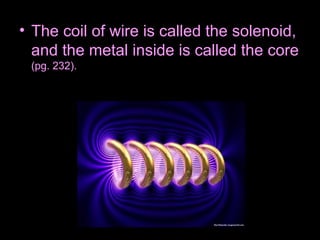
• The coil of wire is called the solenoid,
and the metal inside is called the core
(pg. 232).
• Do you think electromagnets run on
alternating current, direct current, or either?
Hmmmm…..
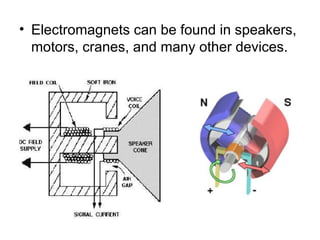
• Electromagnets can be found in speakers,
motors, cranes, and many other devices.
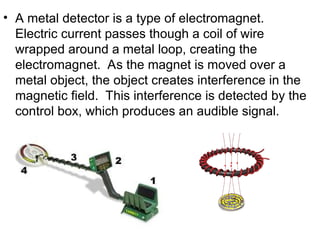
• A metal detector is a type of electromagnet.
Electric current passes though a coil of wire
wrapped around a metal loop, creating the
electromagnet. As the magnet is moved over a
metal object, the object creates interference in the
magnetic field. This interference is detected by the
control box, which produces an audible signal.
• Where else might you see another
electrical device which works on similar
technology?
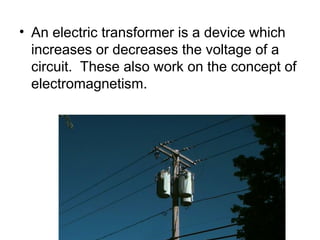
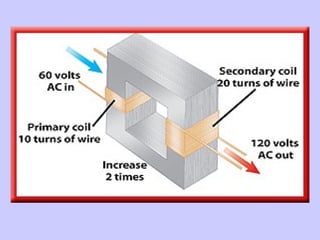
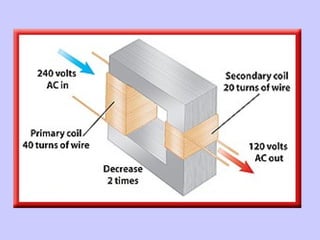
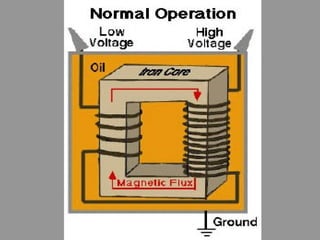
• An electric transformer is a device which
increases or decreases the voltage of a
circuit. These also work on the concept of
electromagnetism.
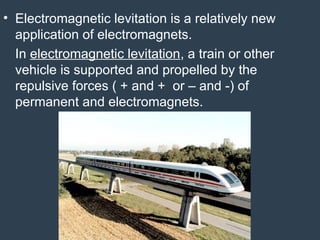
• Electromagnetic levitation is a relatively new
application of electromagnets.
In electromagnetic levitation, a train or other
vehicle is supported and propelled by the
repulsive forces ( + and + or – and -) of
permanent and electromagnets.
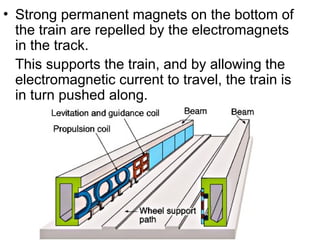
• Strong permanent magnets on the bottom of
the train are repelled by the electromagnets
in the track.
This supports the train, and by allowing the
electromagnetic current to travel, the train is
in turn pushed along.
• What are some advantages that mag-lev
tracks would have over ordinary tracks?
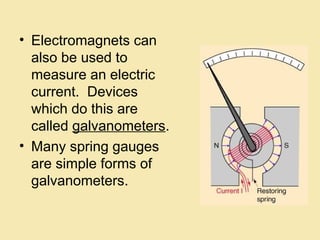
• Electromagnets can
also be used to
measure an electric
current. Devices
which do this are
called galvanometers.
• Many spring gauges
are simple forms of
galvanometers.
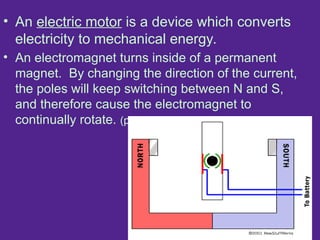
• An electric motor is a device which converts
electricity to mechanical energy.
• An electromagnet turns inside of a permanent
magnet. By changing the direction of the current,
the poles will keep switching between N and S,
and therefore cause the electromagnet to
continually rotate. (pg. 236)
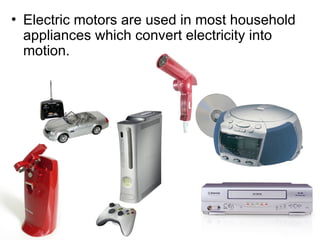
• Electric motors are used in most household
appliances which convert electricity into
motion.
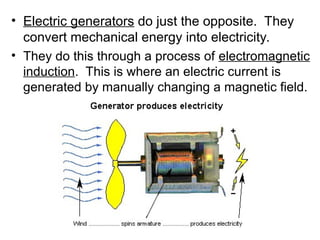
• Electric generators do just the opposite. They
convert mechanical energy into electricity.
• They do this through a process of electromagnetic
induction. This is where an electric current is
generated by manually changing a magnetic field.
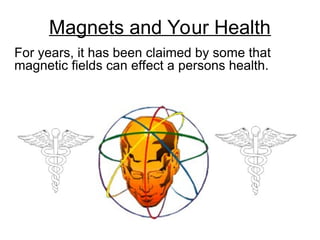
Magnets and Your Health
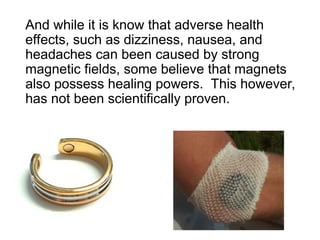
For years, it has been claimed by some that
magnetic fields can effect a persons health.
And while it is know that adverse health
effects, such as dizziness, nausea, and
headaches can been caused by strong
magnetic fields, some believe that magnets
also possess healing powers. This however,
has not been scientifically proven.
• In the realm of proven medical
technology however, magnets and
magnetism do have their place.
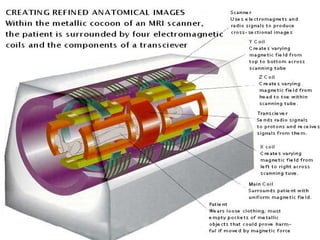
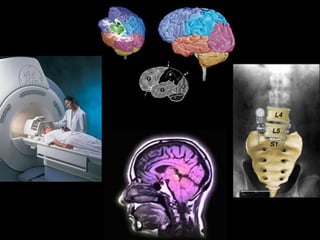
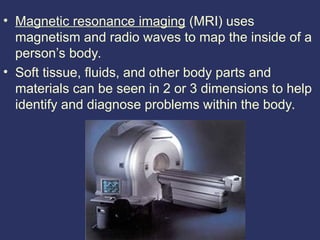
• Magnetic resonance imaging (MRI) uses
magnetism and radio waves to map the inside of a
person’s body.
• Soft tissue, fluids, and other body parts and
materials can be seen in 2 or 3 dimensions to help
identify and diagnose problems within the body.
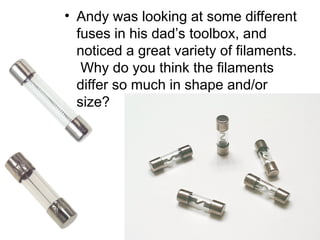
• Andy was looking at some different
fuses in his dad’s toolbox, and
noticed a great variety of filaments.
Why do you think the filaments
differ so much in shape and/or
size?
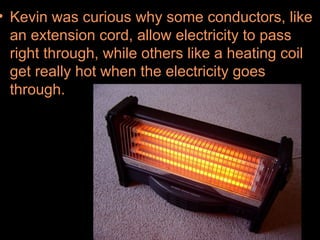
• Kevin was curious why some conductors, like
an extension cord, allow electricity to pass
right through, while others like a heating coil
get really hot when the electricity goes
through.
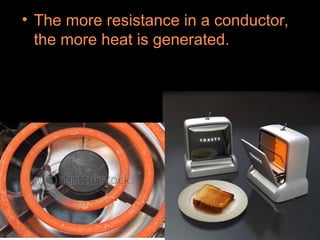
• The more resistance in a conductor,
the more heat is generated.

electromagnet slide show PowerPoint Presentation

  • 1.
  • 2.
    • A magnetis a device which attracts iron or other magnets, and produces a magnetic field around it’s body. The term magnetism refers to the properties and interactions of magnets.
  • 3.
    • A magneticfield is a force field present around a magnet which exerts a force (a push or a pull) on other magnets or magnetic materials.
  • 4.
    • In thepicture, the closer the lines the greater the magnetic force. The force is greatest next to the poles. A magnetic pole is the north (+) or south (-) end of a magnet where the force is the greatest.
  • 5.
    • Opposite polesof 2 different magnets produce an attractive force, while the same poles repel each other.
  • 6.
    • A magneticfield causes a magnet to align in the direction of the opposite pole. So the north end of the compass (device used to identify the poles of a magnetic field) aligns with the south end of the magnet.
  • 7.
    • As youalready know, the earth behaves like a large magnet. So the poles of a compass line up with the poles of the earth. However, the north pole on earth (arctic region) is actually the magnetic south end. That is why the north end of a compass still aligns in that direction.
  • 9.
    • Different materialscan become magnets or are effected by magnets. Iron is the most common, but cobalt and nickel have similar properties. • The atoms of these elements are slightly magnetic. Individually, this produces no noticeable effect. But if the atoms all align with each other, then the metal will display magnetic properties. N N S S
  • 10.
    • These atomscan be made to align by either passing an electric current through the material, or by placing the material next to a magnet. These methods, however, will only create temporary magnets.
  • 11.
    • Permanent magnetsare created by placing material, such as iron, into a very strong magnetic field. This will allow the material to maintain the magnetic properties even after being removed from the field.
  • 12.
    Neodymium magnets arethe strongest magnets in the world. • A warning on the packaging of the magnet shown below cautions that 2 magnets of this size should be kept separate, or will risk shattering upon attraction. • The magnet must be shipped by ground direct because it’s magnetism has been know to interfere with aircraft instrumentation and electronic devices at the shipping companies. • Large neodymiums have been know to break bones as they come together.
  • 13.
    • Is thestrength of a magnet determined by it’s size?
  • 14.
    • Because magnetism canbe created by electrons in atoms, and electricity is created by the flow of electrons, it stands to reason that an electric current can produce a magnetic field.
  • 15.
    • When thiselectromagnetic field is imparted to an object, such as an iron bar, then an electromagnet is formed. • An electromagnet is a temporary magnet created by coiling a wire around a metal core, and passing a current through the wire.
  • 16.
    • The coilof wire is called the solenoid, and the metal inside is called the core (pg. 232).
  • 17.
    • Do youthink electromagnets run on alternating current, direct current, or either? Hmmmm…..
  • 18.
    • Electromagnets canbe found in speakers, motors, cranes, and many other devices.
  • 19.
    • A metaldetector is a type of electromagnet. Electric current passes though a coil of wire wrapped around a metal loop, creating the electromagnet. As the magnet is moved over a metal object, the object creates interference in the magnetic field. This interference is detected by the control box, which produces an audible signal.
  • 20.
    • Where elsemight you see another electrical device which works on similar technology?
  • 21.
    • An electrictransformer is a device which increases or decreases the voltage of a circuit. These also work on the concept of electromagnetism.
  • 25.
    • Electromagnetic levitationis a relatively new application of electromagnets. In electromagnetic levitation, a train or other vehicle is supported and propelled by the repulsive forces ( + and + or – and -) of permanent and electromagnets.
  • 26.
    • Strong permanentmagnets on the bottom of the train are repelled by the electromagnets in the track. This supports the train, and by allowing the electromagnetic current to travel, the train is in turn pushed along.
  • 27.
    • What aresome advantages that mag-lev tracks would have over ordinary tracks?
  • 31.
    • Electromagnets can alsobe used to measure an electric current. Devices which do this are called galvanometers. • Many spring gauges are simple forms of galvanometers.
  • 32.
    • An electricmotor is a device which converts electricity to mechanical energy. • An electromagnet turns inside of a permanent magnet. By changing the direction of the current, the poles will keep switching between N and S, and therefore cause the electromagnet to continually rotate. (pg. 236)
  • 33.
    • Electric motorsare used in most household appliances which convert electricity into motion.
  • 34.
    • Electric generatorsdo just the opposite. They convert mechanical energy into electricity. • They do this through a process of electromagnetic induction. This is where an electric current is generated by manually changing a magnetic field.
  • 35.
    Magnets and YourHealth For years, it has been claimed by some that magnetic fields can effect a persons health.
  • 36.
    And while itis know that adverse health effects, such as dizziness, nausea, and headaches can been caused by strong magnetic fields, some believe that magnets also possess healing powers. This however, has not been scientifically proven.
  • 37.
    • In therealm of proven medical technology however, magnets and magnetism do have their place.
  • 38.
    • Magnetic resonanceimaging (MRI) uses magnetism and radio waves to map the inside of a person’s body. • Soft tissue, fluids, and other body parts and materials can be seen in 2 or 3 dimensions to help identify and diagnose problems within the body.
  • 41.
    • Andy waslooking at some different fuses in his dad’s toolbox, and noticed a great variety of filaments. Why do you think the filaments differ so much in shape and/or size?
  • 42.
    • Kevin wascurious why some conductors, like an extension cord, allow electricity to pass right through, while others like a heating coil get really hot when the electricity goes through.
  • 43.
    • The moreresistance in a conductor, the more heat is generated.