Electrical and
Instrumentation Works:
Building the Foundation for
Modern Industries
Electrical and instrumentation works are the backbone of modern
industries, enabling precise measurement, control, and
optimization of critical processes. From wiring and panel
installations to advanced control system programming, these
specialized fields ensure optimal performance, safety, and
compliance across a wide range of sectors.
Defining Electrical and Instrumentation Systems
Electrical Systems
Responsible for powering and distributing electricity,
including wiring, panels, and controls.
Instrumentation Systems
Measure and regulate critical process variables like
pressure, temperature, and flow to ensure optimal
performance.
The Importance of Reliable
Instrumentation
1 Process Optimization
Accurate instrumentation
data enables real-time
adjustments for peak
efficiency.
2 Safety and
Compliance
Monitoring critical
parameters helps
mitigate risks and
maintain regulatory
standards.
3 Cost Savings
Optimized processes and reduced downtime translate to
significant operational cost savings.
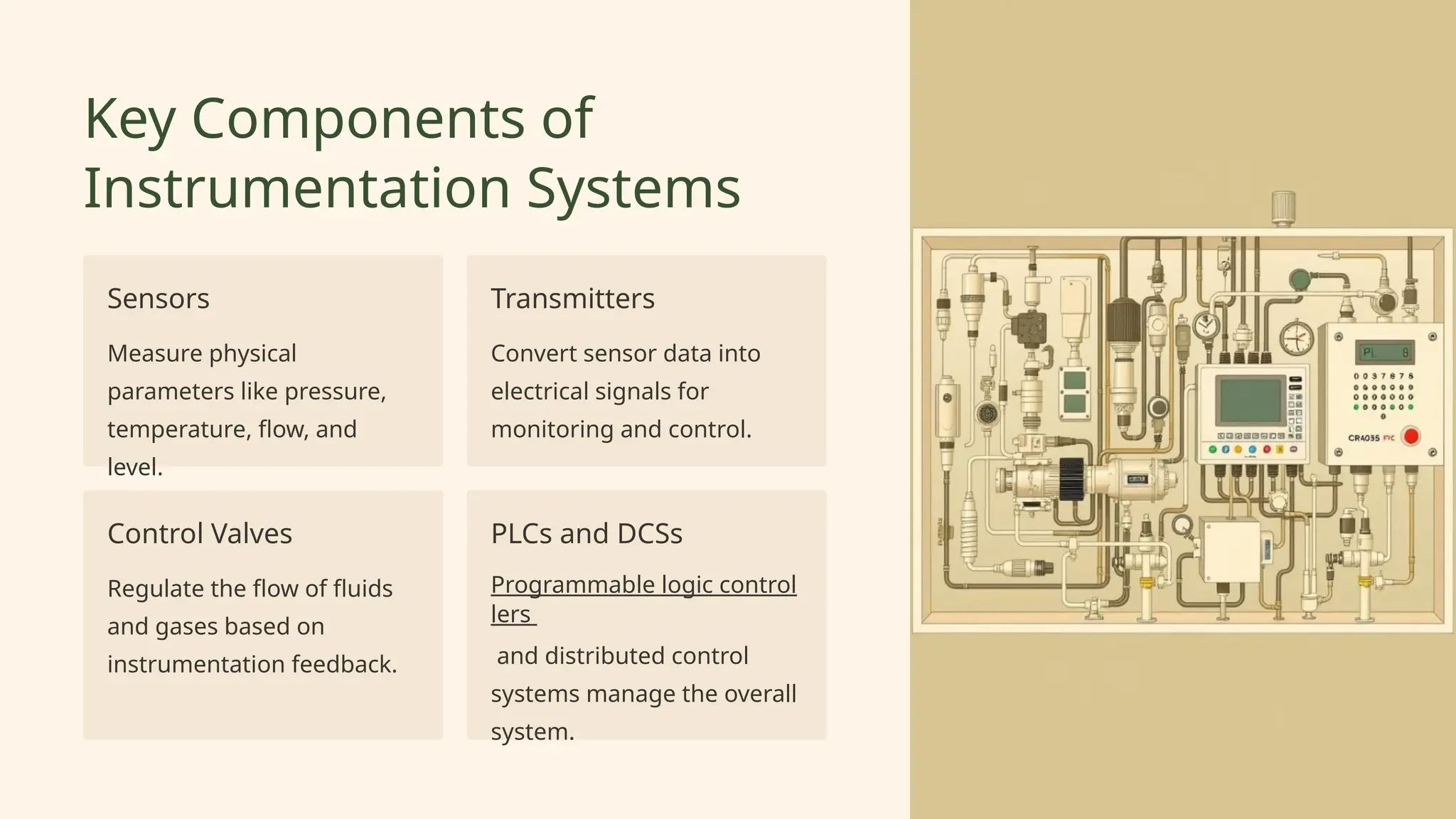
Key Components of
Instrumentation Systems
Sensors
Measure physical
parameters like pressure,
temperature, flow, and
level.
Transmitters
Convert sensor data into
electrical signals for
monitoring and control.
Control Valves
Regulate the flow of fluids
and gases based on
instrumentation feedback.
PLCs and DCSs
Programmable logic control
lers
and distributed control
systems manage the overall
system.
Measurement and Control Principles
1
Sensing
Measure process variables
2
Transmission
Convert measurements to signals
3
Processing
Analyze data and determine control actions
4
Actuation
Implement control actions
5
Feedback
Continuously monitor and adjust
Advanced Tools and
Techniques
Calibration
Ensure accurate and reliable
instrumentation readings.
Automation
Sophisticated control
algorithms optimize processes
in real-time.
Data Analytics
Leverage instrumentation data
to identify optimization
opportunities.
Remote Monitoring
Monitor and adjust systems
from anywhere using digital
technologies.
Ensuring Safety and
Compliance
Rigorous Safety
Standards
Meticulous procedures
and personal protective
equipment safeguard
workers.
Regulatory
Compliance
Instrumentation systems
must adhere to strict
industry regulations and
codes.
Cybersecurity Measures
Robust digital security protects critical systems from cyber threats.
Integrating Electrical and Instrumentation for Optimal
Process Performance
System Design
Electrical and instrumentation
experts collaborate to develop
holistic solutions.
Installation and
Commissioning
Careful coordination ensures
seamless integration and
startup.
Ongoing Maintenance
Proactive monitoring and
preventive maintenance
maximize uptime.
Continuous Improvement
Data-driven optimization
identifies opportunities to
enhance performance.
Contact Us
Website- https://www.rudrajaengineers.com
Phone no. +91- 8978571343
Gmail- info@rudrajaengineers.com
vnraju@rudrajaengineers.com

Electrical-and-Instrumentation-Modern-Industries.pptx

  • 1.
    Electrical and Instrumentation Works: Buildingthe Foundation for Modern Industries Electrical and instrumentation works are the backbone of modern industries, enabling precise measurement, control, and optimization of critical processes. From wiring and panel installations to advanced control system programming, these specialized fields ensure optimal performance, safety, and compliance across a wide range of sectors.
  • 2.
    Defining Electrical andInstrumentation Systems Electrical Systems Responsible for powering and distributing electricity, including wiring, panels, and controls. Instrumentation Systems Measure and regulate critical process variables like pressure, temperature, and flow to ensure optimal performance.
  • 3.
    The Importance ofReliable Instrumentation 1 Process Optimization Accurate instrumentation data enables real-time adjustments for peak efficiency. 2 Safety and Compliance Monitoring critical parameters helps mitigate risks and maintain regulatory standards. 3 Cost Savings Optimized processes and reduced downtime translate to significant operational cost savings.
  • 4.
    Key Components of InstrumentationSystems Sensors Measure physical parameters like pressure, temperature, flow, and level. Transmitters Convert sensor data into electrical signals for monitoring and control. Control Valves Regulate the flow of fluids and gases based on instrumentation feedback. PLCs and DCSs Programmable logic control lers and distributed control systems manage the overall system.
  • 5.
    Measurement and ControlPrinciples 1 Sensing Measure process variables 2 Transmission Convert measurements to signals 3 Processing Analyze data and determine control actions 4 Actuation Implement control actions 5 Feedback Continuously monitor and adjust
  • 6.
    Advanced Tools and Techniques Calibration Ensureaccurate and reliable instrumentation readings. Automation Sophisticated control algorithms optimize processes in real-time. Data Analytics Leverage instrumentation data to identify optimization opportunities. Remote Monitoring Monitor and adjust systems from anywhere using digital technologies.
  • 7.
    Ensuring Safety and Compliance RigorousSafety Standards Meticulous procedures and personal protective equipment safeguard workers. Regulatory Compliance Instrumentation systems must adhere to strict industry regulations and codes. Cybersecurity Measures Robust digital security protects critical systems from cyber threats.
  • 8.
    Integrating Electrical andInstrumentation for Optimal Process Performance System Design Electrical and instrumentation experts collaborate to develop holistic solutions. Installation and Commissioning Careful coordination ensures seamless integration and startup. Ongoing Maintenance Proactive monitoring and preventive maintenance maximize uptime. Continuous Improvement Data-driven optimization identifies opportunities to enhance performance.
  • 9.
    Contact Us Website- https://www.rudrajaengineers.com Phoneno. +91- 8978571343 Gmail- info@rudrajaengineers.com vnraju@rudrajaengineers.com