NEWENERGY


Experience with CLTS
   Charles S. Nachinab
      NewEnergy
Outline
1.   NE in brief
2.   CLTS overview
3.   Experience
4.   Challenges
5.   Recommendations
6.   Conclusion
Brief on newenergy
โ€ข A Ghanaian devโ€™t NGO founded in 1994
โ€ข Vision:
  โ€“ An Environment of Socio-economic Prosperity Where
    All People Live in Dignity
โ€ข Mission:
  โ€“ To work in partnership with local communities and
    other stakeholders to increase and improve access to
    social services, infrastructure and other development
    opportunities to the underserved in Ghana


                                                       3
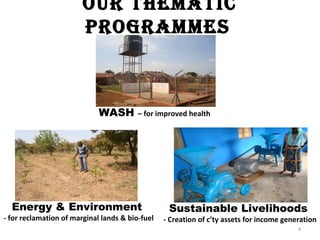
our ThemaTic
                        Programmes


                             WASH        โ€“ for improved health


  Energy & Environment                            Sustainable Livelihoods
- for reclamation of marginal lands & bio-fuel   - Creation of cโ€™ty assets for income generation
                                                                                          4
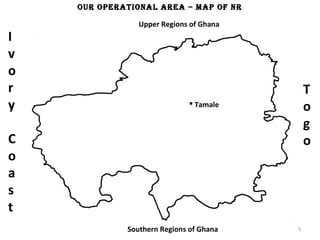
our oPeraTionaL area โ€“ maP of nr

                Upper Regions of Ghana
I
v
o
r                                            T
y                             ๏‚ง Tamale
                                             o
                                             g
C                                            o
o
a
s
t
             Southern Regions of Ghana   5
oPeraTionaL area โ€“ characTerisTics of nr


๏ฑ Land mass = 70,384 sq. Km (i.e.          ๏ฑ 3rd poorest = only 4% in highest
  About โ…“ of Ghana)                          wealth quintile against national
๏ฑ Population = 2,468,557                     average of 22%
   ๏ถ M=49% & F= 51%                                           [Source: 2008 DHS]
๏ฑ Pop Density = 35 per sq. Km              ๏ฑ Low WASH coverage
   ๏ถ Tโ€™le (reg. capital) = 548               ๏ถ Water = 62%
   ๏ถ National = 102                          ๏ถ Sanitation = <10%
๏ฑ Fastest growing region                     ๏ถ Hygiene = Not impressive
   ๏ถ Intercensal growth rate                              [Source: CWSA Records]

      ๏‚ง NR = 35.6% (highest in
        Ghana)                              The above represent the reason for
      ๏‚ง National = 28.1%                          your needed support!!!
  [Source: 2010 PHC Provisional Results]

                                                                           6
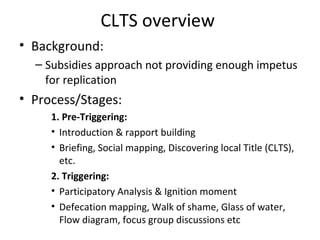
CLTS overview
โ€ข Background:
  โ€“ Subsidies approach not providing enough impetus
    for replication
โ€ข Process/Stages:
     1. Pre-Triggering:
     โ€ข Introduction & rapport building
     โ€ข Briefing, Social mapping, Discovering local Title (CLTS),
       etc.
     2. Triggering:
     โ€ข Participatory Analysis & Ignition moment
     โ€ข Defecation mapping, Walk of shame, Glass of water,
       Flow diagram, focus group discussions etc
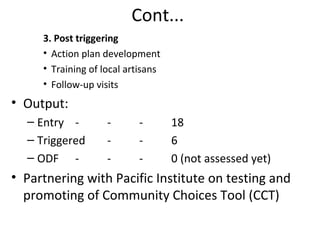
Cont...
     3. Post triggering
     โ€ข Action plan development
     โ€ข Training of local artisans
     โ€ข Follow-up visits
โ€ข Output:
  โ€“ Entry -         -      -        18
  โ€“ Triggered       -      -        6
  โ€“ ODF -           -      -        0 (not assessed yet)
โ€ข Partnering with Pacific Institute on testing and
  promoting of Community Choices Tool (CCT)
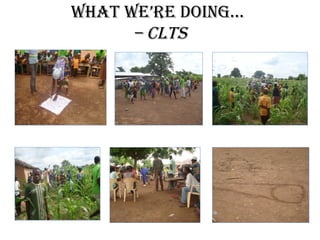
whaT weโ€™re Doing...
      โ€“ cLTs
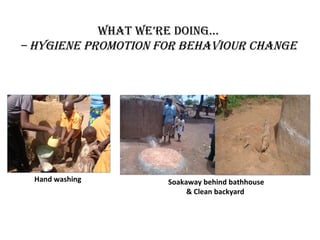
whaT weโ€™re Doing...
โ€“ hygiene PromoTion for Behaviour change


  Hand washing       Soakaway behind bathhouse
                          & Clean backyard
Experience
โ€ข Community members often refer to the
  subsidies offered by some development
  partners.
โ€ข Innovativeness, affordability, adaptability and
  appropriateness are critical in sanitation
  options.
โ€ข Water and micro-credit are mostly the
  priorities of rural community members.
โ€ข Difficult to practice CLTS in large urban
  communities
Challenges
โ€ข Most places are always bushy and therefore
  convenient for open defecation to be practiced
โ€ข Non-harmonisation of approaches and non-
  commitment to CLTS
  โ€“ Subsidy still goes on by some DCEs, MPs, NGOs,
โ€ข Limited knowledge/skills in the construction of
  appropriate cheaper technology options
โ€ข EIG???
Recommendations
โ€ข CLTS as a national strategy should be vigorously
  supported and promoted by the District
  Assemblies and all other stakeholders in
  sanitation
โ€ข District Sanitation promotion forum should be
  organized to harmonize CLTS process in the
  districts
โ€ข Integrate EcoSan into sanitation promotion and
  delivery, especially for institutional latrines
Recommendations ...
โ€ข Intensify follow-up
โ€ข And for sustainable sanitation for all,
  communities empowered through CLTS
  process should be connected with
  commercially viable producers and suppliers
  of sanitation solutions
concLusion
โ€ข โ€œIndividual players win matches, but team
  players win gamesโ€
  โ€“ Coach Dunga, Brazil 2010 FIFA World Cup Team

            fooD for ThoughT!!!
Thank U

Ehsd unicef-coniwas engagement on sanitation

  • 1.
    NEWENERGY Experience with CLTS Charles S. Nachinab NewEnergy
  • 2.
    Outline 1. NE in brief 2. CLTS overview 3. Experience 4. Challenges 5. Recommendations 6. Conclusion
  • 3.
    Brief on newenergy โ€ขA Ghanaian devโ€™t NGO founded in 1994 โ€ข Vision: โ€“ An Environment of Socio-economic Prosperity Where All People Live in Dignity โ€ข Mission: โ€“ To work in partnership with local communities and other stakeholders to increase and improve access to social services, infrastructure and other development opportunities to the underserved in Ghana 3
  • 4.
    our ThemaTic Programmes WASH โ€“ for improved health Energy & Environment Sustainable Livelihoods - for reclamation of marginal lands & bio-fuel - Creation of cโ€™ty assets for income generation 4
  • 5.
    our oPeraTionaL areaโ€“ maP of nr Upper Regions of Ghana I v o r T y ๏‚ง Tamale o g C o o a s t Southern Regions of Ghana 5
  • 6.
    oPeraTionaL area โ€“characTerisTics of nr ๏ฑ Land mass = 70,384 sq. Km (i.e. ๏ฑ 3rd poorest = only 4% in highest About โ…“ of Ghana) wealth quintile against national ๏ฑ Population = 2,468,557 average of 22% ๏ถ M=49% & F= 51% [Source: 2008 DHS] ๏ฑ Pop Density = 35 per sq. Km ๏ฑ Low WASH coverage ๏ถ Tโ€™le (reg. capital) = 548 ๏ถ Water = 62% ๏ถ National = 102 ๏ถ Sanitation = <10% ๏ฑ Fastest growing region ๏ถ Hygiene = Not impressive ๏ถ Intercensal growth rate [Source: CWSA Records] ๏‚ง NR = 35.6% (highest in Ghana) The above represent the reason for ๏‚ง National = 28.1% your needed support!!! [Source: 2010 PHC Provisional Results] 6
  • 7.
    CLTS overview โ€ข Background: โ€“ Subsidies approach not providing enough impetus for replication โ€ข Process/Stages: 1. Pre-Triggering: โ€ข Introduction & rapport building โ€ข Briefing, Social mapping, Discovering local Title (CLTS), etc. 2. Triggering: โ€ข Participatory Analysis & Ignition moment โ€ข Defecation mapping, Walk of shame, Glass of water, Flow diagram, focus group discussions etc
  • 8.
    Cont... 3. Post triggering โ€ข Action plan development โ€ข Training of local artisans โ€ข Follow-up visits โ€ข Output: โ€“ Entry - - - 18 โ€“ Triggered - - 6 โ€“ ODF - - - 0 (not assessed yet) โ€ข Partnering with Pacific Institute on testing and promoting of Community Choices Tool (CCT)
  • 9.
  • 10.
    whaT weโ€™re Doing... โ€“hygiene PromoTion for Behaviour change Hand washing Soakaway behind bathhouse & Clean backyard
  • 11.
    Experience โ€ข Community membersoften refer to the subsidies offered by some development partners. โ€ข Innovativeness, affordability, adaptability and appropriateness are critical in sanitation options. โ€ข Water and micro-credit are mostly the priorities of rural community members. โ€ข Difficult to practice CLTS in large urban communities
  • 12.
    Challenges โ€ข Most placesare always bushy and therefore convenient for open defecation to be practiced โ€ข Non-harmonisation of approaches and non- commitment to CLTS โ€“ Subsidy still goes on by some DCEs, MPs, NGOs, โ€ข Limited knowledge/skills in the construction of appropriate cheaper technology options โ€ข EIG???
  • 13.
    Recommendations โ€ข CLTS asa national strategy should be vigorously supported and promoted by the District Assemblies and all other stakeholders in sanitation โ€ข District Sanitation promotion forum should be organized to harmonize CLTS process in the districts โ€ข Integrate EcoSan into sanitation promotion and delivery, especially for institutional latrines
  • 14.
    Recommendations ... โ€ข Intensifyfollow-up โ€ข And for sustainable sanitation for all, communities empowered through CLTS process should be connected with commercially viable producers and suppliers of sanitation solutions
  • 15.
    concLusion โ€ข โ€œIndividual playerswin matches, but team players win gamesโ€ โ€“ Coach Dunga, Brazil 2010 FIFA World Cup Team fooD for ThoughT!!!
  • 16.