PRESENTATION OUTLINE:
Elasticity of Demand
Price Elasticity of Demand
•Types of PED
Determinants of PED
Income Elasticity of Demand
•Types of IED
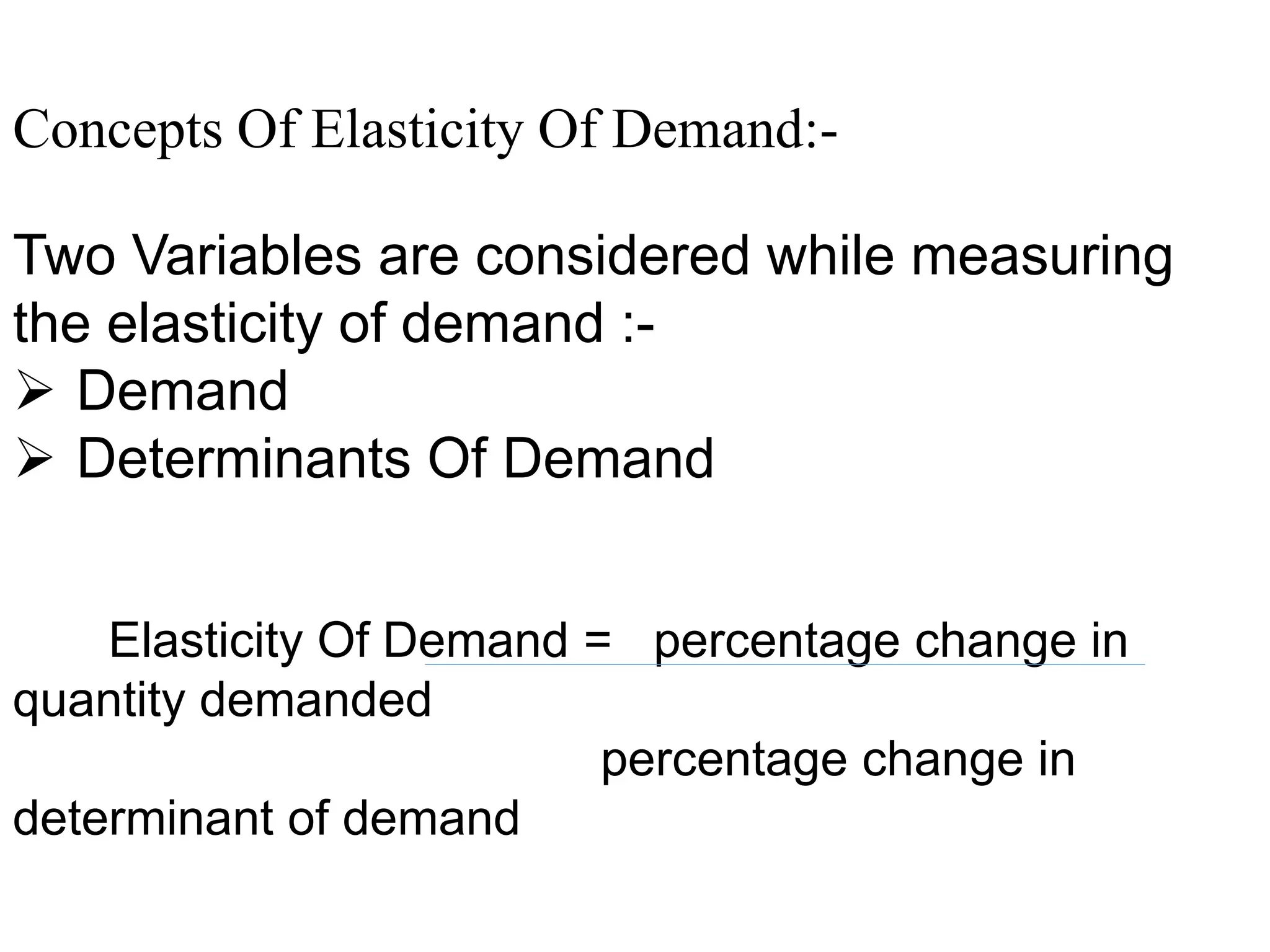
Concepts Of Elasticity Of Demand:-
Two Variables are considered while measuring
the elasticity of demand :-
 Demand
 Determinants Of Demand
Elasticity Of Demand = percentage change in
quantity demanded
percentage change in
determinant of demand
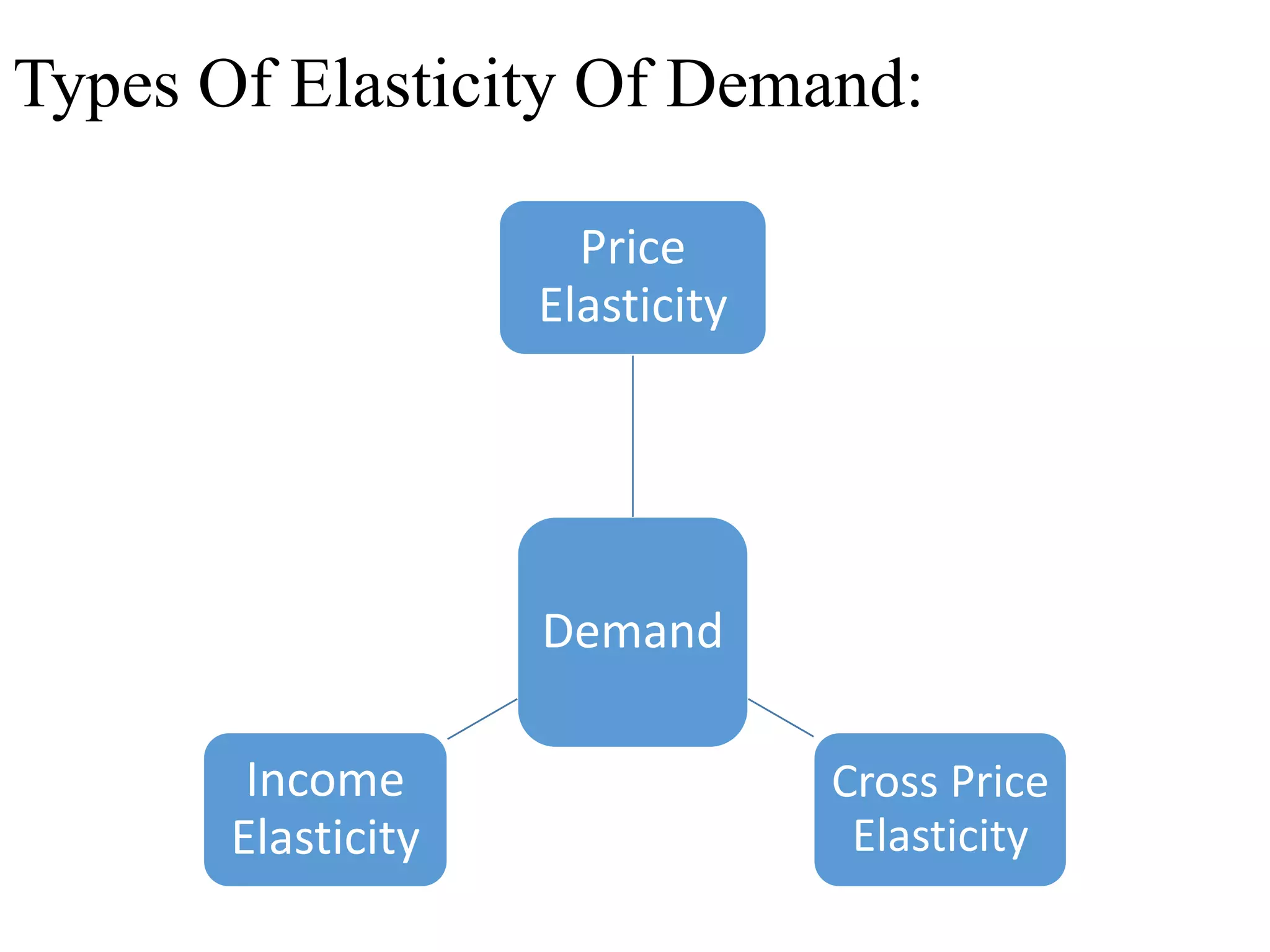
Types Of Elasticity Of Demand:
Demand
Price
Elasticity
Cross Price
Elasticity
Income
Elasticity
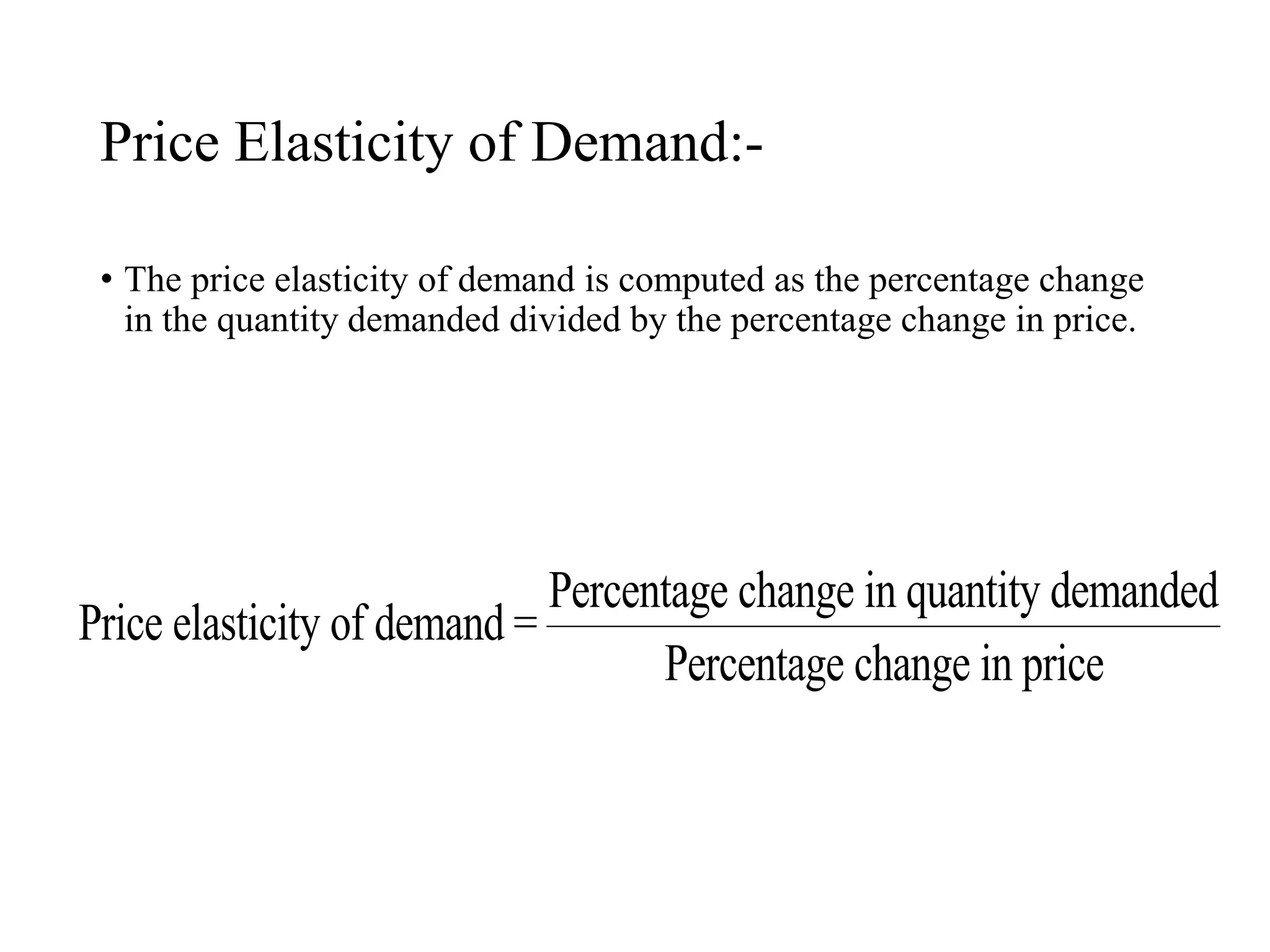
Price Elasticity of Demand:-
• The price elasticity of demand is computed as the percentage change
in the quantity demanded divided by the percentage change in price.
Price elasticity of demand =
Percentage change in quantity demanded
Percentage change in price
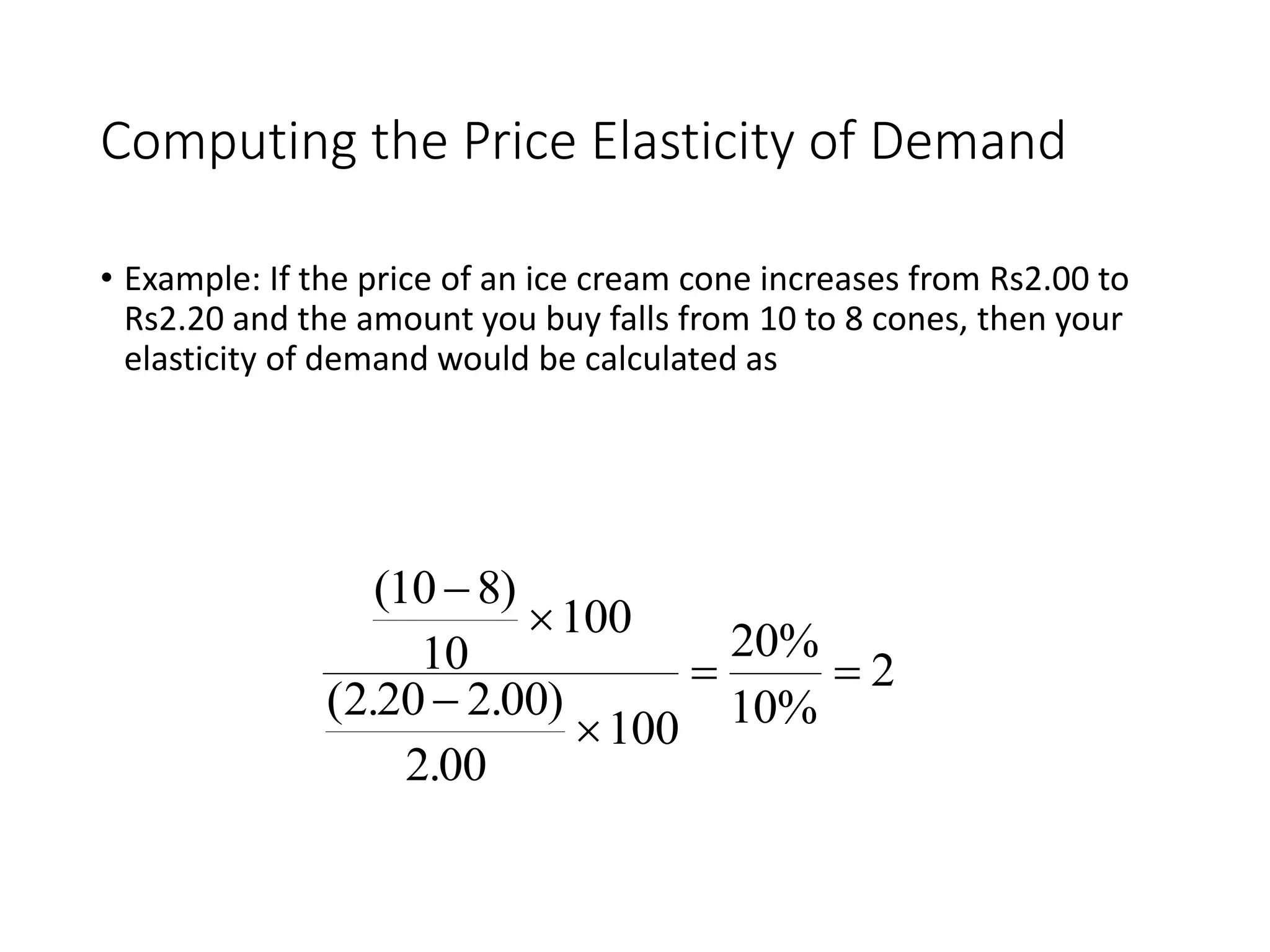
Computing the Price Elasticity of Demand
• Example: If the price of an ice cream cone increases from Rs2.00 to
Rs2.20 and the amount you buy falls from 10 to 8 cones, then your
elasticity of demand would be calculated as
( )
( . . )
.
10 8
10
100
2 20 2 00
2 00
100
20%
10%
2




 
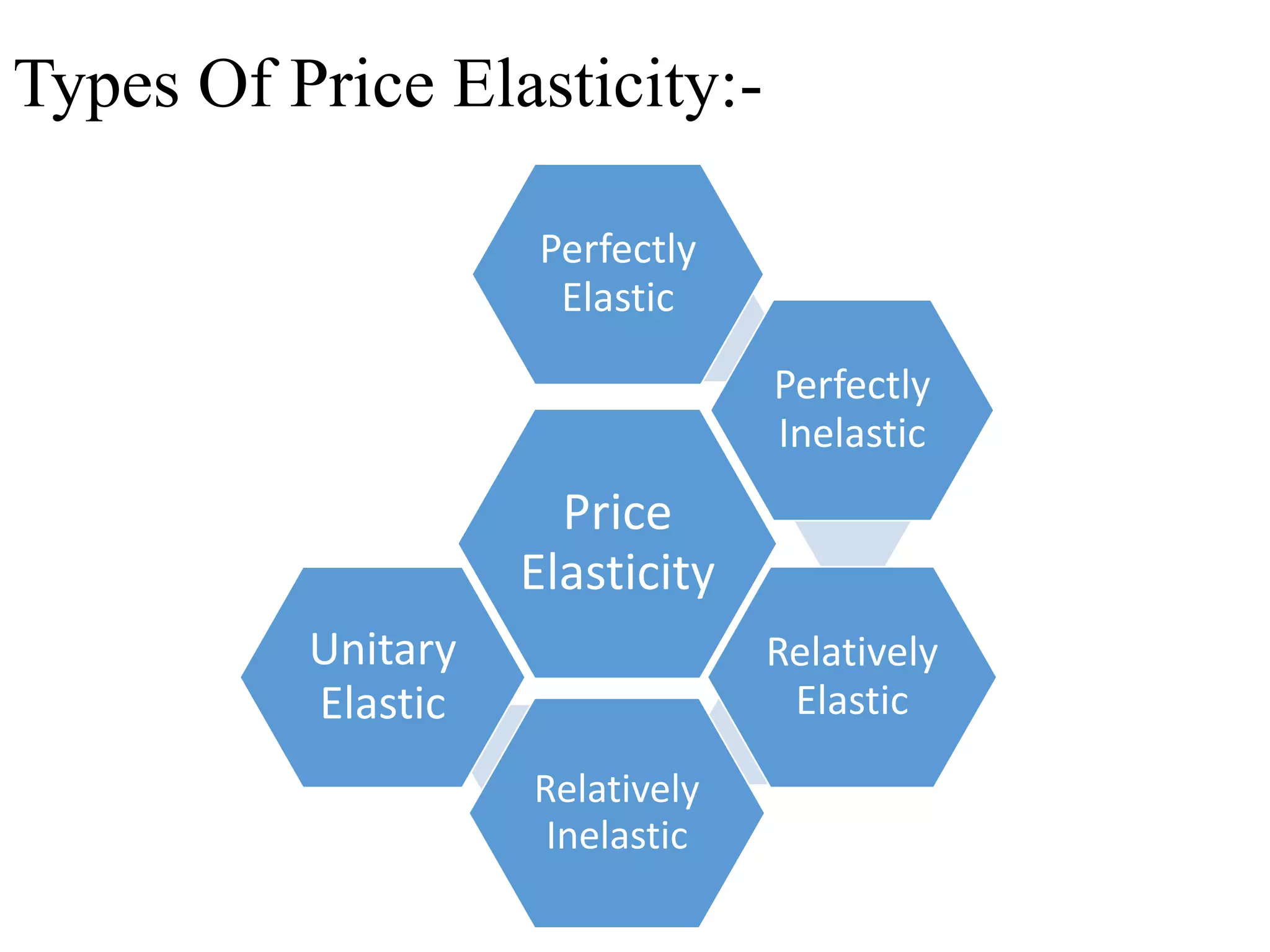
Types Of Price Elasticity:-
Price
Elasticity
Perfectly
Elastic
Perfectly
Inelastic
Relatively
Elastic
Relatively
Inelastic
Unitary
Elastic
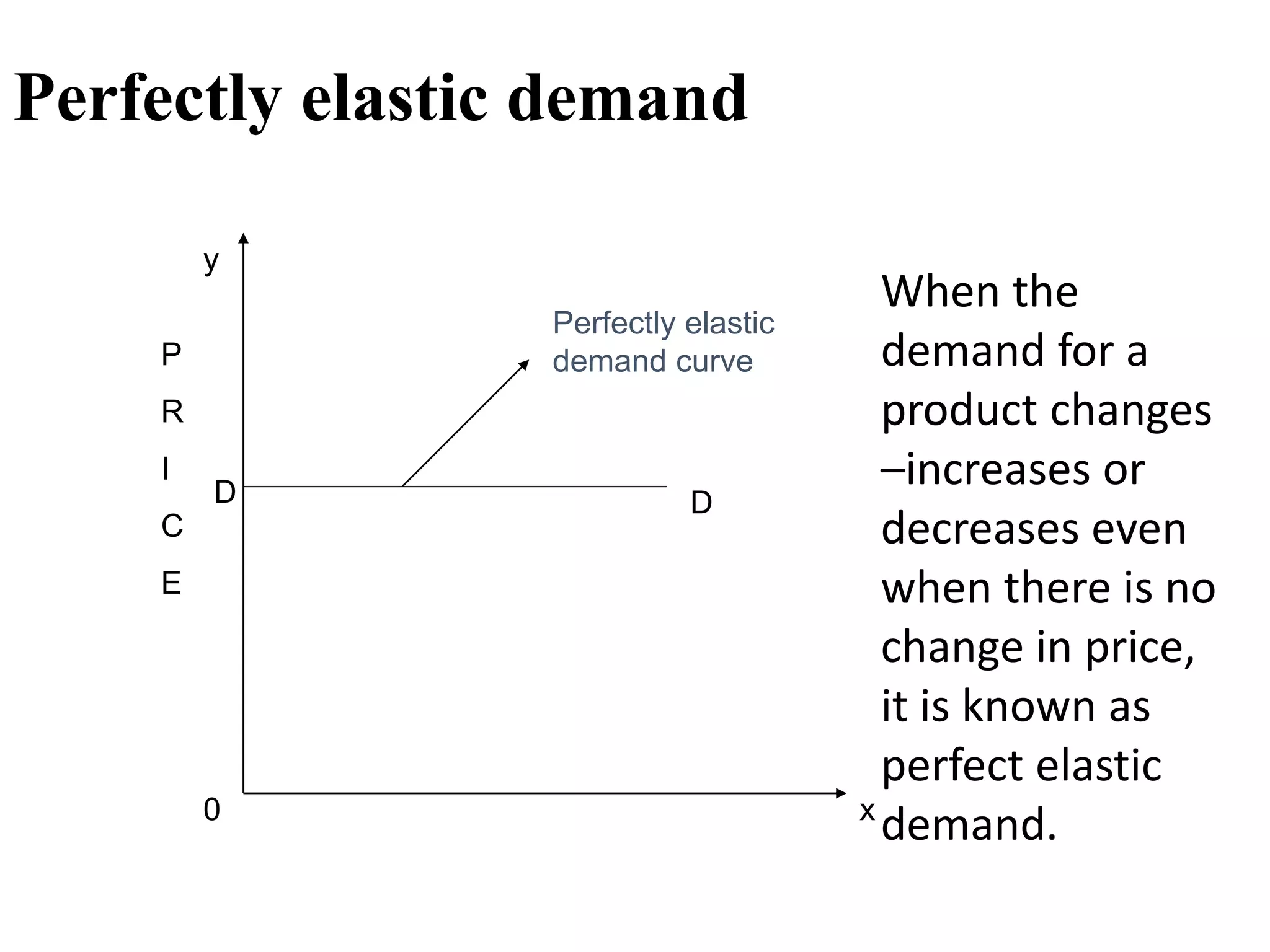
Perfectly elastic demand
P
R
I
C
E
y
0 x
Perfectly elastic
demand curve
D D
When the
demand for a
product changes
–increases or
decreases even
when there is no
change in price,
it is known as
perfect elastic
demand.
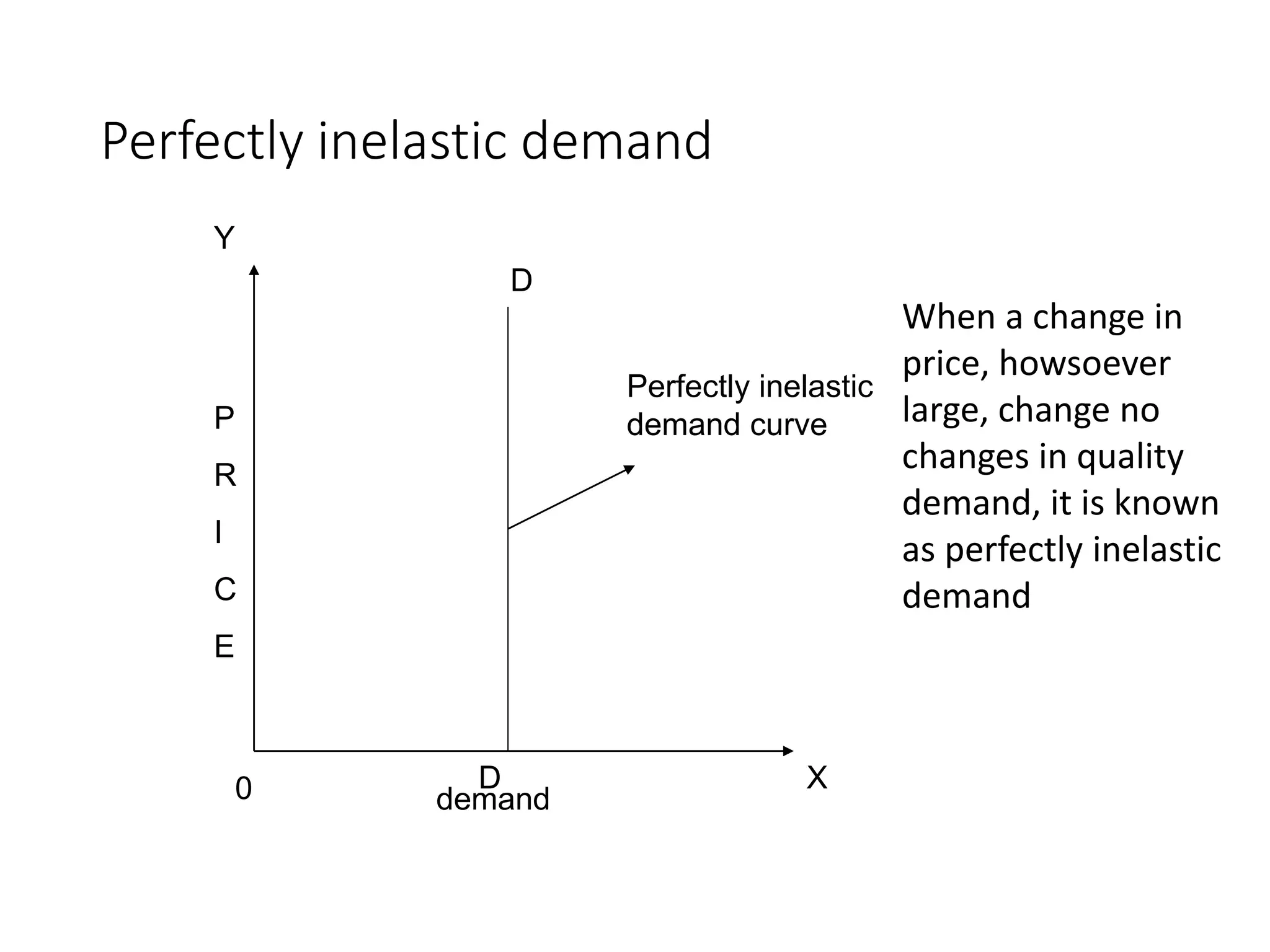
Perfectly inelastic demand
demand
D
D
Perfectly inelastic
demand curve
0
Y
X
P
R
I
C
E
When a change in
price, howsoever
large, change no
changes in quality
demand, it is known
as perfectly inelastic
demand
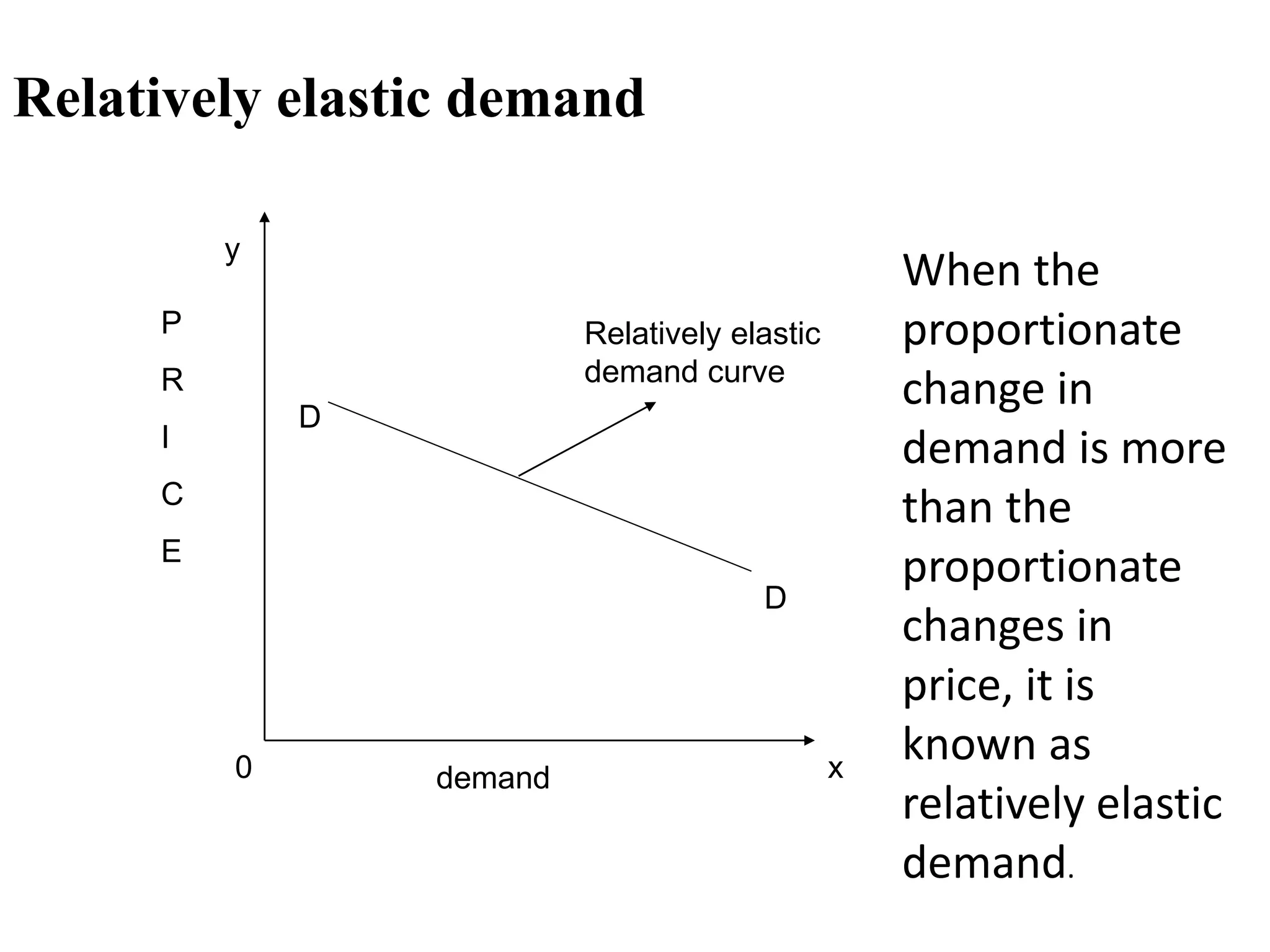
Relatively elastic demand
Relatively elastic
demand curve
P
R
I
C
E
demand
0 x
y
D
D
When the
proportionate
change in
demand is more
than the
proportionate
changes in
price, it is
known as
relatively elastic
demand.
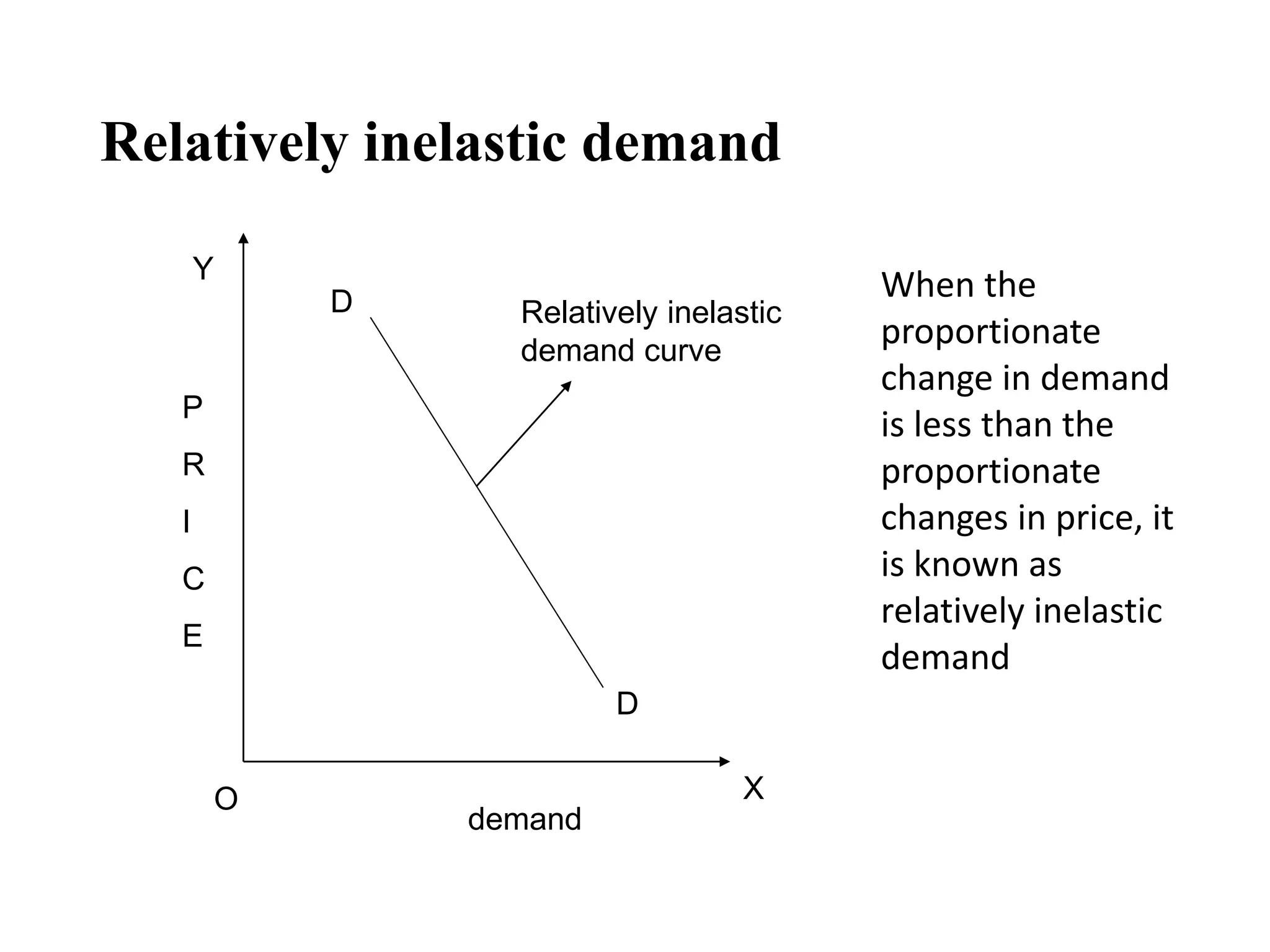
Relatively inelastic demand
Relatively inelastic
demand curve
X
O
Y
demand
D
D
P
R
I
C
E
When the
proportionate
change in demand
is less than the
proportionate
changes in price, it
is known as
relatively inelastic
demand
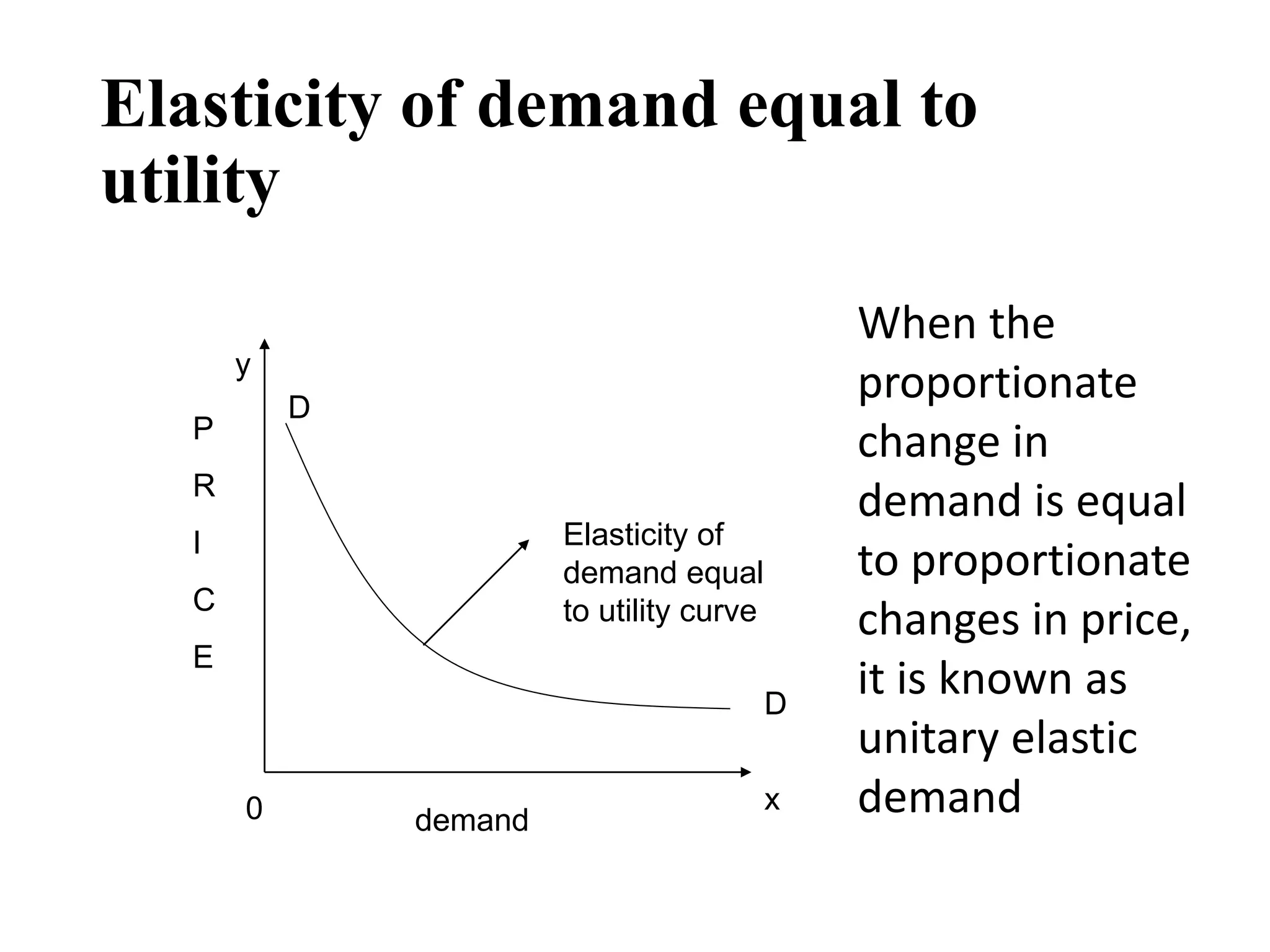
Elasticity of demand equal to
utility
Elasticity of
demand equal
to utility curve
y
x
0 demand
P
R
I
C
E
D
D
When the
proportionate
change in
demand is equal
to proportionate
changes in price,
it is known as
unitary elastic
demand
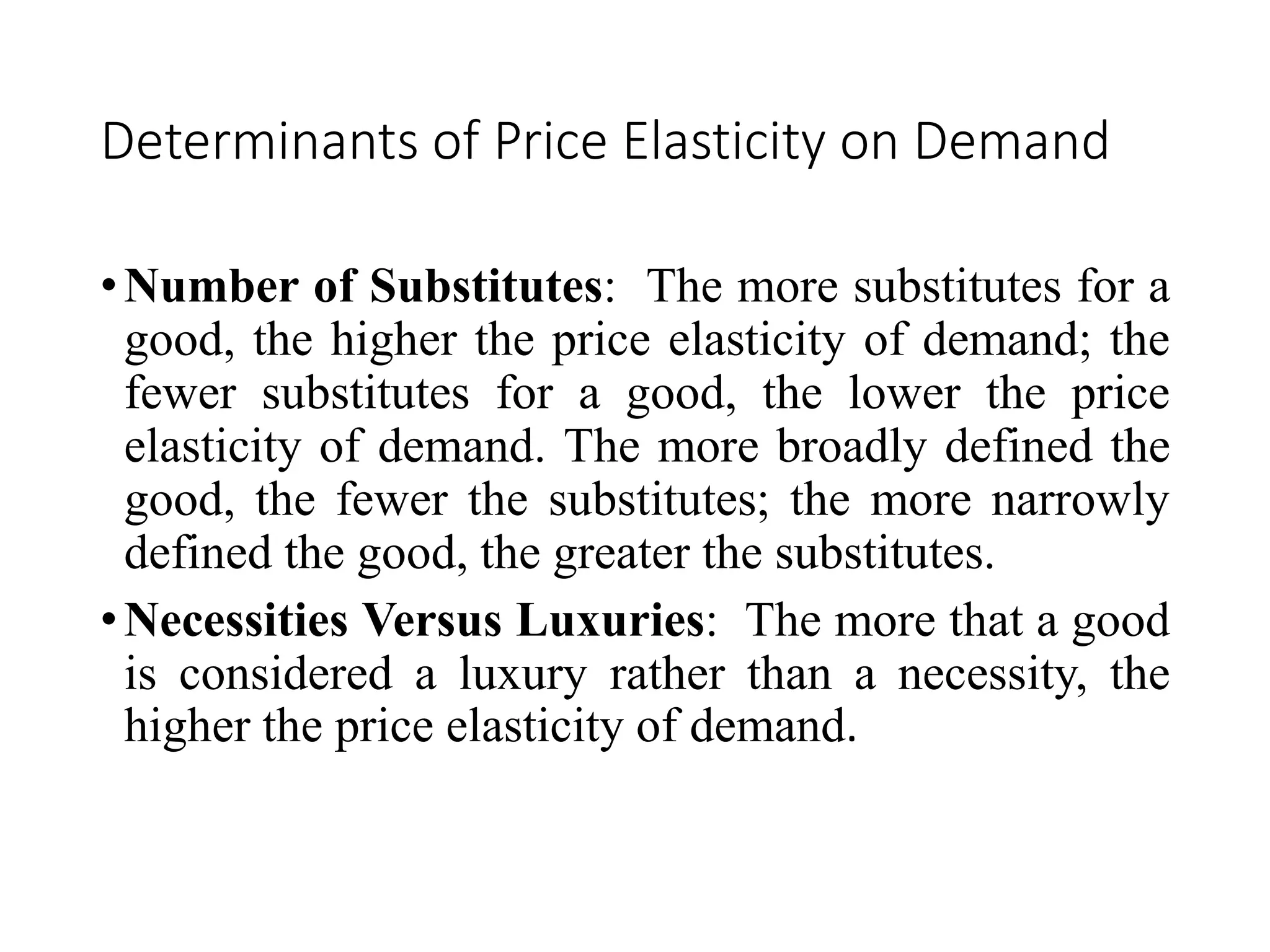
Determinants of Price Elasticity on Demand
•Number of Substitutes: The more substitutes for a
good, the higher the price elasticity of demand; the
fewer substitutes for a good, the lower the price
elasticity of demand. The more broadly defined the
good, the fewer the substitutes; the more narrowly
defined the good, the greater the substitutes.
•Necessities Versus Luxuries: The more that a good
is considered a luxury rather than a necessity, the
higher the price elasticity of demand.
Determinants of Price Elasticity on Demand
•Percentage of One’s Budget Spent on the Good:
The greater the percentage of one’s budget that goes
to purchase a good, the higher the price elasticity of
demand; the smaller the percentage of one’s budget
that goes to purchase a good, the lower the elasticity
of demand.
•Time: The more time that passes, the higher the
price elasticity of demand for the good; the less time
that passes, the lower the price elasticity of demand
for the good.
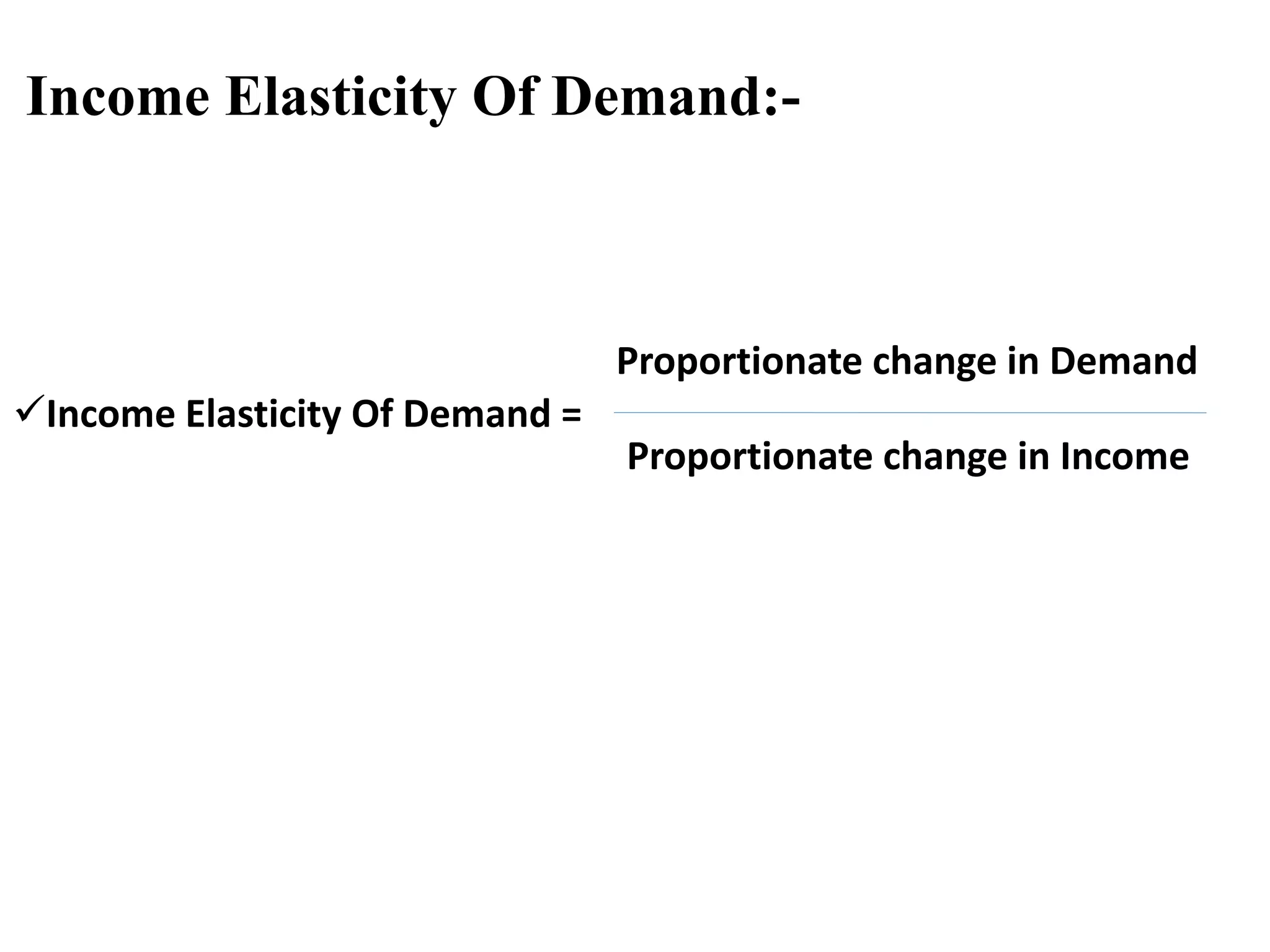
Income Elasticity Of Demand:-
Income Elasticity Of Demand =
Proportionate change in Demand
Proportionate change in Income
Types Of Income Elasticity Of Demand
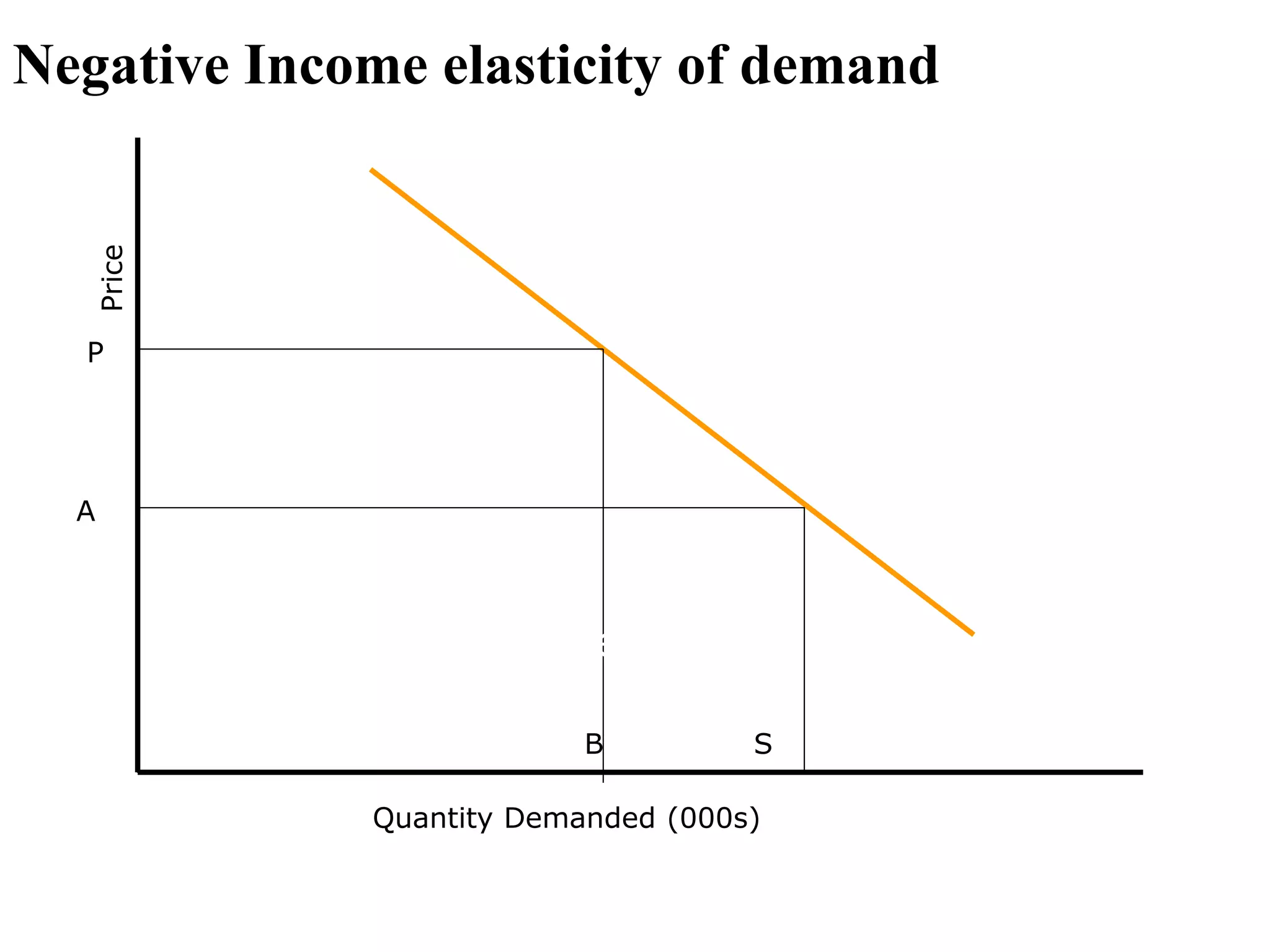
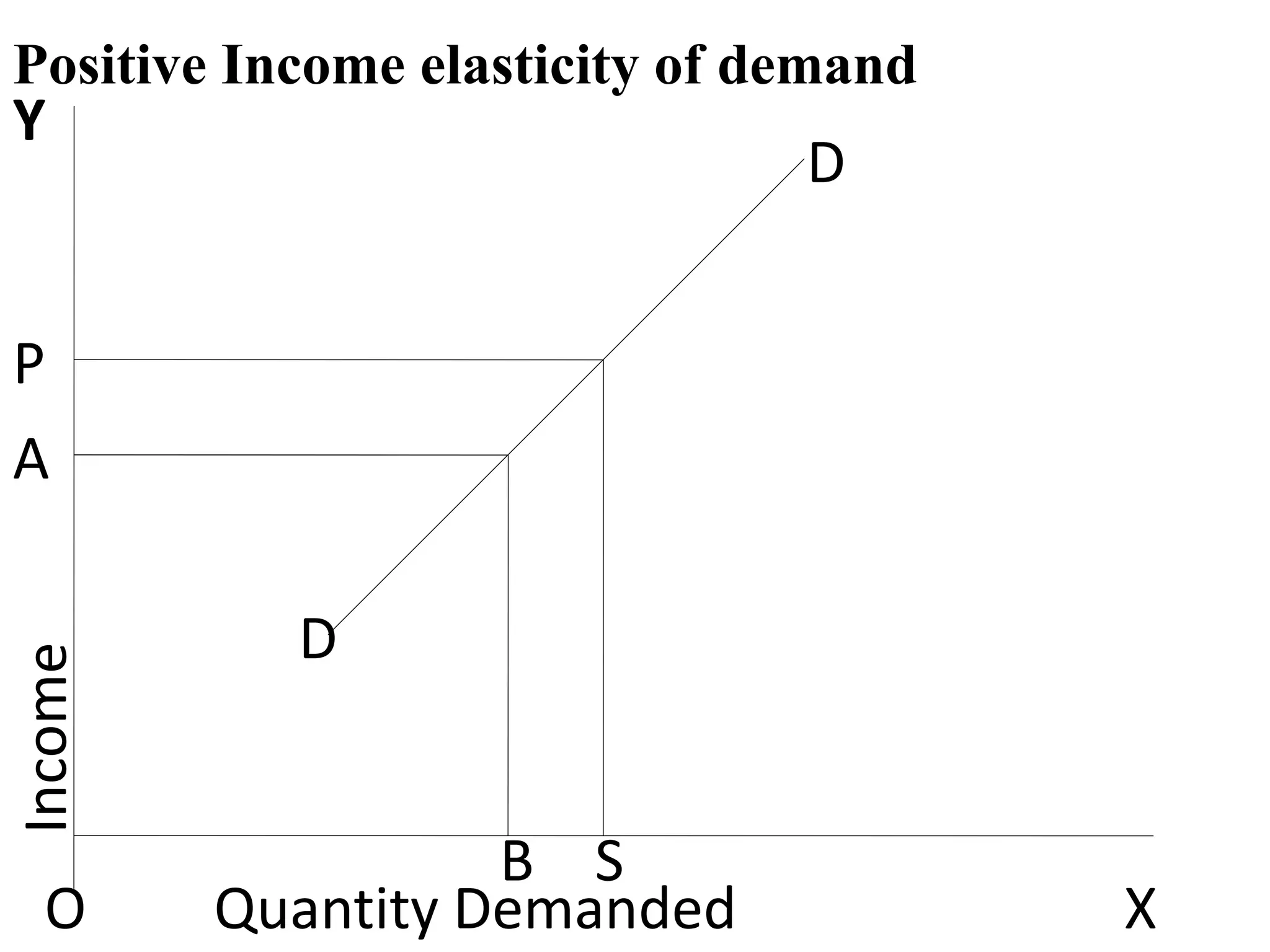
•Positive Income elasticity of demand
•Negative Income elasticity of demand
•Zero Income elasticity of demand
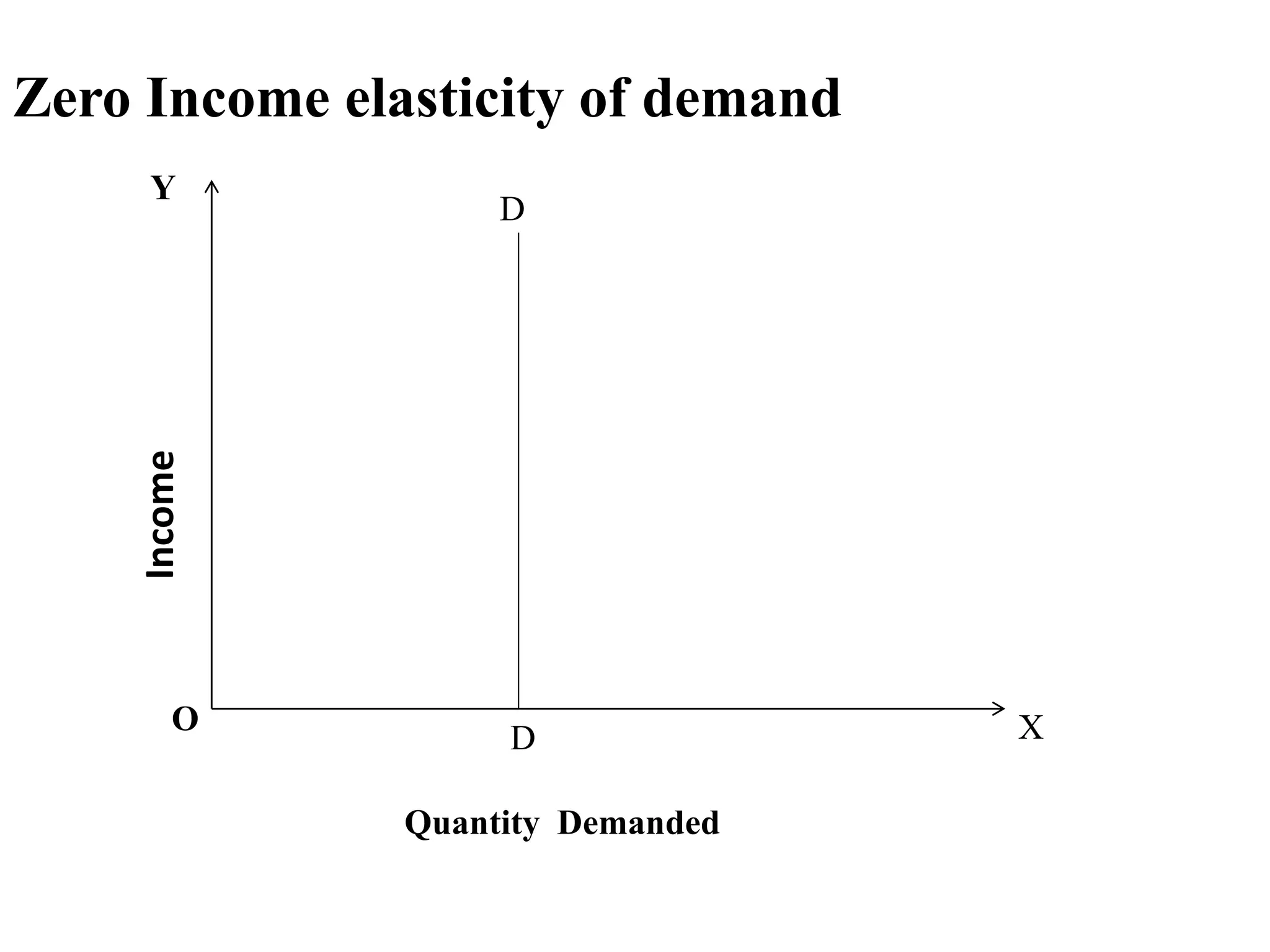
Zero Income elasticity of demand
Y
X
O
D
D
Quantity Demanded
Income
Negative Income elasticity of demand
Price
P
B
A
S
Total Revenue
Quantity Demanded (000s)
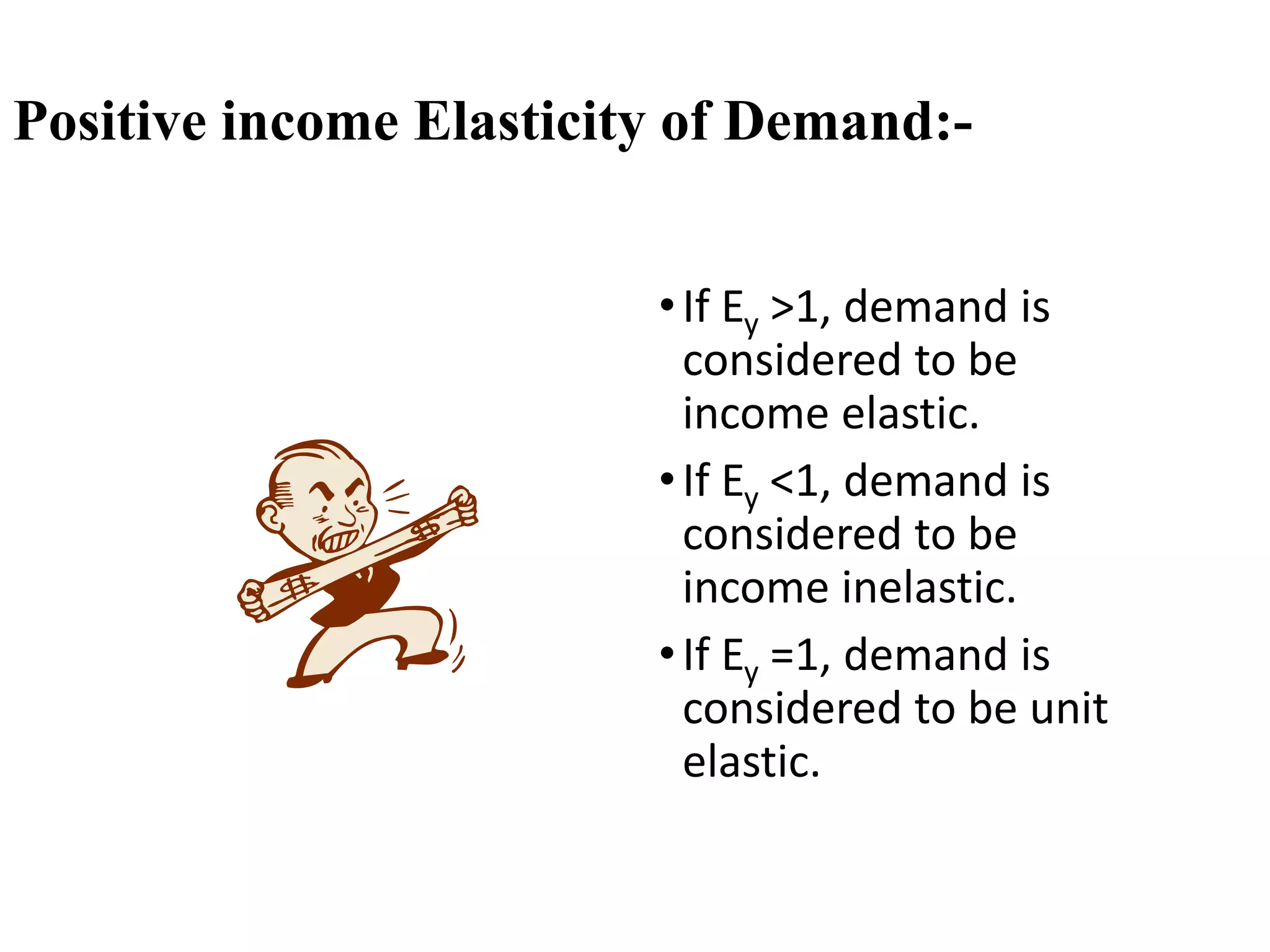
Positive income Elasticity of Demand:-
•If Ey >1, demand is
considered to be
income elastic.
•If Ey <1, demand is
considered to be
income inelastic.
•If Ey =1, demand is
considered to be unit
elastic.
Positive Income elasticity of demand
Y
P
A
D
D
B S
O X
Quantity Demanded
Income
EEM 3.pptx

EEM 3.pptx

  • 1.
    PRESENTATION OUTLINE: Elasticity ofDemand Price Elasticity of Demand •Types of PED Determinants of PED Income Elasticity of Demand •Types of IED
  • 2.
    Concepts Of ElasticityOf Demand:- Two Variables are considered while measuring the elasticity of demand :-  Demand  Determinants Of Demand Elasticity Of Demand = percentage change in quantity demanded percentage change in determinant of demand
  • 3.
    Types Of ElasticityOf Demand: Demand Price Elasticity Cross Price Elasticity Income Elasticity
  • 4.
    Price Elasticity ofDemand:- • The price elasticity of demand is computed as the percentage change in the quantity demanded divided by the percentage change in price. Price elasticity of demand = Percentage change in quantity demanded Percentage change in price
  • 5.
    Computing the PriceElasticity of Demand • Example: If the price of an ice cream cone increases from Rs2.00 to Rs2.20 and the amount you buy falls from 10 to 8 cones, then your elasticity of demand would be calculated as ( ) ( . . ) . 10 8 10 100 2 20 2 00 2 00 100 20% 10% 2      
  • 6.
    Types Of PriceElasticity:- Price Elasticity Perfectly Elastic Perfectly Inelastic Relatively Elastic Relatively Inelastic Unitary Elastic
  • 7.
    Perfectly elastic demand P R I C E y 0x Perfectly elastic demand curve D D When the demand for a product changes –increases or decreases even when there is no change in price, it is known as perfect elastic demand.
  • 8.
    Perfectly inelastic demand demand D D Perfectlyinelastic demand curve 0 Y X P R I C E When a change in price, howsoever large, change no changes in quality demand, it is known as perfectly inelastic demand
  • 9.
    Relatively elastic demand Relativelyelastic demand curve P R I C E demand 0 x y D D When the proportionate change in demand is more than the proportionate changes in price, it is known as relatively elastic demand.
  • 10.
    Relatively inelastic demand Relativelyinelastic demand curve X O Y demand D D P R I C E When the proportionate change in demand is less than the proportionate changes in price, it is known as relatively inelastic demand
  • 11.
    Elasticity of demandequal to utility Elasticity of demand equal to utility curve y x 0 demand P R I C E D D When the proportionate change in demand is equal to proportionate changes in price, it is known as unitary elastic demand
  • 12.
    Determinants of PriceElasticity on Demand •Number of Substitutes: The more substitutes for a good, the higher the price elasticity of demand; the fewer substitutes for a good, the lower the price elasticity of demand. The more broadly defined the good, the fewer the substitutes; the more narrowly defined the good, the greater the substitutes. •Necessities Versus Luxuries: The more that a good is considered a luxury rather than a necessity, the higher the price elasticity of demand.
  • 13.
    Determinants of PriceElasticity on Demand •Percentage of One’s Budget Spent on the Good: The greater the percentage of one’s budget that goes to purchase a good, the higher the price elasticity of demand; the smaller the percentage of one’s budget that goes to purchase a good, the lower the elasticity of demand. •Time: The more time that passes, the higher the price elasticity of demand for the good; the less time that passes, the lower the price elasticity of demand for the good.
  • 14.
    Income Elasticity OfDemand:- Income Elasticity Of Demand = Proportionate change in Demand Proportionate change in Income
  • 15.
    Types Of IncomeElasticity Of Demand •Positive Income elasticity of demand •Negative Income elasticity of demand •Zero Income elasticity of demand
  • 16.
    Zero Income elasticityof demand Y X O D D Quantity Demanded Income
  • 17.
    Negative Income elasticityof demand Price P B A S Total Revenue Quantity Demanded (000s)
  • 18.
    Positive income Elasticityof Demand:- •If Ey >1, demand is considered to be income elastic. •If Ey <1, demand is considered to be income inelastic. •If Ey =1, demand is considered to be unit elastic.
  • 19.
    Positive Income elasticityof demand Y P A D D B S O X Quantity Demanded Income