EDUCATIONAL RESOURCES Education Resources In
Educational Institution
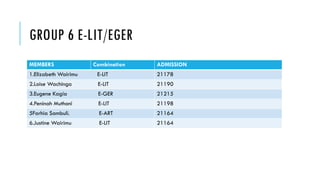
GROUP 6 E-LIT/EGER
MEMBERS Combination ADMISSION
1.Elizabeth Wairimu E-LIT 21178
2.Loise Wachinga E-LIT 21190
3.Eugene Kagia E-GER 21215
4.Peninah Muthoni E-LIT 21198
5Farhia Sambuli. E-ART 21164
6.Justine Wairimu E-LIT 21164
1.0 : RESEARCH & FINDINGS
The group did a research on the school library within Kagumo Teachers Training
College and deduced the following results :
Types of Educational Resources
1.Print Media,
This refers to educational materials in print form.
These include authentic print resources ( non educational materials that can be
adapted to serve educational purposes) for example novels , literature books and
newspapers and specified course books like Mastering Communication by Nicki
Stunton.
2.Audio-Visual/ Digital Resources
These are multimedia resources that were mainly authentic and in some cases ,
specified educational learning computers that were solely used for educational
purposes.
3.Software and Connectivity /Internet Resources
Within the library of Kagumo Teachers Training College (that served as a case
study) ,we observed the presence of a wi-fi network, namely Library Wireless , that
was used to back the digital resources used for research , assessment and other
educational purposes like score evaluation
4. Professional Development
This was noted by the presence of teachers and library guides who kept the library
order and directed people to the resources they searched for by interpreting
catalogues for books and guiding people to computer rooms.
Teeachers were used for referencing in case of ambiguous or complex information
within learning resources
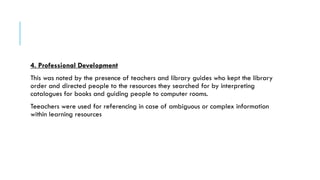
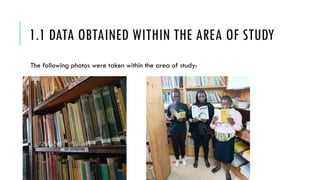
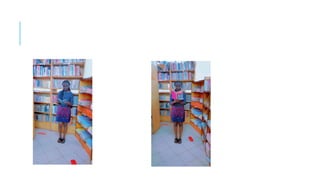
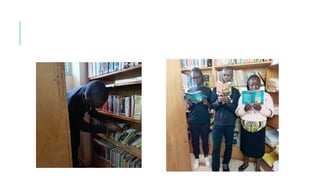
1.1 DATA OBTAINED WITHIN THE AREA OF STUDY
The following photos were taken within the area of study:
1.2 CHALLENGES FACING LEARNING RESOURCES
CASE STUDY
SUBJECT:INDIGENOUS LANGUAGE
STRAND:LISTENING AND SPEAKING
SUB-STRAND:LISTENING FOR INFORMATION
LEARNING EXPERIENCE : To listen to indigenous language texts for information.
Challenge
The challenge faced is that most of the indigenous language books have very little
authentic translations due to heavy influence by portmanteau words and other
derived words from English.
Resolution
It is thus recommended for the learning centre to organize a trip to an ideal resource
person with more cultural knowledge and who understands the language’s original
words.

Educational resources and their many uses

  • 1.
    EDUCATIONAL RESOURCES EducationResources In Educational Institution
  • 2.
    GROUP 6 E-LIT/EGER MEMBERSCombination ADMISSION 1.Elizabeth Wairimu E-LIT 21178 2.Loise Wachinga E-LIT 21190 3.Eugene Kagia E-GER 21215 4.Peninah Muthoni E-LIT 21198 5Farhia Sambuli. E-ART 21164 6.Justine Wairimu E-LIT 21164
  • 3.
    1.0 : RESEARCH& FINDINGS The group did a research on the school library within Kagumo Teachers Training College and deduced the following results : Types of Educational Resources 1.Print Media, This refers to educational materials in print form. These include authentic print resources ( non educational materials that can be adapted to serve educational purposes) for example novels , literature books and newspapers and specified course books like Mastering Communication by Nicki Stunton.
  • 4.
    2.Audio-Visual/ Digital Resources Theseare multimedia resources that were mainly authentic and in some cases , specified educational learning computers that were solely used for educational purposes. 3.Software and Connectivity /Internet Resources Within the library of Kagumo Teachers Training College (that served as a case study) ,we observed the presence of a wi-fi network, namely Library Wireless , that was used to back the digital resources used for research , assessment and other educational purposes like score evaluation
  • 5.
    4. Professional Development Thiswas noted by the presence of teachers and library guides who kept the library order and directed people to the resources they searched for by interpreting catalogues for books and guiding people to computer rooms. Teeachers were used for referencing in case of ambiguous or complex information within learning resources
  • 6.
    1.1 DATA OBTAINEDWITHIN THE AREA OF STUDY The following photos were taken within the area of study:
  • 9.
    1.2 CHALLENGES FACINGLEARNING RESOURCES CASE STUDY SUBJECT:INDIGENOUS LANGUAGE STRAND:LISTENING AND SPEAKING SUB-STRAND:LISTENING FOR INFORMATION LEARNING EXPERIENCE : To listen to indigenous language texts for information.
  • 10.
    Challenge The challenge facedis that most of the indigenous language books have very little authentic translations due to heavy influence by portmanteau words and other derived words from English. Resolution It is thus recommended for the learning centre to organize a trip to an ideal resource person with more cultural knowledge and who understands the language’s original words.