STUDENT LIFE IN INDIA
Population of the United States      310,561,080
 (about 310 million)

 Population of India               1,139,964,932
 (over 1 billion)

Think about how big India is in relation to the U.S.
What happens when there are many people in a small
area of land?

India has the world’s largest child population.

How does this relate to education and school?
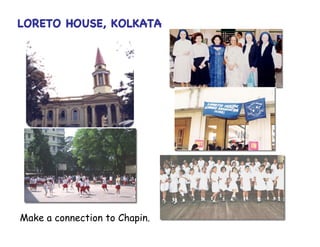
LORETO HOUSE, KOLKATA


Make a connection to Chapin.
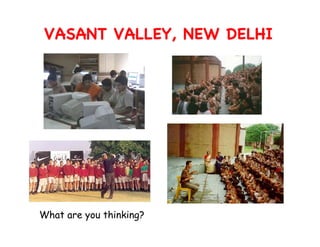
VASANT VALLEY, NEW DELHI


What are you thinking?
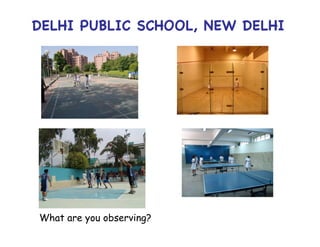
DELHI PUBLIC SCHOOL, NEW DELHI


What are you observing?
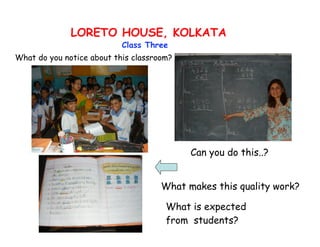
LORETO HOUSE, KOLKATA
                           Class Three
What do you notice about this classroom?


                                           Can you do this..?


                                     What makes this quality work?

                                      What is expected
                                      from students?
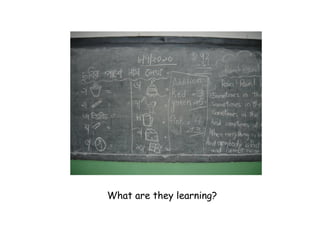
What are they learning?
Reasons why millions of children in India do not go
to school…

• Too often schools in India do not have enough facilities
for every child.

• Some families cannot afford to pay for school supplies.

• For others, the nearest school is just too far away.

• Many children have to work to earn money to help their
families survive. Some children (mostly girls) have to stay
home to look after their younger brothers and sisters.
Schools in India are as different as the students
                 who attend them.


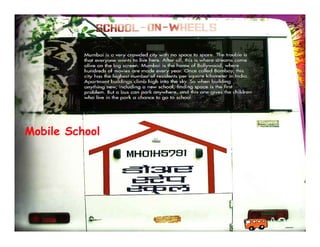
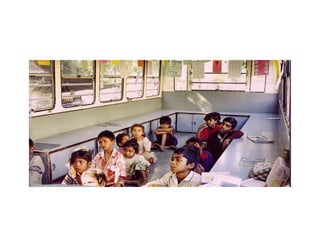
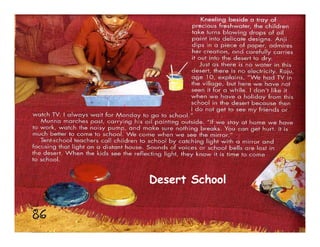
 In India, “school” can be a city classroom, a mountaintop,
 a tent in the desert, a railway platform,
 or even a stationary bus.


 Lessons are taught in just as many different ways.
 Students learn from the environments they live in.
Mobile School
Desert School
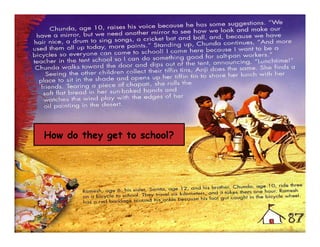
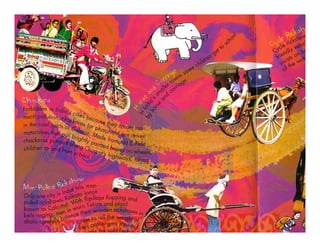
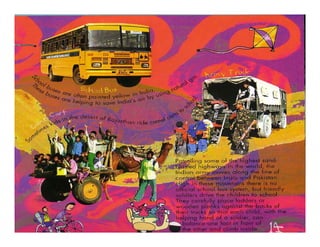
How do they get to school?
Often, Indian children travel great distances
to get to school.

They walk, ride bicycles, travel in groups, sit on each
other’s laps in cycle rickshaws, or travel in buses.


          How do you get to school?

          How far do you travel?
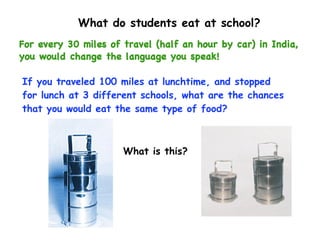
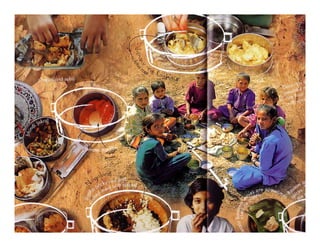
What do students eat at school?
For every 30 miles of travel (half an hour by car) in India,
you would change the language you speak!

If you traveled 100 miles at lunchtime, and stopped
for lunch at 3 different schools, what are the chances
that you would eat the same type of food?


                      What is this?
What did you learn?

         What did you find interesting?

         What questions do you have?


What is one similarity and one difference between school
in India and school in the United States?

Education in india

  • 1.
  • 2.
    Population of theUnited States 310,561,080 (about 310 million) Population of India 1,139,964,932 (over 1 billion) Think about how big India is in relation to the U.S. What happens when there are many people in a small area of land? India has the world’s largest child population. How does this relate to education and school?
  • 3.
    LORETO HOUSE, KOLKATA Makea connection to Chapin.
  • 4.
    VASANT VALLEY, NEWDELHI What are you thinking?
  • 5.
    DELHI PUBLIC SCHOOL,NEW DELHI What are you observing?
  • 6.
    LORETO HOUSE, KOLKATA Class Three What do you notice about this classroom? Can you do this..? What makes this quality work? What is expected from students?
  • 8.
    What are theylearning?
  • 9.
    Reasons why millionsof children in India do not go to school… • Too often schools in India do not have enough facilities for every child. • Some families cannot afford to pay for school supplies. • For others, the nearest school is just too far away. • Many children have to work to earn money to help their families survive. Some children (mostly girls) have to stay home to look after their younger brothers and sisters.
  • 11.
    Schools in Indiaare as different as the students who attend them. In India, “school” can be a city classroom, a mountaintop, a tent in the desert, a railway platform, or even a stationary bus. Lessons are taught in just as many different ways. Students learn from the environments they live in.
  • 13.
  • 15.
  • 16.
    How do theyget to school?
  • 17.
    Often, Indian childrentravel great distances to get to school. They walk, ride bicycles, travel in groups, sit on each other’s laps in cycle rickshaws, or travel in buses. How do you get to school? How far do you travel?
  • 20.
    What do studentseat at school? For every 30 miles of travel (half an hour by car) in India, you would change the language you speak! If you traveled 100 miles at lunchtime, and stopped for lunch at 3 different schools, what are the chances that you would eat the same type of food? What is this?
  • 22.
    What did youlearn? What did you find interesting? What questions do you have? What is one similarity and one difference between school in India and school in the United States?