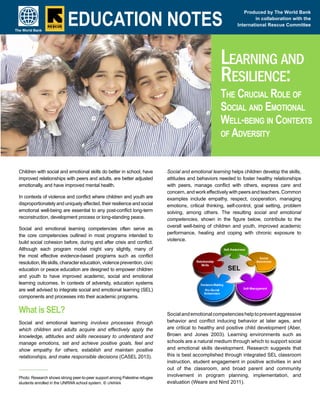
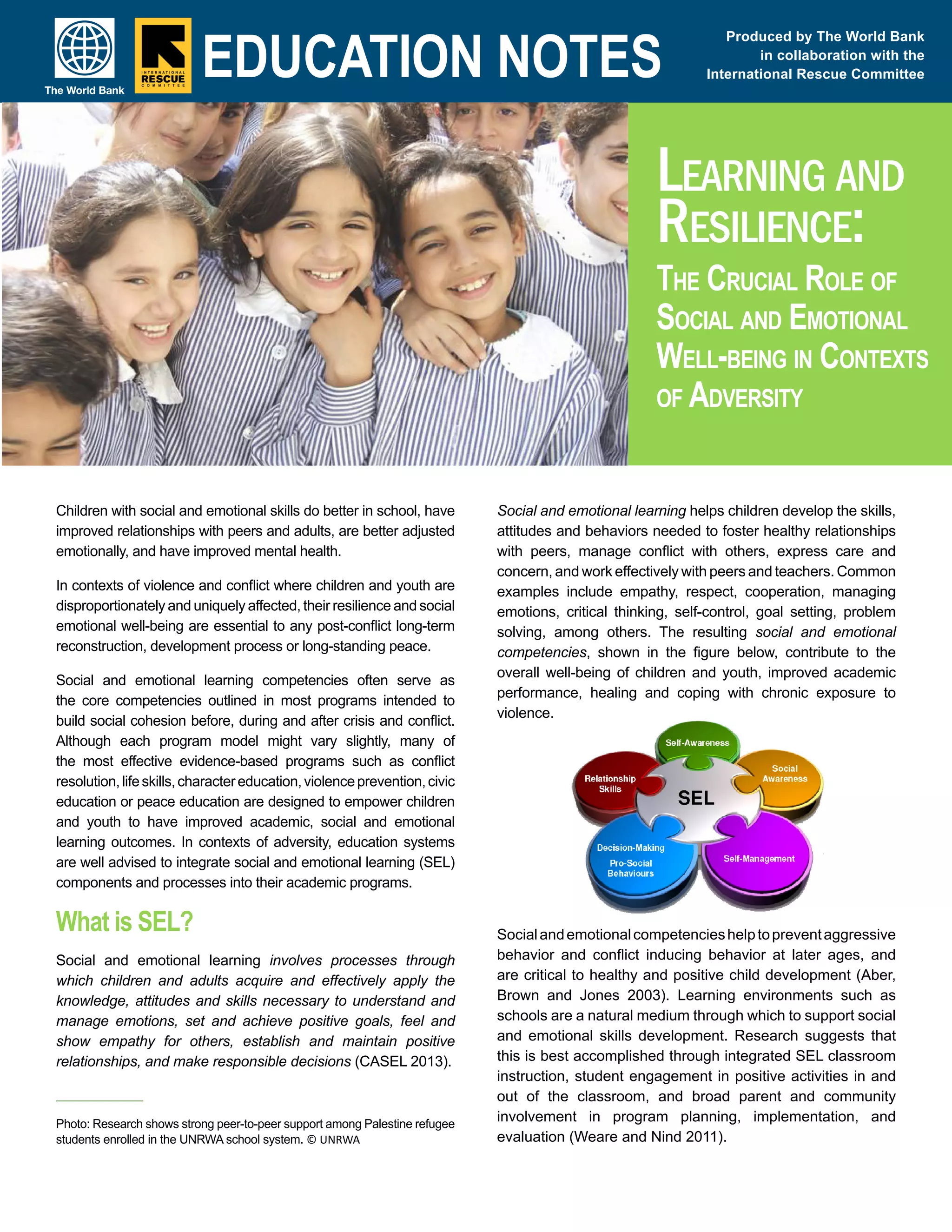
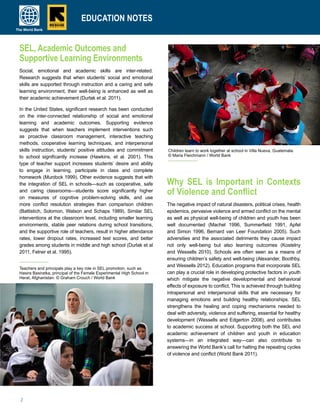
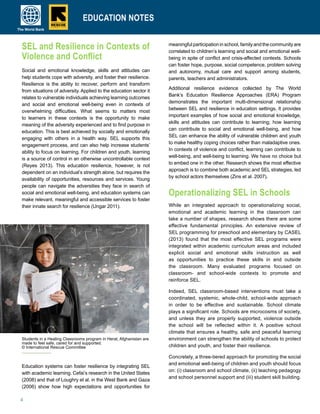
Social and emotional learning (SEL) involves developing skills like self-awareness, relationship skills, and responsible decision-making. The document discusses how SEL benefits children in several ways: it improves school performance, relationships, emotional adjustment, and mental health. SEL is especially important for children in contexts of violence or conflict, as it helps build resilience. Effective SEL programs aim to empower children and promote skills like conflict resolution. Integrating SEL into education can help children cope with adversity and prevent future conflicts. Teachers play a key role in SEL by supporting safe, caring classrooms that foster social and emotional development along with academic learning.


![Solutions%20and%20Interventions%20to%20Improve%20School-Wide%20Behavior[1]](https://cdn.slidesharecdn.com/ss_thumbnails/857fa973-1c55-4a54-af63-d8d88063260a-150727204106-lva1-app6892-thumbnail.jpg?width=640&height=640&fit=bounds)


