America In The BeginningWho were the first Americans?This land bridge is known as __________.Animals like mammoths crossed the bridge or ___________ to the America's. This caused ocean levels to _drop ____  and expose ____land ______.In the Bering straight a __land bridge _______ appeared connecting ____Siberia the _______the Americans ____& _______________30,000 years ago During a period of low temperatures called an __ice age ________The world was covered in _glaciers __ or sheets of ice. How and why did they come here?
America In The BeginningWhat happened when they came to America?The ice age ended _warming___________ up glaciers causing water levels to __rise________ covering up the ___land bridge______ ________.Some animals died off like _______mammoths_____.Living in many different parts of the Americas the Natives needed to adjust or _adapt________ to every thing in the new surrounds that made up each of their own ____environments_________in order to ___survive_______.  How did they meet their new needs?Hunter's in Asia who moved from place to place to find food or __nomads___________ followed the mammoths and spread out or  __migrated_________ to the America's
How did Native Americans adjust to the new environments?America In The BeginningDifferent groups in different environments developed their own beliefs and ways of life or culture.  Groups in the same environments adapted similar life styles, and language creating  cultural region .Many Native American have these things in common.1. Nature has a spirit & believe in many gods.2. No one can own land4. Only use what is needed(no waste)5. trade was important to most societiesLiving in many different parts of the Americas the Natives used the different natural recourses in their own different environments for food, clothing, and shelter. What did they have in common?
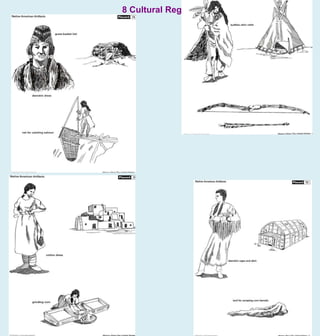
8 Cultural RegionsCaliforniaGreat BasinGreat PlainsSouth EastEastern WoodlandsNorth West CoastPlateauSouth West
8 Cultural Regions
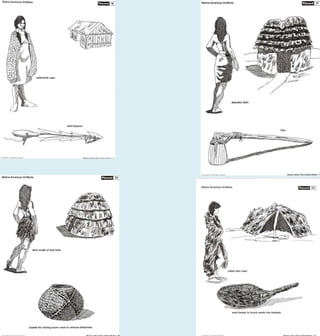
North West CoastWeather:long cold winterscool summersheavy rainfallNatural Resources:ocean/beachesthick forests of fir, spruce, and cedarrugged mountainsseafood/salmondeer, moose, bear, elk, beaver, mountain goatsUsed cedar canoes to huntFenced in salmon laying eggsused cedar to make rope, mats and basketsshell needles used wedges, sledge hammers, drills, and knifes to carve wooden masksClothing:Cedar water proof clothing like capes withdecorative shell buttons Shelter: lived near the coastCedar Long Houses with cedar bark roofs
CaliforniaWeather: rainy wintershot dry summersNatural Resources:ocean/coastfoothillsvalley'sdesertsmountainsacorns, oak treesgrass, and plantsredwood treessalmon/seafood/shellfishdeer, rabbits, ducks, roots berries, pine nuts Used Bows& arrows, snares, and nets, used cooking stones to heat acorn meal tools from antlersClothing: grass/leather aprons and skirtsShelter: Cone shaped made of redwood bark, pole, and reeds woven into mats
Great BasinWeather:little rainhot during the day cold at nightNatural Resources:mostly dessertlow areas surrounded by mountains at the edgeswith valleys that had seasonal lakes and streamsplants that need little water likegrasses, sagebrush, pinon trees, at the outer edges pine trees, and willowsmall animals rabbits, lizards, grasshoppers, snakes sometimes ducks , duck eggs during certain seasons seeds,berries pine nuts, roots, cattailTools: water baskets sealed with tree sapFloating duck decoys, nets, sharp sticks, flat baskets for catching seedsClothing: rabbit robes in winterShelter: Nomadic temporary cone shelters of willow, brush and reeds
PlateauWeather:long cold winterscomfortable summers Natural Resources:mountains with dense forests in areasflatter in the center with drier grass landsriversdriftwood, mud, dirt,grass and sage brushfish, antelope, deer, seedsonions, carrots, camas roots, salmonTools: woven baskets, willow digging sticks, wooden fishing platforms, nets, and spears for salmonClothing: antelope and deer hides leggings, dresses and skirts, woven hats, seed and shell designsShelter: near rivers, partly under ground out of driftwood, mud, sap, and reeds
Great PlainsWeather:cold winters hot summersNatural Resources:mountains surrounding edgestreeless grasslands in the centereast more water and softer soilwest drier dense grassBuffalo and smaller animalsCulture:Tools: bow made of buffalo tendon, arrows, V shaped stone trap, fire, bone knives, shields, Clothing: Buffalo robes and hidesShelter: Houses called tipis
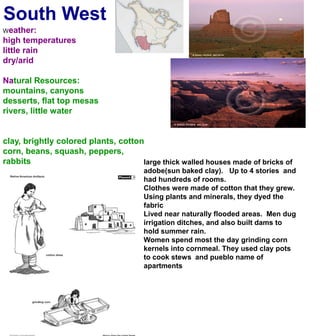
South WestWeather:high temperatureslittle rain dry/aridNatural Resources:mountains, canyonsdesserts, flat top mesasrivers, little waterclay, brightly colored plants, cottoncorn, beans, squash, peppers, rabbitslarge thick walled houses made of bricks of adobe(sun baked clay).   Up to 4 stories  and had hundreds of rooms. Clothes were made of cotton that they grew. Using plants and minerals, they dyed the fabricLived near naturally flooded areas.  Men dug irrigation ditches, and also built dams to hold summer rain. Women spend most the day grinding corn kernels into cornmeal. They used clay pots to cook stews  and pueblo name of apartments
Eastern WoodlandsWeather:snowy winters , rainNatural Resources:rivers, ocean/coastlots of lakes and streamsForests, plants, maple trees, elm,deer, bears, beavers, birds, fishcorn, sunflowers, tobacco, vegetables,nuts, berriessections of the house.Skirts, capes, and moccasins were made out of deer skins.Women ground corn with wooden sticks .Men often paddled on the rivers and streams in log and bark canoes .  They trapped beavers, hunted deer, bear, caught birds, and speared fish.For farming land, men burnt small sections of trees and underbrush. Women did the hoeing and planting. They planted many different types of corn, beans and squash. Made  maple syrup and wooden storage canisters.Long House:  Sturdy, log-framed houses covered with elm bark, about 20 feet wide and over 100 feet long. Several related families live in sections of the house.Skirts, capes, and moccasins were made out of deer skins.Women ground corn with wooden sticks .Men often paddled on the rivers and streams in log and bark canoes .  They trapped beavers, hunted deer, bear, caught birds, and speared fish.For farming land, men burnt small sections of trees and underbrush. Women did the hoeing and planting. They planted many different types of corn, beans and squash. Made  maple syrup and wooden storage canisters.
South EastWeather:long warm humid summersmild wintersNatural Resources:rivers, ocean/coastFertile coastal plainsmountains, swampsTrees, clay, shells, corn, beans, squash, pumpkins, sunflowers, sweet potatoessquirrels, rabbits, turkeys, deer, alligators, turtles,wild rice, persimmons

Edmonda U00a4

  • 1.
    America In TheBeginningWho were the first Americans?This land bridge is known as __________.Animals like mammoths crossed the bridge or ___________ to the America's. This caused ocean levels to _drop ____ and expose ____land ______.In the Bering straight a __land bridge _______ appeared connecting ____Siberia the _______the Americans ____& _______________30,000 years ago During a period of low temperatures called an __ice age ________The world was covered in _glaciers __ or sheets of ice. How and why did they come here?
  • 2.
    America In TheBeginningWhat happened when they came to America?The ice age ended _warming___________ up glaciers causing water levels to __rise________ covering up the ___land bridge______ ________.Some animals died off like _______mammoths_____.Living in many different parts of the Americas the Natives needed to adjust or _adapt________ to every thing in the new surrounds that made up each of their own ____environments_________in order to ___survive_______. How did they meet their new needs?Hunter's in Asia who moved from place to place to find food or __nomads___________ followed the mammoths and spread out or __migrated_________ to the America's
  • 3.
    How did NativeAmericans adjust to the new environments?America In The BeginningDifferent groups in different environments developed their own beliefs and ways of life or culture. Groups in the same environments adapted similar life styles, and language creating cultural region .Many Native American have these things in common.1. Nature has a spirit & believe in many gods.2. No one can own land4. Only use what is needed(no waste)5. trade was important to most societiesLiving in many different parts of the Americas the Natives used the different natural recourses in their own different environments for food, clothing, and shelter. What did they have in common?
  • 4.
    8 Cultural RegionsCaliforniaGreatBasinGreat PlainsSouth EastEastern WoodlandsNorth West CoastPlateauSouth West
  • 5.
  • 7.
    North West CoastWeather:longcold winterscool summersheavy rainfallNatural Resources:ocean/beachesthick forests of fir, spruce, and cedarrugged mountainsseafood/salmondeer, moose, bear, elk, beaver, mountain goatsUsed cedar canoes to huntFenced in salmon laying eggsused cedar to make rope, mats and basketsshell needles used wedges, sledge hammers, drills, and knifes to carve wooden masksClothing:Cedar water proof clothing like capes withdecorative shell buttons Shelter: lived near the coastCedar Long Houses with cedar bark roofs
  • 8.
    CaliforniaWeather: rainy wintershotdry summersNatural Resources:ocean/coastfoothillsvalley'sdesertsmountainsacorns, oak treesgrass, and plantsredwood treessalmon/seafood/shellfishdeer, rabbits, ducks, roots berries, pine nuts Used Bows& arrows, snares, and nets, used cooking stones to heat acorn meal tools from antlersClothing: grass/leather aprons and skirtsShelter: Cone shaped made of redwood bark, pole, and reeds woven into mats
  • 9.
    Great BasinWeather:little rainhotduring the day cold at nightNatural Resources:mostly dessertlow areas surrounded by mountains at the edgeswith valleys that had seasonal lakes and streamsplants that need little water likegrasses, sagebrush, pinon trees, at the outer edges pine trees, and willowsmall animals rabbits, lizards, grasshoppers, snakes sometimes ducks , duck eggs during certain seasons seeds,berries pine nuts, roots, cattailTools: water baskets sealed with tree sapFloating duck decoys, nets, sharp sticks, flat baskets for catching seedsClothing: rabbit robes in winterShelter: Nomadic temporary cone shelters of willow, brush and reeds
  • 10.
    PlateauWeather:long cold winterscomfortablesummers Natural Resources:mountains with dense forests in areasflatter in the center with drier grass landsriversdriftwood, mud, dirt,grass and sage brushfish, antelope, deer, seedsonions, carrots, camas roots, salmonTools: woven baskets, willow digging sticks, wooden fishing platforms, nets, and spears for salmonClothing: antelope and deer hides leggings, dresses and skirts, woven hats, seed and shell designsShelter: near rivers, partly under ground out of driftwood, mud, sap, and reeds
  • 11.
    Great PlainsWeather:cold wintershot summersNatural Resources:mountains surrounding edgestreeless grasslands in the centereast more water and softer soilwest drier dense grassBuffalo and smaller animalsCulture:Tools: bow made of buffalo tendon, arrows, V shaped stone trap, fire, bone knives, shields, Clothing: Buffalo robes and hidesShelter: Houses called tipis
  • 12.
    South WestWeather:high temperatureslittlerain dry/aridNatural Resources:mountains, canyonsdesserts, flat top mesasrivers, little waterclay, brightly colored plants, cottoncorn, beans, squash, peppers, rabbitslarge thick walled houses made of bricks of adobe(sun baked clay). Up to 4 stories and had hundreds of rooms. Clothes were made of cotton that they grew. Using plants and minerals, they dyed the fabricLived near naturally flooded areas. Men dug irrigation ditches, and also built dams to hold summer rain. Women spend most the day grinding corn kernels into cornmeal. They used clay pots to cook stews and pueblo name of apartments
  • 13.
    Eastern WoodlandsWeather:snowy winters, rainNatural Resources:rivers, ocean/coastlots of lakes and streamsForests, plants, maple trees, elm,deer, bears, beavers, birds, fishcorn, sunflowers, tobacco, vegetables,nuts, berriessections of the house.Skirts, capes, and moccasins were made out of deer skins.Women ground corn with wooden sticks .Men often paddled on the rivers and streams in log and bark canoes . They trapped beavers, hunted deer, bear, caught birds, and speared fish.For farming land, men burnt small sections of trees and underbrush. Women did the hoeing and planting. They planted many different types of corn, beans and squash. Made maple syrup and wooden storage canisters.Long House: Sturdy, log-framed houses covered with elm bark, about 20 feet wide and over 100 feet long. Several related families live in sections of the house.Skirts, capes, and moccasins were made out of deer skins.Women ground corn with wooden sticks .Men often paddled on the rivers and streams in log and bark canoes . They trapped beavers, hunted deer, bear, caught birds, and speared fish.For farming land, men burnt small sections of trees and underbrush. Women did the hoeing and planting. They planted many different types of corn, beans and squash. Made maple syrup and wooden storage canisters.
  • 14.
    South EastWeather:long warmhumid summersmild wintersNatural Resources:rivers, ocean/coastFertile coastal plainsmountains, swampsTrees, clay, shells, corn, beans, squash, pumpkins, sunflowers, sweet potatoessquirrels, rabbits, turkeys, deer, alligators, turtles,wild rice, persimmons