ED 633 School Board Presentation Amy Zimmerman
Why Should There Be More Technology Integration in the Classroom?
Key Points Changes in Instruction Throughout History Increased Student Achievement Increased Higher Order Thinking Skills Prepare Students for Post-Secondary School and the Workforce How Do We Get There?
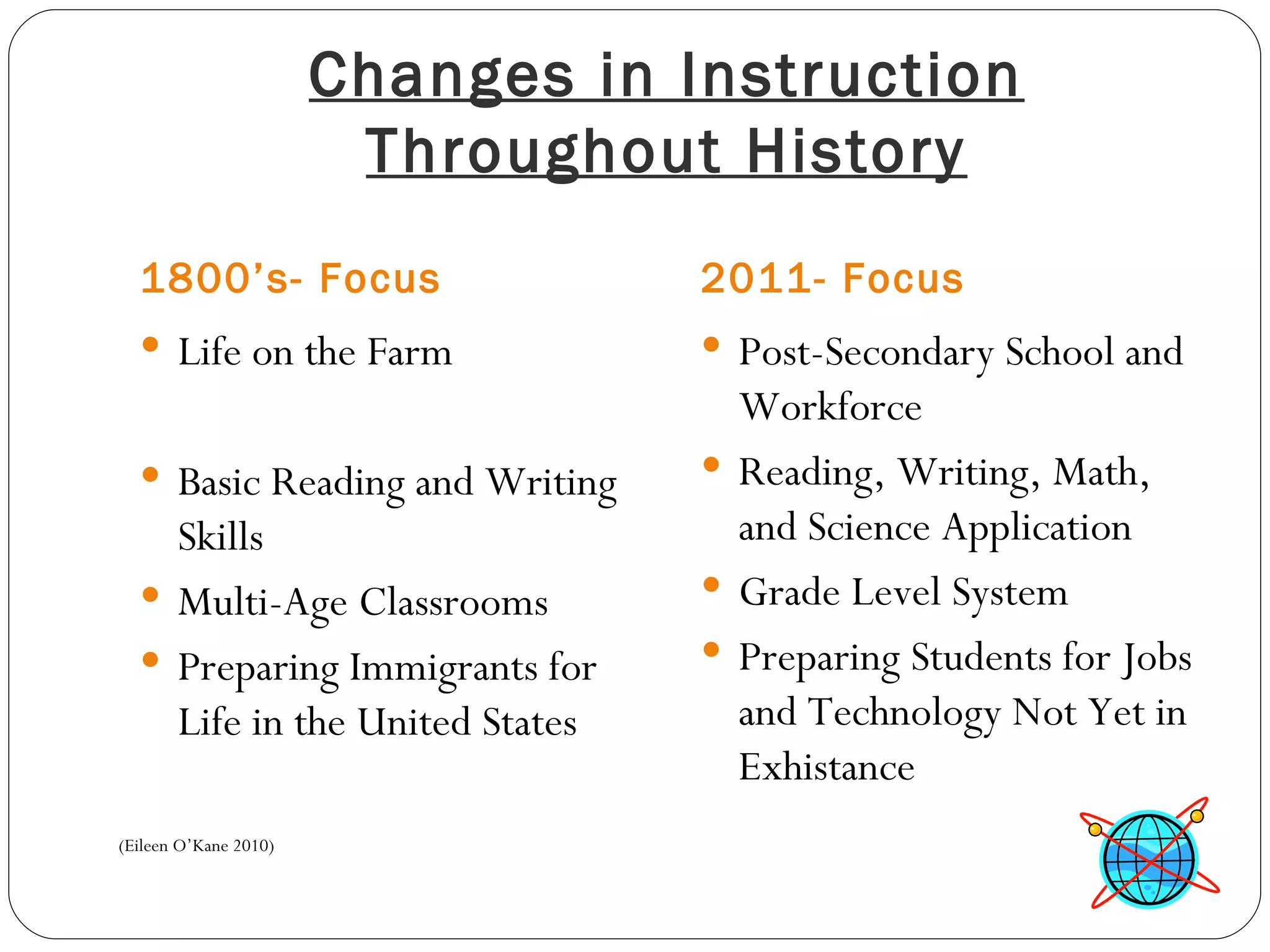
Changes in Instruction Throughout History 1800’s- Focus 2011- Focus Life on the Farm Basic Reading and Writing Skills Multi-Age Classrooms Preparing Immigrants for Life in the United States Post-Secondary School and Workforce Reading, Writing, Math, and Science Application Grade Level System Preparing Students for Jobs and Technology Not Yet in Exhistance (Eileen O’Kane 2010)
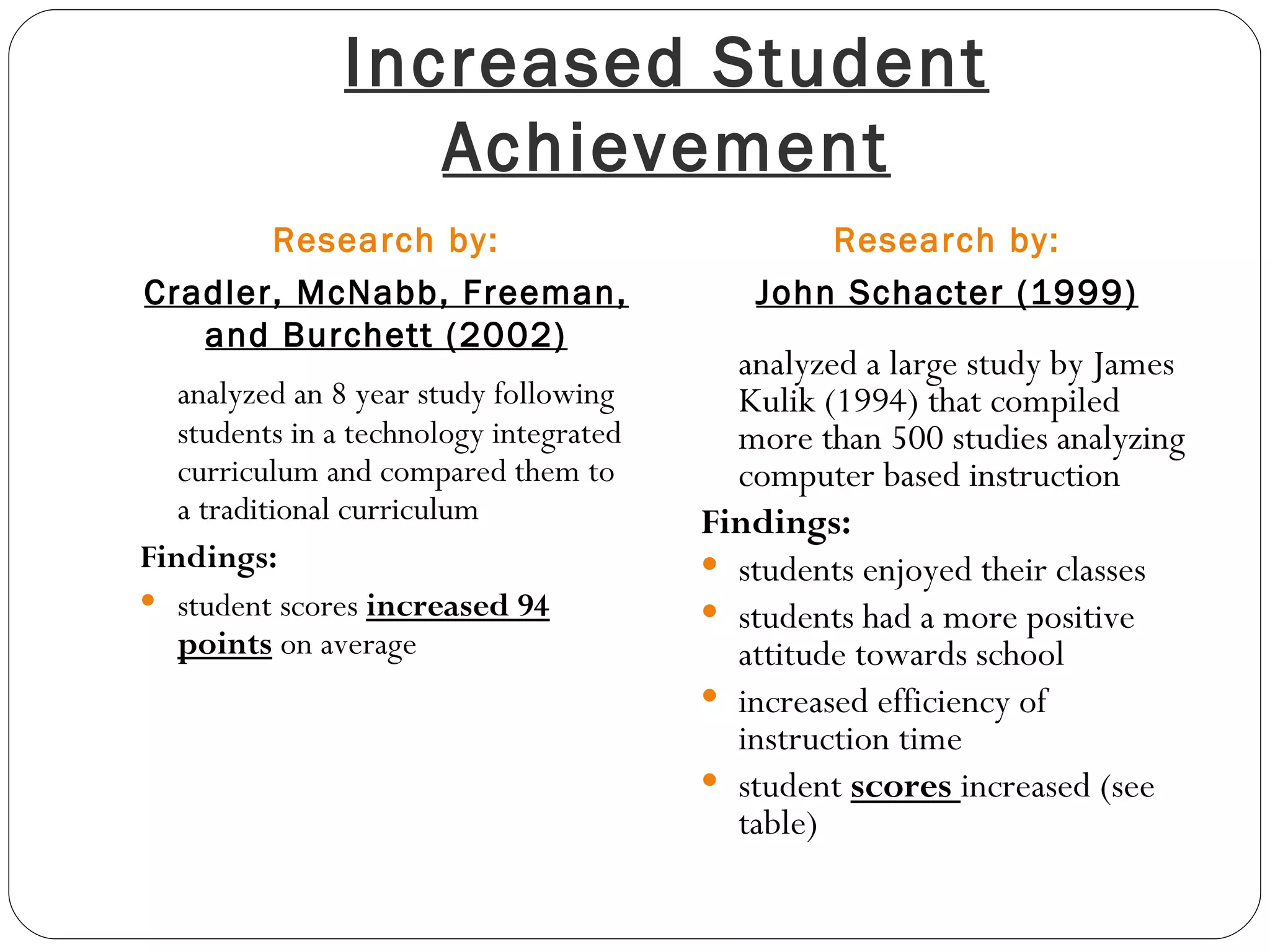
Increased Student Achievement Research by: Cradler, McNabb, Freeman, and Burchett (2002) Research by: John Schacter (1999) analyzed an 8 year study following students in a technology integrated curriculum and compared them to a traditional curriculum Findings: student scores  increased 94 points  on average analyzed a large study by James Kulik (1994) that compiled more than 500 studies analyzing computer based instruction Findings: students enjoyed their classes students had a more positive attitude towards school increased efficiency of instruction time student  scores  increased (see table)
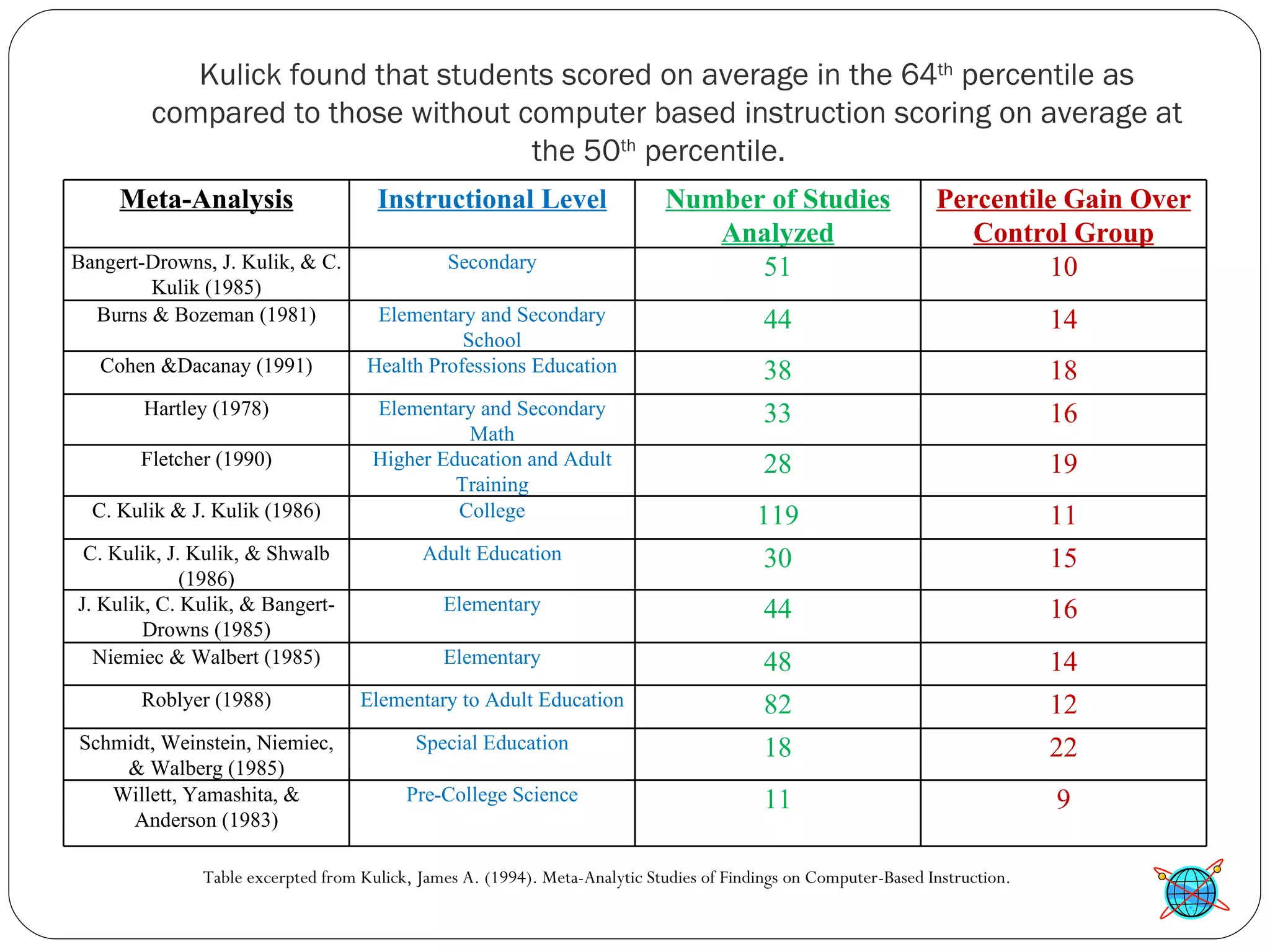
Kulick found that students scored on average in the 64 th  percentile as compared to those without computer based instruction scoring on average at the 50 th  percentile.  Table excerpted from Kulick, James A. (1994). Meta-Analytic Studies of Findings on Computer-Based Instruction. Meta-Analysis Instructional Level Number of Studies Analyzed Percentile Gain Over Control Group Bangert-Drowns, J. Kulik, & C. Kulik (1985) Secondary 51 10 Burns & Bozeman (1981) Elementary and Secondary School 44 14 Cohen &Dacanay (1991) Health Professions Education 38 18 Hartley (1978) Elementary and Secondary Math 33 16 Fletcher (1990) Higher Education and Adult Training 28 19 C. Kulik & J. Kulik (1986) College 119 11 C. Kulik, J. Kulik, & Shwalb (1986) Adult Education 30 15 J. Kulik, C. Kulik, & Bangert-Drowns (1985) Elementary 44 16 Niemiec & Walbert (1985) Elementary 48 14 Roblyer (1988) Elementary to Adult Education 82 12 Schmidt, Weinstein, Niemiec, & Walberg (1985) Special Education 18 22 Willett, Yamashita, & Anderson (1983) Pre-College Science 11 9
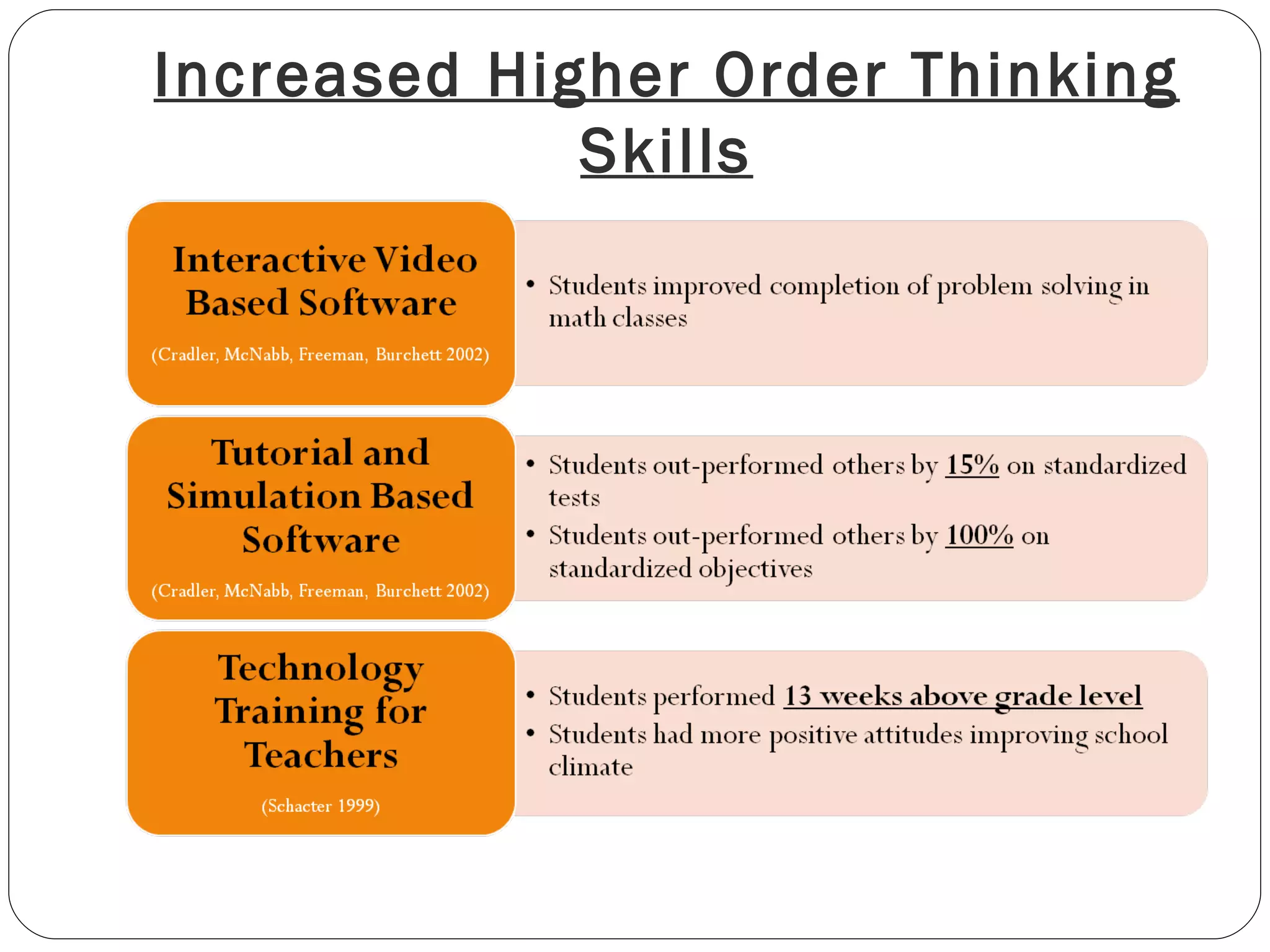
Increased Higher Order Thinking Skills
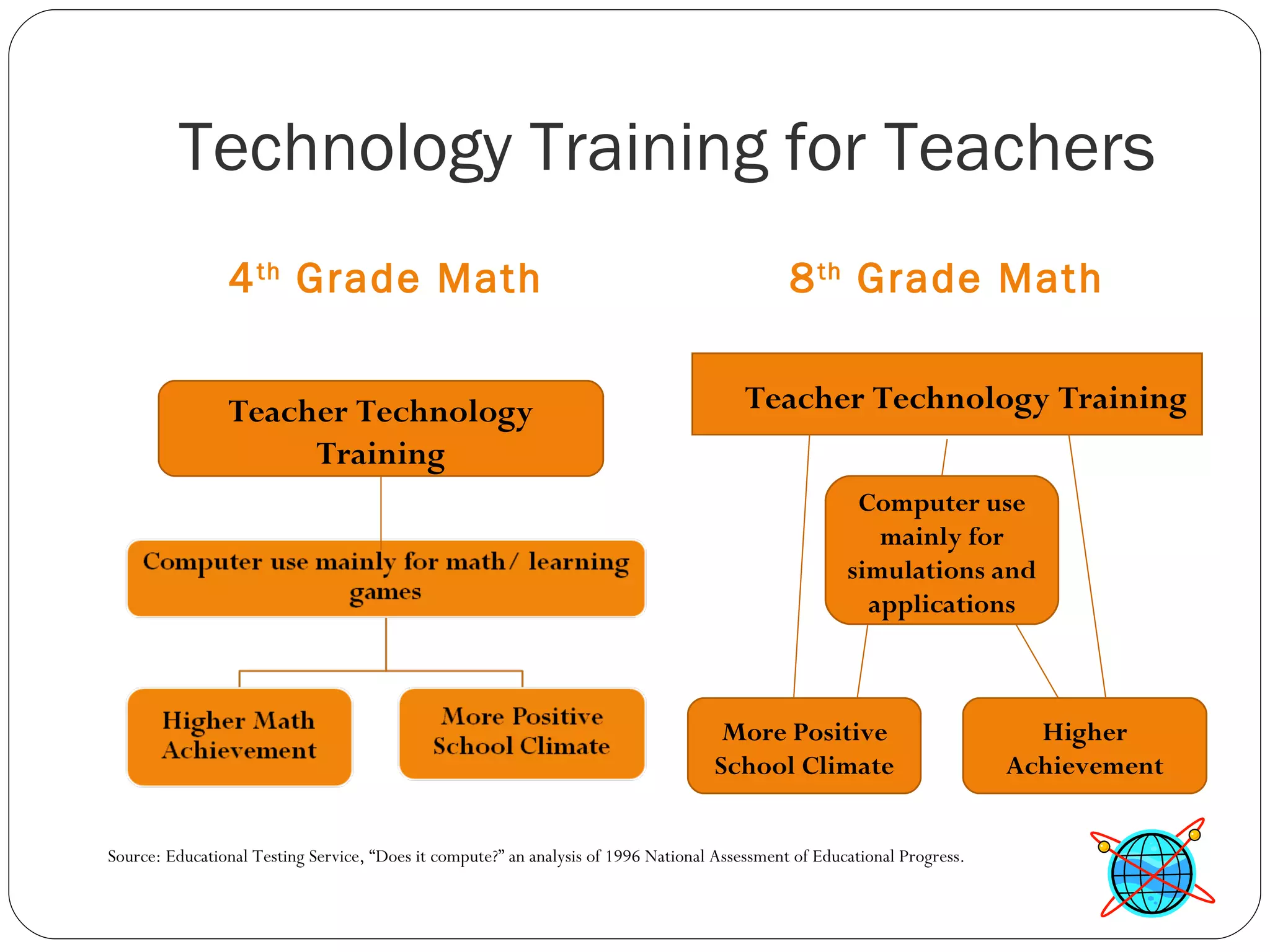
Technology Training for Teachers 4 th  Grade Math 8 th  Grade Math Teacher Technology Training Teacher Technology Training More Positive School Climate Higher Achievement Computer use mainly for simulations and applications Source: Educational Testing Service, “Does it compute?” an analysis of 1996 National Assessment of Educational Progress.
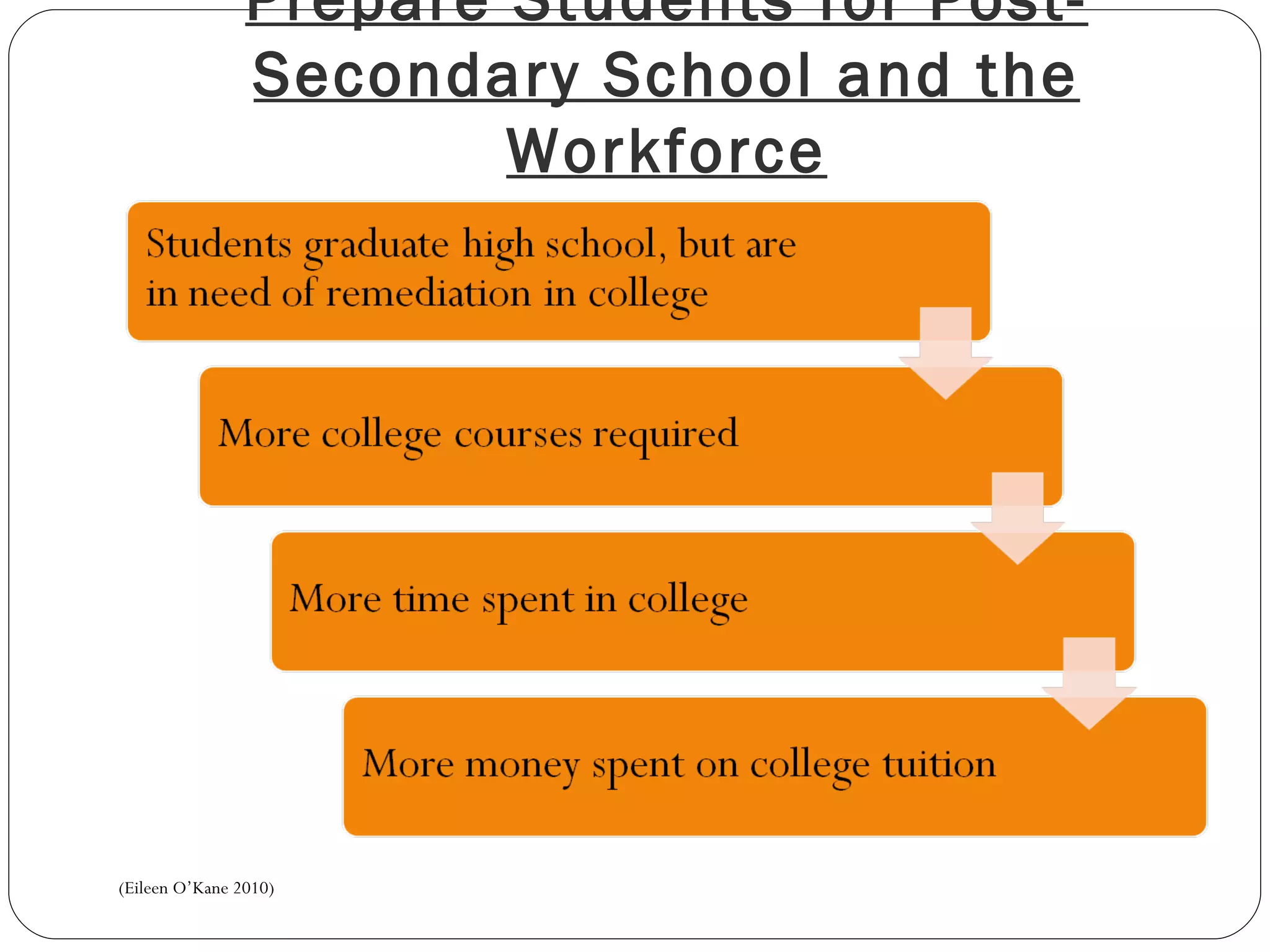
Prepare Students for Post-Secondary School and the Workforce (Eileen O’Kane 2010)
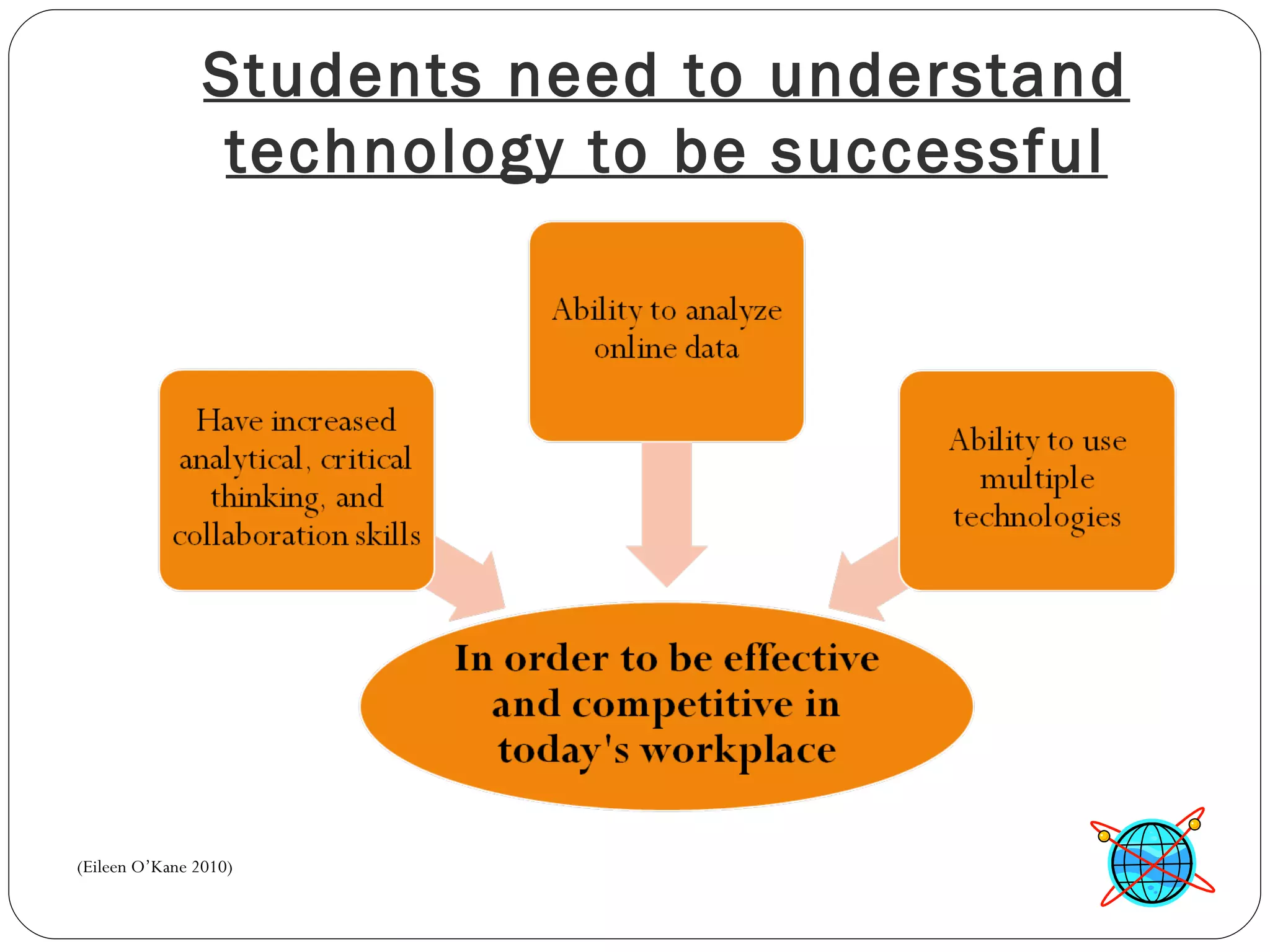
Students need to understand technology to be successful (Eileen O’Kane 2010)
How do we get there? INCREASED  ADMINISTRATION  AND  TEACHER  TRAINING AND STAFF DEVELOPMENT
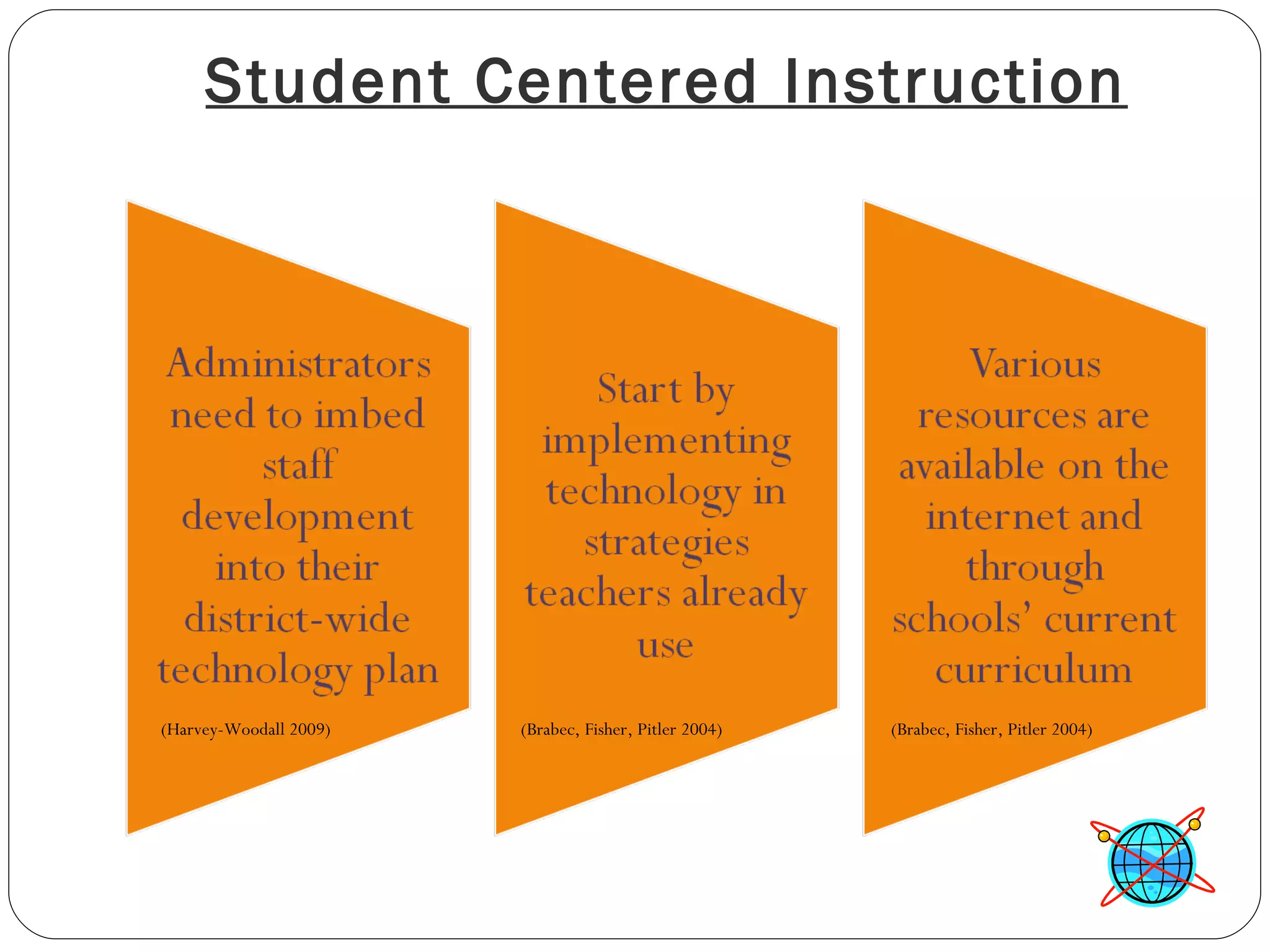
Student Centered Instruction (Harvey-Woodall 2009) (Brabec, Fisher, Pitler 2004)  (Brabec, Fisher, Pitler 2004)

Ed 633 persuasive power point2

  • 1.
    ED 633 SchoolBoard Presentation Amy Zimmerman
  • 2.
    Why Should ThereBe More Technology Integration in the Classroom?
  • 3.
    Key Points Changesin Instruction Throughout History Increased Student Achievement Increased Higher Order Thinking Skills Prepare Students for Post-Secondary School and the Workforce How Do We Get There?
  • 4.
    Changes in InstructionThroughout History 1800’s- Focus 2011- Focus Life on the Farm Basic Reading and Writing Skills Multi-Age Classrooms Preparing Immigrants for Life in the United States Post-Secondary School and Workforce Reading, Writing, Math, and Science Application Grade Level System Preparing Students for Jobs and Technology Not Yet in Exhistance (Eileen O’Kane 2010)
  • 5.
    Increased Student AchievementResearch by: Cradler, McNabb, Freeman, and Burchett (2002) Research by: John Schacter (1999) analyzed an 8 year study following students in a technology integrated curriculum and compared them to a traditional curriculum Findings: student scores increased 94 points on average analyzed a large study by James Kulik (1994) that compiled more than 500 studies analyzing computer based instruction Findings: students enjoyed their classes students had a more positive attitude towards school increased efficiency of instruction time student scores increased (see table)
  • 6.
    Kulick found thatstudents scored on average in the 64 th percentile as compared to those without computer based instruction scoring on average at the 50 th percentile. Table excerpted from Kulick, James A. (1994). Meta-Analytic Studies of Findings on Computer-Based Instruction. Meta-Analysis Instructional Level Number of Studies Analyzed Percentile Gain Over Control Group Bangert-Drowns, J. Kulik, & C. Kulik (1985) Secondary 51 10 Burns & Bozeman (1981) Elementary and Secondary School 44 14 Cohen &Dacanay (1991) Health Professions Education 38 18 Hartley (1978) Elementary and Secondary Math 33 16 Fletcher (1990) Higher Education and Adult Training 28 19 C. Kulik & J. Kulik (1986) College 119 11 C. Kulik, J. Kulik, & Shwalb (1986) Adult Education 30 15 J. Kulik, C. Kulik, & Bangert-Drowns (1985) Elementary 44 16 Niemiec & Walbert (1985) Elementary 48 14 Roblyer (1988) Elementary to Adult Education 82 12 Schmidt, Weinstein, Niemiec, & Walberg (1985) Special Education 18 22 Willett, Yamashita, & Anderson (1983) Pre-College Science 11 9
  • 7.
    Increased Higher OrderThinking Skills
  • 8.
    Technology Training forTeachers 4 th Grade Math 8 th Grade Math Teacher Technology Training Teacher Technology Training More Positive School Climate Higher Achievement Computer use mainly for simulations and applications Source: Educational Testing Service, “Does it compute?” an analysis of 1996 National Assessment of Educational Progress.
  • 9.
    Prepare Students forPost-Secondary School and the Workforce (Eileen O’Kane 2010)
  • 10.
    Students need tounderstand technology to be successful (Eileen O’Kane 2010)
  • 11.
    How do weget there? INCREASED ADMINISTRATION AND TEACHER TRAINING AND STAFF DEVELOPMENT
  • 12.
    Student Centered Instruction(Harvey-Woodall 2009) (Brabec, Fisher, Pitler 2004) (Brabec, Fisher, Pitler 2004)