Wardiere Inc.
ECOCRITICISM
An Earth-Centered Approach to
Literature and Culture
ANILA SHAJI
MA ENGLISH LANGUAGE AnD LITERATURE
24PENG16008
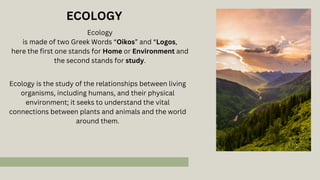
Ecology
is made of two Greek Words “Oikos” and “Logos,
here the first one stands for Home or Environment and
the second stands for study.
Ecology is the study of the relationships between living
organisms, including humans, and their physical
environment; it seeks to understand the vital
connections between plants and animals and the world
around them.
ECOLOGY
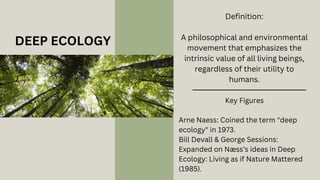
DEEP ECOLOGY
Definition:
A philosophical and environmental
movement that emphasizes the
intrinsic value of all living beings,
regardless of their utility to
humans.
Key Figures
Arne Naess: Coined the term "deep
ecology" in 1973.
Bill Devall & George Sessions:
Expanded on Næss’s ideas in Deep
Ecology: Living as if Nature Mattered
(1985).
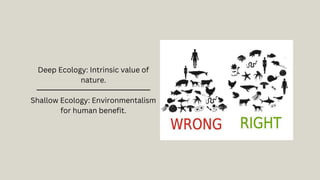
Deep Ecology: Intrinsic value of
nature.
Shallow Ecology: Environmentalism
for human benefit.
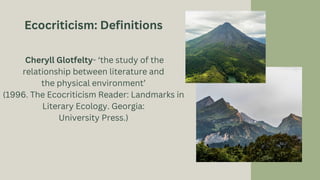
Cheryll Glotfelty- ‘the study of the
relationship between literature and
the physical environment’
(1996. The Ecocriticism Reader: Landmarks in
Literary Ecology. Georgia:
University Press.)
Ecocriticism: Definitions
Greg Garrard (2004):
“Ecocriticism analyzes the cultural and ideological
constructions of nature in literature and media"
Lawrence Buell (1995):
“Ecocriticism examines how
environmental issues, nature, and place
are represented in cultural texts.”
Quote from Silent Spring:
"The question is whether any civilization can wage
relentless war on life without destroying itself, and
without losing the right to be called civilized."
— Rachel Carson, Silent Spring (1962)
The foundation of
‘Ecocriticism’
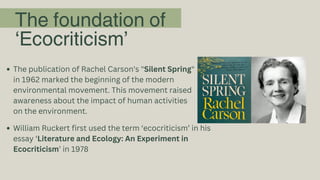
The publication of Rachel Carson's "Silent Spring"
in 1962 marked the beginning of the modern
environmental movement. This movement raised
awareness about the impact of human activities
on the environment.
William Ruckert first used the term ‘ecocriticism’ in his
essay ‘Literature and Ecology: An Experiment in
Ecocriticism’ in 1978
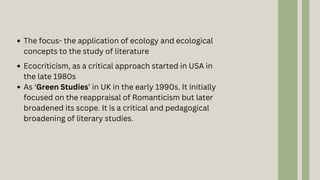
Ecocriticism, as a critical approach started in USA in
the late 1980s
As ‘Green Studies’ in UK in the early 1990s. It initially
focused on the reappraisal of Romanticism but later
broadened its scope. It is a critical and pedagogical
broadening of literary studies.
The focus- the application of ecology and ecological
concepts to the study of literature
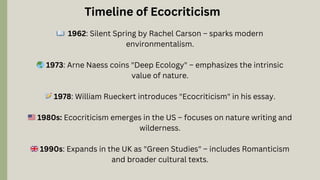
📖 1962: Silent Spring by Rachel Carson – sparks modern
environmentalism.
🌏1973: Arne Naess coins "Deep Ecology" – emphasizes the intrinsic
value of nature.
📝1978: William Rueckert introduces "Ecocriticism" in his essay.
🇺🇸1980s: Ecocriticism emerges in the US – focuses on nature writing and
wilderness.
🇬🇧1990s: Expands in the UK as "Green Studies" – includes Romanticism
and broader cultural texts.
Timeline of Ecocriticism
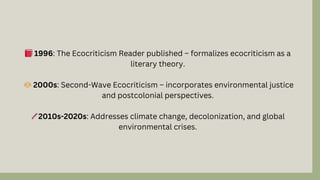
📕1996: The Ecocriticism Reader published – formalizes ecocriticism as a
literary theory.
⚖️2000s: Second-Wave Ecocriticism – incorporates environmental justice
and postcolonial perspectives.
🌡️2010s-2020s: Addresses climate change, decolonization, and global
environmental crises.
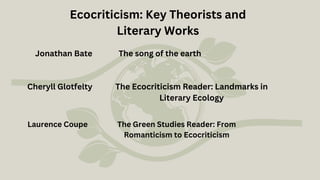
Jonathan Bate The song of the earth
Cheryll Glotfelty The Ecocriticism Reader: Landmarks in
Literary Ecology
The Green Studies Reader: From
Romanticism to Ecocriticism
Laurence Coupe
Ecocriticism: Key Theorists and
Literary Works
Ecocriticism is an earth-centered approach to studying
culture, literature, and human relationships with nature. It
emphasizes:
1. Ecocentric values: Careful observation, shared ethical
responsibility, and considering the natural world beyond
human interests.
2. Interconnectedness: Challenges the idea that everything is
socially or linguistically constructed, focusing instead on the
idea that "everything is connected."
3. Interdisciplinary: Draws from fields like biology, history,
geography, cultural studies, and literature.
4. Regional focus: Includes the study of local environments
and cultures.
Eco Criticism
First-and Second-Wave Ecocriticism
🍃First-wave ecocriticism focuses on nature writing and the
representation of nature,while
⚖️second-wave ecocriticism incorporates more theoretical
and political perspectives, including environmental justice.
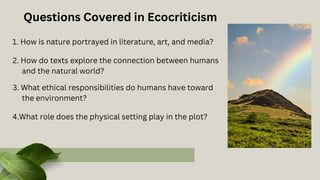
1. How is nature portrayed in literature, art, and media?
2. How do texts explore the connection between humans
and the natural world?
3. What ethical responsibilities do humans have toward
the environment?
Questions Covered in Ecocriticism
4.What role does the physical setting play in the plot?
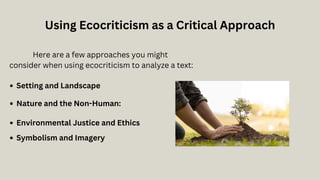
Using Ecocriticism as a Critical Approach
Here are a few approaches you might
consider when using ecocriticism to analyze a text:
Nature and the Non-Human:
Environmental Justice and Ethics
Symbolism and Imagery
Setting and Landscape
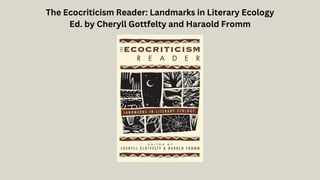
The Ecocriticism Reader: Landmarks in Literary Ecology
Ed. by Cheryll Gottfelty and Haraold Fromm
♀️🌿: Connection between the exploitation of nature and the oppression
of women.
Example: Analysis of The Color Purple by Alice Walker.
🌎🗺️: Impact of colonialism on environments and indigenous cultures.
Example: Analysis of Things Fall Apart by Chinua Achebe
Ecofeminism and Postcolonial Ecocriticism
ThankYou.

ECOCRITICISM_20250309_1306756_000000.pdf

  • 1.
    Wardiere Inc. ECOCRITICISM An Earth-CenteredApproach to Literature and Culture ANILA SHAJI MA ENGLISH LANGUAGE AnD LITERATURE 24PENG16008
  • 2.
    Ecology is made oftwo Greek Words “Oikos” and “Logos, here the first one stands for Home or Environment and the second stands for study. Ecology is the study of the relationships between living organisms, including humans, and their physical environment; it seeks to understand the vital connections between plants and animals and the world around them. ECOLOGY
  • 3.
    DEEP ECOLOGY Definition: A philosophicaland environmental movement that emphasizes the intrinsic value of all living beings, regardless of their utility to humans. Key Figures Arne Naess: Coined the term "deep ecology" in 1973. Bill Devall & George Sessions: Expanded on Næss’s ideas in Deep Ecology: Living as if Nature Mattered (1985).
  • 4.
    Deep Ecology: Intrinsicvalue of nature. Shallow Ecology: Environmentalism for human benefit.
  • 5.
    Cheryll Glotfelty- ‘thestudy of the relationship between literature and the physical environment’ (1996. The Ecocriticism Reader: Landmarks in Literary Ecology. Georgia: University Press.) Ecocriticism: Definitions
  • 6.
    Greg Garrard (2004): “Ecocriticismanalyzes the cultural and ideological constructions of nature in literature and media" Lawrence Buell (1995): “Ecocriticism examines how environmental issues, nature, and place are represented in cultural texts.”
  • 7.
    Quote from SilentSpring: "The question is whether any civilization can wage relentless war on life without destroying itself, and without losing the right to be called civilized." — Rachel Carson, Silent Spring (1962)
  • 8.
    The foundation of ‘Ecocriticism’ Thepublication of Rachel Carson's "Silent Spring" in 1962 marked the beginning of the modern environmental movement. This movement raised awareness about the impact of human activities on the environment. William Ruckert first used the term ‘ecocriticism’ in his essay ‘Literature and Ecology: An Experiment in Ecocriticism’ in 1978
  • 9.
    Ecocriticism, as acritical approach started in USA in the late 1980s As ‘Green Studies’ in UK in the early 1990s. It initially focused on the reappraisal of Romanticism but later broadened its scope. It is a critical and pedagogical broadening of literary studies. The focus- the application of ecology and ecological concepts to the study of literature
  • 10.
    📖 1962: SilentSpring by Rachel Carson – sparks modern environmentalism. 🌏1973: Arne Naess coins "Deep Ecology" – emphasizes the intrinsic value of nature. 📝1978: William Rueckert introduces "Ecocriticism" in his essay. 🇺🇸1980s: Ecocriticism emerges in the US – focuses on nature writing and wilderness. 🇬🇧1990s: Expands in the UK as "Green Studies" – includes Romanticism and broader cultural texts. Timeline of Ecocriticism
  • 11.
    📕1996: The EcocriticismReader published – formalizes ecocriticism as a literary theory. ⚖️2000s: Second-Wave Ecocriticism – incorporates environmental justice and postcolonial perspectives. 🌡️2010s-2020s: Addresses climate change, decolonization, and global environmental crises.
  • 12.
    Jonathan Bate Thesong of the earth Cheryll Glotfelty The Ecocriticism Reader: Landmarks in Literary Ecology The Green Studies Reader: From Romanticism to Ecocriticism Laurence Coupe Ecocriticism: Key Theorists and Literary Works
  • 13.
    Ecocriticism is anearth-centered approach to studying culture, literature, and human relationships with nature. It emphasizes: 1. Ecocentric values: Careful observation, shared ethical responsibility, and considering the natural world beyond human interests. 2. Interconnectedness: Challenges the idea that everything is socially or linguistically constructed, focusing instead on the idea that "everything is connected." 3. Interdisciplinary: Draws from fields like biology, history, geography, cultural studies, and literature. 4. Regional focus: Includes the study of local environments and cultures. Eco Criticism
  • 14.
    First-and Second-Wave Ecocriticism 🍃First-waveecocriticism focuses on nature writing and the representation of nature,while ⚖️second-wave ecocriticism incorporates more theoretical and political perspectives, including environmental justice.
  • 15.
    1. How isnature portrayed in literature, art, and media? 2. How do texts explore the connection between humans and the natural world? 3. What ethical responsibilities do humans have toward the environment? Questions Covered in Ecocriticism 4.What role does the physical setting play in the plot?
  • 16.
    Using Ecocriticism asa Critical Approach Here are a few approaches you might consider when using ecocriticism to analyze a text: Nature and the Non-Human: Environmental Justice and Ethics Symbolism and Imagery Setting and Landscape
  • 17.
    The Ecocriticism Reader:Landmarks in Literary Ecology Ed. by Cheryll Gottfelty and Haraold Fromm
  • 18.
    ♀️🌿: Connection betweenthe exploitation of nature and the oppression of women. Example: Analysis of The Color Purple by Alice Walker. 🌎🗺️: Impact of colonialism on environments and indigenous cultures. Example: Analysis of Things Fall Apart by Chinua Achebe Ecofeminism and Postcolonial Ecocriticism
  • 19.