(eBook PDF) Operations Management 3rd by Alex Hill
(eBook PDF) Operations Management 3rd by Alex Hill
(eBook PDF) Operations Management 3rd by Alex Hill
(eBook PDF) Operations Management 3rd by Alex Hill
(eBook PDF) Operations Management 3rd by Alex Hill
1.
(eBook PDF) OperationsManagement 3rd by Alex Hill
download pdf
https://ebookmass.com/product/ebook-pdf-operations-management-3rd-by-
alex-hill/
Visit ebookmass.com today to download the complete set of
ebook or textbook!
2.
We have selectedsome products that you may be interested in
Click the link to download now or visit ebookmass.com
for more options!.
Essential Operations Management Alex Hill
https://ebookmass.com/product/essential-operations-management-alex-
hill/
eTextbook 978-0134337623 Hotel Operations Management (3rd
Edition)
https://ebookmass.com/product/etextbook-978-0134337623-hotel-
operations-management-3rd-edition/
(eTextbook PDF) for Operations Management: Processes and
Supply Chains 12th Edition by Lee J. Krajewski
https://ebookmass.com/product/etextbook-pdf-for-operations-management-
processes-and-supply-chains-12th-edition-by-lee-j-krajewski/
Operations Management: Sustainability and Supply Chain
Management 11th Edition, (Ebook PDF)
https://ebookmass.com/product/operations-management-sustainability-
and-supply-chain-management-11th-edition-ebook-pdf/
3.
Operations Management 13thEdition
https://ebookmass.com/product/operations-management-13th-edition/
Wicked Throne Alex Hill
https://ebookmass.com/product/wicked-throne-alex-hill/
Analytics and Decision Support in Health Care Operations
Management (Jossey Bass Public Health) 3rd Edition, (Ebook
PDF)
https://ebookmass.com/product/analytics-and-decision-support-in-
health-care-operations-management-jossey-bass-public-health-3rd-
edition-ebook-pdf/
eTextbook 978-0073525259 Operations Management (Operations
and Decision Sciences)
https://ebookmass.com/product/etextbook-978-0073525259-operations-
management-operations-and-decision-sciences/
Transportation Operations Management Darren Prokop
https://ebookmass.com/product/transportation-operations-management-
darren-prokop/
Operations Management Contentsvii
The decision
Reviewing the service and product mix
Service/product life cycles
Service/product portfolio analysis
Designing services and products to meet the needs of different market segments
Developing a specification
The inherent nature of services and products
Developing a specification to reflect the service/product mix
The implications of the non-repeat or repeat nature of a service or product
Techniques for improving design
Standardization
Modular design
Mass customization
Taguchi methods
Quality function deployment and the house of quality
Value engineering and value analysis
Simultaneous engineering
Variety reduction
Designing services and products in practice
Driving business performance
Critical reflections
Study activities
Exploring further
5 Delivering services
Executive overview
Introduction
Factors affecting service delivery system design
Characteristics of service operations
Service/product mix
Intangible nature of services
Simultaneous provision and consumption of services
Time-dependent capacity
Customers as participants in the service delivery system
Customer management
People skills
Effective services are reproducible
Site selection: proximity to the customer and multi-site management
Lack of patents on services
Factors involved in delivering services
The roles of technology and people in service provision
The nature of the services to be delivered
Categorizing services
Complexity of the service
Volumes
Order-winners and qualifiers
Service delivery system – overall design
Service delivery system – detailed design
Phase 1: the point of customer interface: back office or front office?
Phase 2: the delivery system
160
160
161
162
166
166
166
166
169
171
171
171
171
173
173
175
179
181
184
184
185
188
189
195
198
199
199
200
200
201
201
201
202
202
202
202
204
204
204
204
204
206
206
206
207
207
207
209
211
7.
viii
Single-step or multi-stepprocess
IT-based service delivery system designs
E-commerce
Further aspects of service delivery
Customer participation in service delivery
Maximizing the use of skilled staff
Determining the level of server discretion within the delivery system
Service profiling
Procedure
Delivering services in practice
Driving business performance
Critical reflections
Study activities
Exploring further
6 Making products
Executive overview
Introduction
Factors affecting the design of the manufacturing process
Categories of product
Product complexity
Volumes
Types of manufacturing process
Project process
Jobbing process
Batch
Line process
Continuous processing
Designing the manufacturing process
Implications of process design
Hybrid processes
Cells
Linked batch
Nagare production system
Transfer lines
Product profiling
Procedure
The story behind Figure 6.18
Making products in practice
Driving business performance
Critical reflections
Study activities
Exploring further
7 Location and layout
Executive overview
217
221
224
227
230
231
231
235
235
239
239
240
241
242
251
254
255
255
255
256
256
256
257
257
258
259
261
261
269
273
273
279
279
279
280
281
282
284
285
286
287
288
301
304
8.
Operations Management Contentsix
Introduction
Choosing a location
Levels of decision
Choosing the continent or region
Choosing the country
Choosing the area or city
Choosing the site
Background factors influencing location decisions
Factors affecting the choice of continent/region, country and area/city
Factors affecting the choice of site
Impact of site location on potential demand
Site location techniques
Weighted factor method
Centre of gravity method
Choosing a layout
Factors influencing layout
The nature of the core task
Available space
Making space for future expansion and layout changes
Health and safety
Aesthetics
Basic types of layout
Fixed position layout
Process or functional layout
Service or product layout
Hybrid delivery system layouts
Cellular layout
Nagare cellular layout
Transfer line layout
Other layout formats
Flexing process layouts to reflect varying levels of demand
Flexible office layouts
Impact of IT on delivery systems and layouts
Detailed layout design
The features of good layouts
Designing fixed position layouts
Designing process or functional layouts
Load, movement or trip frequency charts
Relationship charts
Designing service or product layouts
Hybrid layouts
Queuing and waiting line analysis
Location and layout in practice
Driving business performance
Critical reflections
Study activities
Exploring further
306
306
307
307
308
308
308
308
309
311
313
315
316
316
320
320
320
320
320
321
321
321
323
324
329
330
330
332
332
332
333
333
334
335
335
337
337
338
339
340
341
342
343
344
345
346
348
9.
Part three –Managing operations
8 Managing capacity
Executive overview
Introduction
An overview of managing capacity
Defining and measuring capacity
Defining capacity
Measuring capacity
Overall measurement
Using output to measure capacity
Measuring capacity in practice
Using utilization and efficiency data to manage capacity
Utilization
Efficiency
Factors affecting capacity management
Make-or-buy decisions
How do service delivery systems and manufacturing process designs affect capacity?
Customers as a source of capacity
The perishable nature of service capacity
Back office vs. front office
Ensuring adequate capacity at each stage of a delivery system
Flexibility
Skills and mix
The impact of different delivery systems
Service delivery systems
Manufacturing processes
Determining the level of capacity
Demand-related issues
Capacity-related issues
Planning and managing capacity
Resource planning
General issues
Competition
Developing countries
Technology
Amount of capacity
Forecasting demand for services and products
Operations issues in forecasting
The choice of forecasting method
Make vs. buy
Size of operations units
Timing of capacity
Proactive strategy
Reactive strategy
Combination strategy
Strategic positioning
Location
353
353
356
357
357
358
358
359
360
361
361
369
369
369
370
370
371
371
371
372
372
372
372
372
375
375
378
378
379
380
381
382
382
383
383
383
383
384
384
384
384
385
385
385
387
387
387
x
10.
Operations Management Contentsxi
Medium-term capacity planning
Steps in medium-term capacity planning
Achieving the medium-term capacity plan
Types of capacity plan
Level capacity plans
Chase demand capacity plans
Mixed capacity plans
Managing demand and capacity
Managing demand
Managing capacity
Managing capacity in practice
Driving business performance
Critical reflections
Study activities
Exploring further
9 Scheduling and executing operations
Executive overview
Introduction
What is operations scheduling?
The role of scheduling in managing operations
Operations scheduling systems
Bar charts
Scheduling systems for complex services or products
Network analysis
Scheduling systems for repeat services or products
Material requirements planning
The master schedule
Service/product structure records
Inventory status records
Manufacturing resource planning
Enterprise resource planning
Software characteristics
Just-in-time control system
Physical changes
Staff involvement
Control system changes
Lean – a philosophy of operations management
Asset emphasis: inventory versus process
Improvement through exposing problems
Incorporating indirect activities into the remit of direct staff
Eliminating waste
Set-up reduction
Optimized production technology
Theory of constraints
Scheduling and executing operations in practice
Driving business performance
387
388
388
390
390
391
392
392
392
394
398
399
400
402
403
407
410
411
411
412
413
416
420
420
425
425
426
428
429
432
432
433
436
440
442
442
444
444
445
445
446
446
446
447
448
449
11.
xii
Critical reflections
Study activities
Exploringfurther
10 Managing inventory
Executive overview
Introduction
What is inventory?
The role of inventory
Types of inventory
Functions of inventory
Corporate inventory
Operations inventory in manufacturing processes
Operations inventory in service delivery systems
Managing and controlling inventory – general issues
Inventory and its impact on profit levels
Inventory cost structures
Corporate issues
Models and approaches to managing inventory
The independent/dependent demand principle
Pareto analysis
Economic order quantity and economic batch quantity/economic lot size
Determining the reorder level
Key inventory decisions – what to stock and when to order
Deciding which items to hold in stock
Deciding how much inventory to hold, and how much and when to order materials
Approaches to managing inventory
Inventory control systems and analysis
Inventory control systems
Corporate inventory control
Operations inventory control
Inventory analysis
Causal analysis
Managing inventory in practice
Driving business performance
Critical reflections
Study activities
Exploring further
11 Managing quality
Executive overview
Introduction
What is quality and why is it important?
Quality philosophies: the work of Deming, Juran and Crosby
W. Edwards Deming
Joseph M. Juran
Philip B. Crosby
450
452
453
457
460
461
461
462
463
463
466
467
470
471
472
472
473
473
473
476
478
479
480
480
481
483
487
487
487
487
489
491
493
494
495
497
499
507
510
512
512
513
517
518
520
12.
Operations Management Contentsxiii
The steps to effectively managing quality
Tools and techniques
Checklists
Sampling
Process mapping
Pareto analysis
Scatter diagrams
Cause and effect diagrams
Gap analysis
Breakthrough projects
Control charts
Statistical process control
Six-sigma quality
Tools and techniques in practice
Managing the supply chain
Proactively managing bought-out service and product quality
Reactively managing bought-out service and product quality
Delivering services and products
Approaches to managing quality
Total quality management philosophy
Quality management frameworks: ISO 9000, Baldrige Award and EFQM Excellence Award
Managing quality in practice
Driving business performance
Critical reflections
Study activities
Exploring further
12 Managing the supply chain
Executive overview
Introduction
What is a supply chain?
Designing the supply chain
Deciding whether to make or buy
Deciding how much to make or buy
Advantages and disadvantages of make or buy
Reasons for making inappropriate make-or-buy decisions
Managing supply chains
Types of supplier relationship
Corporate social responsibility
Digital supply
Developing supply chains
Stages of development
Tools and techniques for developing supply chains
The benefits of improving supply chains
Managing supply chains in practice
Driving business performance
Critical reflections
521
525
528
529
532
533
534
535
536
537
538
539
539
540
540
541
541
542
543
543
546
549
550
551
554
557
567
569
571
571
572
573
576
578
588
591
593
595
595
598
598
602
617
621
622
623
13.
xiv
Study activities
Exploring further
Partfour – Improving operations
13 Analyzing operations
Executive overview
Introduction
Why analyze operations?
How to analyze operations
Understanding the business context
Stakeholder requirements
Corporate objectives
Business health check
Analyzing markets
Identify current and future markets
Identify executive opinion of current and future order-winners and qualifiers
Test executive opinion with data
Analyzing market support
Analyzing cash holdings
Review current assets
Review fixed assets
Analyzing operating costs
Analyzing operations in practice
Driving business performance
Critical reflections
Exploring further
14 Improving operations
Executive overview
Introduction
Why improve operations?
Releasing cash
Improving market support
Reducing costs
Process of improving operations
1. Plan
2. Do
3. Check
4. Review
Approach to improving operations
Passive incremental
Proactive incremental
Passive breakthrough
Proactive breakthrough
628
628
637
637
639
641
641
641
643
644
644
645
651
651
654
655
660
664
665
666
666
668
669
671
675
677
679
681
681
681
682
687
687
687
691
691
691
691
695
697
697
697
14.
Operations Management Contentsxv
Improvement tools and techniques
Benchmarking
Mapping the customer journey
Mapping processes
Identifying causes of problems
Generating improvement ideas
Reengineering business processes
Making improvements
Involving employees
Involving suppliers
Involving customers
Improving operations in practice
Driving business performance
Critical reflections
Study activities
Exploring further
15 Corporate social responsibility
Executive overview
Introduction
What is CSR?
Meeting the needs of stakeholders
The ethical consumer
Employee expectations
Suppliers
Developing social and environmental initiatives
Designing services and products
Delivering services and products
Managing capacity
Managing inventory
Managing quality
Managing the supply chain
Implementing social and environmental initiatives
The benefits of social and environmental initiatives
Criticisms of social and environmental initiatives
Corporate social responsibility in practice
Driving business performance
Critical reflections
Study activities
Exploring further
Index
700
700
702
703
705
705
707
709
712
714
714
720
721
722
724
725
733
735
737
737
739
739
746
746
746
746
750
750
750
750
750
750
753
754
757
758
759
761
762
769
15.
Visit https://ebookmass.com todayto explore
a vast collection of ebooks across various
genres, available in popular formats like
PDF, EPUB, and MOBI, fully compatible with
all devices. Enjoy a seamless reading
experience and effortlessly download high-
quality materials in just a few simple steps.
Plus, don’t miss out on exciting offers that
let you access a wealth of knowledge at the
best prices!
16.
xvi
Service Product Location
1.1Operations management tasks at Portioli sandwich and coffee bar UK
1.2 A cup of coffee – product or service? –
1.3 Operations – a key role in the retail chain UK
End of chapter case: Southwest Airlines USA
2.1 Comparing success at Kmart and Walmart USA
2.2 Price leadership strategies at Aldi and Ikea Europe
2.3 Operations developments at Benetton Global
2.4 Restructuring within the healthcare industry USA
2.5 Customer segmentation in the electricity industry UK
End of chapter case: Apple Global
3.1 Introducing work teams at San Diego Zoo USA
3.2 Opportunities for involvement at Unipart UK
End of chapter case: Lloyds Banking Group Global
4.1 Product design at Asahi Breweries Asia
4.2 R&D expenditure at Microsoft Global
4.3 Product R&D at Microsoft Global
4.4 Design and development at GlaxoSmithKline (GSK) Global
4.5 Product design for different market segments at Handels Bank NW Switzerland
4.6 Market segmentation in the hotel industry Global
4.7 Operations techniques –
4.8 Capitalizing through volume at Assa Abloy Global
4.9 Small changes with dramatic effects –
End of chapter case: Dyson Global
5.1 Tipping as a measure of customer service –
5.2 Influencing customer perceptions at the Royal Bank of Canada Canada
5.3 Changing the point of customer interface –
5.4 Service delivery at the Moscow Scientific Institute for eye microsurgery Russia
5.5 Service delivery at a local high-street bank branch UK
5.6 Telephone service delivery at Thomas Cook Group UK
5.7 Telephone banking at HSBC’s First Direct Global
5.8 Providing personal service online at Garden Escape Global
5.9 Self-scanning in supermarkets Global
5.10 Service delivery at Direct Line UK
End of chapter case: British Airways Club World Global
6.1 Old and new car plants USA
6.2 Manufacturing processes at Meindorf GMBH Germany
6.3 Manufacturing in small quantities at Toshiba Asia
End of chapter case: McDonald’s Global
7.1 Growth at Plastic Omnium Global
7.2 HSBC relocates call centre operations Global
7.3 Creating space on passenger jets –
7.4 Functions at a telecommunications company call centre –
7.5 Building communal learning spaces at various North American universities USA
End of chapter case: McDonald’s and McCafé New Zealand
8.1 Increasing restaurant capacity –
8.2 Dell’s customer support USA
8.3 Walmart uses scale to compete in the US food market USA
8.4 Flexible working at BMW Europe
8.5 A job to suit the business and your lifestyle UK
End of chapter case: Minkies Deli UK
9.1 IT systems changes at Dell UK
9.2 JIT system developments at Nissan Global
End of chapter case: Ash Electrics UK
Case studies
6
18
23
33
48
63
64
66
71
86
104
120
134
147
149
150
154
167
168
172
183
186
193
203
214
215
220
222
225
226
228
232
233
244
270
271
276
290
312
314
322
331
336
350
373
374
386
395
396
404
437
439
455
17.
Operations Management Casestudies xvii
Service Product Location
10.1 Some examples of inventory decisions –
10.2 Using causal analysis to reduce inventory levels –
End of chapter case: Dell Global
11.1 The importance of managing quality UK
11.2 Changing the quality offering Global
11.3 Regaining consumer confidence at Coca-Cola and Perrier Global
11.4 On-time passenger flights: improving quality USA
11.5 Nashua: need to have the right tools to do the job USA
11.6 3M: Committing to quality improvement Global
End of chapter case: The Ipswich Hospital NHS Trust UK
12.1 Capital One and Delta: strategic outsourcing decisions USA
12.2 Fender International: creating a positive retail experience Global
12.3 Land Rover: single sourcing policy UK
12.4 Rawlins Industries: the dominance of the cost argument USA
12.5 Chiquita: relocates from Cincinnati to Costa Rica Central America
12.6 Fedex and Kinko join forces to increase delivery speed Global
12.7 Apple’s iTunes: digital supply chain Global
12.8 Reinhold Messner: the direct alpine approach to mountain climbing Italy
12.9 Japanese companies: approach to suppliers Asia
12.10 IT developments at Caterpillar and Gap USA
12.11 Dell: supply chain integration Global
12.12 Strategic partnership developments at Volkswagen, Mercedes-Benz and Skoda Global
12.13 Calyx and Corolla: synchronising the supply chain USA
End of chapter case: Zara Global
14.1 Improving processes: Ritz-Carlton, Steinway & Sons and Massachusetts Global
General Hospital
14.2 Breakthrough vs incremental improvement: Sheffield Council, gold mining, Global
Metro and McDonald’s
14.3 Continuously improving operations: Porsche Germany
14.4 Continuously driving improvement: Microsoft, Volvo and Ricoh Global
14.5 Ford Motors: benchmarking its ‘accounts payable’ department against Mazda Global
14.6 IDEO: rules for brainstorming improvement ideas USA
14.7 Reengineering business processes: Mutual Benefit, Taco Bell, Global
JetBlue and Western Provident Association
14.8 Closed vs open innovation: Apple vs Google Global
14.9 Unipart UK
14.10 Apple’s iPod: using suppliers to reduce lead-times Global
14.11 Using suppliers to developnew products and services: TED and Apple’s App Store Global
14.12 Using customers to improve operations: Wikipedia, Threadless and Starbucks Global
End of chapter case: Harley-Davidson Global
15.1 Herman Miller: changing production processes and working with USA
suppliers to become sustainable
15.2 Apple estimates the complete environmental footprint of its products Global
15.3 Veja: building a social and environmental supply chain France
15.4 Social initiatives: Pfizer and Ernst & Young Global
15.5 Reduced inefficiencies from environmental initiatives: Walmart and UPS Global
15.6 Unilever: increased market access through social initiatives Global
End of chapter case: IBM Corporate Service Corps Global
482
492
500
514
515
526
527
530
545
559
575
580
582
590
592
594
597
603
605
611
614
616
618
631
683
696
698
699
701
708
710
713
715
717
718
719
727
748
749
751
752
755
756
765
18.
xviii
About the authors
ALEXHILL is a Principal Lecturer at the University of Kingston
(UK), an Associate Fellow at the University of Oxford (UK), a
Visiting Professor at the University of Pretoria (South Africa)
and a Visiting Professor at the University of Bordeaux (France).
Prior to moving into university education, he worked extensively
in industry and now researches and consults in a wide range of
service and manufacturing organizations.
TERRY HILL is an Emeritus Fellow at the University of Oxford,
(UK), an Affiliate Professor at the Milan Polytechnic (Italy) and at
the Ohio State University (USA), and a Visiting Professor at the
University of Pretoria (South Africa). He is a leading international
figure in the field of operations management and operations
strategy. Terry spent several years in operations management
and continues to work as a consultant. He has held previous
professorial appointments at London Business School (UK),
and the University of Bath (UK).
19.
Operations Management Prefacexix
Preface
The competitive nature of markets over the last 20 years has re-emphasized the key role
of operations in bringing about the growth and profitability of organizations. Providing
services and products fast, on-time, right first time and at a price that matches or betters
competitors’ are increasingly important factors in most markets. How well operations
is managed to bring these about is a key corporate issue. However, not only does
operations contribute much that enables a company to compete effectively, but it is also
responsible for 60–70 per cent of costs, assets and people. The task of controlling costs
and assets and the continuing need to reduce costs and release cash are equally critical
and essential contributions to the welfare of an organization. Furthermore, the need to
effectively manage and develop people adds yet more substance to the role of managing
the operations function. From a historical bias towards techniques and systems, the
emphasis of what is key in operations has swung to one that stresses and highlights the
effective management of this large business function. This book is designed to contribute
to this on-going focus. It is orientated towards a managerial perspective of operations and
is set within the context of the function’s significant contribution to the overall success of
an organization. Operations has now rightly and appropriately returned to the top of the
corporate agenda and this text has been designed to serve the needs of those who intend
to take on the operations management role and also those whose roles will relate to this
function in a range of businesses. In particular it can be used by:
• Postgraduate, MBA or Executive students, with explanations and further application
through class discussion and the use of appropriate case studies.
• Managers who can apply the knowledge, concepts and ideas to their own business
to increase their understanding of how to improve operations’ contribution to an
organization’s overall performance.
Why choose this book?
This 3rd edition is a comprehensive and accessible guide to operations management.
Here are just a few reasons why you should choose this book:
• It has been researched and written by a highly respected author team. Alex and Terry Hill
both worked in operations management for a decade or more before switching careers
and this experience and their continued research and consultancy within the field is the
basis for the book’s orientation towards the task of managing the operations function
and the source of the numerous case studies that provide illustrations and teaching
material throughout.
• The content is supported by a comprehensive pedagogy, and a modern and dynamic
page design to draw in the reader.
• It reflects the mix of the service and manufacturing sectors that typify more developed
economies.
• It contains excellent coverage of operations strategy – a key area that students find
difficult to grasp.
• It is fully up-to-date both in terms of its content, data illustrations and case study material.
• It has an excellent supporting companion website which includes bonus chapters and
cases for students and a comprehensive manual for lecturers which contains teaching
notes for all the cases in the book, PowerPoint slides and much more. Visit www.
palgrave.com/business/hillom3e
Alex Hill and Terry Hill
20.
CASES
Learning objectives
• Showwhat you should have learned by the time you reach the end of the chapter
• Are linked to a central topic or issue in operations management
Chapter outline
• Highlights the key topics discussed in the chapter
Introduction
Sets the scene for the chapter and explains the key topics that will be covered.
Text within the chapter
Explains the key ideas and concepts discussed within the chapter.
Key terms used
within the chapter are
explained in speech
bubbles placed in the
page margin.
How to use each chapter
Figures
Show data or concepts in a tabular or graphic format to provide a deeper illustration
of the issues being discussed.
> EXECUTIVE INSIGHT
Highlights the key ideas and concepts being discussed and the issues to consider when
applying them in practice.
Executive overview
Explains:
• How the ideas and concepts discussed in the chapter impact a business
• Why it is important to understand these ideas and concepts
• How these ideas can be used to improve business performance
• The key issues to consider when applying these ideas in practice
Illustrate current business practices and
show how the ideas and concepts dis-
cussed in the chapter can be applied in
practice. Questions at the end of each case
encourage critical reflection and web links
are provided for further investigation.
Example answers to these questions can
be found at www.palgrave.com/business/
hillom3e
xx
21.
END OF CHAPTERCASES
As well as the smaller cases within the
chapter, there is also a longer case at the
end of each chapter. This can be used for
a tutorial, study group or class discussion
based on the aspects covered within the
chapter.
Extensive teaching notes for each
of these cases can be obtained from
www.palgrave.com/business/hillom3e
Driving business performance
Looks at how the ideas and concepts discussed within the chapter can be used to improve
business performance by:
• Releasing cash
• Improving market support, and/or
• Reducing costs
In practice
• Highlights the key issues to consider when applying the ideas and concepts
to an organization
Critical reflections
Discuss the issues addressed in the chapter and encourage critical evaluation and
reflection on the key topics that have been discussed.
Summary
• Summarises the key points from the chapter as bullet points
Exploring further
Provides TED talks, journal articles, books, films and websites that allow you to
explore further the ideas and concepts discussed within the chapter.
Study activities
Outlines discussion questions, assignments and groups exercises that can be used to
debate and apply the chapter content.
Operations Management How to use each chapter xxi
2
Chapter outline
Executive overview
Introduction
Managingoperations: an overview of the role
Origins of the name ‘operations management’
The nature of organizations
The operations manager’s task
The operations manager within an organization
The mix of sectors in different economies
The purchase – a mix of services and products
Size of the operations task
The role of the operations manager
Managing a large cost centre
Managing the short and long term
Managing the strategic contribution
Managing technology
Coordinating the whole
Using the common denominators of time and money
Managing the process through people
Linking the thinking and doing ends of a business
Managing complexity
Services versus manufacturing
Nature of the service/product
Organizational arrangements
Competitive environment
Managing operations in practice
Driving business performance
Critical reflections
Summary
Learning objectives
After completing this chapter, you should be able to:
• Explain the role of operations management in an organization and
appreciate the dimensions that make up the operations task
• Be aware of the features that distinguish operations management in
the service and manufacturing sectors
• Identify where the operations function fits into an organization
• Illustrate the crucial role of operations management in an
organization’s success
25.
-
Operations Management ManagingOperations 3
Executive overview
Why is managing operations important?
• Organizations, whether commercial, public sector or non-profit making in nature,
deliver services or make products that are purchased or provided for their users or
customers. Operations completes these tasks
• Operations is central to an organization’s activities in that it takes the inputs (such as
people, data, materials and energy) and transforms them into the required outputs
(such as services, products and information)
• Operations constitutes the essence of why an organization exists. How well this
provisioning task is completed will directly impact customers’ perceptions of
an organization in terms of its reputation (and hence customers’ willingness to
recommend it to others) and repeat sales
How does operations impact on a business?
• The characteristic size of operations in terms of the assets used, cost budgets involved
and people managed typically accounts for 60–70 per cent of the total
• Get it wrong and the economic wealth and welfare of the enterprise suffers
What are the key issues to consider in operations management?
• The strategic role of operations both in securing new and retaining existing customers
is central to sustaining and growing the success of an organization
• Traditionally, operations executives have failed to appreciate this essential contri-
bution and, as a consequence, have neither fully recognized nor fully fulfilled this key
strategic role
• Given the size of its spend both in terms of cost budgets and asset investments, how
well operations manages the conversion process of inputs into services or products,
while meeting the increasingly competitive demands of today’s markets, underpins
the financial success of an organization
• The provision and delivery of services and products is made possible through the
efforts and skills of the people within operations
• Harnessing and developing these key resources is a prerequisite for the continued
and growing success of any organization
How does operations impact business performance?
• Retaining and growing market share owes much to the effective arrangement of the
operations function
• Failings to meet customers’ needs will, in the long-term, result in a loss of business
• The size of operations’ budgets and investments underpins the day-to-day cost
structures that have such a large and inherent impact on an organization’s financial
prosperity
26.
Visit https://ebookmass.com todayto explore
a vast collection of ebooks across various
genres, available in popular formats like
PDF, EPUB, and MOBI, fully compatible with
all devices. Enjoy a seamless reading
experience and effortlessly download high-
quality materials in just a few simple steps.
Plus, don’t miss out on exciting offers that
let you access a wealth of knowledge at the
best prices!
for five orsix years past, acted as regent of the kingdom. How could
de Brus expect that a Comyn would permit a descendant of David’s
second daughter to take the Scottish crown in his presence?151 But,
3, there stood in his way the de facto king of Scotland, Edward, to
whom he, de Brus, and every lord in Scotland, had sworn fealty; and
whose strong right arm showed, as yet, no signs of relinquishing so
important an acquisition. De Brus could not forget that any
appearance of treason on his part, in Scotland, would at once
endanger his ninety‐four English lordships; and in spite of all that
some Scottish historians have said, we feel satisfied, by Edward’s
letter just cited, and by Bruce’s employment to settle “the
pacification of Scotland,” that the king regarded him, up to the close
of 1305, as “our dear and faithful Robert de Brus.”
But in October or November of that year, “having sworn upon the
Holy Gospels” that he “would faithfully keep and observe the
ordinances of the pacification of Scotland, Bruce took leave of the
king, and returned home, with great appearance of joy and
satisfaction.” No one pretends that the king had given him any cause
for discontent or alienation. Yet every Scottish historian that has
ever written on the subject has avowed his conviction that this
swearing on the gospels was a deliberate perjury, and that the show
of “joy and satisfaction” was wholly hypocritical. They all assure us
that at this very time Bruce was planning and conspiring, with
various persons, to obtain for himself the crown of Scotland.
In this temper of mind he began his journey homewards. He
would direct his course, naturally, first to Holme Cultram, in
Cumberland, where his father had, but a year or two before, been
buried. From Holme Cultram a vessel would carry him in two or
three hours to Dumfries, from whence an hour’s ride would bring
him to his Scottish home at Lochmaben. During his long ride from
Sheen and from London, his thoughts would inevitably turn to those
three obstacles, of which we have spoken, which stood between him
and the crown of Scotland; and we know now what must have been
his thoughts. It is easy to describe them, without any risk of error.
29.
Baliol, he knew,had pledged himself, three or four years before,
not to meddle any further in the affairs of Scotland; nor had he any
concealed intentions of another kind. Voluntarily, and expressing his
own feelings, he had declared that he would never again set foot in
a country which had treated him so unjustly. Baliol, therefore, who
had been an obstacle in times past, might now be dismissed from
view; he could obstruct the path no longer.
A more serious question was that which concerned Edward
himself; but Bruce had latterly been spending much time in the
king’s company, and he had learnt enough to satisfy him that the
great warrior had seen the last of his battle‐fields. Edward was now
in his sixty‐seventh year. The length of his lower limbs had always
been the one fault in his otherwise perfect symmetry, and those
limbs now began to fail him. In a public ceremonial, a few months
after this, the king’s strength gave way before his task had been
performed. Bruce might confidently assure himself that, whatever
might happen, the victor of Falkirk would never again be found at
the head of an army on the soil of Scotland. As for the young prince,
he was not worth a thought.
Two principal obstacles, then, were vanishing out of his way, and
the crisis, the present moment, was all‐important. A plan of a new
English government had just been agreed upon, but it had still to be
constructed and established. If that government should be allowed
to develope itself, to assume the reins, and to take the rule of
Scotland into its hands, a new rebellion might be almost a hopeless
task. Now, if ever—now, with ten times more hope than two years
later—now, must the effort be made.
But, though two obstacles had almost vanished, the third still
remained. Comyn was “the first noble in the realm.”152 His power in
Scotland was far greater than that of Bruce. He had acted, too, as
regent of Scotland for some five years past. Upon the course he
should now take, the success of any new attempt must mainly
depend. He had but recently applied for the king’s pardon, and had
received it. He had, at the same time, given a new oath of fealty to
30.
the king. Whatwould he now do? Should he adhere to his oath, and
give his help to put down a new insurrection, what reasonable
prospect of success would there be? Yet how could Bruce expect
Comyn, after struggling in vain against English rule for five years,
now to incur the terrible risk of a new rebellion? and that not for
himself, but for another? The case seemed hopeless. What, then,
was to be done?
Such thoughts as these, we cannot for a moment doubt, must
have passed through Bruce’s mind in his journey from Sheen to
Scotland, in October and November, 1305. The question seemed to
reduce itself within the smallest limits: “Comyn, what will he do?
And, supposing he refuses to aid us in a new rebellion, by what
means can we thrust him out of our way?”
The answer to this question, the final resolve, we know to have
been an evil one. Bruce had already entangled himself in the guilt of
deception and hypocrisy, but now he must go much further. The
great prize of a crown was suspended before him, and he would
hesitate at nothing to gain it.
His decision was formed: if Comyn would obstruct his course—if
Comyn would neither act nor permit others to act, then Comyn must
be got rid of. A settled plan of deliberate assassination was the final
result of these long cogitations.
Four of the principal English chroniclers of the time, besides divers
others, give us the result.
Walter Hemingford, one of the best of the English historians, says
—
“Robert de Brus, grandson of that Brus who had disputed with
Baliol the crown of Scotland,” “relying on perverse counsel, aspired
to the kingdom, and fearing lord John Comyn, a powerful noble, and
faithful to the king,” “he sent to him with treacherous intent two of
his brothers, Thomas and Nigel, asking him to meet him at
Dumfries, to treat of certain matters; and he, suspecting no evil,
came to him to the church of the Friars’ Minors. And when they were
31.
conversing, as itseemed, with peaceful words, all at once altering
his mien and changing his language, he began to inveigh against
him, accusing him of having injured him in the king’s estimation. And
when Comyn attempted to reply, the other would not hear him, but,
as he had plotted, he struck him with his foot, and then with his
sword; and, retiring, left him to his retainers, who, pressing on him,
left him for dead on the pavement of the altar.”
The “Chronicle of Lanercost,” written at the time and in the
neighbourhood, thus records the fact:—
“Lord Robert Brus, earl of Carrick, guilefully sent a message to lord
John Comyn, asking him to come and have an interview with him at
the house of the Friars’ Minors in Dumfries; and when he had come,
he slew him in the church, and also lord Robert Comyn, his uncle.”
Matthew of Westminster is another contemporary historian, who
shows that he had access to the best sources of information. He
thus describes the murder:—
“Robert Bruce, earl of Carrick, first secretly, and afterwards more
openly, conferred with some of the Scottish nobles, saying, ‘Ye know
that by right this kingdom belongs to me; and this nation intended
to have crowned my grandfather king, had not the cunning of the
king of England disappointed them. But now, if ye will crown me
king, I will deliver this kingdom and people from the tyranny of the
English.’ To this many consented. But when he asked John Comyn, a
noble and powerful knight, he resolutely replied that he did not
consent. He added, ‘All the world knows that the king of England has
four times subdued our country, and that we all, both knights and
clergy, have sworn fealty to him. Far be it from me to consent to this
perjury, I will not burden my soul with it.’ Bruce begins to persuade,
Comyn continues to object; the one threatens, the other withstands.
At length, Bruce, drawing his sword, strikes Comyn, who was
unarmed. Comyn fell, grasping the sword; Bruce’s attendants rushed
in and gave Comyn fresh wounds. This took place at Dumfries, in
the church of the Friars’ Minors.”
32.
Peter Langtoft, anotherwriter of the time, thus describes the
scene:—
“He sent for John Comyn, the lord of Badenoch:
To Dumfries should he come, unto the Minors’ kirke:
A speking there they had: the Comyn will not worke,
Nor do after the saying of Robert the Bruse.
Away he ’gan him drawe; his conseil to refuse:
Robert, with a knife, the Comyn there he smote;
Through which wound his life he lost, well I wote.
He went to the high altar, and stood and rested him there;
Came Robert’s squire, and wounded him well more;
For he will not consent to raise no follye,
Nor do as he meant, to gin to make partie
Against king Edward, Scotland to dereyne.”
These four writers are all contemporary witnesses; they all had
access to the best sources of information, and they wrote at the very
time. Many other and similar accounts might be cited, but these are
sufficient.
Almost one hundred years after, the three principal Scottish
historians—Barbour, Fordun, and Wyntoun—arose in Scotland. They
had to write the history of their country, but their only materials
consisted of Scottish traditions and English chronicles. Barbour, the
first of these, had a pension granted to him out of the Scottish
exchequer, “for compiling the book of the deeds of king Robert the
First.” The work assigned to him evidently was to represent the
Bruce as a hero, and, as far as possible, a “blameless king.”
After him followed Fordun and Wyntoun, and, still later, Hector
Boece. No one of these could pretend to be a contemporary—all
gave from tradition such facts as the Scottish people demanded of
them. The general result is a story of this kind:—
That Comyn and Bruce had had conferences, to discuss the
prospects of a new rebellion, in which Comyn was to support Bruce,
and to receive his, Bruce’s, estates as a reward. That this agreement
was put into an “endentur,” and sealed. That Comyn, being in
Scotland, rode off to the king (who, at the time indicated, was in
33.
Dorset or Hants)and showed him the “endentur,” and left it with
him. That thereupon the king summoned a parliament, and Bruce
came up from Scotland to attend it. That Edward, having Bruce in
town, was about to seize him, when the earl of Gloucester gave him
warning, and he fled. That, on his way to Scotland, he met a
messenger, whom he killed, and on whose person he found letters
from Comyn to Edward. That, thus armed, and indignant at Comyn’s
treachery, he went to Dumfries, met Comyn in the church of the
Friars’ Minors, where he upbraided him, and at last slew him.
Such is the story, which appeared a century after the time in
which the events occurred, and from the pen of men engaged to
represent Bruce as a hero. We shall give, first of all, a Scottish
criticism on the whole romance—the reasonable remarks of Mr.
David Macpherson, the editor of Andrew Wyntoun’s Chronicle:—
“This whole story of the transactions of Bruce with Comyn has
much the air of a fable contrived to varnish over the murder, and to
make it appear an act of justice in Bruce, whose splendid actions
had so prepossessed the people in his favour that they were
determined not to believe that he could do wrong. The story has this
sure mark of fable—that the later writers give us more
circumstances than the earlier ones. Barbour has nothing of the earl
of Gloucester, nor of Comyn’s messenger being intercepted and put
to death, which are found in Fordun. In Bower’s time the tale was
embellished with the devil’s consultation, and his wise scheme of
inspiring Comyn to betray Bruce; together with the fall of snow, and
the ingenious device of shoeing the horses backward. It was also
thought proper to augment his retinue with a groom, and to allow
two days more for the journey. Nothing remained for Hector Boece
but to turn the earl of Gloucester’s pennies into two pieces of gold,
and to make a brother for Bruce, whom he calls David.”153
One or two other remarks may be added:—
1. All the Scottish writers speak of a parliament being summoned,
in order to bring Bruce back to London.154 Now we know that this is
34.
a fiction. Nosuch parliament was ever held, or called.
2. Bruce having taken leave of the king, at the end of October, and
returned home to Scotland, Comyn, whose presence in England at
that time is nowhere to be traced, is said to go to the king, and to
show him the “endentur.” Whereupon Bruce, who had returned to
Scotland, is to be suddenly brought back again, that the king may
charge him with his treason. Now the journey, at that time, occupied
from fifteen to twenty days. Winchelsey, a few years earlier,
described it as requiring twenty. Barbour says that Bruce
accomplished it in fifteen.155 Here we have, first, Comyn’s “riding off
to the king”; then, the king’s issue of a summons, to be sent to
Scotland to Bruce; then, the return of Bruce to England, to attend a
parliament; and finally, Bruce’s flight back into Scotland—which last,
of itself, his own historian says, occupied fifteen days. It cannot be
necessary to add that all this riding backward and forward, from
England to Scotland, and from Scotland to England, is a romance,
not a history.
3. Had the king been warned beforehand of Bruce’s treachery, he
would have spoken of it. It would have been recorded in some of the
English chronicles. No reason can be imagined why such a fact, if
known, should have been kept secret by any one. Bruce’s flight, too,
had it ever happened, would have alarmed Edward, and precautions
would have been taken. But it is quite clear that when Edward heard
of Bruce’s treason, and of the assassination of Comyn, the news
came upon him as a surprise. Neither he nor the people of England
had any previous expectation of it. “Nothing,” says Dr. Henry, “could
exceed the surprise and indignation of Edward, when he heard of
this revolution.”
4. Comyn, it is alleged, after having been guilty of treachery
towards Bruce, is invited to meet him in private conference. Bruce
goes there with the dagger by his side; but Comyn, with all his
consciousness of having sinned grievously against Bruce, which,
according to this story, he must have felt, goes to this conference
unarmed. Is this a credible account of the matter? Must we not
35.
rather agree withDr. Lingard, who says, “There can be little doubt
that all this is a fiction, invented to wash the guilt of blood from the
character of Bruce, and to justify a transaction which led to the
recovery of Scottish independence.”156 A more recent writer, Mr.
Pearson, says, “There can be no reasonable doubt that the crime
was, to some extent, premeditated, as one in which lay the only
hope of safety for a betrayed and desperate man” (vol. ii., p. 437).
We believe that the murder was premeditated; but we see no proof
of any betrayal.
Mr. Macpherson is doubtless right when he thinks that “this whole
story has much the air of a fable,” invented long after, “to varnish
over the murder of Comyn.” We are not at all bound to regard Bruce,
as these Scottish writers would have us, as so hardened a hypocrite
as to be blandly discussing with Edward, at Sheen, the terms of the
“settlement of Scotland,” if he had already agreed with Comyn on
the mode and manner of a new rebellion. We deem the simple
narrative of the English chroniclers who wrote at the time to be both
the more probable and also that which casts the least blame upon
Bruce. It surely is most probable that the thoughts of a new
rebellion only arose in his mind during his homeward journey; that,
arrived in Scotland, he spent some time, as the English historians tell
us, in conferring with the Scottish lords; and that it was only when
he found that Comyn would not concur, and that his opposition
would be fatal to the whole plan, that his final resolve was taken. He
would draw Comyn into a position from which there should be no
retreat. It should be, “Consent, or die!”
But the deed was now done. Bruce, by a perfidious device, had
effected his purpose, and by one stroke of a dagger, had removed
the last remaining obstacle from his path.157 “The first noble in the
realm,” whose opposition would have been fatal to the plan, was
slain, and the conspirators had now the ground clear before them.
We speak of a conspiracy, although most modern Scottish writers
assume the murder to have been committed “in the heat of passion.”
None, however, of the older Scottish historians so represent it; and
36.
the well‐known anecdoteof Kirkpatrick refutes the idea. All Scottish
writers tell us that Bruce came out of the church exclaiming, “I
doubt I have killed Comyn!” “You doubt!” exclaims Kirkpatrick, “I’ll
soon make sure!” (mak siccar). The exclamation is that of a man
who expected some such news; not of one who was surprised or
shocked. Evidently, Hemingford had ground for his statement. “He
struck him with his foot, and then with his sword, as he had plotted,
and then, retiring, left him to his retainers, who, pressing on him,
left him for dead on the pavement.”
“The die was now cast,” adds Mr. Tytler. “Bruce had, with his own
hand, assassinated the first noble in the land, in a place of
tremendous sanctity. He had stained the high altar with blood, and
had directed against himself the resentment of the powerful friends
and vassals of the murdered earl.” “He must now either become a
fugitive and an outlaw, or raise open banner against Edward.”
There can be no doubt that Bruce had weighed these chances
beforehand. The inveigling his victim into “a place of tremendous
sanctity,” into which he naturally came unarmed, and there falling
upon him, shows clearly a “foregone conclusion.” The chief man in
England, he well knew, was incapacitated by age and disease, and
he had now got rid of the chief man in Scotland. These obstacles
removed, for all the rest he relied on his own skill and audacity, his
good sword, and his strong right arm. And the issue showed that his
calculations were just and accurate; and “the power of intellect
without conscience” was once more proved to be sufficient to
achieve great earthly and temporary success.
He repaired forthwith to Lochmaben castle, where he was at least
safe from any sudden pursuit of the Comyns. From thence he
immediately despatched letters to every friend who was likely to give
him any aid. Of these, the earls of Athol and Lennox, and the
bishops of Glasgow, St. Andrew’s, and Athol, and about fourteen
others of some rank, as knights or barons, quickly joined his
standard. With these few supporters, “he had the courage,” says
37.
Fordun, “to raisehis hand, not only against the king of England and
his allies, but against the whole accumulated power of Scotland.”
This confession, from the pen of Scotland’s first historian—himself
a profound admirer of Bruce—decides one question. It was not in
obedience to Scotland’s call that Bruce took up arms;“the whole
accumulated power of Scotland” was opposed to his enterprise. The
cause he undertook was simply his own cause, not that of Scotland.
He had said to the Scottish people—(to use the language of Matthew
of Westminster)—“Make me your king, and I will deliver you from
the tyranny of the English.” The response he received was the
adherence of two earls, three bishops, and fourteen knights or
barons. The dissentients were so numerous as to amount, in
Fordun’s view, to “the whole accumulated power of Scotland.”
Still, however insignificant the support he received, and however
evident it might be that the movement had no other origin or
purpose than the gratification of his own personal ambition, he had
now gone too far to recede. Not even flight could save him, for who
in France or Italy would shelter one who had committed such
sacrilege? He therefore boldly took the only course which remained
open. Three or four weeks sufficed to collect together a sufficient
force, and on the 24th or the 25th of March, Bruce rode to Glasgow,
and from thence, on the 27th, to Scone, where, in the accustomed
spot, he received from the bishops some kind of a coronation. Some
robes were provided by the bishop of Glasgow; a slight coronet of
gold, “probably borrowed,” says Mr. Tytler, supplied the place of the
ancient crown of Scotland; and a banner wrought with the royal
arms was delivered by Wishart to the new king; who, beneath it,
received the homage of his few adherents, as “Robert the first.” On
the second day after the ceremony a repetition of the scene took
place. The earls of Fife had long enjoyed the privilege of placing the
kings of Scotland, at their coronation, upon the throne. The present
earl was with Edward in England; but his sister, the countess of
Buchan, was an enthusiastic partisan of Bruce; and, hearing of the
intended ceremony, she rushed to Scone to offer her services in her
brother’s room. Bruce could not afford to slight or disappoint any
38.
adherent; and hence,simply to gratify her, the coronation was
performed over again, and she was allowed the privilege upon which
she set so much value.
The new king then began a progress through such parts of
Scotland as were likely to favour his pretensions; seizing the royal
castles, driving away the English officers, and asserting his rights as
king wherever he could find an opening. But his party, Mr. Tytler
admits, “was small; the Comyns possessed the greatest power in
Scotland; and many earls and barons, who had suffered in the late
war, preferred the quiet of submission to the hazard of insurrection
and revolt.” In fact, as we have seen Fordun admitting—the rebellion
was not a popular one. Bruce had a far smaller party than either
Wallace or Comyn had gathered, and if a couple of years of life and
vigour had been left to Edward, the suppression of this third revolt
would have proved an easier task than the defeat of either of the
former two. Of Bruce’s method of proceeding we have a sample in a
document still extant, in which the earl of Strathern describes the
mode in which he had been dealt with. This is a memorial,
addressed by the earl to king Edward, in explanation of his position.
In it the earl states, that as soon as Bruce was made king, he sent
letters of credence to the earl, by the abbot of Inchaffrayn. The
abbot urged the earl to repair forthwith to Bruce, to perform homage
and fealty. “Nay,” said the earl, “I have nothing to do with him.”
Thereupon Bruce and Athol, with a power, entered Strathern, and
occupied Foulis. Bruce sent the earl a safe conduct, to repair to him.
He did so, and on refusing to pay homage, he was carried to
Inchmecolmec. Here he found Sir Robert Boyd, who advised Bruce,
in his presence, to behead him, the earl, and to grant away the
lands of Strathern. On hearing this, he was frightened, and did their
will, and then they let him go.158
Tidings of all these proceedings—of Comyn’s murder; of Bruce’s
coronation; and of the treason of Lennox and Athol, of Wishart, and
of the two other bishops, reached Edward at Winchester, in Lent,
and shortly before Easter in 1306. Had there been any truth in the
39.
stories told byBarbour, Fordun, and Wyntoun, of Bruce’s escape and
flight to Scotland, in the January preceding, we should have found,
long before this, traces of Edward’s foresight and energy, in the writs
and other documents which such occurrences would have drawn
forth. But no such traces are to be met with. This of itself
abundantly proves that the narratives of Barbour and Fordun are
wholly fabulous.
The intelligence came upon the king as a surprise; and it
awakened in him feelings of the greatest indignation. As a knight
and a soldier, accustomed to the laws of honour, an act of
premeditated assassination—the assault of several armed men upon
a single nobleman, whom they had induced to come without arms to
an amicable meeting, would naturally fill his mind with horror and
detestation. As a sincerely religious man, who, in 1289, had
abstained from violating the sanctity of a church, even to take a
notorious criminal from its protection, the ruthless murder of a
nobleman on the steps of the altar must increase, if it were possible,
his just indignation. But evidently, that feature of the case which
most exasperated him, was the perfidy and treachery which had
marked the whole transaction. The two chief actors in this tragedy
had been Bruce and Wishart; and it had been to these two men,
above all others, that he had looked for the quiet settlement of
Scotland. They had come from Scotland professedly to assist him.
They had sat at his council‐table for weeks together, and, doubtless,
had often taken their places at his festive board, and shared with
him in the summer enjoyments of his Richmond retirement. And
now, it was not merely that they had fallen off from him, but that
they had proved, by the desperate course which they adopted
immediately on their return, that all their pretended zeal and loyalty
in the October preceding, had been utterly false and treacherous.
Edward was well versed in the language of the Psalms, and he
would naturally be inclined to cry out, with David, “Yea! even mine
own familiar friend, in whom I trusted, which did eat of my bread,
hath lift up his heel against me.”
40.
This perfidy ismade the especial charge against both the bishops,
in an accusation laid by Edward before the pope. In this document
the king recounts a long list of perjuries. Thus, of Wishart, bishop of
Glasgow, the king alleges—
That when he, the king, was first called into Scotland, about the
matter of the succession, he, the bishop, took the oath to the king,
as superior lord, and was appointed by him as one of the guardians
of the realm; yet, when Baliol was put into possession of the
kingdom, he, the bishop, aided and advised him in making war upon
England.
Next, that, upon Baliol’s submission, the bishop came to the king
at Elgin, and prayed forgiveness; and took an oath on the
consecrated host, on the gospels, and upon the black rood of
Scotland, that he would be faithful and true to the king, and would
never counsel anything to his hurt or damage. And that, at the
parliament held at Berwick, he took the oath of fealty for the third
time. Yet when the king was gone to Flanders, the bishop abetted
Wallace, and came forth into the field against the king.
Again, when the rebellion seemed to decline, the bishop once
more submitted himself to the king, at Irvine, in July, 1297. Yet, in
less than a month afterwards, he had again confederated himself
with Wallace and the rebels, encouraging them as heretofore.
Next, the king having returned from Flanders, the bishop came
before him at Holme Cultram, and prayed the king’s grace and
mercy, and did then, for the fourth time, take the oath of fealty upon
the host, gospels, rood, etc., etc. Yet, while this oath was yet fresh,
the bishop assembled all his strength, and marched against the
king’s army.
Again, the rebellion being suppressed, the bishop came before the
king at Cambuskenneth, and prayed grace and mercy, and forswore
himself a fifth time, upon the host, gospels, etc., etc. And at the
parliament at St. Andrew’s, he took the same oath a sixth time. And
yet, after all this, within eight days after the murder of Comyn, he
41.
gave Bruce plenaryabsolution—thus showing his approval of the
sacrilege and the murder. He also in every way promoted and
encouraged the rebellion, in violation of the oath which he had, on
six different occasions, taken.
Similar are the complaints made by the king of the perjuries of the
bishop of St. Andrew’s, and the bishop of Elgin or Moray. To this
general faithlessness on the part of the leaders in the rebellion,
Wyntoun, in his “Cronykyl,” published in the next century, pleads
guilty, saying of Wallace’s day—
“For in his time, I heard well say,
That fickle they were, all time, of fay” (faith).
But the disgust and exasperation which this perpetual perfidy would
naturally excite in an honourable mind will be obvious to every one;
and we have no doubt that it was this feeling which induced the
inscription on the king’s tomb—Pactum serva—an inscription which
doubtless was placed there by his own command.
All the troubles of Edward’s life had arisen from the faithlessness
of those with whom he was concerned. David of Wales, Philip of
France, Balliol, Bruce—all, in their turn, first swore to him, and then
shamelessly violated their oaths. Hence, as his last word, he desires
this injunction or maxim—“KEEP YOUR COVENANT”—to be engraven
on his monument; and there, in Westminster Abbey, it still remains.
Meanwhile, the immediate result of all this perfidy is seen in the
entire change which is perceptible in Edward’s policy. For thirty years
he had been singularly merciful, insomuch that Lingard, as we have
just seen, declares it to be “difficult to point out any conqueror who
had displayed equal lenity.” And our latest historian, Mr. Pearson,
concedes to him “the praise of being slow to shed blood.”159 But
there is truth in the maxim, “Beware of the anger of a patient man.”
Edward was not naturally a patient man, but he had the command
of his own spirit; he loved justice tempered with mercy; and one of
his chief principles of action had been shown in his hasty
exclamation in Segrave’s case, implying clearly that to seek his
mercy, in all ordinary cases, was to find it. But now he evidently felt
42.
that the timefor showing lenity was past. There is a degree of
sternness, mingled probably with some feeling of exasperation, in
the acts of the last year of his life; but his love of justice never
varied, and cruelty was a thing to him unknown.
“Although broken in body,” says Mr. Tytler, “this great king was, in
his mind and spirit, yet vigorous and unimpaired, as was soon
evinced by the rapidity and decision of his orders, and the
subsequent magnitude of his preparations. He instantly sent to
strengthen the frontier‐garrisons of Berwick and Carlisle, with the
intention of securing the English borders from invasion; and he
appointed the earl of Pembroke, with lord Robert Clifford and Henry
Percy, to march into Scotland.” It is clear, also, that the whole tone
of the king’s mind and language was changed, and his purpose was
everywhere openly avowed, to take a signal vengeance on all who
had in any way been concerned in the murder of Comyn.
Yet the death of that nobleman had deprived him of no favourite,
—of no intimate personal friend or counsellor. Between this Scottish
baron and the king there had been very little intercourse. For four or
five years Comyn had kept the field against Edward, while Bruce had
been professing the greatest zeal in his service. But Edward
recognized in Comyn a frank and earnest opponent, who carried on
the war until submission seemed to be a duty, and then surrendered
his sword, accepted peace, gave his fealty to the king, and kept his
covenant. And Edward saw this nobleman treacherously murdered
by that Robert Bruce who had often sat at his table and professed
attachment to him;—murdered, too, merely because he would not
join in treason. Hence the king’s vehement decision seemed at once
to be taken, that for Bruce and his abettors there was to be no more
mercy. The blood of Comyn should be fully avenged. He often
showed his familiarity with the Old Testament, and on this occasion
he probably recurred frequently to the language of David concerning
Joab: “He shed the blood of war in peace, and put the blood of war
upon the girdle that was about his loins, and in the shoes that were
on his feet: let not his head go down to the grave in peace.”
43.
And it isquite evident that his feelings were generally shared by
his people. A grand religious ceremony was announced to take place
at Whitsuntide in Westminster Abbey. There the king purposed to
confer knighthood on the young prince, and on other young men of
rank, his companions. Nearly three hundred of the younger nobility
and gentry were candidates for this honour, and eager to take their
part in the new enterprise. So vast was the concourse of people in
the abbey, that some persons were crushed to death in the throng.
The king was scarcely able to perform his part; but at the banquet
which followed, he took a solemn oath, according to the laws of
chivalry, that he would proceed to Scotland, there to avenge the
death of John Comyn, and to punish the perfidy of the Scots; and
that, when that work was done, he would embark for the Holy Land,
and leave his body in that hallowed soil. Soon after this solemnity,
the young prince, with the new‐made knights, his companions, and
a considerable force of horse and foot, began the march to Scotland,
leaving the king, who was now in his sixty‐eighth year, to follow
more at leisure. The rendezvous was appointed for July 8, at
Carlisle.
But before either the king or the prince could arrive in Scotland,
the new rebellion seemed nearly to have reached its close. The
surprise of Roslyn had been reversed, and a disastrous defeat had
reduced Bruce to the condition of a fugitive. The earl of Pembroke
commanded a small English force at Perth, then called Johnstown.
Bruce, having now gathered to himself something amounting to an
army, marched towards the place, and sent a challenge to the earl to
come out and fight him. The earl sent him for answer, that the day
was now too far advanced, but that he would give him battle on the
morrow. The Scotch retired, and incautiously broke up their array,
and began to prepare their suppers. Suddenly, the cry was heard
that the enemy was upon them. Pembroke, on second thoughts,
disliking to appear backward, had marshalled his forces, and
marched out to find the Scots. Bruce, still a young commander, had
neglected all the usual precautions, and his troops, taken entirely by
surprise, were thrown into utter confusion. Six or seven men of note
44.
were taken prisoners,and the loss of the Scotch is said to have been
seven thousand men; in fact, the army, such as it was, was
annihilated. Bruce himself, with a few friends, escaped to the coast,
and fled to hide themselves in the western isles. Here, says Fordun,
“he was reduced to such necessity, that he passed a long period
without any other food than herbs, and roots, and water. He
wandered barefoot, now hiding alone in some of the islands, now
chased by his enemies, and despised and ridiculed by his own
vassals.”160 “He and his friends,” says Mr. Tytler, “began to feel the
miseries of outlaws. Compelled to harbour in the hills, deprived of
the common comforts of life, he and his followers presented a
ragged and wretched appearance. Their shoes were worn off their
feet by constant toil; and hunting, instead of pastime, became a
necessity.”161 The English army, scouring the country, picked up all
the fugitives they could find, and the chief power of Scotland was
opposed to the insurrection. The lord of Lorne beset the passes, and
had nearly captured Bruce. The earl of Rosse seized Bruce’s wife and
daughter, and handed them over to the English. The bishops of
Glasgow and St. Andrews, the abbot of Scone, the lord Seton, the
earl of Athol, and the countess of Buchan, all were successively
found, and brought in as prisoners. The king had, meanwhile,
arrived at Dumfries, and the prince, after scouring the country, came
to Perth. Bruce, now wholly disheartened, sent messengers to the
young Edward to learn whether his submission would be accepted;
but the king, when he heard of it, was incensed with the prince for
holding any correspondence with “that traitor.” We thus see the
distinction drawn between his case and Wallace’s. Wallace, after all
his cruelties, was “to be received, if he chose to submit himself;” but
Bruce’s perfidy, his sacrilege, and his treacherous murder of Comyn,
had put him beyond the pale of mercy. The king had sworn to
avenge Comyn’s murder, and hence with Bruce no communication
was to be held.
There was now no visible insurrection in Scotland, the chief rebel
being a mere fugitive among the hills. Hence, in October, we find the
king at Lanercost, in Cumberland, where a council was held, and a
45.
deliberate sentence passed,with reference to the rebellion and its
chief abettors.
This ordinance, in which various Scottish writers profess to find
cruelty, is merely identical with what, under the like circumstances,
would be passed at the present day. The parties arraigned had most
of them been rebels in past years, and had found mercy. They had,
in most cases, sworn fealty to Edward again and again, and had
asked and received pardon. Their lives and their lands had been
forfeited, and the forfeiture had not been exacted. Yet, after all this
lenity, they were again found in rebellion, and now with the added
guilt of murder and sacrilege. They had slain the first nobleman in
Scotland, treacherously and perfidiously, and “in a place of
tremendous sanctity.” What in our own time would be the judgment
passed on such criminals? or, rather, what has been the punishment
adjudged to such criminals, within the last twenty years, in our
Indian possessions?
The Ordinance of Lanercost declared—1. “That all who were guilty
or were abettors of the murder of John Comyn should be hanged,
and that all who advised or assented to such murder should have
the same punishment.” 2. “And that all who were aiding or assisting
Robert Bruce, or were procuring or persuading the people to rise
contrary to law, should be imprisoned during the king’s pleasure.”
Could queen Victoria, under like circumstances, be advised to
pursue any less severe course? Yet, for this mere administration of
justice, is the king charged by some writers with “cruelty!”
Doubtless he had now deliberately laid aside that singular lenity
with which, for ten years past, he had treated the Scotch, and had
become convinced that, with respect to some among them at least,
mercy would be no longer consistent with a proper regard to justice.
Yet, surely, the second of these provisos, which merely ordains for
actual rebels “imprisonment during the king’s pleasure,” is one
seldom equalled for its temperance and lenity. There was also
perceptible, in some of his decisions, that notion of apportioning the
punishment to the offence, which was observable in former actions
46.
of the king’slife. Thus, the countess of Buchan had, careless of
Bruce’s perfidy and recklessness of crime in the murder of Comyn,
rushed forward with zeal to take part in his coronation. She was now
a prisoner. The king said, “Since she has not struck with the sword,
let her not be stricken with the sword; but as a penalty for the
treasonable coronation in which she took part, let her be shut up in
a cage made in the form of a crown, that she may be a spectacle
and a reproach.”162 The wife of Bruce, being also a prisoner, was
sent to England as a captive. These two instances of severity are
fastened upon by some writers as showing “vindictiveness.” Yet the
countess of Buchan was plainly guilty of treason; and to have
allowed Bruce’s wife to return free into Scotland, would evidently
have been an act of imprudence. But the censors of Edward’s
conduct neglect to remark that the countess’s cage was ordered “to
have all the conveniences of a handsome chamber and that Bruce’s
wife was sent to the king’s manor of Bruntwick; with seven
attendants, and liberty to ride out whenever she chose.163
But with the male prisoners the Ordinance of Lanercost was
carried into effect. Nigel Bruce was brought to trial at Berwick,
hanged, and beheaded. Christopher and Alexander Seton, both
Englishmen, shared the same sentence. These had been all
concerned, in various ways, in the murder. The earl of Athol had
taken part in the coronation of Bruce, and had been in arms at the
affair of Johnstown. He attempted to escape by sea, but was driven
back by a storm, and captured. Sir Simon Fraser was the same
person who had cruelly murdered Ralph the cofferer at the battle of
Roslyn, in 1302. He had received pardon for the offences of that
period, but was now found again in arms. These two were tried in
Westminster Hall, and executed, and their heads placed on London
Bridge. “If we consider these men,” says Lingard, “as champions of
freedom, they may demand our pity; but their execution cannot
substantiate the charge of cruelty against Edward. Some were
murderers, all had repeatedly broken their oaths of fealty, and had
repeatedly been admitted to pardon.”
47.
The winter nowreigned, and Bruce was hidden in the little isle of
Rachrin. On the approach of spring he surprised the isle of Arran,
and from thence sent spies into his own country of Annandale. The
English in and near Turnberry Castle were cantoned in careless
security, hearing nothing of any enemy; and it was not difficult to
take them by surprise. Lord Henry Percy shut himself up in the
castle; but he was soon relieved by the arrival of Sir Roger St. John
with a thousand men. About this time two of Bruce’s brothers,
Thomas and Alexander, having collected about seven hundred men
in Ireland, landed in Galloway. But they were met on landing by
Macdowal, a Scottish chief, who remained true to his oath. The Irish
auxiliaries were routed and scattered, and both the Bruces, with Sir
Reginald Crawford, were taken prisoners. They were sent to Carlisle,
and, having been concerned in Comyn’s murder, were immediately
brought to trial and executed. The whole of the executions on the
scaffold, which took place in consequence of this rebellion, included
about sixteen or eighteen persons. Most of these had been
concerned in Comyn’s murder, either as actual parties, or as
accessories. Yet is it insisted upon by some writers that these
punishments partook of cruelty. These critics, however, have no
censure to spare for such atrocities as “the Douglas larder,” which
was perpetrated on Palm Sunday. Sir James Douglas, one of Bruce’s
adherents, surprised the English garrison of Douglas while in church.
He butchered them all, after Wallace’s manner, and as he had no
strength wherewith to hold the castle, he raised a great pile of
wood, threw the bodies of the English garrison upon it, and then
setting it on fire, consumed the whole.164 Such deeds as these were
not calculated to soften the king’s disposition, or to dispose him to
lenity when any of Bruce’s immediate accomplices fell into his hands.
Yet, when was such a rebellion as this suppressed—as, during
Edward’s lifetime, it was suppressed—with so small an amount of
judicial punishment? Four centuries later, another Scottish rebellion
was quelled, while England was guided by the councils of Pelham,
Hardwicke, Stephen Fox, Granville, and the elder Pitt. And these
statesmen did not shrink from exhibiting, in various places, eighty
48.
ghastly heads; orfrom beheading, on Tower Hill, lords Kilmarnock
and Balmerino, and finally, lord Lovat, a man whose years were
fourscore!165
The spring of 1307 was now advancing, and Bruce, whose valour
and personal prowess were of the highest order, found many
opportunities of harassing the English, by surprises and sudden
encounters. His success, however, was not unvaried. On one
occasion he lost his banner, and was in the greatest peril of capture
or death. In May he ventured to stand the assault of the earl of
Pembroke, and by strongly posting his men, armed with long spears,
he defeated the earl’s attempt to break his line, and drove back the
English, who had only cavalry to oppose to his spears. Three days
after, he encountered the earl of Gloucester, whose force he also
routed, and who retreated into the castle of Ayr. But the king,
hearing that Bruce was in the field, sent a force from Carlisle, before
which the rebel chief retreated. “He then took refuge in the marshes
and forests, where the English found it impossible to follow him.”166
And thus stood matters at the opening of July, 1307.
But now drew near that great event for which, there can be no
doubt, Bruce had long been eagerly looking, and which entirely
changed the whole position of affairs. The king, as our readers will
probably have observed, had never made his appearance in the field
during the whole of the fifteen months which had elapsed since the
first outbreak of the rebellion. He had found it possible to get as far
as Carlisle and Dumfries, but Bruce knew full well that his active
career as a military commander was for ever terminated. The last
few months of his life presented merely a painful struggle between a
still vigorous mind and a decaying body. During all the spring of
1307, a dysentery had detained and weakened him, and the natural
ardour of his temperament must have conspired with the disease.
His very longing for the active life to which he had been so long
accustomed, supplied fuel to the inward fire which was already
consuming him. Bruce’s reappearance in the field, and his occasional
successes, made any longer delay appear intolerable. Persuading
49.
himself, at thebeginning of July, that his disease was abating, he
offered up the litter in which he had hitherto travelled, in the
cathedral of Carlisle, and mounted his horse for a new expedition
into Scotland; but the decaying body was unable to answer the call
of that powerful spirit. The effort merely brought on at once that
termination of his disease which might otherwise have been delayed
for months. In the course of the next two or three days, he was
unable to proceed more than some six or seven miles; reaching the
village of Burgh on the Sands, where he probably halted at the close
of the first or second day’s march, and where, on the seventh of that
month, he died.
His last hours were spent in vainly endeavouring to impress upon
his son some obvious lessons of prudence and firm resolve—lessons
which were indeed greatly needed, but which the young prince
seemed mentally incapable of receiving. He enjoined upon him never
to permit the return of Gaveston. He urged him forthwith, and once
for all, to put down the Scottish revolt, the means of which were all
prepared and ready to his hand. So earnestly and enthusiastically did
he dwell upon this point, that he desired his son to carry, after his
death, his bones at the head of his army; so that he, before whose
charge no Scottish army had been able to stand, might, even after
death, be still in some sort present in the first shock of the battle.
But he spoke to ears which had already been closed, by luxury
and dissipation, against all high and noble counsels. Not one of his
commands was obeyed. The young king no sooner saw the opulence
and splendour of royalty within his grasp, than he turned his back at
once on the calls of honour and duty. The great and all‐important
object of putting down the insurrection in Scotland was disregarded.
The forward march was countermanded, the anticipations of Bruce
were fully realized, and the union of the two kingdoms—the great
object of Edward’s labours during the last ten years—was forgotten
and practically abandoned. The remains of the greatest king that
England had ever seen were, after some delay, removed to
Westminster, and were placed near to his father Henry and to his
50.
beloved Eleanor. Asimple tomb received that noble heart, with the
brief inscription:—
Edvardus Primus: Scotorum Malleus:
Hic Est: mcccviii167
Pactum Serva.
The death of Edward may be said to have ensured the ultimate
success of Bruce’s ambitious enterprise. “The two greatest (i.e.,
most puissant) knights in Europe at that period,” says Froissart,
“were king Edward and Robert Bruce.” Edward being removed, Bruce
found no equal in the field. Not only so, but there was opposed to
him, in Edward’s room, the weakest and most incompetent monarch
that ever sat on the throne of England. It was nearly inevitable,
therefore, that he should entirely succeed in the enterprise to which
he had devoted himself. He decided the question of Scottish
independence at Bannockburn, inflicting on the English the greatest
defeat they had received since the battle of Hastings. This victory
established him on the throne of Scotland, of which he held entire
possession for the remainder of his life.
One very serious and very deplorable mistake has been made in
modern times, in misinterpreting all these events, and, instead of
seeing in them another successful Norman enterprise,—regarding
them as an effort of the highest “patriotism.” Thus Bruce is
described by Sir Walter Scott as “the vindicator of his country’s
liberty”—as one who had adopted “the unalterable resolution, either
to free his country or to perish in the attempt;”168 while Hume
unhesitatingly tells us, that “Bruce had long harboured in his breast
the design of freeing his enslaved country;” and a writer of our own
day styles him “the most heroic, as well as the most patriotic,
monarch which Scotland has ever produced.”
It is difficult to imagine a greater abuse of language than this.
Patriotism is a love of country; and a real patriot will labour and
suffer, and, if needful, will die for his country; but Robert Bruce
conspired against his country, fought against his country, and, in the
51.
end, inflicted uponhis country the most grievous injuries. If this be
“patriotism,” then words have lost their meaning.
“Bruce was an Englishman;”—we quote the words of a volume put
forth by a committee of Scottish gentlemen, “Bruce by descent was
an Englishman, and probably so by affection as well as interest.”169
The son of a great Yorkshire baron, and heir to ninety‐four English
lordships and to two Scottish estates, he was born, as we have seen,
in the metropolis of England, a few weeks before Edward’s
coronation. We entirely accept, therefore, the statement of the
Wallace Documents, that “Bruce was an Englishman;”—but we read
with hesitation the rest of the sentence—“and probably so by
affection as well as interest.” We believe that Sir Walter Scott formed
a more accurate estimate of these matters when he wrote,
concerning the Norman knights who were settled in Scotland, that
“Two or three generations had not converted Normans into Scots; in
fact, the Normans were neither by birth nor manners accessible to
the emotions which constitute patriotism.” “The ideal perfection of
the knight‐errant was, to wander from land to land in quest of
renown; to gain earldoms, kingdoms, nay, empires, by the sword;
and to sit down a settler on his acquisitions, without looking back on
the land which gave him life.”170 This vivid sketch seems as if it had
been meant to describe a Robert de Brus.
Still, so long as Edward could keep the field, the young aspirant
remained in quietness; but when he had seen distinctly that the
great captain’s campaigns were ended, Bruce came boldly to the
front, and soon won a kingdom for himself. Such honour and credit
as belong to a feat of this kind ought to be awarded to Bruce; but
this sort of merit should not be confounded with the far higher virtue
of real “patriotism.”
Bruce’s success made him to all succeeding ages a hero. “So long
as thou doest well unto thyself,” says the Psalmist, “men will speak
good of thee.” With this sort of popular and vulgar applause we shall
not quarrel, but the more serious and thoughtful students of history
52.
should pause beforethey award a nobler kind of praise to a mere
knight‐errant of the Norman breed.
His success placed him on the throne of Scotland, and maintained
him on that throne to the end of his life; and yet it may be
questioned whether, even on the lowest view, of mere material and
personal advantage, his success was such as a man might look back
upon with satisfaction. He was crowned king at Scone in March,
1306. Edward’s death assured to him the quiet possession of that
throne, and he did, in fact, retain it until 1331, when he died.
Fourteen years of uncertain warfare, and then eleven years of
settled dominion, made up the whole of his kingly career. He had
indeed succeeded, but such a success was scarcely better than
failure. His family had been destroyed. Of a brotherhood of five
gallant knights who took part in the murder of Comyn, he, the king,
was, in 1318, the sole survivor. Three of his brothers had perished
on the scaffold before a year had been completed from Comyn’s
death; and the fourth, endeavouring to find for himself a throne in
Ireland, died in the attempt; and he, the beginner of the strife, was
now left alone. His wife for several years was held in captivity in
England; he himself died of leprosy in 1331, and his son spent a
large portion of his life in an English prison. On the son’s death the
line of Bruce ended, and that of Stewart came in its stead—a line
scarcely to be paralleled in history for disaster, wretchedness, and
disgrace.171 This being the measure of Bruce’s success, it may be
questioned whether failure would not have been on the whole
preferable, so far as he personally was concerned.
But what of Scotland? Are the usual phrases of “deliverance,”
“independence,” “freedom from a foreign yoke,” etc., properly
applied to this case? In the year 1603, Scotland became
permanently united to England, and has ever since been ruled by
governments sitting at Westminster. Has this change been
calamitous for Scotland? Is there a Scotchman living, whose opinion
is worth a straw, who would desire to see Bruce’s enterprise
repeated, and a new Scottish monarchy established?
53.
No, Scotland wasvery far from benefiting by this greatly‐lauded
“deliverance.” A separation of the northern and southern districts of
this island had indeed been effected, but that separation was not
then, any more than it would be now, for the good of either section.
In mere military glory, the advantage could not long remain on the
Scottish side. “Never,” says Alison, “at any subsequent period, was
Scotland able to withstand the more powerful arms of the English
yeomanry. Thenceforward, her military history is little more than a
melancholy catalogue of continued defeats.”
The discomfitures of Halidon‐hill, of Dupplin‐moor, of Durham, of
Hamildon‐hill, of Flodden, and of Pinkie, soon left Bannockburn the
one solitary triumph amidst a long history of disaster. These six
battles are computed to have inflicted on the Scots a loss of one
hundred thousand men. Allow one‐half or one‐third of this number
for the English losses, and then add to the reckoning the perpetual
drain arising from skirmishes and “border‐raids,” and we shall see
that this irrational idea of “Scottish independence” must have cost
the two nations, from Bruce’s day to Elizabeth’s, at least a quarter of
a million of valuable lives. The loss of property and of material
prosperity during the same period cannot easily be estimated.
An unfriendly critic remarks of Edward, that, with statesmanlike
sagacity, “he saw that, before England could mount very high in the
scale of nations, the whole island must be one undivided power,
instead of three.” This aim and object was a noble one, and if
pursued by honourable means—as we believe that it was—it casts
lustre on the sovereign’s name. But how, then, shall we praise the
man who, from the far lower motive of mere personal ambition,
withstood and finally frustrated the great king’s purpose?
Scotland was not benefited by Bruce’s success. Her independence,
as we have just remarked, brought upon her a long train of
calamitous wars and ruinous defeats. The uniform custom of France,
whenever she quarrelled with England, was, to send to Scotland,
and to incite her to attack her neighbour on the northern side, as a
diversion in favour of the war beginning in the south: but Scotland,
54.
so allied withFrance, was merely the dwarf going to battle by the
side of the giant. Of the hard blows she received a full share; but the
glory and the profit, when there were any, usually fell to the lot of
her ally.
Nor did Scotland gain, by her desired “self‐government,” any
recompence for what she lost in her external relations? All Scottish
historians of any credit admit, that Edward’s mode of government
was liberal, mild, and upright. Mr. Tytler confesses that “the
measures he adopted were equally politic and just.” “No wanton or
unnecessary act of rigour was committed, no capricious changes
introduced.” And when, in 1304–5, a new “settlement of Scotland”
was required, the king called on the most active of the Scottish
prelates, Wishart, upon Mowbray, and upon Bruce, and placed the
matter wholly in their hands.
Could Scotland obtain, then, in recompense for all the losses she
suffered in this home‐warfare, any solid advantages, springing out of
“home‐government,” which could counter‐balance long years of
carnage and desolation? History gives no affirmative answer. We will
ask the Scottish writers, and them only. Describing a period only
sixty years after Bruce’s death, Sir Walter Scott says: “To use a
scriptural expression, ‘every one did that which was right in his own
eyes,’ as if there had been no king in Scotland.” A little later he says:
“If we look at Scotland generally during the minority, it forms a dark
and disgusting spectacle.” And Mr. Tytler uses similar language. In
one place he says: “The nation had been reduced to the lowest pitch
of impoverishment in every branch of public wealth” (vol. ii. p. 75);
in another, “The pride and power of the feudal barons had risen to a
pitch destructive of all regular subordination” (p. 85); and again,
“Scotland seemed to be rapidly sinking under her accumulated
distresses” (p. 94). No—the “recovery of her independence” had
been no gain to Scotland; to each district of the island—to Scotland
as well as to England—it had brought merely weakness, distraction,
and loss. Edward’s desire to create one united Britain was wise and
statesmanlike. Had Llewellyn and Balliol co‐operated with him, each
of them might have preserved his throne. But Bruce’s enterprise,
55.
commencing with anatrocious murder, was strictly one of personal
ambition. If he ever really dreamed that he was conferring a benefit
on Scotland, he fell into a grievous error; but if his self‐
consciousness prevented this, and he merely used “independence”
as a popular cry,—a device, then his scheme and his effort, from first
to last, was a grievous crime. Let us leave this part of the subject,
however, and try to take a fitting leave of the great sovereign whose
reign we have endeavoured to describe. And here we must
remember that, at each point of the story, we have freely expressed
an opinion—have endeavoured to meet hostile attacks, and to place
Edward’s character in the fullest light of truth. We must not now
repeat all these arguments. We prefer, for obvious reasons, to gather
into one view the judgments formed by many eminent writers, both
of past times and of our own day, and thus to collect, by degrees,
the verdict of a very competent jury.
Two very different and, in fact, opposite beliefs have obtained
currency in England during the last five centuries. For four hundred
years Englishmen formed their own opinions, and spoke of Edward
as they knew him, or as their forefathers had known him. Then, for
one hundred years, they submitted to have a different view forced
upon them; and they received in silence, until they gradually came
to believe it—the estimate of Edward which was formed by the
admirers of Bruce and of Wallace;—of Bruce the false and of Wallace
the ferocious. Thus, strangely enough, the people of England
learned to think, in the eighteenth century, quite differently of the
greatest of their kings from what their forefathers had done, during
at least ten or twelve generations.
The men of his own day admired and venerated Edward.
Hemingford speaks of him as “the most excellent, wise, and
sagacious king.” Rishanger tells us of “his infinite labours and
manifold troubles,” and of “his numberless good deeds.” Wykes
dwells on “his wonderful mercy towards transgressors,” “a mercy
which not only relinquished revenge, but freely granted pardon.”
56.
This estimate, thischaracter of him, had gone abroad. Uberti, an
Italian poet of Edward’s own time, condemns his father, Henry, but
adds—
“Yet there’s some good to say of him, I grant,
Because of him was the good Edward born,
Whose valour still is famous in the world.”172
A little later another foreigner, Froissart, uses the same language,
describing him as he who was “called the good king Edward, who
was brave, wise, and fortunate in war.”
During four centuries our own chroniclers and historians continue
to use the same language. Fabyan, in 1494, describes him as “slow
to all manner of strife; discreet, and wise, and true of his word; in
arms a giant.” Holinshed speaks of him as “wise and virtuous, gentle
and courteous.” John Foxe, the puritan, terms him “valiant and
courageous, pious and gentle.” Prynne, another puritan, speaks of
him as “the most illustrious,—our glorious king Edward.” Camden, in
Elizabeth’s days, describes him as “a monarch most renowned, in
whose valiant soul the spirit of God seemed evidently to dwell; so
that he justly merited the character of one of the greatest glories of
Britain.” And when we turn to Rapin, who wrote towards the end of
the seventeenth century, and who was, like Froissart, a foreigner,
and wholly impartial—we find him giving this deliberate judgment:
—“Edward joined to his bodily perfections a solid judgment:, a great
penetration, and a prudence which rarely suffered him to make a
false step. Besides this, he had principles of justice, honour, and
honesty, which restrained him from countenancing vice. He was also
of an exemplary chastity, a virtue seldom found in sovereigns. All
these noble qualities bred in the hearts of his subjects a love and
esteem which greatly contributed to the peace of his kingdom.”173
Thus, through a period of several succeeding centuries,
Englishmen, with one consent, regarded this great sovereign with
veneration—not so much for his valour or his prowess, in which the
Conqueror, or him of the “lion heart,” might, perhaps, equal him, as
for his wisdom, his statesmanlike qualities, his “legislative mind,”
57.
Welcome to ourwebsite – the perfect destination for book lovers and
knowledge seekers. We believe that every book holds a new world,
offering opportunities for learning, discovery, and personal growth.
That’s why we are dedicated to bringing you a diverse collection of
books, ranging from classic literature and specialized publications to
self-development guides and children's books.
More than just a book-buying platform, we strive to be a bridge
connecting you with timeless cultural and intellectual values. With an
elegant, user-friendly interface and a smart search system, you can
quickly find the books that best suit your interests. Additionally,
our special promotions and home delivery services help you save time
and fully enjoy the joy of reading.
Join us on a journey of knowledge exploration, passion nurturing, and
personal growth every day!
ebookmasss.com



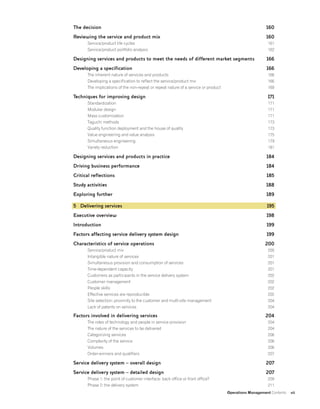
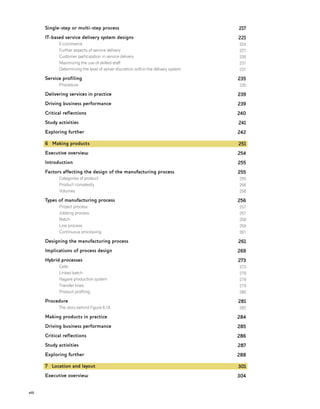

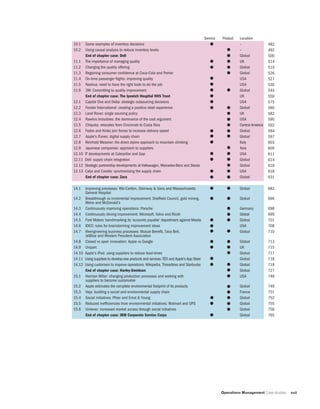
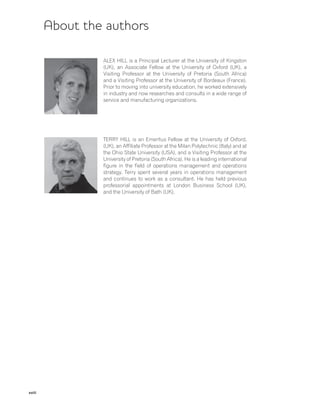
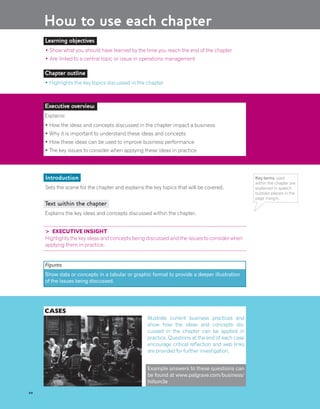
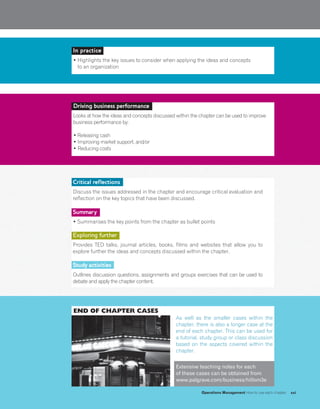
![xxii
Publisher’s acknowledgements
The authors and publishers are grateful to the following for permission to reproduce copyright
material:
The American Marketing Association for Figure 11.17, ‘The gap model for understanding the
difference between customer expectations and perceptions’, adapted from Parasuraman, A. et
al (1985) ‘A conceptual model of service quality and implications for future research’, Journal
of Marketing, 49 (Fall 1985), pp. 41–50.
The Baldrige National Quality Programme for permission to reproduce Figure 11.24.
Barclays Bank PLC for permission to reproduce the image used in Case 5.5.
The Benetton Group for permission to reproduce the image of the Regent Street Benetton
Store (Oxford Circus) in Case 2.3.
Canon (UK) Ltd. for permission to reproduce the image of a Canon camera used in Case 12.9.
The Central Intelligence Agency for Figure 1.6, ‘Percentage of GDP by sector for selected
countries, 2001 and 2008’.
The Co-operative Financial Services for Figure 15.2, ‘Percent of UK adults who undertake
the following ethical behaviours at least once a year’; Figure 15.3, ‘Ethical spending by the
average UK household in 2009 compared with 1999’; and Figure 15.4, ‘UK ethical consumerism
(1999–2009)’ from the Co-operative Ethical Consumerism Report 2009.
The EFQM for Figure 11.25, ‘EFQM Excellence Model criteria and weights’ © EFQM 2009.
Elsevier for permission to reprint Figures 12.4, 12.5 and 12.6 from R.H. Lowson, ‘Offshore
sourcing: and optimal operational strategy?’, Business Horizons (Nov–-Dec 2001), pp. 61–6.
Honda Manufacturing for permission to use the images in Figure 6.8.
Lloyds TSB for permission to use the image in Figure 5.12, from 2000.
Pearson Education Limited for Figure 11.17, ‘The gap model for understanding the difference
between customer expectations and perceptions’, from Slack, N., Chambers, S. and Johnston,
R. (2010) Operations Management, 6th edn), Essex. [Adapted from Parasuraman, A. et al. (1985)
‘A conceptual model of service quality and implications for future research’. Reproduced by
permission of the American Marketing Association.]
Upper Crust for permission to use the image in Figure 5.13.
The authors and publishers are also very grateful to the following for permission to use
photographs in the book: Aldi, Asahi Breweries Inc., BMW Group, British Airways Plc., Dyson
Ltd., Ernst & Young, Fotolia, Google, Herman Miller, HSBC and First Direct, Inditex, iStockphoto,
Nissan Motor Ltd., Pret A Manger Ltd., Porsche Cars Ltd., Sainsbury’s Supermarkets Ltd., TED
Conferences, Threadless, Toyota, Veja, and Volvo Group. Special thanks are due to Jonathan
Harris for permitting us to use a selection of his photographs in the short and long cases
throughout the book.
Every effort has been made to trace all copyright holders, but if any have been inadvertently
overlooked, the publishers would be pleased to make the necessary arrangements at the first
opportunity.
The authors and publishers are particularly grateful to Judith Wilding at Delicious Industries
for creating the page design for this textbook and typesetting the figures.](https://image.slidesharecdn.com/3810-250619104834-2b8a3c33/85/eBook-PDF-Operations-Management-3rd-by-Alex-Hill-22-320.jpg)