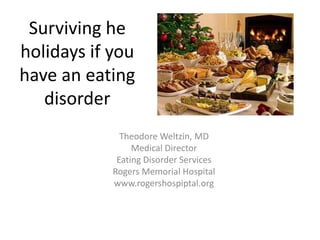
Surviving he
holidays if you
have an eating
   disorder
              Theodore Weltzin, MD
                 Medical Director
             Eating Disorder Services
            Rogers Memorial Hospital
            www.rogershospiptal.org
"Cookies are made of butter and love." - Norwegian
Proverb
The Dilemma
• Holidays show be a time of year to look
  forward to but are stresfful for eating diosdrer
  pateints
• have a game plan
• Keep your sense of humor
• Make yourself useful
• Make time for yourself
• Look on the bright side
The Dilemma
• A survey of adolescent girls showed that their main
  source of information about health issues is the media
• The average adolescent watches 3-4 hours of TV per day
• 90% of 15 –24 year olds are “on-line”
   – 75% use the internet for health information
   – 25% search for information on weight concerns
   – 4 out of 10 online searchers of health information say they
     changed their behavior because of what they learned
Why is everyone on a diet?
• Weight loss and dieting become very
  reinforcing.
  – Success, money, relationships, health, sports
• However, the majority of people have
  difficulty with weight loss.
• Adolescents seem particularly vulnerable
  to developing extremes of weight loss and
  dieting behavior.
Seventeen Magazine
• Watch for
  subtle
  messages:
• “The thin
  girls are
  happy”
Teenage Vegetarians at Risk?
• Adolescent vegetarians    • Male adolescent
  more likely to avoid        vegetarians more likely to
  meat for weight control     vomit after eating that
• Adolescent vegetarians      non vegetarians
  weigh themselves          • Vegetarianism may serve
  more                        as a red flag for eating
• 6-10% of adolescents        disorder behavior
  are thought to be         • Vegan Diet unhealthy for
  vegetarian                  adolescents
Eat regularly and in some kind of
          reasonable pattern.
• Avoid “preparing for the last supper.” Don’t
  skip meals and starve in an attempt to make
  up for what you recently ate or are about to
  eat. Keep a regular and moderate pattern
Worry more about the size of your
    heart than the size of your hips!
• It is the holiday season, a great time to reflect,
  enjoy relationships with loved ones, and most
  importantly, a time to feel gratitude for
  blessings received and to give back through
  loving service to others.
• Discuss your anticipation of the holidays with
  your therapist, physician, dietitian, or
• other members of your treatment team so
  that they can help you predict, prepare for,
• and get through any uncomfortable family
  interactions without self-destructive coping
• attempts.
• Have a well-thought-out game plan before you
  go home or invite others into your
• home. Know “where the exits are,” where
  your support people are, and how you’ll
• recognize when it’s time to make a quick exit
  and get connected with needed support.
• Talk with loved ones about important issues:
  decisions, victories, challenges, fears,
• concerns, dreams, goals, special moments,
  spirituality, relationships and your feelings
• about them. Allow important themes to be
  present. Allow yourself to have fun rather
• than rigidly focusing on food or body
  concerns.
• Think of someone to call if you are struggling
  with addictive behaviors, or with
• negative thoughts or difficult emotions. Alert
  them ahead of time; let them know of
• your concerns, needs, and the possibility of
  you calling them for emotional support.
• Consider choosing one loved one to be your
  “reality check” with food, to either help
• fix a plate for you or to give you sound
  feedback on the food portion sizes you make
• for yourself.
• Write down your vision of where you would
  like your mind and heart to be during
• this holiday time with loved ones. Take time,
  several times per day, to find a quiet
• place to get in tune with your vision, to
  remember, to nurture, and to center yourself
• in the thoughts, feelings, and actions that
  match your vision for yourself.
• Focus your personal goals for your time with
  loved ones during the holidays. Make them
  about “doing something”
• rather than about trying to prevent
  something. It’s fine to have food goals, but
  make sure you add personal,
• emotional, spiritual, and relationship goals as
  well.
• Work on being flexible in your thoughts. Learn
  to be flexible when setting guidelines for
  yourself and expectations
• of yourself and others. Strive to be flexible in
  what you can eat during the holidays. Take a
  holiday from self-imposed
• criticism, rigidity, and perfectionism.
• Stay active in your support group, or join one if
  you are not currently involved. Many support
  groups can be helpful:
• 12-step groups, co-dependency groups, eating
  disorder therapy groups, book clubs,
  neighborhood game groups, and
• religious- or spiritually oriented groups are
  examples of groups that may give real support.
  Isolation and withdrawal
• from positive support are not the way to get
  through trying times.
• Avoid “overstressing” and “overbooking” yourself. A
  lower sense of stress can decrease the perceived need
  to turn to
• eating-disordered behaviors or other unhelpful coping
  strategies. Cut down on unnecessary events and
  obligations
• and leave time for relaxation, contemplation,
  reflection, spiritual renewal, simple service, and
  enjoying the small yet
• most important things in life. This will help you
  experience and enjoy a sense of gratitude and peace.
Eating and the holidays

Eating and the holidays

  • 1.
    Surviving he holidays ifyou have an eating disorder Theodore Weltzin, MD Medical Director Eating Disorder Services Rogers Memorial Hospital www.rogershospiptal.org
  • 2.
    "Cookies are madeof butter and love." - Norwegian Proverb
  • 3.
    The Dilemma • Holidaysshow be a time of year to look forward to but are stresfful for eating diosdrer pateints • have a game plan • Keep your sense of humor • Make yourself useful • Make time for yourself • Look on the bright side
  • 4.
    The Dilemma • Asurvey of adolescent girls showed that their main source of information about health issues is the media • The average adolescent watches 3-4 hours of TV per day • 90% of 15 –24 year olds are “on-line” – 75% use the internet for health information – 25% search for information on weight concerns – 4 out of 10 online searchers of health information say they changed their behavior because of what they learned
  • 5.
    Why is everyoneon a diet? • Weight loss and dieting become very reinforcing. – Success, money, relationships, health, sports • However, the majority of people have difficulty with weight loss. • Adolescents seem particularly vulnerable to developing extremes of weight loss and dieting behavior.
  • 6.
  • 7.
    • Watch for subtle messages: • “The thin girls are happy”
  • 9.
    Teenage Vegetarians atRisk? • Adolescent vegetarians • Male adolescent more likely to avoid vegetarians more likely to meat for weight control vomit after eating that • Adolescent vegetarians non vegetarians weigh themselves • Vegetarianism may serve more as a red flag for eating • 6-10% of adolescents disorder behavior are thought to be • Vegan Diet unhealthy for vegetarian adolescents
  • 10.
    Eat regularly andin some kind of reasonable pattern. • Avoid “preparing for the last supper.” Don’t skip meals and starve in an attempt to make up for what you recently ate or are about to eat. Keep a regular and moderate pattern
  • 11.
    Worry more aboutthe size of your heart than the size of your hips! • It is the holiday season, a great time to reflect, enjoy relationships with loved ones, and most importantly, a time to feel gratitude for blessings received and to give back through loving service to others.
  • 12.
    • Discuss youranticipation of the holidays with your therapist, physician, dietitian, or • other members of your treatment team so that they can help you predict, prepare for, • and get through any uncomfortable family interactions without self-destructive coping • attempts.
  • 13.
    • Have awell-thought-out game plan before you go home or invite others into your • home. Know “where the exits are,” where your support people are, and how you’ll • recognize when it’s time to make a quick exit and get connected with needed support.
  • 14.
    • Talk withloved ones about important issues: decisions, victories, challenges, fears, • concerns, dreams, goals, special moments, spirituality, relationships and your feelings • about them. Allow important themes to be present. Allow yourself to have fun rather • than rigidly focusing on food or body concerns.
  • 15.
    • Think ofsomeone to call if you are struggling with addictive behaviors, or with • negative thoughts or difficult emotions. Alert them ahead of time; let them know of • your concerns, needs, and the possibility of you calling them for emotional support.
  • 16.
    • Consider choosingone loved one to be your “reality check” with food, to either help • fix a plate for you or to give you sound feedback on the food portion sizes you make • for yourself.
  • 17.
    • Write downyour vision of where you would like your mind and heart to be during • this holiday time with loved ones. Take time, several times per day, to find a quiet • place to get in tune with your vision, to remember, to nurture, and to center yourself • in the thoughts, feelings, and actions that match your vision for yourself.
  • 18.
    • Focus yourpersonal goals for your time with loved ones during the holidays. Make them about “doing something” • rather than about trying to prevent something. It’s fine to have food goals, but make sure you add personal, • emotional, spiritual, and relationship goals as well.
  • 19.
    • Work onbeing flexible in your thoughts. Learn to be flexible when setting guidelines for yourself and expectations • of yourself and others. Strive to be flexible in what you can eat during the holidays. Take a holiday from self-imposed • criticism, rigidity, and perfectionism.
  • 20.
    • Stay activein your support group, or join one if you are not currently involved. Many support groups can be helpful: • 12-step groups, co-dependency groups, eating disorder therapy groups, book clubs, neighborhood game groups, and • religious- or spiritually oriented groups are examples of groups that may give real support. Isolation and withdrawal • from positive support are not the way to get through trying times.
  • 21.
    • Avoid “overstressing”and “overbooking” yourself. A lower sense of stress can decrease the perceived need to turn to • eating-disordered behaviors or other unhelpful coping strategies. Cut down on unnecessary events and obligations • and leave time for relaxation, contemplation, reflection, spiritual renewal, simple service, and enjoying the small yet • most important things in life. This will help you experience and enjoy a sense of gratitude and peace.