Defibrillators
A step by step guide on how to use this
life saving device!
Defibrillators
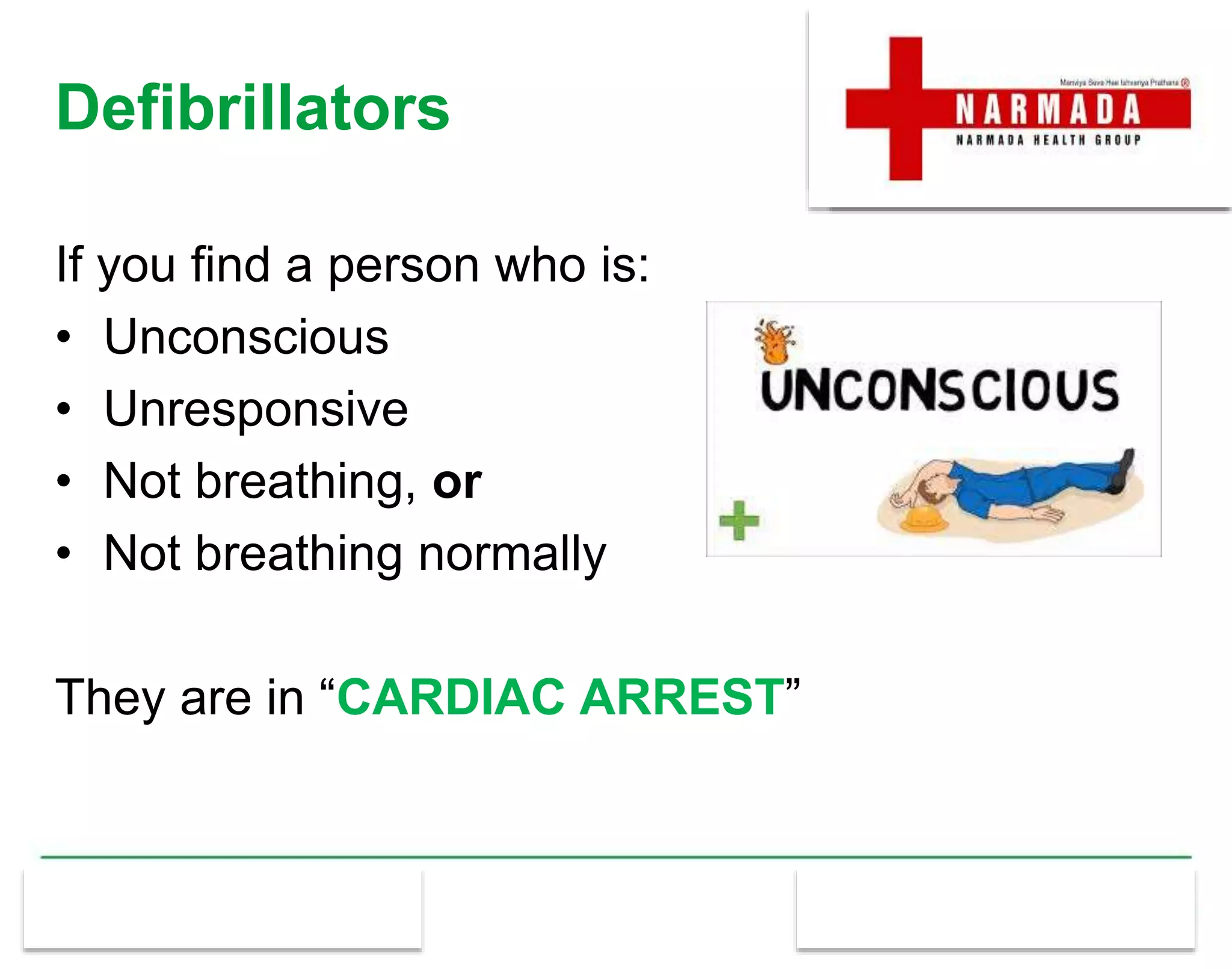
If you find a person who is:
• Unconscious
• Unresponsive
• Not breathing, or
• Not breathing normally
They are in “CARDIAC ARREST”
Defibrillators
The first things to do is dial 999.
You will be advised what to do
next.
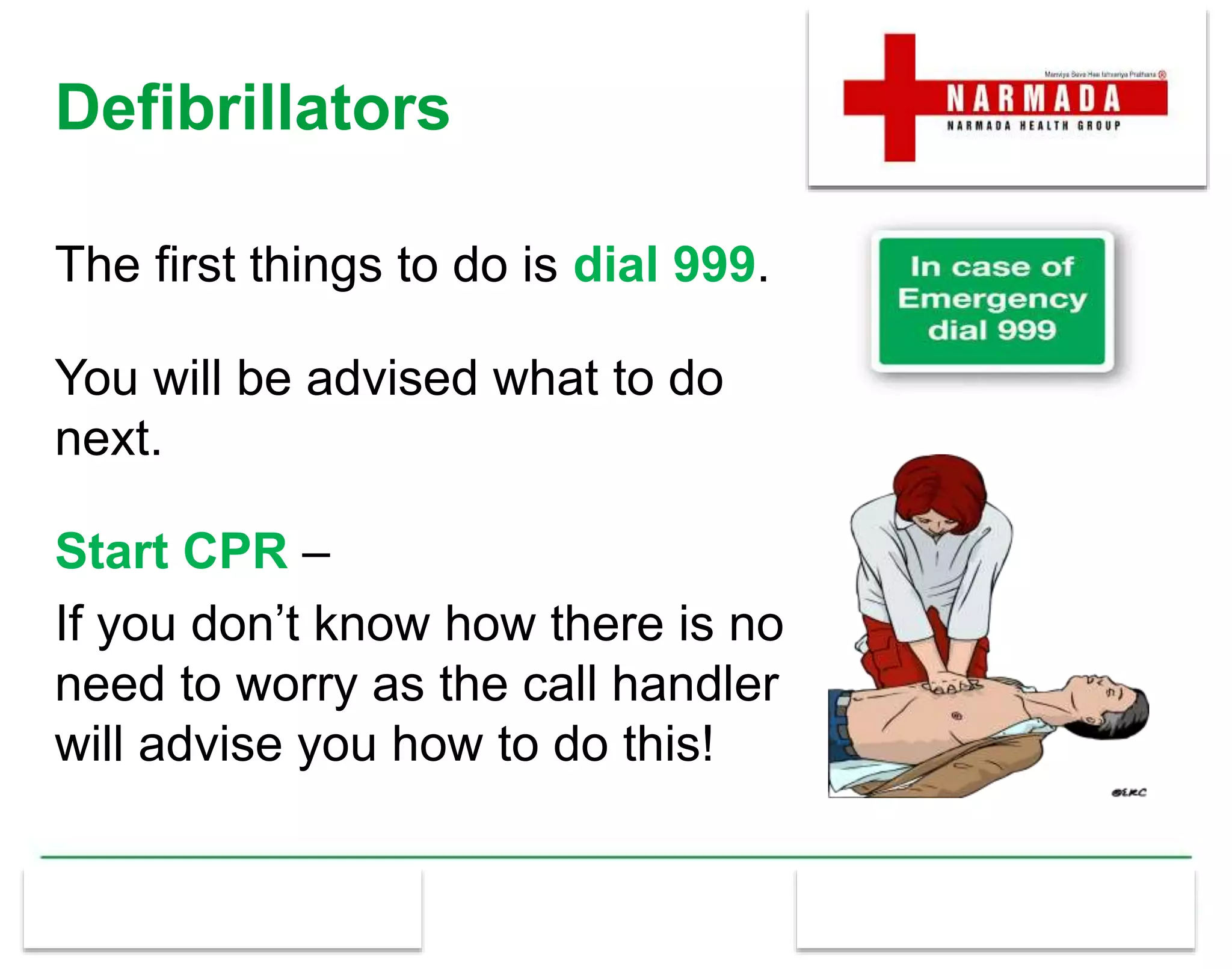
Start CPR –
If you don’t know how there is no
need to worry as the call handler
will advise you how to do this!
Defibrillators
The call handler will ask you if there is an AED
near you and may advise you of the nearest one
in your village.
If there is someone with you, you could ask them
to collect it for you.
AED– What is that?
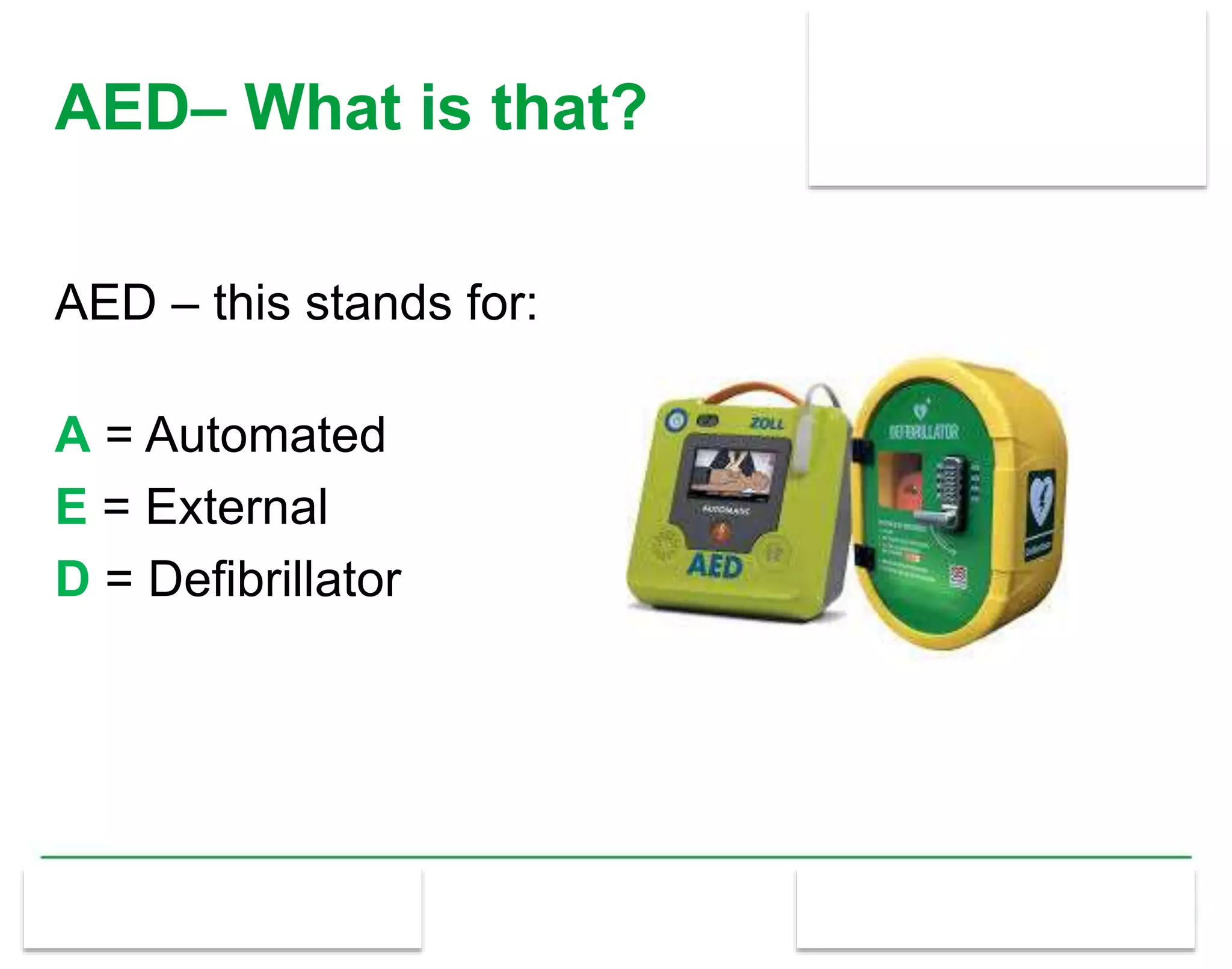
AED – this stands for:
A = Automated
E = External
D = Defibrillator
What is a ‘defibrillator’?
A defibrillator (AED) is a device that gives a high
energy electric shock to the heart of someone
who has collapsed and is in cardiac arrest.
This high energy shock is called defibrillation,
and it’s essentially part in trying to save the life of
someone who’s in cardiac arrest.
The defibrillator
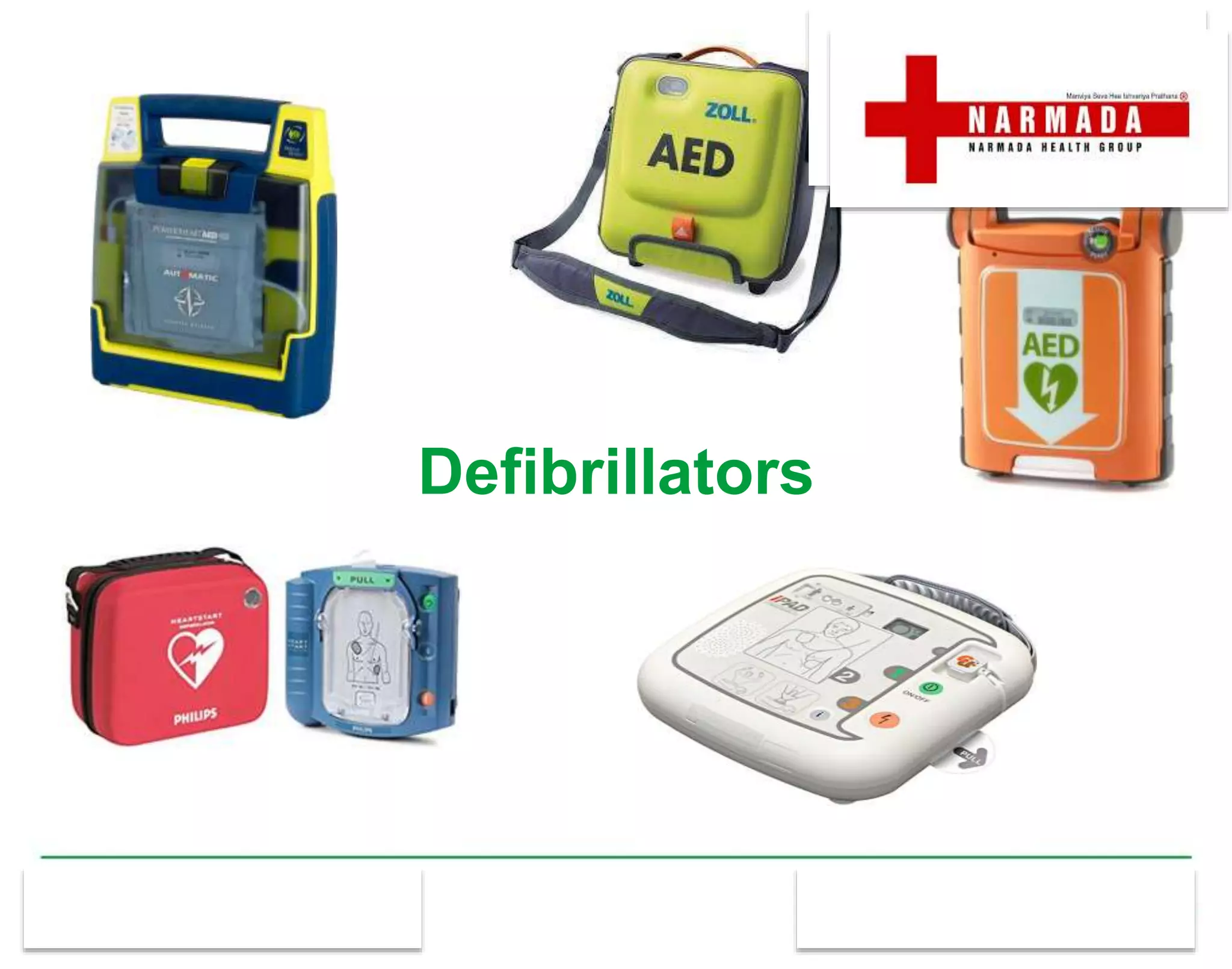
There are a number of makes of defibrillator.
They all do the same job, and each type talks you
through what you need to do.
There is no need to worry, you won't be able to
shock someone who doesn’t need it as the AED
will only deliver a shock if it’s required!
Defibrillators
A = Automated
E = External
D = Defibrillator
Defibrillators
Where you can find them…
We call our defibrillator sites CPAD sites (Community
Public Access Defibrillator sites)
and they are located in places such as:
Airports - Railway stations – Schools - Shops -
Village Halls – Community Centres –
Public Houses – Telephone Boxes
Do you know where your nearest site is?
Why are they so important?
A person suffering from a heart attack may well go into
cardiac arrest.
There are approximately 185,000 cardiac arrests per
year in the UK.
Survival to hospital discharge presently stands at
between 5 – 10%.
Bystander CPR is a vital intervention before the arrival of
the ambulance service.
Early resuscitation and prompt defibrillation (within the
first 1-2 minutes) can result in a 50% chance of survival.
The defibrillator
Once the AED is with you, open the
defibrillator case.
You will find:
Scissors – to assist in cutting the clothes
Towel – to dry the chest
Razor – to remove any thick hair
AED pads – to place on the persons
chest
Don’t worry – the AED will talk you
through what you need to do!
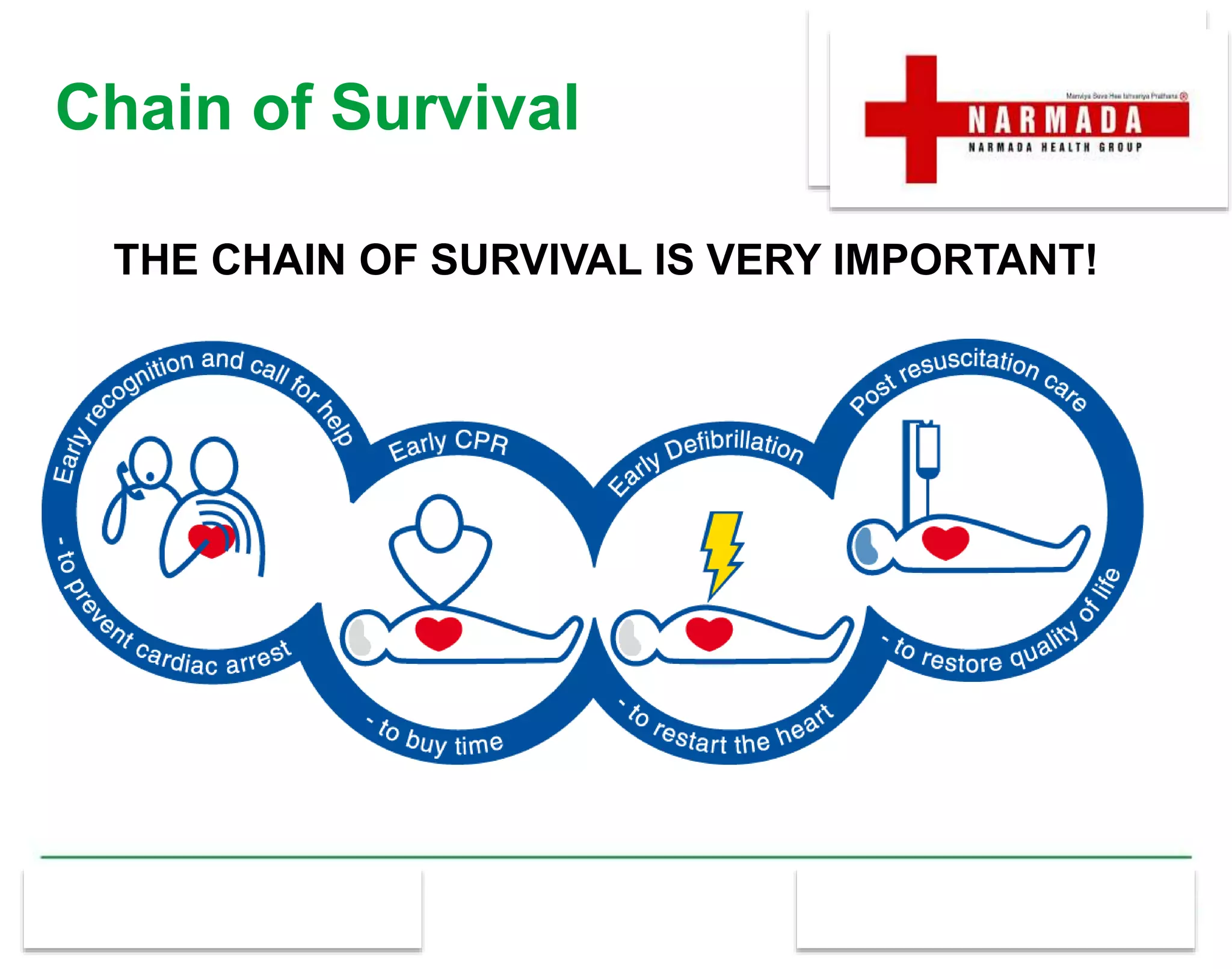
Chain of Survival
THE CHAIN OF SURVIVAL IS VERY IMPORTANT!
How the heart works
• The heart’s pumping action
is controlled by the electrical
system of your body
• The electrical rhythm is
normally very well organized
• The normal heart rhythm is
called “Sinus Rhythm”
• A normal heart beats at a
rate of 60 - 100 beats per
minute
Sinus Rhythm
How the heart works
• If the heart stops working, using a
defibrillator may correct this
• The defibrillator delivers a DC
current across the heart wall
• Successful defibrillation
“depolarizes” the heart’s cells
• Depolarization allows the cells to
“reorganize”
• Defibrillation is the ONLY effective
cure for cardiac arrest
Defibrillators can save lives
Once the Defibrillator (AED) arrives on scene it
must be attached to the patient’s chest as soon
as possible.
STOP CPR and get the defibrillator pads on!
Any delay may reduce the chance of success.
The defibrillator
• Follow the voice prompts from the defibrillator
• Don’t worry if the defibrillator says ‘no shock
advised’ if this does happen just carry on doing
CPR
• CPR is vital in this situation – keep going, you
are doing great!
* If the defibrillator
advises a shock just
follow the voice prompts
– you may be asked to
press the button but
don’t worry you wont do
any harm!
* What you are doing is
giving the person a
greater chance of
survival and you could
potentially save their life!
The ambulance will be with you as
soon as possible so carry on.
Follow the voice prompt
instructions from the A.E.D.
You are doing an amazing job!
What happens if the patients
starts to breath on their own?
Place the patient
in the recovery
position.
Please leave the
defibrillator
switched on and
leave the pads
attached!
What to do when the ambulance
service arrives…
• Don’t stop CPR
• Carry on until advised to stop by the ambulance crew
• Update the ambulance crew on what happened and
pass on any information you know about the patient
• Follow advice from the crew
• Just remember – what you have just done could
make a big difference!
Don’t become a bystander –
Become a life saver!
+ = lives saved!
Contact Us
For further information on getting an AED for your
local community or to register one onto our trust
data base please email:
defibs@eastamb.nhs.uk
or go to:
www.eastamb.nhs.uk
EASY TO LEARN DEFIBRILLATOR

EASY TO LEARN DEFIBRILLATOR

  • 2.
    Defibrillators A step bystep guide on how to use this life saving device!
  • 3.
    Defibrillators If you finda person who is: • Unconscious • Unresponsive • Not breathing, or • Not breathing normally They are in “CARDIAC ARREST”
  • 4.
    Defibrillators The first thingsto do is dial 999. You will be advised what to do next. Start CPR – If you don’t know how there is no need to worry as the call handler will advise you how to do this!
  • 5.
    Defibrillators The call handlerwill ask you if there is an AED near you and may advise you of the nearest one in your village. If there is someone with you, you could ask them to collect it for you.
  • 6.
    AED– What isthat? AED – this stands for: A = Automated E = External D = Defibrillator
  • 7.
    What is a‘defibrillator’? A defibrillator (AED) is a device that gives a high energy electric shock to the heart of someone who has collapsed and is in cardiac arrest. This high energy shock is called defibrillation, and it’s essentially part in trying to save the life of someone who’s in cardiac arrest.
  • 8.
    The defibrillator There area number of makes of defibrillator. They all do the same job, and each type talks you through what you need to do. There is no need to worry, you won't be able to shock someone who doesn’t need it as the AED will only deliver a shock if it’s required!
  • 9.
  • 10.
    A = Automated E= External D = Defibrillator
  • 11.
    Defibrillators Where you canfind them… We call our defibrillator sites CPAD sites (Community Public Access Defibrillator sites) and they are located in places such as: Airports - Railway stations – Schools - Shops - Village Halls – Community Centres – Public Houses – Telephone Boxes Do you know where your nearest site is?
  • 12.
    Why are theyso important? A person suffering from a heart attack may well go into cardiac arrest. There are approximately 185,000 cardiac arrests per year in the UK. Survival to hospital discharge presently stands at between 5 – 10%. Bystander CPR is a vital intervention before the arrival of the ambulance service. Early resuscitation and prompt defibrillation (within the first 1-2 minutes) can result in a 50% chance of survival.
  • 13.
    The defibrillator Once theAED is with you, open the defibrillator case. You will find: Scissors – to assist in cutting the clothes Towel – to dry the chest Razor – to remove any thick hair AED pads – to place on the persons chest Don’t worry – the AED will talk you through what you need to do!
  • 14.
    Chain of Survival THECHAIN OF SURVIVAL IS VERY IMPORTANT!
  • 15.
    How the heartworks • The heart’s pumping action is controlled by the electrical system of your body • The electrical rhythm is normally very well organized • The normal heart rhythm is called “Sinus Rhythm” • A normal heart beats at a rate of 60 - 100 beats per minute Sinus Rhythm
  • 16.
    How the heartworks • If the heart stops working, using a defibrillator may correct this • The defibrillator delivers a DC current across the heart wall • Successful defibrillation “depolarizes” the heart’s cells • Depolarization allows the cells to “reorganize” • Defibrillation is the ONLY effective cure for cardiac arrest
  • 17.
    Defibrillators can savelives Once the Defibrillator (AED) arrives on scene it must be attached to the patient’s chest as soon as possible. STOP CPR and get the defibrillator pads on! Any delay may reduce the chance of success.
  • 18.
    The defibrillator • Followthe voice prompts from the defibrillator • Don’t worry if the defibrillator says ‘no shock advised’ if this does happen just carry on doing CPR • CPR is vital in this situation – keep going, you are doing great!
  • 19.
    * If thedefibrillator advises a shock just follow the voice prompts – you may be asked to press the button but don’t worry you wont do any harm! * What you are doing is giving the person a greater chance of survival and you could potentially save their life! The ambulance will be with you as soon as possible so carry on. Follow the voice prompt instructions from the A.E.D. You are doing an amazing job!
  • 20.
    What happens ifthe patients starts to breath on their own? Place the patient in the recovery position. Please leave the defibrillator switched on and leave the pads attached!
  • 21.
    What to dowhen the ambulance service arrives… • Don’t stop CPR • Carry on until advised to stop by the ambulance crew • Update the ambulance crew on what happened and pass on any information you know about the patient • Follow advice from the crew • Just remember – what you have just done could make a big difference!
  • 22.
    Don’t become abystander – Become a life saver! + = lives saved!
  • 23.
    Contact Us For furtherinformation on getting an AED for your local community or to register one onto our trust data base please email: defibs@eastamb.nhs.uk or go to: www.eastamb.nhs.uk