Long shadow of fear in an epidemic:
fearonomic effects of Ebola on the
private sector in Nigeria
Sulzhan Bali,1
Kearsley A Stewart,1
Muhammad Ali Pate1,2
To cite: Bali S, Stewart KA,
Pate MA. Long shadow of
fear in an epidemic:
fearonomic effects of Ebola
on the private sector in
Nigeria. BMJ Global Health
2016;1:e000111.
doi:10.1136/bmjgh-2016-
000111
Received 21 June 2016
Accepted 28 September 2016
1
Duke Global Health Institute,
Duke University, Durham,
North Carolina, USA
2
BigWin Philanthropy,
Washington, District of
Columbia, USA
Correspondence to
Sulzhan Bali;
Sulzhan@gmail.com
ABSTRACT
Background: The already significant impact of the
Ebola epidemic on Guinea, Liberia and Sierra Leone,
was worsened by a fear of contagion that aggravated
the health crisis. However, in contrast to other Ebola-
affected countries, Nigeria fared significantly better due
to its swift containment of the disease. The objective of
our study was to describe the impact of Ebola on the
Nigerian private sector. This paper introduces and
defines the term fearonomic effect as the direct and
indirect economic effects of both misinformation as
well as fear-induced aversion behaviour, exhibited by
individuals, organisations or countries during an
outbreak or an epidemic.
Methods: This study was designed as a cross-
sectional mixed-methods study that used
semistructured in-depth interviews and a supporting
survey to capture the impact of Ebola on the Nigerian
private sector after the outbreak. Themes were
generated from the interviews on the direct and indirect
impact of Ebola on the private sector; the impact of
misinformation and fear-based aversion behaviour in
the private sector.
Results: Our findings reveal that the fearonomic
effects of Ebola included health service outages and
reduced healthcare usage as a result of misinformation
and aversion behaviour by both patients and providers.
Although certain sectors (eg, health sector, aviation
sector, hospitality sector) in Nigeria were affected more
than others, no business was immune to Ebola’s
fearonomic effects. We describe how sectors expected
to prosper during the outbreak (eg, pharmaceuticals),
actually suffered due to the changes in consumption
patterns and demand shocks.
Conclusion: In a high-stressor epidemic-like setting,
altered consumption behaviour due to distorted
disease perception, misinformation and fear can trigger
short-term economic cascades that can
disproportionately affect businesses and lead to
financial insecurity of the poorest and the most
vulnerable in a society.
INTRODUCTION
The impact of fear during an infectious
disease is often considerable.1 2
Outbreaks of
infectious diseases affect nations in two dis-
tinct ways—through direct effects of the
Key questions
What is already known about this topic?
▸ Infectious diseases have been known to trigger
fear-related behavioural changes across the
public.
▸ The significant impact of Ebola on affected
countries of Guinea, Liberia and Sierra Leone,
was worsened by a fear of contagion that aggra-
vated the health crisis.
▸ In contrast to other Ebola-affected countries,
Nigeria contained the outbreak within 93 days.
What are the new findings?
▸ This study is the first to take an in-depth look at
the impact of Ebola on Nigeria’s private sector.
▸ This paper shows that even when a country
swiftly controls an outbreak, there can be down-
stream ripple effects on its economy.
▸ Even sectors, which were expected to prosper
during the outbreak (eg, pharmaceuticals), actu-
ally suffered due to the changes in consumption
patterns and demand shocks.
Recommendations for policy
▸ It is necessary to address dangers of misinfor-
mation and fear-induced aversion behaviour
during an outbreak. Awareness efforts should be
combined with swift risk communication, quick
dissemination of accurate information and syn-
chronised response to address misinformation
and stigma.
▸ We recommend engaging community and reli-
gious leaders and the use of tools such as
social media, adverts and radio to ensure
disease awareness, mobilise volunteers and to
fight misinformation.
▸ The fearonomic effects of outbreaks should be a
strong motivator for businesses to assist gov-
ernment efforts in epidemic response. The
private sector can be a partner in building com-
munity trust in disease control efforts and in
ensuring dissemination of accurate disease pre-
vention information.
▸ To protect affected countries from the fearonomic
effects of outbreaks, it is essential that the
International Health Regulations are upheld and
that countries do not restrict trade or travel against
WHO advice during public health emergencies.
Bali S, et al. BMJ Glob Health 2016;1:e000111. doi:10.1136/bmjgh-2016-000111 1
Research
group.bmj.comon November 9, 2016 - Published byhttp://gh.bmj.com/Downloaded from
disease itself, and through indirect behavioural response
to the disease.1 2
The direct impact of a disease is cap-
tured by both the mortality and morbidity associated
with the disease, as well as losses in productivity incurred
as a result of the disease. At the same time, emerging
infectious diseases also affect public perceptions, indu-
cing fear and fear-related corresponding behavioural
effects as occurred with AIDS,3
SARS,4
and Ebola.1
Fear
can drive significant changes in human behaviour,
leading to border closures and the disruption of busi-
nesses, trade, tourism and social events.5
In fact, fear-
related behavioural effects were responsible for 80–90%
of the economic impact of SARS, which depressed the
economic growth of affected countries by 1–5% in
2004.6 7
As Brazil geared up to host the 2016 Olympics,
the fear of Zika had already overshadowed the benefits
associated with such a landmark event. The declaration
of Zika as a Public Health Emergency of International
Concern (PHEIC)8 9
follows in the immediate aftermath
of another PHEIC-Ebola outbreak in West Africa, that
killed over 11 300 people and infected over 28 000.10
The Ebola outbreak in West Africa started in
December 2013 in Guinea.11 12
By July 2014, the out-
break had spread to other neighboring West African
nations, including Liberia, Sierra Leone, Nigeria, Mali,
and Senegal.11 12
The outbreak was declared a PHEIC
by the WHO on 8 August 2014.8
For the first time, the
downstream effects of an Ebola outbreak transcended
borders of countries and continents, reminding the
global health community that infectious diseases respect
no borders, religion or socioeconomic status.13
The lack
of timely control of Ebola revealed systemic gaps and
weaknesses in global health systems, institutions and cap-
acities regarding epidemic control.14
The impact of
Ebola on affected countries of Guinea, Liberia and
Sierra Leone, was worsened by a fear of contagion that
aggravated the health crisis.6 15 16
In fact, as per the
World Bank estimates, the total cost of Ebola in Liberia,
Guinea and Sierra Leone are estimated to be a loss of
US$2.2 billion.5 17
However, in contrast to other
Ebola-affected nations in West Africa, Nigeria fared sig-
nificantly better: the Nigerian government responded to
the outbreak swiftly and Nigeria was declared as
Ebola-free on 20 October 2014.18
The economic cost
incurred by Nigeria due to the Ebola outbreak was esti-
mated to be US$186 million.6 16
Although significant,
this amount was much less in comparison to its GDP
(0.5% of its GDP).6 16
It is essential to note that the
Ebola outbreak in West Africa not only significantly
impacted health systems and consumed health resources
in the affected countries, but it also led to limited mobil-
ity, travel restrictions and disruptions across public and
the private sectors.6 15 16
While considerable scholarly attention has been paid
to understanding and investigating the direct effects of
an epidemic, our understanding of the indirect effects
that arise from fear of the disease during an outbreak is
limited. We investigated the impact of Ebola on Nigeria’s
private sector. The rapid Ebola response action by both
Lagos State and the Federal governments limited the
direct impact of Ebola. However, our findings shed con-
siderable light on the role of misinformation and aver-
sion behaviour during an outbreak. In this paper, we
introduce a new term—‘fearonomic effects’—that we
define as the direct and the indirect economic effects of
both misinformation and fear-induced aversion behav-
iour, exhibited by individuals, organisations or countries
during an outbreak or epidemic. A focus on only the
direct effects of an epidemic significantly underestimates
the true cost of disease and fails to account for aversion
and other fear-related consequences experienced
during an epidemic.19
METHODS
Study design and setting
This study was designed as a cross-sectional mixed-
methods study that used semistructured in-depth inter-
views and a supporting survey to capture the impact of
Ebola on the Nigerian private sector retrospectively after
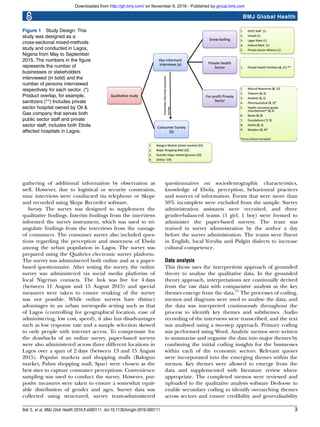
the outbreak (figure 1). Data were collected in accord-
ance with the consolidated criteria for reporting qualita-
tive research guidelines.20
The data were collected in
Lagos, Nigeria from May 2015 to September 2015. As
the objective of the study was to explore and assess the
holistic impact of Ebola (both direct and indirect) on
the Nigerian private sector, use of qualitative methods of
in-depth semistructured interview and survey was
deemed appropriate.
Recruitment of participants and data collection
In-depth interviews: Snowballing and media database
(LexisNexis) search was used to identify the participants
to conduct in-depth interviews. We conducted keyword
searches ‘Nigeria’, ‘Ebola’, ‘Private sector’ between 1
May 2014 and 1 May 2015. Texts reviewed included news-
paper clippings and ‘grey’ literature. Purposive sampling
was used to create the researcher’s guide to key stake-
holders names and economic sectors. The list was cross-
checked via snowballing with key informants from our
partner host organisation, Private Sector Health Alliance
of Nigeria, and the public sector key informants closely
involved in Nigeria’s Ebola response. These experts com-
mented on the overall impact of Ebola on the Nigerian
economy and the disease’s impact on the private sector
from the vantage of public and private sector interac-
tions. For this study, over 127 key informants across
Nigeria were contacted via personal referrals, emails,
LinkedIn, phone and in-person office visits; 114 were fol-
lowed, and 76 interviews were conducted. Interviews
were conducted until thematic saturation was reached.
The in-depth interviews were conducted in English and
lasted ∼60–90 min each. The corresponding author
conducted the interviews, which were audio recorded.
The interviews were mostly conducted face to face with
the respondents in a comfortable setting to allow the
2 Bali S, et al. BMJ Glob Health 2016;1:e000111. doi:10.1136/bmjgh-2016-000111
BMJ Global Health
group.bmj.comon November 9, 2016 - Published byhttp://gh.bmj.com/Downloaded from
gathering of additional information by observation as
well. However, due to logistical or security constraints,
nine interviews were conducted via telephone or Skype
and recorded using Skype Recorder software.
Survey: The survey was designed to supplement the
qualitative findings. Interim findings from the interviews
informed the survey instrument, which was used to tri-
angulate findings from the interviews from the vantage
of consumers. The consumer survey also included ques-
tions regarding the perception and awareness of Ebola
among the urban population in Lagos. The survey was
prepared using the Qualtrics electronic survey platform.
The survey was administered both online and as a paper-
based questionnaire. After testing the survey, the online
survey was administered via social media platforms of
local Nigerian contacts. The link was live for 4 days
(between 11 August and 15 August 2015) and special
measures were taken to ensure retaking of the survey
was not possible. While online surveys have distinct
advantages in an urban metropolis setting such as that
of Lagos (controlling for geographical location, ease of
administering, low cost, speed), it also has disadvantages
such as low response rate and a sample selection skewed
to only people with internet access. To compensate for
the drawbacks of an online survey, paper-based surveys
were also administered across three different locations in
Lagos over a span of 2 days (between 13 and 15 August
2015). Popular markets and shopping malls (Balogun
market, Palms shopping mall, Spar) were chosen as the
best sites to capture consumer perceptions. Convenience
sampling was used to conduct the survey. However, pur-
posive measures were taken to ensure a somewhat equit-
able distribution of gender and ages. Survey data was
collected using structured, survey team-administered
questionnaires on sociodemographic characteristics,
knowledge of Ebola, perception, behavioural practices
and sources of information. Forms that were more than
50% incomplete were excluded from the sample. Survey
administration assistants were recruited, and three
gender-balanced teams (1 girl, 1 boy) were formed to
administer the paper-based surveys. The team was
trained in survey administration by the author a day
before the survey administration. The teams were fluent
in English, local Yoruba and Pidgin dialects to increase
cultural competence.
Data analysis
This thesis uses the interpretivist approach of grounded
theory to analyse the qualitative data. In the grounded
theory approach, interpretations are continually derived
from the raw data with comparative analysis as the key
themes emerge from the data.21
The processes of coding,
memos and diagrams were used to analyse the data, and
the data was interpreted continuously throughout the
process to identify key themes and subthemes. Audio
recording of the interviews were transcribed, and the text
was analysed using a two-step approach. Primary coding
was performed using Word. Analytic memos were written
to summarise and organise the data into major themes by
combining the initial coding insights for the businesses
within each of the economic sectors. Relevant quotes
were incorporated into the emerging themes within the
memos. Key themes were allowed to emerge from the
data and supplemented with literature review where
appropriate. The completed memos were reviewed and
uploaded to the qualitative analysis software Dedoose to
enable secondary coding to identify overarching themes
across sectors and ensure credibility and generalisability
Figure 1 Study Design: This
study was designed as a
cross-sectional mixed-methods
study and conducted in Lagos,
Nigeria from May to September
2015. The numbers in the figure
represents the number of
businesses or stakeholders
interviewed (in bold) and the
number of persons interviewed
respectively for each sector. (*)
Product overlap, for example,
sanitizers (**) Includes private
sector hospital owned by Oil &
Gas company that serves both
public sector staff and private
sector staff, includes both Ebola
affected hospitals in Lagos.
Bali S, et al. BMJ Glob Health 2016;1:e000111. doi:10.1136/bmjgh-2016-000111 3
BMJ Global Health
group.bmj.comon November 9, 2016 - Published byhttp://gh.bmj.com/Downloaded from
of emerging themes. Representative quotes were identi-
fied to support each of the primary themes, and the cor-
responding memos and transcripts for each quote were
revisited to contextualise participants’ words within their
overall narratives. The survey data was analysed using
Qualtrics and Excel as a supplement to the qualitative
findings from the in-depth interviews.
RESULTS
For the in-depth interviews, 58% of the interviewees were
male and 42% were female. The profiles of the intervie-
wees were diverse, ranging from Heads of corporate com-
munications, Directors, Government Affairs, Medical
Officers, Healthcare workers, CEOs, Risk Managers,
Country Directors, to HR executives. For the survey, of
the 119 respondents, 55% of the respondents were male
and 45% were females. About 31% of respondents were
18–24 years old, 58% were 25–39 years old, 9% were
40–60 years old and 2% were over 60 years old. Among
the respondents, 2% had no schooling, 3% had been
educated up to primary school, 22% had been edu-
cated up to secondary school level, 11% had a diploma
or vocational training, 41% had undergraduate degrees,
20% had Master’s degrees and 1% had a doctoral
degree.
The findings are presented according to the five
themes identified: (1) The origin of fear, that is,
Misinformation triggered fear and promoted high-risk
behaviour; (2) The impact of fear on the economy, that
is, Fearonomic effects amplified the impact of the
disease on the economy; (3) The impact of fear on indi-
viduals, that is, Fearonomic effects included stigma, dis-
crimination and collateral loss of lives; (4) The impacts
of fear on the health system, that is, Fearonomic effects
included the disruption of health services; and (5) The
impact of fear on specific business, that is, Fearonomic
effects impacted on a broad range of businesses.
Misinformation triggered fear and promoted high-risk
behaviour
It was the information; the major thing at that period was
the information. People were panicking more because of
lack of information.—(Male, Nigerian, Corporate Affairs,
Oil & Gas)
Many people drank salt water. One of my brother’s
friends drank and ended up in the hospital because he
was hypertensive. Luckily he didn’t have a stroke.—
(Female, Nigerian, Head Matron at a facility in Victoria
Island, Lagos)
Because we’ve heard so much about this disease, about how
you touch somebody and you have it.—(Male, Nigerian,
Business Development Executive, Pharmaceutical Sector).
From the way it was presented, its so easy to contact and
spread through door handles, stairways hand rails,
through mere contacts like hand shakes.—(Female,
Nigerian, Sales Manager, Hospitality
This staff is okay he left today he was okay, the next day
he comes to work, how are we sure he is okay, how are
sure he has not touched someone that has that.—
(Female, GM, External Affairs & Communication, Oil &
Gas)
Misinformation and myths regarding Ebola were fuelled
by the novelty of the disease in the region, international
media attention and the lack of accurate information
about the disease. As Ebola was a novel disease in
Nigeria, there was a significant lack of information
regarding its transmission, aetiology and case manage-
ment. Consequently, after the first case of Ebola was
reported in Nigeria,11
social media platforms saw a
sharp increase in conversations regarding Ebola.22
Social
media activity fuelled rumours as people sought any
available information on Ebola—whether it came from
credible resources or not.
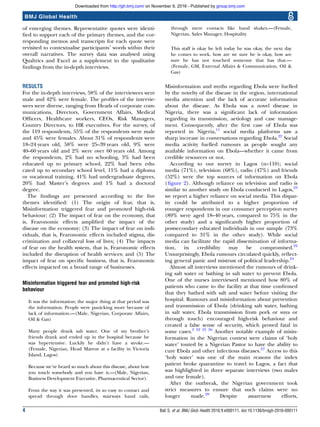
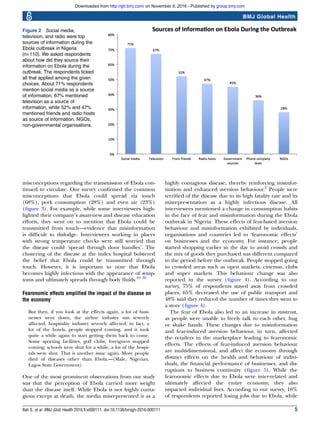
According to our survey in Lagos (n=110); social
media (71%), television (68%), radio (47%) and friends
(52%) were the top sources of information on Ebola
(figure 2). Although reliance on television and radio is
similar to another study on Ebola conducted in Lagos,23
we report a higher reliance on social media. This dispar-
ity could be attributed to a higher proportion of
younger respondents in our consumer perception survey
(89% were aged 18–40 years, compared to 75% in the
other study) and a significantly higher proportion of
postsecondary educated individuals in our sample (73%
compared to 31% in the other study). While social
media can facilitate the rapid dissemination of informa-
tion, its credibility may be compromised.22
Unsurprisingly, Ebola rumours circulated quickly, reflect-
ing general panic and mistrust of political leadership.24
Almost all interviews mentioned the rumours of drink-
ing salt water or bathing in salt water to prevent Ebola.
One of the nurses interviewed mentioned how 80% of
patients who came to the facility at that time confirmed
that they bathed with salt and water before visiting the
hospital. Rumours and misinformation about prevention
and transmission of Ebola (drinking salt water, bathing
in salt water, Ebola transmission from pork or suya or
through touch) encouraged high-risk behaviour and
created a false sense of security, which proved fatal in
some cases.2 22 25 26
Another notable example of misin-
formation in the Nigerian context were claims of ‘holy
water’ touted by a Nigerian Pastor to have the ability to
cure Ebola and other infectious diseases.27
Access to this
‘holy water’ was one of the main reasons the index
patient broke quarantine to travel to Lagos, a fact that
was highlighted in three separate interviews (two males
and one female).
After the outbreak, the Nigerian government took
strict measures to ensure that such claims were no
longer made.28
Despite awareness efforts,
4 Bali S, et al. BMJ Glob Health 2016;1:e000111. doi:10.1136/bmjgh-2016-000111
BMJ Global Health
group.bmj.comon November 9, 2016 - Published byhttp://gh.bmj.com/Downloaded from
misconceptions regarding the transmission of Ebola con-
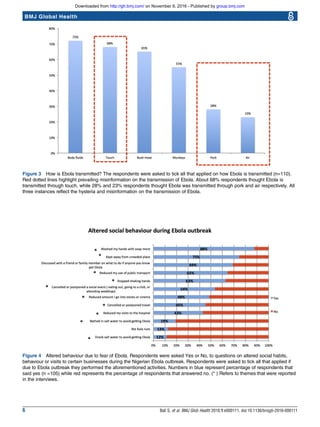
tinued to circulate. Our survey confirmed the common
misconceptions that Ebola could spread via touch
(68%), pork consumption (28%) and even air (23%)
(figure 3). For example, while some interviewees high-
lighted their company’s awareness and disease education
efforts, they went on to mention that Ebola could be
transmitted from touch—evidence that misinformation
is difficult to dislodge. Interviewees working in places
with strong temperature checks were still worried that
the disease could ‘spread through door handles’. The
clustering of the disease at the index hospital bolstered
the belief that Ebola could be transmitted through
touch. However, it is important to note that Ebola
becomes highly infectious with the appearance of symp-
toms and ultimately spreads through body fluids.29 30
Fearonomic effects amplified the impact of the disease on
the economy
But then, if you look at the effects again, a lot of busi-
nesses went down, the airline industry was severely
affected, hospitality industry severely affected, in fact, a
lot of the hotels, people stopped coming, and it took
quite a while again to start getting them back to come.
Some sporting facilities, golf clubs, foreigners stopped
coming; schools were shut for a while, a lot of the hospi-
tals were shut. That is another issue again. More people
died of diseases other than Ebola.—(Male, Nigerian,
Lagos State Government)
One of the most prominent observations from our study
was that the perception of Ebola carried more weight
than the disease itself. While Ebola is not highly conta-
gious except at death, the media misrepresented it as a
highly contagious disease, thereby reinforcing misinfor-
mation and enhanced aversion behaviour.2
People were
terrified of the disease due to its high fatality rate and its
misrepresentation as a highly infectious disease. All
interviewees mentioned a change in consumption habits
in the face of fear and misinformation during the Ebola
outbreak in Nigeria. These effects of fear-based aversion
behaviour and misinformation exhibited by individuals,
organisations and countries led to ‘fearonomic effects’
on businesses and the economy. For instance, people
started shopping earlier in the day to avoid crowds and
the mix of goods they purchased was different compared
to the period before the outbreak. People stopped going
to crowded areas such as open markets, cinemas, clubs
and super markets. This behaviour change was also
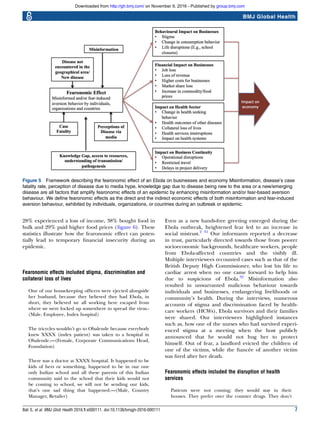
reported in the survey (figure 4). According to our
survey, 75% of respondents stayed away from crowded
places, 65% decreased the use of public transport and
48% said they reduced the number of times they went to
a store (figure 4).
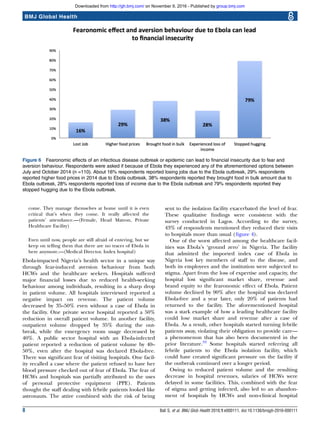
The fear of Ebola also led to an increase in mistrust,
as people were unable to freely talk to each other, hug
or shake hands. These changes due to misinformation
and fear-induced aversion behaviour, in turn, affected
the retailers in the marketplace leading to fearonomic
effects. The effects of fear-induced aversion behaviour
are multidimensional, and affect the economy through
distinct effects on the health and behaviour of indivi-
duals, the financial performance of businesses, and dis-
ruptions to business continuity (figure 5). While the
fearonomic effects due to Ebola were inter-related and
ultimately affected the entire economy, they also
impacted individual lives. According to our survey, 16%
of respondents reported losing jobs due to Ebola, while
Figure 2 Social media,
television, and radio were top
sources of information during the
Ebola outbreak in Nigeria
(n=110). We asked respondents
about how did they source their
information on Ebola during the
outbreak. The respondents ticked
all that applied among the given
choices. About 71% respondents
mention social media as a source
of information, 67% mentioned
television as a source of
information, while 52% and 47%
mentioned friends and radio hosts
as source of information. NGOs,
non-governmental organisations.
Bali S, et al. BMJ Glob Health 2016;1:e000111. doi:10.1136/bmjgh-2016-000111 5
BMJ Global Health
group.bmj.comon November 9, 2016 - Published byhttp://gh.bmj.com/Downloaded from
Figure 4 Altered behaviour due to fear of Ebola. Respondents were asked Yes or No, to questions on altered social habits,
behaviour or visits to certain businesses during the Nigerian Ebola outbreak. Respondents were asked to tick all that applied if
due to Ebola outbreak they performed the aforementioned activities. Numbers in blue represent percentage of respondents that
said yes (n =105) while red represents the percentage of respondents that answered no. (* ) Refers to themes that were reported
in the interviews.
Figure 3 How is Ebola transmitted? The respondents were asked to tick all that applied on how Ebola is transmitted (n=110).
Red dotted lines highlight prevailing misinformation on the transmission of Ebola. About 68% respondents thought Ebola is
transmitted through touch, while 28% and 23% respondents thought Ebola was transmitted through pork and air respectively. All
three instances reflect the hysteria and misinformation on the transmission of Ebola.
6 Bali S, et al. BMJ Glob Health 2016;1:e000111. doi:10.1136/bmjgh-2016-000111
BMJ Global Health
group.bmj.comon November 9, 2016 - Published byhttp://gh.bmj.com/Downloaded from
28% experienced a loss of income, 38% bought food in
bulk and 29% paid higher food prices (figure 6). These
statistics illustrate how the fearonomic effect can poten-
tially lead to temporary financial insecurity during an
epidemic.
Fearonomic effects included stigma, discrimination and
collateral loss of lives
One of our housekeeping officers were ejected alongside
her husband, because they believed they had Ebola, in
short, they believed we all working here escaped from
where we were locked up somewhere to spread the virus.-
(Male, Employee, Index hospital)
The tricycles wouldn’t go to Obalende because everybody
knew XXXX (index patient) was taken to a hospital in
Obalende.—(Female, Corporate Communications Head,
Foundation)
There was a doctor at XXXX hospital. It happened to be
kids of hers or something, happened to be in our one
only Indian school and all these parents of this Indian
community said to the school that their kids would not
be coming to school, we will not be sending our kids,
that’s one sad thing that happened.—(Male, Country
Manager, Retailer)
Even as a new hands-free greeting emerged during the
Ebola outbreak, heightened fear led to an increase in
social mistrust.2 31
Our informants reported a decrease
in trust, particularly directed towards those from poorer
socioeconomic backgrounds, healthcare workers, people
from Ebola-affected countries and the visibly ill.
Multiple interviewees recounted cases such as that of the
British Deputy High Commissioner, who lost his life to
cardiac arrest when no one came forward to help him
due to suspicions of Ebola.32
Misinformation also
resulted in unwarranted malicious behaviour towards
individuals and businesses, endangering livelihoods or
community’s health. During the interviews, numerous
accounts of stigma and discrimination faced by health-
care workers (HCWs), Ebola survivors and their families
were shared. Our interviewees highlighted instances
such as, how one of the nurses who had survived experi-
enced stigma at a meeting when the host publicly
announced that he would not hug her to protect
himself. Out of fear, a landlord evicted the children of
one of the victims, while the fiancée of another victim
was fired after her death.
Fearonomic effects included the disruption of health
services
Patients were not coming; they would stay in their
houses. They prefer over the counter drugs. They don’t
Figure 5 Framework describing the fearonomic effect of an Ebola on businesses and economy Misinformation, disease’s case
fatality rate, perception of disease due to media hype, knowledge gap due to disease being new to the area or a new/emerging
disease are all factors that amplify fearonomic effects of an epidemic by enhancing misinformation and/or fear-based aversion
behaviour. We define fearonomic effects as the direct and the indirect economic effects of both misinformation and fear-induced
aversion behaviour, exhibited by individuals, organizations, or countries during an outbreak or epidemic.
Bali S, et al. BMJ Glob Health 2016;1:e000111. doi:10.1136/bmjgh-2016-000111 7
BMJ Global Health
group.bmj.comon November 9, 2016 - Published byhttp://gh.bmj.com/Downloaded from
come. They manage themselves at home until it is even
critical that’s when they come. It really affected the
patients’ attendance.—(Female, Head Matron, Private
Healthcare Facility)
Even until now, people are still afraid of entering, but we
keep on telling them that there are no traces of Ebola in
here anymore.—(Medical Director, Index hospital)
Ebola-impacted Nigeria’s health sector in a unique way
through fear-induced aversion behaviour from both
HCWs and the healthcare seekers. Hospitals suffered
major financial losses due to reduced health-seeking
behaviour among individuals, resulting in a sharp drop
in patient volume. All hospitals interviewed reported a
negative impact on revenue. The patient volume
decreased by 35–50% even without a case of Ebola in
the facility. One private sector hospital reported a 50%
reduction in overall patient volume. In another facility,
outpatient volume dropped by 35% during the out-
break, while the emergency room usage decreased by
40%. A public sector hospital with an Ebola-infected
patient reported a reduction of patient volume by 40–
50%, even after the hospital was declared Ebola-free.
There was significant fear of visiting hospitals. One facil-
ity recalled a case where the patient refused to have her
blood pressure checked out of fear of Ebola. The fear of
HCWs and hospitals was partially attributed to the uses
of personal protective equipment (PPE). Patients
thought the staff dealing with febrile patients looked like
astronauts. The attire combined with the risk of being
sent to the isolation facility exacerbated the level of fear.
These qualitative findings were consistent with the
survey conducted in Lagos. According to the survey,
43% of respondents mentioned they reduced their visits
to hospitals more than usual (figure 4).
One of the worst affected among the healthcare facil-
ities was Ebola’s ‘ground zero’ in Nigeria. The facility
that admitted the imported index case of Ebola in
Nigeria lost key members of staff to the disease, and
both its employees and the institution were subjected to
stigma. Apart from the loss of expertise and capacity, the
hospital lost significant market share, revenue and
brand equity to the fearonomic effect of Ebola. Patient
volume declined by 90% after the hospital was declared
Ebola-free and a year later, only 20% of patients had
returned to the facility. The aforementioned hospital
was a stark example of how a leading healthcare facility
could lose market share and revenue after a case of
Ebola. As a result, other hospitals started turning febrile
patients away, violating their obligation to provide care—
a phenomenon that has also been documented in the
prior literature.33
Some hospitals started referring all
febrile patients to the Ebola isolation facility, which
could have created significant pressure on the facility if
the outbreak continued over a longer period.
Owing to reduced patient volume and the resulting
decrease in hospital revenues, salaries of HCWs were
delayed in some facilities. This, combined with the fear
of stigma and getting infected, also led to an abandon-
ment of hospitals by HCWs and non-clinical hospital
Figure 6 Fearonomic effects of an infectious disease outbreak or epidemic can lead to financial insecurity due to fear and
aversion behaviour. Respondents were asked if because of Ebola they experienced any of the aforementioned options between
July and October 2014 (n =110). About 16% respondents reported losing jobs due to the Ebola outbreak, 29% respondents
reported higher food prices in 2014 due to Ebola outbreak, 38% respondents reported they brought food in bulk amount due to
Ebola outbreak, 28% respondents reported loss of income due to the Ebola outbreak and 79% respondents reported they
stopped hugging due to the Ebola outbreak.
8 Bali S, et al. BMJ Glob Health 2016;1:e000111. doi:10.1136/bmjgh-2016-000111
BMJ Global Health
group.bmj.comon November 9, 2016 - Published byhttp://gh.bmj.com/Downloaded from
staff in Lagos. For example, at the hospital with the
index Ebola patient, a few nurses quit their positions to
escape the stigma of working with patients with Ebola.
Another hospital reported the resignation of 10 staff
members. Interestingly, both fear and absenteeism/
abandonment was reported to be more rampant among
non-frontline medical staff than frontline staff. This
could be due to non-frontline staff feeling more vulner-
able without the PPE that must be provided to the
HCWs.
Fearonomic effects impacted on a broad range of
businesses
I had stopped selling pork because I think it was
somehow related to Ebola virus, so we stopped selling
pork to our customers, we stopped serving pork. We
started selling only chicken and beef in our menu.—
(Male, Nigerian, Manager, Retail Mall)
Sales declined because people didn’t go to hospitals.
People were self-medicating. So sales declined but not
huge.—(Male, Nigerian, Managing Director,
Pharmaceutical)
Because Nigeria is a big market for all the airlines and
they cannot afford to stop flying to Nigeria.—(Male,
Nigerian, GM West Africa, Major International Airline)
We saw a greater demand for antibiotics.—(Male,
Managing Director, Pharmaceutical).
We were not prepared for it (sanitizer demand surge)
commercially because we didn’t have the large volume of
products to manage the situation locally. So it was during
the outbreak we had to start importing. So what we could
have shipped, we had to fly it down, and the cost was
higher so we couldn’t take advantage of the situation.—
(Male, Head of Compensations & Benefits, FMCG).
As far as the average man was concerned, the world told
the average man that hand sanitizers were the way to go.
—(Male, National Sales Manager, Pharmaceutical
company)
They were having losses during that period, so that
period is not the time to lend.—(Male, Directorate
Head, Lagos & West Africa, Major Bank).
One of our vessels was suspected to be carrying an Ebola
patient which was not true. Turns out to be just a fever,
but because of that suspicion the vessel had to be
diverted, returned back, and that was a lot of money
apart from the cost of gas and cost of transportation back
to Nigeria and all that was involved.—(Male Corporate
Affairs, Natural Resource Company).
Despite swift control efforts, no business was immune to
the fear surrounding the disease. The outbreak was a
period where revenues dropped, and operating costs
spiked due to investments in protection measures and
staff shortages. Across all sectors, meetings were resched-
uled and projects were delayed due to consultants and
contractual staff’s inability to travel to Nigeria out of
fear. This led to opportunity costs in the form of missed
commercial opportunities. For example, during our
interview, a major oil and gas company estimated its cost
of rescheduling meetings due to the outbreak to be US
$2–3 million, while telecom companies reported a trans-
fer of projects to outside Africa altogether and cancella-
tion of overseas training for Nigerian employees.
Hospitality and retail: Limited mobility coupled with
fear can lead to severe negative effects particularly in
service sectors such as tourism and trade. Companies
involved in travel and hospitality were affected as indivi-
duals who feared infection limited their movements.
Occupancy rates in two hotels interviewed dropped pre-
cipitously from 80% to 12% and 20% respectively.
Another adverse effect of Ebola on the hospitality sector
stemmed from online cancellations. Many hotels offer
restricted discounted rates online—rates that are
cheaper but are non-refundable in case of cancellation.
During the outbreak, hotels had to relax their refund
policy regarding cancelled bookings to include those
that booked the discounted rate. Given the significant
number of online cancellations, this had a drastic
impact.
All three mall retailers interviewed reported a 30–40%
reduction in foot traffic, which reflected the 20–40%
decline in revenue of malls highlighted in a previous
study.34
Changes in consumption and mobility also
impacted retailers, restaurant owners and the informal
sector as people exhibited aversion to any food products
not made in front of them. Sales of street food, pork,
meat and bakery were particularly affected due to fear-
related aversion behaviour and misinformation on how
Ebola was transmitted. Reduced consumption of afore-
mentioned products due to fear was highlighted in the
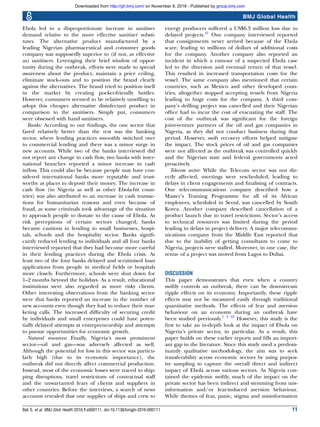
retailer interviews and the consumer survey (figure 7).
Aviation: While international flights were halted to
other Ebola-hit nations35 36
against WHO’s advice,37
they
continued to serve Nigeria. This was due to Nigeria’s
importance as a commercial hub and Nigerian govern-
ment’s rapid implementation of screening measures.
Many airlines that continued to fly to Nigeria had
stopped flying to the other three Ebola-hit countries,
which were much smaller markets. The continued
flights between Nigeria and the rest of the world sup-
ported the previous evidence of minimal risk of Ebola
transmission through air travel with the implementation
of exit screening38
—Nigeria never exported a case of
Ebola despite the continued flights. Nevertheless, load
factors decreased drastically during the outbreak for all
airlines interviewed due to the sensitivity surrounding
air travel and travel restrictions on Nigerians to certain
countries. As airline routes in Africa often mimic govern-
ment restrictions on travel, regional airlines were the
worst affected, with few routes left in operation due to
travel restrictions39
on Nigerians and other Ebola-
Bali S, et al. BMJ Glob Health 2016;1:e000111. doi:10.1136/bmjgh-2016-000111 9
BMJ Global Health
group.bmj.comon November 9, 2016 - Published byhttp://gh.bmj.com/Downloaded from
affected countries. In fact, two airlines reported 40%
and 70% reduction in flight occupancy of flights to and
from Nigeria during the period of Ebola outbreak.
Another interesting impact on the aviation sector was
the change in policy regarding transport of human
remains from outside Nigeria. Nigeria is a funeral
society, where significant cultural importance is given to
the rites of a funeral. As per our interviews, this action
further decreased airline revenue since the transport of
human remains represents a sizeable contribution to the
overall income for a few regional carriers.
Pharmaceuticals: Despite their perceived ability to profit
during an outbreak, several pharmaceutical companies
incurred economic losses. Fear-induced aversion behav-
iour leading to lost sales for pharmaceutical industry was
a major theme. One company reported an overall reduc-
tion in sales by ∼10–15% during the length of the out-
break. Another pharmaceutical and medical devices
company highlighted how their growth rate dropped
from 22 to 23% to ∼1% during the year of the outbreak.
The reduced growth rate was attributed to both Ebola
and Boko Haram attacks in the north. According to our
interviewees, since patients were apprehensive of hos-
pital visits, sales of prescription medication and medical
devices dropped significantly. However, this drop in sales
was offset to some extent by greater disinfectant sales
and the increased sales of antibiotics, as individuals pre-
ferred self-medication to hospital visits. A marginal
increase in sales of antibiotics was also observed in our
consumer survey data (figure 7). The period during the
Ebola outbreak in Nigeria also saw an increase in
the demand for disinfectants and other products used
for sterilisation. According to a pharmaceutical
and medical device company, sales of products such as
an effervescent Chlorine-based tablet (sodium dichloroi-
socyanurate), which is four times more potent than
bleach for disinfection, rose by 200% from 2013 to 2014.
Nevertheless, a 50% drop in sales was reported for other
medical products (such as products for hernia, stitching,
etc).
Consumer goods: Consumer goods companies were
unable to translate the 200–400% surge in demand of
sanitisers (figures reported in interviews) into profit
because of stock-outs and higher procurement costs.
The surge in demand for sanitisers overwhelmed the
existing supply chain of retailers and the suppliers, who
had to resort to more expensive means to meet the
demand. These costs were, in turn, transferred to the
consumer and led to 100–200% increase in the prices of
sanitisers.40
Contrary to the popular perception that
many pharmaceutical companies and consumer goods
companies exploited the conditions to make profits,
findings from this study reveal that increased prices was
a function of more expensive alternative procurement
methods to meet demand. One common method used
to procure additional sanitisers was to import them
quickly via air-freight from international manufactures.
For example, in an interview, one supplier described
flying product in from a sister factory in Indonesia,
which further added to the consumer price. Another
retailer flew sanitisers from London to keep up with the
surge in demand.
Despite the availability of cheaper hygiene alternatives
to sanitisers, misinformation on protective measures for
Figure 7 Change in consumer consumption behaviour during the Nigerian Ebola outbreak (n =114). Respondents were asked
questions if they brought certain commodities or products more or less or same during the Ebola outbreak. Blue signifies
increase in purchase, red signifies decrease in purchase, while grey represents no change in purchasing habit. Numbers
represents percentage of respondents out of the total respondents. The green dotted lines highlight products consumed more
than usual that was also reported in the interviews. Red dotted lines highlight products consumed less than usual that were
reported in the interviews as well.
10 Bali S, et al. BMJ Glob Health 2016;1:e000111. doi:10.1136/bmjgh-2016-000111
BMJ Global Health
group.bmj.comon November 9, 2016 - Published byhttp://gh.bmj.com/Downloaded from
Ebola led to a disproportionate increase in sanitiser
demand relative to the more effective sanitiser substi-
tutes. The alternative product manufactured by a
leading Nigerian pharmaceutical and consumer goods
company was supposedly superior to (if not, as effective
as) sanitisers. Leveraging their brief window of oppor-
tunity during the outbreak, efforts were made to spread
awareness about the product, maintain a price ceiling,
eliminate stock-outs and to position the brand clearly
against the alternatives. The brand tried to position itself
in the market by creating pocket-friendly bottles.
However, consumers seemed to be relatively unwilling to
adopt this cheaper alternative disinfectant product in
comparison to the sanitisers. Simply put, consumers
were obsessed with hand sanitisers.
Banks: According to our findings, the one sector that
fared relatively better than the rest was the banking
sector, where lending practices smoothly switched over
to commercial lending and there was a minor surge in
new accounts. While two of the banks interviewed did
not report any change in cash flow, two banks with inter-
national branches reported a minor increase in cash
inflow. This could also be because people may have con-
sidered international banks more reputable and trust-
worthy as places to deposit their money. The increase in
cash flow (in Nigeria as well as other Ebola-hit coun-
tries) was also attributed to an increase in cash transac-
tions for humanitarian reasons and even because of
fraud, as some criminals took advantage of the situation
to approach people to donate to the cause of Ebola. As
risk perceptions of certain sectors changed, banks
became cautious in lending to small businesses, hospi-
tals, schools and the hospitality sector. Banks signifi-
cantly reduced lending to individuals and all four banks
interviewed reported that they had become more careful
in their lending practices during the Ebola crisis. At
least two of the four banks delayed and scrutinised loan
applications from people in medical fields or hospitals
more closely. Furthermore, schools were shut down for
1–2 months beyond the holidays. As a result, educational
institutions were also regarded as more risky clients.
Other interesting observations from the banking sector
were that banks reported an increase in the number of
new accounts even though they had to reduce their mar-
keting calls. The increased difficulty of securing credit
by individuals and small enterprises could have poten-
tially delayed attempts at entrepreneurship and attempts
to pursue opportunities for economic growth.
Natural resources: Finally, Nigeria’s most prominent
sector—oil and gas—was adversely affected as well.
Although the potential for loss in this sector was particu-
larly high (due to its economic importance), the
outbreak did not directly affect commercial production.
Instead, most of the economic losses were traced to ship-
ping disruptions, travel restrictions of contractual staff
and the unwarranted fears of clients and suppliers in
other countries. Before the interviews, a search of news
accounts revealed that one supplier of ships and crew to
energy producers suffered a US$6.3 million loss due to
delayed projects.41
One company interviewed reported
that consignments never arrived because of the Ebola
scare, leading to millions of dollars of additional costs
for the company. Another company also reported an
incident in which a rumour of a suspected Ebola case
led to the diversion and eventual return of that vessel.
This resulted in increased transportation costs for the
vessel. The same company also mentioned that certain
countries, such as Mexico and other developed coun-
tries, altogether stopped accepting vessels from Nigeria
leading to huge costs for the company. A third com-
pany’s drilling project was cancelled and their Nigerian
office had to incur the cost of evacuating the staff. The
cost of the outbreak was significant for the foreign
joint-venture partners of the oil and gas companies in
Nigeria, as they did not conduct business during that
period. However, swift recovery efforts helped mitigate
the impact. The stock prices of oil and gas companies
were not affected as the outbreak was controlled quickly
and the Nigerian state and federal governments acted
proactively.
Telecom sector: While the Telecom sector was not dir-
ectly affected, meetings were rescheduled, leading to
delays in client engagements and finalising of contracts.
One telecommunications company described how a
Master’s Training Programme for all of its African
employees, scheduled in Seoul, was cancelled by South
Korea. Another company described cancellation of a
product launch due to travel restrictions. Sector’s access
to technical resources was limited during the period
leading to delays in project delivery. A major telecommu-
nications company from the Middle East reported that
due to the inability of getting consultants to come to
Nigeria, projects were stalled. Moreover, in one case, the
venue of a project was moved from Lagos to Dubai.
DISCUSSION
This paper demonstrates that even when a country
swiftly controls an outbreak, there can be downstream
ripple effects on its economy. Importantly, these ripple
effects may not be measured easily through traditional
quantitative methods. The effects of fear and aversion
behaviour on an economy during an outbreak have
been studied previously.1 2 42
However, this study is the
first to take an in-depth look at the impact of Ebola on
Nigeria’s private sector, in particular. As a result, this
paper builds on these earlier reports and fills an import-
ant gap in the literature. Since this study used a predom-
inantly qualitative methodology, the aim was to seek
transferability across economic sectors by using purpos-
ive sampling to capture the overall direct and indirect
impact of Ebola across various sectors. As Nigeria con-
tained the epidemic swiftly, much of the impact on the
private sector has been indirect and stemming from mis-
information and/or fear-induced aversion behaviour.
While themes of fear, panic, stigma and misinformation
Bali S, et al. BMJ Glob Health 2016;1:e000111. doi:10.1136/bmjgh-2016-000111 11
BMJ Global Health
group.bmj.comon November 9, 2016 - Published byhttp://gh.bmj.com/Downloaded from
were common across economic sectors, some sectors
offered unique insights regarding altered consumption.
As qualitative study renders a partial view of the whole
picture, attempts were made in this study to triangulate
the findings from the interviews of the private sector by
complementing it with a survey conducted among con-
sumers to understand the impact of Ebola on the
private sector both from the angle of the private sector
and consumers.
One of the most interesting findings from this study
was the reporting of reduced health service usage as well
as health service interruptions in Nigeria during the out-
break. Decreases in health service usage due to fear
were also seen in Sierra Leone, Guinea and Liberia
during the Ebola outbreak.43
A similar fear of HCWs by
patients was also observed during the SARS epidemic
due to the novelty of SARS, its nosocomial transmission
and the vulnerability of HCWs to infection.42 44–46
Reduced health-seeking behaviour during the Ebola out-
break has been associated with an increase in maternal
mortality in Sierra Leone47 48
as well as an increase in
Malaria, HIV and TB mortality rates in other
Ebola-affected countries.49
As a result, decreased
health-seeking behaviour due to fears of Ebola could
potentially have had a downstream effect on other
health outcomes in Nigeria as well. Health service inter-
ruptions due to abandonment of hospitals by HCWs
have also been reported in other outbreaks previously.
Abandonment of hospital was observed during the
Kikwit Ebola outbreak in Democratic Republic of Congo
when all the HCWs of Kikwit General Hospital fled.50
This phenomenon is not restricted to countries in
Africa. In fact, a WHO survey in the USA showed that
over half of HCWs thought it acceptable not to show up
for work during the Avian influenza outbreak.51
A longer Ebola outbreak could have had a significant
impact on the health systems due to a loss of HCWs
from disease or abandonment.
Our study highlights that Ebola’s most significant
effects in Nigeria stemmed from misinformation and
fear-induced aversion behaviour exhibited by individuals,
organisations and countries. Fear led to trade restric-
tions, changes in consumption patterns, the spread of
rumours and an epidemic of fear.1 2 5 7
This was similar
to the outbreak of SARS. The indirect macroeconomic
impact of SARS on the global economy was estimated to
be US$30–100 billion or US$3–10 million per case.52
Although none of the sectors studied for this thesis were
immune to the fearonomic impact of Ebola, some
sectors were affected more than the others. For
example, the private health sector, the aviation sector
and hotels were the most affected by aversion behaviour.
This is not surprising—during the SARS outbreak, a
reduction in private consumption spending due to fear
generated by SARS was also observed and effected the
tourism, aviation and hotel sectors the most.45
Restaurants in Hong Kong experienced a sharp decline
as well.46 53
Just like SARS, Ebola exerted a
disproportionate psychological impact on people and
their understanding of the disease. While this study
focuses on Ebola, its findings would offer insights into
the impact of future outbreaks and epidemics—in
Nigeria and beyond.
Already, the spread of Zika has been met with consid-
erable fear, fuelling the potential for significant eco-
nomic repercussions.54 55
As Zika continues to spread
across countries increasingly reliant on tourism (eg,
Brazil, the host of the 2016 Summer Olympics, the
Caribbean and more recently South-East Asia), fearo-
nomic effects may be particularly harsh. As per one esti-
mate by the World Bank, in 2016 itself, Zika is estimated
to cost the Latin American and the Caribbean US$3.5
billion or 0.06% of the region’s GDP.56
In such a scen-
ario, our study of fear surrounding the Nigerian Ebola
outbreak offers several insights as one confronts the
fearonomic effects of Zika.
Our findings highlighted that fear-induced aversion
behaviour meant that open markets were almost
deserted during the outbreak. Despite being a major
part of the private sector, we could not study the impact
of Ebola on the informal private sector due to limited
time. Further research on the impact of the outbreak on
the informal sector would add new insights to the study.
Additional questions on the evaluation of level of fear
would have further strengthened this study.
There are also a few limitations in the study, which we
would like to address here. Although a consumer survey
was conducted to validate and triangulate the findings,
our survey data was limited in sample size due to time
constraint. We did not collect information on the age or
ethnicity of the interview respondents. In hindsight, such
information would have added strength and further per-
spective to the study. Although we would have liked some
documents and figures from the interviewees to support
their statements, we were limited in access to the data
due to concerns from the private sector. We also acknow-
ledge that as a qualitative study, much of data is self-
reported by the interviewees and there could be instances
of reporting biases such as selective memory, attribution
or exaggeration of risks. In some cases data shared could
be difficult to independently verify. We tried to overcome
these limitations by ensuring data saturation, asking ques-
tions in different ways to ensure respondent verification,
interviewing different stakeholders and looking for
common themes between interviews, as well as and by
triangulating the findings from the interviews with
consumer survey findings and prior research. We also
conducted the interview in a place comfortable to the
respondents in a culturally competent manner to alleviate
concerns that could lead to bias in reporting.
CONCLUSION
In an era where global is the new local, the impact of
epidemics is no longer limited by geographical boundar-
ies or even economic sectors. In such a scenario, it is
12 Bali S, et al. BMJ Glob Health 2016;1:e000111. doi:10.1136/bmjgh-2016-000111
BMJ Global Health
group.bmj.comon November 9, 2016 - Published byhttp://gh.bmj.com/Downloaded from
essential to battle both epidemics and their fearonomic
effects to ensure epidemic resilience and prevent eco-
nomic devastation due to epidemics.
Handling editor Seye Abimbola
Twitter Follow Sulzhan Bali at @sulzhan
Acknowledgements The authors would like to show their gratitude to Duke
Global Health Institute for funding the field-work. The authors also thank
Private Sector Health Alliance of Nigeria for their support as the on-site
partner for this study. Last but not the least, thanks to all the interviewees
who shared their time, insights and expertise to make this study possible.
Contributors SB and MAP were involved in conception or design of the
study. MAP and KAS contributed by supervising the study. SB took part in
data collection and drafted the manuscript. SB and KAS analysed and
interpreted the data. MAP and KAS revised the manuscript critically for
important intellectual content. SB, KAS and MAP approved the final version of
the manuscript to be published.
Funding The field-work for this research was funded by Duke Global Health
Institute’s student field work grant for Master’s Degree students.
Competing interests None declared.
Ethics approval Duke IRB.
Provenance and peer review Not commissioned; externally peer reviewed.
Data sharing statement No additional data are available.
Open Access This is an Open Access article distributed in accordance with
the Creative Commons Attribution Non Commercial (CC BY-NC 4.0) license,
which permits others to distribute, remix, adapt, build upon this work non-
commercially, and license their derivative works on different terms, provided
the original work is properly cited and the use is non-commercial. See: http://
creativecommons.org/licenses/by-nc/4.0/
REFERENCES
1. Kinsman J. “A time of fear”: local, national, and international
responses to a large Ebola outbreak in Uganda. Global Health
2012;8:15.
2. Ogoina D. Behavioural and emotional responses to the 2014 Ebola
outbreak in Nigeria: a narrative review. Int Health 2016;8:5–12.
3. Gonsalves G, Staley P. Panic, paranoia, and public health—the
AIDS epidemic’s lessons for Ebola. N Engl J Med 2014;371:2348–9.
4. Hickson M, McDonald M, Meijer C, et al. Fear and stigma: the
epidemic within the SARS outbreak. Emerg Infect Dis
2004;10:358–63.
5. World Bank. The economic impact of the 2014 Ebola epidemic: short
and medium term estimates for West Africa. Washington, DC: World
Bank Group 2014. http://documents.worldbank.org/curated/en/
524521468141287875/The-economic-impact-of-the-2014-Ebola-
epidemic-short-and-medium-term-estimates-for-West-Africa
6. Roland TM, Gregory S, Ferreira, Francisco HG, et al. The economic
impact of Ebola on sub-Saharan Africa: updated estimates for 2015.
Washington, DC: World Bank Group, 2015.
7. Analytica O. AFRICA: Ebola economic impact may outstrip health
risk. Oxford: Oxford Analytica Ltd, 2014:1.
8. Helleringer S, Grépin KA, Noymer A, WHO. Ebola virus disease in
West Africa—the first 9 months. N Engl J Med 2015;372:188–9.
9. WHO. WHO Director-General summarizes the outcome of the
Emergency Committee regarding clusters of microcephaly and
Guillain-Barré syndrome. Secondary WHO Director-General
summarizes the outcome of the Emergency Committee regarding
clusters of microcephaly and Guillain-Barré syndrome. 2016. http://
www.who.int/mediacentre/news/statements/2016/
emergency-committee-zika-microcephaly/en/
10. WHO. Ebola Situation Report—2 March 2016 Secondary Ebola
Situation Report—2 March 2016. 2016. http://apps.who.int/ebola/
current-situation/ebola-situation-report-2-march-2016
11. Shuaib F, Gunnala R, Musa EO, et al. Ebola virus disease outbreak
—Nigeria, July–September 2014. MMWR Morb Mortal Wkly Rep
2014;63:867–72.
12. CDC. Ebola Outbreak in West Africa—Outbreak Distribution Map.
Secondary Ebola Outbreak in West Africa—Outbreak Distribution
Map. 2016. http://www.cdc.gov/vhf/ebola/outbreaks/2014-west-africa/
distribution-map.html—areas
13. Baden LR, Kanapathipillai R, Campion EW, et al. Ebola—an
ongoing crisis. N Engl J Med 2014;371:1458–9.
14. Moon S, Sridhar D, Pate MA, et al. Will Ebola change the game?
Ten essential reforms before the next pandemic. The report of the
Harvard-LSHTM Independent Panel on the Global Response to
Ebola. Lancet 2015;386:2204–21.
15. Mordi F. How Nigeria beat Ebola. African business. London: IC
Publications, Inc., 2014:78–9.
16. KPMG. Doing business in Africa—a focus on the business and
economic impact of Ebola. South Africa: KPMG, 2015.
17. Thomas MR, Smith G, Ferreira FH, et al. The economic impact of
Ebola on sub-Saharan Africa: updated estimates for 2015. 2015.
18. Vaz RG, Mkanda P, Banda R, et al. The role of the Polio program
infrastructure in response to Ebola virus disease outbreak in Nigeria
2014. J Infect Dis 2016;213 (Suppl 3):S140–6.
19. WHO. WHO guide to identifying the economic consequences of
disease and injury. World Health Organization, 2009. http://www.
who.int/iris/handle/10665/137037
20. Tong A, Sainsbury P, Craig J. Consolidated criteria for reporting
qualitative research (COREQ): a 32-item checklist for interviews and
focus groups. Int J Qual Health Care 2007;19:349–57.
21. Strauss A, Corbin J. Grounded theory methodology. Handbook of
Qualitative Research, 1994:273–85.
22. Oyeyemi SO, Gabarron E, Wynn R. Ebola, Twitter, and
misinformation: a dangerous combination?. BMJ 2014.
23. Gidado S, Oladimeji AM, Roberts AA, et al. Public knowledge,
perception and source of Information on Ebola virus disease–Lagos,
Nigeria; September, 2014. PLOS Currents 2015. doi:10.1371/
currents.outbreaks.0b805cac244d700a47d6a3713ef2d6db
24. Jin F, Wang W, Zhao L, et al. Misinformation propagation in the age
of twitter. Computer 2014;47:90–4.
25. Fung ICH, Tse ZTH, Cheung CN, et al. Ebola and the social media.
Lancet 2014;384:2207.
26. ABCNews. Nigerian Ebola Hoax Results in Two Deaths. Secondary
Nigerian Ebola Hoax Results in Two Deaths. 2014. http://abcnews.go.
com/Health/nigerian-ebola-hoax-results-deaths/story?id=25842191
27. Griffin A. Ebola outbreak: millionaire preacher TB Joshua ‘sends
4,000 bottles of holy water to Sierra Leone as cure’. Independent 17
August 2014. 2015. http://www.independent.co.uk/news/world/
millionaire-preacher-sends-4000-bottles-of-holy-water-as-ebola-cure-
9674136.html
28. Phillips A. Nigerian official warns pastors and healers to stop making
false Ebola-cure claims. The Washington Post 31 July 2014. 2014.
https://www.washingtonpost.com/news/worldviews/wp/2014/07/31/
nigerian-official-warns-pastors-and-healers-to-stop-making-false-
ebola-cure-claims/
29. Beeching NJ, Fenech M, Houlihan CF. Ebola virus disease. BMJ
2014;349:g7348.
30. Prescott J, Bushmaker T, Fischer R, et al. Postmortem stability of
Ebola virus. Emerg Infect Dis 2015;21:856.
31. Andrews J. Ebola: Governors Avoid Handshaking, Adopt
Clenched-fist Salute. ThisDayOnline. 2014. http://www.thisdaylive.
com/articles/ebola-governors-avoid-handshaking-adopt-clenched-fist-
salute/186297/
32. BBC. UK diplomat dies after ‘heart attack’ in Lagos airport.
Secondary UK diplomat dies after ‘heart attack’ in Lagos airport.
2014. http://www.bbc.com/news/uk-29048035
33. Maduka O, Odia O. Ethical challenges of containing Ebola: the
Nigerian experience. J Med Ethics 2015;41:917–19.
34. Bank W. The economic impact of the 2014 Ebola Epidemic:
short-and medium-term estimates for West Africa. Washington DC:
World Bank, 2014.
35. Worland J. Why One Airline Flies To West Africa Despite Ebola.
Time, 2014. http://time.com/3490961/brussels-airlines-ebola/
36. Anderson M. Ebola: airlines cancel more flights to affected countries.
The Guardian 2014 22 August, 2014. https://www.theguardian.com/
society/2014/aug/22/ebola-airlines-cancel-flights-guinea-liberia-
sierra-leone
37. WHO. 8th meeting of the IHR Emergency Committee regarding the
Ebola outbreak in West Africa. 2015. http://www.who.int
38. Bogoch II, Creatore MI, Cetron MS, et al. Assessment of the potential
for international dissemination of Ebola virus via commercial air travel
during the 2014 West African outbreak. Lancet 2015;385:29–35.
39. Reuters. Travel bans issued in reaction to Ebola. Reuters, 2014.
40. Wynner E. Nigeria: Ebola Causes Scarcity, Increase in Demand for
Hand Sanitizer, Other Products. 2014 13 August. 2014. http://
allafrica.com/stories/201408141312.html
41. Bloomberg. Ebola Affects Bourbon’s Operations As Company
Swings To Loss. Secondary Ebola Affects Bourbon’s Operations As
Bali S, et al. BMJ Glob Health 2016;1:e000111. doi:10.1136/bmjgh-2016-000111 13
BMJ Global Health
group.bmj.comon November 9, 2016 - Published byhttp://gh.bmj.com/Downloaded from
Company Swings To Loss [438 words]. 2014. http://www.bloomberg.
com/news/articles/2014-09-03/bourbon-faces-ebola-damage-in-
nigeria-amid-loss-in-first-half
42. Smith RD. Responding to global infectious disease outbreaks:
lessons from SARS on the role of risk perception, communication
and management. Soc Sci Med 2006;63:3113–23.
43. WHO. Guidance on temporary malaria control measures in
Ebola-affected countries. World Health Organization. 2014.
WHO/HTM/GMP/2014.10
44. Chang HJ, Huang N, Lee CH, et al. The impact of the SARS
epidemic on the utilization of medical services: SARS and the fear of
SARS. Am J Public Health 2004;94:562–4.
45. Fan EX. SARS: economic impacts and implications. Asian
Development Bank. 2003.
46. Naylor CD, Chantler C, Griffiths S. Learning from SARS in Hong
Kong and Toronto. JAMA 2004;291:2483–7.
47. Mukherjee JS, Marsh R. Excess maternal death in the time of Ebola.
Fletcher F World Aff 2015;39:149.
48. Ribacke KJB, van Duinen AJ, Nordenstedt H, et al. The impact of
the West Africa Ebola outbreak on obstetric health care in Sierra
Leone. PLoS ONE 2016;11:e0150080.
49. Parpia AS, Ndeffo-Mbah ML, Wenzel NS, et al. Effects of response to
2014–2015 Ebola outbreak on deaths from Malaria, HIV/AIDS, and
tuberculosis, West Africa. Emerging Infect Dis 2016;22:433.
50. Sokol DK. Ethics and epidemics. Am J Bioeth 2008;8:28–9.
51. Bateman C. Healthcare workers baulk at caring for contagious
patients. S Afr Med J 2015;105:431–2.
52. Chou J, Kuo NF, Peng SL. Potential impacts of the SARS outbreak
on Taiwan’s economy*. Asian Economic Papers 2004;3:84–99.
53. Estimating the global economic costs of SARS. Learning from SARS:
preparing for the next disease outbreak: workshop summary. National
Academies Press. 2004. https://www.ncbi.nlm.nih.gov/books/NBK92473/
54. CNBC. Zika virus worries weigh on the travel industry. Secondary
Zika virus worries weigh on the travel industry. 2016. http://www.cnbc.
com/2016/02/01/zika-virus-worries-weigh-on-the-travel-industry.html
55. FoxNews. Rapidly-spreading Zika virus having financial impact on
US travel industry. Secondary rapidly-spreading Zika virus having
financial impact on U.S. travel industry. 2016. http://latino.foxnews.
com/latino/health/2016/02/02/rapidly-spreading-zika-virus-having-
financial-impact-on-us-travel-industry/
56. WBG. The short-term economic costs of Zika in Latin America and
the Caribbean. The World Bank Group, 2016.
14 Bali S, et al. BMJ Glob Health 2016;1:e000111. doi:10.1136/bmjgh-2016-000111
BMJ Global Health
group.bmj.comon November 9, 2016 - Published byhttp://gh.bmj.com/Downloaded from
sector in Nigeria
fearonomic effects of Ebola on the private
Long shadow of fear in an epidemic:
Sulzhan Bali, Kearsley A Stewart and Muhammad Ali Pate
doi: 10.1136/bmjgh-2016-000111
2016 1:BMJ Glob Health
http://gh.bmj.com/content/1/3/e000111
Updated information and services can be found at:
These include:
References
#BIBLhttp://gh.bmj.com/content/1/3/e000111
This article cites 25 articles, 5 of which you can access for free at:
Open Access
http://creativecommons.org/licenses/by-nc/4.0/non-commercial. See:
provided the original work is properly cited and the use is
non-commercially, and license their derivative works on different terms,
permits others to distribute, remix, adapt, build upon this work
Commons Attribution Non Commercial (CC BY-NC 4.0) license, which
This is an Open Access article distributed in accordance with the Creative
service
Email alerting
box at the top right corner of the online article.
Receive free email alerts when new articles cite this article. Sign up in the
Collections
Topic Articles on similar topics can be found in the following collections
(105)Open access
Notes
http://group.bmj.com/group/rights-licensing/permissions
To request permissions go to:
http://journals.bmj.com/cgi/reprintform
To order reprints go to:
http://group.bmj.com/subscribe/
To subscribe to BMJ go to:
group.bmj.comon November 9, 2016 - Published byhttp://gh.bmj.com/Downloaded from

e000111.full

  • 1.
    Long shadow offear in an epidemic: fearonomic effects of Ebola on the private sector in Nigeria Sulzhan Bali,1 Kearsley A Stewart,1 Muhammad Ali Pate1,2 To cite: Bali S, Stewart KA, Pate MA. Long shadow of fear in an epidemic: fearonomic effects of Ebola on the private sector in Nigeria. BMJ Global Health 2016;1:e000111. doi:10.1136/bmjgh-2016- 000111 Received 21 June 2016 Accepted 28 September 2016 1 Duke Global Health Institute, Duke University, Durham, North Carolina, USA 2 BigWin Philanthropy, Washington, District of Columbia, USA Correspondence to Sulzhan Bali; Sulzhan@gmail.com ABSTRACT Background: The already significant impact of the Ebola epidemic on Guinea, Liberia and Sierra Leone, was worsened by a fear of contagion that aggravated the health crisis. However, in contrast to other Ebola- affected countries, Nigeria fared significantly better due to its swift containment of the disease. The objective of our study was to describe the impact of Ebola on the Nigerian private sector. This paper introduces and defines the term fearonomic effect as the direct and indirect economic effects of both misinformation as well as fear-induced aversion behaviour, exhibited by individuals, organisations or countries during an outbreak or an epidemic. Methods: This study was designed as a cross- sectional mixed-methods study that used semistructured in-depth interviews and a supporting survey to capture the impact of Ebola on the Nigerian private sector after the outbreak. Themes were generated from the interviews on the direct and indirect impact of Ebola on the private sector; the impact of misinformation and fear-based aversion behaviour in the private sector. Results: Our findings reveal that the fearonomic effects of Ebola included health service outages and reduced healthcare usage as a result of misinformation and aversion behaviour by both patients and providers. Although certain sectors (eg, health sector, aviation sector, hospitality sector) in Nigeria were affected more than others, no business was immune to Ebola’s fearonomic effects. We describe how sectors expected to prosper during the outbreak (eg, pharmaceuticals), actually suffered due to the changes in consumption patterns and demand shocks. Conclusion: In a high-stressor epidemic-like setting, altered consumption behaviour due to distorted disease perception, misinformation and fear can trigger short-term economic cascades that can disproportionately affect businesses and lead to financial insecurity of the poorest and the most vulnerable in a society. INTRODUCTION The impact of fear during an infectious disease is often considerable.1 2 Outbreaks of infectious diseases affect nations in two dis- tinct ways—through direct effects of the Key questions What is already known about this topic? ▸ Infectious diseases have been known to trigger fear-related behavioural changes across the public. ▸ The significant impact of Ebola on affected countries of Guinea, Liberia and Sierra Leone, was worsened by a fear of contagion that aggra- vated the health crisis. ▸ In contrast to other Ebola-affected countries, Nigeria contained the outbreak within 93 days. What are the new findings? ▸ This study is the first to take an in-depth look at the impact of Ebola on Nigeria’s private sector. ▸ This paper shows that even when a country swiftly controls an outbreak, there can be down- stream ripple effects on its economy. ▸ Even sectors, which were expected to prosper during the outbreak (eg, pharmaceuticals), actu- ally suffered due to the changes in consumption patterns and demand shocks. Recommendations for policy ▸ It is necessary to address dangers of misinfor- mation and fear-induced aversion behaviour during an outbreak. Awareness efforts should be combined with swift risk communication, quick dissemination of accurate information and syn- chronised response to address misinformation and stigma. ▸ We recommend engaging community and reli- gious leaders and the use of tools such as social media, adverts and radio to ensure disease awareness, mobilise volunteers and to fight misinformation. ▸ The fearonomic effects of outbreaks should be a strong motivator for businesses to assist gov- ernment efforts in epidemic response. The private sector can be a partner in building com- munity trust in disease control efforts and in ensuring dissemination of accurate disease pre- vention information. ▸ To protect affected countries from the fearonomic effects of outbreaks, it is essential that the International Health Regulations are upheld and that countries do not restrict trade or travel against WHO advice during public health emergencies. Bali S, et al. BMJ Glob Health 2016;1:e000111. doi:10.1136/bmjgh-2016-000111 1 Research group.bmj.comon November 9, 2016 - Published byhttp://gh.bmj.com/Downloaded from
  • 2.
    disease itself, andthrough indirect behavioural response to the disease.1 2 The direct impact of a disease is cap- tured by both the mortality and morbidity associated with the disease, as well as losses in productivity incurred as a result of the disease. At the same time, emerging infectious diseases also affect public perceptions, indu- cing fear and fear-related corresponding behavioural effects as occurred with AIDS,3 SARS,4 and Ebola.1 Fear can drive significant changes in human behaviour, leading to border closures and the disruption of busi- nesses, trade, tourism and social events.5 In fact, fear- related behavioural effects were responsible for 80–90% of the economic impact of SARS, which depressed the economic growth of affected countries by 1–5% in 2004.6 7 As Brazil geared up to host the 2016 Olympics, the fear of Zika had already overshadowed the benefits associated with such a landmark event. The declaration of Zika as a Public Health Emergency of International Concern (PHEIC)8 9 follows in the immediate aftermath of another PHEIC-Ebola outbreak in West Africa, that killed over 11 300 people and infected over 28 000.10 The Ebola outbreak in West Africa started in December 2013 in Guinea.11 12 By July 2014, the out- break had spread to other neighboring West African nations, including Liberia, Sierra Leone, Nigeria, Mali, and Senegal.11 12 The outbreak was declared a PHEIC by the WHO on 8 August 2014.8 For the first time, the downstream effects of an Ebola outbreak transcended borders of countries and continents, reminding the global health community that infectious diseases respect no borders, religion or socioeconomic status.13 The lack of timely control of Ebola revealed systemic gaps and weaknesses in global health systems, institutions and cap- acities regarding epidemic control.14 The impact of Ebola on affected countries of Guinea, Liberia and Sierra Leone, was worsened by a fear of contagion that aggravated the health crisis.6 15 16 In fact, as per the World Bank estimates, the total cost of Ebola in Liberia, Guinea and Sierra Leone are estimated to be a loss of US$2.2 billion.5 17 However, in contrast to other Ebola-affected nations in West Africa, Nigeria fared sig- nificantly better: the Nigerian government responded to the outbreak swiftly and Nigeria was declared as Ebola-free on 20 October 2014.18 The economic cost incurred by Nigeria due to the Ebola outbreak was esti- mated to be US$186 million.6 16 Although significant, this amount was much less in comparison to its GDP (0.5% of its GDP).6 16 It is essential to note that the Ebola outbreak in West Africa not only significantly impacted health systems and consumed health resources in the affected countries, but it also led to limited mobil- ity, travel restrictions and disruptions across public and the private sectors.6 15 16 While considerable scholarly attention has been paid to understanding and investigating the direct effects of an epidemic, our understanding of the indirect effects that arise from fear of the disease during an outbreak is limited. We investigated the impact of Ebola on Nigeria’s private sector. The rapid Ebola response action by both Lagos State and the Federal governments limited the direct impact of Ebola. However, our findings shed con- siderable light on the role of misinformation and aver- sion behaviour during an outbreak. In this paper, we introduce a new term—‘fearonomic effects’—that we define as the direct and the indirect economic effects of both misinformation and fear-induced aversion behav- iour, exhibited by individuals, organisations or countries during an outbreak or epidemic. A focus on only the direct effects of an epidemic significantly underestimates the true cost of disease and fails to account for aversion and other fear-related consequences experienced during an epidemic.19 METHODS Study design and setting This study was designed as a cross-sectional mixed- methods study that used semistructured in-depth inter- views and a supporting survey to capture the impact of Ebola on the Nigerian private sector retrospectively after the outbreak (figure 1). Data were collected in accord- ance with the consolidated criteria for reporting qualita- tive research guidelines.20 The data were collected in Lagos, Nigeria from May 2015 to September 2015. As the objective of the study was to explore and assess the holistic impact of Ebola (both direct and indirect) on the Nigerian private sector, use of qualitative methods of in-depth semistructured interview and survey was deemed appropriate. Recruitment of participants and data collection In-depth interviews: Snowballing and media database (LexisNexis) search was used to identify the participants to conduct in-depth interviews. We conducted keyword searches ‘Nigeria’, ‘Ebola’, ‘Private sector’ between 1 May 2014 and 1 May 2015. Texts reviewed included news- paper clippings and ‘grey’ literature. Purposive sampling was used to create the researcher’s guide to key stake- holders names and economic sectors. The list was cross- checked via snowballing with key informants from our partner host organisation, Private Sector Health Alliance of Nigeria, and the public sector key informants closely involved in Nigeria’s Ebola response. These experts com- mented on the overall impact of Ebola on the Nigerian economy and the disease’s impact on the private sector from the vantage of public and private sector interac- tions. For this study, over 127 key informants across Nigeria were contacted via personal referrals, emails, LinkedIn, phone and in-person office visits; 114 were fol- lowed, and 76 interviews were conducted. Interviews were conducted until thematic saturation was reached. The in-depth interviews were conducted in English and lasted ∼60–90 min each. The corresponding author conducted the interviews, which were audio recorded. The interviews were mostly conducted face to face with the respondents in a comfortable setting to allow the 2 Bali S, et al. BMJ Glob Health 2016;1:e000111. doi:10.1136/bmjgh-2016-000111 BMJ Global Health group.bmj.comon November 9, 2016 - Published byhttp://gh.bmj.com/Downloaded from
  • 3.
    gathering of additionalinformation by observation as well. However, due to logistical or security constraints, nine interviews were conducted via telephone or Skype and recorded using Skype Recorder software. Survey: The survey was designed to supplement the qualitative findings. Interim findings from the interviews informed the survey instrument, which was used to tri- angulate findings from the interviews from the vantage of consumers. The consumer survey also included ques- tions regarding the perception and awareness of Ebola among the urban population in Lagos. The survey was prepared using the Qualtrics electronic survey platform. The survey was administered both online and as a paper- based questionnaire. After testing the survey, the online survey was administered via social media platforms of local Nigerian contacts. The link was live for 4 days (between 11 August and 15 August 2015) and special measures were taken to ensure retaking of the survey was not possible. While online surveys have distinct advantages in an urban metropolis setting such as that of Lagos (controlling for geographical location, ease of administering, low cost, speed), it also has disadvantages such as low response rate and a sample selection skewed to only people with internet access. To compensate for the drawbacks of an online survey, paper-based surveys were also administered across three different locations in Lagos over a span of 2 days (between 13 and 15 August 2015). Popular markets and shopping malls (Balogun market, Palms shopping mall, Spar) were chosen as the best sites to capture consumer perceptions. Convenience sampling was used to conduct the survey. However, pur- posive measures were taken to ensure a somewhat equit- able distribution of gender and ages. Survey data was collected using structured, survey team-administered questionnaires on sociodemographic characteristics, knowledge of Ebola, perception, behavioural practices and sources of information. Forms that were more than 50% incomplete were excluded from the sample. Survey administration assistants were recruited, and three gender-balanced teams (1 girl, 1 boy) were formed to administer the paper-based surveys. The team was trained in survey administration by the author a day before the survey administration. The teams were fluent in English, local Yoruba and Pidgin dialects to increase cultural competence. Data analysis This thesis uses the interpretivist approach of grounded theory to analyse the qualitative data. In the grounded theory approach, interpretations are continually derived from the raw data with comparative analysis as the key themes emerge from the data.21 The processes of coding, memos and diagrams were used to analyse the data, and the data was interpreted continuously throughout the process to identify key themes and subthemes. Audio recording of the interviews were transcribed, and the text was analysed using a two-step approach. Primary coding was performed using Word. Analytic memos were written to summarise and organise the data into major themes by combining the initial coding insights for the businesses within each of the economic sectors. Relevant quotes were incorporated into the emerging themes within the memos. Key themes were allowed to emerge from the data and supplemented with literature review where appropriate. The completed memos were reviewed and uploaded to the qualitative analysis software Dedoose to enable secondary coding to identify overarching themes across sectors and ensure credibility and generalisability Figure 1 Study Design: This study was designed as a cross-sectional mixed-methods study and conducted in Lagos, Nigeria from May to September 2015. The numbers in the figure represents the number of businesses or stakeholders interviewed (in bold) and the number of persons interviewed respectively for each sector. (*) Product overlap, for example, sanitizers (**) Includes private sector hospital owned by Oil & Gas company that serves both public sector staff and private sector staff, includes both Ebola affected hospitals in Lagos. Bali S, et al. BMJ Glob Health 2016;1:e000111. doi:10.1136/bmjgh-2016-000111 3 BMJ Global Health group.bmj.comon November 9, 2016 - Published byhttp://gh.bmj.com/Downloaded from
  • 4.
    of emerging themes.Representative quotes were identi- fied to support each of the primary themes, and the cor- responding memos and transcripts for each quote were revisited to contextualise participants’ words within their overall narratives. The survey data was analysed using Qualtrics and Excel as a supplement to the qualitative findings from the in-depth interviews. RESULTS For the in-depth interviews, 58% of the interviewees were male and 42% were female. The profiles of the intervie- wees were diverse, ranging from Heads of corporate com- munications, Directors, Government Affairs, Medical Officers, Healthcare workers, CEOs, Risk Managers, Country Directors, to HR executives. For the survey, of the 119 respondents, 55% of the respondents were male and 45% were females. About 31% of respondents were 18–24 years old, 58% were 25–39 years old, 9% were 40–60 years old and 2% were over 60 years old. Among the respondents, 2% had no schooling, 3% had been educated up to primary school, 22% had been edu- cated up to secondary school level, 11% had a diploma or vocational training, 41% had undergraduate degrees, 20% had Master’s degrees and 1% had a doctoral degree. The findings are presented according to the five themes identified: (1) The origin of fear, that is, Misinformation triggered fear and promoted high-risk behaviour; (2) The impact of fear on the economy, that is, Fearonomic effects amplified the impact of the disease on the economy; (3) The impact of fear on indi- viduals, that is, Fearonomic effects included stigma, dis- crimination and collateral loss of lives; (4) The impacts of fear on the health system, that is, Fearonomic effects included the disruption of health services; and (5) The impact of fear on specific business, that is, Fearonomic effects impacted on a broad range of businesses. Misinformation triggered fear and promoted high-risk behaviour It was the information; the major thing at that period was the information. People were panicking more because of lack of information.—(Male, Nigerian, Corporate Affairs, Oil & Gas) Many people drank salt water. One of my brother’s friends drank and ended up in the hospital because he was hypertensive. Luckily he didn’t have a stroke.— (Female, Nigerian, Head Matron at a facility in Victoria Island, Lagos) Because we’ve heard so much about this disease, about how you touch somebody and you have it.—(Male, Nigerian, Business Development Executive, Pharmaceutical Sector). From the way it was presented, its so easy to contact and spread through door handles, stairways hand rails, through mere contacts like hand shakes.—(Female, Nigerian, Sales Manager, Hospitality This staff is okay he left today he was okay, the next day he comes to work, how are we sure he is okay, how are sure he has not touched someone that has that.— (Female, GM, External Affairs & Communication, Oil & Gas) Misinformation and myths regarding Ebola were fuelled by the novelty of the disease in the region, international media attention and the lack of accurate information about the disease. As Ebola was a novel disease in Nigeria, there was a significant lack of information regarding its transmission, aetiology and case manage- ment. Consequently, after the first case of Ebola was reported in Nigeria,11 social media platforms saw a sharp increase in conversations regarding Ebola.22 Social media activity fuelled rumours as people sought any available information on Ebola—whether it came from credible resources or not. According to our survey in Lagos (n=110); social media (71%), television (68%), radio (47%) and friends (52%) were the top sources of information on Ebola (figure 2). Although reliance on television and radio is similar to another study on Ebola conducted in Lagos,23 we report a higher reliance on social media. This dispar- ity could be attributed to a higher proportion of younger respondents in our consumer perception survey (89% were aged 18–40 years, compared to 75% in the other study) and a significantly higher proportion of postsecondary educated individuals in our sample (73% compared to 31% in the other study). While social media can facilitate the rapid dissemination of informa- tion, its credibility may be compromised.22 Unsurprisingly, Ebola rumours circulated quickly, reflect- ing general panic and mistrust of political leadership.24 Almost all interviews mentioned the rumours of drink- ing salt water or bathing in salt water to prevent Ebola. One of the nurses interviewed mentioned how 80% of patients who came to the facility at that time confirmed that they bathed with salt and water before visiting the hospital. Rumours and misinformation about prevention and transmission of Ebola (drinking salt water, bathing in salt water, Ebola transmission from pork or suya or through touch) encouraged high-risk behaviour and created a false sense of security, which proved fatal in some cases.2 22 25 26 Another notable example of misin- formation in the Nigerian context were claims of ‘holy water’ touted by a Nigerian Pastor to have the ability to cure Ebola and other infectious diseases.27 Access to this ‘holy water’ was one of the main reasons the index patient broke quarantine to travel to Lagos, a fact that was highlighted in three separate interviews (two males and one female). After the outbreak, the Nigerian government took strict measures to ensure that such claims were no longer made.28 Despite awareness efforts, 4 Bali S, et al. BMJ Glob Health 2016;1:e000111. doi:10.1136/bmjgh-2016-000111 BMJ Global Health group.bmj.comon November 9, 2016 - Published byhttp://gh.bmj.com/Downloaded from
  • 5.
    misconceptions regarding thetransmission of Ebola con- tinued to circulate. Our survey confirmed the common misconceptions that Ebola could spread via touch (68%), pork consumption (28%) and even air (23%) (figure 3). For example, while some interviewees high- lighted their company’s awareness and disease education efforts, they went on to mention that Ebola could be transmitted from touch—evidence that misinformation is difficult to dislodge. Interviewees working in places with strong temperature checks were still worried that the disease could ‘spread through door handles’. The clustering of the disease at the index hospital bolstered the belief that Ebola could be transmitted through touch. However, it is important to note that Ebola becomes highly infectious with the appearance of symp- toms and ultimately spreads through body fluids.29 30 Fearonomic effects amplified the impact of the disease on the economy But then, if you look at the effects again, a lot of busi- nesses went down, the airline industry was severely affected, hospitality industry severely affected, in fact, a lot of the hotels, people stopped coming, and it took quite a while again to start getting them back to come. Some sporting facilities, golf clubs, foreigners stopped coming; schools were shut for a while, a lot of the hospi- tals were shut. That is another issue again. More people died of diseases other than Ebola.—(Male, Nigerian, Lagos State Government) One of the most prominent observations from our study was that the perception of Ebola carried more weight than the disease itself. While Ebola is not highly conta- gious except at death, the media misrepresented it as a highly contagious disease, thereby reinforcing misinfor- mation and enhanced aversion behaviour.2 People were terrified of the disease due to its high fatality rate and its misrepresentation as a highly infectious disease. All interviewees mentioned a change in consumption habits in the face of fear and misinformation during the Ebola outbreak in Nigeria. These effects of fear-based aversion behaviour and misinformation exhibited by individuals, organisations and countries led to ‘fearonomic effects’ on businesses and the economy. For instance, people started shopping earlier in the day to avoid crowds and the mix of goods they purchased was different compared to the period before the outbreak. People stopped going to crowded areas such as open markets, cinemas, clubs and super markets. This behaviour change was also reported in the survey (figure 4). According to our survey, 75% of respondents stayed away from crowded places, 65% decreased the use of public transport and 48% said they reduced the number of times they went to a store (figure 4). The fear of Ebola also led to an increase in mistrust, as people were unable to freely talk to each other, hug or shake hands. These changes due to misinformation and fear-induced aversion behaviour, in turn, affected the retailers in the marketplace leading to fearonomic effects. The effects of fear-induced aversion behaviour are multidimensional, and affect the economy through distinct effects on the health and behaviour of indivi- duals, the financial performance of businesses, and dis- ruptions to business continuity (figure 5). While the fearonomic effects due to Ebola were inter-related and ultimately affected the entire economy, they also impacted individual lives. According to our survey, 16% of respondents reported losing jobs due to Ebola, while Figure 2 Social media, television, and radio were top sources of information during the Ebola outbreak in Nigeria (n=110). We asked respondents about how did they source their information on Ebola during the outbreak. The respondents ticked all that applied among the given choices. About 71% respondents mention social media as a source of information, 67% mentioned television as a source of information, while 52% and 47% mentioned friends and radio hosts as source of information. NGOs, non-governmental organisations. Bali S, et al. BMJ Glob Health 2016;1:e000111. doi:10.1136/bmjgh-2016-000111 5 BMJ Global Health group.bmj.comon November 9, 2016 - Published byhttp://gh.bmj.com/Downloaded from
  • 6.
    Figure 4 Alteredbehaviour due to fear of Ebola. Respondents were asked Yes or No, to questions on altered social habits, behaviour or visits to certain businesses during the Nigerian Ebola outbreak. Respondents were asked to tick all that applied if due to Ebola outbreak they performed the aforementioned activities. Numbers in blue represent percentage of respondents that said yes (n =105) while red represents the percentage of respondents that answered no. (* ) Refers to themes that were reported in the interviews. Figure 3 How is Ebola transmitted? The respondents were asked to tick all that applied on how Ebola is transmitted (n=110). Red dotted lines highlight prevailing misinformation on the transmission of Ebola. About 68% respondents thought Ebola is transmitted through touch, while 28% and 23% respondents thought Ebola was transmitted through pork and air respectively. All three instances reflect the hysteria and misinformation on the transmission of Ebola. 6 Bali S, et al. BMJ Glob Health 2016;1:e000111. doi:10.1136/bmjgh-2016-000111 BMJ Global Health group.bmj.comon November 9, 2016 - Published byhttp://gh.bmj.com/Downloaded from
  • 7.
    28% experienced aloss of income, 38% bought food in bulk and 29% paid higher food prices (figure 6). These statistics illustrate how the fearonomic effect can poten- tially lead to temporary financial insecurity during an epidemic. Fearonomic effects included stigma, discrimination and collateral loss of lives One of our housekeeping officers were ejected alongside her husband, because they believed they had Ebola, in short, they believed we all working here escaped from where we were locked up somewhere to spread the virus.- (Male, Employee, Index hospital) The tricycles wouldn’t go to Obalende because everybody knew XXXX (index patient) was taken to a hospital in Obalende.—(Female, Corporate Communications Head, Foundation) There was a doctor at XXXX hospital. It happened to be kids of hers or something, happened to be in our one only Indian school and all these parents of this Indian community said to the school that their kids would not be coming to school, we will not be sending our kids, that’s one sad thing that happened.—(Male, Country Manager, Retailer) Even as a new hands-free greeting emerged during the Ebola outbreak, heightened fear led to an increase in social mistrust.2 31 Our informants reported a decrease in trust, particularly directed towards those from poorer socioeconomic backgrounds, healthcare workers, people from Ebola-affected countries and the visibly ill. Multiple interviewees recounted cases such as that of the British Deputy High Commissioner, who lost his life to cardiac arrest when no one came forward to help him due to suspicions of Ebola.32 Misinformation also resulted in unwarranted malicious behaviour towards individuals and businesses, endangering livelihoods or community’s health. During the interviews, numerous accounts of stigma and discrimination faced by health- care workers (HCWs), Ebola survivors and their families were shared. Our interviewees highlighted instances such as, how one of the nurses who had survived experi- enced stigma at a meeting when the host publicly announced that he would not hug her to protect himself. Out of fear, a landlord evicted the children of one of the victims, while the fiancée of another victim was fired after her death. Fearonomic effects included the disruption of health services Patients were not coming; they would stay in their houses. They prefer over the counter drugs. They don’t Figure 5 Framework describing the fearonomic effect of an Ebola on businesses and economy Misinformation, disease’s case fatality rate, perception of disease due to media hype, knowledge gap due to disease being new to the area or a new/emerging disease are all factors that amplify fearonomic effects of an epidemic by enhancing misinformation and/or fear-based aversion behaviour. We define fearonomic effects as the direct and the indirect economic effects of both misinformation and fear-induced aversion behaviour, exhibited by individuals, organizations, or countries during an outbreak or epidemic. Bali S, et al. BMJ Glob Health 2016;1:e000111. doi:10.1136/bmjgh-2016-000111 7 BMJ Global Health group.bmj.comon November 9, 2016 - Published byhttp://gh.bmj.com/Downloaded from
  • 8.
    come. They managethemselves at home until it is even critical that’s when they come. It really affected the patients’ attendance.—(Female, Head Matron, Private Healthcare Facility) Even until now, people are still afraid of entering, but we keep on telling them that there are no traces of Ebola in here anymore.—(Medical Director, Index hospital) Ebola-impacted Nigeria’s health sector in a unique way through fear-induced aversion behaviour from both HCWs and the healthcare seekers. Hospitals suffered major financial losses due to reduced health-seeking behaviour among individuals, resulting in a sharp drop in patient volume. All hospitals interviewed reported a negative impact on revenue. The patient volume decreased by 35–50% even without a case of Ebola in the facility. One private sector hospital reported a 50% reduction in overall patient volume. In another facility, outpatient volume dropped by 35% during the out- break, while the emergency room usage decreased by 40%. A public sector hospital with an Ebola-infected patient reported a reduction of patient volume by 40– 50%, even after the hospital was declared Ebola-free. There was significant fear of visiting hospitals. One facil- ity recalled a case where the patient refused to have her blood pressure checked out of fear of Ebola. The fear of HCWs and hospitals was partially attributed to the uses of personal protective equipment (PPE). Patients thought the staff dealing with febrile patients looked like astronauts. The attire combined with the risk of being sent to the isolation facility exacerbated the level of fear. These qualitative findings were consistent with the survey conducted in Lagos. According to the survey, 43% of respondents mentioned they reduced their visits to hospitals more than usual (figure 4). One of the worst affected among the healthcare facil- ities was Ebola’s ‘ground zero’ in Nigeria. The facility that admitted the imported index case of Ebola in Nigeria lost key members of staff to the disease, and both its employees and the institution were subjected to stigma. Apart from the loss of expertise and capacity, the hospital lost significant market share, revenue and brand equity to the fearonomic effect of Ebola. Patient volume declined by 90% after the hospital was declared Ebola-free and a year later, only 20% of patients had returned to the facility. The aforementioned hospital was a stark example of how a leading healthcare facility could lose market share and revenue after a case of Ebola. As a result, other hospitals started turning febrile patients away, violating their obligation to provide care— a phenomenon that has also been documented in the prior literature.33 Some hospitals started referring all febrile patients to the Ebola isolation facility, which could have created significant pressure on the facility if the outbreak continued over a longer period. Owing to reduced patient volume and the resulting decrease in hospital revenues, salaries of HCWs were delayed in some facilities. This, combined with the fear of stigma and getting infected, also led to an abandon- ment of hospitals by HCWs and non-clinical hospital Figure 6 Fearonomic effects of an infectious disease outbreak or epidemic can lead to financial insecurity due to fear and aversion behaviour. Respondents were asked if because of Ebola they experienced any of the aforementioned options between July and October 2014 (n =110). About 16% respondents reported losing jobs due to the Ebola outbreak, 29% respondents reported higher food prices in 2014 due to Ebola outbreak, 38% respondents reported they brought food in bulk amount due to Ebola outbreak, 28% respondents reported loss of income due to the Ebola outbreak and 79% respondents reported they stopped hugging due to the Ebola outbreak. 8 Bali S, et al. BMJ Glob Health 2016;1:e000111. doi:10.1136/bmjgh-2016-000111 BMJ Global Health group.bmj.comon November 9, 2016 - Published byhttp://gh.bmj.com/Downloaded from
  • 9.
    staff in Lagos.For example, at the hospital with the index Ebola patient, a few nurses quit their positions to escape the stigma of working with patients with Ebola. Another hospital reported the resignation of 10 staff members. Interestingly, both fear and absenteeism/ abandonment was reported to be more rampant among non-frontline medical staff than frontline staff. This could be due to non-frontline staff feeling more vulner- able without the PPE that must be provided to the HCWs. Fearonomic effects impacted on a broad range of businesses I had stopped selling pork because I think it was somehow related to Ebola virus, so we stopped selling pork to our customers, we stopped serving pork. We started selling only chicken and beef in our menu.— (Male, Nigerian, Manager, Retail Mall) Sales declined because people didn’t go to hospitals. People were self-medicating. So sales declined but not huge.—(Male, Nigerian, Managing Director, Pharmaceutical) Because Nigeria is a big market for all the airlines and they cannot afford to stop flying to Nigeria.—(Male, Nigerian, GM West Africa, Major International Airline) We saw a greater demand for antibiotics.—(Male, Managing Director, Pharmaceutical). We were not prepared for it (sanitizer demand surge) commercially because we didn’t have the large volume of products to manage the situation locally. So it was during the outbreak we had to start importing. So what we could have shipped, we had to fly it down, and the cost was higher so we couldn’t take advantage of the situation.— (Male, Head of Compensations & Benefits, FMCG). As far as the average man was concerned, the world told the average man that hand sanitizers were the way to go. —(Male, National Sales Manager, Pharmaceutical company) They were having losses during that period, so that period is not the time to lend.—(Male, Directorate Head, Lagos & West Africa, Major Bank). One of our vessels was suspected to be carrying an Ebola patient which was not true. Turns out to be just a fever, but because of that suspicion the vessel had to be diverted, returned back, and that was a lot of money apart from the cost of gas and cost of transportation back to Nigeria and all that was involved.—(Male Corporate Affairs, Natural Resource Company). Despite swift control efforts, no business was immune to the fear surrounding the disease. The outbreak was a period where revenues dropped, and operating costs spiked due to investments in protection measures and staff shortages. Across all sectors, meetings were resched- uled and projects were delayed due to consultants and contractual staff’s inability to travel to Nigeria out of fear. This led to opportunity costs in the form of missed commercial opportunities. For example, during our interview, a major oil and gas company estimated its cost of rescheduling meetings due to the outbreak to be US $2–3 million, while telecom companies reported a trans- fer of projects to outside Africa altogether and cancella- tion of overseas training for Nigerian employees. Hospitality and retail: Limited mobility coupled with fear can lead to severe negative effects particularly in service sectors such as tourism and trade. Companies involved in travel and hospitality were affected as indivi- duals who feared infection limited their movements. Occupancy rates in two hotels interviewed dropped pre- cipitously from 80% to 12% and 20% respectively. Another adverse effect of Ebola on the hospitality sector stemmed from online cancellations. Many hotels offer restricted discounted rates online—rates that are cheaper but are non-refundable in case of cancellation. During the outbreak, hotels had to relax their refund policy regarding cancelled bookings to include those that booked the discounted rate. Given the significant number of online cancellations, this had a drastic impact. All three mall retailers interviewed reported a 30–40% reduction in foot traffic, which reflected the 20–40% decline in revenue of malls highlighted in a previous study.34 Changes in consumption and mobility also impacted retailers, restaurant owners and the informal sector as people exhibited aversion to any food products not made in front of them. Sales of street food, pork, meat and bakery were particularly affected due to fear- related aversion behaviour and misinformation on how Ebola was transmitted. Reduced consumption of afore- mentioned products due to fear was highlighted in the retailer interviews and the consumer survey (figure 7). Aviation: While international flights were halted to other Ebola-hit nations35 36 against WHO’s advice,37 they continued to serve Nigeria. This was due to Nigeria’s importance as a commercial hub and Nigerian govern- ment’s rapid implementation of screening measures. Many airlines that continued to fly to Nigeria had stopped flying to the other three Ebola-hit countries, which were much smaller markets. The continued flights between Nigeria and the rest of the world sup- ported the previous evidence of minimal risk of Ebola transmission through air travel with the implementation of exit screening38 —Nigeria never exported a case of Ebola despite the continued flights. Nevertheless, load factors decreased drastically during the outbreak for all airlines interviewed due to the sensitivity surrounding air travel and travel restrictions on Nigerians to certain countries. As airline routes in Africa often mimic govern- ment restrictions on travel, regional airlines were the worst affected, with few routes left in operation due to travel restrictions39 on Nigerians and other Ebola- Bali S, et al. BMJ Glob Health 2016;1:e000111. doi:10.1136/bmjgh-2016-000111 9 BMJ Global Health group.bmj.comon November 9, 2016 - Published byhttp://gh.bmj.com/Downloaded from
  • 10.
    affected countries. Infact, two airlines reported 40% and 70% reduction in flight occupancy of flights to and from Nigeria during the period of Ebola outbreak. Another interesting impact on the aviation sector was the change in policy regarding transport of human remains from outside Nigeria. Nigeria is a funeral society, where significant cultural importance is given to the rites of a funeral. As per our interviews, this action further decreased airline revenue since the transport of human remains represents a sizeable contribution to the overall income for a few regional carriers. Pharmaceuticals: Despite their perceived ability to profit during an outbreak, several pharmaceutical companies incurred economic losses. Fear-induced aversion behav- iour leading to lost sales for pharmaceutical industry was a major theme. One company reported an overall reduc- tion in sales by ∼10–15% during the length of the out- break. Another pharmaceutical and medical devices company highlighted how their growth rate dropped from 22 to 23% to ∼1% during the year of the outbreak. The reduced growth rate was attributed to both Ebola and Boko Haram attacks in the north. According to our interviewees, since patients were apprehensive of hos- pital visits, sales of prescription medication and medical devices dropped significantly. However, this drop in sales was offset to some extent by greater disinfectant sales and the increased sales of antibiotics, as individuals pre- ferred self-medication to hospital visits. A marginal increase in sales of antibiotics was also observed in our consumer survey data (figure 7). The period during the Ebola outbreak in Nigeria also saw an increase in the demand for disinfectants and other products used for sterilisation. According to a pharmaceutical and medical device company, sales of products such as an effervescent Chlorine-based tablet (sodium dichloroi- socyanurate), which is four times more potent than bleach for disinfection, rose by 200% from 2013 to 2014. Nevertheless, a 50% drop in sales was reported for other medical products (such as products for hernia, stitching, etc). Consumer goods: Consumer goods companies were unable to translate the 200–400% surge in demand of sanitisers (figures reported in interviews) into profit because of stock-outs and higher procurement costs. The surge in demand for sanitisers overwhelmed the existing supply chain of retailers and the suppliers, who had to resort to more expensive means to meet the demand. These costs were, in turn, transferred to the consumer and led to 100–200% increase in the prices of sanitisers.40 Contrary to the popular perception that many pharmaceutical companies and consumer goods companies exploited the conditions to make profits, findings from this study reveal that increased prices was a function of more expensive alternative procurement methods to meet demand. One common method used to procure additional sanitisers was to import them quickly via air-freight from international manufactures. For example, in an interview, one supplier described flying product in from a sister factory in Indonesia, which further added to the consumer price. Another retailer flew sanitisers from London to keep up with the surge in demand. Despite the availability of cheaper hygiene alternatives to sanitisers, misinformation on protective measures for Figure 7 Change in consumer consumption behaviour during the Nigerian Ebola outbreak (n =114). Respondents were asked questions if they brought certain commodities or products more or less or same during the Ebola outbreak. Blue signifies increase in purchase, red signifies decrease in purchase, while grey represents no change in purchasing habit. Numbers represents percentage of respondents out of the total respondents. The green dotted lines highlight products consumed more than usual that was also reported in the interviews. Red dotted lines highlight products consumed less than usual that were reported in the interviews as well. 10 Bali S, et al. BMJ Glob Health 2016;1:e000111. doi:10.1136/bmjgh-2016-000111 BMJ Global Health group.bmj.comon November 9, 2016 - Published byhttp://gh.bmj.com/Downloaded from
  • 11.
    Ebola led toa disproportionate increase in sanitiser demand relative to the more effective sanitiser substi- tutes. The alternative product manufactured by a leading Nigerian pharmaceutical and consumer goods company was supposedly superior to (if not, as effective as) sanitisers. Leveraging their brief window of oppor- tunity during the outbreak, efforts were made to spread awareness about the product, maintain a price ceiling, eliminate stock-outs and to position the brand clearly against the alternatives. The brand tried to position itself in the market by creating pocket-friendly bottles. However, consumers seemed to be relatively unwilling to adopt this cheaper alternative disinfectant product in comparison to the sanitisers. Simply put, consumers were obsessed with hand sanitisers. Banks: According to our findings, the one sector that fared relatively better than the rest was the banking sector, where lending practices smoothly switched over to commercial lending and there was a minor surge in new accounts. While two of the banks interviewed did not report any change in cash flow, two banks with inter- national branches reported a minor increase in cash inflow. This could also be because people may have con- sidered international banks more reputable and trust- worthy as places to deposit their money. The increase in cash flow (in Nigeria as well as other Ebola-hit coun- tries) was also attributed to an increase in cash transac- tions for humanitarian reasons and even because of fraud, as some criminals took advantage of the situation to approach people to donate to the cause of Ebola. As risk perceptions of certain sectors changed, banks became cautious in lending to small businesses, hospi- tals, schools and the hospitality sector. Banks signifi- cantly reduced lending to individuals and all four banks interviewed reported that they had become more careful in their lending practices during the Ebola crisis. At least two of the four banks delayed and scrutinised loan applications from people in medical fields or hospitals more closely. Furthermore, schools were shut down for 1–2 months beyond the holidays. As a result, educational institutions were also regarded as more risky clients. Other interesting observations from the banking sector were that banks reported an increase in the number of new accounts even though they had to reduce their mar- keting calls. The increased difficulty of securing credit by individuals and small enterprises could have poten- tially delayed attempts at entrepreneurship and attempts to pursue opportunities for economic growth. Natural resources: Finally, Nigeria’s most prominent sector—oil and gas—was adversely affected as well. Although the potential for loss in this sector was particu- larly high (due to its economic importance), the outbreak did not directly affect commercial production. Instead, most of the economic losses were traced to ship- ping disruptions, travel restrictions of contractual staff and the unwarranted fears of clients and suppliers in other countries. Before the interviews, a search of news accounts revealed that one supplier of ships and crew to energy producers suffered a US$6.3 million loss due to delayed projects.41 One company interviewed reported that consignments never arrived because of the Ebola scare, leading to millions of dollars of additional costs for the company. Another company also reported an incident in which a rumour of a suspected Ebola case led to the diversion and eventual return of that vessel. This resulted in increased transportation costs for the vessel. The same company also mentioned that certain countries, such as Mexico and other developed coun- tries, altogether stopped accepting vessels from Nigeria leading to huge costs for the company. A third com- pany’s drilling project was cancelled and their Nigerian office had to incur the cost of evacuating the staff. The cost of the outbreak was significant for the foreign joint-venture partners of the oil and gas companies in Nigeria, as they did not conduct business during that period. However, swift recovery efforts helped mitigate the impact. The stock prices of oil and gas companies were not affected as the outbreak was controlled quickly and the Nigerian state and federal governments acted proactively. Telecom sector: While the Telecom sector was not dir- ectly affected, meetings were rescheduled, leading to delays in client engagements and finalising of contracts. One telecommunications company described how a Master’s Training Programme for all of its African employees, scheduled in Seoul, was cancelled by South Korea. Another company described cancellation of a product launch due to travel restrictions. Sector’s access to technical resources was limited during the period leading to delays in project delivery. A major telecommu- nications company from the Middle East reported that due to the inability of getting consultants to come to Nigeria, projects were stalled. Moreover, in one case, the venue of a project was moved from Lagos to Dubai. DISCUSSION This paper demonstrates that even when a country swiftly controls an outbreak, there can be downstream ripple effects on its economy. Importantly, these ripple effects may not be measured easily through traditional quantitative methods. The effects of fear and aversion behaviour on an economy during an outbreak have been studied previously.1 2 42 However, this study is the first to take an in-depth look at the impact of Ebola on Nigeria’s private sector, in particular. As a result, this paper builds on these earlier reports and fills an import- ant gap in the literature. Since this study used a predom- inantly qualitative methodology, the aim was to seek transferability across economic sectors by using purpos- ive sampling to capture the overall direct and indirect impact of Ebola across various sectors. As Nigeria con- tained the epidemic swiftly, much of the impact on the private sector has been indirect and stemming from mis- information and/or fear-induced aversion behaviour. While themes of fear, panic, stigma and misinformation Bali S, et al. BMJ Glob Health 2016;1:e000111. doi:10.1136/bmjgh-2016-000111 11 BMJ Global Health group.bmj.comon November 9, 2016 - Published byhttp://gh.bmj.com/Downloaded from
  • 12.
    were common acrosseconomic sectors, some sectors offered unique insights regarding altered consumption. As qualitative study renders a partial view of the whole picture, attempts were made in this study to triangulate the findings from the interviews of the private sector by complementing it with a survey conducted among con- sumers to understand the impact of Ebola on the private sector both from the angle of the private sector and consumers. One of the most interesting findings from this study was the reporting of reduced health service usage as well as health service interruptions in Nigeria during the out- break. Decreases in health service usage due to fear were also seen in Sierra Leone, Guinea and Liberia during the Ebola outbreak.43 A similar fear of HCWs by patients was also observed during the SARS epidemic due to the novelty of SARS, its nosocomial transmission and the vulnerability of HCWs to infection.42 44–46 Reduced health-seeking behaviour during the Ebola out- break has been associated with an increase in maternal mortality in Sierra Leone47 48 as well as an increase in Malaria, HIV and TB mortality rates in other Ebola-affected countries.49 As a result, decreased health-seeking behaviour due to fears of Ebola could potentially have had a downstream effect on other health outcomes in Nigeria as well. Health service inter- ruptions due to abandonment of hospitals by HCWs have also been reported in other outbreaks previously. Abandonment of hospital was observed during the Kikwit Ebola outbreak in Democratic Republic of Congo when all the HCWs of Kikwit General Hospital fled.50 This phenomenon is not restricted to countries in Africa. In fact, a WHO survey in the USA showed that over half of HCWs thought it acceptable not to show up for work during the Avian influenza outbreak.51 A longer Ebola outbreak could have had a significant impact on the health systems due to a loss of HCWs from disease or abandonment. Our study highlights that Ebola’s most significant effects in Nigeria stemmed from misinformation and fear-induced aversion behaviour exhibited by individuals, organisations and countries. Fear led to trade restric- tions, changes in consumption patterns, the spread of rumours and an epidemic of fear.1 2 5 7 This was similar to the outbreak of SARS. The indirect macroeconomic impact of SARS on the global economy was estimated to be US$30–100 billion or US$3–10 million per case.52 Although none of the sectors studied for this thesis were immune to the fearonomic impact of Ebola, some sectors were affected more than the others. For example, the private health sector, the aviation sector and hotels were the most affected by aversion behaviour. This is not surprising—during the SARS outbreak, a reduction in private consumption spending due to fear generated by SARS was also observed and effected the tourism, aviation and hotel sectors the most.45 Restaurants in Hong Kong experienced a sharp decline as well.46 53 Just like SARS, Ebola exerted a disproportionate psychological impact on people and their understanding of the disease. While this study focuses on Ebola, its findings would offer insights into the impact of future outbreaks and epidemics—in Nigeria and beyond. Already, the spread of Zika has been met with consid- erable fear, fuelling the potential for significant eco- nomic repercussions.54 55 As Zika continues to spread across countries increasingly reliant on tourism (eg, Brazil, the host of the 2016 Summer Olympics, the Caribbean and more recently South-East Asia), fearo- nomic effects may be particularly harsh. As per one esti- mate by the World Bank, in 2016 itself, Zika is estimated to cost the Latin American and the Caribbean US$3.5 billion or 0.06% of the region’s GDP.56 In such a scen- ario, our study of fear surrounding the Nigerian Ebola outbreak offers several insights as one confronts the fearonomic effects of Zika. Our findings highlighted that fear-induced aversion behaviour meant that open markets were almost deserted during the outbreak. Despite being a major part of the private sector, we could not study the impact of Ebola on the informal private sector due to limited time. Further research on the impact of the outbreak on the informal sector would add new insights to the study. Additional questions on the evaluation of level of fear would have further strengthened this study. There are also a few limitations in the study, which we would like to address here. Although a consumer survey was conducted to validate and triangulate the findings, our survey data was limited in sample size due to time constraint. We did not collect information on the age or ethnicity of the interview respondents. In hindsight, such information would have added strength and further per- spective to the study. Although we would have liked some documents and figures from the interviewees to support their statements, we were limited in access to the data due to concerns from the private sector. We also acknow- ledge that as a qualitative study, much of data is self- reported by the interviewees and there could be instances of reporting biases such as selective memory, attribution or exaggeration of risks. In some cases data shared could be difficult to independently verify. We tried to overcome these limitations by ensuring data saturation, asking ques- tions in different ways to ensure respondent verification, interviewing different stakeholders and looking for common themes between interviews, as well as and by triangulating the findings from the interviews with consumer survey findings and prior research. We also conducted the interview in a place comfortable to the respondents in a culturally competent manner to alleviate concerns that could lead to bias in reporting. CONCLUSION In an era where global is the new local, the impact of epidemics is no longer limited by geographical boundar- ies or even economic sectors. In such a scenario, it is 12 Bali S, et al. BMJ Glob Health 2016;1:e000111. doi:10.1136/bmjgh-2016-000111 BMJ Global Health group.bmj.comon November 9, 2016 - Published byhttp://gh.bmj.com/Downloaded from
  • 13.
    essential to battleboth epidemics and their fearonomic effects to ensure epidemic resilience and prevent eco- nomic devastation due to epidemics. Handling editor Seye Abimbola Twitter Follow Sulzhan Bali at @sulzhan Acknowledgements The authors would like to show their gratitude to Duke Global Health Institute for funding the field-work. The authors also thank Private Sector Health Alliance of Nigeria for their support as the on-site partner for this study. Last but not the least, thanks to all the interviewees who shared their time, insights and expertise to make this study possible. Contributors SB and MAP were involved in conception or design of the study. MAP and KAS contributed by supervising the study. SB took part in data collection and drafted the manuscript. SB and KAS analysed and interpreted the data. MAP and KAS revised the manuscript critically for important intellectual content. SB, KAS and MAP approved the final version of the manuscript to be published. Funding The field-work for this research was funded by Duke Global Health Institute’s student field work grant for Master’s Degree students. Competing interests None declared. Ethics approval Duke IRB. Provenance and peer review Not commissioned; externally peer reviewed. Data sharing statement No additional data are available. Open Access This is an Open Access article distributed in accordance with the Creative Commons Attribution Non Commercial (CC BY-NC 4.0) license, which permits others to distribute, remix, adapt, build upon this work non- commercially, and license their derivative works on different terms, provided the original work is properly cited and the use is non-commercial. See: http:// creativecommons.org/licenses/by-nc/4.0/ REFERENCES 1. Kinsman J. “A time of fear”: local, national, and international responses to a large Ebola outbreak in Uganda. Global Health 2012;8:15. 2. Ogoina D. Behavioural and emotional responses to the 2014 Ebola outbreak in Nigeria: a narrative review. Int Health 2016;8:5–12. 3. Gonsalves G, Staley P. Panic, paranoia, and public health—the AIDS epidemic’s lessons for Ebola. N Engl J Med 2014;371:2348–9. 4. Hickson M, McDonald M, Meijer C, et al. Fear and stigma: the epidemic within the SARS outbreak. Emerg Infect Dis 2004;10:358–63. 5. World Bank. The economic impact of the 2014 Ebola epidemic: short and medium term estimates for West Africa. Washington, DC: World Bank Group 2014. http://documents.worldbank.org/curated/en/ 524521468141287875/The-economic-impact-of-the-2014-Ebola- epidemic-short-and-medium-term-estimates-for-West-Africa 6. Roland TM, Gregory S, Ferreira, Francisco HG, et al. The economic impact of Ebola on sub-Saharan Africa: updated estimates for 2015. Washington, DC: World Bank Group, 2015. 7. Analytica O. AFRICA: Ebola economic impact may outstrip health risk. Oxford: Oxford Analytica Ltd, 2014:1. 8. Helleringer S, Grépin KA, Noymer A, WHO. Ebola virus disease in West Africa—the first 9 months. N Engl J Med 2015;372:188–9. 9. WHO. WHO Director-General summarizes the outcome of the Emergency Committee regarding clusters of microcephaly and Guillain-Barré syndrome. Secondary WHO Director-General summarizes the outcome of the Emergency Committee regarding clusters of microcephaly and Guillain-Barré syndrome. 2016. http:// www.who.int/mediacentre/news/statements/2016/ emergency-committee-zika-microcephaly/en/ 10. WHO. Ebola Situation Report—2 March 2016 Secondary Ebola Situation Report—2 March 2016. 2016. http://apps.who.int/ebola/ current-situation/ebola-situation-report-2-march-2016 11. Shuaib F, Gunnala R, Musa EO, et al. Ebola virus disease outbreak —Nigeria, July–September 2014. MMWR Morb Mortal Wkly Rep 2014;63:867–72. 12. CDC. Ebola Outbreak in West Africa—Outbreak Distribution Map. Secondary Ebola Outbreak in West Africa—Outbreak Distribution Map. 2016. http://www.cdc.gov/vhf/ebola/outbreaks/2014-west-africa/ distribution-map.html—areas 13. Baden LR, Kanapathipillai R, Campion EW, et al. Ebola—an ongoing crisis. N Engl J Med 2014;371:1458–9. 14. Moon S, Sridhar D, Pate MA, et al. Will Ebola change the game? Ten essential reforms before the next pandemic. The report of the Harvard-LSHTM Independent Panel on the Global Response to Ebola. Lancet 2015;386:2204–21. 15. Mordi F. How Nigeria beat Ebola. African business. London: IC Publications, Inc., 2014:78–9. 16. KPMG. Doing business in Africa—a focus on the business and economic impact of Ebola. South Africa: KPMG, 2015. 17. Thomas MR, Smith G, Ferreira FH, et al. The economic impact of Ebola on sub-Saharan Africa: updated estimates for 2015. 2015. 18. Vaz RG, Mkanda P, Banda R, et al. The role of the Polio program infrastructure in response to Ebola virus disease outbreak in Nigeria 2014. J Infect Dis 2016;213 (Suppl 3):S140–6. 19. WHO. WHO guide to identifying the economic consequences of disease and injury. World Health Organization, 2009. http://www. who.int/iris/handle/10665/137037 20. Tong A, Sainsbury P, Craig J. Consolidated criteria for reporting qualitative research (COREQ): a 32-item checklist for interviews and focus groups. Int J Qual Health Care 2007;19:349–57. 21. Strauss A, Corbin J. Grounded theory methodology. Handbook of Qualitative Research, 1994:273–85. 22. Oyeyemi SO, Gabarron E, Wynn R. Ebola, Twitter, and misinformation: a dangerous combination?. BMJ 2014. 23. Gidado S, Oladimeji AM, Roberts AA, et al. Public knowledge, perception and source of Information on Ebola virus disease–Lagos, Nigeria; September, 2014. PLOS Currents 2015. doi:10.1371/ currents.outbreaks.0b805cac244d700a47d6a3713ef2d6db 24. Jin F, Wang W, Zhao L, et al. Misinformation propagation in the age of twitter. Computer 2014;47:90–4. 25. Fung ICH, Tse ZTH, Cheung CN, et al. Ebola and the social media. Lancet 2014;384:2207. 26. ABCNews. Nigerian Ebola Hoax Results in Two Deaths. Secondary Nigerian Ebola Hoax Results in Two Deaths. 2014. http://abcnews.go. com/Health/nigerian-ebola-hoax-results-deaths/story?id=25842191 27. Griffin A. Ebola outbreak: millionaire preacher TB Joshua ‘sends 4,000 bottles of holy water to Sierra Leone as cure’. Independent 17 August 2014. 2015. http://www.independent.co.uk/news/world/ millionaire-preacher-sends-4000-bottles-of-holy-water-as-ebola-cure- 9674136.html 28. Phillips A. Nigerian official warns pastors and healers to stop making false Ebola-cure claims. The Washington Post 31 July 2014. 2014. https://www.washingtonpost.com/news/worldviews/wp/2014/07/31/ nigerian-official-warns-pastors-and-healers-to-stop-making-false- ebola-cure-claims/ 29. Beeching NJ, Fenech M, Houlihan CF. Ebola virus disease. BMJ 2014;349:g7348. 30. Prescott J, Bushmaker T, Fischer R, et al. Postmortem stability of Ebola virus. Emerg Infect Dis 2015;21:856. 31. Andrews J. Ebola: Governors Avoid Handshaking, Adopt Clenched-fist Salute. ThisDayOnline. 2014. http://www.thisdaylive. com/articles/ebola-governors-avoid-handshaking-adopt-clenched-fist- salute/186297/ 32. BBC. UK diplomat dies after ‘heart attack’ in Lagos airport. Secondary UK diplomat dies after ‘heart attack’ in Lagos airport. 2014. http://www.bbc.com/news/uk-29048035 33. Maduka O, Odia O. Ethical challenges of containing Ebola: the Nigerian experience. J Med Ethics 2015;41:917–19. 34. Bank W. The economic impact of the 2014 Ebola Epidemic: short-and medium-term estimates for West Africa. Washington DC: World Bank, 2014. 35. Worland J. Why One Airline Flies To West Africa Despite Ebola. Time, 2014. http://time.com/3490961/brussels-airlines-ebola/ 36. Anderson M. Ebola: airlines cancel more flights to affected countries. The Guardian 2014 22 August, 2014. https://www.theguardian.com/ society/2014/aug/22/ebola-airlines-cancel-flights-guinea-liberia- sierra-leone 37. WHO. 8th meeting of the IHR Emergency Committee regarding the Ebola outbreak in West Africa. 2015. http://www.who.int 38. Bogoch II, Creatore MI, Cetron MS, et al. Assessment of the potential for international dissemination of Ebola virus via commercial air travel during the 2014 West African outbreak. Lancet 2015;385:29–35. 39. Reuters. Travel bans issued in reaction to Ebola. Reuters, 2014. 40. Wynner E. Nigeria: Ebola Causes Scarcity, Increase in Demand for Hand Sanitizer, Other Products. 2014 13 August. 2014. http:// allafrica.com/stories/201408141312.html 41. Bloomberg. Ebola Affects Bourbon’s Operations As Company Swings To Loss. Secondary Ebola Affects Bourbon’s Operations As Bali S, et al. BMJ Glob Health 2016;1:e000111. doi:10.1136/bmjgh-2016-000111 13 BMJ Global Health group.bmj.comon November 9, 2016 - Published byhttp://gh.bmj.com/Downloaded from
  • 14.
    Company Swings ToLoss [438 words]. 2014. http://www.bloomberg. com/news/articles/2014-09-03/bourbon-faces-ebola-damage-in- nigeria-amid-loss-in-first-half 42. Smith RD. Responding to global infectious disease outbreaks: lessons from SARS on the role of risk perception, communication and management. Soc Sci Med 2006;63:3113–23. 43. WHO. Guidance on temporary malaria control measures in Ebola-affected countries. World Health Organization. 2014. WHO/HTM/GMP/2014.10 44. Chang HJ, Huang N, Lee CH, et al. The impact of the SARS epidemic on the utilization of medical services: SARS and the fear of SARS. Am J Public Health 2004;94:562–4. 45. Fan EX. SARS: economic impacts and implications. Asian Development Bank. 2003. 46. Naylor CD, Chantler C, Griffiths S. Learning from SARS in Hong Kong and Toronto. JAMA 2004;291:2483–7. 47. Mukherjee JS, Marsh R. Excess maternal death in the time of Ebola. Fletcher F World Aff 2015;39:149. 48. Ribacke KJB, van Duinen AJ, Nordenstedt H, et al. The impact of the West Africa Ebola outbreak on obstetric health care in Sierra Leone. PLoS ONE 2016;11:e0150080. 49. Parpia AS, Ndeffo-Mbah ML, Wenzel NS, et al. Effects of response to 2014–2015 Ebola outbreak on deaths from Malaria, HIV/AIDS, and tuberculosis, West Africa. Emerging Infect Dis 2016;22:433. 50. Sokol DK. Ethics and epidemics. Am J Bioeth 2008;8:28–9. 51. Bateman C. Healthcare workers baulk at caring for contagious patients. S Afr Med J 2015;105:431–2. 52. Chou J, Kuo NF, Peng SL. Potential impacts of the SARS outbreak on Taiwan’s economy*. Asian Economic Papers 2004;3:84–99. 53. Estimating the global economic costs of SARS. Learning from SARS: preparing for the next disease outbreak: workshop summary. National Academies Press. 2004. https://www.ncbi.nlm.nih.gov/books/NBK92473/ 54. CNBC. Zika virus worries weigh on the travel industry. Secondary Zika virus worries weigh on the travel industry. 2016. http://www.cnbc. com/2016/02/01/zika-virus-worries-weigh-on-the-travel-industry.html 55. FoxNews. Rapidly-spreading Zika virus having financial impact on US travel industry. Secondary rapidly-spreading Zika virus having financial impact on U.S. travel industry. 2016. http://latino.foxnews. com/latino/health/2016/02/02/rapidly-spreading-zika-virus-having- financial-impact-on-us-travel-industry/ 56. WBG. The short-term economic costs of Zika in Latin America and the Caribbean. The World Bank Group, 2016. 14 Bali S, et al. BMJ Glob Health 2016;1:e000111. doi:10.1136/bmjgh-2016-000111 BMJ Global Health group.bmj.comon November 9, 2016 - Published byhttp://gh.bmj.com/Downloaded from
  • 15.
    sector in Nigeria fearonomiceffects of Ebola on the private Long shadow of fear in an epidemic: Sulzhan Bali, Kearsley A Stewart and Muhammad Ali Pate doi: 10.1136/bmjgh-2016-000111 2016 1:BMJ Glob Health http://gh.bmj.com/content/1/3/e000111 Updated information and services can be found at: These include: References #BIBLhttp://gh.bmj.com/content/1/3/e000111 This article cites 25 articles, 5 of which you can access for free at: Open Access http://creativecommons.org/licenses/by-nc/4.0/non-commercial. See: provided the original work is properly cited and the use is non-commercially, and license their derivative works on different terms, permits others to distribute, remix, adapt, build upon this work Commons Attribution Non Commercial (CC BY-NC 4.0) license, which This is an Open Access article distributed in accordance with the Creative service Email alerting box at the top right corner of the online article. Receive free email alerts when new articles cite this article. Sign up in the Collections Topic Articles on similar topics can be found in the following collections (105)Open access Notes http://group.bmj.com/group/rights-licensing/permissions To request permissions go to: http://journals.bmj.com/cgi/reprintform To order reprints go to: http://group.bmj.com/subscribe/ To subscribe to BMJ go to: group.bmj.comon November 9, 2016 - Published byhttp://gh.bmj.com/Downloaded from