Dusting and DC
Power Optimizers
on PV Systems
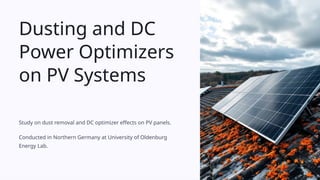
Study on dust removal and DC optimizer effects on PV panels.
Conducted in Northern Germany at University of Oldenburg
Energy Lab.
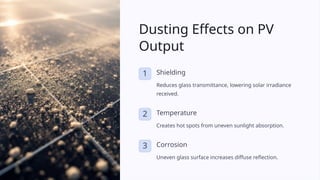
Dusting Effects on PV
Output
1 Shielding
Reduces glass transmittance, lowering solar irradiance
received.
2 Temperature
Creates hot spots from uneven sunlight absorption.
3 Corrosion
Uneven glass surface increases diffuse reflection.
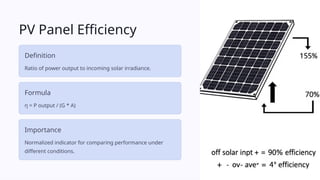
PV Panel Efficiency
Definition
Ratio of power output to incoming solar irradiance.
Formula
η = P output / (G * A)
Importance
Normalized indicator for comparing performance under
different conditions.
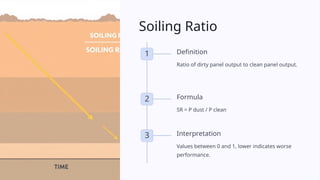
Soiling Ratio
1 Definition
Ratio of dirty panel output to clean panel output.
2 Formula
SR = P dust / P clean
3 Interpretation
Values between 0 and 1, lower indicates worse
performance.
DC Power Optimizers
Purpose
Enhance solar panel efficiency by
ensuring maximum power output.
Function
Operate each panel at its
Maximum Power Point.
Benefits
Improve performance under
shading or misalignment
conditions.
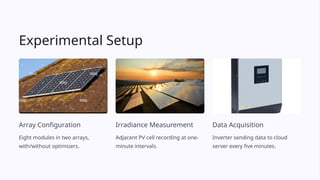
Experimental Setup
Array Configuration
Eight modules in two arrays,
with/without optimizers.
Irradiance Measurement
Adjacent PV cell recording at one-
minute intervals.
Data Acquisition
Inverter sending data to cloud
server every five minutes.
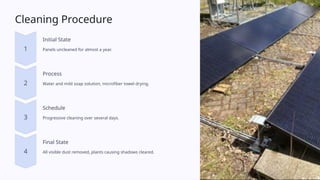
Cleaning Procedure
Initial State
Panels uncleaned for almost a year.
Process
Water and mild soap solution, microfiber towel drying.
Schedule
Progressive cleaning over several days.
Final State
All visible dust removed, plants causing shadows cleared.
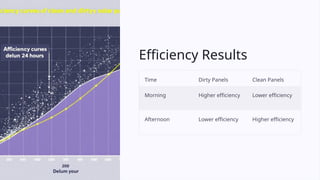
Efficiency Results
Time Dirty Panels Clean Panels
Morning Higher efficiency Lower efficiency
Afternoon Lower efficiency Higher efficiency
Soiling Ratio Analysis
Daily Profile
SR higher in morning, lower in afternoon for dirty panels.
Progressive Cleaning
SR decreased as more panels were cleaned.
Optimizer Effect
Panels with optimizers showed higher SR under dusting conditions.
Conclusions and
Limitations
1 Unexpected Results
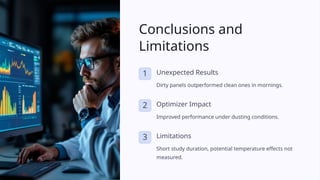
Dirty panels outperformed clean ones in mornings.
2 Optimizer Impact
Improved performance under dusting conditions.
3 Limitations
Short study duration, potential temperature effects not
measured.
Dusting-and-DC-Power-Optimizers-on-PV-Systems.pptx

  • 1.
    Dusting and DC PowerOptimizers on PV Systems Study on dust removal and DC optimizer effects on PV panels. Conducted in Northern Germany at University of Oldenburg Energy Lab.
  • 2.
    Dusting Effects onPV Output 1 Shielding Reduces glass transmittance, lowering solar irradiance received. 2 Temperature Creates hot spots from uneven sunlight absorption. 3 Corrosion Uneven glass surface increases diffuse reflection.
  • 3.
    PV Panel Efficiency Definition Ratioof power output to incoming solar irradiance. Formula η = P output / (G * A) Importance Normalized indicator for comparing performance under different conditions.
  • 4.
    Soiling Ratio 1 Definition Ratioof dirty panel output to clean panel output. 2 Formula SR = P dust / P clean 3 Interpretation Values between 0 and 1, lower indicates worse performance.
  • 5.
    DC Power Optimizers Purpose Enhancesolar panel efficiency by ensuring maximum power output. Function Operate each panel at its Maximum Power Point. Benefits Improve performance under shading or misalignment conditions.
  • 6.
    Experimental Setup Array Configuration Eightmodules in two arrays, with/without optimizers. Irradiance Measurement Adjacent PV cell recording at one- minute intervals. Data Acquisition Inverter sending data to cloud server every five minutes.
  • 7.
    Cleaning Procedure Initial State Panelsuncleaned for almost a year. Process Water and mild soap solution, microfiber towel drying. Schedule Progressive cleaning over several days. Final State All visible dust removed, plants causing shadows cleared.
  • 8.
    Efficiency Results Time DirtyPanels Clean Panels Morning Higher efficiency Lower efficiency Afternoon Lower efficiency Higher efficiency
  • 9.
    Soiling Ratio Analysis DailyProfile SR higher in morning, lower in afternoon for dirty panels. Progressive Cleaning SR decreased as more panels were cleaned. Optimizer Effect Panels with optimizers showed higher SR under dusting conditions.
  • 10.
    Conclusions and Limitations 1 UnexpectedResults Dirty panels outperformed clean ones in mornings. 2 Optimizer Impact Improved performance under dusting conditions. 3 Limitations Short study duration, potential temperature effects not measured.