Christopher  M. Schroeder CEO, HealthCentral James E. Burroughs  Associate Professor of Commerce, University of Virginia Thursday, April 8, 2010 All information within this presentation is confidential. Copyright © 2010 HealthCentral. All rights reserved. The Empowered Patient
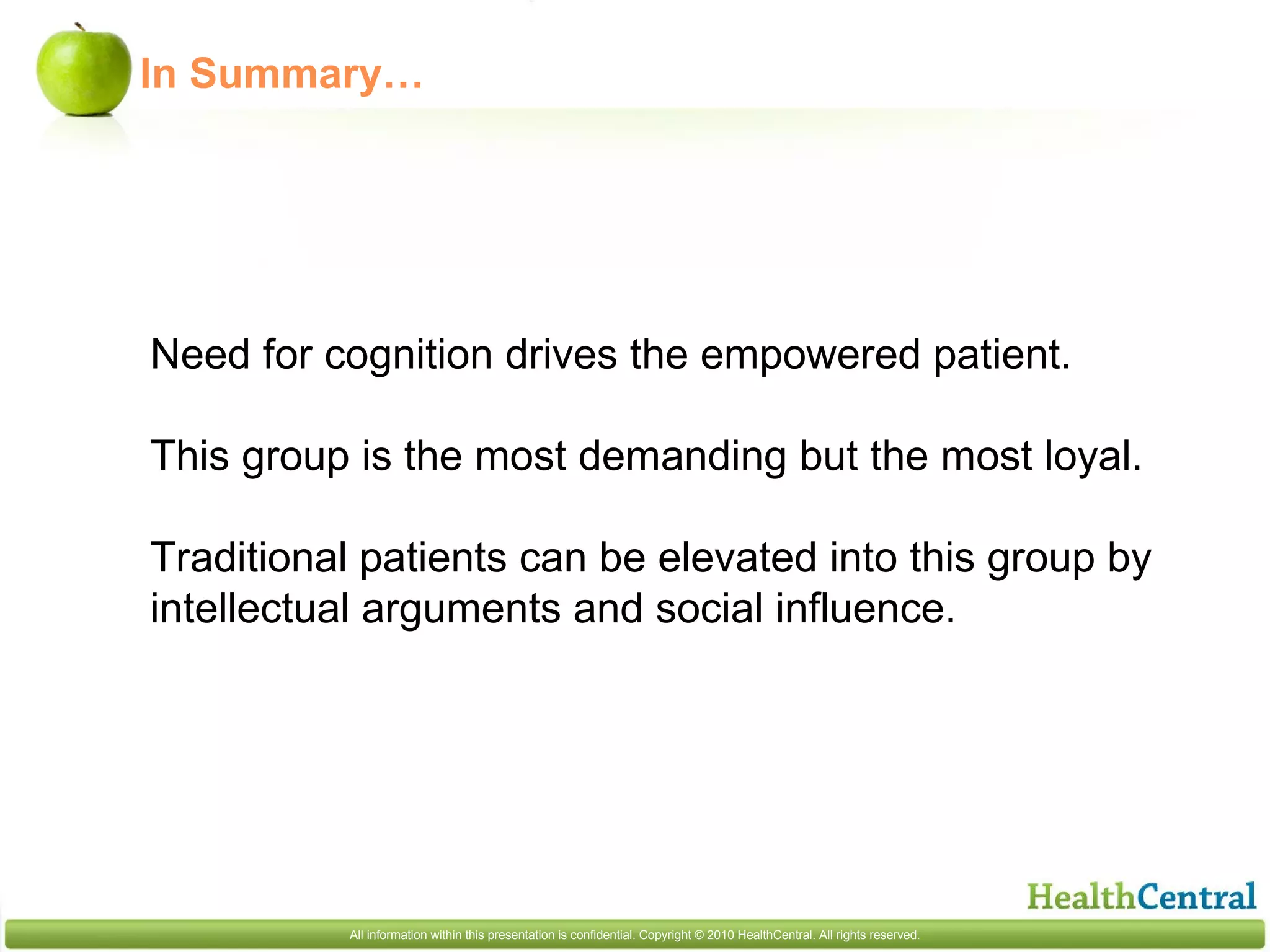
The Empowered Patient Need for cognition drives the empowered patient. This group is the most demanding but the most loyal. Traditional patients can be elevated into this group by intellectual arguments and social influence.
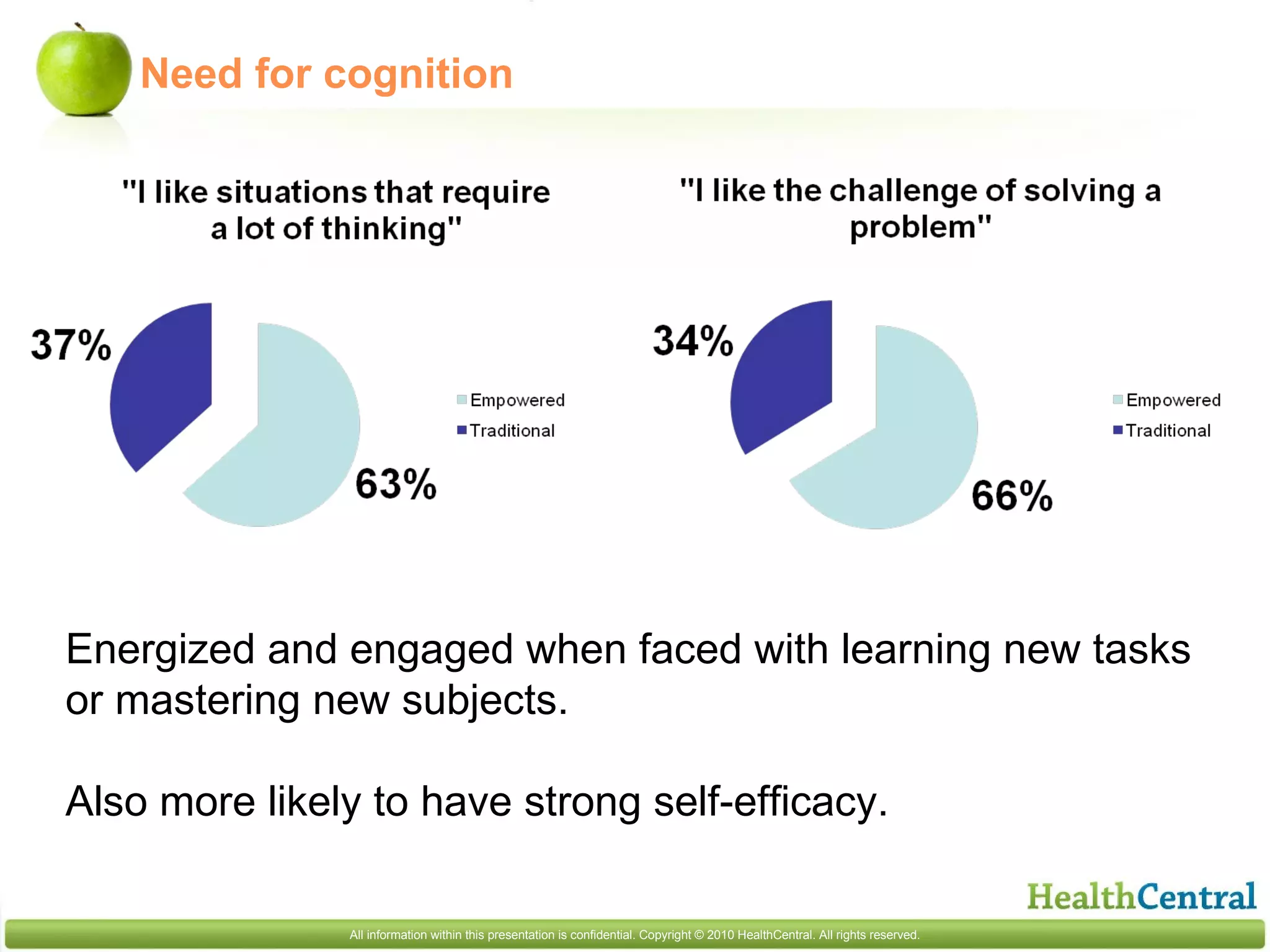
Need for cognition Energized and engaged when faced with learning new tasks or mastering new subjects.  Also more likely to have strong self-efficacy.
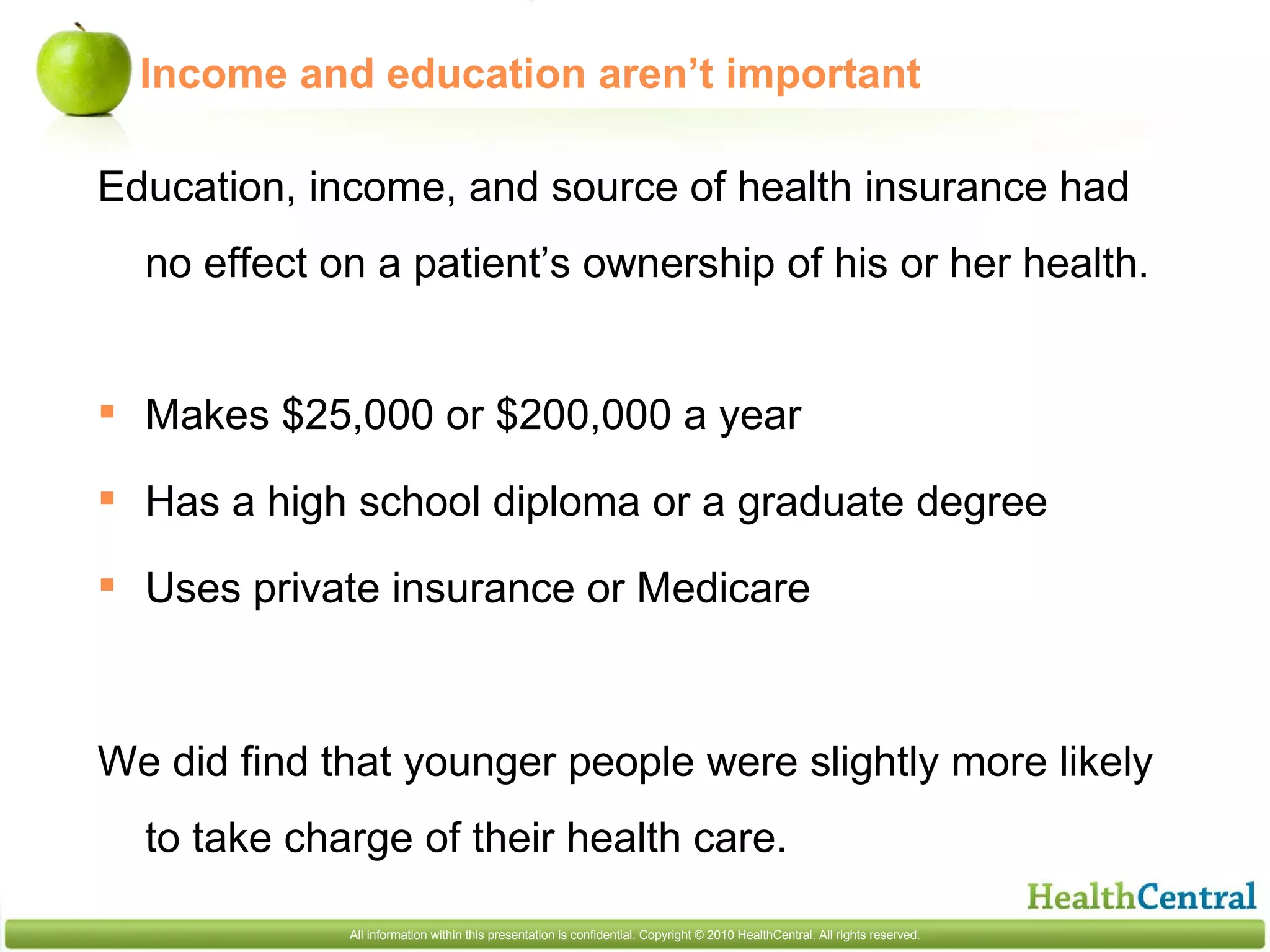
Education, income, and source of health insurance had no effect on a patient’s ownership of his or her health. Makes $25,000 or $200,000 a year Has a high school diploma or a graduate degree Uses private insurance or Medicare We did find that younger people were slightly more likely to take charge of their health care.  Income and education aren’t important
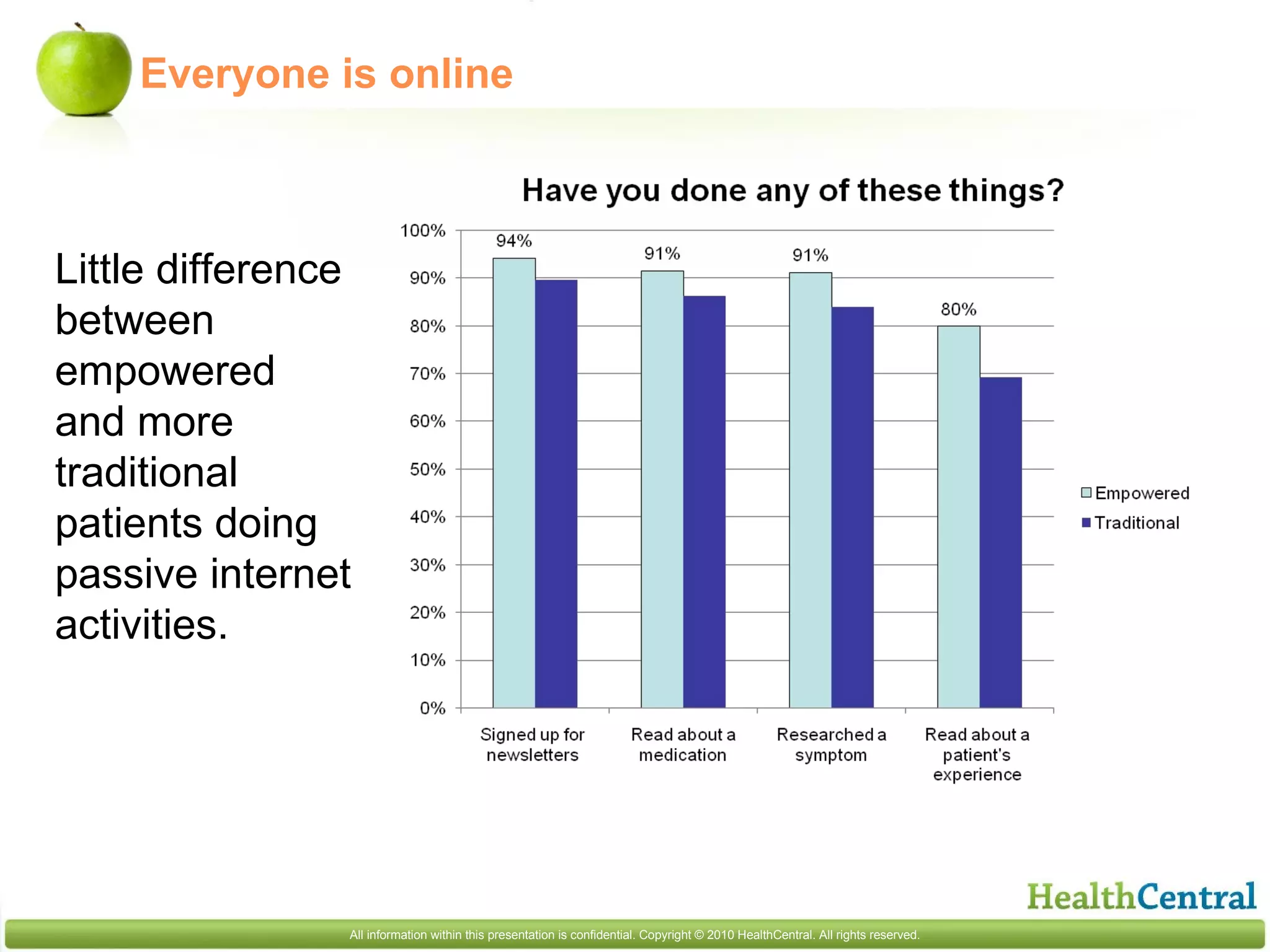
Everyone is online Little difference between empowered and more traditional patients doing passive internet activities.
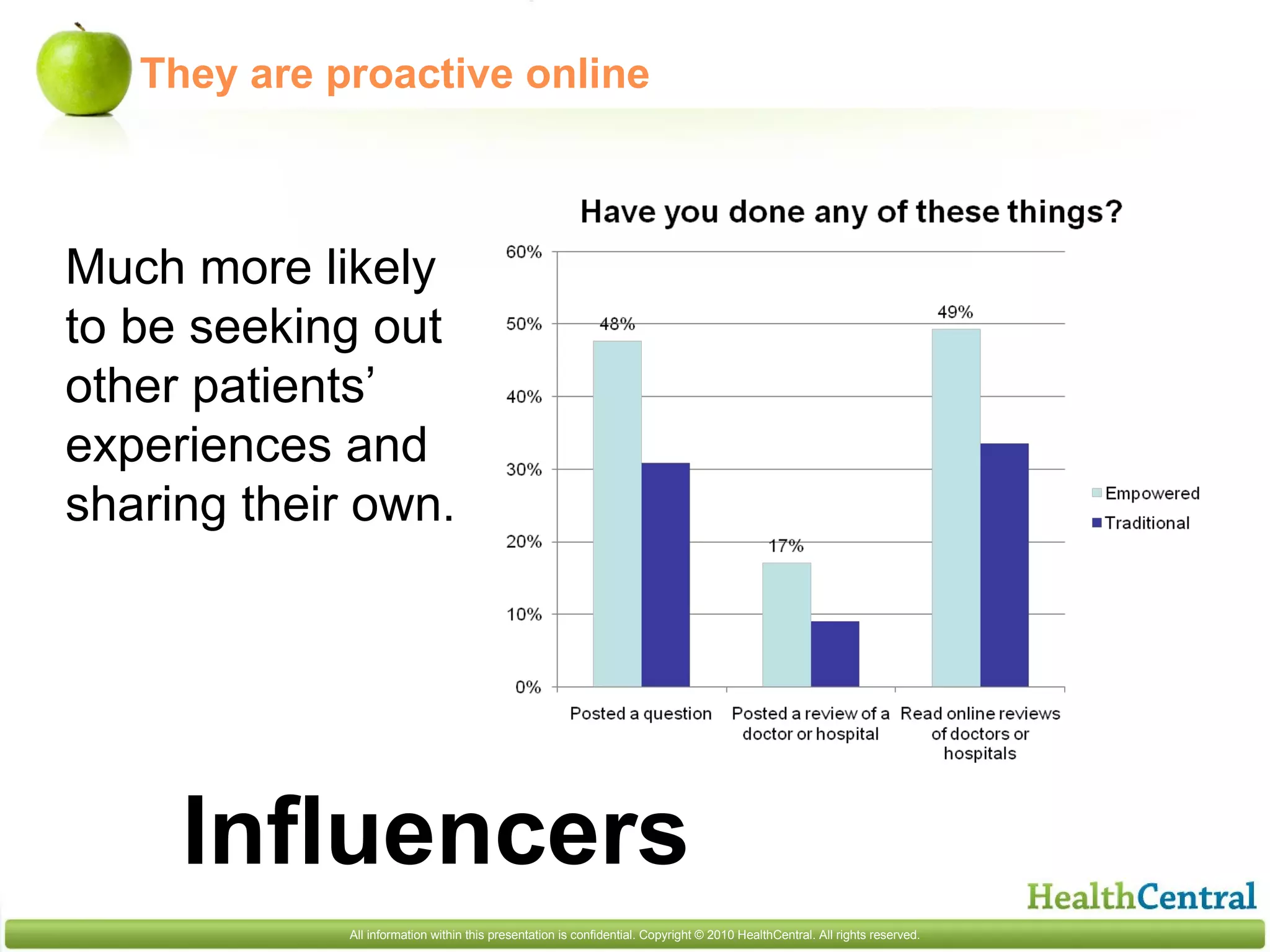
They are proactive online Much more likely to be seeking out other patients’ experiences and sharing their own. Influencers
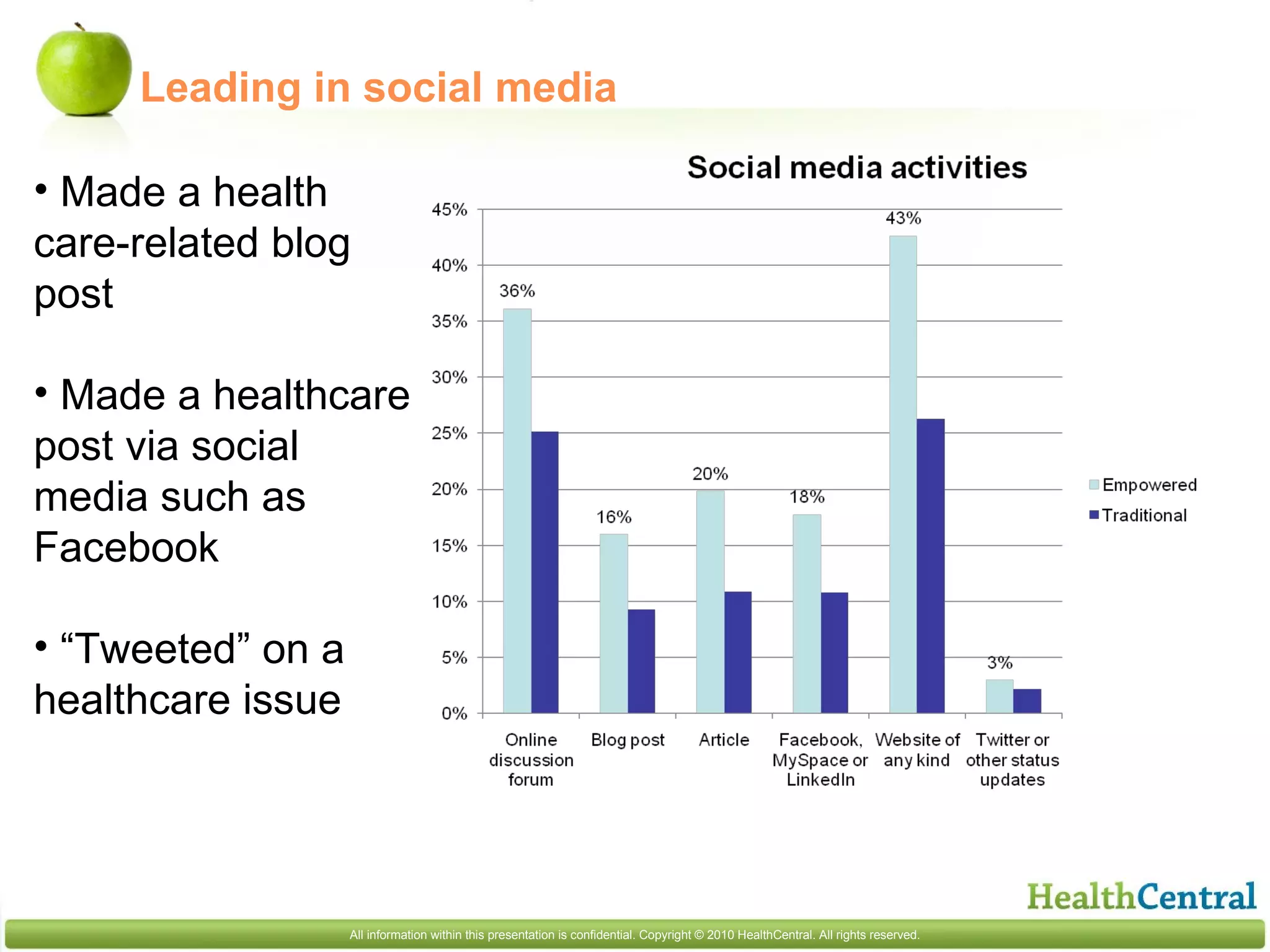
Leading in social media Made a health care-related blog post Made a healthcare post via social media such as Facebook “ Tweeted” on a healthcare issue
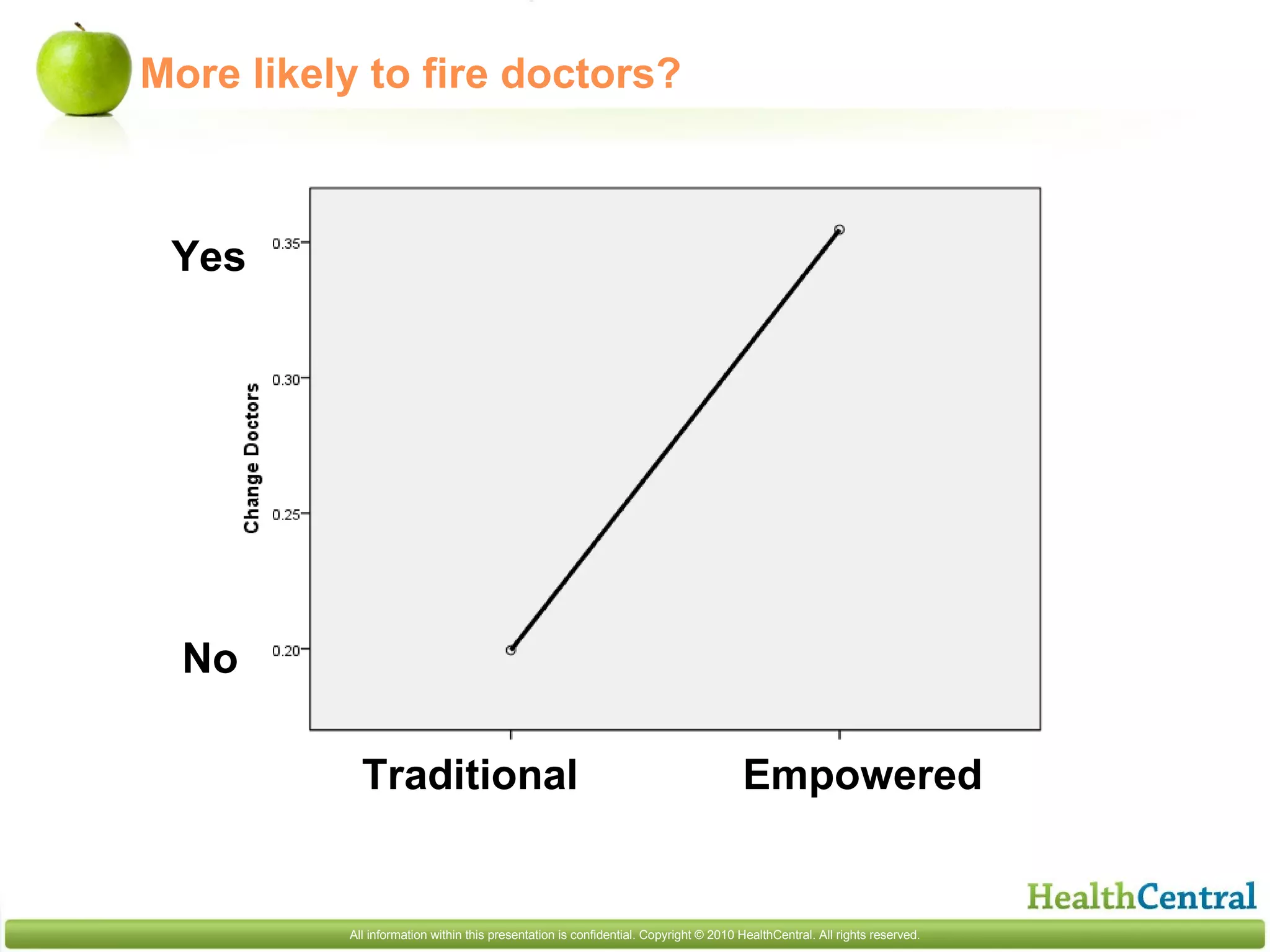
More likely to fire doctors? Yes No Traditional Empowered
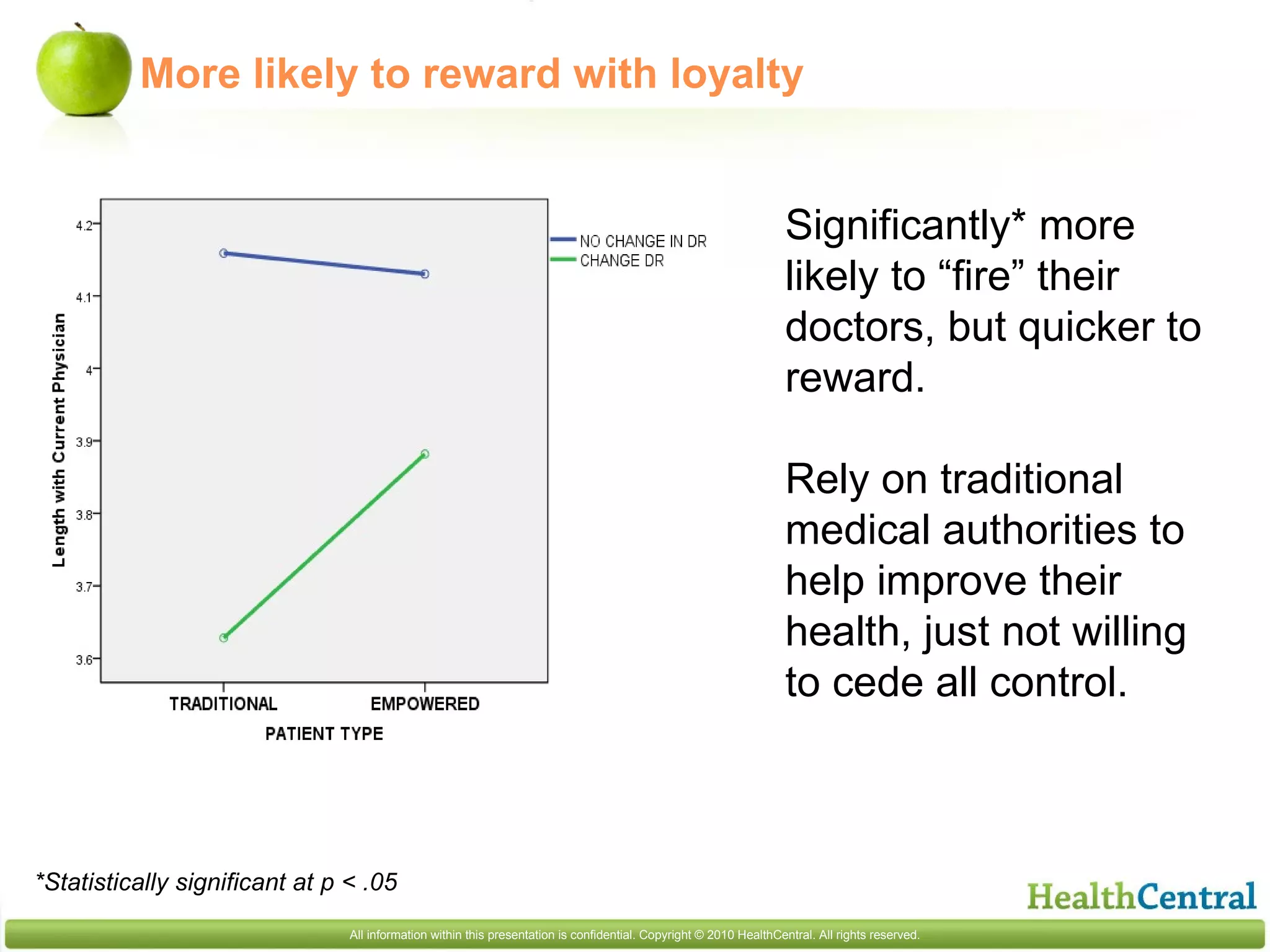
More likely to reward with loyalty *Statistically significant at p < .05 Significantly* more likely to “fire” their doctors, but quicker to reward. Rely on traditional medical authorities to help improve their health, just not willing to cede all control.
Activating Traditional Consumers CONSUMER EMPOWERMENT Empowered Traditional Mainstream Traditional Resistant [30%] [50%] [20%] Rational Appeal  (appeal to intellect) Social Appeal  (influence through empowered) High  NFC/ High  Self-efficacy Low  NFC/ High  Self-efficacy Low  NFC/ Low  Self-efficacy
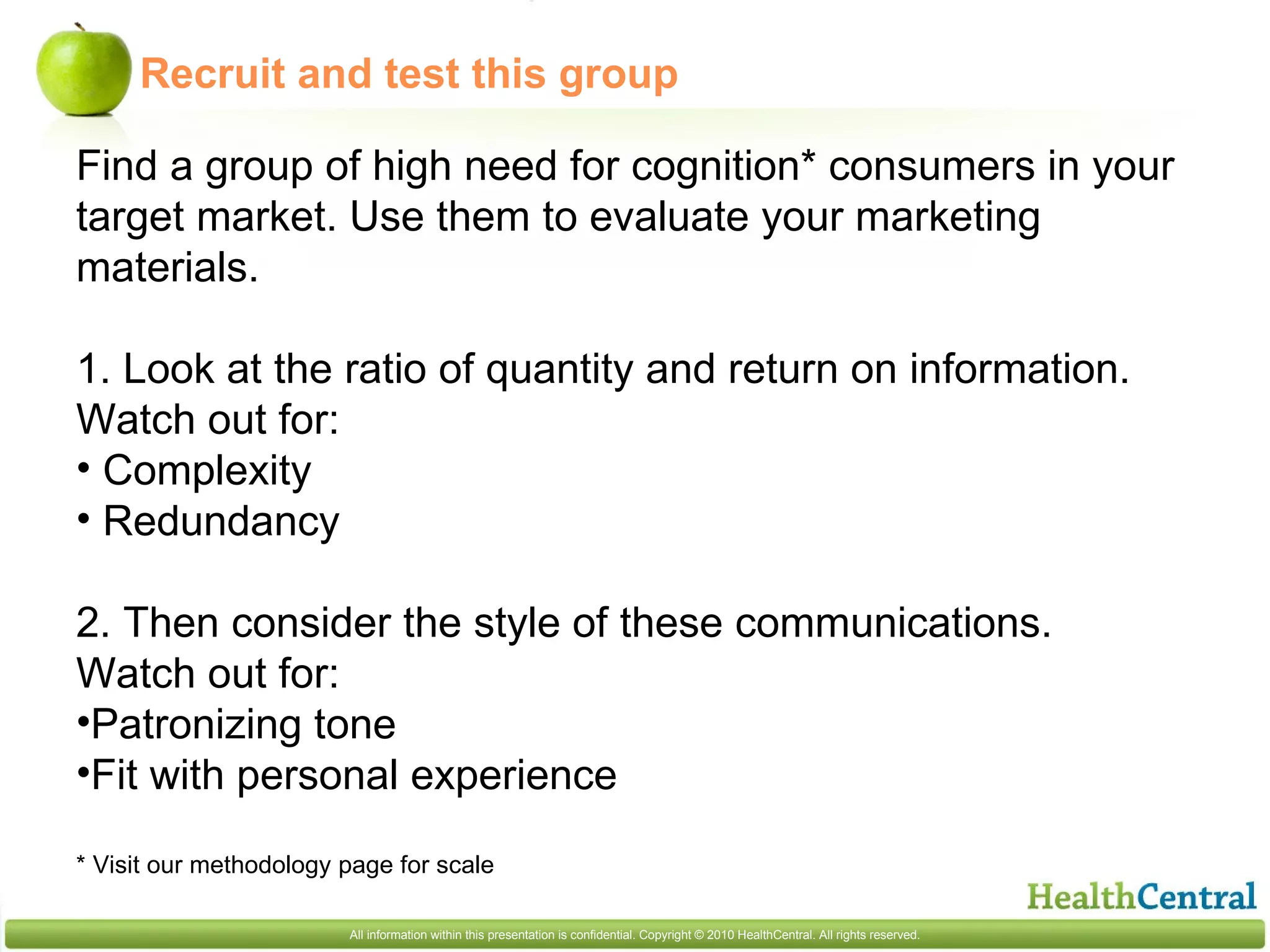
Recruit and test this group Find a group of high need for cognition* consumers in your target market. Use them to evaluate your marketing materials. 1. Look at the ratio of quantity and return on information. Watch out for:  Complexity Redundancy 2. Then consider the style of these communications. Watch out for: Patronizing tone Fit with personal experience * Visit our methodology page for scale
In Summary… Need for cognition drives the empowered patient. This group is the most demanding but the most loyal. Traditional patients can be elevated into this group by intellectual arguments and social influence.
The Study: Identifying the Empowered Patient To find out: How we conducted our study When we did it How we determined empowerment And more details of our study, please visit: http://www.healthcentral.com/about/study-methodology/
Thank you! On Twitter:  @cmschroed   @healthcentral @JimatUVA

Dtc Presentation 2010 HealthCentral

  • 1.
    Christopher M.Schroeder CEO, HealthCentral James E. Burroughs Associate Professor of Commerce, University of Virginia Thursday, April 8, 2010 All information within this presentation is confidential. Copyright © 2010 HealthCentral. All rights reserved. The Empowered Patient
  • 2.
    The Empowered PatientNeed for cognition drives the empowered patient. This group is the most demanding but the most loyal. Traditional patients can be elevated into this group by intellectual arguments and social influence.
  • 3.
    Need for cognitionEnergized and engaged when faced with learning new tasks or mastering new subjects.  Also more likely to have strong self-efficacy.
  • 4.
    Education, income, andsource of health insurance had no effect on a patient’s ownership of his or her health. Makes $25,000 or $200,000 a year Has a high school diploma or a graduate degree Uses private insurance or Medicare We did find that younger people were slightly more likely to take charge of their health care. Income and education aren’t important
  • 5.
    Everyone is onlineLittle difference between empowered and more traditional patients doing passive internet activities.
  • 6.
    They are proactiveonline Much more likely to be seeking out other patients’ experiences and sharing their own. Influencers
  • 7.
    Leading in socialmedia Made a health care-related blog post Made a healthcare post via social media such as Facebook “ Tweeted” on a healthcare issue
  • 8.
    More likely tofire doctors? Yes No Traditional Empowered
  • 9.
    More likely toreward with loyalty *Statistically significant at p < .05 Significantly* more likely to “fire” their doctors, but quicker to reward. Rely on traditional medical authorities to help improve their health, just not willing to cede all control.
  • 10.
    Activating Traditional ConsumersCONSUMER EMPOWERMENT Empowered Traditional Mainstream Traditional Resistant [30%] [50%] [20%] Rational Appeal (appeal to intellect) Social Appeal (influence through empowered) High NFC/ High Self-efficacy Low NFC/ High Self-efficacy Low NFC/ Low Self-efficacy
  • 11.
    Recruit and testthis group Find a group of high need for cognition* consumers in your target market. Use them to evaluate your marketing materials. 1. Look at the ratio of quantity and return on information. Watch out for: Complexity Redundancy 2. Then consider the style of these communications. Watch out for: Patronizing tone Fit with personal experience * Visit our methodology page for scale
  • 12.
    In Summary… Needfor cognition drives the empowered patient. This group is the most demanding but the most loyal. Traditional patients can be elevated into this group by intellectual arguments and social influence.
  • 13.
    The Study: Identifyingthe Empowered Patient To find out: How we conducted our study When we did it How we determined empowerment And more details of our study, please visit: http://www.healthcentral.com/about/study-methodology/
  • 14.
    Thank you! OnTwitter: @cmschroed @healthcentral @JimatUVA

Editor's Notes

  • #4 These pie charts show respondents who answered “very true of me” in response to these statements.