It is a chronic inflammatory disorder of the airways characterized by reversible airflow obstruction and bronchospasm.
Airways become narrow, the muscles around the airways tighten, and there is an increase in the production of sticky mucus
It is also characterized by
hyperresponsiveness of tracheo-bronchial smooth muscle to a variety of stimuli
narrowing of air tubes (bronchoconstriction)
increased secretion,
mucosal edema,
mucus plugging
The inflammation makes the airways extremely sensitive to irritations and increases susceptibility to allergic reaction.
The inflammatory process begins with binding of allergens molecules (eg, house dust mite) to antibody on mast cells. This causes mast cells to release an mediators like Histamine, LT, PG, Interleukins.
Release of mediators stored in granules (immediate): histamine, protease enzymes, TNFα.
Release of phospholipids from cell membrane followed by mediator synthesis (within minutes): PGs, LTs, PAF.
Activation of genes followed by protein synthesis (over hours): Interleukins, TNFα.
These mediators have two effects.
cause bronchoconstriction
activation of inflammatory cells ( Eosinophils, leukocytes, Macrophages)
These inflammatory cells then release mediators of their own which cause bronchospasm,
Prevention of AG:AB reaction: avoidance of antigen, hyposensitization - possible in extrinsic asthma and if antigen can be identified.
Neutralization of IgE (reaginic antibody): Omalizumab.
Suppression of inflammation and bronchial hyperreactivity: corticosteroids.
Prevention of release of mediators: mast cell stabilizers.
Antagonism of released mediators: leukotriene antagonists, antihistamines, PAF antagonists.
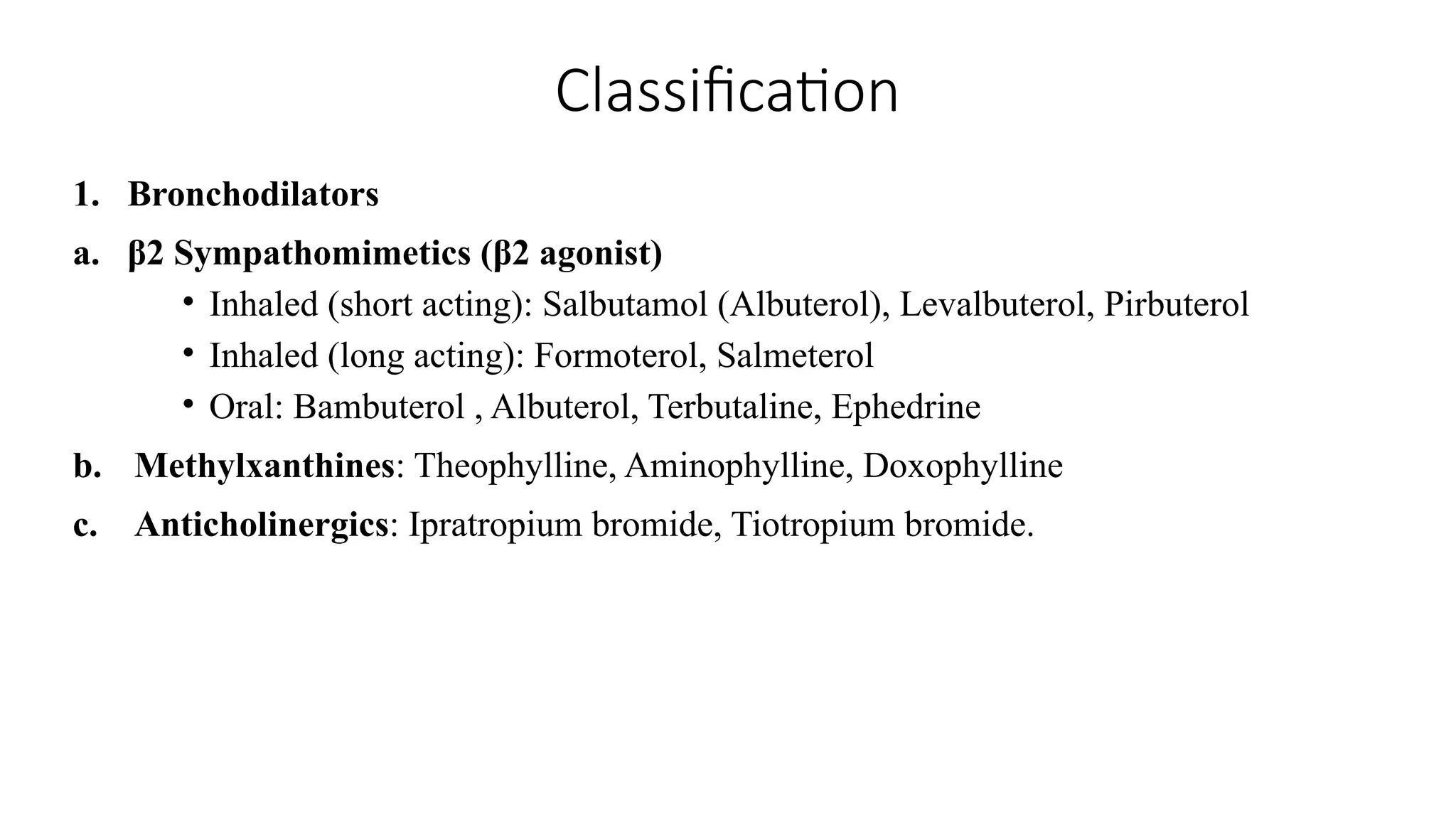
Blockade of constrictor neurotransmitter: anticholinergics.
Mimicking dilator neurotransmitter: sympathomimetics.
Directly acting bronchodilators: methylxanthinesSide effects
CNS: Nervousness, restlessness, dizziness, drowsiness, headache, insomnia
Neuromuscular & skeletal: Trembling (Shaking), Muscle cramps, weakness
CVS: Tachycardia, hypertension
GI: Xerostomia (dry mouth due to reduced saliva flow), nausea, vomiting, bad taste in mouth
Miscellaneous: Diaphoresis (excessive sweating), Chest pain, arrhythmias, hypersensitivity
Provides mild-moderate bronchodilation by relaxing smooth muscle of the bronchi.
Low dose has mild anti-inflammatory action.
Given together with inhaled corticosteroid to treat moderate asthma that is difficult to control & must be taken daily.
Dose
Theophylline: 125mg 3-4 times PO daily after food.
Aminophylline:100-300mg, 3-4times PO daily after meal.
Side Effects
Nausea & vomiting, diarrhea, stomachache, headache, rapid & irregular heartbeat, Muscle cramp, jittery (nervous feeling or hyperactivity).
Works best when used along with inhaled short acting beta2 agonist (in severe asthma exacerbation).
Competitive inhibitor of Ach at muscarinic receptor- blocks the contraction of airway smooth muscle & increase in secretion of mucus.
Onset of action within 60 mins.
Ip