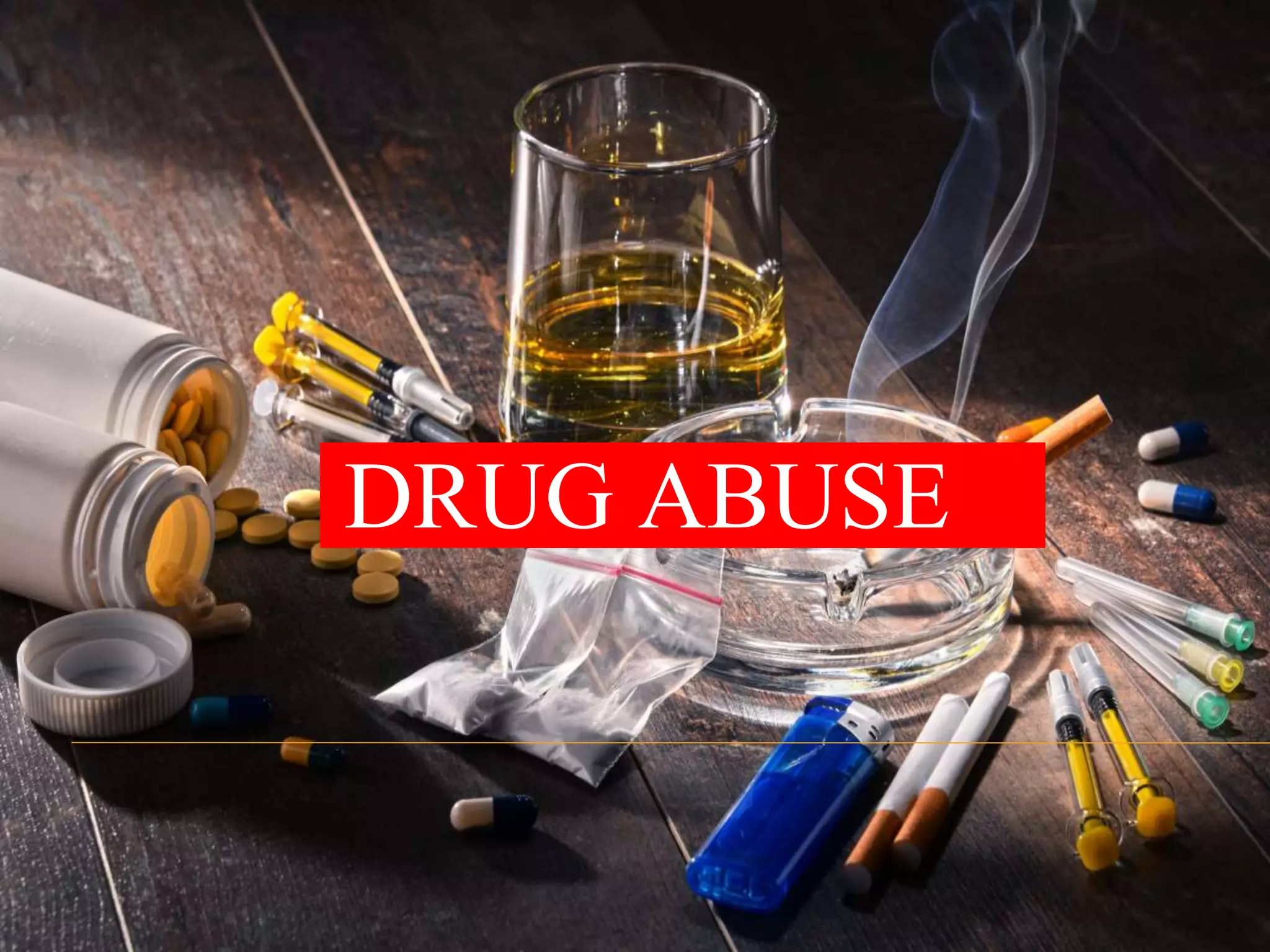
DRUG ABUSE
INTRODUCTION
❖ A drug is any chemical substance that causes a change in an organism's
physiology or psychology when consumed.
❖ Indiscriminate use of the drug without the advice of doctors is called
drug abuse.
❖ Constant use of certain drugs as a habit that leads to dependence on
them is called drug addiction.
❖ There are over 190 million drugs user around the world and the problem
keeps increasing at an alarming rate, especially among young adults
under the age of 30.
REASONS OF DRUG ADDICTION
• Family history of addiction
• Sleep problems
• Chronic pain
• Financial difficulties
• Divorce or the loss of a loved one
• Long-term tobacco habit
• Tense home environment
• Lack of parental attachment in childhood
• Relationship issues
EFFECTS OF DRUG
On mind
❖ Drugs affect the brain’s “reward
circuit” and releases a lot of
dopamine that causes the
reinforcement of pleasurable but
unhealthy behaviors.
❖ Overall, drugs effect functions
of brain that includes :
i. learning,
ii. judgement,
iii. decision-making,
iv. behavior and memory.
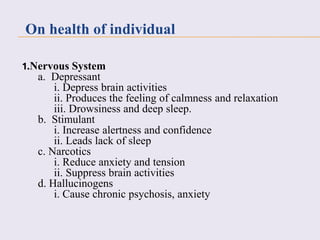
1.Nervous System
a. Depressant
i. Depress brain activities
ii. Produces the feeling of calmness and relaxation
iii. Drowsiness and deep sleep.
b. Stimulant
i. Increase alertness and confidence
ii. Leads lack of sleep
c. Narcotics
i. Reduce anxiety and tension
ii. Suppress brain activities
d. Hallucinogens
i. Cause chronic psychosis, anxiety
On health of individual
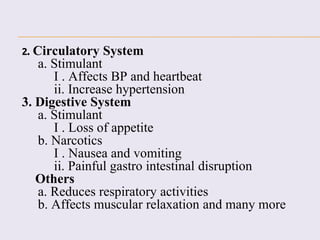
2. Circulatory System
a. Stimulant
I . Affects BP and heartbeat
ii. Increase hypertension
3. Digestive System
a. Stimulant
I . Loss of appetite
b. Narcotics
I . Nausea and vomiting
ii. Painful gastro intestinal disruption
Others
a. Reduces respiratory activities
b. Affects muscular relaxation and many more
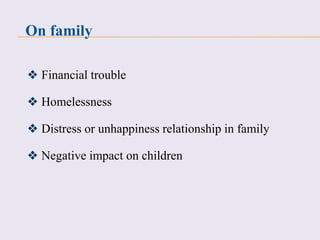
❖ Financial trouble
❖ Homelessness
❖ Distress or unhappiness relationship in family
❖ Negative impact on children
On family
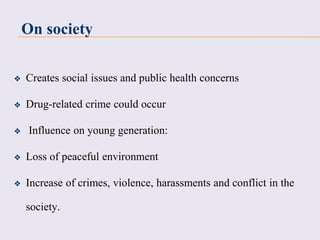
❖ Creates social issues and public health concerns
❖ Drug-related crime could occur
❖ Influence on young generation:
❖ Loss of peaceful environment
❖ Increase of crimes, violence, harassments and conflict in the
society.
On society
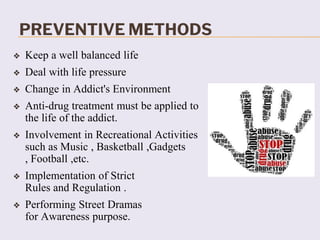
PREVENTIVE METHODS
❖ Keep a well balanced life
❖ Deal with life pressure
❖ Change in Addict's Environment
❖ Anti-drug treatment must be applied to
the life of the addict.
❖ Involvement in Recreational Activities
such as Music , Basketball ,Gadgets
, Football ,etc.
❖ Implementation of Strict
Rules and Regulation .
❖ Performing Street Dramas
for Awareness purpose.
CONCLUSION
❖ Drug addiction has become major concern for people all
over the world.
❖ More deaths, illness and disabilities are caused by
substance abuse than by any other disorder
❖ Partnering with community to address this issue is integral
to preparing teenagers to better understand how to use
prescription drugs safely
❖ We all should lend hands to make our community drug
free.
TEAM MEMBERS
Manish Pandey
Mohan Khadka
MD Jabed Akhtar
Monika Budhathoki
Nabin Subedi
Nabina Dhital
Narendra Thapa
Navin Prakash
Nayansha Bhattarai
Neha Karn
Nelsha Shrestha
Ngawang Tharchin Sherpa
Drug-Abuse (1).pptx

Drug-Abuse (1).pptx

  • 1.
  • 2.
    INTRODUCTION ❖ A drugis any chemical substance that causes a change in an organism's physiology or psychology when consumed. ❖ Indiscriminate use of the drug without the advice of doctors is called drug abuse. ❖ Constant use of certain drugs as a habit that leads to dependence on them is called drug addiction. ❖ There are over 190 million drugs user around the world and the problem keeps increasing at an alarming rate, especially among young adults under the age of 30.
  • 3.
    REASONS OF DRUGADDICTION • Family history of addiction • Sleep problems • Chronic pain • Financial difficulties • Divorce or the loss of a loved one • Long-term tobacco habit • Tense home environment • Lack of parental attachment in childhood • Relationship issues
  • 4.
    EFFECTS OF DRUG Onmind ❖ Drugs affect the brain’s “reward circuit” and releases a lot of dopamine that causes the reinforcement of pleasurable but unhealthy behaviors. ❖ Overall, drugs effect functions of brain that includes : i. learning, ii. judgement, iii. decision-making, iv. behavior and memory.
  • 5.
    1.Nervous System a. Depressant i.Depress brain activities ii. Produces the feeling of calmness and relaxation iii. Drowsiness and deep sleep. b. Stimulant i. Increase alertness and confidence ii. Leads lack of sleep c. Narcotics i. Reduce anxiety and tension ii. Suppress brain activities d. Hallucinogens i. Cause chronic psychosis, anxiety On health of individual
  • 6.
    2. Circulatory System a.Stimulant I . Affects BP and heartbeat ii. Increase hypertension 3. Digestive System a. Stimulant I . Loss of appetite b. Narcotics I . Nausea and vomiting ii. Painful gastro intestinal disruption Others a. Reduces respiratory activities b. Affects muscular relaxation and many more
  • 7.
    ❖ Financial trouble ❖Homelessness ❖ Distress or unhappiness relationship in family ❖ Negative impact on children On family
  • 8.
    ❖ Creates socialissues and public health concerns ❖ Drug-related crime could occur ❖ Influence on young generation: ❖ Loss of peaceful environment ❖ Increase of crimes, violence, harassments and conflict in the society. On society
  • 9.
    PREVENTIVE METHODS ❖ Keepa well balanced life ❖ Deal with life pressure ❖ Change in Addict's Environment ❖ Anti-drug treatment must be applied to the life of the addict. ❖ Involvement in Recreational Activities such as Music , Basketball ,Gadgets , Football ,etc. ❖ Implementation of Strict Rules and Regulation . ❖ Performing Street Dramas for Awareness purpose.
  • 10.
    CONCLUSION ❖ Drug addictionhas become major concern for people all over the world. ❖ More deaths, illness and disabilities are caused by substance abuse than by any other disorder ❖ Partnering with community to address this issue is integral to preparing teenagers to better understand how to use prescription drugs safely ❖ We all should lend hands to make our community drug free.
  • 11.
    TEAM MEMBERS Manish Pandey MohanKhadka MD Jabed Akhtar Monika Budhathoki Nabin Subedi Nabina Dhital Narendra Thapa Navin Prakash Nayansha Bhattarai Neha Karn Nelsha Shrestha Ngawang Tharchin Sherpa