SUBSTANCE
DEPENDENCE
COMMONLY ABUSED
DRUGS RISKS AND
CONSEQUENCES
Imran Khan
Mental Health Counselor
J&K Police Drug De Addiction and Rehabilitation
Centre
Drug or Substance
Psychoactive drugs / substances.
Psychoactive drugs are generally defined as substances which
ALTER/CHANGE brain functioning causing change in :
 Mood.
 Cognition (thoughts, perception,)
 Consciousness
 Behaviour.
MOST COMMONLY
ABUSED
DRUGS/SUBSTANCES
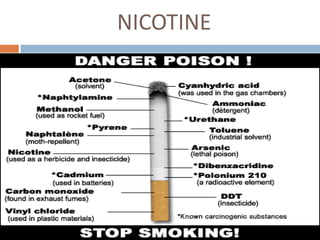
NICOTINE
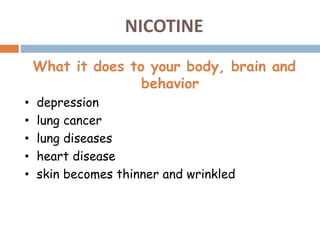
NICOTINE
What it does to your body, brain and
behavior
• depression
• lung cancer
• lung diseases
• heart disease
• skin becomes thinner and wrinkled
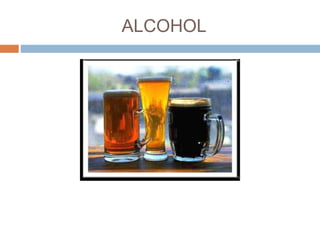
ALCOHOL
ALCOHOL AND THE LIVER
• The liver removes poisons – include
alcohol from the body
• People who drink regularly can have
serious liver damage and may even get
liver cancer
• If the liver is damaged badly enough, it
can stop working, causing the person to
die.
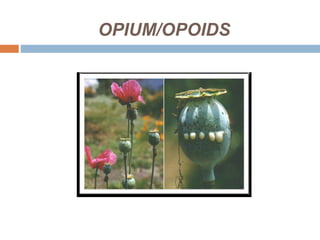
OPIUM/OPOIDS
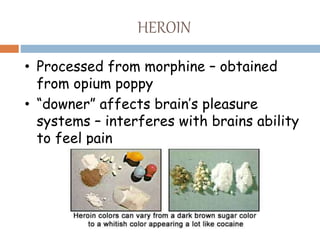
HEROIN
• Processed from morphine – obtained
from opium poppy
• “downer” affects brain’s pleasure
systems – interferes with brains ability
to feel pain
HEROIN
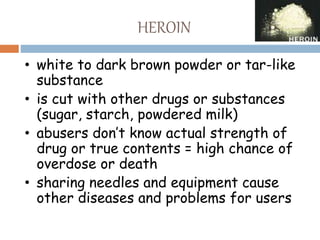
• white to dark brown powder or tar-like
substance
• is cut with other drugs or substances
(sugar, starch, powdered milk)
• abusers don’t know actual strength of
drug or true contents = high chance of
overdose or death
• sharing needles and equipment cause
other diseases and problems for users
HEROIN
 leads to flushing of skin, dry mouth,
collapsed veins, liver disease
 additives don’t dissolve leading to clogs
in blood vessels that lead to lungs, liver,
kidney or brain
 tolerance develops with regular use –
user needs more heroin to achieve same
intensity
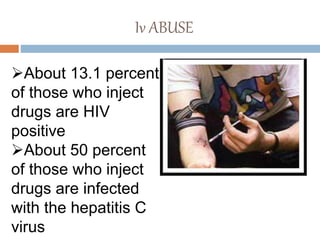
Iv ABUSE
About 13.1 percent
of those who inject
drugs are HIV
positive
About 50 percent
of those who inject
drugs are infected
with the hepatitis C
virus
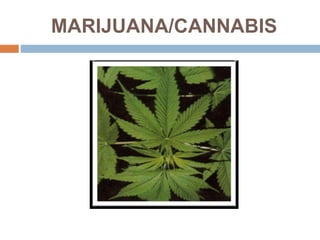
MARIJUANA/CANNABIS
MARIJUANA
• Marijuana and cigarette smoke have
some of the same cancer-causing
substances.
• Benzopyrene (cancer-producing agent)
higher in marijuana
• 400 chemicals in marijuana smoke
affect lungs, throat and esophagus
MARIJUANA
Short Term Effects:
Increase in heart rate,
lead to anxiety and
paranoia
Distorted concept of
time and space
Decrease in
concentration skills,
short-term memory
capacity
Feeling tired after the
“high” wears off
Increase in appetite,
weight gain
 Long Term
Effects:
• Breathing problems
• Lung cancer
• Damage cells and
tissues in the body
that fight disease
• Lack of motivation
• Difficulty
processing new
information
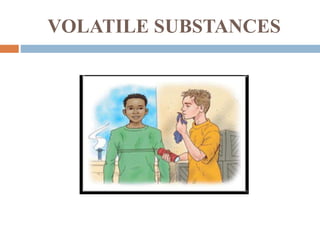
VOLATILE SUBSTANCES
INHALANTS
Risks
• lack of coordination
• dizziness
• euphoria
• difficulty speaking
• brain damage
• organ damage
• death caused by choking
• high only lasts a few minutes, abusers inhale
repeatedly and can lose consciousness or
die
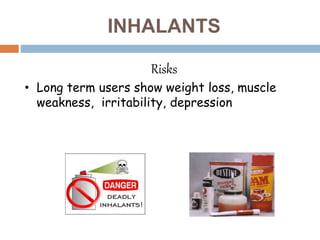
INHALANTS
Risks
• Long term users show weight loss, muscle
weakness, irritability, depression
Thank You
DRUG ADDICTION CAN BE PREVENTED IF ONE NEVER
ABUSES DRUGS

DRUG ABUSE, Risks, consequences and Prevention

  • 1.
    SUBSTANCE DEPENDENCE COMMONLY ABUSED DRUGS RISKSAND CONSEQUENCES Imran Khan Mental Health Counselor J&K Police Drug De Addiction and Rehabilitation Centre
  • 2.
    Drug or Substance Psychoactivedrugs / substances. Psychoactive drugs are generally defined as substances which ALTER/CHANGE brain functioning causing change in :  Mood.  Cognition (thoughts, perception,)  Consciousness  Behaviour.
  • 3.
  • 4.
  • 5.
    NICOTINE What it doesto your body, brain and behavior • depression • lung cancer • lung diseases • heart disease • skin becomes thinner and wrinkled
  • 8.
  • 9.
    ALCOHOL AND THELIVER • The liver removes poisons – include alcohol from the body • People who drink regularly can have serious liver damage and may even get liver cancer • If the liver is damaged badly enough, it can stop working, causing the person to die.
  • 10.
  • 11.
    HEROIN • Processed frommorphine – obtained from opium poppy • “downer” affects brain’s pleasure systems – interferes with brains ability to feel pain
  • 12.
    HEROIN • white todark brown powder or tar-like substance • is cut with other drugs or substances (sugar, starch, powdered milk) • abusers don’t know actual strength of drug or true contents = high chance of overdose or death • sharing needles and equipment cause other diseases and problems for users
  • 13.
    HEROIN  leads toflushing of skin, dry mouth, collapsed veins, liver disease  additives don’t dissolve leading to clogs in blood vessels that lead to lungs, liver, kidney or brain  tolerance develops with regular use – user needs more heroin to achieve same intensity
  • 14.
    Iv ABUSE About 13.1percent of those who inject drugs are HIV positive About 50 percent of those who inject drugs are infected with the hepatitis C virus
  • 16.
  • 17.
    MARIJUANA • Marijuana andcigarette smoke have some of the same cancer-causing substances. • Benzopyrene (cancer-producing agent) higher in marijuana • 400 chemicals in marijuana smoke affect lungs, throat and esophagus
  • 18.
    MARIJUANA Short Term Effects: Increasein heart rate, lead to anxiety and paranoia Distorted concept of time and space Decrease in concentration skills, short-term memory capacity Feeling tired after the “high” wears off Increase in appetite, weight gain  Long Term Effects: • Breathing problems • Lung cancer • Damage cells and tissues in the body that fight disease • Lack of motivation • Difficulty processing new information
  • 20.
  • 21.
    INHALANTS Risks • lack ofcoordination • dizziness • euphoria • difficulty speaking • brain damage • organ damage • death caused by choking • high only lasts a few minutes, abusers inhale repeatedly and can lose consciousness or die
  • 22.
    INHALANTS Risks • Long termusers show weight loss, muscle weakness, irritability, depression
  • 24.
    Thank You DRUG ADDICTIONCAN BE PREVENTED IF ONE NEVER ABUSES DRUGS