Lecture series
Gastrointestinal tract
Professor Shraddha Singh,
Department of Physiology,
KGMU, Lucknow
Learning Objectives:
• Understand the composition of protein
• Understand the enzymes responsible for digestion of proteins
• What are sites for absorption Molecular basis of protein
transportation
• Learn about diseases related to protein digestion
What are Protiens ?
 Proteins are a sequence of amino acids
 One amino acids is joined to the next by a PEPTIDE bond
 Provide energy substrate for metabolism (4 kcals/g).
 Protein load received by the gut is derived from two primary
sources: 70-100 g dietary protein, and
35-200 g endogenous protein,
Amino acids
• Of the 20 amino acids that exist, 9 are
essential amino acids, and 11 are non-
essential
AMINO ACID: Sequence
 Dipeptide – 2 amino acids
 Tripeptide – 3 amino acids
 Oligopeptides – 4-10 amino acids
 Polypeptide – more than 10 amino acids
 Proteins in the body and diet are long polypeptides
(100s of amino acids)
AMINO ACID: Sequence
 Dipeptide – 2 amino acids
 Tripeptide – 3 amino acids
 Oligopeptides – 4-10 amino acids
 Polypeptide – more than 10 amino acids
 Proteins in the body and diet are long polypeptides
(100s of amino acids)
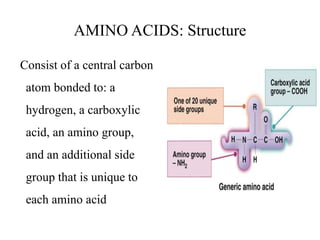
AMINO ACIDS: Structure
Consist of a central carbon
atom bonded to: a
hydrogen, a carboxylic
acid, an amino group,
and an additional side
group that is unique to
each amino acid
Digestion of proteins
Initial digestion of protein in stomach
 No digestion of protein takes place in the mouth,
 Hydrochloric acid denatures protein and also
converts pepsinogen to pepsin
 Pepsin breaks the protein down into peptides of
various lengths and some amino acids
 Pepsin act only at pH 1.6-3.2
 Pepsin completes ~ 10-20% of digestion
Denaturing of Proteins
• Acid, alkaline, heat and alcohol, can disrupt the
chemical forces that stabilize proteins and can cause
them to lose their shape (denature)
• Denaturing of proteins happens during food
preparation (cooking, whipping, adding acids) or
digestion (in the stomach with hydrochloric acid)
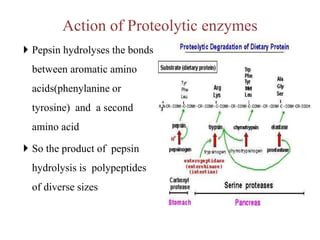
Action of Proteolytic enzymes
 Pepsin hydrolyses the bonds
between aromatic amino
acids(phenylanine or
tyrosine) and a second
amino acid
 So the product of pepsin
hydrolysis is polypeptides
of diverse sizes
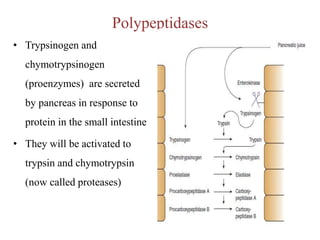
Polypeptidases
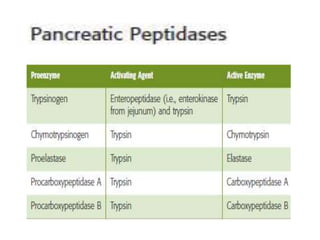
• Trypsinogen and
chymotrypsinogen
(proenzymes) are secreted
by pancreas in response to
protein in the small intestine
• They will be activated to
trypsin and chymotrypsin
(now called proteases)
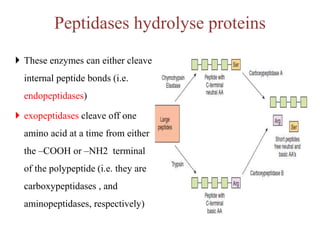
Peptidases hydrolyse proteins
 These enzymes can either cleave
internal peptide bonds (i.e.
endopeptidases)
 exopeptidases cleave off one
amino acid at a time from either
the –COOH or –NH2 terminal
of the polypeptide (i.e. they are
carboxypeptidases , and
aminopeptidases, respectively)
• The endopeptidases cleave the large
polypeptides to smaller oligopeptides, which
can be acted upon by the exopeptidases to
produce the final products of protein digestion,
amino acids, di- and tripeptides, which are then
absorbed by the enterocytes
Further hydrolysis by Peptidases
• By the action of endo and exopeptidases some free
amino acids are liberated in the intestinal lumen,
• But others are liberated at the cell surface by the
aminopeptidases, carboxypeptidases, endopeptidases,
and dipeptidases in the brush border of the mucosal
cells.
Absorption of proteins
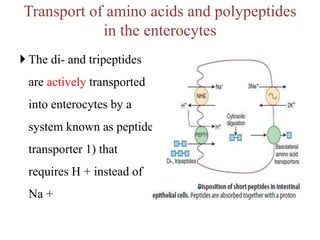
Transport of amino acids and polypeptides
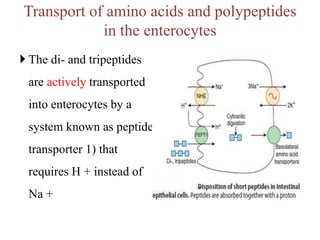
in the enterocytes
 The di- and tripeptides
are actively transported
into enterocytes by a
system known as peptide
transporter 1) that
requires H + instead of
Na +
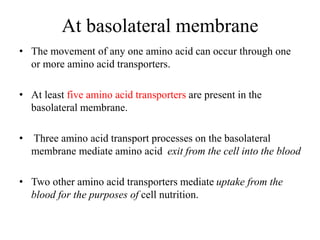
At basolateral membrane
• The movement of any one amino acid can occur through one
or more amino acid transporters.
• At least five amino acid transporters are present in the
basolateral membrane.
• Three amino acid transport processes on the basolateral
membrane mediate amino acid exit from the cell into the blood
• Two other amino acid transporters mediate uptake from the
blood for the purposes of cell nutrition.
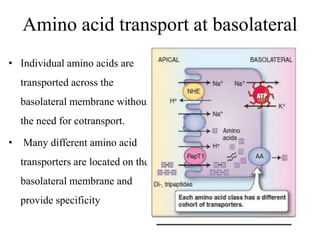
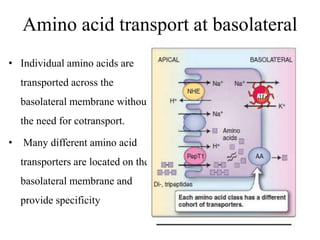
Amino acid transport at basolateral
• Individual amino acids are
transported across the
basolateral membrane without
the need for cotransport.
• Many different amino acid
transporters are located on the
basolateral membrane and
provide specificity
Further hydrolysis by Peptidases
• By the action of endo and exopeptidases some free
amino acids are liberated in the intestinal lumen,
• But others are liberated at the cell surface by the
aminopeptidases, carboxypeptidases, endopeptidases,
and dipeptidases in the brush border of the mucosal
cells.
Absorption of proteins
Transport of amino acids and polypeptides
in the enterocytes
 The di- and tripeptides
are actively transported
into enterocytes by a
system known as peptide
transporter 1) that
requires H + instead of
Na +
At basolateral membrane
• The movement of any one amino acid can occur through one
or more amino acid transporters.
• At least five amino acid transporters are present in the
basolateral membrane.
• Three amino acid transport processes on the basolateral
membrane mediate amino acid exit from the cell into the blood
• Two other amino acid transporters mediate uptake from the
blood for the purposes of cell nutrition.
Amino acid transport at basolateral
• Individual amino acids are
transported across the
basolateral membrane without
the need for cotransport.
• Many different amino acid
transporters are located on the
basolateral membrane and
provide specificity
Diseases associated with absorption of proteins
• Hartnup disease and cystinuria are hereditary disorders of amino
acid transport across the apical membrane.
• These autosomal recessive disorders are associated with both small
intestine and renal tubule abnormalities
• the absorption of neutral amino acids in the case of Hartnup disease
and of cationic (i.e., basic) amino acids and cystine in the case of
cystinuria.
References
• Lippincott’s Illustrated Reviews: Physiology (2013)
• Medical Physiology, Updated second edition (walter F. Boron,
MD, phd)
• Berne & levy, physiology, sixth edition, updated edition
• Ganong’s Review of Medical Physiology, 26 t h e d i t i o n

dr_shraddha_digestion_and_absorption_of_protein_and_its_applied.pptx

  • 2.
    Lecture series Gastrointestinal tract ProfessorShraddha Singh, Department of Physiology, KGMU, Lucknow
  • 3.
    Learning Objectives: • Understandthe composition of protein • Understand the enzymes responsible for digestion of proteins • What are sites for absorption Molecular basis of protein transportation • Learn about diseases related to protein digestion
  • 4.
    What are Protiens?  Proteins are a sequence of amino acids  One amino acids is joined to the next by a PEPTIDE bond  Provide energy substrate for metabolism (4 kcals/g).  Protein load received by the gut is derived from two primary sources: 70-100 g dietary protein, and 35-200 g endogenous protein,
  • 5.
    Amino acids • Ofthe 20 amino acids that exist, 9 are essential amino acids, and 11 are non- essential
  • 6.
    AMINO ACID: Sequence Dipeptide – 2 amino acids  Tripeptide – 3 amino acids  Oligopeptides – 4-10 amino acids  Polypeptide – more than 10 amino acids  Proteins in the body and diet are long polypeptides (100s of amino acids)
  • 7.
    AMINO ACID: Sequence Dipeptide – 2 amino acids  Tripeptide – 3 amino acids  Oligopeptides – 4-10 amino acids  Polypeptide – more than 10 amino acids  Proteins in the body and diet are long polypeptides (100s of amino acids)
  • 8.
    AMINO ACIDS: Structure Consistof a central carbon atom bonded to: a hydrogen, a carboxylic acid, an amino group, and an additional side group that is unique to each amino acid
  • 9.
  • 10.
    Initial digestion ofprotein in stomach  No digestion of protein takes place in the mouth,  Hydrochloric acid denatures protein and also converts pepsinogen to pepsin  Pepsin breaks the protein down into peptides of various lengths and some amino acids  Pepsin act only at pH 1.6-3.2  Pepsin completes ~ 10-20% of digestion
  • 11.
    Denaturing of Proteins •Acid, alkaline, heat and alcohol, can disrupt the chemical forces that stabilize proteins and can cause them to lose their shape (denature) • Denaturing of proteins happens during food preparation (cooking, whipping, adding acids) or digestion (in the stomach with hydrochloric acid)
  • 12.
    Action of Proteolyticenzymes  Pepsin hydrolyses the bonds between aromatic amino acids(phenylanine or tyrosine) and a second amino acid  So the product of pepsin hydrolysis is polypeptides of diverse sizes
  • 13.
    Polypeptidases • Trypsinogen and chymotrypsinogen (proenzymes)are secreted by pancreas in response to protein in the small intestine • They will be activated to trypsin and chymotrypsin (now called proteases)
  • 15.
    Peptidases hydrolyse proteins These enzymes can either cleave internal peptide bonds (i.e. endopeptidases)  exopeptidases cleave off one amino acid at a time from either the –COOH or –NH2 terminal of the polypeptide (i.e. they are carboxypeptidases , and aminopeptidases, respectively)
  • 16.
    • The endopeptidasescleave the large polypeptides to smaller oligopeptides, which can be acted upon by the exopeptidases to produce the final products of protein digestion, amino acids, di- and tripeptides, which are then absorbed by the enterocytes
  • 17.
    Further hydrolysis byPeptidases • By the action of endo and exopeptidases some free amino acids are liberated in the intestinal lumen, • But others are liberated at the cell surface by the aminopeptidases, carboxypeptidases, endopeptidases, and dipeptidases in the brush border of the mucosal cells.
  • 18.
  • 19.
    Transport of aminoacids and polypeptides in the enterocytes  The di- and tripeptides are actively transported into enterocytes by a system known as peptide transporter 1) that requires H + instead of Na +
  • 20.
    At basolateral membrane •The movement of any one amino acid can occur through one or more amino acid transporters. • At least five amino acid transporters are present in the basolateral membrane. • Three amino acid transport processes on the basolateral membrane mediate amino acid exit from the cell into the blood • Two other amino acid transporters mediate uptake from the blood for the purposes of cell nutrition.
  • 21.
    Amino acid transportat basolateral • Individual amino acids are transported across the basolateral membrane without the need for cotransport. • Many different amino acid transporters are located on the basolateral membrane and provide specificity
  • 22.
    Further hydrolysis byPeptidases • By the action of endo and exopeptidases some free amino acids are liberated in the intestinal lumen, • But others are liberated at the cell surface by the aminopeptidases, carboxypeptidases, endopeptidases, and dipeptidases in the brush border of the mucosal cells.
  • 23.
  • 24.
    Transport of aminoacids and polypeptides in the enterocytes  The di- and tripeptides are actively transported into enterocytes by a system known as peptide transporter 1) that requires H + instead of Na +
  • 25.
    At basolateral membrane •The movement of any one amino acid can occur through one or more amino acid transporters. • At least five amino acid transporters are present in the basolateral membrane. • Three amino acid transport processes on the basolateral membrane mediate amino acid exit from the cell into the blood • Two other amino acid transporters mediate uptake from the blood for the purposes of cell nutrition.
  • 26.
    Amino acid transportat basolateral • Individual amino acids are transported across the basolateral membrane without the need for cotransport. • Many different amino acid transporters are located on the basolateral membrane and provide specificity
  • 27.
    Diseases associated withabsorption of proteins • Hartnup disease and cystinuria are hereditary disorders of amino acid transport across the apical membrane. • These autosomal recessive disorders are associated with both small intestine and renal tubule abnormalities • the absorption of neutral amino acids in the case of Hartnup disease and of cationic (i.e., basic) amino acids and cystine in the case of cystinuria.
  • 28.
    References • Lippincott’s IllustratedReviews: Physiology (2013) • Medical Physiology, Updated second edition (walter F. Boron, MD, phd) • Berne & levy, physiology, sixth edition, updated edition • Ganong’s Review of Medical Physiology, 26 t h e d i t i o n