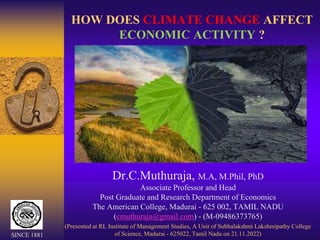
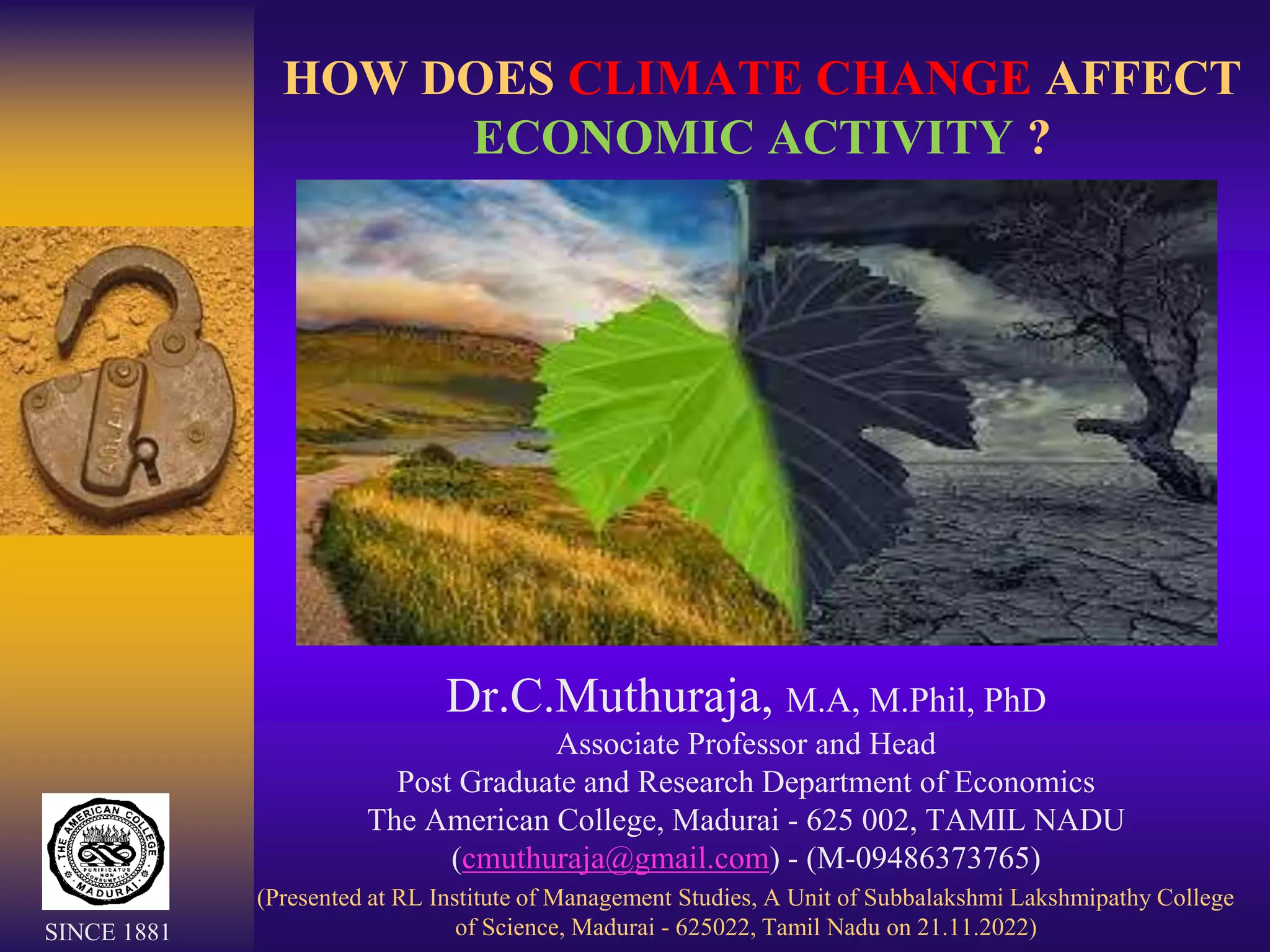
HOW DOES CLIMATE CHANGE AFFECT
ECONOMIC ACTIVITY ?
Dr.C.Muthuraja, M.A, M.Phil, PhD
Associate Professor and Head
Post Graduate and Research Department of Economics
The American College, Madurai - 625 002, TAMIL NADU
(cmuthuraja@gmail.com) - (M-09486373765)
(Presented at RL Institute of Management Studies, A Unit of Subbalakshmi Lakshmipathy College
of Science, Madurai - 625022, Tamil Nadu on 21.11.2022)
SINCE 1881
CONTENTS
 INTRODUCTION
 CLIMATE CHANGE
 CLIMATE CHANGE & ECONOMIC ACTIVITY
 IMPACT ON :
 AGRICULTURE
 INDUSTRY
 ENVIRONMENT
 PEOPLE
 MITIGATION
 ROLE :GOVERNMENT-PRIVATE-NGO’S-INDIVIDUAL
 SUMMARY
 APPEAL
 QUESTIONS Please…
SINCE 1881
SINCE 1881
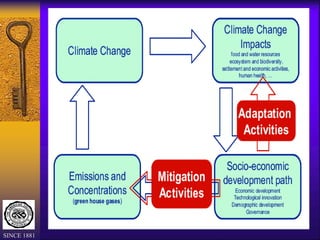
CLIMATE CHANGE
 Climate change occurs when changes in Earth's
climate system result in new weather patterns that
last for at least a few decades, and maybe for
millions of years
 The climate system is comprised of five interacting
parts, the atmosphere, hydrosphere, cryosphere,
biosphere, and lithosphere
 Small changes in average temperature of Earth lead
to large and potentially dangerous shifts in climate
and weather
 Rising global temperatures, Changes in weather
and climate, floods, droughts, intense rain, frequent
and severe heat waves
SINCE 1881
Climate Change and its Effects
 Climate change is now considered one of the greatest
threats to economic stability
 Climate change is one of the biggest threats to
economic stability
 Heat waves make us less able to work and reduce
productivity
 Warmer temperatures, sea level rise and extreme
weather will damage property and critical
infrastructure
 Negative impact on human health and productivity,
and affect sectors such as agriculture, forestry,
fisheries and tourism
 Property loss and damage, infrastructure and service
costs and risks to financial stability
SINCE 1881
SINCE 1881
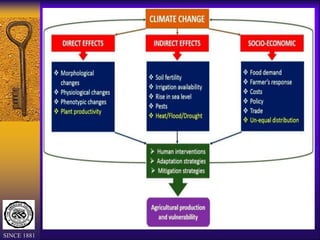
Climate Change & Agriculture
 Causing a rise in sea level, leading to the loss of
coastal land, a change in precipitation patterns,
increased risks of droughts and floods, and threats to
biodiversity
 Rise to blights and pests and causing population
movement and change in biodiversity.
 Changes in average temperatures, rainfall, and
climate extremes (e.g. heat waves)
 Changes in pests and diseases
 Changes in atmospheric carbon dioxide and ground-
level ozone concentrations
 Changes in the nutritional quality of some foods
 Brings about biological changes in areas such as
fertilization and breeding and affects the growing
pattern of pastures
SINCE 1881
Climate Change and Industry
 Higher Prices for Goods and Services
 Even companies that aren't in the energy industry
can be indirectly affected by energy regulation and
the costs they create
 Broad changes in prices for utilities and
transportation must be passed on by suppliers
 The companies in the middle must pass them on to
their customers
 Changes in the interest rate, wage rates, and the rate
of inflation
 Affects fuel supply, energy production as well as the
physical resilience of current and future energy
infrastructure
SINCE 1881
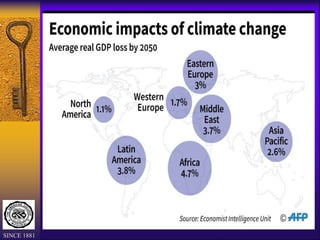
Climate Change and Economy
 In the Oxford Economics high emission scenario, a
temperature rise of 2 degrees by the year 2050
would reduce global GDP by 2.5% – 7.5%
 By the year 2100 in this case, the temperature would rise
by 4 degrees, which could reduce the global GDP by
30% in the worst case
 It influences economic growth through damage to
property and infrastructure, lost yield or output,
security risk and mass migration
 It could wipe off up to 18% of GDP off the worldwide
economy by 2050 if global temperatures rise by 3.2°C,
the Swiss Re Institute warns
 Direct damages of such disasters are estimated to add up
to around US$ 1.3 trillion (or around 0.2% of world
GDP on average, per year
SINCE 1881
SINCE 1881
ECONOMICS OF CLIMATE CHANGE
• The uncertainty inherent in economic analyses of
environmental regulations is magnified by the long-term
and global scale of the problem
• There are uncertainties regarding the pace and form of
future technological innovation, economic growth, and
thresholds for climate impacts
• Discusses the effect of global warming on the world
economy
• The Stern Review on the Economics of Climate
Change for the Government of the United
Kingdom (2006 by economist Nicholas Stern, Chair of
the Grantham Research Institute on Climate Change and
the Environment at the London School of
Economics (LSE) and also chair of the Centre for
Climate Change Economics and Policy (CCCEP) at
Leeds University and LSE
SINCE 1881
The Economists Perspective
 “… it will do us little good to solve our common
global economic problems if we do not do
something about the most pressing common
environmental problem: global warming.”
Joseph E. Stiglitz, 2001 Nobel Memorial Prize in
Economics
 “we are much better off to act to reduce CO2
emissions substantially than to suffer and risk
the consequences of failing to meet this
challenge.”
Kenneth J. Arrow, 1972 Nobel Memorial Prize in
Economics
SINCE 1881
SINCE 1881
CC India - Benefits and Costs
• Climate change could cost India 2.8 per cent of GDP,
and depress living standards of nearly half of its
population by 2050, as average annual temperatures are
expected to rise by 1-2 per cent over three decades
• If no measures are taken, average temperatures in India
are predicted to increase by 1.5-3 degrees- 'South Asia's
Hotspots: The Impact of Temperature and Precipitation
Changes on Living Standards‘
• Even if preventive measures are taken along the lines of
those recommended by the Paris climate change
agreement of 2015, India's average annual temperatures
are expected to rise by 1-2 degrees Celsius by 2050
• About 600 million people in India today live in
locations that could either become moderate or severe
hotspots of climate change by 2050 under a business-
as-usual scenario
SINCE 1881
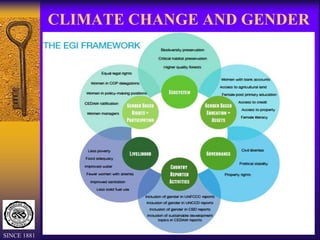
CLIMATE CHANGE AND GENDER
SINCE 1881
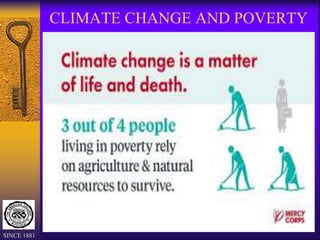
CLIMATE CHANGE AND POVERTY
SINCE 1881
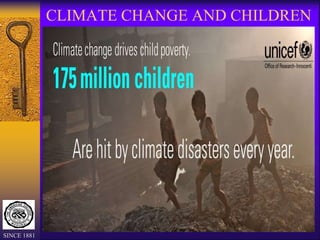
CLIMATE CHANGE AND CHILDREN
SINCE 1881
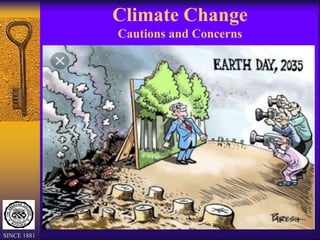
Climate Change
Cautions and Concerns
SINCE 1881
SINCE 1881
SINCE 1881
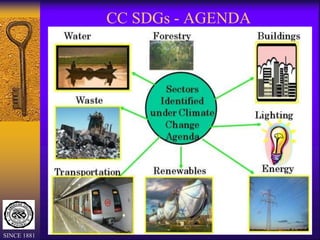
CC SDGs - AGENDA
SINCE 1881
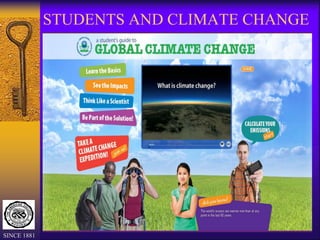
STUDENTS AND CLIMATE CHANGE
SINCE 1881
TOWARDS GREEN ECONOMICS/WORLD
SINCE 1881
ROLE OF
 INTERNATIONAL INSTITUTIONS
 GOVENMENTS
 PRIVATE CORPORATES
 NON GOVERNMENT ORGANISATIONS
 PUBLIC
 MASS/SOCIAL MEDIA FAMILY
 INDIVIDUAL
FAMILY PARTICIPATION
PUBLIC PARTICIPATION
SOCIAL/CIVIC RESPONSIBILITIES
LEARN TO SHARE
LEARN TO UNLEARN +++
SINCE 1881
SINCE 1881
SINCE 1881
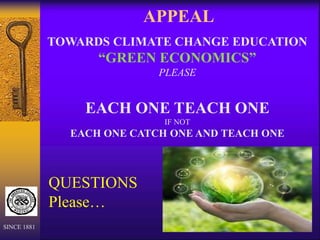
APPEAL
SINCE 1881
QUESTIONS
Please…
TOWARDS CLIMATE CHANGE EDUCATION
“GREEN ECONOMICS”
PLEASE
EACH ONE TEACH ONE
IF NOT
EACH ONE CATCH ONE AND TEACH ONE

Dr.C.Muthuraja's Presentation on HOW DOES CLIMATE CHANGE AFFECT ECONOMIC ACTIVITY ?

  • 1.
    HOW DOES CLIMATECHANGE AFFECT ECONOMIC ACTIVITY ? Dr.C.Muthuraja, M.A, M.Phil, PhD Associate Professor and Head Post Graduate and Research Department of Economics The American College, Madurai - 625 002, TAMIL NADU (cmuthuraja@gmail.com) - (M-09486373765) (Presented at RL Institute of Management Studies, A Unit of Subbalakshmi Lakshmipathy College of Science, Madurai - 625022, Tamil Nadu on 21.11.2022) SINCE 1881
  • 2.
    CONTENTS  INTRODUCTION  CLIMATECHANGE  CLIMATE CHANGE & ECONOMIC ACTIVITY  IMPACT ON :  AGRICULTURE  INDUSTRY  ENVIRONMENT  PEOPLE  MITIGATION  ROLE :GOVERNMENT-PRIVATE-NGO’S-INDIVIDUAL  SUMMARY  APPEAL  QUESTIONS Please… SINCE 1881
  • 3.
  • 4.
    CLIMATE CHANGE  Climatechange occurs when changes in Earth's climate system result in new weather patterns that last for at least a few decades, and maybe for millions of years  The climate system is comprised of five interacting parts, the atmosphere, hydrosphere, cryosphere, biosphere, and lithosphere  Small changes in average temperature of Earth lead to large and potentially dangerous shifts in climate and weather  Rising global temperatures, Changes in weather and climate, floods, droughts, intense rain, frequent and severe heat waves SINCE 1881
  • 5.
    Climate Change andits Effects  Climate change is now considered one of the greatest threats to economic stability  Climate change is one of the biggest threats to economic stability  Heat waves make us less able to work and reduce productivity  Warmer temperatures, sea level rise and extreme weather will damage property and critical infrastructure  Negative impact on human health and productivity, and affect sectors such as agriculture, forestry, fisheries and tourism  Property loss and damage, infrastructure and service costs and risks to financial stability SINCE 1881
  • 6.
  • 7.
    Climate Change &Agriculture  Causing a rise in sea level, leading to the loss of coastal land, a change in precipitation patterns, increased risks of droughts and floods, and threats to biodiversity  Rise to blights and pests and causing population movement and change in biodiversity.  Changes in average temperatures, rainfall, and climate extremes (e.g. heat waves)  Changes in pests and diseases  Changes in atmospheric carbon dioxide and ground- level ozone concentrations  Changes in the nutritional quality of some foods  Brings about biological changes in areas such as fertilization and breeding and affects the growing pattern of pastures SINCE 1881
  • 8.
    Climate Change andIndustry  Higher Prices for Goods and Services  Even companies that aren't in the energy industry can be indirectly affected by energy regulation and the costs they create  Broad changes in prices for utilities and transportation must be passed on by suppliers  The companies in the middle must pass them on to their customers  Changes in the interest rate, wage rates, and the rate of inflation  Affects fuel supply, energy production as well as the physical resilience of current and future energy infrastructure SINCE 1881
  • 9.
    Climate Change andEconomy  In the Oxford Economics high emission scenario, a temperature rise of 2 degrees by the year 2050 would reduce global GDP by 2.5% – 7.5%  By the year 2100 in this case, the temperature would rise by 4 degrees, which could reduce the global GDP by 30% in the worst case  It influences economic growth through damage to property and infrastructure, lost yield or output, security risk and mass migration  It could wipe off up to 18% of GDP off the worldwide economy by 2050 if global temperatures rise by 3.2°C, the Swiss Re Institute warns  Direct damages of such disasters are estimated to add up to around US$ 1.3 trillion (or around 0.2% of world GDP on average, per year SINCE 1881
  • 10.
  • 11.
    ECONOMICS OF CLIMATECHANGE • The uncertainty inherent in economic analyses of environmental regulations is magnified by the long-term and global scale of the problem • There are uncertainties regarding the pace and form of future technological innovation, economic growth, and thresholds for climate impacts • Discusses the effect of global warming on the world economy • The Stern Review on the Economics of Climate Change for the Government of the United Kingdom (2006 by economist Nicholas Stern, Chair of the Grantham Research Institute on Climate Change and the Environment at the London School of Economics (LSE) and also chair of the Centre for Climate Change Economics and Policy (CCCEP) at Leeds University and LSE SINCE 1881
  • 12.
    The Economists Perspective “… it will do us little good to solve our common global economic problems if we do not do something about the most pressing common environmental problem: global warming.” Joseph E. Stiglitz, 2001 Nobel Memorial Prize in Economics  “we are much better off to act to reduce CO2 emissions substantially than to suffer and risk the consequences of failing to meet this challenge.” Kenneth J. Arrow, 1972 Nobel Memorial Prize in Economics SINCE 1881
  • 13.
  • 14.
    CC India -Benefits and Costs • Climate change could cost India 2.8 per cent of GDP, and depress living standards of nearly half of its population by 2050, as average annual temperatures are expected to rise by 1-2 per cent over three decades • If no measures are taken, average temperatures in India are predicted to increase by 1.5-3 degrees- 'South Asia's Hotspots: The Impact of Temperature and Precipitation Changes on Living Standards‘ • Even if preventive measures are taken along the lines of those recommended by the Paris climate change agreement of 2015, India's average annual temperatures are expected to rise by 1-2 degrees Celsius by 2050 • About 600 million people in India today live in locations that could either become moderate or severe hotspots of climate change by 2050 under a business- as-usual scenario SINCE 1881
  • 15.
    CLIMATE CHANGE ANDGENDER SINCE 1881
  • 16.
    CLIMATE CHANGE ANDPOVERTY SINCE 1881
  • 17.
    CLIMATE CHANGE ANDCHILDREN SINCE 1881
  • 18.
    Climate Change Cautions andConcerns SINCE 1881
  • 19.
  • 20.
  • 21.
    CC SDGs -AGENDA SINCE 1881
  • 22.
    STUDENTS AND CLIMATECHANGE SINCE 1881
  • 23.
    TOWARDS GREEN ECONOMICS/WORLD SINCE1881 ROLE OF  INTERNATIONAL INSTITUTIONS  GOVENMENTS  PRIVATE CORPORATES  NON GOVERNMENT ORGANISATIONS  PUBLIC  MASS/SOCIAL MEDIA FAMILY  INDIVIDUAL FAMILY PARTICIPATION PUBLIC PARTICIPATION SOCIAL/CIVIC RESPONSIBILITIES LEARN TO SHARE LEARN TO UNLEARN +++
  • 24.
  • 25.
  • 26.
  • 27.
    APPEAL SINCE 1881 QUESTIONS Please… TOWARDS CLIMATECHANGE EDUCATION “GREEN ECONOMICS” PLEASE EACH ONE TEACH ONE IF NOT EACH ONE CATCH ONE AND TEACH ONE