STUDY ON INCIDENCE OF POST CESAREAN SURGICAL SITE
WOUND INFECTION,IDENTIFY ITS ASSOCIATED RISK FACTORS
AND ETIOLOGICAL AGENT ,MEASURES TO REDUCE ITS
INCIDENCE ,MANAGEMENT AND OUTCOME IN A TERITARY CARE
PRESENTOR-
DR. SABITHA BAANU.M
FIRST YEAR POST
GRADUATE
DEPT OF OBSTETRICS AND
GYNAECOLOGY
HOD:
DR.T.V.INDIRANI MD OG
GUIDE:
DR.THENNARASI MS OG
CO-GUIDE:
DR.GEETHA RENUKA DNB OG
DEPT OF OBSTETRICS AND
GYNAECOLOGY
INSTITUTE:
GOVT SIVAGANGAI MEDICAL
COLLEGE AND HOSPITAL
•Cesarean section is an operative procedure by which a fetus, placenta, and membranes are delivered
through an abdominal and uterine incision which is performed whenever abnormal conditions
complicate labor and vaginal delivery that threatening the life or health of the mother or the baby.
•In 1985, WHO declared that, the optimal threshold for cesarean section rate should be 10–15%.
•But recent studies have reported that the rate of cesarean section is rising rapidly that leads to
actual, potential, and life-long maternal and neonatal complications.
•Women having fewer children, increased maternal age, Malpresentation especially breech
presentation, Decreased frequency of forceps and vacuum delivery, Increased rate of labor
induction, obesity dramatically raises and vaginal birth after cesarean section decreased are some
of the possible explanations for increased incidence of cesarean section delivery.
INTRODUCTION
•Despite cesarean section a lifesaving medical intervention and procedures to the decrease adverse
birth outcome, controlling different postoperative neonatal and maternal complications are
challenging in terms of patient safety; postpartum fever, surgical site infection, puerperal sepsis
and maternal mortality are common complications of CS.
•One of the short term morbidity which takes place after CS is Surgical Site Infection (SSI).
•Globally, surgical site infections is potential complication associated with any type of surgical
procedure, and is defined as infection which occurs within 30 days of a postsurgical procedure
involving skin, subcutaneous tissue, soft tissue, or any other part of the body.
•Mothers undergoing cesarean delivery have a 5 to 20-times greater chance of getting an infection
compared with mothers who give birth vaginally.
•Even though SSIs are one among the most preventable hospital-acquired infections(HAI), it is the
second most common cause of maternal morbidity and mortality after PPH.
•To determine the magnitude, risk factors and
etiological agent that contribute for SSI
following cesarean delivery and measures to
reduce its incidence, management and
outcome in GOVERNMENT SIVAGANGAI
MEDICAL COLLEGE AND HOSPITAL,
which is a step ahead for preventing and
reducing the problem
AIM OFTHE STUDY
OBJECTIVES
• Primary Objective:
Incidence of post-cesarean SSWIs.
• Secondary Objective:
Identification of risk factors, common etiological agents, effectiveness of preventive measures, management
strategies and patient outcomes.
Study Protocol
•Study Design: Institutional Based Prospective Cohort Study.
•Study Period: 1 Year from the date of ethics committee approval.
•Setting: Department of Obstetrics and Gynaecology, Government Sivagangai Medical College and
Hospital, Sivagangai.
• Methodology
• Sample Size: 136
• Study design - Institutional based prospective cohort study
• Randomisation: Simple sampling done by computer generated numbers
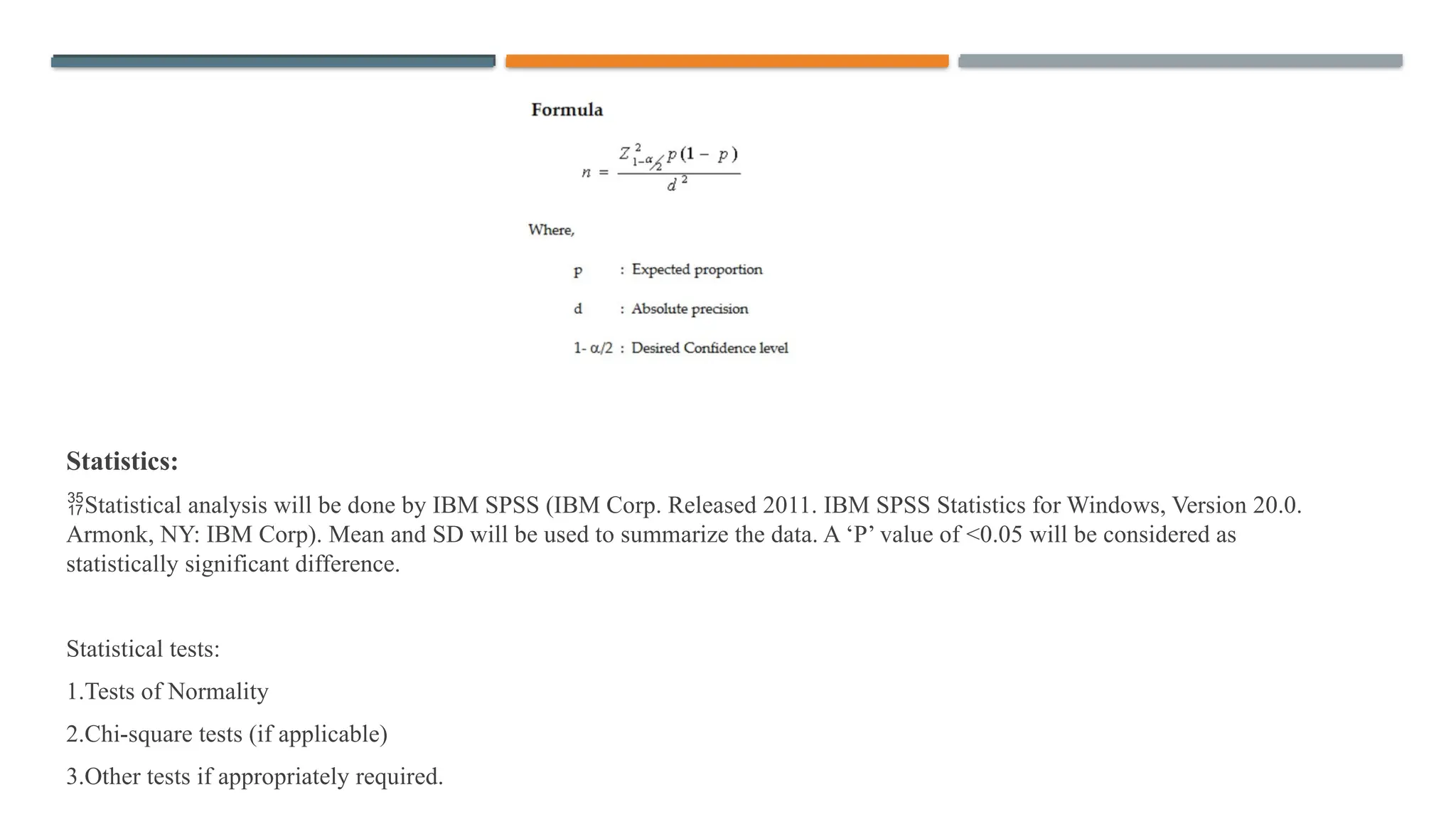
Single Proportion - Absolute Precision Metrics
Expected Proportion 0.15
Precision (%) 6
Desired confidence level (1- alpha) % 95
Required sample size 136
Statistics:
Statistical analysis will be done by IBM SPSS (IBM Corp. Released 2011. IBM SPSS Statistics for Windows, Version 20.0.
Armonk, NY: IBM Corp). Mean and SD will be used to summarize the data. A ‘P’ value of <0.05 will be considered as
statistically significant difference.
Statistical tests:
1.Tests of Normality
2.Chi-square tests (if applicable)
3.Other tests if appropriately required.
INCLUSION CRITERIA
• Women who undergone cesarean section in GSMCH during study period.
• Women above 18 years so that to give informed consent on their own.
• Both elective and emergency cesarean section.
• Women who have at least one post operative follow up or who have been monitored for specific period.
E.g- 30 days post cesarean to detect wound infection.
• Women who have provided informed consent to participate in he study allowing the collection and
analysis of their medical data.
• Women who have stayed in the hospital for a minimum duration post cesarean to ensure adequate initial
observation for early signs of infection.
EXCLUSION CRITERIA
• Women with pre-existing infection that could influence wound healing. Eg- Active infection at
the time of surgery.
• Women with chronic illness that significantly affect immune function or wound healing. Eg- AIDS
• Women who receiving immunosuppressive therapy that could have affect infection rate and wound
healing. Eg- On chemotherapy, On steroids treatment.
• Women who do not comply with post operative follow up.
• Women with incomplete medical records or insufficient data to assess risk factors, surgical details
adequately.
• Women who do not provide informed consent to participate in the study.
INCIDENCE
The incidence of post-
cesarean SSWI varies
widely, reported to be
between 3% and 15%,
depending on factors
like geographic
location, healthcare
settings, and patient
demographics.
RISK FACTORS
• PRE OPERATIVE
• INTRA OPERATIVE
• POST OPERATIVE
PREOPERATIVE FACTORS
• Increased maternal age, Previous cesarean delivery, malnutrition.
• Obesity: Higher body mass index (BMI) increases the risk of infection.
• Diabetes: Both gestational and pregestational diabetes are associated with a
higher incidence of SSWI.
• Prolonged labor: Extended duration of labor before the cesarean increases
infection risk.
• Chorioamnionitis: Infection of the fetal membranes can lead to SSWI.
• Preoperative anemia: Reduced immune response and healing capability.
INTRAOPERATIVE FACTORS
• Type of cesarean: Emergency C-sections have a higher infection risk compared to
elective ones.
• Duration of surgery: Longer operative times are associated with a higher risk.
• Surgical technique: Techniques that cause more tissue trauma or use of certain types
of sutures can influence infection rates.
• Antibiotic prophylaxis: Failure to administer appropriate antibiotics prior to surgery.
POSTOPERATIVE FACTORS
• Postoperative care: Poor wound care and hygiene can increase the risk
• Hospital environment: Inadequate infection control practice .
• Patient compliance: Non-adherence to postoperative care instructions.
ETIOLOGICAL AGENT OF SSI:
Data Collection:
Demographic and Socioeconomic Data
Age
Body Mass Index(BMI)
Education level
Occupation
Obstetric History
Parity(number of previous pregnancies)
History of previous cesarean sections
Complications in previous pregnancies
Medical History
Pre-Existing Medical conditions(e,g- Diabetes, Hypertension)
Allergies
Medications Currently taken (Especially antibiotics and immunosuppressive
drugs)
Smoking and Alcohol use
Surgical Details
Type of cesarean section (elective or emergency)
Indication for cesarean section
Duration of surgery
Type of anesthesia used(e.g- General, Spinal, Epidural)
Intraoperative Blood loss
Type of skin incision(e.g- Pfannenstiel, vertical)
Type of uterine incision(e.g- low transverse, classical)
Intraoperative complications
Post-Operative care
Prophylactic antibiotic use(type, dose, duration)
Wound care practices(e.g- type of dressing, frequency of changes)
Use of any additional preventive measures(e.g- wound protectors, negative pressure wound
therapy)
Follow-up and Monitoring
Frequency and schedule of post-operative follow up visits
Monitoring parameters: vital signs, signs of infection(redness, swelling, pain, discharge),
wound healing progress
Duration of hospital stay
Infection Data
Date and time of onset of surgical site infection(SSI)
Clinical signs and symptoms of infection(e.g- Fever, purulent discharge)
Classifications of SSI(superficial, deep, organ/space)
Laboratory and microbiological data: wound swab culture results(type of organism, antibiotic
sensitivity)
Blood culture results(if applicable)
Complete blood count(CBC)
C-reactive protein(CRP) levels
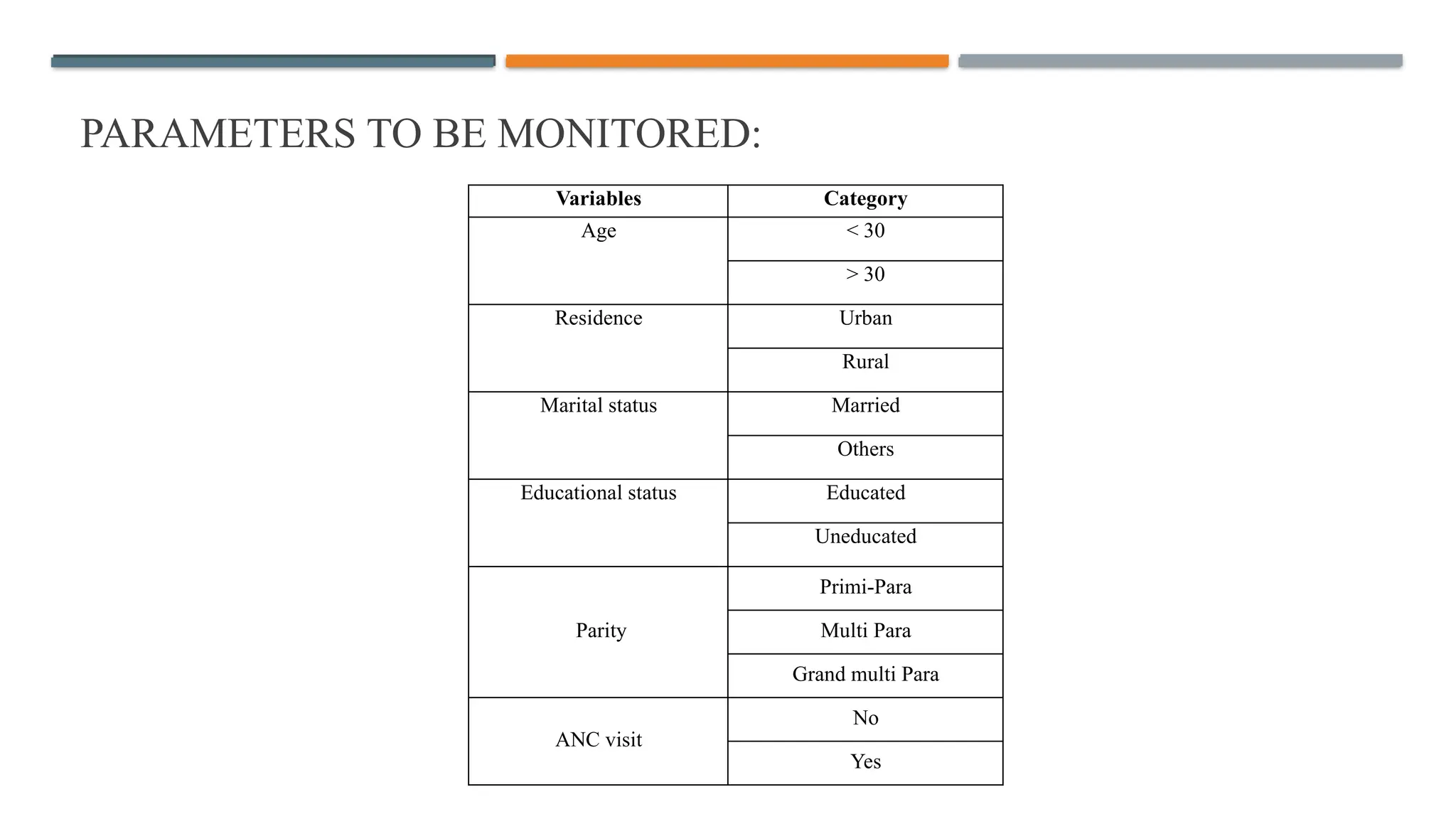
PARAMETERS TO BE MONITORED:
Variables Category
Age < 30
> 30
Residence Urban
Rural
Marital status Married
Others
Educational status Educated
Uneducated
Parity
Primi-Para
Multi Para
Grand multi Para
ANC visit
No
Yes
Variables Category
Duration of labor
Not in labor
< 24hrs
24hrs
Gestational age
< 37wks
37_40wks
> 40wks
Number of vaginal examinations
Not done
1- 4
> 5
Duration of membrane rupture
Intact
Ruptured < 12hrs
Ruptured >12hrs
Present of meconium
Yes
No
Present of chorioamninitis
Yes
No
History of abortion
Yes
No
History of previous C/S
Yes
No
Variables Category
Who perform the operation
Emergency surgeon
Gynecologist
Preoperative HCT
< 30%
> 30%
Type of CS
Emergency
Elective
Type of anesthesia
Regional
General
Duration of operation
< 60minutes
> 60minutes
Type of abdominal incision
Transverse
Vertical
Prophylactic antibiotics
Yes
No
Post-operative antibiotics Yes
Number of dose of antbiotics Multiple dose
Post-operative HCT
< 30%
> 30%
Length of hospital stay
< 8 days
> 8 days
Blood transfusion
Yes
No
Investigations
• Hb% with RBC indices
• TC, DC
• Urine routine including urine albumin
• Weight
• Culture and sensitivity
• Swab from the wound
• Blood Culture
• Urine Culture
• High Vaginal Swab
• Kirby Bauer disc diffusion method to identify sensitivity of antibiotics
• ESR
• CRP (C Reactive Protein)
• LFT
• RFT
• Fundus examination of eyes
• RBS
• HbA1C level
• USG Abdomen and Pelvis
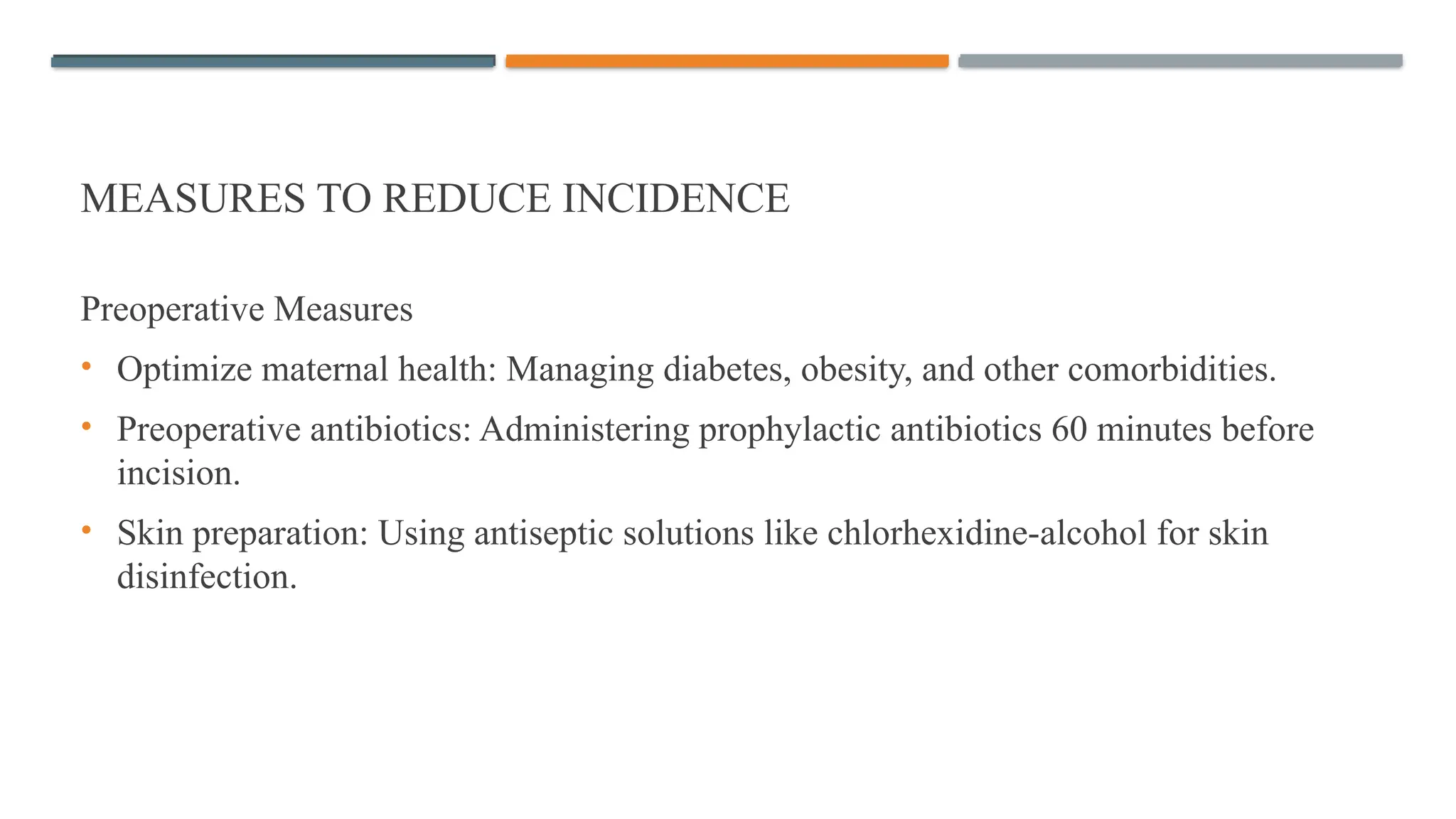
MEASURES TO REDUCE INCIDENCE
Preoperative Measures
• Optimize maternal health: Managing diabetes, obesity, and other comorbidities.
• Preoperative antibiotics: Administering prophylactic antibiotics 60 minutes before
incision.
• Skin preparation: Using antiseptic solutions like chlorhexidine-alcohol for skin
disinfection.
PROPHYLACTIC MEASURE WITH AZITHROMYCIN
INTRAOPERATIVE MEASURES
• Surgical technique: Minimizing tissue trauma and using appropriate suturing
techniques.
• Reducing operative time: Efficient surgical practices to minimize exposure
time.
• Maintaining sterile environment: Adhering to strict aseptic techniques.
POST OPERATIVE MEASURES
• Wound care: Educating patients on proper wound care and hygiene.
• Early mobilization: Encouraging movement to reduce the risk of complications.
• Monitoring: Regular monitoring for early signs of infection.
MANAGEMENT
• Diagnosis
• Clinical signs: Redness, swelling, pain, and discharge at the surgical site.
• Laboratory tests: Blood tests and cultures to identify the causative organism.
• Treatment .
• Antibiotics: Broad-spectrum antibiotics initially, followed by culture-specific therapy.
• Wound care: Regular cleaning, dressing changes, and, if necessary, surgical
debridement.
• Supportive care: Ensuring adequate nutrition and hydration.
Proforma
NAME OF THE PATIENT:
AGE: SEX:
IP /OP No:
Address:
OCCUPATION:
SOCIOECONOMIC CLASS:
OBSTETRIC SCORE:
PAST HISTORY:
TREATMENT HISTORY:
MENSTRUAL HISTORY:
MARITAL HISTORY:
OBSTETRIC HISTORY:
PERSONAL HISTORY:
FAMILY HISTORY:
GENERAL PHYSICAL EXAMINATION:
Built
Nourishment
Ht
Wt
BMI
On examination:
Vitals-
BP:
PR:
RR:
Spo2:
SYSTEMIC EXAMINATION:
CVS:
RS:
CNS:
Per ABDOMEN:
PROVISIONAL DIAGNOSIS
PROCEDURE DONE
INVESTIGATIONS: PREOP POSTOP
Complete blood count:
Total count:
Hb:
Platelet:
PCV:
RBS:
Blood Urea/Sr.Creatinine:
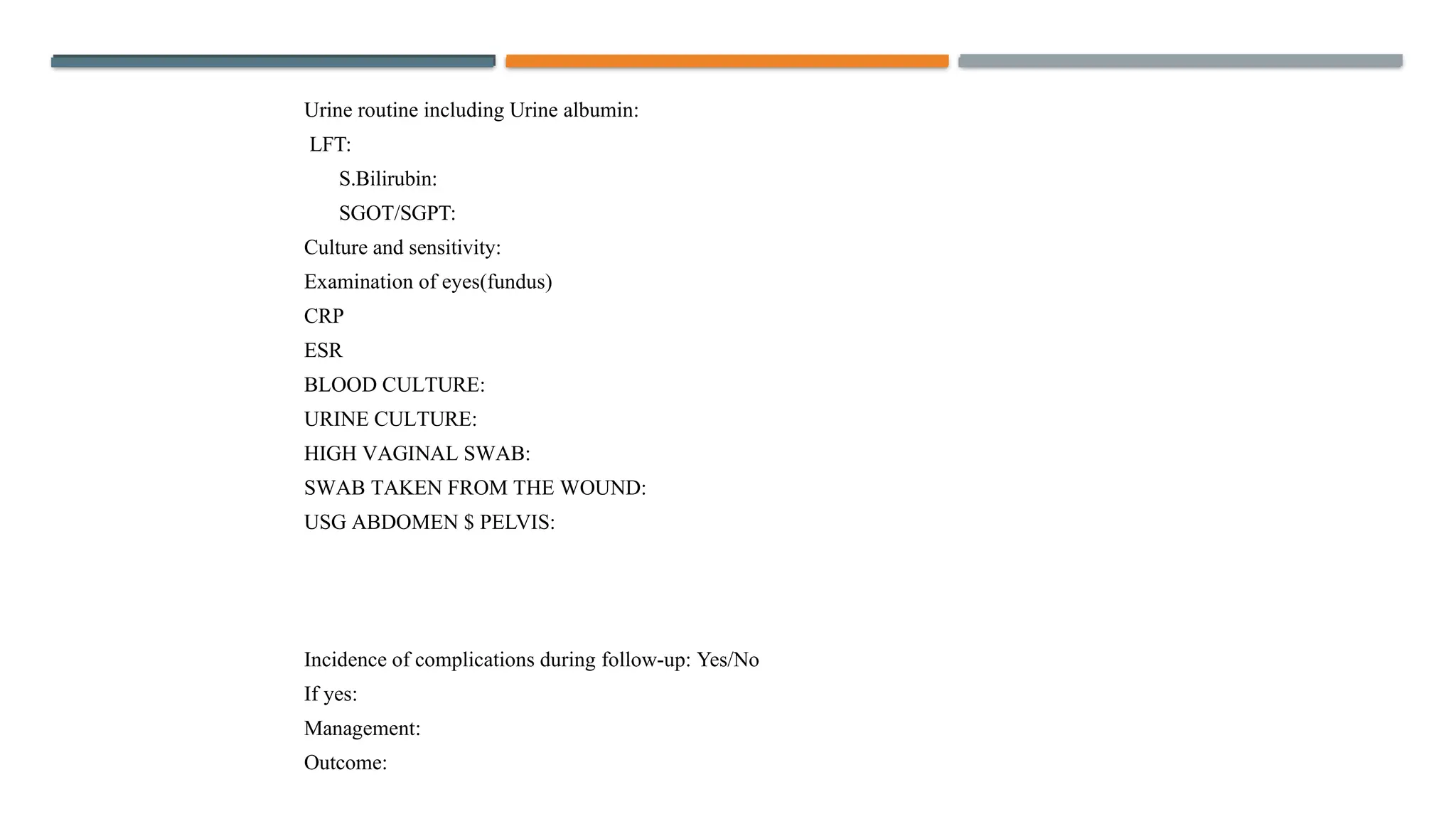
Urine routine including Urine albumin:
LFT:
S.Bilirubin:
SGOT/SGPT:
Culture and sensitivity:
Examination of eyes(fundus)
CRP
ESR
BLOOD CULTURE:
URINE CULTURE:
HIGH VAGINAL SWAB:
SWAB TAKEN FROM THE WOUND:
USG ABDOMEN $ PELVIS:
Incidence of complications during follow-up: Yes/No
If yes:
Management:
Outcome:
CONCLUSION
• The incidence of post-
cesarean SSWI can be
significantly reduced through
the identification and
management of risk factors,
adherence to best surgical
practices, and thorough
postoperative care.
• Early diagnosis and prompt
treatment are crucial for
favorable outcome
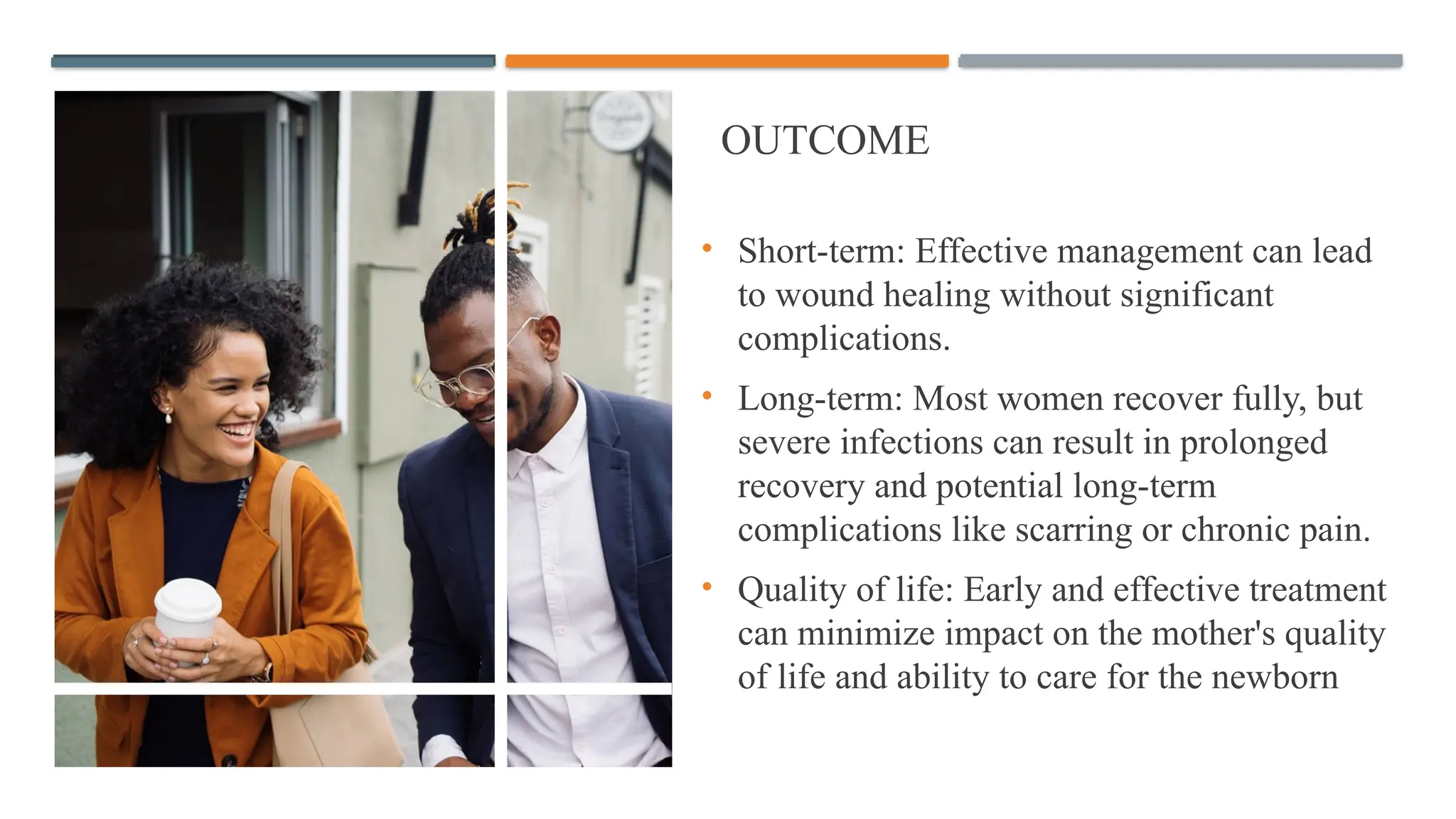
OUTCOME
• Short-term: Effective management can lead
to wound healing without significant
complications.
• Long-term: Most women recover fully, but
severe infections can result in prolonged
recovery and potential long-term
complications like scarring or chronic pain.
• Quality of life: Early and effective treatment
can minimize impact on the mother's quality
of life and ability to care for the newborn
References
• Solomokin J, P G, P B, A L, S B, M E, et al. WHO global guidelines for the prevention of surgical site infection Geneva. Switzerland. Lancet Infect Dis. 2017;
17(3):262–4. https:// doi.org/10.1016/S1473- 3099(17)30081-6 PMID: 28244389
• Betra´n AP, Torloni MR, Zhang J-J, Gu¨lmezoglu A, Section WWGoC, Aleem H, et al. WHO statement on caesarean section rates. BJOG: An International Journal of
Obstetrics & Gynaecology. 2016; 123 (5):667–70. https://doi.org/10.1111/1471-0528.13526 PMID: 26681211
• Betra´n AP, Merialdi M, Lauer JA, Bing-Shun W, Thomas J, Van Look P, et al. Rates of caesarean section: analysis of global, regional and national estimates.
Paediatric and perinatal epidemiology. 2007; 21(2):98–113. https://doi.org/10.1111/
• j.1365-3016.2007.00786.x PMID: 17302638
• Alfouzan W, Al Fadhli M, Abdo N, Alali W, Dhar R. Surgical site infection following cesarean section in a general hospital in Kuwait: trends and risk factors.
Epidemiology & Infection. 2019; 147
• Smaill FM, Grivell RM. Antibiotic prophylaxis versus no prophylaxis for preventing infection after cesarean section. Cochrane Database of Systematic Reviews. 2014(10).
https://doi.org/ 10.1002/14651858. CD007482.pub3 PMID: 25350672
• Allegranzi B, Bischoff P, de Jonge S, Kubilay NZ, Zayed B, Gomes SM, et al. New WHO recommendations on preoperative measures for surgical site infection prevention:
an evidence-based global perspective. The Lancet Infectious Diseases. 2016; 16(12):e276–e87. https://doi.org/10.1016/S1473-3099 (16)30398-X PMID: 27816413
• Saeed KB, Corcoran P, Greene RA. Incisional surgical site infection following cesarean section: A national retrospective cohort study. European Journal of Obstetrics &
Gynecology and Reproductive Biology. 2019; 240:256–60. https://doi.org/10.1016/j.ejogrb.2019.07.020 PMID: 31344664
• Grayi A, Vawdai Y. The development of national secondary legislation informing the
• implementation of the National Health Act continues apace. Health Policy and Legislation. 2018; 21(23–46).
• Bizimana JK, Ndoli J, Bayingana C, Baluhe I, Gilson G, Habimana E. Prevalence and risk factors for post cesarean delivery surgical site infection in a teaching hospital
setting in rural Rwanda: A prospective cross sectional study. International Journal of Current Microbiology and Applied Sciences 2016; 5 (6):631–41.
• Onyegbule OA, Akujobi CN, Ezebialu IU, Nduka AC, Anahalu IC, Okolie V, et al. Determinants of postcaesarean wound infection in Nnewi, Nigeria. Journal of Advances
in Medicine and
• Medical Research. 2015:767–74.
• Dacho A, Angelo A. Magnitude of post caesarean section surgical site infection and its associated factors among mothers who underwent caesarean section in Mizan
Tepi University Teaching Hospital, South West Ethiopia, 2017. J Nurs Care. 2018; 7(454):1168– 2167.
• Hana Lijaemiro SBL, and Jembere Tesfaye Deressa. Incidence of Surgical Site Infection and Factors Associated among Cesarean Deliveries in Selected Government
Hospitals in Addis
THANK YOU

DR. SabithaBaanu_Surgical site infection

  • 1.
    STUDY ON INCIDENCEOF POST CESAREAN SURGICAL SITE WOUND INFECTION,IDENTIFY ITS ASSOCIATED RISK FACTORS AND ETIOLOGICAL AGENT ,MEASURES TO REDUCE ITS INCIDENCE ,MANAGEMENT AND OUTCOME IN A TERITARY CARE
  • 2.
    PRESENTOR- DR. SABITHA BAANU.M FIRSTYEAR POST GRADUATE DEPT OF OBSTETRICS AND GYNAECOLOGY HOD: DR.T.V.INDIRANI MD OG GUIDE: DR.THENNARASI MS OG CO-GUIDE: DR.GEETHA RENUKA DNB OG DEPT OF OBSTETRICS AND GYNAECOLOGY INSTITUTE: GOVT SIVAGANGAI MEDICAL COLLEGE AND HOSPITAL
  • 3.
    •Cesarean section isan operative procedure by which a fetus, placenta, and membranes are delivered through an abdominal and uterine incision which is performed whenever abnormal conditions complicate labor and vaginal delivery that threatening the life or health of the mother or the baby. •In 1985, WHO declared that, the optimal threshold for cesarean section rate should be 10–15%. •But recent studies have reported that the rate of cesarean section is rising rapidly that leads to actual, potential, and life-long maternal and neonatal complications. •Women having fewer children, increased maternal age, Malpresentation especially breech presentation, Decreased frequency of forceps and vacuum delivery, Increased rate of labor induction, obesity dramatically raises and vaginal birth after cesarean section decreased are some of the possible explanations for increased incidence of cesarean section delivery. INTRODUCTION
  • 4.
    •Despite cesarean sectiona lifesaving medical intervention and procedures to the decrease adverse birth outcome, controlling different postoperative neonatal and maternal complications are challenging in terms of patient safety; postpartum fever, surgical site infection, puerperal sepsis and maternal mortality are common complications of CS. •One of the short term morbidity which takes place after CS is Surgical Site Infection (SSI). •Globally, surgical site infections is potential complication associated with any type of surgical procedure, and is defined as infection which occurs within 30 days of a postsurgical procedure involving skin, subcutaneous tissue, soft tissue, or any other part of the body. •Mothers undergoing cesarean delivery have a 5 to 20-times greater chance of getting an infection compared with mothers who give birth vaginally. •Even though SSIs are one among the most preventable hospital-acquired infections(HAI), it is the second most common cause of maternal morbidity and mortality after PPH.
  • 5.
    •To determine themagnitude, risk factors and etiological agent that contribute for SSI following cesarean delivery and measures to reduce its incidence, management and outcome in GOVERNMENT SIVAGANGAI MEDICAL COLLEGE AND HOSPITAL, which is a step ahead for preventing and reducing the problem AIM OFTHE STUDY
  • 6.
    OBJECTIVES • Primary Objective: Incidenceof post-cesarean SSWIs. • Secondary Objective: Identification of risk factors, common etiological agents, effectiveness of preventive measures, management strategies and patient outcomes. Study Protocol •Study Design: Institutional Based Prospective Cohort Study. •Study Period: 1 Year from the date of ethics committee approval. •Setting: Department of Obstetrics and Gynaecology, Government Sivagangai Medical College and Hospital, Sivagangai.
  • 7.
    • Methodology • SampleSize: 136 • Study design - Institutional based prospective cohort study • Randomisation: Simple sampling done by computer generated numbers Single Proportion - Absolute Precision Metrics Expected Proportion 0.15 Precision (%) 6 Desired confidence level (1- alpha) % 95 Required sample size 136
  • 8.
    Statistics: Statistical analysis willbe done by IBM SPSS (IBM Corp. Released 2011. IBM SPSS Statistics for Windows, Version 20.0. Armonk, NY: IBM Corp). Mean and SD will be used to summarize the data. A ‘P’ value of <0.05 will be considered as statistically significant difference. Statistical tests: 1.Tests of Normality 2.Chi-square tests (if applicable) 3.Other tests if appropriately required.
  • 9.
    INCLUSION CRITERIA • Womenwho undergone cesarean section in GSMCH during study period. • Women above 18 years so that to give informed consent on their own. • Both elective and emergency cesarean section. • Women who have at least one post operative follow up or who have been monitored for specific period. E.g- 30 days post cesarean to detect wound infection. • Women who have provided informed consent to participate in he study allowing the collection and analysis of their medical data. • Women who have stayed in the hospital for a minimum duration post cesarean to ensure adequate initial observation for early signs of infection.
  • 10.
    EXCLUSION CRITERIA • Womenwith pre-existing infection that could influence wound healing. Eg- Active infection at the time of surgery. • Women with chronic illness that significantly affect immune function or wound healing. Eg- AIDS • Women who receiving immunosuppressive therapy that could have affect infection rate and wound healing. Eg- On chemotherapy, On steroids treatment. • Women who do not comply with post operative follow up. • Women with incomplete medical records or insufficient data to assess risk factors, surgical details adequately. • Women who do not provide informed consent to participate in the study.
  • 11.
    INCIDENCE The incidence ofpost- cesarean SSWI varies widely, reported to be between 3% and 15%, depending on factors like geographic location, healthcare settings, and patient demographics.
  • 12.
    RISK FACTORS • PREOPERATIVE • INTRA OPERATIVE • POST OPERATIVE
  • 13.
    PREOPERATIVE FACTORS • Increasedmaternal age, Previous cesarean delivery, malnutrition. • Obesity: Higher body mass index (BMI) increases the risk of infection. • Diabetes: Both gestational and pregestational diabetes are associated with a higher incidence of SSWI. • Prolonged labor: Extended duration of labor before the cesarean increases infection risk. • Chorioamnionitis: Infection of the fetal membranes can lead to SSWI. • Preoperative anemia: Reduced immune response and healing capability.
  • 14.
    INTRAOPERATIVE FACTORS • Typeof cesarean: Emergency C-sections have a higher infection risk compared to elective ones. • Duration of surgery: Longer operative times are associated with a higher risk. • Surgical technique: Techniques that cause more tissue trauma or use of certain types of sutures can influence infection rates. • Antibiotic prophylaxis: Failure to administer appropriate antibiotics prior to surgery.
  • 15.
    POSTOPERATIVE FACTORS • Postoperativecare: Poor wound care and hygiene can increase the risk • Hospital environment: Inadequate infection control practice . • Patient compliance: Non-adherence to postoperative care instructions.
  • 16.
  • 17.
    Data Collection: Demographic andSocioeconomic Data Age Body Mass Index(BMI) Education level Occupation Obstetric History Parity(number of previous pregnancies) History of previous cesarean sections Complications in previous pregnancies Medical History Pre-Existing Medical conditions(e,g- Diabetes, Hypertension) Allergies Medications Currently taken (Especially antibiotics and immunosuppressive drugs) Smoking and Alcohol use
  • 18.
    Surgical Details Type ofcesarean section (elective or emergency) Indication for cesarean section Duration of surgery Type of anesthesia used(e.g- General, Spinal, Epidural) Intraoperative Blood loss Type of skin incision(e.g- Pfannenstiel, vertical) Type of uterine incision(e.g- low transverse, classical) Intraoperative complications Post-Operative care Prophylactic antibiotic use(type, dose, duration) Wound care practices(e.g- type of dressing, frequency of changes) Use of any additional preventive measures(e.g- wound protectors, negative pressure wound therapy)
  • 19.
    Follow-up and Monitoring Frequencyand schedule of post-operative follow up visits Monitoring parameters: vital signs, signs of infection(redness, swelling, pain, discharge), wound healing progress Duration of hospital stay Infection Data Date and time of onset of surgical site infection(SSI) Clinical signs and symptoms of infection(e.g- Fever, purulent discharge) Classifications of SSI(superficial, deep, organ/space) Laboratory and microbiological data: wound swab culture results(type of organism, antibiotic sensitivity) Blood culture results(if applicable) Complete blood count(CBC) C-reactive protein(CRP) levels
  • 20.
    PARAMETERS TO BEMONITORED: Variables Category Age < 30 > 30 Residence Urban Rural Marital status Married Others Educational status Educated Uneducated Parity Primi-Para Multi Para Grand multi Para ANC visit No Yes
  • 21.
    Variables Category Duration oflabor Not in labor < 24hrs 24hrs Gestational age < 37wks 37_40wks > 40wks Number of vaginal examinations Not done 1- 4 > 5 Duration of membrane rupture Intact Ruptured < 12hrs Ruptured >12hrs Present of meconium Yes No Present of chorioamninitis Yes No History of abortion Yes No History of previous C/S Yes No
  • 22.
    Variables Category Who performthe operation Emergency surgeon Gynecologist Preoperative HCT < 30% > 30% Type of CS Emergency Elective Type of anesthesia Regional General Duration of operation < 60minutes > 60minutes Type of abdominal incision Transverse Vertical Prophylactic antibiotics Yes No Post-operative antibiotics Yes Number of dose of antbiotics Multiple dose Post-operative HCT < 30% > 30% Length of hospital stay < 8 days > 8 days Blood transfusion Yes No
  • 23.
    Investigations • Hb% withRBC indices • TC, DC • Urine routine including urine albumin • Weight • Culture and sensitivity • Swab from the wound • Blood Culture • Urine Culture • High Vaginal Swab • Kirby Bauer disc diffusion method to identify sensitivity of antibiotics • ESR • CRP (C Reactive Protein) • LFT • RFT • Fundus examination of eyes • RBS • HbA1C level • USG Abdomen and Pelvis
  • 24.
    MEASURES TO REDUCEINCIDENCE Preoperative Measures • Optimize maternal health: Managing diabetes, obesity, and other comorbidities. • Preoperative antibiotics: Administering prophylactic antibiotics 60 minutes before incision. • Skin preparation: Using antiseptic solutions like chlorhexidine-alcohol for skin disinfection.
  • 25.
  • 26.
    INTRAOPERATIVE MEASURES • Surgicaltechnique: Minimizing tissue trauma and using appropriate suturing techniques. • Reducing operative time: Efficient surgical practices to minimize exposure time. • Maintaining sterile environment: Adhering to strict aseptic techniques.
  • 27.
    POST OPERATIVE MEASURES •Wound care: Educating patients on proper wound care and hygiene. • Early mobilization: Encouraging movement to reduce the risk of complications. • Monitoring: Regular monitoring for early signs of infection.
  • 28.
    MANAGEMENT • Diagnosis • Clinicalsigns: Redness, swelling, pain, and discharge at the surgical site. • Laboratory tests: Blood tests and cultures to identify the causative organism. • Treatment . • Antibiotics: Broad-spectrum antibiotics initially, followed by culture-specific therapy. • Wound care: Regular cleaning, dressing changes, and, if necessary, surgical debridement. • Supportive care: Ensuring adequate nutrition and hydration.
  • 29.
    Proforma NAME OF THEPATIENT: AGE: SEX: IP /OP No: Address: OCCUPATION: SOCIOECONOMIC CLASS: OBSTETRIC SCORE: PAST HISTORY: TREATMENT HISTORY: MENSTRUAL HISTORY: MARITAL HISTORY: OBSTETRIC HISTORY: PERSONAL HISTORY: FAMILY HISTORY: GENERAL PHYSICAL EXAMINATION: Built Nourishment Ht Wt BMI
  • 30.
    On examination: Vitals- BP: PR: RR: Spo2: SYSTEMIC EXAMINATION: CVS: RS: CNS: PerABDOMEN: PROVISIONAL DIAGNOSIS PROCEDURE DONE INVESTIGATIONS: PREOP POSTOP Complete blood count: Total count: Hb: Platelet: PCV: RBS: Blood Urea/Sr.Creatinine:
  • 31.
    Urine routine includingUrine albumin: LFT: S.Bilirubin: SGOT/SGPT: Culture and sensitivity: Examination of eyes(fundus) CRP ESR BLOOD CULTURE: URINE CULTURE: HIGH VAGINAL SWAB: SWAB TAKEN FROM THE WOUND: USG ABDOMEN $ PELVIS: Incidence of complications during follow-up: Yes/No If yes: Management: Outcome:
  • 33.
    CONCLUSION • The incidenceof post- cesarean SSWI can be significantly reduced through the identification and management of risk factors, adherence to best surgical practices, and thorough postoperative care. • Early diagnosis and prompt treatment are crucial for favorable outcome
  • 34.
    OUTCOME • Short-term: Effectivemanagement can lead to wound healing without significant complications. • Long-term: Most women recover fully, but severe infections can result in prolonged recovery and potential long-term complications like scarring or chronic pain. • Quality of life: Early and effective treatment can minimize impact on the mother's quality of life and ability to care for the newborn
  • 35.
    References • Solomokin J,P G, P B, A L, S B, M E, et al. WHO global guidelines for the prevention of surgical site infection Geneva. Switzerland. Lancet Infect Dis. 2017; 17(3):262–4. https:// doi.org/10.1016/S1473- 3099(17)30081-6 PMID: 28244389 • Betra´n AP, Torloni MR, Zhang J-J, Gu¨lmezoglu A, Section WWGoC, Aleem H, et al. WHO statement on caesarean section rates. BJOG: An International Journal of Obstetrics & Gynaecology. 2016; 123 (5):667–70. https://doi.org/10.1111/1471-0528.13526 PMID: 26681211 • Betra´n AP, Merialdi M, Lauer JA, Bing-Shun W, Thomas J, Van Look P, et al. Rates of caesarean section: analysis of global, regional and national estimates. Paediatric and perinatal epidemiology. 2007; 21(2):98–113. https://doi.org/10.1111/ • j.1365-3016.2007.00786.x PMID: 17302638 • Alfouzan W, Al Fadhli M, Abdo N, Alali W, Dhar R. Surgical site infection following cesarean section in a general hospital in Kuwait: trends and risk factors. Epidemiology & Infection. 2019; 147 • Smaill FM, Grivell RM. Antibiotic prophylaxis versus no prophylaxis for preventing infection after cesarean section. Cochrane Database of Systematic Reviews. 2014(10). https://doi.org/ 10.1002/14651858. CD007482.pub3 PMID: 25350672 • Allegranzi B, Bischoff P, de Jonge S, Kubilay NZ, Zayed B, Gomes SM, et al. New WHO recommendations on preoperative measures for surgical site infection prevention: an evidence-based global perspective. The Lancet Infectious Diseases. 2016; 16(12):e276–e87. https://doi.org/10.1016/S1473-3099 (16)30398-X PMID: 27816413 • Saeed KB, Corcoran P, Greene RA. Incisional surgical site infection following cesarean section: A national retrospective cohort study. European Journal of Obstetrics & Gynecology and Reproductive Biology. 2019; 240:256–60. https://doi.org/10.1016/j.ejogrb.2019.07.020 PMID: 31344664 • Grayi A, Vawdai Y. The development of national secondary legislation informing the • implementation of the National Health Act continues apace. Health Policy and Legislation. 2018; 21(23–46). • Bizimana JK, Ndoli J, Bayingana C, Baluhe I, Gilson G, Habimana E. Prevalence and risk factors for post cesarean delivery surgical site infection in a teaching hospital setting in rural Rwanda: A prospective cross sectional study. International Journal of Current Microbiology and Applied Sciences 2016; 5 (6):631–41. • Onyegbule OA, Akujobi CN, Ezebialu IU, Nduka AC, Anahalu IC, Okolie V, et al. Determinants of postcaesarean wound infection in Nnewi, Nigeria. Journal of Advances in Medicine and • Medical Research. 2015:767–74. • Dacho A, Angelo A. Magnitude of post caesarean section surgical site infection and its associated factors among mothers who underwent caesarean section in Mizan Tepi University Teaching Hospital, South West Ethiopia, 2017. J Nurs Care. 2018; 7(454):1168– 2167. • Hana Lijaemiro SBL, and Jembere Tesfaye Deressa. Incidence of Surgical Site Infection and Factors Associated among Cesarean Deliveries in Selected Government Hospitals in Addis
  • 36.