...that a flipped coin will turn up
                 heads
      ... that when you meet one
      twin, she is the older one


  Odds like 1:2 are depressing.
  A 50% chance seems helpless
 but sometimes, the odds aren’t
1
1
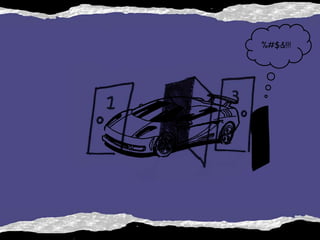
%#$&!!!


1
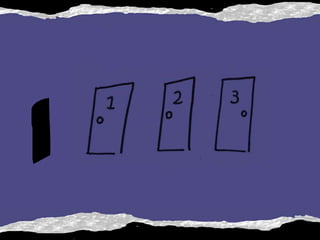
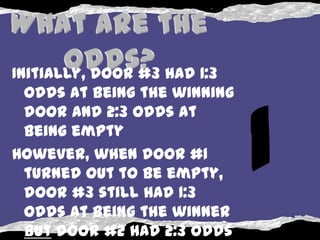
Initially, door #3 had 1:3
  odds at being the winning


                              1
  door and 2:3 odds at
  being empty
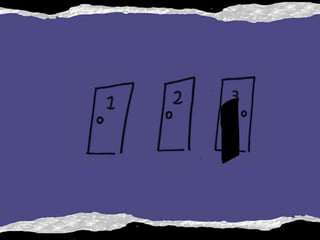
However, when door #1
  turned out to be empty,
  door #3 still had 1:3
  odds at being the winner
  but door #2 had 2:3 odds
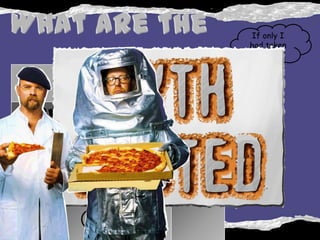
If only I
                            had taken
                            EDUC 211

       Door   Door   Door
        #1     #2     #3


                            1
Case                
  1
Case                
  2
Case         
WHAT: Probe meaning to "find out"
                 AND
 “proof” means what is claimed to
               be true.
WHERE: Probability originated from
            the study of
   games of chance and gambling
       during the 16th century.
BY WHOM: Probability theory was a
• The last 10 times this penny has
  been flipped, it has shown heads
• What is most probable to show
  next? Heads, or Tails?
• Many people believe that
  betting on Tails offers a higher
  probability
    Is this a Myth or are your
• Probability is long-term
  outcome, is does not rely on
  individual events.
• Each probabilistic event is an
  isolated event, unaffected by
  past or future events.
• Probability is the pattern of
  infinitely many of such events.
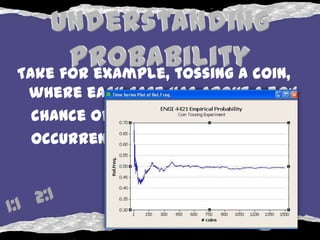
Take for example, tossing a coin,
 where each case has about a 50%
  chance of
  occurrence.
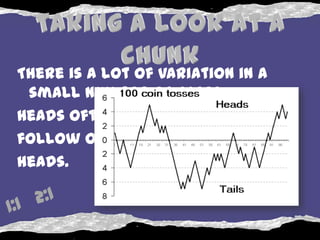
There is a lot of variation in a
 small number of cases.
Heads often
follow other
heads.
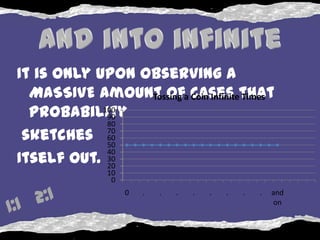
It is only upon observing a
  MASSIVE amount ofa cases that
                 Tossing Coin Infinite Times
  probability
            100
             90
             80
 sketches 70 60
             50
Itself out. 30
             40
             20
               10
                0
                    0   .   .   .   .   .   .   .   .   and
                                                         on
• A single event is uninfluenced by
  past events
• Probability takes into account
  ALL events
• When tossing a coin a single
  time, it is either Heads or Tails
• The probability is 100% of either
  or
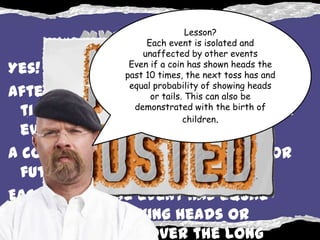
Lesson?
                    Each event is isolated and
                   unaffected by other events
                Even if a coin has shown heads the
Yes!           past 10 times, the next toss has and
                equal probability of showing heads
After flipping heads twenty
                     or tails. This can also be
                 demonstrated with the birth of
  times, each event is still a single
                              children.
  event.
A coin is not influenced by past or
  future events.
Each individual event has equal
  chance of showing heads or
  tails, it is only over the long
Lets go back to the birthday
 question:


How many people are needed
 in a room so that the
 probability that there are
 at least two people whose
 birthdays are the same day
Using the same format as the dice
  questions earlier, we can easily
  find the answer to this question.
• Remember that a way determine
  the probability of something
  happening is to subtract the
  probability of something not
  happening from 1 (or 100%).
A die has six sides.
Each roll will reveal one side.
The probability of any one
  number showing is 1/6.
Let's say we have 2 dice, what is
  the probability of having two
  different numbers showing?
We can find the answer easier by
When we roll a pair of dice, there
  are 36 (6 x 6) equally likely
  outcomes.
The ones that have the same number
  are 1 and 1, 2 and 2, 3 and 3, 4 and
  4, 5 and 5, and 6 and 6 (6/36).
Instead of listing all the possible
  outcomes, we can go 1 (100%)
  subtract 6/36 (the probability of
The probability of an event
 occurring E can be represented
 by the equation: 1 – probability
 of E not occurring.

So the birthday question has the
  same format.
• Please turn to page 594.
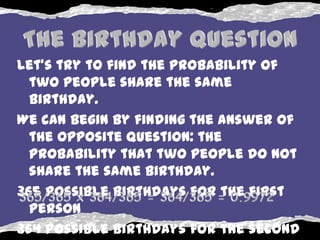
Let's try to find the probability of
  two people share the same
  birthday.
We can begin by finding the answer of
  the opposite question: the
  probability that two people do not
  share the same birthday.
365 possible birthdays for the first
  person
364 possible birthdays for the second
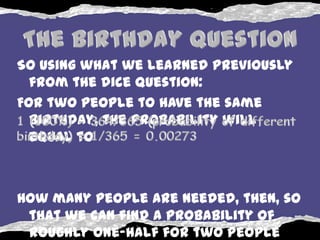
So using what we learned previously
  from the dice question:
For two people to have the same
  birthday, the probability will
  equal to


How many people are needed, then, so
 that we can find a probability of
 roughly one-half for two people
So if we had kept going with that
 pattern...
Number of people   Probability that at least two
in the room        people share a birthday
5                  0.027...
10                 0.116...
15                 0.252...
20                 0.411...
25                 0.568...
30                 0.706
...                ...

Downgrade

  • 2.
    ...that a flippedcoin will turn up heads ... that when you meet one twin, she is the older one Odds like 1:2 are depressing. A 50% chance seems helpless but sometimes, the odds aren’t
  • 3.
  • 4.
  • 5.
  • 7.
    Initially, door #3had 1:3 odds at being the winning 1 door and 2:3 odds at being empty However, when door #1 turned out to be empty, door #3 still had 1:3 odds at being the winner but door #2 had 2:3 odds
  • 8.
    If only I had taken EDUC 211 Door Door Door #1 #2 #3 1 Case   1 Case   2 Case  
  • 9.
    WHAT: Probe meaningto "find out" AND “proof” means what is claimed to be true. WHERE: Probability originated from the study of games of chance and gambling during the 16th century. BY WHOM: Probability theory was a
  • 11.
    • The last10 times this penny has been flipped, it has shown heads • What is most probable to show next? Heads, or Tails? • Many people believe that betting on Tails offers a higher probability Is this a Myth or are your
  • 12.
    • Probability islong-term outcome, is does not rely on individual events. • Each probabilistic event is an isolated event, unaffected by past or future events. • Probability is the pattern of infinitely many of such events.
  • 13.
    Take for example,tossing a coin, where each case has about a 50% chance of occurrence.
  • 14.
    There is alot of variation in a small number of cases. Heads often follow other heads.
  • 15.
    It is onlyupon observing a MASSIVE amount ofa cases that Tossing Coin Infinite Times probability 100 90 80 sketches 70 60 50 Itself out. 30 40 20 10 0 0 . . . . . . . . and on
  • 16.
    • A singleevent is uninfluenced by past events • Probability takes into account ALL events • When tossing a coin a single time, it is either Heads or Tails • The probability is 100% of either or
  • 17.
    Lesson? Each event is isolated and unaffected by other events Even if a coin has shown heads the Yes! past 10 times, the next toss has and equal probability of showing heads After flipping heads twenty or tails. This can also be demonstrated with the birth of times, each event is still a single children. event. A coin is not influenced by past or future events. Each individual event has equal chance of showing heads or tails, it is only over the long
  • 18.
    Lets go backto the birthday question: How many people are needed in a room so that the probability that there are at least two people whose birthdays are the same day
  • 19.
    Using the sameformat as the dice questions earlier, we can easily find the answer to this question. • Remember that a way determine the probability of something happening is to subtract the probability of something not happening from 1 (or 100%).
  • 20.
    A die hassix sides. Each roll will reveal one side. The probability of any one number showing is 1/6. Let's say we have 2 dice, what is the probability of having two different numbers showing? We can find the answer easier by
  • 21.
    When we rolla pair of dice, there are 36 (6 x 6) equally likely outcomes. The ones that have the same number are 1 and 1, 2 and 2, 3 and 3, 4 and 4, 5 and 5, and 6 and 6 (6/36). Instead of listing all the possible outcomes, we can go 1 (100%) subtract 6/36 (the probability of
  • 22.
    The probability ofan event occurring E can be represented by the equation: 1 – probability of E not occurring. So the birthday question has the same format. • Please turn to page 594.
  • 23.
    Let's try tofind the probability of two people share the same birthday. We can begin by finding the answer of the opposite question: the probability that two people do not share the same birthday. 365 possible birthdays for the first person 364 possible birthdays for the second
  • 24.
    So using whatwe learned previously from the dice question: For two people to have the same birthday, the probability will equal to How many people are needed, then, so that we can find a probability of roughly one-half for two people
  • 25.
    So if wehad kept going with that pattern... Number of people Probability that at least two in the room people share a birthday 5 0.027... 10 0.116... 15 0.252... 20 0.411... 25 0.568... 30 0.706 ... ...