Unsolicited Selling Guidelines
A guide for Enrolment Advisors
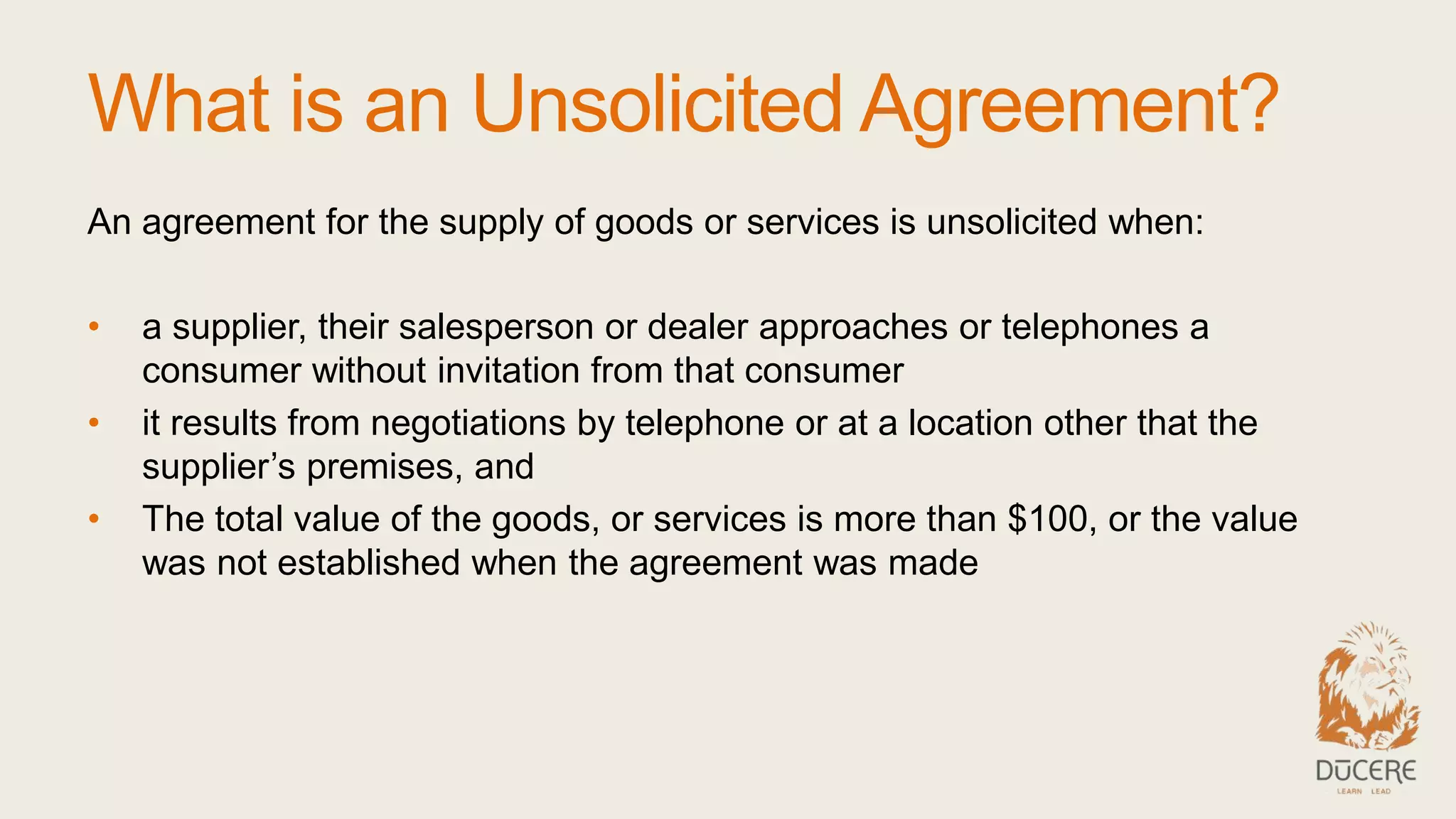
What is an Unsolicited Agreement?
An agreement for the supply of goods or services is unsolicited when:
• a supplier, their salesperson or dealer approaches or telephones a
consumer without invitation from that consumer
• it results from negotiations by telephone or at a location other that the
supplier’s premises, and
• The total value of the goods, or services is more than $100, or the value
was not established when the agreement was made
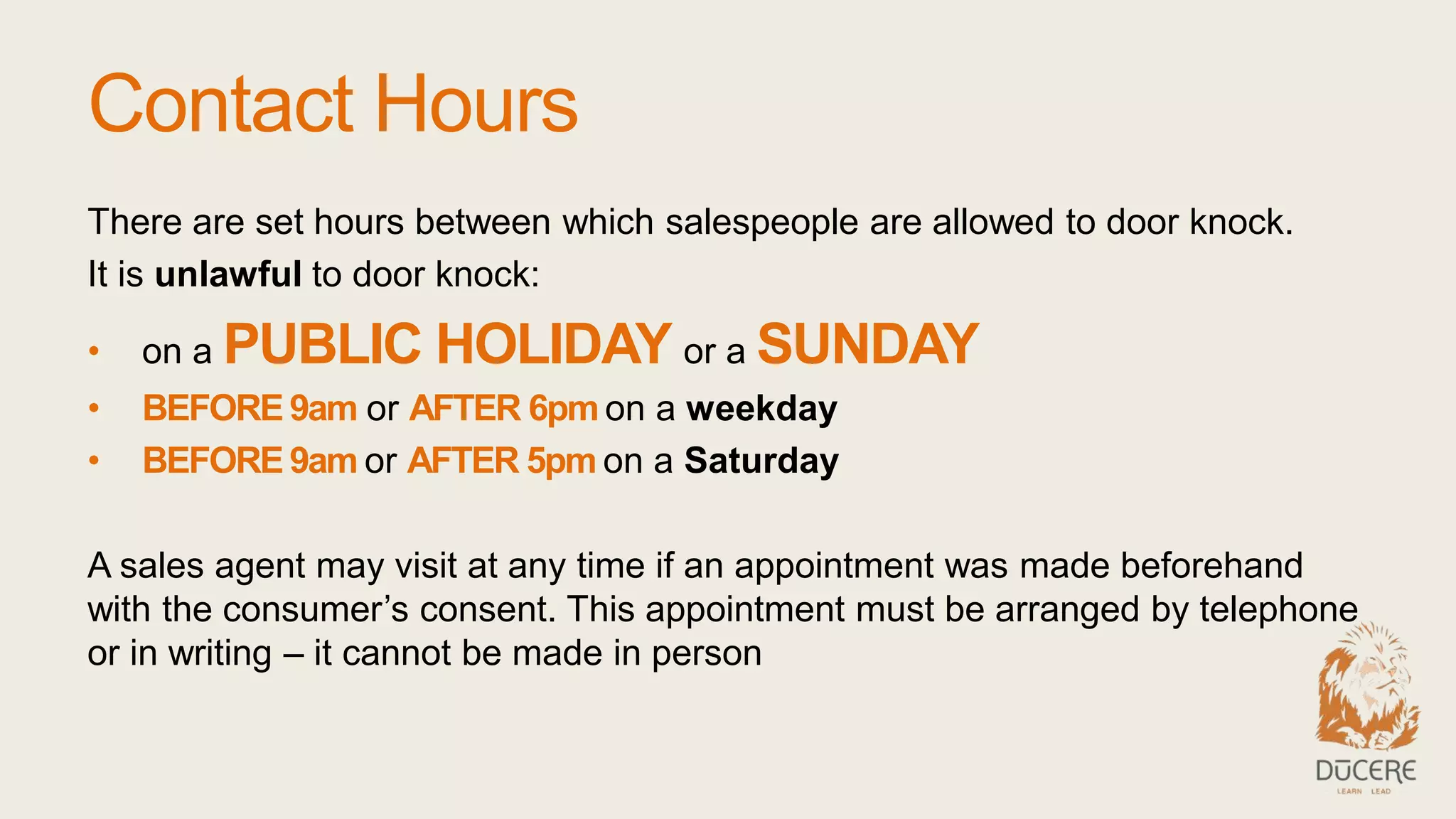
Contact Hours
There are set hours between which salespeople are allowed to door knock.
It is unlawful to door knock:
• on a PUBLIC HOLIDAY or a SUNDAY
• BEFORE 9am or AFTER 6pm on a weekday
• BEFORE 9am or AFTER 5pm on a Saturday
A sales agent may visit at any time if an appointment was made beforehand
with the consumer’s consent. This appointment must be arranged by telephone
or in writing – it cannot be made in person
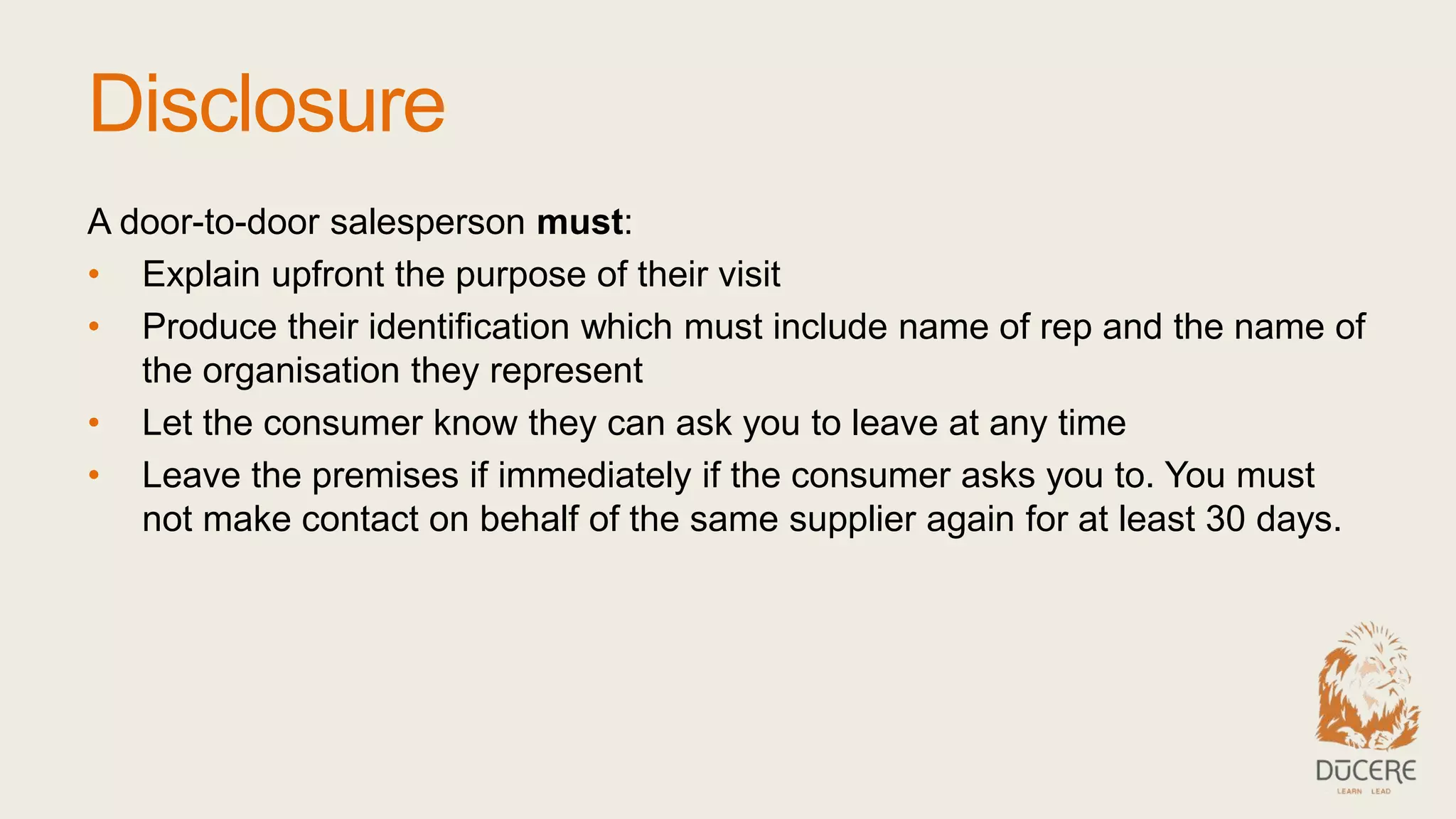
Disclosure
A door-to-door salesperson must:
• Explain upfront the purpose of their visit
• Produce their identification which must include name of rep and the name of
the organisation they represent
• Let the consumer know they can ask you to leave at any time
• Leave the premises if immediately if the consumer asks you to. You must
not make contact on behalf of the same supplier again for at least 30 days.
Written Agreements
When a salesperson negotiates an unsolicited consumer agreement:
• The salesperson must inform the consumer of their termination rights before
the agreement is made
• The consumer must be given a written copy of the agreement
• Both parties must sign the agreement and any amendments
Information about the consumer’s termination rights must be given to them in
writing and must be:
• Attached to the agreement
• Transparent – expressed in plain language, legible and clear, and
• The most prominent text in the document, other than the text setting out the
supplier’s logo
The Sales Contract
The document must be:
• Transparent – expressed in plain language, legible and clear, and
• Printed – although any changes to the agreement may be handwritten
The document must clearly state:
• The consumer’s cooling off (census) and termination rights
• The full terms of the agreement
• The total price payable, or how this will be calculated
• The supplier’s:
– Name
– Business address
– ABC / CAN
– Fax number and email address
Implied License
There is an implied license that allows sales people to enter public parts of
property (driveway / paths).
The license will only exist if there is no notice or other indication that entry by
visitors generally or particularly designated visitors is forbidden or unauthorised
The implied license is void if:
• a person displays a DO NOT KNOCK or KEEP OUT stick / sign
• a salesperson is asked to leave
Australian Consumer Law requires a salesperson to leave if requested (Do not
knock / keep out signs equate to a request to leave). Failure to comply is
trespassing and can leave the company exposed to a penalty of up to
$50,000 each incident.

Door knocking guidelines

  • 1.
    Unsolicited Selling Guidelines Aguide for Enrolment Advisors
  • 2.
    What is anUnsolicited Agreement? An agreement for the supply of goods or services is unsolicited when: • a supplier, their salesperson or dealer approaches or telephones a consumer without invitation from that consumer • it results from negotiations by telephone or at a location other that the supplier’s premises, and • The total value of the goods, or services is more than $100, or the value was not established when the agreement was made
  • 3.
    Contact Hours There areset hours between which salespeople are allowed to door knock. It is unlawful to door knock: • on a PUBLIC HOLIDAY or a SUNDAY • BEFORE 9am or AFTER 6pm on a weekday • BEFORE 9am or AFTER 5pm on a Saturday A sales agent may visit at any time if an appointment was made beforehand with the consumer’s consent. This appointment must be arranged by telephone or in writing – it cannot be made in person
  • 4.
    Disclosure A door-to-door salespersonmust: • Explain upfront the purpose of their visit • Produce their identification which must include name of rep and the name of the organisation they represent • Let the consumer know they can ask you to leave at any time • Leave the premises if immediately if the consumer asks you to. You must not make contact on behalf of the same supplier again for at least 30 days.
  • 5.
    Written Agreements When asalesperson negotiates an unsolicited consumer agreement: • The salesperson must inform the consumer of their termination rights before the agreement is made • The consumer must be given a written copy of the agreement • Both parties must sign the agreement and any amendments Information about the consumer’s termination rights must be given to them in writing and must be: • Attached to the agreement • Transparent – expressed in plain language, legible and clear, and • The most prominent text in the document, other than the text setting out the supplier’s logo
  • 6.
    The Sales Contract Thedocument must be: • Transparent – expressed in plain language, legible and clear, and • Printed – although any changes to the agreement may be handwritten The document must clearly state: • The consumer’s cooling off (census) and termination rights • The full terms of the agreement • The total price payable, or how this will be calculated • The supplier’s: – Name – Business address – ABC / CAN – Fax number and email address
  • 7.
    Implied License There isan implied license that allows sales people to enter public parts of property (driveway / paths). The license will only exist if there is no notice or other indication that entry by visitors generally or particularly designated visitors is forbidden or unauthorised The implied license is void if: • a person displays a DO NOT KNOCK or KEEP OUT stick / sign • a salesperson is asked to leave Australian Consumer Law requires a salesperson to leave if requested (Do not knock / keep out signs equate to a request to leave). Failure to comply is trespassing and can leave the company exposed to a penalty of up to $50,000 each incident.